
Reviewed · WALKING TOURS
Osaka: Five Must-See Highlights Walking Tour & Ramen Lunch
Osaka rewards curious walkers. This seven-hour tour connects five major sights with an English-speaking local guide, subway rides, and plenty of time to look around. I like the small groups, limited to eight people, and the included ramen lunch, which adds a real local flavor instead of treating food as an afterthought.
I also like the mix of old and new: a castle museum, one of Japan’s oldest Buddhist temples, retro Shinsekai, a covered food market, and neon-lit Dotonbori. The main caution is simple: this is a serious walking day, potentially around 11 kilometers, with subway stairs and long stretches on foot. It suits active adults far better than anyone wanting a gentle sightseeing ride.
In This Review
- Key Points Before You Book
- Why This Route Works for a First Day in Osaka
- Osaka Castle: Big Views and Sengoku-Era Stories
- Ramen Lunch Near Temmabashi Station
- Shitennoji: Osaka’s Ancient Buddhist Center
- Shinsekai and the Tsutenkaku View
- Kuromon Ichiba Market: Food, Noise, and Local Advice
- Dotonbori and the Famous Running Man
- What the Small Group Adds
- Walking, Subway Rides, and the Real Physical Demand
- Is $56 a Fair Price?
- Who Should Book This Osaka Tour?
- FAQ
- How long does the Osaka walking tour last?
- Where does the tour meet?
- Where does the tour finish?
- Is ramen lunch included?
- Are Osaka Castle and Shitennoji entrance fees included?
- Is public transportation included?
- How many people can join the tour?
- Should You Book It?
Key Points Before You Book
- Five very different Osaka sights: The route moves from castle history to ancient Buddhism, street food, markets, and modern entertainment districts.
- Small groups make a difference: With no more than eight people, it is easier to ask questions, keep track of the guide, and adjust the pace when needed.
- Ramen is included: Lunch at a popular ramen shop is part of the tour price, while other food and shopping purchases are extra.
- Subway travel keeps the route practical: The sights are spread across Osaka, so public transportation saves time and avoids an exhausting all-day walk.
- Expect a full physical day: Wear proper walking shoes, bring rain gear, and prepare for stairs in stations and at some sights.
- Guide Takanobu, known as Taka, earns strong praise: His English, local advice, care with hot weather and rain, and help with tickets are repeatedly highlighted.
Why This Route Works for a First Day in Osaka
Osaka can feel scattered at first. Osaka Castle sits away from the southern entertainment districts, Shitennoji and Shinsekai occupy another part of the city, and Kuromon Market and Dotonbori belong to the busy Namba area.
This tour solves that geography problem. You use the subway between districts and walk through each neighborhood rather than seeing Osaka through a vehicle window. That gives you a useful first look at how the city changes from one area to the next.
The route also explains Osaka through several identities. You see the city as a place of merchants, food, comedy, religious tradition, and political change. The guide’s job is not only to point out buildings, but to connect them to the character of Osaka and explain why the city feels less formal and more playful than Kyoto.
The tour begins at 9:00 a.m. outside the FamilyMart near Exit 4 of Tanimachi 4-chome Station. Look for a man wearing green glasses. This is a practical meeting point, but large Osaka stations can be confusing, so allow extra time to find the correct exit.
More Walking Tours in Osaka
- Osaka: Hotspots & Hidden Gems Walking Tour Private or Group
★ 4.9 · 1,300 reviews - Osaka Local Foodie Walking Tour in Dotonbori and Shinsekai
★ 5.0 · 985 reviews - Osaka Bar Hopping Night Walking Tour in Namba (3 bars, 6 tastes)
★ 5.0 · 958 reviews
Osaka Castle: Big Views and Sengoku-Era Stories
The first walk takes about 30 minutes, leading to Osaka Castle. The castle tower is the morning’s major historical stop, with a guided visit lasting about 75 minutes.
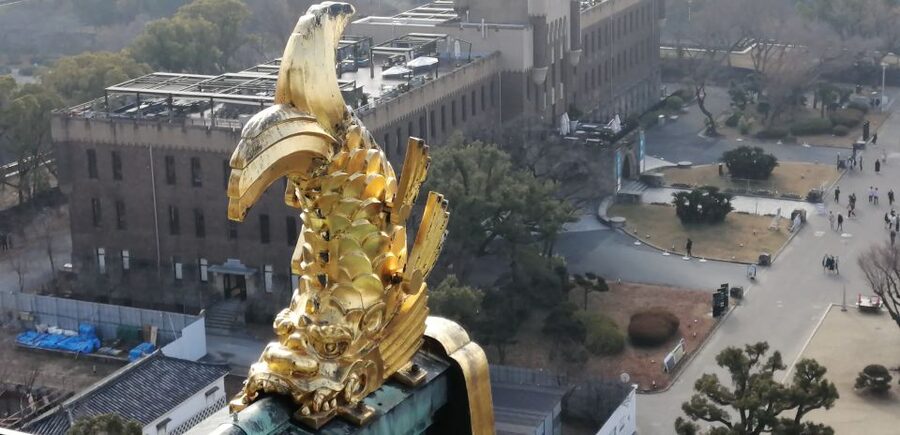
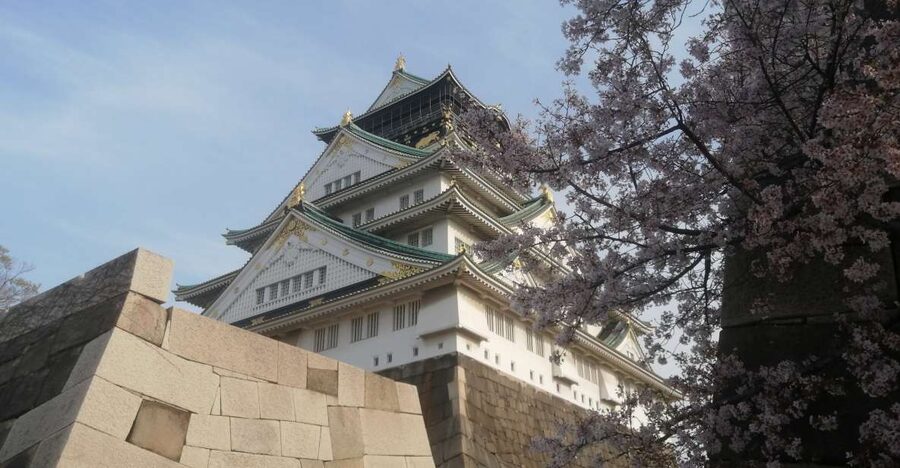
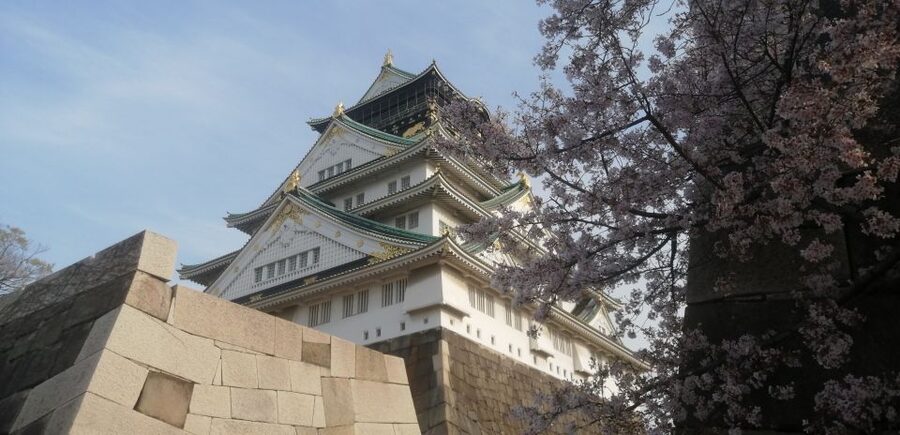
Osaka Castle is one of those places that works from a distance and up close. The exterior gives you the classic photo opportunity, with the tower rising above the grounds, while the upper level offers views over Osaka. Inside, the museum focuses on the castle’s history and the Sengoku period, the era of military conflict that reshaped Japan.
I like starting here because the castle gives you a broad sense of Osaka before the day moves into smaller streets and markets. From the top, you can look out over the city and understand just how large the urban area is.
The main practical point is cost. The entrance fee is not included and ranges from JPY 1,080 to JPY 1,430, depending on the season and day. The guide can help with tickets, and a few participants found advice about city passes useful, especially when a pass offered a discount or a separate entrance arrangement. Check the current terms before buying one, since prices and benefits can change.
The castle visit is not a quiet stroll through old rooms. It is a museum experience inside a reconstructed tower, with historical displays and city views. If you want a perfectly preserved medieval castle, adjust your expectations. If you want context, photographs, and a clear introduction to Osaka’s past, it earns its place on the route.
Ramen Lunch Near Temmabashi Station
After the castle, you walk for about 20 minutes toward Temmabashi Station. Lunch takes around 45 minutes and is served at a popular ramen shop.
This is one of the tour’s best-value features. You do not need to spend time choosing a restaurant in an unfamiliar neighborhood, and the meal gives you a chance to sit down after the first major sightseeing stop. The ramen is included in the $56 tour price, which makes the overall cost easier to justify.
The meal is described as tasty and substantial, and it has received especially warm praise. Several participants singled out the ramen as one of the best meals of their Osaka visit. A few also had a sake tasting or picked up extra snacks during the day, but those additions are not listed as guaranteed parts of the tour, so treat them as possible extras rather than promises.
Lunch is also a useful pause before the afternoon begins. The rest of the route includes several stations, more walking, and time in crowded public areas. If you like a tour that combines sightseeing with food rather than stopping only for photos, this meal is a strong point.
Shitennoji: Osaka’s Ancient Buddhist Center
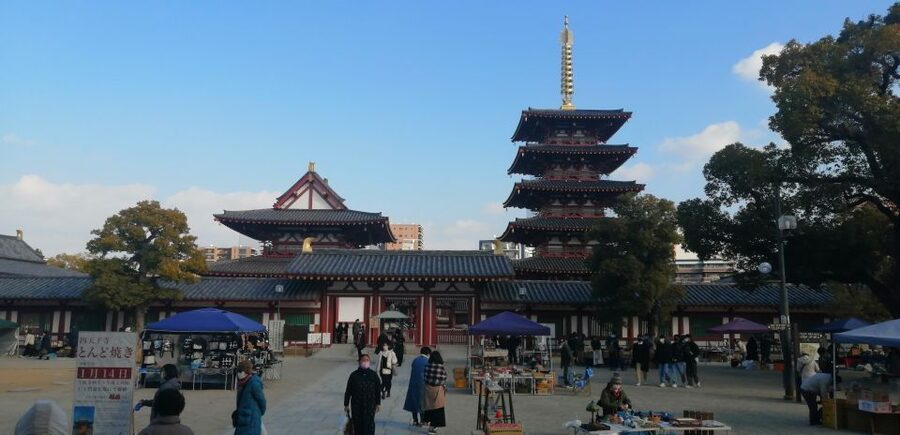
From the lunch area, the group takes the subway for about 20 minutes to Shitennoji. The visit lasts around 45 minutes, including guided commentary.
Founded in 593, Shitennoji is one of Japan’s oldest Buddhist temples and is described as the first temple built by the state. That date gives the stop real weight. You are not simply seeing another attractive temple building. You are visiting a site tied to the early spread of Buddhism and to the foundation of Japanese religious institutions.
The guide explains the temple’s origin and the achievements of its founder. This is where a local English guide adds genuine value. Without context, a temple visit can become a quick look at gates, courtyards, and rooflines. With an explanation of its age and purpose, the site becomes part of Osaka’s long story.
An entrance fee of JPY 400 to JPY 600 is extra, depending on the season and day. The time here is focused rather than leisurely. You will learn about the site and see its main features, but this is not a long private meditation in the grounds.
The change from Osaka Castle to Shitennoji is one of the day’s best contrasts. The castle represents military power and the Sengoku period. Shitennoji carries a much older religious tradition. Together, they show that Osaka’s story did not begin with neon signs and food stalls.
More Walking Tours in Japan:
- Kyoto Geisha Walking Tour: Gion District & Hidden Gems
★ 4.7 · 3,273 reviews - Tokyo Tsukiji Fish Market Food and Culture Walking Tour
★ 5.0 · 3,184 reviews - Kyoto: Gion Magical Night Walking Tour with Geisha Trivia
★ 4.9 · 2,393 reviews - Tokyo: Imperial Palace and Shogun Historical Walking Tour
★ 5.0 · 2,251 reviews
Shinsekai and the Tsutenkaku View
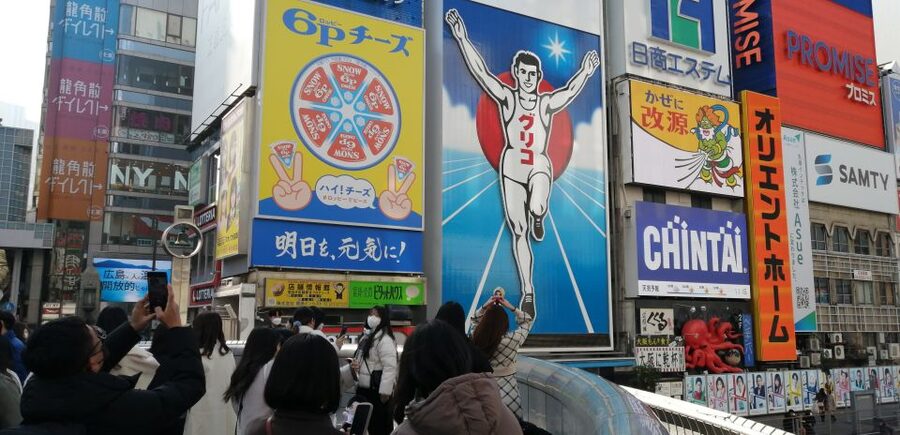
The next leg is a 15-minute walk to Shinsekai, where you have about 45 minutes for a break, photographs, free time, and shopping.
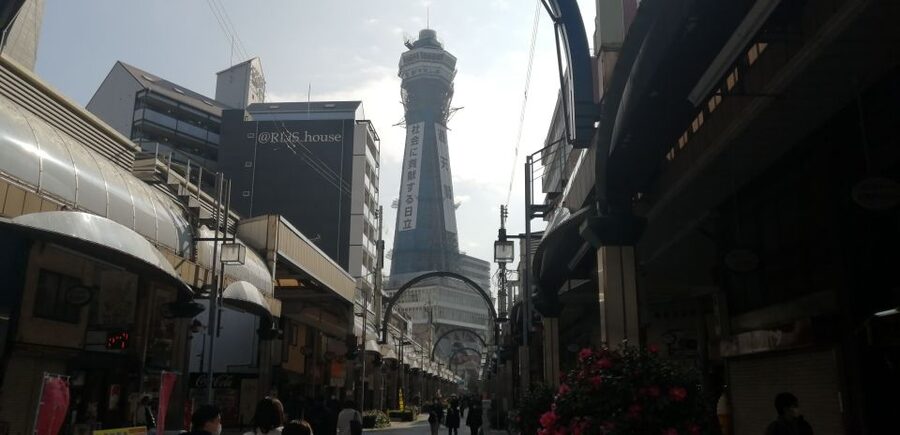
Shinsekai has a retro feel that is unlike the polished image many people bring to Japan. Its colorful streets, old-style signs, food shops, and Tsutenkaku Tower create a slightly eccentric part of Osaka. This is the place to slow down, take photographs, and notice the city’s sense of humor.
The district is also associated with kushikatsu, deep-fried skewers served in casual shops. The tour does not include kushikatsu, so budget separately if you want to try it. The guide can point out local food choices, but your free time is limited, and the group then moves on.
The photo stop with Tsutenkaku and the surrounding streets is a practical highlight. You get a recognizable Osaka picture without spending the whole afternoon at one attraction. I would use the free time for photographs and a quick snack rather than planning a serious shopping session.
Shinsekai can feel crowded and energetic, especially around its food streets. Keep your belongings secure and stay aware of the group’s meeting instructions. The district is fun precisely because it is busy and slightly chaotic, but that also means it is not the calmest place to wander without a time limit.
Kuromon Ichiba Market: Food, Noise, and Local Advice
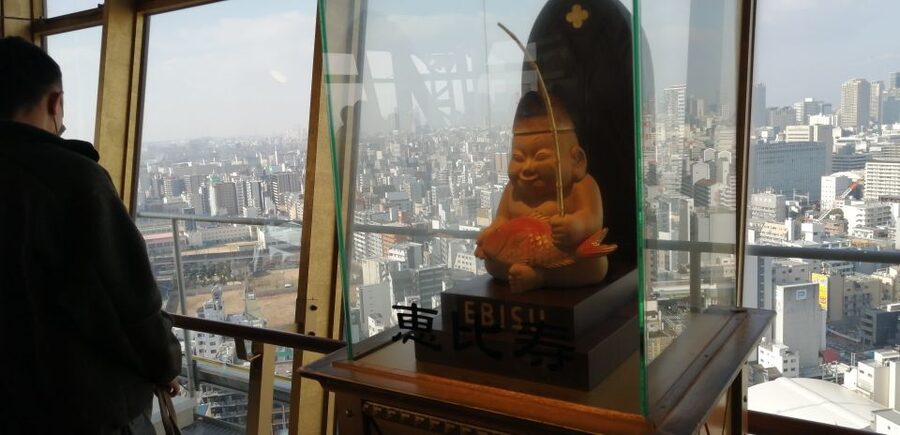
A 15-minute subway ride brings you to Kuromon Ichiba Market. The guided visit and free time last about 45 minutes.
Kuromon is a covered public market with more than 200 years of history. Its stalls sell food and local products, and the guide recommends items worth trying. This guidance matters because market food can be tempting, expensive, or difficult to identify when you are seeing it for the first time.
I like this stop because it gives you a closer look at Osaka’s food culture than a restaurant alone can provide. You can browse, ask questions, and decide for yourself what looks appealing. It also gives you another chance to taste something small after the included ramen lunch.
The limitation is time. Forty-five minutes lets you sample and browse, but it is not enough for a slow, detailed exploration of every stall. Also remember that purchases here are extra. If you are hoping to eat your way through the entire market, bring a little spending money and keep your expectations realistic.
Kuromon connects naturally with Dotonbori, the final district. The market is about food in a practical, market setting. Dotonbori turns food into spectacle, with giant signs, bright lights, and crowds along the canal.
Dotonbori and the Famous Running Man
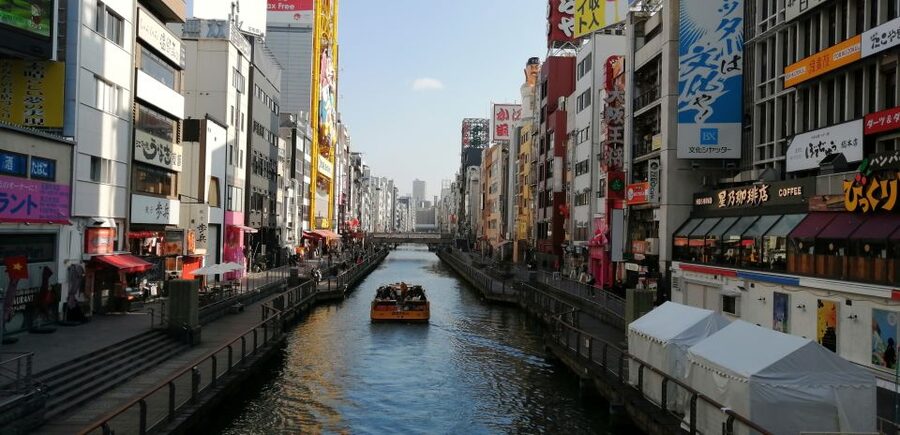
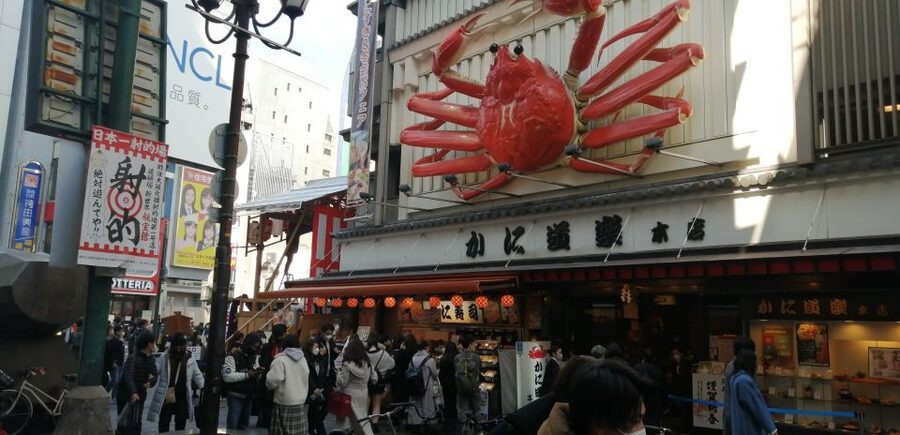
The final subway ride takes about 15 minutes, followed by 45 minutes in Dotonbori. The guide leads a sightseeing walk through one of Osaka’s best-known entertainment areas, including the famous Running Man sign above Ebisbashi Bridge.
This is the Osaka many first-time visitors picture: huge illuminated signs, colorful restaurant fronts, canal-side views, and an endless choice of snacks. The Glico Running Man is an obvious photo stop, but the fun is also in seeing how Osaka presents itself through food advertising and playful street design.
You may have time for a small treat. One especially useful food suggestion from the guide is fresh-fruit mochi, with juicy fruit inside the soft rice-cake exterior. That kind of recommendation is more helpful than a generic list of famous restaurants, since it gives you a simple thing to look for during limited free time.
The tour ends with a five-minute walk to Hozenji Temple. This quiet ending works well after Dotonbori’s noise. Hozenji offers a small, atmospheric final stop and gives the day a softer finish than ending beside a giant advertising sign.
The tour ends in the Namba area rather than returning you to the starting point. That is convenient if you want to continue eating, shopping, or exploring Dotonbori afterward.
What the Small Group Adds
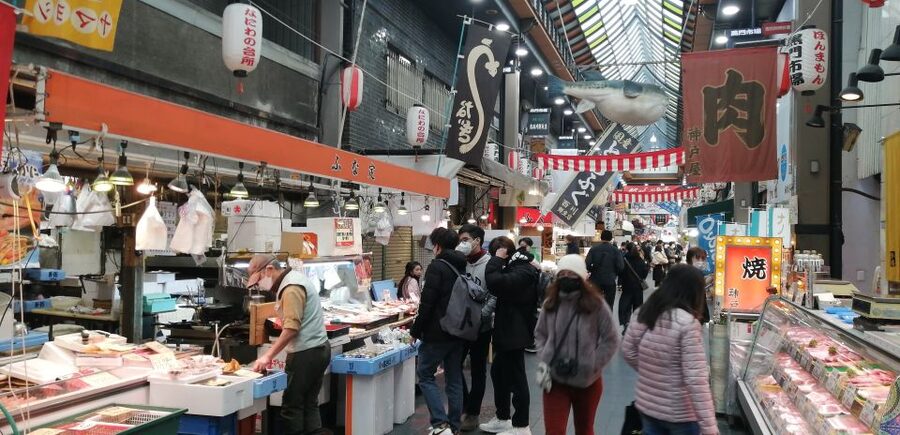
The maximum group size is eight, though the actual group may be smaller. That matters on a route involving subway platforms, crowded streets, ticket machines, and several changes of area.
A small group lets you hear the guide more easily and ask questions without holding up a large crowd. It also gives the guide more room to help with practical needs. Taka has been praised for finding shade during hot weather, keeping people as dry as possible in rain, checking on bathroom needs, and helping participants who had trouble navigating a large station.
That personal care is one of the tour’s strongest features. A guide who knows the route can explain which ticket to buy, help you avoid getting lost, and adjust plans when conditions change. This is especially useful if you are new to Japanese subway systems.
The tour is conducted in English. Taka is frequently praised for clear English, humor, organization, and his willingness to answer questions. Good guiding is not just a stream of facts. It is also knowing when the group needs shade, a pause, directions, or a little extra time for photographs.
Walking, Subway Rides, and the Real Physical Demand
The advertised duration is seven hours, but the detailed schedule adds up to roughly seven and a half hours. Plan for a full day rather than a short morning outing.
You walk between attractions and use the Osaka Metro for longer connections. The transport plan is efficient, but stations can involve stairs, long corridors, and repeated changes between street level and platforms. The route is not suitable for people with mobility impairments, and it is specifically not recommended for pregnant women, people with heart problems, children under 12, or people with a cold.
Bring hiking shoes or other well-cushioned walking shoes. Rain gear is also important because the tour runs in wet weather unless conditions force a change. In hot months, bring water, sun protection, and a hat or sunglasses. The guide has helped groups find shade, but Osaka’s summer heat still makes this an energetic outing.
This is not an exercise challenge for its own sake. The walking lets you experience Osaka at street level, and the subway prevents the day from becoming even longer. Still, if your ideal tour includes long restaurant stops and plenty of unplanned wandering, this itinerary may feel packed.
Is $56 a Fair Price?
At $56 per person, the tour offers a solid package for a first visit. You get a local English-speaking guide, commentary, photo assistance, ramen lunch, and a carefully connected route through five major areas.
You still need to pay for the Osaka Metro pass or individual fares, Osaka Castle admission, and Shitennoji admission. The listed one-day Metro pass costs JPY 620 to JPY 820, depending on the day of the week. Add the two attraction fees and any snacks or shopping, and the final cost rises above the advertised price.
Even so, the value is good if you are short on time or uncertain about navigating Osaka. The guide saves you the work of building a route across several districts, and the lunch removes one important decision from a busy day. The price is less attractive if you already know Osaka well, speak Japanese, and prefer to explore at your own pace.
The tour has a 4.7 rating from 411 reviews, with particularly strong praise for Taka, the small group format, the ramen, and the amount covered in one day. Those strengths match the structure of the experience: this is a practical orientation tour, not a slow specialist visit.
Who Should Book This Osaka Tour?
I would recommend it to first-time visitors, solo travelers, couples, and anyone with only a day or two in Osaka. It is also useful if you want help with the subway and prefer history, food, neighborhoods, and photographs in one package.
You should be comfortable walking for most of the day. The route may reach about 11 kilometers, and the repeated station stairs can be tiring. Families with children under 12 cannot join, and the physical requirements make this a poor fit for anyone managing serious health or mobility concerns.
The tour also suits people who want a local introduction rather than a checklist of monuments. You will see the big sights, but you will also get food suggestions, neighborhood context, ticket advice, and practical help along the way.
FAQ
How long does the Osaka walking tour last?
The stated duration is seven hours. The detailed schedule runs from a 9:00 a.m. meeting time through the final stop and totals roughly seven to seven and a half hours.
Where does the tour meet?
Meet outside the FamilyMart near Exit 4 of Osaka Metro’s Tanimachi 4-chome Station. Look for a man wearing green glasses.
Where does the tour finish?
The tour ends at Hozenji Temple, written in the meeting information as 天龍山 法善寺, after a short walk from Dotonbori.
Is ramen lunch included?
Yes. Ramen lunch at a popular ramen shop is included in the tour fee.
Are Osaka Castle and Shitennoji entrance fees included?
No. Osaka Castle admission costs JPY 1,080 to JPY 1,430, and Shitennoji admission costs JPY 400 to JPY 600, with prices varying by season and day.
Is public transportation included?
No. You must pay for the Osaka Metro pass or individual subway fares. A one-day Osaka Metro pass is listed at JPY 620 to JPY 820, depending on the day of the week.
How many people can join the tour?
The tour is limited to eight participants and is conducted in English.
Should You Book It?
Book this tour if you want to cover Osaka’s major sights in one organized day and do not mind a brisk walking pace. The combination of Taka’s personal guidance, subway help, included ramen, and five very different districts gives you a strong first sense of the city.
Skip it if you need a slow pace, have difficulty with stairs or long walks, or want extended time inside each attraction. For an active first day in Osaka, though, $56 is a reasonable starting price, especially when you value local explanations and a meal as much as the sightseeing itself.
More Lunch Experiences in Japan
- Shirakawa-go & Takayama Old Town Day Tour (Optional Hida Beef Lunch)
★ 4.6 · 3,936 reviews - Bike Tour Exploring North Kyoto plus Lunch
★ 5.0 · 1,087 reviews - Tokyo: Mt.Fuji & Lake Kawaguchiko 1-Day Bus Tour w/Optional Lunch
★ 4.5 · 839 reviews - Osaka/Kyoto: Arashiyama, Nara & Fushimi Inari Shrine w/Lunch
★ 4.4 · 754 reviews
Just added in Japan
- A One-of-a-Kind Sushi Experience in a Special Place of Japan★ 5.0 · 15 reviews
- Tokyo Cute Bento Cooking Class – Make a Kawaii Character Lunchbox★ 5.0 · 126 reviews
- Japanese Home Cooking Class & Walk in Todoroki Temple Tokyo★ 5.0 · 88 reviews
- Japan Tokyo Tower Observatory Deck E-Ticket★ 4.0 · 34 reviews
- Catch a Baseball Game in Tokyo with a Local – Tickets Included★ 5.0 · 24 reviews
- JDM Experience with Fast&Furious RX-7 (English speaking Driver)★ 5.0 · 57 reviews
- Tokyo Private Day Tour by Car with English speaking Driver Guide★ 4.0 · 29 reviews
- Japan Classic 10 Day – One Life Adventures★ 5.0 · 129 reviews
Walking Tours, compared.
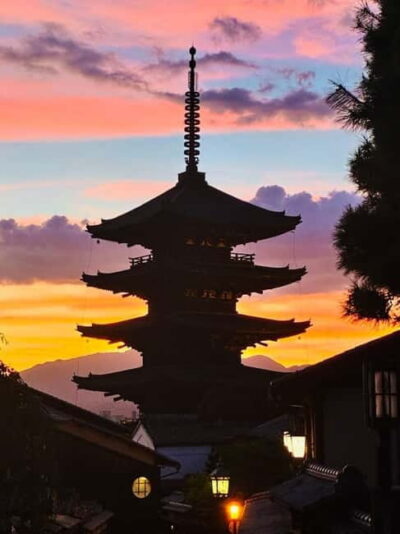
Kyoto Geisha Walking Tour: Gion District & Hidden Gems
Read our review →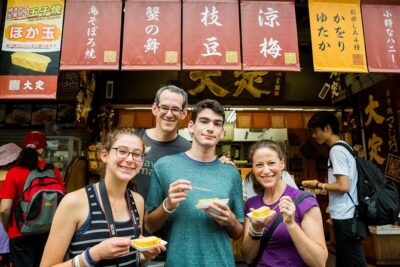
Tokyo Tsukiji Fish Market Food and Culture Walking Tour
Read our review →
Gion Magical Night Walking Tour with Geisha Trivia
Read our review →
Imperial Palace and Shogun Historical Walking Tour
Read our review →
Gion Geisha District Walking Tour – Stories of Geisha
Read our review →
Shinjuku Local Bar and Izakaya Guided Walking Tour
Read our review →
Browse the lists this tour appears in