
Reviewed · CYCLING AND E-BIKE TOURS
Tokyo Great Cycling Tour
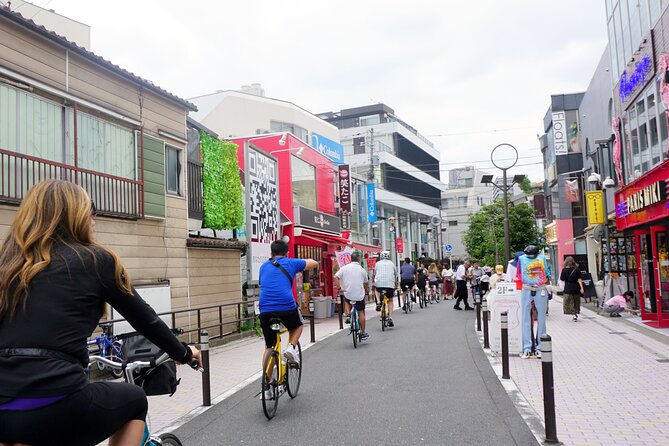
Tokyo looks impossible to cover in one day. This six-hour ride makes a good attempt by linking the Tsukiji Jogai Market, Zojo-ji Temple, Meiji Jingu Shrine, and Imperial Palace with streets and neighborhoods that buses cannot reach. I like the small group of no more than 12, which keeps the ride personal, and I like the way cycling gives you a broader view of Tokyo than walking from sight to sight.
The route also has a human scale. You are not simply being delivered to famous monuments, then hurried back to a vehicle. You pedal between them and watch Tokyo change from market lanes to temple grounds, expensive apartment districts, office blocks, cemeteries, and major shrines. The main consideration is physical: you need a moderate level of fitness, and the tour depends on good weather.
Guides named in rider feedback include Toshi, Nick, and Naoko. Their attention to safety and personal care received especially strong praise. One hot day, the planned picnic became lunch at an izakaya instead, a sensible adjustment that shows the tour can respond when conditions change.
In This Review
- What makes this Tokyo bike tour worth considering
- Why cycling is a smart way to see Tokyo
- Starting near Shinkawa at 9:00 a.m.
- Tsukiji Jogai Market after the inner market moved
- Zojo-ji Temple and the Tokyo Tower contrast
- The modern districts between the landmarks
- A cemetery hidden among fashionable neighborhoods
- Meiji Jingu Shrine in a different kind of Tokyo
- The Imperial Palace as the final major sight
- Safety, fitness, and the real demands of six hours
- Heat, lunch changes, and weather planning
- Who will enjoy this tour most
- Should you book the Tokyo Great Cycling Tour?
- FAQ
- How long is the Tokyo Great Cycling Tour?
- What time does the tour start?
- Where does the tour begin?
- Where does the tour end?
- How many people can join the tour?
- Which major sights are included?
- Are admission tickets included for the stops?
- Do I need to be physically fit?
- What happens if the weather is poor?
- Can I cancel for a refund?
What makes this Tokyo bike tour worth considering
- A six-hour route covers four major Tokyo sights: You visit Tsukiji Jogai Market, Zojo-ji Temple, Meiji Jingu Shrine, and the Imperial Palace in one outing.
- The group is capped at 12 riders: That is small enough for closer guide attention and a less crowded feel.
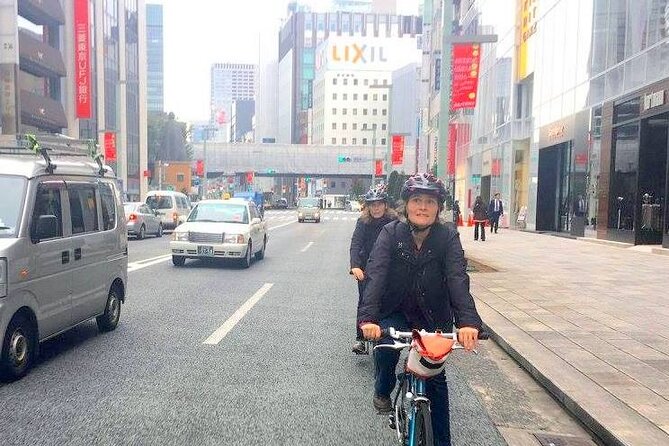
- Cycling reaches places buses cannot: The route includes ordinary city districts, a cemetery in a fashionable area, and stretches of high-rise apartments, shops, and offices.
- The route mixes old Tokyo with new Tokyo: Zojo-ji’s traditional Buddhist architecture sits with Tokyo Tower behind it, while modern commercial districts fill the spaces between major stops.
- Safety is a real part of the experience: Feedback specifically praises Toshi, Nick, and Naoko for looking after riders.
- The tour returns to its starting point: You begin and end at Tokyo Great Tours in Shinkawa, Chuo City.
Why cycling is a smart way to see Tokyo
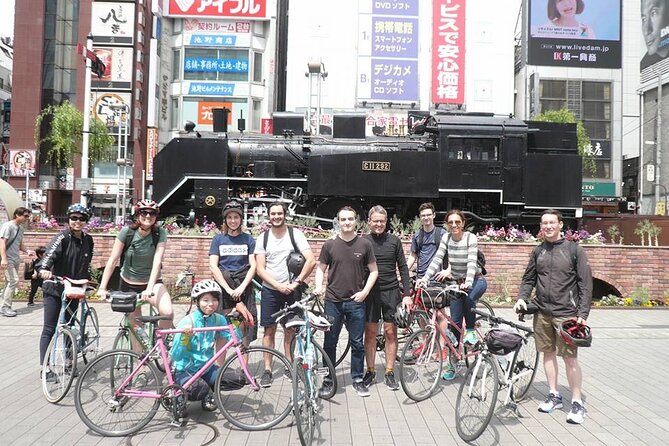
Tokyo is huge, and its sights are spread across districts with very different moods. On foot, you can enjoy one neighborhood well, but covering Tsukiji, Zojo-ji, Meiji Jingu, and the Imperial Palace in one day would require a lot of walking and transport changes.
A bicycle gives you a middle ground. You cover more distance than a walking tour, but you still move slowly enough to notice the city. You can pass from busy shopping streets to quiet temple grounds and then into broad districts filled with offices and expensive apartments. That change is part of the lesson.
I also like the fact that the route does not treat Tokyo as a collection of postcard stops. The less famous sections matter. A cemetery in the middle of fashionable districts tells you something about how old spaces remain part of modern Tokyo. High-rise buildings and shopping areas show the city as it is now, not only as a museum of temples and imperial landmarks.
The group limit matters here. Twelve is not a private tour, but it is far more manageable than a large bus group. Your guide can keep an eye on the group, explain what you are seeing, and respond if someone needs a slower pace or a short pause. That personal care was one of the strongest themes in the feedback.
More Bike Tours in Tokyo
- Tokyo Top Highlights 3h Guided E-bike Tour
★ 5.0 · 714 reviews - 3h Tokyo E-Bike Tour: Hidden Gems, and Local Life with guide
★ 5.0 · 670 reviews - Tokyo: 3-Hour Bike or E-Bike City Highlights Tour
★ 4.8 · 435 reviews
Starting near Shinkawa at 9:00 a.m.
The meeting point is Tokyo Great Tours at 1-chōme-3-2 Shinkawa, Chuo City, Tokyo 104-0033. The start time is 9:00 a.m., and the activity ends back at the same location.
That early start gives the outing a full working day without taking up your evening. It also means you should plan your morning carefully. The tour requires you to arrive at the stated meeting point, not at one of the sightseeing stops, and the ride lasts about six hours.
The booking price is $99.49 per person. For a half-day outing with a guide, bicycle access, a group limit of 12, and a route linking several distant parts of Tokyo, I see reasonable value here. You are paying for more than time at four famous sights. You are paying for the route between them, the guide’s safety support, and the chance to understand how the districts connect.
This is not the cheapest way to see a single Tokyo landmark. It can be good value if you want one organized day that covers a wide slice of the city without arranging each transfer yourself. The tour is often booked about 46 days ahead, so you may want to reserve early if your Tokyo dates are fixed.
Tsukiji Jogai Market after the inner market moved
The first stop is Tsukiji Jogai Market, the outer market area that remains active after the inner market moved to Toyosu. You get about 15 minutes here, with no admission charge.
The important distinction is that Tsukiji Jogai Market is not the old inner wholesale market. You should expect a public market district with local shoppers and sightseers, rather than a full recreation of the former fish auction experience. That makes this a brief orientation stop, not a long food tour.
The timing works well as an opening glimpse of Tokyo. Tsukiji gives you a sense of the city’s food culture and commercial energy before the route turns toward temples and imperial spaces. Since the stop is only 15 minutes, keep your expectations in check. You will have time to take in the atmosphere, but not to explore every lane or shop.
Cycling is useful here because the market is one part of a much larger route. You see it, then continue under your own power instead of spending the rest of the morning moving between unrelated transport points.
Zojo-ji Temple and the Tokyo Tower contrast
Zojo-ji Temple is another short stop, about 15 minutes, and admission is free. It is an old Buddhist temple with one of the clearest visual contrasts in the tour: traditional architecture in the foreground and Tokyo Tower behind it.
That view sums up the whole outing. Tokyo does not separate its old and new worlds neatly. A temple can sit beside modern towers, and a historic religious site can remain part of a dense city. Your guide can give the setting meaning, rather than leaving you with only a quick photograph.
Fifteen minutes is enough to see the basic setting and understand the contrast, but it is not enough for a slow temple visit. If you want extended time for prayer, close architectural study, or unhurried photographs, this stop may feel brief. The trade-off is that the tour keeps moving and gives you several different parts of Tokyo in one day.
The bicycle also helps put Zojo-ji in context. You do not simply arrive at a temple in isolation. You ride through the modern city before and after it, which makes the temple’s presence feel more surprising and more authentic.
A completely different kind of day out:
- Tokyo Disney Resort – Tokyo Disneyland & Tokyo DisneySea Park Tickets
★ 4.8 · 99,488 reviews - SHIBUYA SKY Ticket
★ 4.7 · 46,509 reviews - JR Whole Japan Rail Pass
★ 4.8 · 29,150 reviews - Mt Fuji and Hakone 1-Day Bus Tour Return by Bullet Train
★ 5.0 · 26,383 reviews
The modern districts between the landmarks
Some of the route is described simply as passing high-story, expensive apartment, shopping, and office buildings. That may sound less exciting than a shrine, but it is an important part of the ride.
A sightseeing plan built only around famous places can give you a false picture of Tokyo. The city is also glass, concrete, retail, business, and housing. Cycling through these areas lets you see how much of daily Tokyo happens between the monuments.
This section is likely to be most rewarding if you enjoy cities as living places. You get a look at the scale and density of the capital, along with the sharp changes in building type from one area to the next. It is also where the bike format earns its keep. A bus can show you a district through a window, but a bicycle gives you a slower, closer passage through it.
The drawback is that this is not a scenic countryside ride. You are in a major capital, and the route includes ordinary urban streets. If you want gardens, quiet lanes, and views at every turn, part of the ride may feel practical rather than picturesque. I would see that as a fair exchange for a more honest picture of Tokyo.
A cemetery hidden among fashionable neighborhoods
The route includes a cemetery situated in the middle of fashionable areas. No entrance fee or long stop is specified, so treat it as part of the ride rather than a major scheduled attraction.
This is one of the more unusual details in the route. A cemetery placed among desirable modern districts shows how Tokyo’s older layers remain in place even as apartments, shops, and offices grow around them. It offers a small pause from the city’s commercial face.
You may appreciate this stop if you like local details that are easy to miss. It is not a grand monument, and it may not be the highlight for every rider. Still, it helps break up the famous-sight pattern and gives the guide a chance to explain how old and new spaces share the same city.
Meiji Jingu Shrine in a different kind of Tokyo
Meiji Jingu Shrine is described as Tokyo’s most popular Shinto shrine, with about 20 minutes to visit and no admission charge. After the market, temple, and modern districts, the shrine adds another side of the capital’s religious life.
The short stop lets you take in the shrine’s importance and atmosphere without turning the day into a long shrine-focused tour. You will need to keep moving with the group, so this is best approached as a clear introduction rather than an exhaustive visit.
Meiji Jingu also gives the itinerary a useful cultural balance. Zojo-ji represents Buddhism, while Meiji Jingu represents Shinto. The route is not just a list of pretty places. It introduces two major religious traditions within the same city and places them alongside markets, offices, housing, and imperial history.
If shrines are a major reason you came to Japan, you may wish for more time here. On the other hand, the short visit protects the larger goal of the ride: seeing several sides of Tokyo in one day.
The Imperial Palace as the final major sight
The Imperial Palace is the final listed stop, with about 15 minutes to see the area. It is identified as the residence of the Emperor and Empress, giving the route a direct connection to Japan’s modern imperial institution.
Again, the timing is brief. You should not expect a long palace tour or an extended interior visit from the information provided. The value lies in seeing the palace area as part of the city route and hearing about its place in Japanese life.
Ending the sightseeing portion here makes sense. The route has moved from commerce to Buddhism, through modern districts, into Shinto space, and finally to the imperial center. It gives the day a clear shape without pretending that one bicycle tour can explain every part of Tokyo.
After the Imperial Palace, you return to the original meeting point. That return is practical, especially if you have plans later in the day, but remember that the overall activity lasts about six hours. You should leave enough room in your schedule for the ride back and any changes caused by weather or the group’s pace.
Safety, fitness, and the real demands of six hours
You need a moderate level of physical fitness for this experience. The ride lasts about six hours, so the challenge is not just one short bicycle trip between sights. You will spend a substantial part of the day on a bike.
The route appears best suited to people who already feel comfortable riding a bicycle. One rider put it simply: if you can ride a bike, this is a strong way to see Tokyo. That does not mean the outing is effortless. You should be prepared for a full active day rather than a sightseeing trip with occasional pedaling.
Safety support is a major strength. Specific feedback praises guides Toshi, Nick, and Naoko for looking after riders’ safety and welfare. One rider also noted that the bicycle was running smoothly, which is the sort of basic detail that matters a great deal on a long urban ride.
The maximum group size of 12 helps here. Your guide has fewer people to monitor than on a large cycling excursion, and the group can remain more connected. Still, you should judge your own comfort honestly. If six hours of cycling sounds tiring before you begin, this may not be the right way to spend a Tokyo day.
Heat, lunch changes, and weather planning
Tokyo weather can affect an outdoor bicycle tour. The experience requires good weather, and if poor conditions force cancellation, you are offered a different date or a full refund.
Heat is another practical concern. On one especially hot day, the planned picnic changed to lunch at an izakaya. I consider that a positive adjustment, but it also tells you that conditions can shape the day. A six-hour ride in hot weather demands more energy than a short morning cycle.
The provided details do not specify the exact lunch plan for every departure, so you should not book this expecting one fixed meal arrangement. The useful point is that the tour may adapt when weather makes the original plan less comfortable.
Book with some flexibility if you can. If the weather is poor, the activity may move to another date or be canceled with a full refund. That policy protects your money, but a cancellation could affect a tightly planned Tokyo schedule.
Who will enjoy this tour most
I would recommend this ride to you if you want broad Tokyo coverage and enjoy active sightseeing. It suits people who would rather pedal through neighborhoods than spend the day moving between stations, and it is especially useful for a first visit when you want a city overview.
It also suits families with older children or pairs of riders who are comfortable spending much of the day on bicycles. The praise for personal care from guides makes the small group appealing if safety and supervision matter to you.
You may want another format if your main goal is long visits inside temples, shrines, or palace sites. The stops are short, and the tour gives priority to variety and distance. It is also less suitable if you have limited cycling fitness, dislike hot-weather activity, or want complete control over how long you spend at each place.
The tour is mobile-ticket enabled, and confirmation is sent within 48 hours of booking, subject to availability. It is near public transportation, though the supplied details do not identify a specific station or give travel directions. Plan to check the meeting point carefully before you go.
Should you book the Tokyo Great Cycling Tour?
Book it if you want to see many sides of Tokyo in one active day. At $99.49, the price is fair for a six-hour guided route limited to 12 people, especially because the bike lets you connect places that are spread across the city.
The strongest reasons to choose it are the route variety, the small group, and the guide attention praised by riders who rode with Toshi, Nick, and Naoko. The main reasons to skip it are equally clear: six hours requires stamina, weather can cancel the ride, and major stops such as Tsukiji, Zojo-ji, Meiji Jingu, and the Imperial Palace receive only short visits.
You can cancel for a full refund up to 24 hours before the start time. Cancellations or changes made less than 24 hours before departure are not refunded or accepted, and the activity may also change if the minimum group size is not reached. If you are comfortable on a bicycle and want Tokyo to feel like a city rather than a checklist, this is a smart choice.
FAQ
How long is the Tokyo Great Cycling Tour?
The tour lasts approximately six hours.
What time does the tour start?
The tour starts at 9:00 a.m.
Where does the tour begin?
It begins at Tokyo Great Tours, 1-chōme-3-2 Shinkawa, Chuo City, Tokyo 104-0033, Japan.
Where does the tour end?
The activity ends back at the original meeting point.
How many people can join the tour?
The tour has a maximum of 12 participants.
Which major sights are included?
The route includes Tsukiji Jogai Market, Zojo-ji Temple, Meiji Jingu Shrine, and the Imperial Palace.
Are admission tickets included for the stops?
The listed stops have no admission charge.
Do I need to be physically fit?
You should have a moderate level of physical fitness because the experience involves cycling for about six hours.
What happens if the weather is poor?
If the tour is canceled due to poor weather, you are offered a different date or a full refund.
Can I cancel for a refund?
Yes. You can cancel at least 24 hours before the start time for a full refund. Cancellations made less than 24 hours before the start time are not refunded.
Just added in Tokyo
- A One-of-a-Kind Sushi Experience in a Special Place of Japan★ 5.0 · 15 reviews
- Tokyo Cute Bento Cooking Class – Make a Kawaii Character Lunchbox★ 5.0 · 126 reviews
- Japanese Home Cooking Class & Walk in Todoroki Temple Tokyo★ 5.0 · 88 reviews
- Japan Tokyo Tower Observatory Deck E-Ticket★ 4.0 · 34 reviews
- Catch a Baseball Game in Tokyo with a Local – Tickets Included★ 5.0 · 24 reviews
- JDM Experience with Fast&Furious RX-7 (English speaking Driver)★ 5.0 · 57 reviews
- Tokyo Private Day Tour by Car with English speaking Driver Guide★ 4.0 · 29 reviews
- Japan Classic 10 Day – One Life Adventures★ 5.0 · 129 reviews
Cycling and E-Bike Tours, compared.
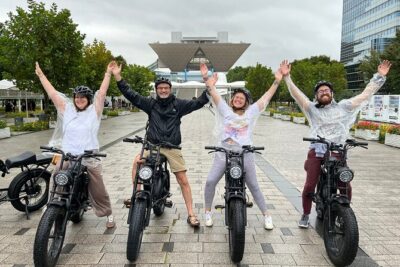
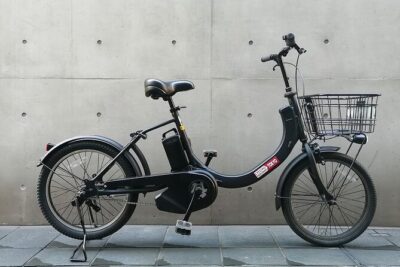
3h Tokyo E-Bike Tour: Hidden Gems, and Local Life with guide
Read our review →
Arashiyama Bamboo Forest & Hidden Gems Bike Tour (Early Bird)
Read our review →
5 Top Highlights of Kyoto Full Day Bike Tour (E-bike option)
Read our review →
Hiroshima 2hr Peace Cycling Tour with Local Guide
Read our review →
5-Hour Osaka Bike Tour to the Neighborhood of Osaka Castle
Read our review →Browse the lists this tour appears in