
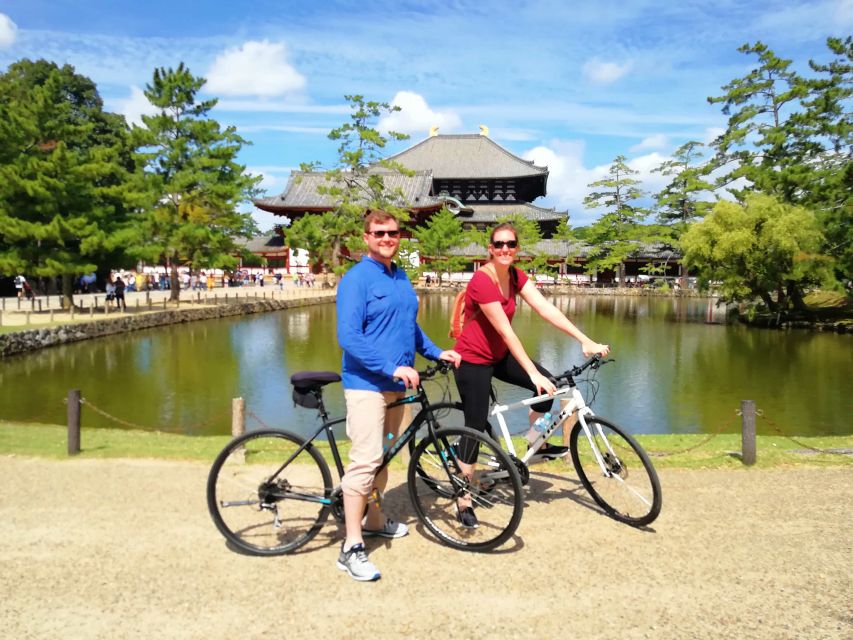
Reviewed · CYCLING AND E-BIKE TOURS
Nara: City Highlights Shared Group or Private Bike Tour
Quiet lanes, famous temples, friendly deer. Nara becomes easier to read from a bicycle, and this three-hour tour links the city’s major sights with a few calmer corners. I like the relaxed pace and the chance to cover more ground than you would on foot. I also like the mix of Buddhism, Shinto, local history, and Japanese cutlery. The main drawback is the meeting point, which sits away from the central stations and may require a bus or taxi.
The ride is not a race, but it is still a working tour. You may finish tired, especially after a few climbs, though the route is considered manageable by riders who are reasonably comfortable on a bicycle. Guide Robert earned particular praise for his clear information and friendly manner, while the bikes themselves were described as good and well kept.
In This Review
- Key reasons to consider this Nara bike tour
- Why a bicycle works so well in Nara
- Meeting the guide near Toichi Shougakko
- Ukimido and the first 30 minutes on two wheels
- Nara Park, deer, and the city’s open-air welcome
- Nandaimon Gate and the scale of Tōdai-ji
- Tōdai-ji’s giant Buddha and the Buddhist context
- Kikuichi and the practical side of Japanese craft
- Kasuga Taisha and the thousand lanterns
- The final 20 minutes back through Nara Park
- What the $70 price includes
- Who will enjoy this ride most
- Should you book the Nara bike tour?
- FAQ
- How long does the Nara bike tour last?
- How much does the tour cost?
- What sights does the tour visit?
- Are bicycles and helmets provided?
- Are entrance fees included?
- Where does the tour begin?
- Is hotel pickup included?
- What languages are available?
- Can one person book the tour?
Key reasons to consider this Nara bike tour
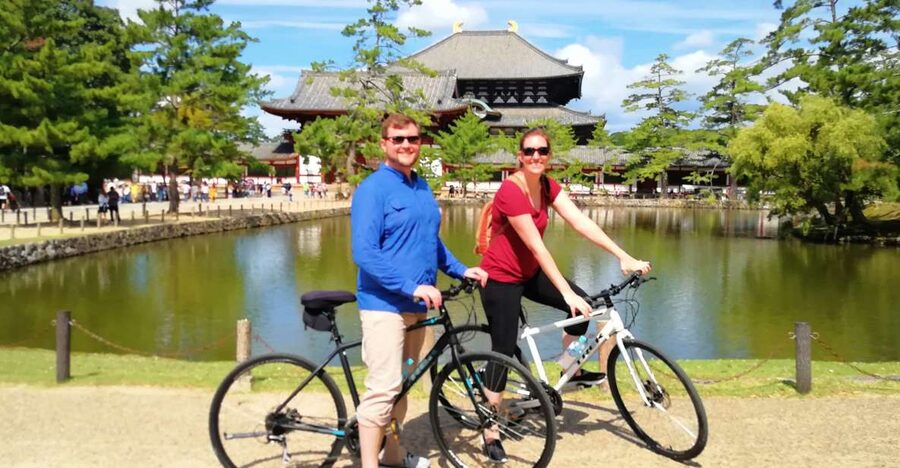
- You see Nara’s major sights in three hours: The route includes Ukimido, Nara Park, Nandaimon Gate, Tōdai-ji, Kikuichi, and Kasuga Taisha.
- The tour reaches quieter areas: Cycling helps you move beyond the busiest paths and see parts of Nara that are easy to miss on foot.
- Tōdai-ji is more than a photo stop: Your guide explains Buddhism and Shinto before you meet the enormous Buddha inside the temple complex.
- The ride is gentle but not effortless: The pace is relaxed, yet a few climbs and several walking stops make comfortable clothing and shoes important.
- Japanese knife culture adds an unusual stop: Kikuichi gives the tour a practical local angle, with high-end cooking knives and traditional craft.
- The starting point needs planning: The bike base is near the Toichi Shougakko bus stop, not directly beside JR Nara Station or Kintetsu Nara Station.
Why a bicycle works so well in Nara
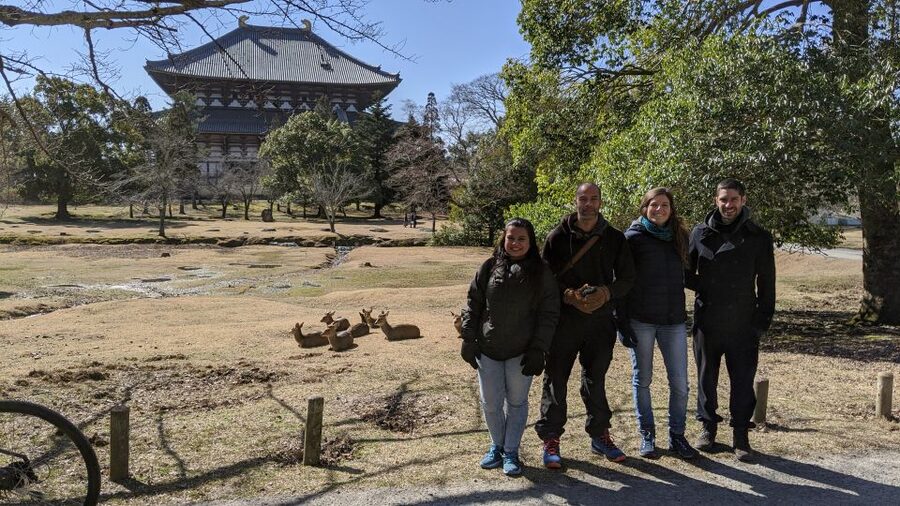
Nara’s sights are spread across a large area. You can walk between them, but the distances add up quickly, especially when you want to see both Tōdai-ji and Kasuga Taisha in the same morning or afternoon.
A bicycle gives you a useful middle ground. You are moving faster than a pedestrian, but slowly enough to notice the park, deer, old roads, and changing views. You are not sealed inside a vehicle, and you do not spend the whole outing waiting for transport.
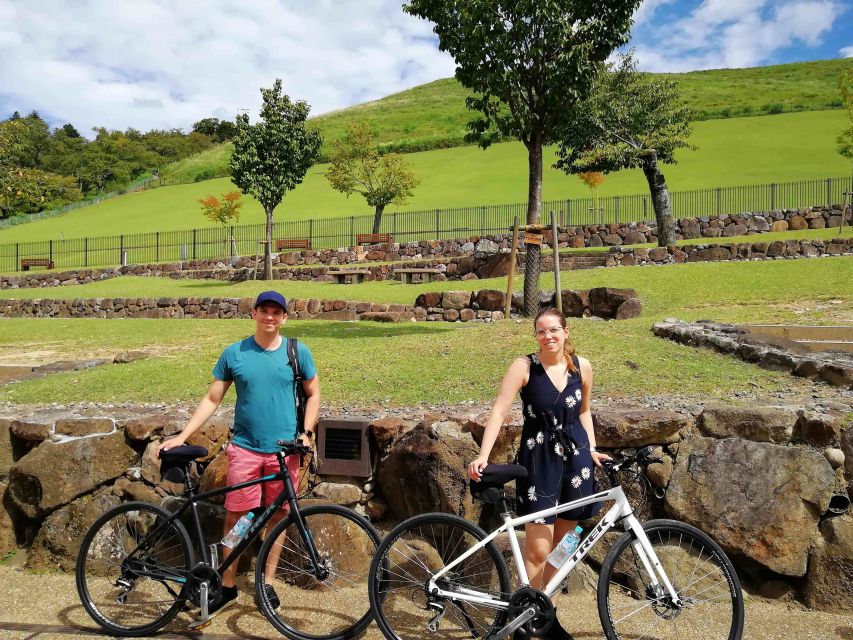
The guide begins with a short introduction and safety briefing. You receive a bicycle, helmet, and bottle of water, then set off at an easy pace. The group can be shared or private, and the guide speaks English, French, or Japanese.
I would describe this as an active sightseeing tour rather than a serious cycling excursion. The emphasis is on seeing Nara and understanding its religious and cultural landmarks, not on speed or distance. Still, you should be comfortable getting on and off a bicycle, riding for several hours, and walking around temple and shrine grounds.
More Bike Tours in Nara:
- E-Bike Nara Highlights – Todaiji, Knives, Deer, Shrine
★ 4.8 · 186 reviews - Nara – Highlights Bike Tour
★ 4.5 · 89 reviews - Nara: Bike Tour in Ancient Capital UNESCO World Heritage
★ 5.0 · 43 reviews
Meeting the guide near Toichi Shougakko
The meeting point is by the bike base near the Toichi Shougakko bus stop, written in Japanese as 東市小学校. Search for Japan Tour Adventure in Nara on Google Maps to locate it.
This is the part of the arrangement that deserves the most attention. The base is not especially convenient for first-time visitors arriving at JR Nara Station or Kintetsu Nara Station. A bus or taxi may be needed, and the extra trip adds time and cost before the tour even begins.
Use the operator’s bus directions video if you are coming from either station. I would not leave this detail until the morning of the tour. Check the route beforehand, allow extra time, and make sure you know which station you are starting from.
Once you reach the base, the process sounds simple: meet the guide, receive your bike and helmet, listen to the safety briefing, and begin. The tour returns to the same location at the end, so you do not need to work out a second pickup point.
Ukimido and the first 30 minutes on two wheels
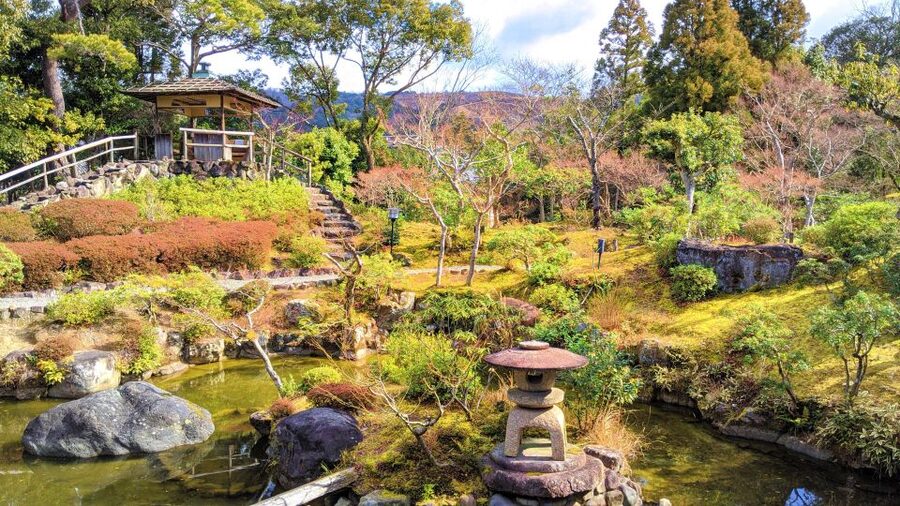
The first major riding section takes you to Ukimido, with about 30 minutes of cycling. This gives you time to settle into the bike before the sightseeing stops become more substantial.
Ukimido is a pleasant early introduction to Nara’s park setting. The route is designed for views and orientation, rather than a long stop packed with facts. You get a feel for the open surroundings and begin to understand how Nara’s religious buildings sit within its wooded parkland.
This opening section also lets you judge the physical demands. The pace is described as relaxed, but the route includes some climbs. If you are not used to cycling, take the first section slowly and tell the guide if you need an easier pace.
You will want comfortable clothing, shoes, and a camera. Bring water and food if you need a snack, though a bottle of water is included. Food and other drinks are not included.
Nara Park, deer, and the city’s open-air welcome
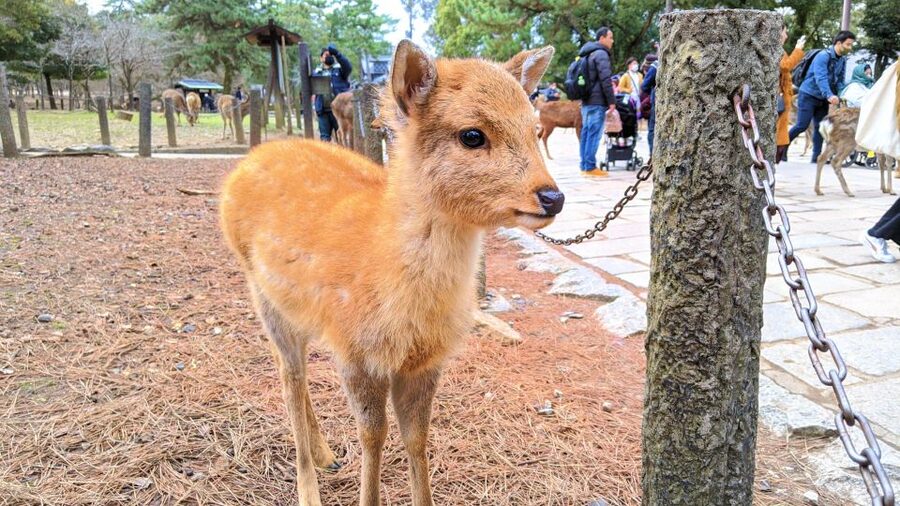
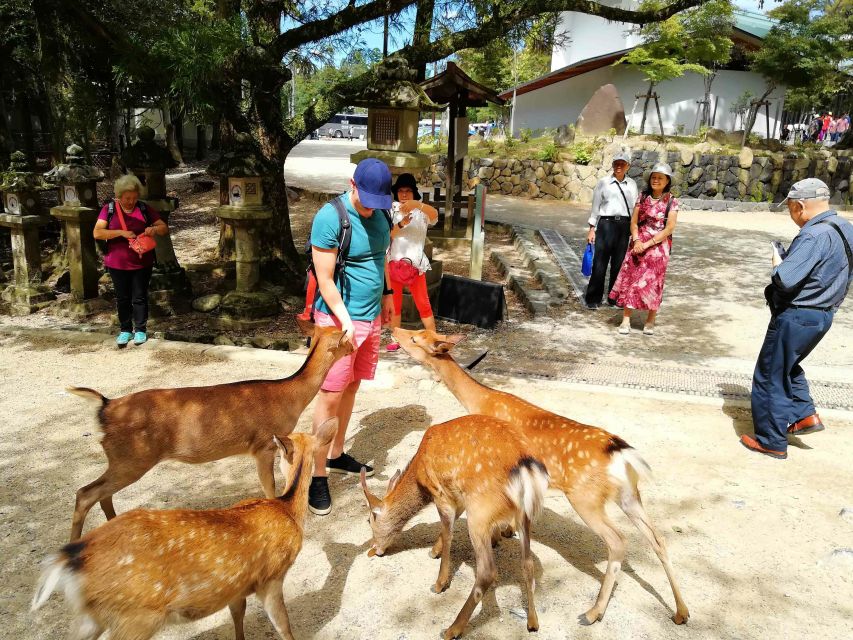
The ride through Nara Park lasts about 30 minutes, followed by another park section later in the route. Here you can expect the familiar Nara scene: maintained park grounds, broad views, and deer moving freely around the paths.
The deer are one of Nara’s great pleasures, but they also make this part less predictable than a normal city ride. Pay attention as you cycle, slow down near wildlife, and follow the guide’s instructions. The park is a place to look around, not simply a road connecting one temple to the next.
One advantage of cycling is that you can see more of the park without turning the day into a long march. You also get short changes of scenery between the major monuments. A guide can point out details as you go, and the ride gives the day a more local rhythm than a simple sequence of entrance gates.
The park is also where the tour’s balance becomes clear. You are sightseeing, but you are not sitting still all day. Several people found the activity physically manageable, while one participant noted feeling tired by the finish. Plan on both cycling and walking, not a purely easy transport experience.
More Sightseeing Tours in Nara:
- Mount Fuji & Hakone – Lake Ashi Torii Gate, Hakone Shrine, Hakone Pirate Ship, Hakone Ropeway, Owakudani, Lake Yamanaka & Oshino Hakkai Day Trip: Sea, Land, and Air Panoramic Tour from Tokyo
★ 4.8 · 7,989 reviews - Tokyo: Private City Highlights Tour with Local Guide
★ 4.8 · 1,433 reviews - Tokyo Private Sightseeing Tour by Car- English speaking chauffeur
★ 5.0 · 1,004 reviews - Naha: North Okinawa Sightseeing Tour & Churaumi Aquarium
★ 4.4 · 472 reviews
Nandaimon Gate and the scale of Tōdai-ji
The next key stop is Nandaimon Gate, with around 20 minutes for photographs, a visit, and a walk. This is an excellent point to pause before entering the main temple area.
Nandaimon is imposing even before you reach the main hall. Its scale prepares you for Tōdai-ji, one of Nara’s defining sights. The gate also gives your guide a natural place to explain the religious setting and the role of the temple within Japanese Buddhism.
The stop is not rushed into a quick photograph from the bicycle. You get time to walk and look carefully. That matters here because the architecture is large enough to overwhelm you if you only glance at it while passing through.
The temple grounds can be busy, especially around the most famous paths, but cycling helps you arrive with a better sense of the surrounding area. You are not simply following a station-to-temple route. You have already seen the park and the approaches that frame the temple.
Tōdai-ji’s giant Buddha and the Buddhist context
Tōdai-ji receives about 45 minutes, making it the longest stop on the route. That is appropriate. The temple’s main attraction is the enormous Buddha statue, described as roughly 15 meters tall, but the visit is more rewarding when you understand what you are looking at.
Your guide discusses Buddhism and Shinto culture, helping separate two traditions that can otherwise blur together for first-time visitors. Nara is a useful place to learn this distinction because temples and shrines sit close together, yet they serve different religious roles.
Inside Tōdai-ji, the Buddha’s size does the immediate work. You do not need much imagination to understand why the statue has such a strong effect. Give yourself time to look up, take in the surrounding hall, and notice how the building’s scale supports the image inside.
The stop includes sightseeing and walking, so expect to leave the bike parked while you explore. Entrance fees are included, which makes the visit easier than arranging each admission separately. Your guide adds value here by giving context rather than simply pointing out the statue and moving on.
If Tōdai-ji is high on your Nara list, this tour gives it enough time to feel like a proper visit. If you prefer long, unhurried temple visits, the fixed schedule may feel short, since other stops still need to fit into the three-hour route.
Kikuichi and the practical side of Japanese craft
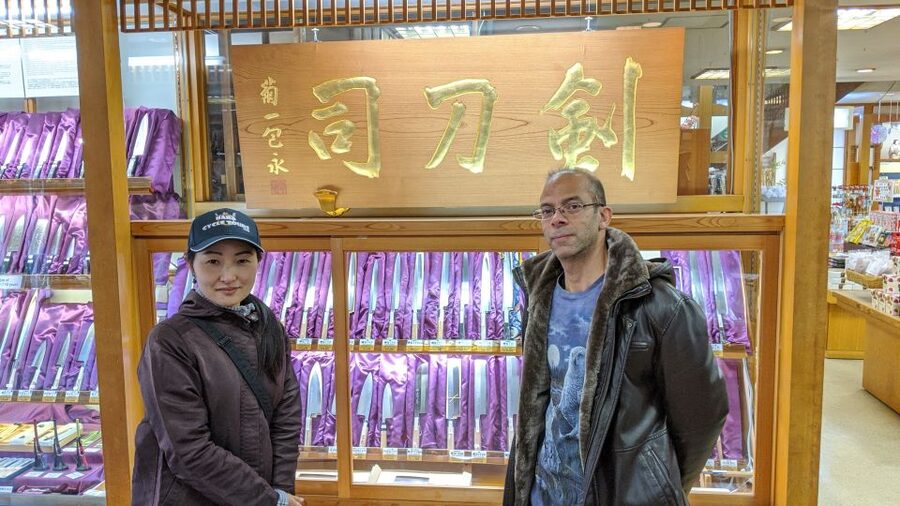
The visit to Kikuichi takes about 30 minutes. Kikuichi is a high-end Japanese cooking knife retailer, and this stop changes the subject from religion and architecture to craftsmanship and everyday food culture.
That shift is one of the tour’s best features. Nara is not only temples, deer, and old stories. Japanese knives connect tradition with modern daily life, and the shop offers a look at a specialized craft that many visitors would not think to seek out.
You have time for shopping and to view the arts and crafts. This is not presented as a food tasting, and food and drinks are not included. If you are interested in cooking, the stop may be especially useful. If you are not shopping, you can still treat it as a short cultural visit, but it may hold less appeal than the temples.
The stop also gives your legs a break from continuous riding. After Tōdai-ji, a brief indoor visit can be welcome before the route continues toward Kasuga Taisha.
Kasuga Taisha and the thousand lanterns
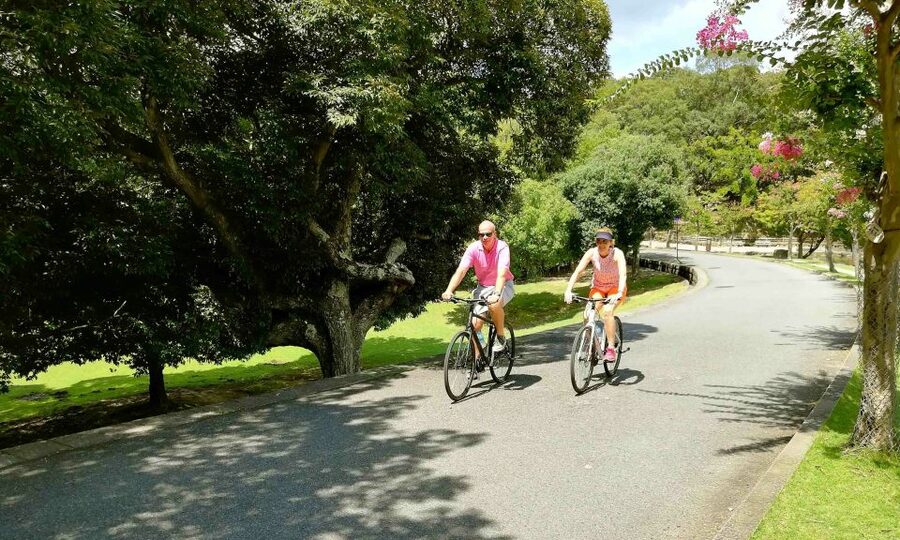
Kasuga Taisha receives about 30 minutes for a visit, free time, photographs, and scenic views along the way. The shrine is known for its many lanterns, which give the grounds a very different mood from the immense Buddhist temple you have just seen.
This is where the guide’s explanation of Shinto becomes especially useful. You can compare the atmosphere, architecture, and religious customs with what you saw at Tōdai-ji. The tour does not treat Nara as a collection of isolated attractions. It links the sites so the contrasts become part of the lesson.
The lanterns are the visual hook, but do not rush past the surrounding paths. The route includes scenic views, and the shrine’s setting is part of its appeal. You may find this stop quieter than the central approach to Tōdai-ji, though the schedule still gives you only about half an hour.
Free time is built in, which gives you a little freedom to look at the details that interest you most. Keep an eye on the clock, since the group needs to return to the bicycles and complete the final park ride.
The final 20 minutes back through Nara Park
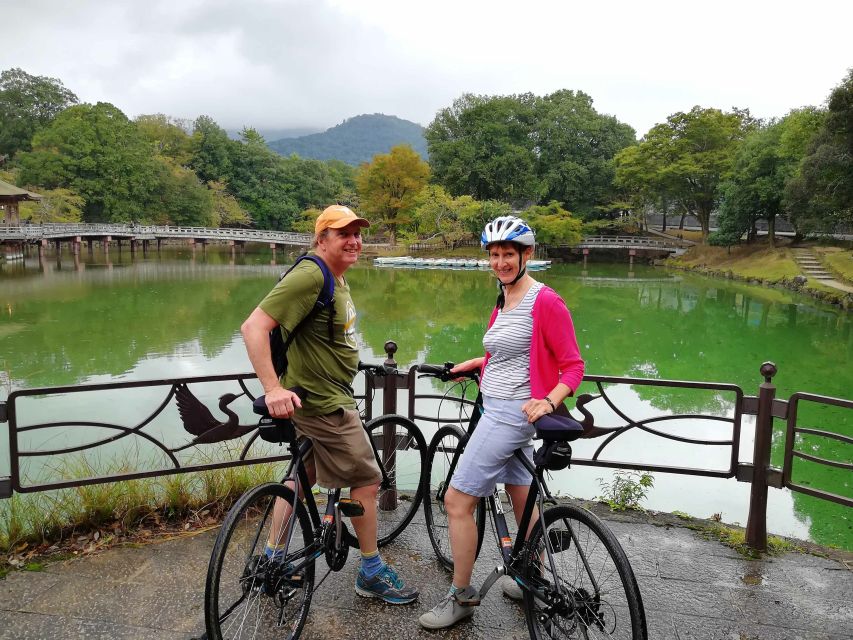
The return section takes about 20 minutes by bicycle. By now, you will have seen the park from several angles, visited the city’s biggest religious sights, and had a chance to browse Japanese knives.
This final ride is not a separate attraction so much as a useful closing stretch. You return to the bike base with the guide, rather than ending at a temple and needing to find your way back alone.
Expect to feel pleasantly worn out. The tour covers a lot in 210 minutes, and the combination of riding, climbs, temple walks, shrine grounds, and standing at major sights can add up. That is part of the value, but it also means this is not the best choice if you want a completely restful afternoon.
What the $70 price includes
At $70 per person, the tour is priced above a simple bicycle rental, but the comparison is not quite fair. You are paying for the bike, helmet, guide, entrance fees, and water, along with a planned route connecting several major sights.
The guide is the main reason the price can make sense. Without one, you could still cycle around Nara Park, but you would need to plan the route, find the entrances, understand the religious differences, and organize your own timing. The tour also takes you to Kikuichi, a stop that may not appear on a standard self-guided route.
The value is strongest if you have only a short time in Nara and want a structured introduction. You see a lot in one session, including quieter areas that can be missed by people who stay close to the station and main park paths.
The value is weaker if you already know Nara well, dislike fixed schedules, or only want to visit Tōdai-ji at a slow pace. You are also responsible for reaching the starting point, and that transport is not included.
Who will enjoy this ride most
I would recommend this tour to you if you want a lively introduction to Nara and are comfortable cycling. It suits people who like mixing major sights with local details, and it works well for a first visit when you want a guide to explain what you are seeing.
It is also a good choice for couples, families with older children who can ride confidently, and small groups that want a private option. English, French, and Japanese guiding makes it accessible to a range of visitors.
You should think twice if you have mobility impairments, use a wheelchair, or do not feel safe riding a bicycle. This tour combines cycling with walking and cannot accommodate wheelchair users.
The weather policy is worth noting. If the Japan Meteorological Agency forecast gives more than a 60 percent chance of rain, the tour may be canceled. The operator sends notice the evening before, so check your email that night and keep a backup plan for Nara.
A single person can book, but the tour requires at least two participants for the session to operate. If nobody else joins, you may be offered another date or a full refund.
Should you book the Nara bike tour?
Book it if you want to cover Nara’s headline sights efficiently, learn the difference between Buddhist and Shinto sites, and add a useful craft stop to the usual deer and temple route. The strong 4.9 rating from 34 reviews reflects the tour’s clearest strengths: good bicycles, friendly guides, manageable physical effort, and a route that reaches quieter areas.
I would be especially happy to choose it for a first visit or a tight schedule. Just plan the journey to the bike base carefully, allow for some hills, and expect to work a little for the reward. If those conditions suit you, this is a practical and enjoyable way to get a broad, well-explained look at Nara in half a day.
FAQ
How long does the Nara bike tour last?
The tour lasts three hours, or 210 minutes.
How much does the tour cost?
The listed price is $70 per person.
What sights does the tour visit?
The route includes Ukimido, Nara Park, Nandaimon Gate of Tōdai-ji, Tōdai-ji, Kikuichimonjushirokanenaga honten, and Kasuga Taisha.
Are bicycles and helmets provided?
Yes. The tour includes a bicycle and helmet.
Are entrance fees included?
Yes, all entrance fees for the tour are included.
Where does the tour begin?
Meet the guide at the bike base near the Toichi Shougakko bus stop, written as 東市小学校. Search for Japan Tour Adventure in Nara on Google Maps.
Is hotel pickup included?
No. Hotel pickup and drop-off are not included, so you need to reach the meeting point yourself.
What languages are available?
The live guide is available in English, French, and Japanese.
Can one person book the tour?
A single person can book directly, but the tour requires a minimum of two participants to operate. If the minimum is not reached, rescheduling or a full refund may be offered.
Just added in Nara
- Hammer a Pattern on Your Ring Workshop★ 5.0 · 57 reviews
- All must-sees in 3 hours – Nara Park Classic Tour! From JR Nara!★ 5.0 · 108 reviews
- Nara Private Tour: Flexible Pickup from Kyoto, Osaka, or Nara★ 5.0 · 17 reviews
- Private Nara Tour and Sake Tasting (Departing from Kyoto/Nara)★ 5.0 · 40 reviews
- Nara Sake Tasting Tour at Local Brewerie(tasting fee included)★ 5.0 · 12 reviews
- Nara World Heritage PRIVATE TOUR★ 4.5 · 15 reviews
- Nara Highlight Walking Tour with Furoshiki Experience with Lunch★ 5.0 · 73 reviews
- Nara – Highlights Bike Tour★ 4.5 · 89 reviews
Cycling and E-Bike Tours, compared.

3h Tokyo E-Bike Tour: Hidden Gems, and Local Life with guide
Read our review →
Arashiyama Bamboo Forest & Hidden Gems Bike Tour (Early Bird)
Read our review →
5 Top Highlights of Kyoto Full Day Bike Tour (E-bike option)
Read our review →

Hiroshima 2hr Peace Cycling Tour with Local Guide
Read our review →Browse the lists this tour appears in