
Reviewed · CYCLING AND E-BIKE TOURS
Nara: Bike Tour in Ancient Capital UNESCO World Heritage
Nara has a quieter side. This two-hour bike tour takes you beyond the deer and crowds of Nara Park, into the wide-open grounds of the former Heijo Palace. I love the easy pace and the way a bicycle lets you cover a large UNESCO World Heritage site without turning the morning into a long walk. I also like the mix of gardens, archaeology, palace buildings, and calm water.
The main consideration is that the palace site is spread out and partly reconstructed. If you want a packed parade of original buildings, you may find some areas modest. But with guide Kay explaining what once stood here, the open spaces become much easier to understand. Summer heat can also make cycling less comfortable.
In This Review
- Key points at a glance
- Why Heijo Palace matters to your Nara visit
- Starting at Suzaku Gate
- To-in Garden and the roots of Japanese garden design
- Archaeology without a glass case
- A quiet ride around Minakami Pond
- Hishiage Ancient Tomb and its grave goods
- Inside the First Daigokuden
- The southern gate and the oldest palace museum
- Traditional Tenpyo costume and photographs
- What the two hours feel like
- Guide quality and family appeal
- Price, access, and practical planning
- Who should book this Nara bike tour?
- Should you book it?
- FAQ
- How long does the bike tour last?
- Where is the meeting point?
- What is included in the price?
- Is the tour offered in English?
- How many people are in the group?
- What happens if the weather is severe?
Key points at a glance
- Ride through the former capital: Cover Heijo Palace’s broad grounds by bicycle rather than walking between far-flung sights.
- Meet guide Kay: Her friendly English explanations and patience with children are a major part of the experience.
- See archaeology in place: The Excavation Site Exhibition Hall preserves remains exactly where they were found.
- Slow down by Minakami Pond: This peaceful stop brings birds, ducks, turtles, and a welcome break from formal monuments.
- Try Tenpyo clothing: The traditional Nara-period costume experience adds a memorable photo opportunity.
- Small-group value: With no more than eight people, you can ask questions and keep the pace comfortable.
Why Heijo Palace matters to your Nara visit
Nara is often reduced to friendly deer, lantern-lined paths, and the famous temples near the park. Those sights deserve their place, but the former Heijo Palace tells a different story. This was the setting for Nara, Japan’s capital during the Nara period, and the palace grounds show how government and court life once worked.
The site is not a single compact ruin. It is a large area of lawns, reconstructed buildings, archaeological remains, gardens, museums, and ponds. That size is exactly why the bicycle helps. You can move from one part to another without spending most of your two hours on foot.
I like this tour as an early introduction to Nara’s past. Kay’s role is not simply to point at buildings. She connects the gates, gardens, ceremonial halls, tiles, wooden tablets, and excavation pits so you can picture the former capital as a working city.
The group limit of eight is useful here. You are not lost in a large crowd, and you have room to stop for questions or photographs. Several family groups found the pace suitable for a six-year-old, although every child must be comfortable riding a bicycle.
More Bike Tours in Nara:
- E-Bike Nara Highlights – Todaiji, Knives, Deer, Shrine
★ 4.8 · 186 reviews - Nara – Highlights Bike Tour
★ 4.5 · 89 reviews - E-Bike Nara Highlights – Todaiji, Knives, Deer, Shrine, and Gems
★ 4.5 · 34 reviews
Starting at Suzaku Gate
Meet at the rental bike reception counter inside Miharashi-Kan in Suzaku Gate Square. Arrive 10 minutes before departure so there is time to get organized before the ride begins.
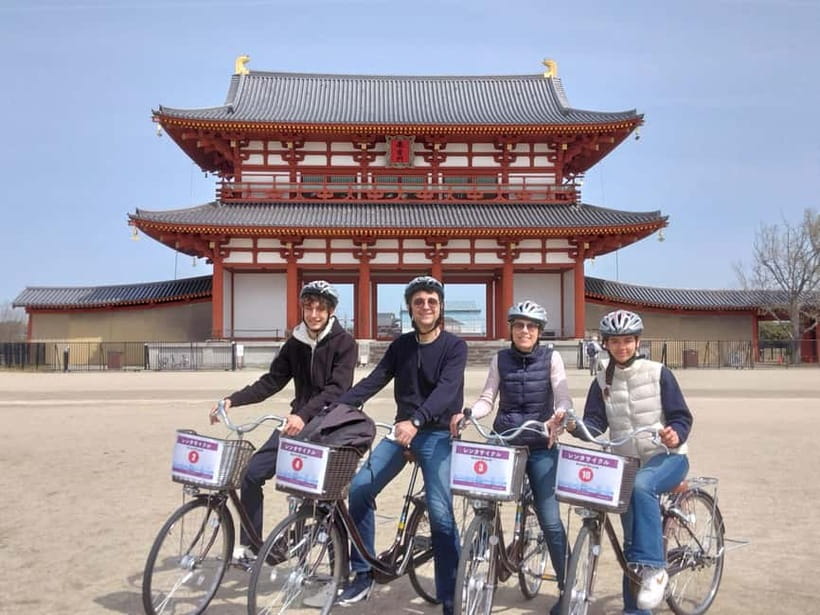
Suzaku Gate, or Suzaku-mon, was the grand main entrance to Heijo Palace. It makes a strong opening stop because it gives you an immediate sense of scale. The gate is a reconstructed landmark, but its broad approach and open setting help you understand how visitors would have entered the palace complex.
You will have about 15 minutes here for photographs, sightseeing, and an introduction to the Nara period. The surrounding nature gives the first part of the tour a relaxed feel. You are not rushing from one indoor room to another.
This is also a useful place to listen closely to the guide. The palace grounds can look like a series of isolated sites if you explore them alone. The background explanation turns the wide spaces into part of a planned imperial center.
To-in Garden and the roots of Japanese garden design
The next stop is To-in Garden, also called the East Palace Garden. Allow about 10 minutes to look around and hear how the garden functioned as a state guest area.
I enjoy this stop because it shifts the focus from power and ceremony to design. You can study the arrangement of bridges, buildings, water, and rocks, and consider how the garden was used to receive important visitors. It is a compact lesson in how Japanese garden traditions took shape.
The garden is a photo-friendly pause, but it is not the longest stop. If you are passionate about garden design, you may wish you had more time. The benefit is that the short visit keeps the tour moving and leaves room for several other parts of the palace grounds.
Archaeology without a glass case
The Excavation Site Exhibition Hall is one of the most unusual stops. Instead of moving artifacts into a polished display, the museum preserves and presents remains in the same place where they were uncovered.
That approach gives the site a practical, almost worksite-like quality. You can see how archaeologists investigate the old capital, rather than only viewing finished objects in a conventional museum. I find this especially helpful if you are curious about how historians know where buildings, roads, and palace features once existed.
The visit lasts about 10 minutes. It is brief, but the guide can explain what you are looking at and why the excavation matters. Without that context, exposed holes and foundations can be hard to read. With it, the ground itself becomes part of the story.
A few more options to weigh up in Nara
- World Heritage Kyoto & Nara Uji Authentic Matcha Experience
★ 5.0 · 1,573 reviews - Nara Half Day Trip Walking Tour (Private Option Available)
★ 5.0 · 937 reviews - Nara Early Morning Tour (Kyoto or Osaka Departure Available)
★ 5.0 · 676 reviews - Osaka: Nara and Uji Day Trip with Deer Park and Hot Spring
★ 4.4 · 302 reviews
A quiet ride around Minakami Pond
The ride around Minakami Pond, also called Mizukami Pond, is the tour’s most restful section. You can feel the breeze, hear birds, and sometimes see ducks and turtles near the water.
After several historical stops, this slower stretch gives your mind a break. It also shows why a bicycle is a good choice for this part of Nara. You are not merely transferring between attractions. You are moving through the grounds at a gentle pace and noticing the ordinary sounds of the place.
The pond is a good fit for families and anyone who wants a calm morning away from the busiest parts of Nara. It is not a major monument, so people seeking constant architectural drama may find it simple. I see that simplicity as part of the appeal.
Hishiage Ancient Tomb and its grave goods
Hishiage Ancient Tomb adds an archaeological layer that is different from the palace buildings. Here, the focus is an ancient burial site and the objects associated with it.
The stop lasts about 10 minutes and gives the guide a chance to discuss burial customs and the material remains connected with the tomb. It helps broaden your view of Nara’s past. The area was not only a place for rulers and official ceremonies. It also reflects older traditions of status, burial, and belief.
Do not expect a huge underground tomb visit. The appeal is the chance to see an ancient burial feature within the wider palace area and understand how the pieces fit together.
Inside the First Daigokuden
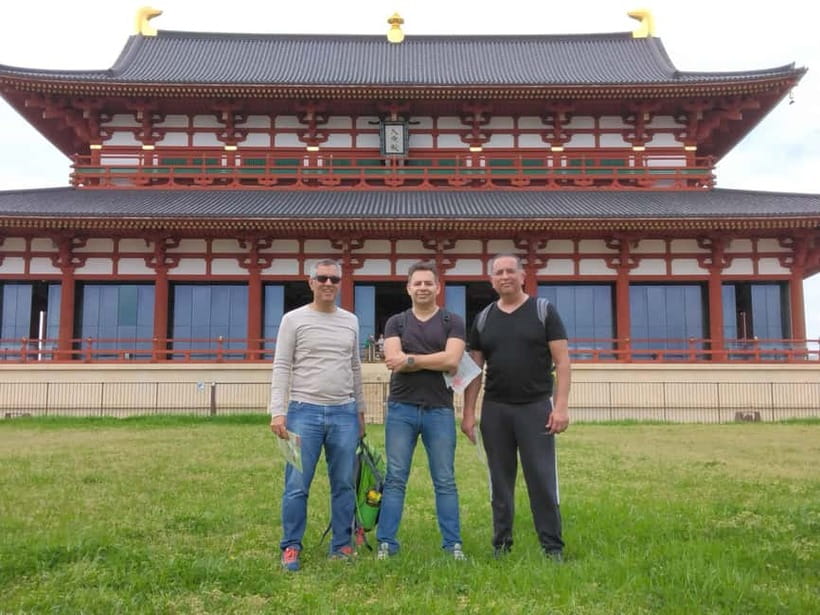
The First Daigokuden, or Imperial Audience Hall, is the tour’s grandest reconstructed building. It was used for special ceremonies, so it represents the formal side of the Nara-period court.
Inside, you can look at paintings, ornaments, and other displays while the guide explains the building’s role. The scale and decoration provide a useful contrast with the excavation areas. One shows what archaeologists find in the ground. The other suggests how the palace may have looked when ceremonies took place.
The reconstructed nature of the building is worth keeping in mind. You are not entering an untouched eighth-century hall. Still, reconstruction can help you grasp proportions, decoration, and ceremonial purpose in a way that a foundation alone cannot.
A particularly useful feature is the view across the palace grounds. From here, you can better see how the main buildings relate to the surrounding open area. It is one of the best points for a photograph and for getting your bearings.
The southern gate and the oldest palace museum
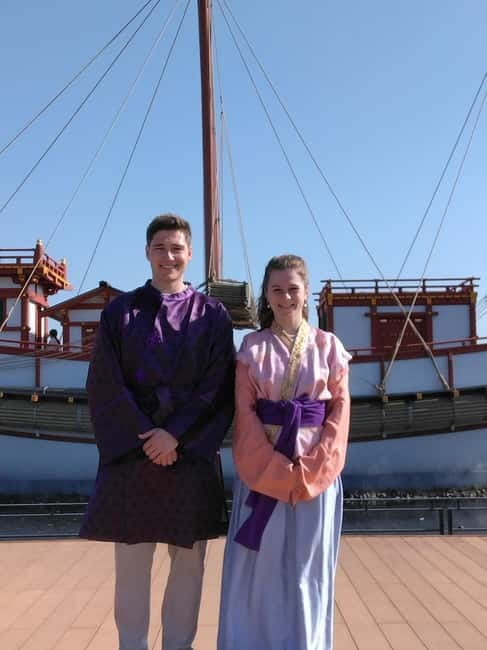
The tour then pauses briefly at the Daigokumon, the southern gate of the First Daigokuden area. This five-minute stop is mainly about the gate’s position, appearance, and role in the ceremonial approach.
After that, you visit the Heijo Palace Site Museum, described as the oldest museum at the palace site. The collection includes ancient roof tiles, wooden tablets, and models.
This museum is valuable because small objects often explain a place better than a large reconstruction. A roof tile can show building practices. A wooden tablet can hint at administration and daily work. A model can make the palace plan easier to understand when the real site is spread across open ground.
You spend about 10 minutes here. That is enough for an introduction, though anyone with a strong interest in archaeology may want to return later at a slower pace. The bike tour gives you a broad overview rather than a long museum study.
Traditional Tenpyo costume and photographs
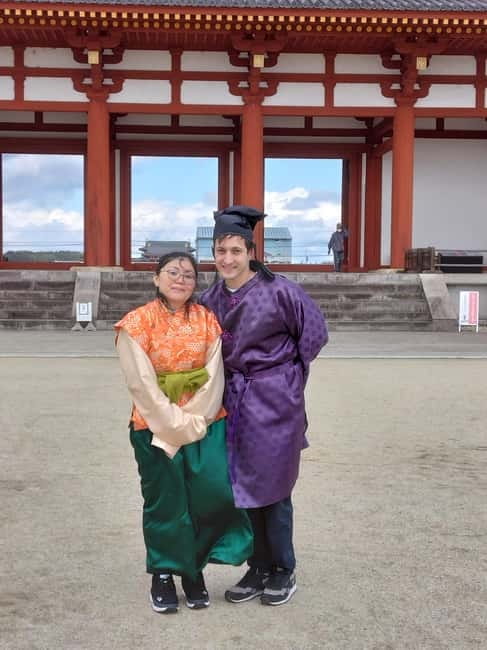
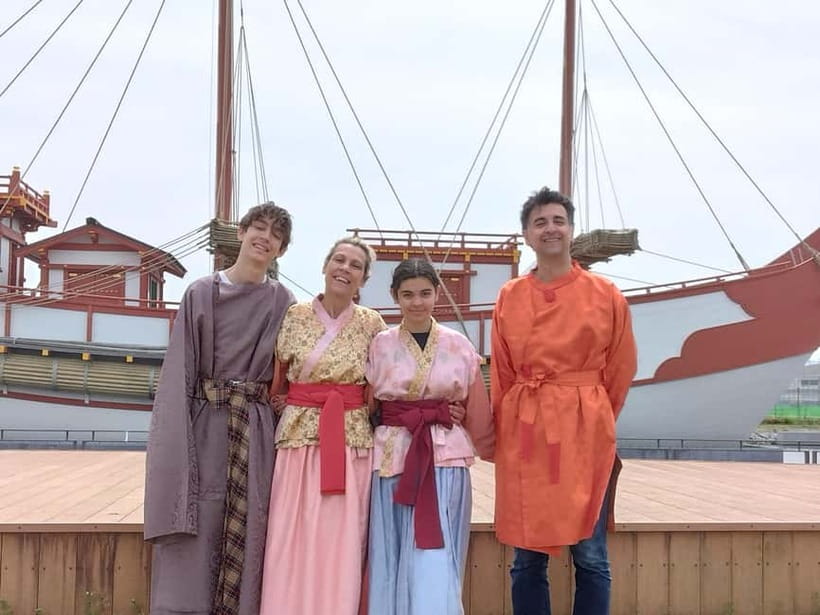
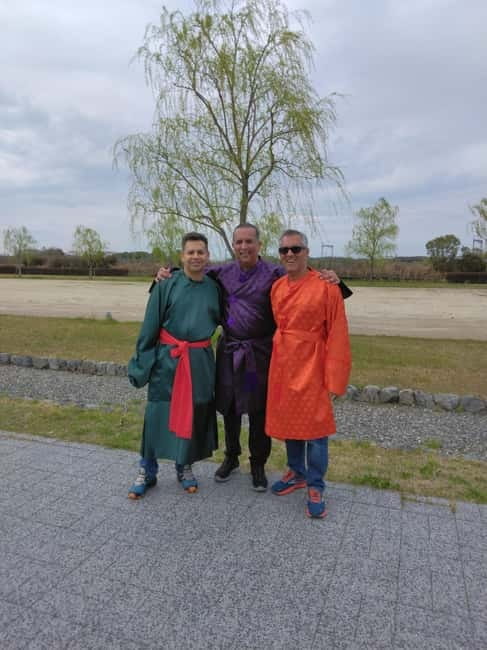
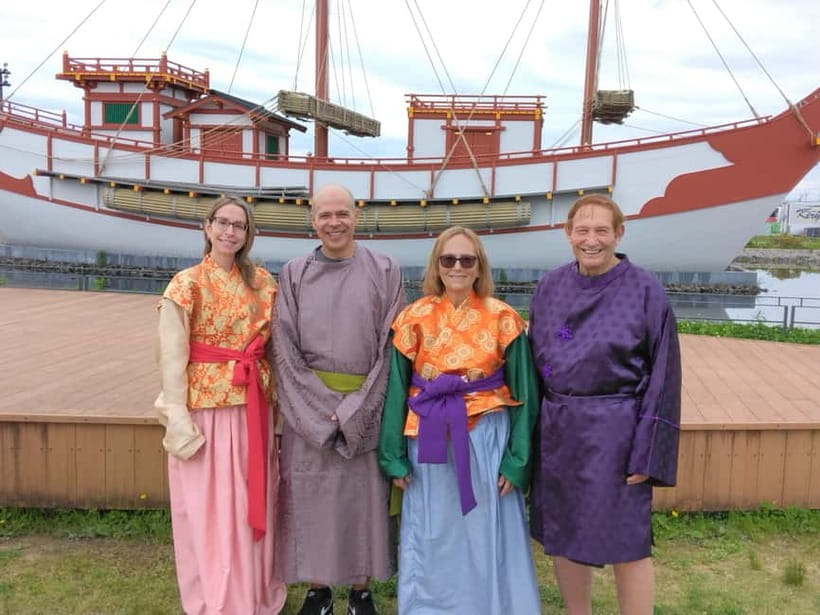
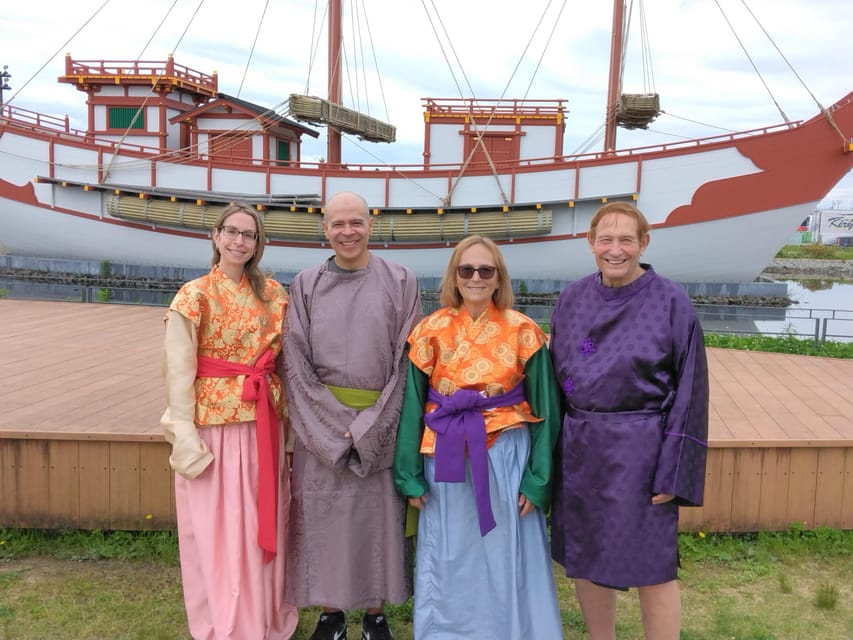
The experience includes a chance to wear traditional Tenpyo clothing, linked to the Nara period, and take photographs. This adds a lighter, more personal moment to a tour that otherwise leans toward archaeology and history.
I like the costume option because it gives you a physical connection to the period. You are not only looking at palace remains and museum objects. You get a playful photo to remember the visit by.
The supplied schedule does not assign a separate time for the costume experience, so the exact timing may depend on the day’s flow. If this is important to you, ask the guide when you meet. It is best viewed as an included extra, not the main reason to book the tour.
What the two hours feel like
The route includes many stops, but the timing is sensible for an overview: 15 minutes at Suzaku Gate, 10 minutes at To-in Garden, 10 minutes at the excavation hall, 10 minutes at Hishiage Tomb, 15 minutes at the audience hall, five minutes at the southern gate, and 10 minutes at the palace museum.
That leaves time for cycling between locations, getting settled, and taking photographs. The pace is active without being a race. Kay has also adjusted the timing for groups who needed a little more patience, including families and people who wanted extra explanations.
At only two hours, you should not expect a detailed examination of every display. The value comes from seeing the major parts of the site in one outing and learning how they connect. If you later want more museum time, you can return on your own.
The bicycles are particularly helpful because the palace grounds are large. One five-star experience described the ride as the only practical way to see so much during the allotted time. That is a fair assessment. Walking the same route would make the day slower and less flexible.
Guide quality and family appeal
The strongest part of this experience is the guide service. Kay is repeatedly praised for clear English, warmth, patience, and a strong grasp of Nara’s past. She answers questions, gives useful context at each stop, and leaves room for photographs.
Families should pay attention to the feedback about six-year-olds. Kay has been especially patient with young children, and the tour length worked well for several families. Children who like collecting stamps, spotting ducks and turtles, or taking costume photographs may find more to enjoy here than they would in a long temple lecture.
This is also a good option for couples. One couple took the tour during a honeymoon and found the ride around the palace grounds both peaceful and interesting. Small groups make the experience feel personal without requiring the commitment of a private tour.
The tour is offered in English or Japanese. If your English is limited, the English tour may still work for basic sightseeing, but the amount you gain from the history depends on how comfortably you follow spoken explanation.
Price, access, and practical planning
At $22 per person, this is a strong value. The price includes the rental bicycle, helmet, guide, admission fees, the cycling experience, and traditional costume use. You are paying for transport around a broad heritage site as well as interpretation at the major stops.
Bike insurance is not included, and food and drinks are also your responsibility. There is no hotel pickup. You need to reach Miharashi-Kan in Suzaku Gate Square yourself.
From Kintetsu Nara Station, the bus ride to Suzakumon-hiroba-mae takes about 16 minutes, followed by a five-minute walk north. From Kintetsu Yamato-Saidaiji Station, the bus takes about 10 minutes, with the same five-minute walk. From JR Nara Station’s West Exit, the bus ride takes about 10 minutes, followed by the five-minute walk.
You can also walk about 20 minutes from the South Exit of Kintetsu Yamato-Saidaiji Station or about 20 minutes from Shin-Omiya Station. Use the meeting coordinates, 34.68628944048124, 135.7926401146025, if you want to confirm the location before leaving.
Book with the weather in mind. Heavy rain, storms, or other severe conditions can lead to cancellation with a full refund. If you cancel at least 24 hours ahead, you can also receive a full refund. Missing the start or arriving too late without notice is not refundable, so plan to be at the rental counter 10 minutes early.
Who should book this Nara bike tour?
I would choose this tour if you want Nara’s political and archaeological past rather than another deer-focused outing. It suits first-time visitors who want a clear introduction, families seeking a manageable activity, and repeat visitors looking for a quieter part of the city.
It is also a good match for anyone who likes variety. In two hours, you get a gate, garden, excavation hall, pond, tomb, ceremonial hall, southern gate, museum, and costume photographs. Few walking tours can cover that much ground so comfortably.
You should think twice if you cannot ride a bicycle, are pregnant, use a wheelchair, or have a visual impairment, since the experience is not suitable for those needs. You may also prefer another activity if you want only original ruins or dislike cycling in hot weather.
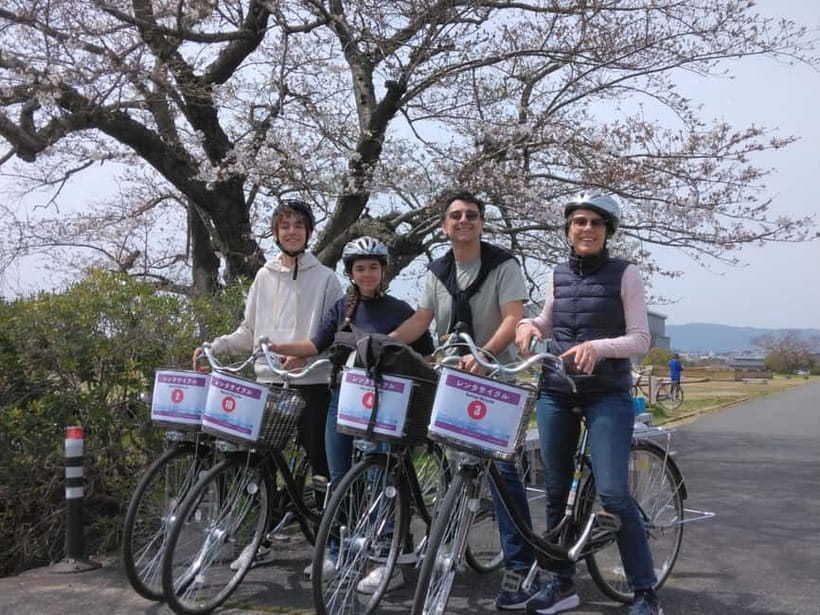
August can be especially demanding. One participant found the heat intense, even while enjoying the tour itself. Choose a cooler season when possible, and remember that spring brings pleasant scenes of local life and cherry blossom viewing around the grounds.
Should you book it?
Book this $22 Heijo Palace bike tour if you want an affordable, gentle way to understand Nara beyond its most famous park. Kay’s explanations, the small group, and the bicycle route turn a spread-out heritage site into an easy half-morning.
Skip it if your main goal is deer, major temple interiors, or a fully original ancient complex. The palace includes reconstructions and open archaeological areas, so the experience rewards curiosity more than spectacle. For history, gardens, quiet cycling, and a useful first look at Nara’s former capital, it is an excellent buy.
FAQ
How long does the bike tour last?
The tour lasts two hours, including guided sightseeing and cycling between the palace-site stops.
Where is the meeting point?
Meet at the rental bike reception counter at Miharashi-Kan in Suzaku Gate Square. The coordinates are 34.68628944048124, 135.7926401146025.
What is included in the price?
The price includes the bike tour, guide, rental bicycle, helmet, admission fees, and the traditional Tenpyo costume experience.
Is the tour offered in English?
Yes. The tour is available with a live guide in English or Japanese.
How many people are in the group?
The group is limited to eight participants.
What happens if the weather is severe?
The provider may cancel because of heavy rain, storms, or other bad weather. A provider cancellation receives a full refund. You can also cancel up to 24 hours before the start for a full refund.
Just added in Nara
- Hammer a Pattern on Your Ring Workshop★ 5.0 · 57 reviews
- All must-sees in 3 hours – Nara Park Classic Tour! From JR Nara!★ 5.0 · 108 reviews
- Nara Private Tour: Flexible Pickup from Kyoto, Osaka, or Nara★ 5.0 · 17 reviews
- Private Nara Tour and Sake Tasting (Departing from Kyoto/Nara)★ 5.0 · 40 reviews
- Nara Highlight Walking Tour with Furoshiki Experience with Lunch★ 5.0 · 73 reviews
- Nara Sake Tasting Tour at Local Brewerie(tasting fee included)★ 5.0 · 12 reviews
- Nara World Heritage PRIVATE TOUR★ 4.5 · 15 reviews
- Nara – Highlights Bike Tour★ 4.5 · 89 reviews
Cycling and E-Bike Tours, compared.
3h Tokyo E-Bike Tour: Hidden Gems, and Local Life with guide
Read our review →
Arashiyama Bamboo Forest & Hidden Gems Bike Tour (Early Bird)
Read our review →
5 Top Highlights of Kyoto Full Day Bike Tour (E-bike option)
Read our review →
Hiroshima 2hr Peace Cycling Tour with Local Guide
Read our review →Browse the lists this tour appears in