
Reviewed · CYCLING AND E-BIKE TOURS
Nara – Heart of Nature Cross Bike Tour
Nara gets wilder than most visitors expect. This five- to six-hour bike tour leaves the busiest sights behind for forest roads, a ruined temple, carved Buddhist statues, and a fine view from Wakakusayama Hill. I especially like the small maximum group of 10 and the way the route mixes outdoor exercise with local crafts, including calligraphy and traditional knife making. Water refills, a helmet, and cycling sunglasses are included, so you do not need to bring a full kit of gear.
The main catch is fitness. This is a proper hill ride, not a gentle city cycle, and there is no electric-bike option. Strong riders in their 60s managed the route, but you should expect some huffing and puffing on the climbs. A single person can book, yet the tour needs at least two people to run, so a solo booking can be canceled or moved if no one else joins.
In This Review
- Key points to know before you book
- What the Nara ride is really like
- Nigatsu-do gives you a calm start
- Kikuichi connects Nara to working crafts
- Wakakusayama Hill supplies the payoff
- A lost temple in the forest
- Uguisu Waterfall adds a short walk
- Stone Buddhist carvings in Kasugayama
- Sagi Pond ends the route quietly
- Price and value at $275.89
- Who should book this cycling tour?
- Should you book the Heart of Nature Cross Bike Tour?
- FAQ
- How long does the Nara Heart of Nature Cross Bike Tour last?
- Where does the tour start and finish?
- Is bicycle equipment included?
- Is lunch included?
- Do I need to be very fit for this tour?
- Can I cancel for a full refund?
Key points to know before you book
- The best views come after the hardest climb: Wakakusayama Hill provides a broad view over Nara, with a snack and water refill at the top.
- The route reaches places tour buses cannot: A forgotten forest temple, Uguisu Waterfall, and stone Buddhist carvings give the ride a quiet, unusual feel.
- You get more than scenery: Nigatsu-do includes a calligraphy stop, while Kikuichi Monju Shiro Kanenaga connects Nara to a 750-year knife-making tradition.
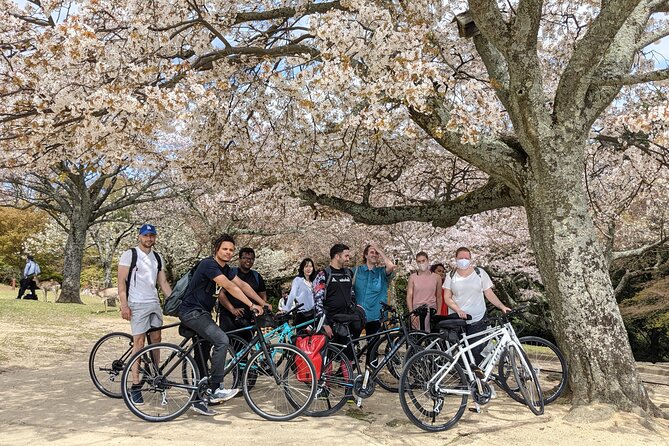
- The group stays personal: A maximum of 10 people allows the bilingual guide to adjust the pace and answer questions.
- Bring lunch if you need it: Lunch is not included, though the group can stop at a convenience store before leaving the city.
- Plan for real effort: Hybrid bikes are provided, but the route includes hills and is not recommended for children under 14 without contacting the operator first.
What the Nara ride is really like
Japan’s ancient capital is often reduced to a few famous sights, especially Todaiji and the deer-filled paths of Nara Park. This tour takes a different line through the city. You still get Buddhist history, but the focus shifts toward wooded slopes, old religious remains, water, and views.
The ride begins at Japan Tour Adventure in Nara, at 297-9 Furuichicho. The start time is 10:00 a.m., and the tour returns to the same meeting point. The total time is listed as about five to six hours, so leave a large part of your day open.
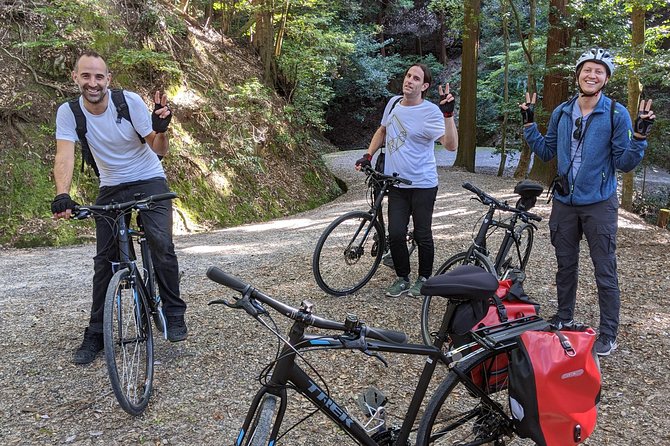
The bicycle and basic gear are covered. You receive a helmet and cycling sunglasses, and water is available for refilling. The operator uses paper cups and encourages you to bring your own bottle, which helps cut down on plastic waste. You will need to pay for any snacks, drinks, souvenirs, or lunch.
That setup makes the tour feel practical rather than fussy. You arrive, get equipped, and spend the day moving through Nara instead of waiting for transport. The tradeoff is clear: your legs do part of the sightseeing work.
More Bike Tours in Nara:
- E-Bike Nara Highlights – Todaiji, Knives, Deer, Shrine
★ 4.8 · 186 reviews - Nara – Highlights Bike Tour
★ 4.5 · 89 reviews - Nara: Bike Tour in Ancient Capital UNESCO World Heritage
★ 5.0 · 43 reviews
Nigatsu-do gives you a calm start
The first stop is Nigatsu-do Temple, close to Todaiji. Its main balcony provides a view across the Todaiji area, and the stop also introduces a calligraphy tradition connected with the temple. A calligraphy expert can add a signature to your seal book, giving you a small personal souvenir rather than a mass-produced keepsake.
This is a smart opening stop. You begin with a cultural setting and a wide view before the route turns more physical. The visit lasts about 20 minutes, enough for a look around without making the morning feel slow.
The temple is also connected with an annual water ritual, an important part of its identity. You are not simply stopping at another famous building for a quick photograph. The guide can connect the site to Nara’s religious customs and explain how calligraphy fits into Japanese temple culture.
Kikuichi connects Nara to working crafts
Next comes Kikuichi Monju Shiro Kanenaga, a traditional knife shop with a history of about 750 years. This stop adds a useful bit of everyday culture to a day otherwise centered on temples and trees.
You learn about Japanese craft, Nara’s past, calligraphy, and knife making. You can even try the blade on paper, which gives the visit a hands-on quality. For many people, this will be more memorable than simply looking at displays behind glass.
The stop lasts roughly 20 minutes. Shopping is optional, and purchases are not included in the tour price. That matters because the visit works best as a cultural stop, not as a sales obligation. You can enjoy the craft demonstration without buying anything, or choose a souvenir if a traditional knife appeals to you.
Wakakusayama Hill supplies the payoff
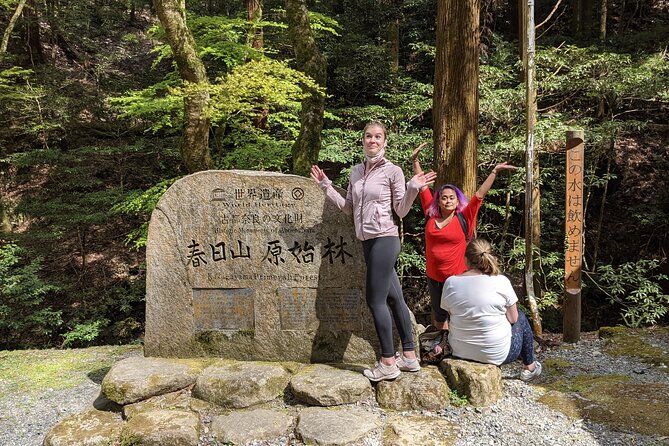
The ride then heads toward Wakakusayama Hill. This is the part that determines if the tour suits you. The ascent requires effort, and the supplied hybrid bike still leaves you responsible for the climb. The route is not presented as an easy pedal around flat streets.
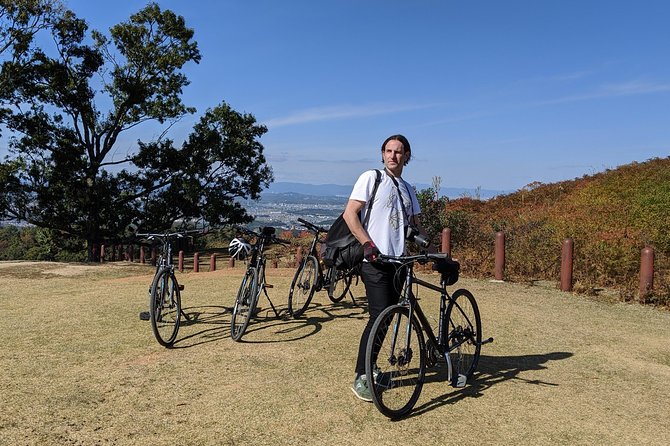
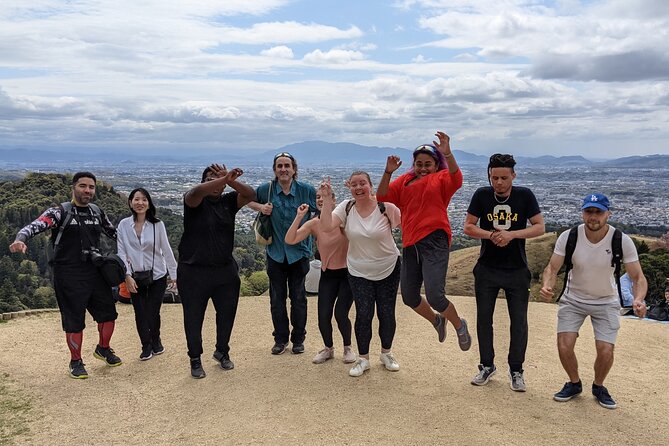
At the top, the reward is a wide view over Nara. This is the main photograph stop, and the setting gives you a different sense of the city than you get from ground level near the temples. The stop itself lasts around 15 minutes, with a snack and water refill provided.
I like this arrangement because the break comes at the right moment. You work for the view, then get time to catch your breath and take photographs. If you prefer easy sightseeing, the climb may feel too demanding. If you enjoy a workout with a clear goal, it is likely to be one of the day’s strongest moments.
Pacing matters here. Guide Rémi received praise for setting a suitable rhythm, while Elodie was described as personable, informative, and encouraging. Those details are important on a route with hills. A guide who watches the pace can make the climb challenging without turning it into a race.
A few more options to weigh up in Nara
- World Heritage Kyoto & Nara Uji Authentic Matcha Experience
★ 5.0 · 1,573 reviews - Nara Half Day Trip Walking Tour (Private Option Available)
★ 5.0 · 937 reviews - Nara Early Morning Tour (Kyoto or Osaka Departure Available)
★ 5.0 · 676 reviews - Osaka: Nara and Uji Day Trip with Deer Park and Hot Spring
★ 4.4 · 302 reviews
A lost temple in the forest
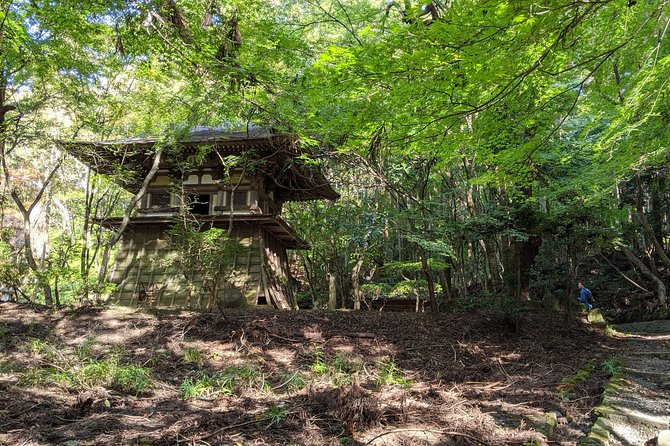
From the hill area, the route reaches the remains of Kyofukuji, also known as Kofukuji Annex Uguisu Takaki Kanjiten in the supplied tour details. It is described as a long-forgotten temple in the forest, where trees and plants are gradually taking back the old Buddhist site.
This is one of the most unusual stops because it does not look polished or carefully staged. The appeal comes from the meeting of Buddhist architecture and growing forest. You can see how an old religious place changes when it is no longer maintained in the usual way.
The stop lasts about 15 minutes. Do not expect a large temple complex or a long formal visit. Instead, you get a short look at a quiet, weathered place that gives the ride its sense of discovery.
This stop also explains why a bicycle is useful. The route connects several places that would be awkward to combine on foot in one day. You move between city history and forest remains without spending the whole afternoon in a vehicle.
Uguisu Waterfall adds a short walk
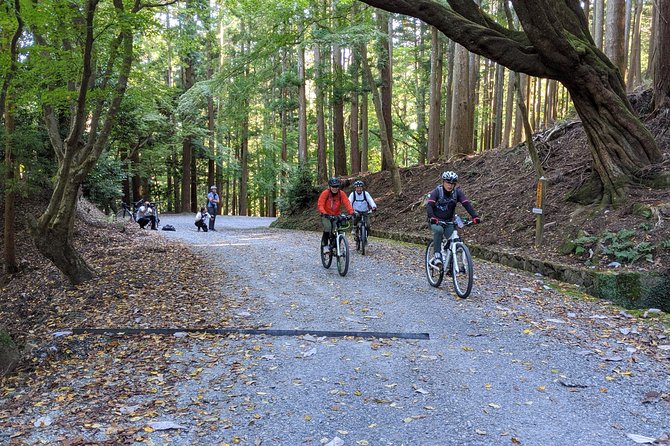
The next stop is Uguisu Waterfall. You leave the bikes for a few minutes and walk toward the falls, crossing near an old preserved bridge in the woods.
The setting is described as a place where you should watch for wildlife, including spiders. That small warning is worth taking seriously. This is a forest stop, not a manicured garden, so you should be comfortable with natural surroundings and uneven paths.
The waterfall visit lasts approximately 15 minutes. It is not a long hike, but it breaks up the cycling and lets you experience the forest at a slower pace. The old bridge adds character and gives the stop a clear visual focus.
I would not book this tour expecting a major waterfall excursion. The appeal lies in the combination of water, bridge, trees, and the ride between sites. It is one short scene in a full day outdoors.
Stone Buddhist carvings in Kasugayama
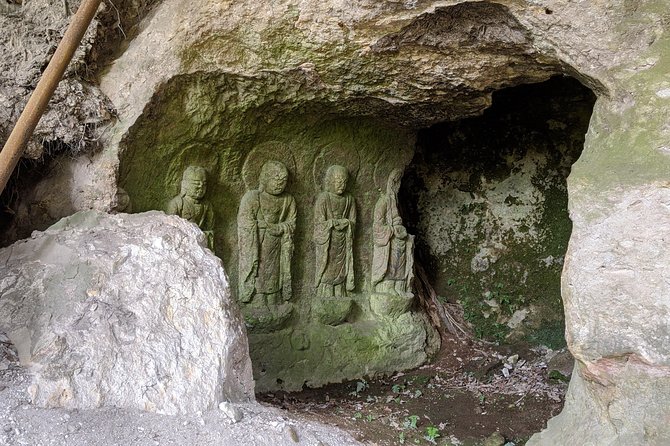
At Mt. Kasuga Sekkutsubutsu, you see Buddhist statues carved directly into stone in the Kasugayama forest. These carvings are remains of an older Buddhist community and are protected today.
This stop gives the route its strongest sense of age. A temple building can be restored, repainted, and surrounded by signs. Figures cut into rock feel more closely tied to the forest itself. The experience depends on your willingness to walk or ride into the wooded area, so comfortable clothing and shoes are sensible.
The visit lasts around 15 minutes. That may sound brief, but the tour covers seven stops, and the guide must keep the full route moving. You get an introduction and time to look closely, rather than a long lecture at each place.
For me, this is exactly the sort of stop that makes the tour different from a standard Nara highlights ride. It adds religious history without sending you to another crowded landmark.
Sagi Pond ends the route quietly
The final stop is Sagi Pond, south of Nara Park and away from the main tourist points. It is described as peaceful and suitable for a final photograph.
After several hours of hills, forest paths, temples, and cultural stops, a pond is a sensible ending. There is no last major climb or complicated activity. You can slow down, take a picture, and let the day settle before cycling back to the meeting point.
The stop lasts about 15 minutes. It may be simple, but that is part of its value. The tour finishes with a quieter view rather than another crowded attraction.
Price and value at $275.89
At $275.89 per person, this is an expensive half-day activity. The price is easier to justify if you value a private-feeling small group, a bilingual local guide, bike use, safety gear, water, and access to several less-visited places in one route.
You are not paying only for a bicycle. The guide handles the route, supplies context at the temple and knife shop, manages the pace, and helps link the cultural stops with the outdoor sections. The maximum of 10 people keeps the experience more personal than a large coach excursion.
Still, the price may not suit every budget. If your main goal is to see Nara’s famous temples, you can visit major sights independently for much less. This tour earns its cost through the combination of exercise, forest access, local craft, and logistics.
Group discounts are available, which could improve the value for families with older teenagers or friends booking together. Lunch, snacks, drinks beyond the supplied water, and shopping are extra. The operator can stop at a convenience store before leaving the city if someone needs food, but I would plan ahead and bring a bottle and lunch if you expect to eat during the day.
Who should book this cycling tour?
This experience suits you if you:
- Enjoy active sightseeing rather than moving only between major monuments
- Can manage hills on a standard hybrid bicycle
- Want a small group and direct contact with a local bilingual guide
- Like forests, old religious sites, and unusual photographs
- Are interested in Japanese craft as well as temples
- Have at least five to six hours available
It is less suitable if you want a flat ride, an electric bike, a relaxed family outing with young children, or a tour centered only on Nara’s headline sights. Children under 14 are not generally recommended, though you can contact the operator about a specific request.
The tour needs a minimum of two people to operate. A solo booking is allowed, but it can be canceled if no second participant joins. In that case, the operator offers a new date or a full refund.
You also need good weather. If rain or other poor conditions cancel the experience, you can choose another date or receive a full refund. For normal changes of plan, cancellation at least 24 hours before the 10:00 a.m. start is required for a full refund.
Should you book the Heart of Nature Cross Bike Tour?
Book it if you want to earn your Nara views. The strongest parts are the personal guiding, the hilltop panorama, the ruined forest temple, and the stone Buddhist carvings. Elodie and Rémi are both praised for friendly support and good pacing, which matters on a route that asks you to work.
Skip it if the thought of climbing without an electric motor sounds unpleasant. The $275.89 price is high for a half-day ride, but it covers much more than basic bike rental. For an active visitor who wants nature, craft, and lesser-known religious sites in one carefully linked outing, the value is solid.
FAQ
How long does the Nara Heart of Nature Cross Bike Tour last?
The experience lasts approximately five to six hours, beginning at 10:00 a.m. and returning to the starting point.
Where does the tour start and finish?
The tour starts at Japan Tour Adventure in Nara, located at 297-9 Furuichicho, Nara, 630-8424, Japan. It ends back at the same meeting point.
Is bicycle equipment included?
Yes. The bicycle, helmet, and cycling sunglasses are included, along with a bilingual local guide and all fees and taxes.
Is lunch included?
No. Lunch is not included. You can bring your own food, and the group can stop at a convenience store before leaving the city if needed.
Do I need to be very fit for this tour?
You should have a strong level of physical fitness because the route includes hills. The tour uses hybrid bikes, and no electric-bike option is provided.
Can I cancel for a full refund?
Yes, if you cancel at least 24 hours before the local start time. Poor weather or failure to meet the minimum number of participants can also lead to a new date or full refund.
Just added in Nara
- Hammer a Pattern on Your Ring Workshop★ 5.0 · 57 reviews
- All must-sees in 3 hours – Nara Park Classic Tour! From JR Nara!★ 5.0 · 108 reviews
- Nara Private Tour: Flexible Pickup from Kyoto, Osaka, or Nara★ 5.0 · 17 reviews
- Private Nara Tour and Sake Tasting (Departing from Kyoto/Nara)★ 5.0 · 40 reviews
- Nara Highlight Walking Tour with Furoshiki Experience with Lunch★ 5.0 · 73 reviews
- Nara Sake Tasting Tour at Local Brewerie(tasting fee included)★ 5.0 · 12 reviews
- Nara World Heritage PRIVATE TOUR★ 4.5 · 15 reviews
- Nara – Highlights Bike Tour★ 4.5 · 89 reviews
Cycling and E-Bike Tours, compared.
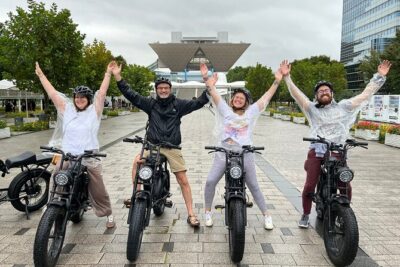

3h Tokyo E-Bike Tour: Hidden Gems, and Local Life with guide
Read our review →
Arashiyama Bamboo Forest & Hidden Gems Bike Tour (Early Bird)
Read our review →
5 Top Highlights of Kyoto Full Day Bike Tour (E-bike option)
Read our review →

Hiroshima 2hr Peace Cycling Tour with Local Guide
Read our review →Browse the lists this tour appears in