Reviewed · TEA CEREMONIES
Kanazawa: Samurai, Matcha, Gardens and Geisha Full-Day Tour
Kanazawa rewards people who walk slowly. This full-day tour links the city’s best-preserved historic quarters with Kenroku-en Garden and a hands-on matcha stop, giving you a clear picture of old Kanazawa without the fuss of planning every turn. I especially like the visit to a preserved samurai residence and the time inside Shima, a former geisha house with classic wooden architecture. The main drawback is the distance: expect several hours outside and roughly 12 kilometers of walking, so good shoes are not optional.
I also like the way the day mixes famous sights with quieter streets, small temples, and back lanes between major stops. Guides such as Mike, Akari, Gareth, Lee, Daniel, and Mohammed have been praised for making the history easy to follow and for adjusting the pace when possible. Lunch is not included, and the matcha location can occasionally change if Gyokusen-an is hosting a special event.
In This Review
- Key points at a glance
- Starting beneath Kanazawa Station’s giant samurai-era welcome
- Nagamachi reveals the everyday samurai neighborhood
- Oyama Shrine mixes Japanese tradition with Western glass
- Matcha and wagashi at Gyokusen-an
- Kanazawa Castle connects power, stone, and garden design
- Kenroku-en shows why garden details matter
- Higashi-chaya brings you into Kanazawa’s tea-house world
- Shima offers the day’s clearest look at geisha culture
- A full day that asks for proper shoes
- Is $156 a fair price?
- Who should book this Kanazawa day tour?
- Should you book it?
- FAQ
- Where does the Kanazawa tour start?
- Where does the tour end?
- How long does the tour last?
- Is the tour conducted in English?
- How much walking is involved?
- Is lunch included?
- Is the matcha experience included?
- Are the Kenroku-en and Shima entry fees included?
- What should I wear in winter?
- What happens if it rains?
Key points at a glance
- About 12 kilometers on foot: This is an active city tour, not a bus ride with quick photo stops.
- A well-preserved samurai neighborhood: Nagamachi gives you a look at modest warrior homes, not just grand residences.
- Matcha beside castle walls: Gyokusen-an pairs tea and wagashi sweets with a traditional garden view.
- Two sides of old entertainment culture: Higashi-chaya’s streets lead to Shima, a preserved geisha tea house.
- Strong guide-led storytelling: Guides explain samurai life, castle design, garden traditions, and tea-house customs.
- Useful for a first Kanazawa day: The route gathers the city’s main historic sights into one well-planned outing.
Starting beneath Kanazawa Station’s giant samurai-era welcome
Your day begins at Kanazawa Station, outside the Shinkansen ticket gates, near the information center and four large sumo wrestler figures. If you enter from outside, the meeting point is just inside the East Entrance. Look for the guide wearing a Snow Monkey Resorts tour tag.
Before you even leave the station, pause for the Tsuzumi-mon gate. Its sweeping wooden form is a modern interpretation of traditional Japanese architecture and has become one of Kanazawa’s recognizable symbols. It is a fitting start because this tour constantly moves between old customs and modern Japan.
The first walk takes about 30 minutes. Instead of marching along a major road, the route uses side streets lined with local homes and occasional wooden temples. That choice matters. You begin to see Kanazawa as a lived-in city rather than a string of isolated attractions.
More Castles and Historic Sites in Kanazawa
- Kanazawa: Samurai Residence Remains Nomura Family admission
★ 4.4 · 111 reviews - Full-Day Tour from Kanazawa: Samurai, Matcha, Gardens and Geisha
★ 5.0 · 68 reviews - Try Mindful Calligraphy Near Kanazawa’s Ninja Temple
★ 5.0 · 50 reviews
Nagamachi reveals the everyday samurai neighborhood
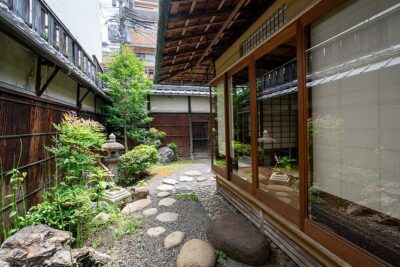
Nagamachi is the emotional center of the morning. The district once housed samurai families connected to the powerful Maeda clan, which ruled the old domain from Kanazawa. Its crooked streets, earthen walls, narrow lanes, and traditional homes create a strong sense of place.
The most useful part is the chance to enter residences associated with lower-ranking samurai. These homes help correct the popular image of every warrior living in a grand compound. Samurai status varied widely, and modest houses show how daily life could be practical and restrained.
You also receive free time to look around the district and browse local Kanazawa crafts and goods. This is a good point to ask your guide about what is genuinely local, especially if you want a small purchase rather than a generic souvenir.
The scheduled time here is generous at about 110 minutes. That gives the guide room to explain the social order, house design, and military culture without rushing you from one doorway to the next. It also gives you a little space to look closely at walls, rooflines, gardens, and tools.
The trade-off is that Nagamachi can feel slow if you prefer only headline sights. I think that slower pace is exactly why the district works. You get a better sense of how people lived, not merely where important people once stood.
Oyama Shrine mixes Japanese tradition with Western glass
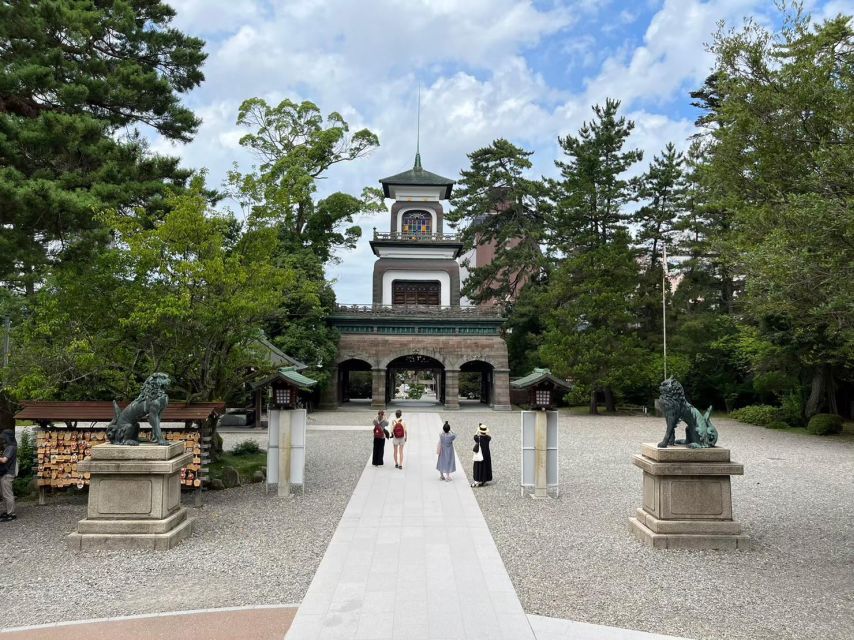
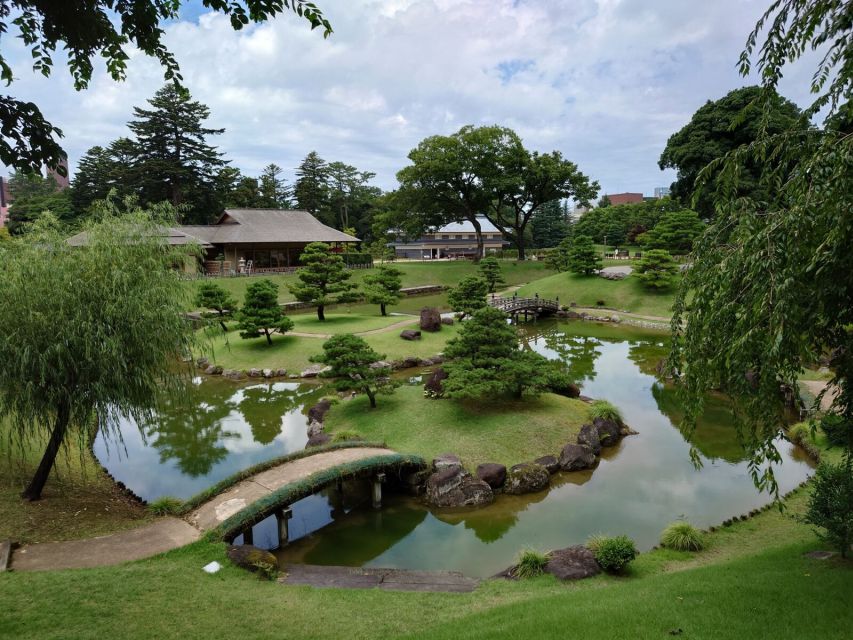
From Nagamachi, the tour continues to Oyama Shrine for a short guided visit. The shrine’s unusual gate combines Japanese architectural forms with Western elements, including colorful stained glass. It reflects the changes Japan experienced in the nineteenth century, when older traditions met new foreign influences.
The shrine is more than a quick stop for a photograph. Your guide can point out the architectural contrasts and explain why the building feels different from a standard Shinto site. At the rear, a koi pond and small garden lead toward a large wooden bridge.
Crossing that bridge brings you to an impressive gate into the Kanazawa Castle grounds. The transition is nicely arranged: a shrine garden, a bridge, a gate, then the broad castle site. It gives the day a sense of movement through Kanazawa’s former seat of power.
The stop itself lasts about 10 minutes, so do not expect a long period for independent exploration. Its value comes from the guide’s explanation and its position between the samurai district and castle grounds.
Matcha and wagashi at Gyokusen-an
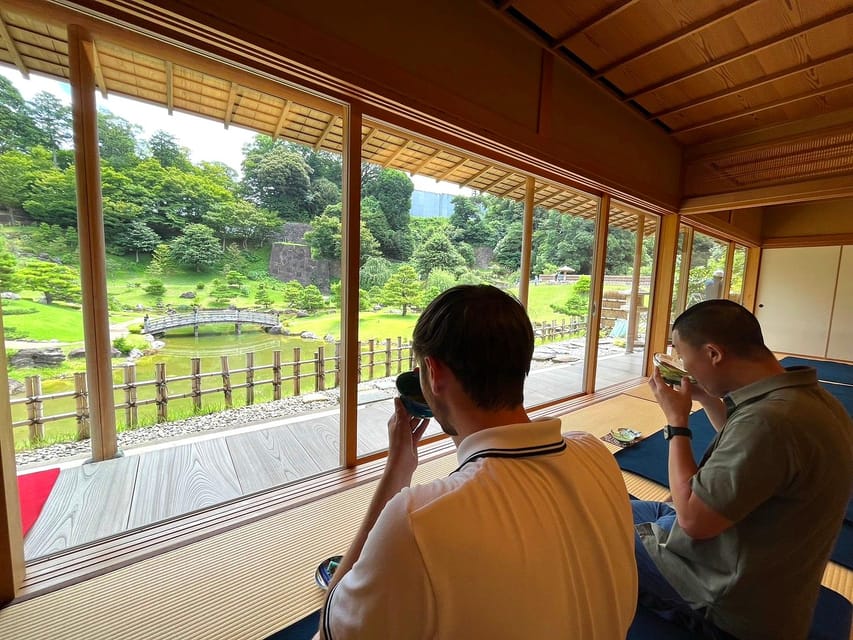
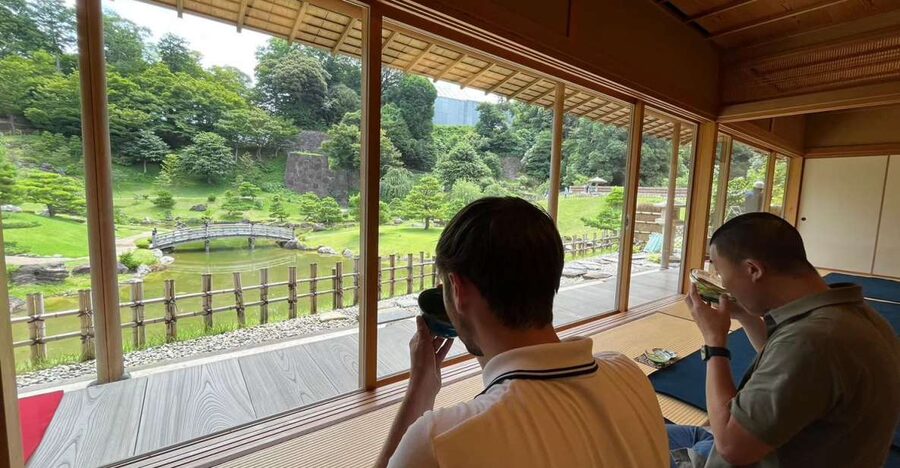
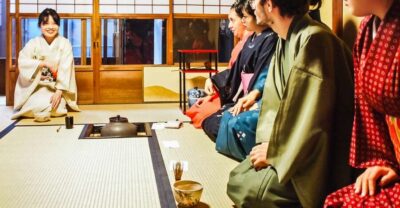
At Gyokusen-an tea house, you take a break at the foot of the castle’s enormous stone walls. The setting is calm and formal, with views over a carefully maintained garden and a distinctly Japanese interior.
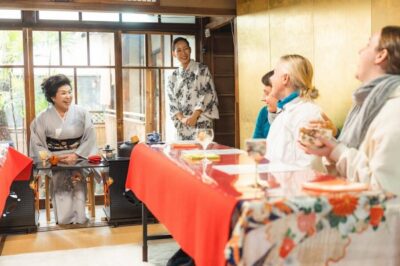
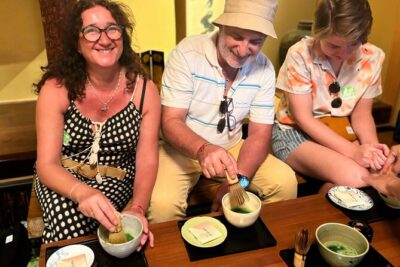
Kimono-clad staff serve matcha with artistic wagashi sweets. Your guide explains the proper way to drink the tea, which makes this more useful than simply receiving a cup and moving on. You get a small lesson in etiquette, presentation, and the deliberate pace of Japanese tea culture.
This is one of the best-balanced moments of the day. The morning involves constant walking and historical information, while the tea stop asks you to sit still and notice small details. The bitter matcha and sweet wagashi also work well together.
Gyokusen-an is scheduled for about 30 minutes. That is enough for the tea experience, though not enough for a long, private ceremony. If a special event is taking place at the tea house, the matcha tasting may move to another location. The experience remains part of the tour, but the original garden setting is not guaranteed every day.
More Day Trips in Kanazawa
- Kanazawa Half Day Tour (Private Guide)
★ 5.0 · 361 reviews - Kanazawa Full Day Tour (Private Guide)
★ 5.0 · 323 reviews - From Kanazawa/Toyama: Shirakawago and Takayama Day Tour
★ 4.7 · 82 reviews - [Day trip bus tour from Kanazawa Station] Weekend only! World Heritage Shirakawago Day Bus Tour
★ 5.0 · 46 reviews
Kanazawa Castle connects power, stone, and garden design
The route continues through Kanazawa Castle grounds before crossing to Kenroku-en. The castle has been partially restored, so you should expect a site with reconstructed sections rather than a completely original fortress complex.
Even so, the castle grounds make the old political order easy to understand. The massive stone walls, gates, bridges, and open spaces show the scale of the domain that once governed the region. A guide adds useful context about how the castle related to the Maeda rulers and the surrounding city.
The tour does not list a separate admission fee for the castle grounds. Kenroku-en entry is included, as is entry to Shima. That helps keep the day’s cost predictable, although you should still budget for lunch and any purchases.
Kenroku-en shows why garden details matter
Kenroku-en receives about 90 minutes, and it deserves the time. The garden is often placed among Japan’s finest, but the guide does more than point out attractive views. You learn how it was planned and developed over more than 200 years under the lords of Kanazawa Castle.
The name Kenroku-en refers to the combination of six qualities traditionally prized in a garden: spaciousness, seclusion, artifice, antiquity, watercourses, and panoramas. You do not need to memorize the list, but it helps explain why the garden can feel both open and intimate within a short walk.
Expect ponds, carefully shaped plantings, stone features, bridges, and changing views. The garden rewards patience. Look at how paths frame the water and how the garden uses slopes and walls to create different moods.
Weather can add to the atmosphere, but it also changes the practical side of the visit. One account described the castle garden in rain and mist as especially memorable, while another noted walking through warm, muggy weather. In winter, temperatures may fall below 10°C, with mornings and evenings near or below freezing. Snow and ice can appear on streets and sidewalks.
Bring an umbrella or raincoat in wet weather. In winter, wear warm clothing and shoes with a firm, non-slip sole. Kenroku-en is beautiful in poor weather, but wet paths and cold fingers can shorten your patience.
Higashi-chaya brings you into Kanazawa’s tea-house world
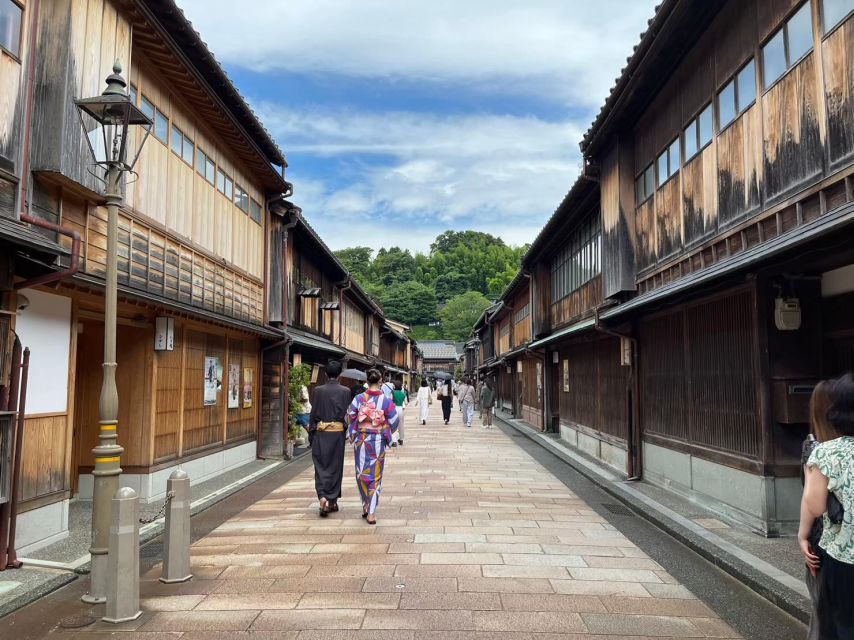
After Kenroku-en, the route heads to Higashi-chaya, one of Kanazawa’s signature districts. Tall, two-story wooden tea houses line the streets, and some are painted red, a feature strongly associated with Kanazawa’s traditional tea-house architecture.
The district is often compared with Kyoto’s famous geisha quarters, but it has its own look and scale. You can stroll along the main streets, examine the facades, and use free time for shopping and photographs. The scheduled visit here lasts about 40 minutes before the tour continues to Shima.
A guide is particularly useful in this district because tea houses are not simply restaurants or ordinary cafés. They belong to a formal entertainment tradition involving music, conversation, hospitality, and trained performers. The guide helps explain that culture without reducing it to a costume show.
You should allow enough attention for the quieter details. Look down side streets, notice the dark wood and red interiors, and listen for the difference between a preserved building and a shop designed mainly for tourists. The area can be busy at popular times, but the route also passes through less crowded streets.
Shima offers the day’s clearest look at geisha culture
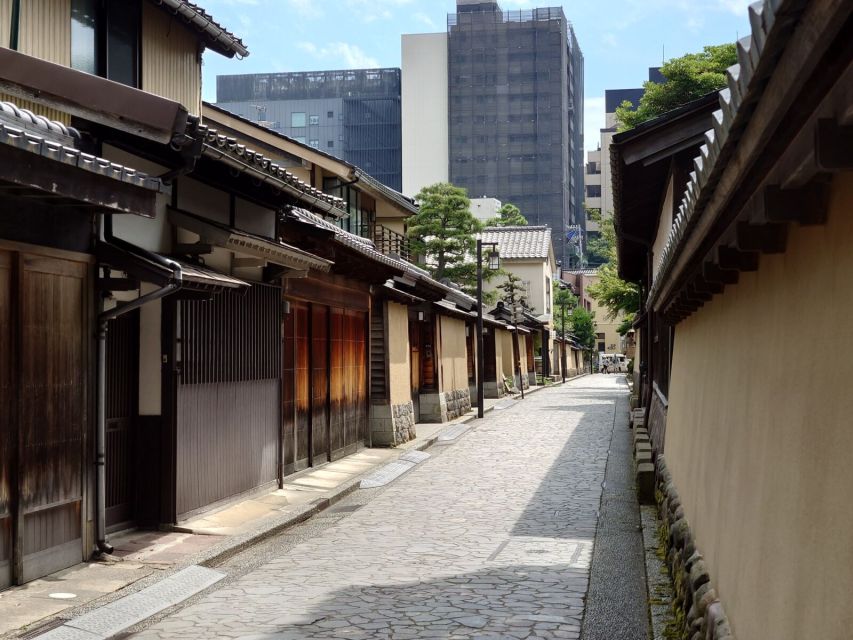
The final major visit is Shima, a heritage geisha tea house with classic architecture. Entry is included, and the guided visit lasts about an hour.
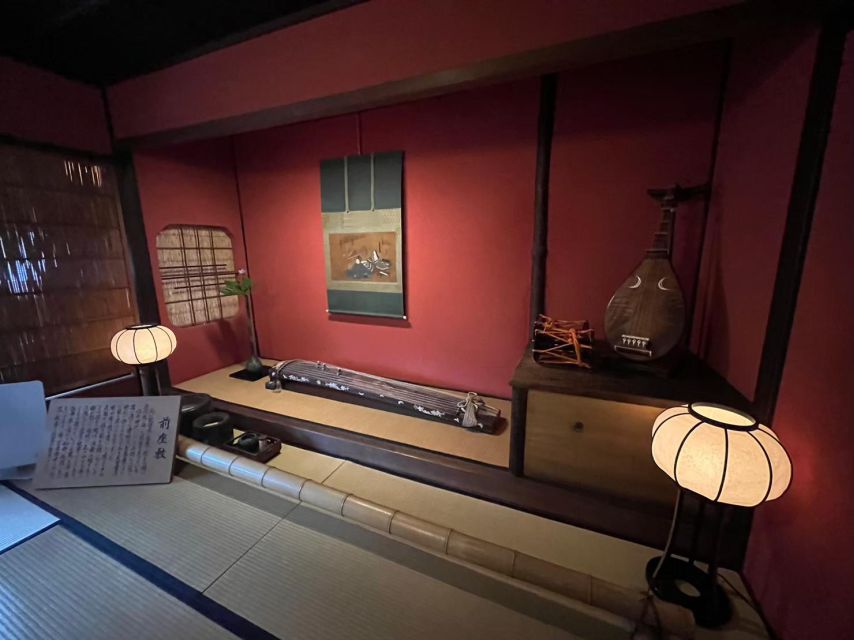
Inside, you can examine the rooms and layout of a traditional tea house and gain a more grounded understanding of how this form of entertainment worked. The building itself is part of the lesson. Its rooms, finishes, and arrangement show a world built around private gatherings, performance, and carefully controlled hospitality.
This stop pairs well with Nagamachi. The samurai houses show domestic life connected to military status, while Shima shows a more formal social world linked to performance and elite entertainment. Together, they give you a broader view of Kanazawa than a castle visit alone could provide.
The final return walk takes about 30 minutes and passes through the maze-like backstreets of Kazue-machi. This is a pleasant way to finish because you are still seeing traditional wooden buildings rather than simply retracing a main road to the station.
A full day that asks for proper shoes
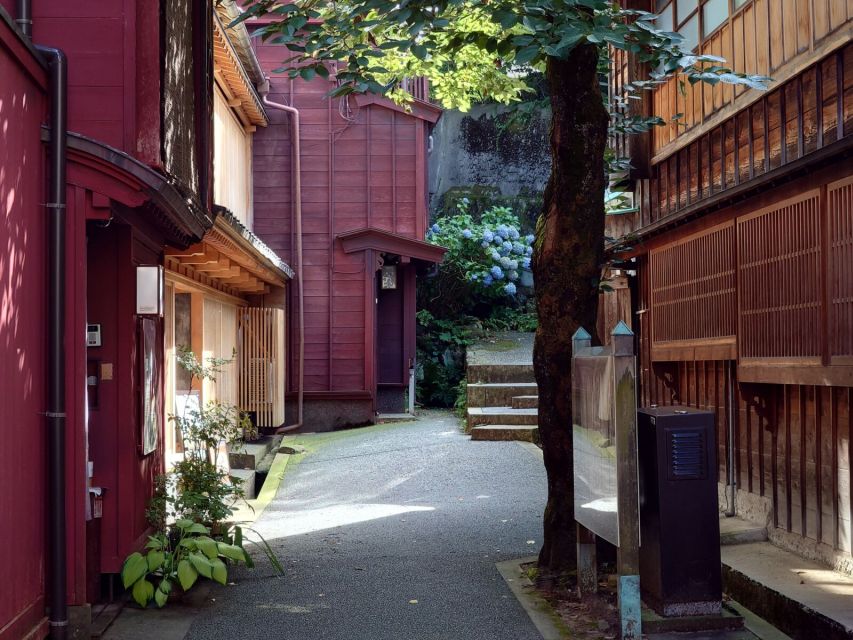
This is an all-day walking tour, with the day ending back at Kanazawa Station. The route includes roughly 12 kilometers of walking according to one detailed account, and another person counted more than 27,000 steps. Those figures are useful warnings, especially if you have already spent several days walking around Japan.
You should wear comfortable shoes, weather-appropriate clothing, and socks suitable for removing shoes at traditional sites. Warm shoes are important in winter. Rain gear is wise in any season because the tour spends much of its time outdoors.
There are pauses, including the tea stop and lunch break, so the pace is not an unbroken march. Lunch is not included. Your guide can recommend a place, and the route gives you a chance to eat nearby. Omicho Market is a practical lunch option if the timing and route allow, but treat that as a recommendation rather than a guaranteed part of the tour.
The English-speaking guides are a major part of the value. Mike has been praised for combining humor with clear explanations and for helping with train tickets after the tour. Akari is described as friendly, flexible, and good at adapting to requests. Gareth has a background in history and has been praised for explaining architecture, culture, and local stories without overloading the day. Daniel has handled family groups patiently, while Lee has adjusted the pace for guests who arrived late or wanted extra help.
Those examples do not guarantee a particular guide, but they show the kind of service this tour aims to provide. The strongest theme is not just factual information. It is the guide’s ability to connect the sites and answer questions in real time.
Is $156 a fair price?
At $156 per person, this is not a budget walking tour. The price includes an English-speaking guide, the matcha experience, Kenroku-en admission, and entry to Shima. It does not include lunch, drinks beyond the tea experience, or personal shopping.
I think the price is reasonable if you want a structured first day in Kanazawa. You receive a full day of guiding, several major admissions, a formal tea experience, and a route that would take time to research and connect on your own. The guide also handles the historical thread, which is especially useful at the samurai district, castle, and geisha house.
The value is weaker if you prefer to move quickly, skip explanations, or explore independently. You could visit several of these places on your own for less, but you would need to plan transport, opening times, admissions, and the order of stops. You would also miss much of the social and architectural context.
The free cancellation option up to 24 hours before the tour and the reserve-now, pay-later arrangement make booking less risky. Check the starting time when selecting your date, since availability controls the exact schedule.
Who should book this Kanazawa day tour?
I would choose this tour if you have one full day in Kanazawa and want the major historic sights tied together by a single story. It suits first-time visitors, history fans, garden lovers, and anyone curious about samurai and geisha culture beyond the usual photographs.
It also works well for families with older children who can manage a long day on foot. A guide has successfully handled a group ranging from age 11 to 70, but your family should still be comfortable with outdoor walking, stairs, weather changes, and traditional spaces where you may need to remove shoes.
You may want a different plan if mobility is limited, if cold or wet weather is a serious concern, or if you want a relaxed half-day. The route is rich in stops, but the distance is real.
Should you book it?
Book it if you want to see Kanazawa’s samurai homes, castle grounds, famous garden, tea-house district, and geisha house in one day, with an English-speaking guide to explain what you are seeing. The matcha stop and Shima visit give the tour more character than a simple sightseeing circuit.
Skip it if you dislike long walks or want to set your own timetable. For most visitors with suitable shoes and a full day available, the combination of access, guiding, and well-chosen historic sites makes the $156 cost a fair exchange for a strong introduction to Kanazawa.
FAQ
Where does the Kanazawa tour start?
The tour starts outside the Shinkansen ticket gates at Kanazawa Station, in front of the information center. Look for the four large sumo wrestler figures and a guide wearing a Snow Monkey Resorts tour tag.
Where does the tour end?
The tour ends back at Kanazawa Station, at the same meeting point.
How long does the tour last?
It is a full-day experience. The stated duration is one day, and the meeting information gives a 9:00 AM start. Check availability for the exact starting time on your chosen date.
Is the tour conducted in English?
Yes. The tour includes a live English-speaking guide.
How much walking is involved?
The tour involves several hours of outdoor walking. One detailed account measured roughly 12 kilometers, and another recorded more than 27,000 steps, so comfortable shoes are essential.
Is lunch included?
No. Lunch is not included, but you have time to eat nearby and can ask your guide for recommendations.
Is the matcha experience included?
Yes. The matcha experience is included, along with artistic wagashi sweets. It normally takes place at Gyokusen-an tea house, although the location may change during special events.
Are the Kenroku-en and Shima entry fees included?
Yes. Admission to Kenroku-en Garden and Shima, the historic geisha tea house, is included.
What should I wear in winter?
Wear warm clothing and footwear suited to cold or snowy conditions. Temperatures can be below 10°C, with mornings and evenings close to or below freezing. Snow and ice may be present, so non-slip shoes are important.
What happens if it rains?
The tour continues in outdoor areas, so bring an umbrella or rain gear and check the forecast before meeting your guide. The route includes several sheltered or indoor stops, including traditional residences, the tea experience, and Shima.
More Kimono Experiences in Kanazawa
- Kanazawa:Traditional Experience -kimono rent at wargo
★ 4.7 · 30 reviews - Kanazawa Half-day Tour: Curated: Gardens, Craft & Geisha District
★ 4.5 · 12 reviews - [Kyoto & Nara Day Tour] Sagano Scenic Railway & Nara Park & Fushimi Inari Taisha Thousand Torii Gates & Togetsukyo Bridge & Bamboo Grove & Kimono Forest (Departing from Osaka)
★ 4.9 · 10,942 reviews - Tokyo Asakusa Kimono&Yukata Rental at Kimono Miyabi Asakusa Station
★ 4.9 · 8,489 reviews
More Tea Ceremonies in Kanazawa
- Kanazawa: Kenrokuen Tea Ceremony Experience
★ 4.8 · 1,139 reviews - Kyoto: Tea Ceremony in a Traditional Tea House in Kiyomizu
★ 4.9 · 3,519 reviews - Kyoto: Tea Ceremony Ju-An at Jotokuji Temple
★ 4.9 · 3,207 reviews - Kyoto: 45-Minute Tea Ceremony Lesson Experience
★ 4.3 · 2,378 reviews
Just added in Kanazawa
- Taste of Kanazawa (Food tasting in Omicho Market & Higashi Chaya)★ 5.0 · 58 reviews
- Shirakawago & Kanazawa from Kanazawa★ 5.0 · 51 reviews
- Takayama and Shirakawago/Photoshoot by professional photographer★ 5.0 · 67 reviews
- Kanazawa: Sushi & Japanese Cooking Class at a Historic School★ 5.0 · 66 reviews
- Private Tour of Shirakawago from Kanazawa (Half Day)★ 5.0 · 24 reviews
- Kanazawa private 1 day/Photoshoot by professional photographer★ 5.0 · 33 reviews
- Private Tour of Shirakawago and Gokayama from Kanazawa★ 5.0 · 50 reviews
- Kanazawa private half day/Photoshoot by professional photographer★ 5.0 · 38 reviews
Tea Ceremonies, compared.
Tea Ceremony in a Traditional Tea House in Kiyomizu
Read our review →
World Heritage Kyoto & Nara Uji Authentic Matcha Experience
Read our review →