
Reviewed · TEA CEREMONIES
Cultural Activities :Kimono, tea ceremony, Calligraphy and Amulet
A few hours can open a door to Japan. This experience brings together kimono dressing, tea ceremony, Japanese calligraphy, and amulet making at Tokuju-ji Temple, a roughly 300-year-old Soto Zen temple on Miyajima. I like the smart format: you get three hands-on lessons in one visit instead of giving up separate blocks of time for each activity. I also like that the staff take photos during the lessons and send them by email, so you can enjoy the moment without constantly reaching for your phone.
The main consideration is the price, $171.73 per person. That is a serious cost for two hours, especially if you are traveling with several family members. Still, the provided kimono, small group limit, instruction, temple setting, and photographs make this more than a quick demonstration.
The schedule gives you about half an hour for each activity, so you should expect an introduction rather than advanced training. That is just right if you want a friendly first look at several Japanese customs, but less suitable if you hope to study calligraphy or tea for a full morning.
In This Review
- Key points to know before you book
- Why this Miyajima activity earns its time
- Tokuju-ji Temple gives the class its sense of place
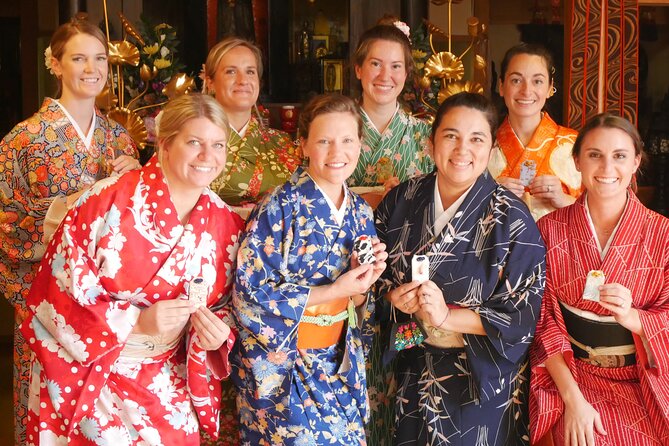
- Wearing the kimono changes the mood
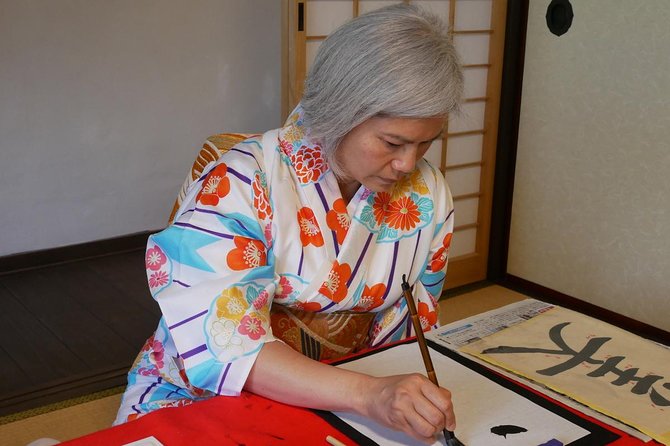
- Calligraphy turns your name into a souvenir
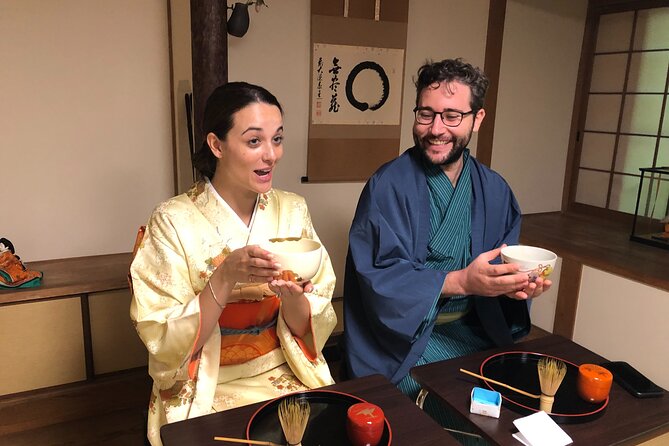
- The tea ceremony is about attention and form
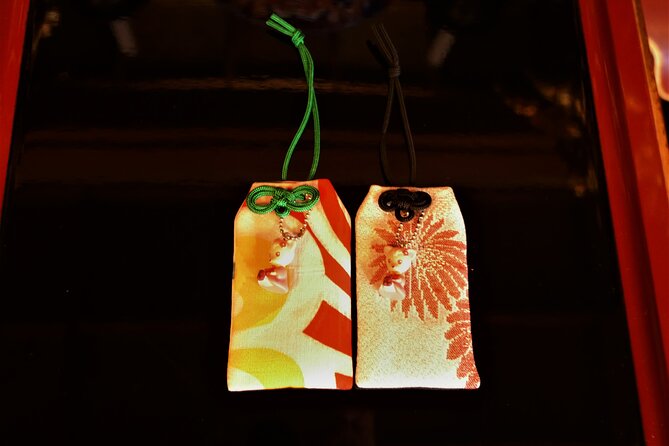
- Amulet making connects craft with local belief
- The two-hour schedule is efficient, but tightly packed
- What the $171.73 price includes in practical terms
- Who will enjoy this most
- Should you book the Miyajima cultural experience?
- FAQ
- Where does the experience take place?
- How long does the experience last?
- What activities are included?
- Are photographs included?
- What is the minimum age?
- How large is the group?
- Can I cancel for a full refund?
Key points to know before you book
- Three traditions in one visit: You learn basic Japanese calligraphy, take part in a tea ceremony, and make an amulet during the same session.
- A 300-year-old temple setting: Tokuju-ji Temple gives the class a quiet cultural setting, with gardens and a main Buddha known as Kinseki Jizo.
- Kimono included: You wear a provided kimono and traditional apron during the activities, adding a strong sense of occasion.
- Photos are part of the experience: The teachers take pictures as you work and send them to you by email afterward.
- Small groups keep it personal: The maximum group size is 10, and some sessions may feel much smaller.
- Best for first-time learners: The lessons are short, practical, and designed to give you a broad introduction rather than specialist instruction.
Why this Miyajima activity earns its time
Miyajima is famous for Itsukushima Shrine, the great torii gate, and the island’s scenic approach across the water. It is easy to spend your whole visit moving from one sight to another with a camera in hand. This class gives you a different way to experience the island: you sit down, put on traditional clothing, listen, make things, and take part.
I especially like the range of the program. Calligraphy gives you a brush and ink. The tea ceremony shows you a careful sequence of movements. Amulet making gives you something connected to local belief that you helped create yourself. These are not three versions of the same activity. Each one shows a different side of Japanese culture.
The format also works well for a short Miyajima visit. At about two hours, it will not consume your entire day. You can place it between other sightseeing plans, provided you allow enough time to reach the meeting point at okeiko Japan Miyajima, located at 741-1 Miyajimachō, Hatsukaichi, Hiroshima 739-0588.
The experience is recommended for children from age six, but children must be accompanied by an adult. With a maximum of 10 people, the setting should be easier to follow than a large demonstration. Confirmation arrives at booking, and the location is near public transportation.
More Tea Ceremonies in Hiroshima:
- Hiroshima Local guided Hiking Tour&Open-air Tea Ceremony
★ 5.0 · 213 reviews - Kimono and Tea Ceremony in Miyajima
★ 5.0 · 73 reviews - An Amazing set of Cultural experience: Kimono, Tea Ceremony and Calligraphy
★ 5.0 · 69 reviews
Tokuju-ji Temple gives the class its sense of place
The activities take place at Tokuju-ji Temple, founded about 300 years ago. The temple belongs to the Soto Zen school, but Miyajima’s religious sites do not always fit neatly into the categories you may know from home. The island’s temples exist alongside the major Shinto presence of Itsukushima Shrine, and some details at Tokuju-ji reflect that mixture.
The temple’s main Buddha is Kinseki Jizo. Jizo is often connected with protection, and this figure is associated especially with children and pregnancy. The temple’s story tells of an older couple who prayed for a baby and later had a healthy son. In thanks, they built the temple.
That story gives the amulet activity more meaning. You are not simply decorating a souvenir in a classroom. You are making something in a place where prayers, protection, and gratitude have been part of the local story for generations. The activity does not turn you into an expert on Japanese religion, but it gives you a useful point of connection.
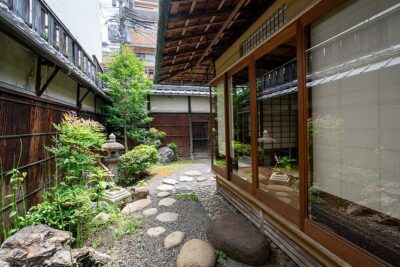
The temple gardens also matter. The setting helps the class feel like an occasion rather than a craft workshop in an ordinary commercial building. You might arrive early, as one family did, to put on the kimono and have photos taken in the garden before the lessons begin.
Wearing the kimono changes the mood
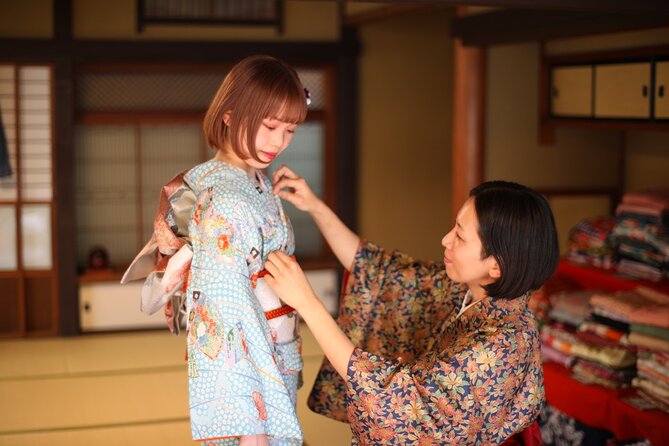
The provided kimono is one of the strongest parts of the program. You wear it during the activities, along with a traditional apron for the lessons. That clothing makes the experience feel more complete, and it gives you a better sense of how formal Japanese customs can be.
There is also a practical benefit. You do not have to arrange a separate kimono rental, find a dressing service, or spend extra time moving between locations. The clothing is built into the session.
I would still keep your expectations sensible. A short activity like this is not the same as a full kimono styling appointment or a detailed lesson in garment construction. The value is in wearing the clothing while taking part in the traditions, not in receiving a long fashion or costume presentation.
The photo service adds a nice touch. Staff take pictures during the lessons and email them to you. That means you can keep your hands on the brush, tea utensils, or amulet materials instead of asking a companion to document every step. The photos also preserve the setting, clothing, and shared experience better than a quick phone snapshot usually can.
Calligraphy turns your name into a souvenir
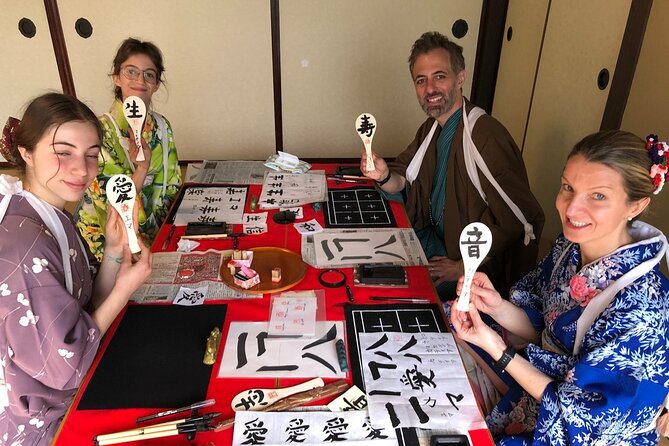
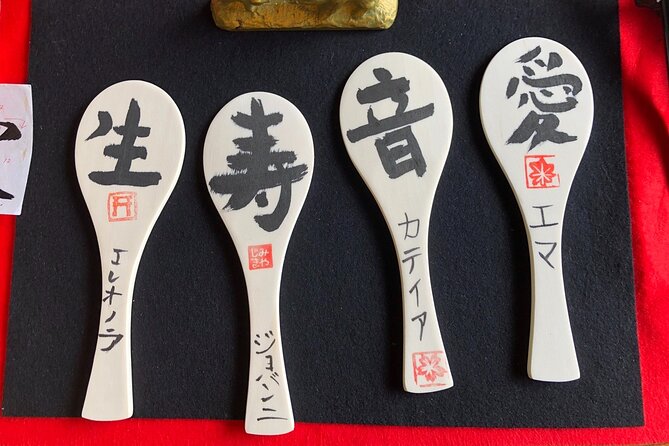
The calligraphy lesson focuses on writing your name in Japanese. For many people, this is the most immediately personal part of the program. You are not copying a random decorative symbol. You are learning how your own name can be represented and then practicing it with a brush.
Expect an introduction, not a full course in Japanese writing. The time is roughly half an hour, so the lesson needs to move at a steady pace. You will likely spend time learning the basic method and producing your own attempt rather than studying a large number of characters.
That short format is a strength for beginners. You do not need previous calligraphy experience, and you can enjoy the physical difference between writing with a brush and writing with a modern pen. The process asks you to slow down and pay attention to the order and shape of each stroke.
It also makes a good family activity. Children old enough to participate can create something personal, while adults get a small souvenir that feels more connected to the day than a standard shop purchase. If calligraphy is your main interest, you may wish the lesson lasted longer. If you want a taste of the art without committing to a full workshop, the time is well judged.
More Kimono Experiences in Hiroshima:
- Kimono and Calligraphy Experience in Miyajima
★ 5.0 · 16 reviews - [Kyoto & Nara Day Tour] Sagano Scenic Railway & Nara Park & Fushimi Inari Taisha Thousand Torii Gates & Togetsukyo Bridge & Bamboo Grove & Kimono Forest (Departing from Osaka)
★ 4.9 · 10,942 reviews - Tokyo Asakusa Kimono&Yukata Rental at Kimono Miyabi Asakusa Station
★ 4.9 · 8,489 reviews - Kyoto Geisha Walking Tour: Gion District & Hidden Gems
★ 4.7 · 3,273 reviews
The tea ceremony is about attention and form
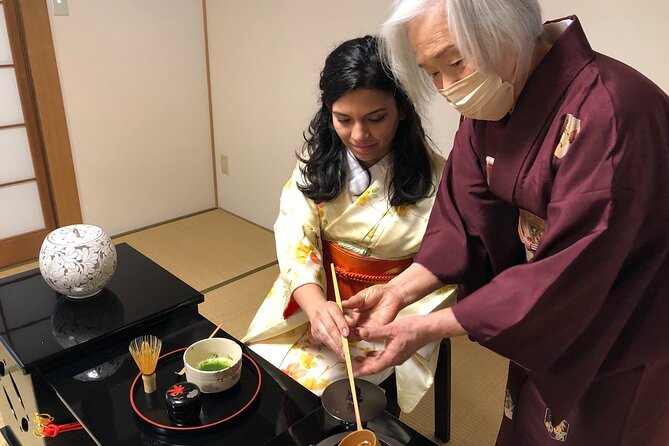
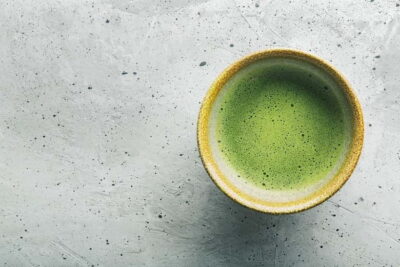
The tea lesson introduces you to preparing matcha and performing a tea ceremony. The appeal is not simply drinking green tea. It is learning the order of actions, the care given to utensils, and the quiet focus that turns a simple drink into a formal practice.
You should expect guidance throughout. This is not a test of whether you already know the correct gestures. The teachers explain what to do, then give you a chance to perform the sequence yourself.
The ceremony is a good counterpoint to calligraphy. Calligraphy asks you to control a brush. Tea asks you to control a series of movements. Both reward patience, but the tea lesson also shows how hospitality is expressed through preparation and presentation.
The half-hour limit keeps the activity approachable. You get enough time to understand the basic rhythm without sitting through a long formal ceremony that might feel difficult for a first visit. On the other hand, anyone with a serious interest in tea should see this as an introduction only.
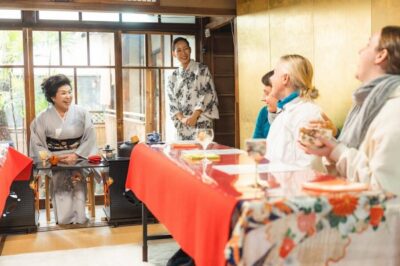
This is also where the staff’s manner matters most. The strongest descriptions of the experience repeatedly point to the warm, gracious teaching style and the amount people learned during the session. That combination is important. A ceremony can feel stiff if instructions are unclear, but friendly guidance makes it easier to participate without worrying about mistakes.
Amulet making connects craft with local belief
The amulet class is the most unusual part of the three. Many cultural programs offer tea or calligraphy, but making an amulet is less common. You learn what goes into one and create your own item during the session.
The activity is hands-on, but its real value comes from the connection to Tokuju-ji’s religious setting. Kinseki Jizo’s association with protection for children and pregnancy gives you a specific story to carry with the object. The amulet is not just a general craft project with Japanese decoration.
The class is especially appealing if you like taking home something that carries a memory of a place. You do not simply buy an amulet at a temple shop and move on. You spend time learning about it and making one yourself.
The available details do not specify the exact materials, design choices, or whether the amulet is intended for a particular blessing. I would treat it as a guided introduction to the tradition rather than assume you will receive a formal religious service or personalized prayer.
The two-hour schedule is efficient, but tightly packed
The full experience lasts about two hours. The three lessons take roughly half an hour each, with the remaining time allowing for changing clothes, movement between activities, explanations, and photographs.
That makes the program efficient for a day on Miyajima. You can sample several customs without spending half a day on a single lesson. It is also helpful for families or couples with different interests. One person may prefer calligraphy, another tea, and another the amulet activity, but everyone gets to try all three.
The tradeoff is pace. You will not have unlimited time to repeat brush strokes, ask long questions, or linger over the tea ceremony. If you want a relaxed, highly specialized study, look for a single-subject class instead. If you want variety and a clear introduction, the schedule works well.
Some people have arrived early and had time to put on kimono before the formal activities. I would not assume that early access is guaranteed, but arriving with time to spare is sensible. It reduces stress and gives you a better chance to settle in before the first lesson.
What the $171.73 price includes in practical terms
At $171.73 per person, this is not a bargain activity. The cost becomes easier to justify when you count what is included: three separate cultural lessons, kimono and apron use, the temple location, staff instruction, a small group of up to 10, and photos sent by email.
You are also paying for convenience. Arranging a kimono experience, a tea ceremony, calligraphy instruction, and an amulet workshop separately would take more planning and could cost more once transportation and separate admission are added. This package puts them in one place and fits into a two-hour window.
Still, value depends on your priorities. If you mainly want a scenic walk around Miyajima, the price may feel high. If you want a structured cultural activity and a memorable keepsake, it is easier to defend.
The program has a perfect five-star rating from 44 submitted ratings, with 100 percent recommending it. That does not guarantee that every person will feel the same, but it points to a clear pattern: the strongest benefits are the warm staff, the authentic setting, the kimono, the photos, and the chance to learn several customs in one visit.
Who will enjoy this most
I would recommend this experience to you if you want a first, friendly introduction to Japanese culture rather than an academic course. It suits couples, families with children aged six and older, and anyone who wants good photographs in traditional clothing.
It is also a strong choice for a short Japan itinerary. One family described having a private session after arriving by cruise ship, which shows how useful the compact schedule can be when your time on the island is limited. A smaller-than-maximum group can make the program feel especially personal.
You may want to skip it if you dislike structured activities, have no interest in wearing traditional clothing, or want an advanced lesson in one subject. The experience is broad by design. Its strength is variety, not depth.
The activity ends back at the meeting point. Since it is near public transportation and confirmation is provided at booking, the basic planning is straightforward. Most people can participate, and no special ability requirement is listed.
Should you book the Miyajima cultural experience?
Book it if you want to do more than look at Miyajima’s famous sights. The temple setting, kimono, photographs, and three practical lessons create a memorable two hours, and the amulet class gives the program something less common than the usual tea-and-calligraphy pairing.
I would be most likely to recommend it to first-time visitors, families, couples, and cruise passengers with a limited window on the island. At $171.73, it asks for a meaningful part of your activity budget, but it offers a lot in return.
Skip it if your main goal is low-cost sightseeing or serious study in one tradition. For everyone else, this is a thoughtful way to slow down, learn by doing, and leave Miyajima with more than photos of the torii gate.
FAQ
Where does the experience take place?
The activity begins and ends at okeiko Japan Miyajima, 741-1 Miyajimachō, Hatsukaichi, Hiroshima 739-0588, Japan. The lessons take place at Tokuju-ji Temple.
How long does the experience last?
The experience lasts approximately two hours. Each of the three main lessons takes roughly half an hour, with additional time for changing, movement, explanations, and photos.
What activities are included?
You learn to write your name in Japanese, take part in a tea ceremony, and make an amulet. A kimono and traditional apron are provided for the lessons.
Are photographs included?
Yes. The teachers take photos during the activities and send them to you by email.
What is the minimum age?
The minimum age is six. Children must be accompanied by an adult.
How large is the group?
The activity has a maximum of 10 participants. Some sessions may be smaller.
Can I cancel for a full refund?
Yes. You can cancel up to 24 hours before the experience start time for a full refund. Cancellations or changes made less than 24 hours before the start time are not accepted for a refund.
Just added in Hiroshima
- Hiroshima Peace Memorial Museum Ticket★ 4.8 · 2,727 reviews
- Hiroshima Peace Memorial Museum Admission★ 4.6 · 1,308 reviews
- Private Full Day Hiroshima Tour★ 4.5 · 29 reviews
- The Peace Memorial to Miyajima : Icons of Peace and Beauty★ 4.5 · 31 reviews
- Shore Excursion from Hiroshima Port : Private Tour in Hiroshima★ 5.0 · 17 reviews
- Hiroshima & Miyajima All-Inclusive Tour w/Licensed guide Pancho★ 5.0 · 54 reviews
- Hiroshima Saijo Sake Tasting Tour with visit to 7 Breweries★ 5.0 · 104 reviews
- Okunoshima Rabbit Island Cycling Tour with Local Guide★ 4.5 · 17 reviews
Tea Ceremonies, compared.
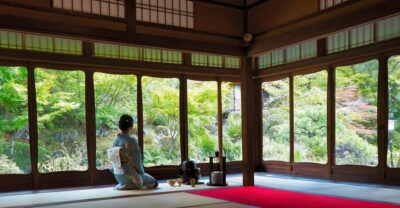
Tea Ceremony in a Traditional Tea House in Kiyomizu
Read our review →
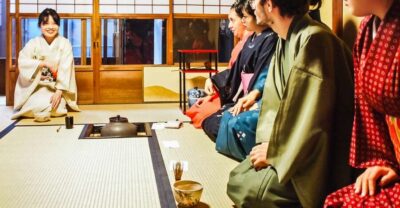
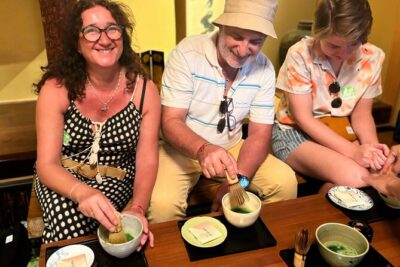
World Heritage Kyoto & Nara Uji Authentic Matcha Experience
Read our review →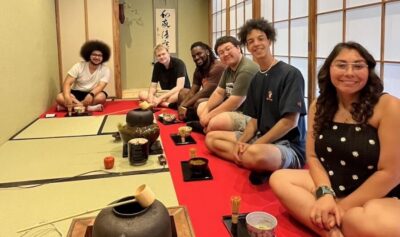
Browse the lists this tour appears in