
Reviewed · TEA CEREMONIES
Kimono and Tea Ceremony in Miyajima
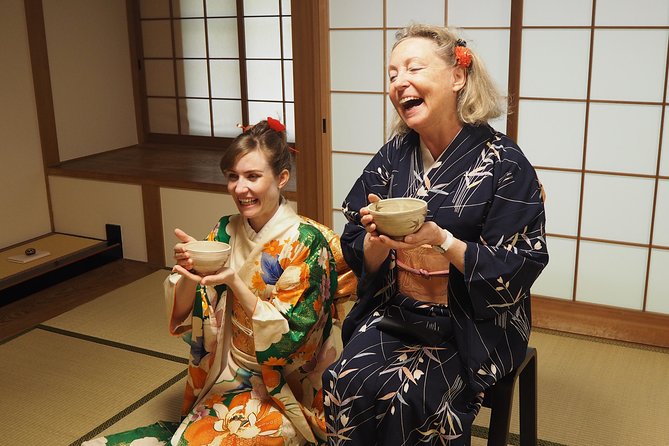
Miyajima has a quiet way into Japanese tradition. I like the careful kimono fitting and the calm temple setting, where you learn by watching and then prepare your own matcha. The main consideration is the one-hour schedule, which gives you a pleasing taste of the ceremony but not a long, formal study.
This experience costs $85.89 per person and takes place at Tokuju-ji Temple, a short walk from Miyajima’s ferry area. I also like the personal scale: the advertised group limit is 10, while many sessions feel smaller. Staff help with dressing, explain the customs in English, take photos during the activity, and let you enjoy the temple grounds afterward.
In This Review
- Key details that make this Miyajima experience special
- A quiet temple start near Miyajima’s ferry port
- Choosing a kimono from more than 100 options
- Watching the tea master before making matcha
- Why the small group makes a difference
- A table-style ceremony, not floor seating
- Photos, garden time, and the best way to use the hour
- Is $85.89 a fair price?
- Who should book this experience?
- Practical advice before you go
- Should you book Kimono and Tea Ceremony in Miyajima?
- FAQ
- Where does the Kimono and Tea Ceremony in Miyajima take place?
- How long does the activity last?
- How many people can join?
- What is included with the kimono experience?
- Do I make my own matcha tea?
- Is food served during the ceremony?
- Can children participate?
- Are photographs provided?
- What happens if the weather is poor?
- Can I cancel my booking?
Key details that make this Miyajima experience special
- More than 100 kimonos: Choose a favorite style before the staff dress you properly for the ceremony.
- A temple away from the main streets: Tokuju-ji offers a quiet setting for tea, photographs, and a break from Miyajima’s busy shopping lanes.
- You make your own matcha: After watching the tea master, you prepare and taste your own tea.
- A useful cultural lesson: You learn how to drink matcha and hear about the four principles connected with tea ceremony.
- Photos included through a questionnaire: Staff take pictures during the session, then provide them after you answer the questionnaire.
- Good for families: Children aged six and older can take part, and the staff have shown patience with groups that include children.
A quiet temple start near Miyajima’s ferry port
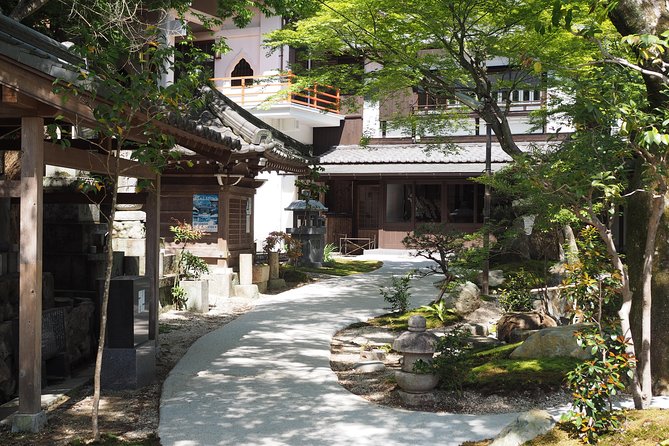
The experience begins at Tokuju-ji Temple, officially listed as 徳寿寺, or Soto Zen Kinkozan Tokuju-ji. The address is 741-1 Miyajimachō, Hatsukaichi, Hiroshima 739-0513. The meeting point is near the ferry port and public transportation, making it practical to fit into a day on the island.
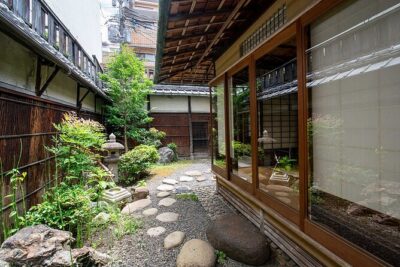
That location matters. Miyajima’s main business streets can fill with shoppers, visitors heading toward Itsukushima Shrine, and people sampling local food. Tokuju-ji gives this activity a quieter rhythm. Several people especially appreciated the small temple, garden, and sense of silence.
You return to the same meeting point at the end. That makes planning simple, especially if you want to continue sightseeing afterward. Allow enough time to find the temple, since the activity begins at a specific location rather than at the ferry terminal itself.
The setting also helps the ceremony make sense. Tea preparation is not only about drinking a green beverage. The quiet room, the measured movements, the seasonal surroundings, and the attention given to each person are part of the experience. Even in a short session, the temple setting gives the lesson more weight than a quick demonstration in a busy shop.
More Tea Ceremonies in Hiroshima:
- Hiroshima Local guided Hiking Tour&Open-air Tea Ceremony
★ 5.0 · 213 reviews - An Amazing set of Cultural experience: Kimono, Tea Ceremony and Calligraphy
★ 5.0 · 69 reviews - Hiroshima: Morning Hiking Tour with Open-air Tea Ceremony
★ 4.8 · 58 reviews
Choosing a kimono from more than 100 options
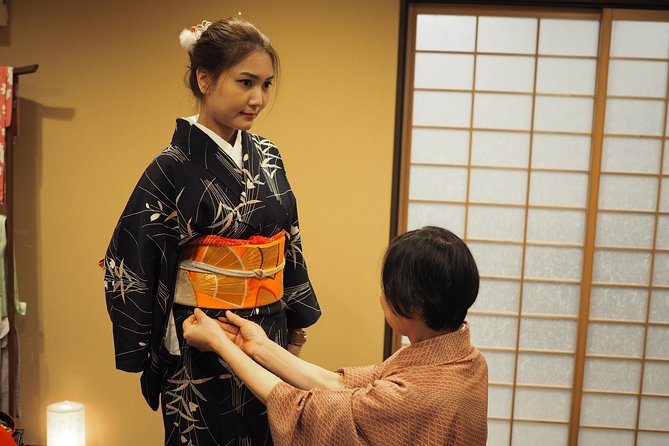
The first part of the activity is dressing. You choose from more than 100 kimonos, with staff providing everything needed to dress for the ceremony. This is not simply a matter of putting on a colorful robe for a photograph. The staff fit the clothing carefully and guide you through the process step by step.
That help is important. Traditional clothing has layers, ties, and a particular way of arranging the fabric. You do not need to know how to dress yourself, and you do not need to buy a kimono. The staff handle the fitting while helping you choose a style you like.
The clothing selection includes options for men and women. A larger-size participant reported that the staff were able to provide a suitable fit, and another group praised the quality of the fabrics. Still, the available choices and fit can vary by person, so it is sensible not to expect every design in every size.
The dressing itself takes part of the one-hour visit. That is worth remembering when you picture the ceremony. You receive a full cultural activity, but the time is shared between choosing and putting on the kimono, watching the tea ceremony, preparing matcha, tasting it, and taking photographs.
Once dressed, you can take pictures around the grounds. The temple and garden provide a more fitting backdrop than a plain studio wall. Staff also take photos during the lesson, and you can receive them by answering the questionnaire afterward. If you are visiting alone, this photo service is especially useful because you are not dependent on a companion to capture the moment.
Watching the tea master before making matcha
After dressing, you watch a tea ceremony conducted by a tea master. The demonstration shows the order and manner of the ritual, including how to drink matcha respectfully. Staff explain the meaning behind the actions rather than asking you to copy movements without context.
The lesson includes the four principles of tea-making in Buddhism. The supplied information does not set out the principles in detail, but the point is clear: the session connects the physical actions of tea preparation with ideas of respect, calm, purity, and harmony.
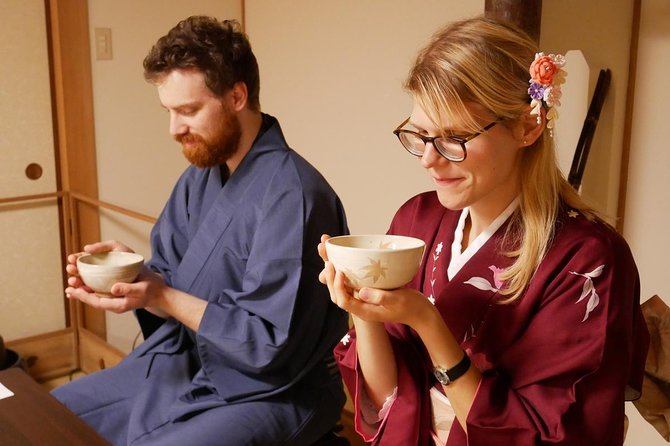
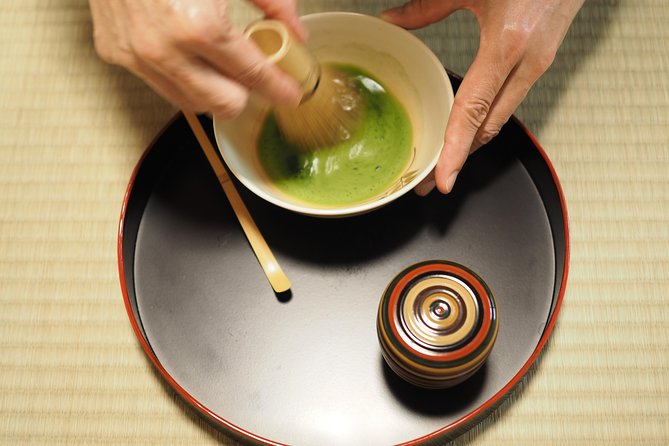
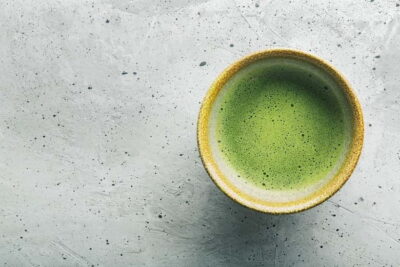
You then prepare your own matcha. This is one of the strongest parts of the activity because you move from spectator to participant. You learn a method you can recreate for friends at home, and you taste the tea you make yourself.
Matcha has a distinct flavor that may surprise you if you usually drink sweetened tea. The activity includes a sweet with the tea, which balances the bitterness and gives you a more traditional pairing. Miyajima chocolate is also offered, and it received repeated praise for its flavor. The chocolate adds a local touch, though the main value remains the ceremony and the instruction.
Staff explain how to handle the tea and answer questions during the lesson. English support is available, and the experience has been praised for clear explanations and patient guidance. That makes it a good choice if you want cultural context without already knowing Japanese customs.
Why the small group makes a difference
The maximum group size is 10 people, and the experience is described as an intimate activity for as few as six. That scale matters during the dressing and tea demonstration. You can see the tea master’s movements more easily, ask questions, and receive help without being lost in a large crowd.
A small group also makes the kimono fitting feel more personal. Staff can adjust the clothing and help with photographs. Families with children have found the staff patient and kind, and groups of friends have had time to ask questions and pose for pictures.
The group may not always be exactly six. Another group could join your session, and one party of six shared the activity with another group of six. The listed maximum is 10, so you should expect a small activity rather than a private appointment.
That distinction is useful. If you want complete privacy, confirm the group arrangement before booking. If you simply want a quieter and more attentive experience than a large city dressing shop can offer, the stated limit is reassuring.
More Kimono Experiences in Hiroshima:
- Cultural Activities :Kimono, tea ceremony, Calligraphy and Amulet
★ 5.0 · 44 reviews - Kimono and Calligraphy Experience in Miyajima
★ 5.0 · 16 reviews - [Kyoto & Nara Day Tour] Sagano Scenic Railway & Nara Park & Fushimi Inari Taisha Thousand Torii Gates & Togetsukyo Bridge & Bamboo Grove & Kimono Forest (Departing from Osaka)
★ 4.9 · 10,942 reviews - Tokyo Asakusa Kimono&Yukata Rental at Kimono Miyabi Asakusa Station
★ 4.9 · 8,489 reviews
A table-style ceremony, not floor seating
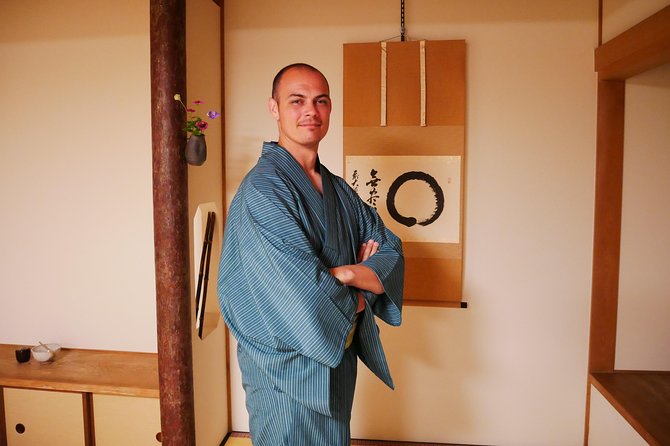
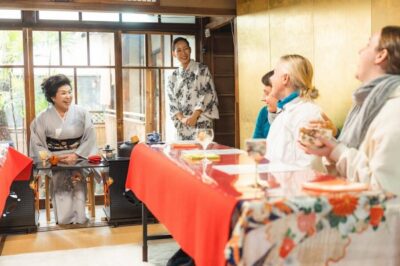
The tea ceremony uses tables rather than requiring you to sit on the floor. One person would have preferred traditional floor seating, but the provider explained that table-style practice has been used in Japan for more than 100 years and is not only a setup for foreign visitors.
This is a practical choice. Sitting on the floor for a formal ceremony can be uncomfortable, especially for older people, children, or anyone with knee or hip problems. The table arrangement lets you focus on the tea instead of worrying about how long you can kneel.
At the same time, you should know that the setting may feel less like the image of a classic tea room you have seen in photographs. If floor seating is essential to your idea of the experience, this may not match your expectations. The table format is still part of the provider’s explanation of modern Japanese practice.
Photos, garden time, and the best way to use the hour
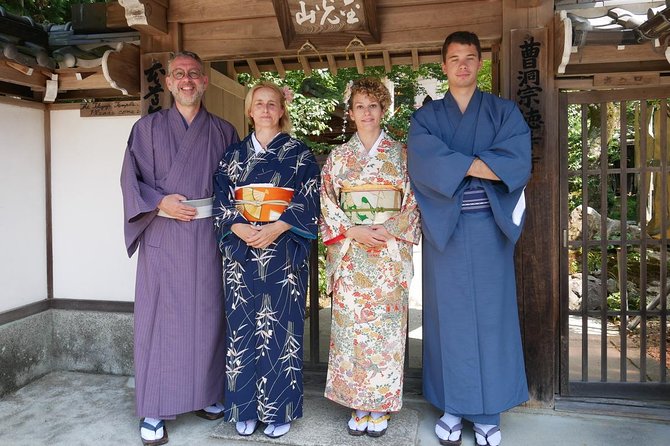
Photography is built into the activity. Staff take pictures while you are learning, and the garden gives you a place to pose in your kimono. You are also allowed time for your own photographs around the grounds.
I would treat this as a cultural lesson first and a photo session second. The pictures are a welcome souvenir, but rushing through the ceremony to collect poses would miss the point. Watch the demonstration, ask questions, make your tea, and then use the remaining time for photographs.
If you are traveling with children, the garden helps keep the activity enjoyable. The staff have worked with families that included five children, and the children took part in the tea ceremony. The minimum age is six, so younger children cannot join under the stated rules.
The garden is also a good reason to consider a morning or afternoon slot based on the rest of your Miyajima plans. The activity ends where it starts, so you can continue exploring the island after changing out of the kimono.
Is $85.89 a fair price?
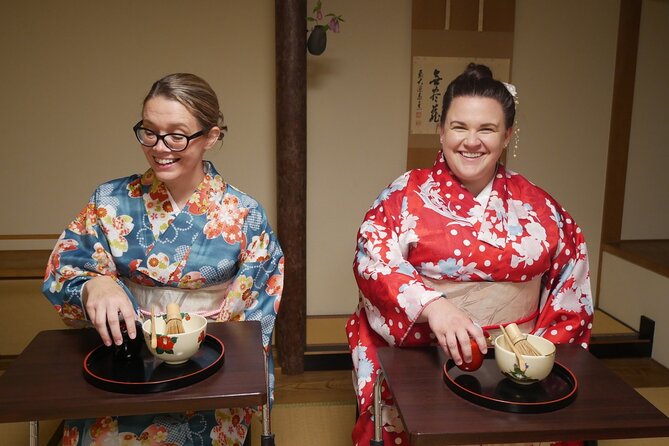
At $85.89 per person, this is not a bargain if you only want to rent a kimono for a quick photograph. The price makes more sense when you count the fitting, the tea master’s demonstration, the matcha lesson, the sweet, the temple setting, the staff assistance, and the photo opportunity.
You also avoid the cost and trouble of buying a kimono. The staff provide the clothing and dress you properly, which is valuable if you want the full look without learning the complicated process yourself.
The strongest value comes from the instruction. You do not merely hold a bowl of tea. You learn how to drink matcha with the proper manner, see a formal demonstration, prepare your own cup, and take the method home. For someone interested in Japanese culture, that is a better use of money than a purely staged costume experience.
The short duration is the main limit. One hour passes quickly, especially when dressing takes part of the session. If you want a long tea ceremony, extensive history, or a full-day cultural class, this is too brief. If you want one focused activity to add to a Miyajima visit, the price is easier to justify.
The experience has a 4.9 rating from 73 reviews, with 100 percent recommending it. Those figures point to strong satisfaction, but your expectations still matter. The activity is designed as an accessible introduction, not advanced training in tea ceremony.
Who should book this experience?
I would recommend it to first-time visitors who want a traditional Japanese activity without committing half a day. It works especially well for couples, families with children aged six or older, and small groups of friends.
It also suits anyone who wants a more personal alternative to a large kimono rental operation in Kyoto or another major city. The staff help with the full dressing process, the ceremony takes place near a small temple, and the group limit keeps the session manageable.
Solo visitors can benefit from the staff-taken photographs. People who are nervous about wearing a kimono can also book with confidence, since the fitting is guided and the staff have helped guests with different body sizes.
I would think twice if you dislike formal customs, do not want to wear layered traditional clothing, or expect a long period of free time in the garden. The activity asks you to follow a set sequence and pay attention to etiquette. That structure is the appeal, but it will not suit every mood.
The experience requires good weather. If poor weather causes cancellation, you can choose another date or receive a full refund. You can cancel for a full refund up to 24 hours before the start time, but cancellations or changes made later are not accepted.
Practical advice before you go
Meet at Tokuju-ji Temple, not simply at the ferry port. The location is near public transportation, but checking the exact Japanese address before leaving the ferry area will help you arrive without stress.
Wear clothing that you can change or adjust comfortably beneath the kimono. The supplied information does not give a dress code, so avoid assuming that your normal outfit will be ideal for every fitting. The staff provide what you need for the kimono itself.
Keep your schedule flexible after the activity. Since the session ends at the meeting point, you can continue around Miyajima, but you should not expect the ceremony to end at the ferry terminal.
Bring your questions. The staff are accustomed to explaining the tea ceremony and Japanese customs to international visitors. Asking about the steps, the four principles, or the proper way to drink matcha will give you more from the short lesson.
Finally, leave room for photographs. The temple and garden are part of the appeal, and the staff can take pictures while you are dressed. Answering the questionnaire afterward allows you to receive the photos taken during the activity.
Should you book Kimono and Tea Ceremony in Miyajima?
Book it if you want a calm, friendly introduction to Japanese culture in a small temple setting. The careful dressing, clear tea instruction, matcha preparation, sweets, and garden photographs give you several meaningful parts in one short visit.
I especially like that you learn to make your own tea instead of only watching a performance. The main tradeoff is time: at about one hour, this is an introduction rather than a full study of tea ceremony. For most visitors spending a day on Miyajima, that compact format is useful.
If wearing a kimono and taking part in a respectful tea lesson sounds like a highlight of your Japan trip, $85.89 is a reasonable price for the setting and personal help. If you want only a quick costume photograph or a long, highly formal ceremony, choose something else.
FAQ
Where does the Kimono and Tea Ceremony in Miyajima take place?
The experience takes place at Tokuju-ji Temple, also written as 徳寿寺, at 741-1 Miyajimachō, Hatsukaichi, Hiroshima 739-0513, Japan.
How long does the activity last?
The activity lasts approximately one hour.
How many people can join?
The maximum is 10 people. The experience is also described as an intimate small-group activity of about six people.
What is included with the kimono experience?
You can choose from more than 100 kimonos, and staff provide everything needed to dress you for the ceremony. Staff help with the fitting.
Do I make my own matcha tea?
Yes. You first watch the tea master conduct the ceremony, then learn how to make matcha and taste the tea you prepare.
Is food served during the ceremony?
Tea is served with a sweet. Miyajima chocolate is also offered during the experience.
Can children participate?
The minimum age is six.
Are photographs provided?
Staff take photographs during the lessons. You can receive the photos by answering the questionnaire provided by the staff.
What happens if the weather is poor?
The experience requires good weather. If it is canceled because of poor weather, you can choose a different date or receive a full refund.
Can I cancel my booking?
You can cancel up to 24 hours before the start time for a full refund. Cancellations and changes made less than 24 hours before the start time are not accepted.
Just added in Hiroshima
- Hiroshima Peace Memorial Museum Ticket★ 4.8 · 2,727 reviews
- Hiroshima Peace Memorial Museum Admission★ 4.6 · 1,308 reviews
- Private Full Day Hiroshima Tour★ 4.5 · 29 reviews
- The Peace Memorial to Miyajima : Icons of Peace and Beauty★ 4.5 · 31 reviews
- Shore Excursion from Hiroshima Port : Private Tour in Hiroshima★ 5.0 · 17 reviews
- Hiroshima & Miyajima All-Inclusive Tour w/Licensed guide Pancho★ 5.0 · 54 reviews
- Hiroshima Country Cycling: Explore Rural Life 1 HR from City★ 5.0 · 22 reviews
- Hiroshima Saijo Sake Tasting Tour with visit to 7 Breweries★ 5.0 · 104 reviews
Tea Ceremonies, compared.
Tea Ceremony in a Traditional Tea House in Kiyomizu
Read our review →
World Heritage Kyoto & Nara Uji Authentic Matcha Experience
Read our review →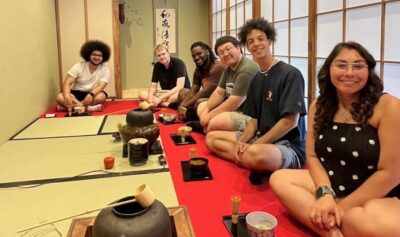
Browse the lists this tour appears in