
Reviewed · TEA CEREMONIES
An Amazing set of Cultural experience: Kimono, Tea Ceremony and Calligraphy
Culture feels personal here. At Okeiko Japan, inside historic Tokujuji Temple on Miyajima, you do more than watch a performance: you put on a kimono, whisk matcha, and practice Japanese calligraphy. I especially like the small group size, capped at eight, and the gentle staff who help with clothing, photos, and each activity.
The setting and thoughtful pace are the other big draws. You get morning or afternoon start times, and the experience includes plenty of family and group photos. The main consideration is value: at $132.14 per person, this is not a quick, cheap cultural demonstration, and the advertised duration is about 1 hour 30 minutes, while the itinerary information allows up to two hours.
In This Review
- Key points to know before booking
- Why this Miyajima cultural experience works so well
- Finding Okeiko Japan near the Miyajima ferry port
- Choosing a kimono and getting dressed
- Learning tea ceremony manners at the temple
- Trying Japanese calligraphy with your own hands
- Temple gardens, photos, and the human touch
- How much value do you get for $132.14?
- Who should book this experience?
- Booking details worth knowing
- Should you book the kimono, tea, and calligraphy experience?
- FAQ
- Where does the experience take place?
- How far is the meeting point from the ferry port?
- How long does the experience last?
- What activities are included?
- Do I get to choose a kimono?
- Are photographs included?
- Is the experience offered in the morning and afternoon?
- What is the minimum age?
- How large is the group?
- Can I cancel for a full refund?
Key points to know before booking
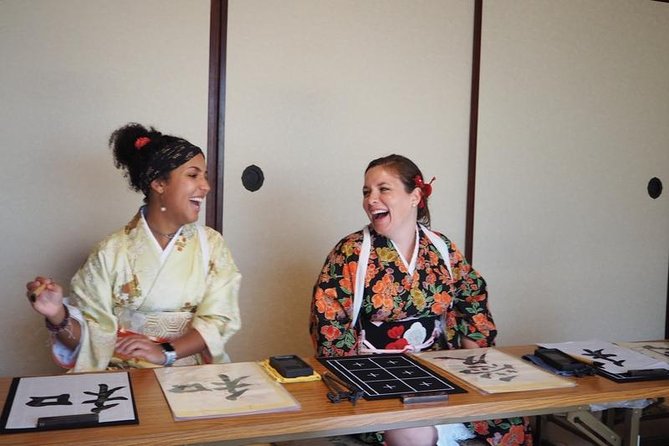
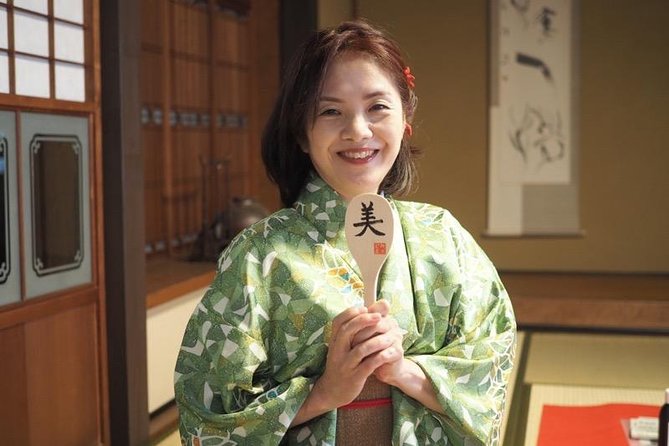
- Kimono dressing comes first: Staff help you choose a kimono in your size, then add accessories such as socks, an obi, cords, and flowers.
- You make your own matcha: The tea ceremony begins with a demonstration, then you learn the movements and whisk your own tea.
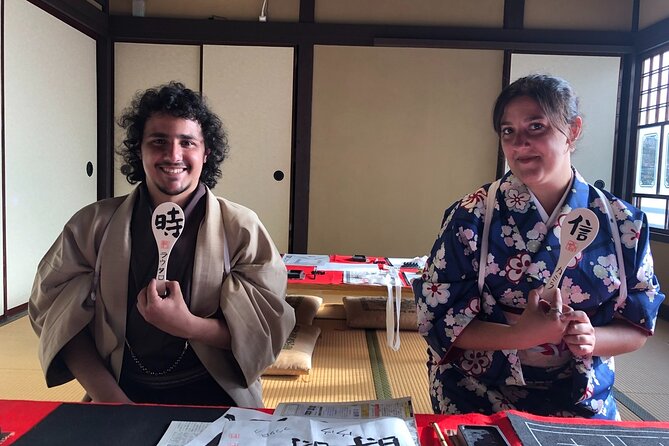
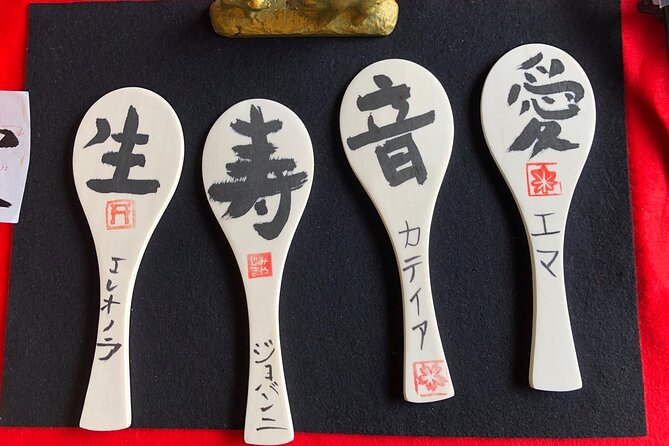
- Calligraphy is hands-on: You practice kanji and names, with some participants writing on wooden spoons that are wrapped as souvenirs.
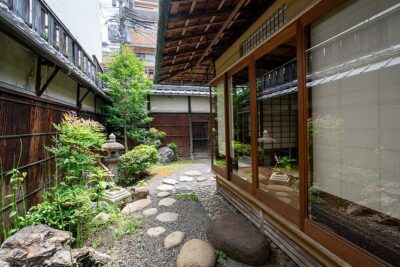
- Tokujuji Temple gives the lesson a fitting setting: The historic Zen temple and its garden provide a quiet backdrop for photos and reflection.
- Photos are part of the experience: Staff take pictures throughout the visit, including family and group shots.
- It is easy to reach on Miyajima: The meeting point is about a five-minute walk from the ferry port toward Tokujuji.
Why this Miyajima cultural experience works so well
Miyajima is famous for its shrine, torii gate, deer, and sea views. Those sights are memorable, but the island can also become a fast circuit of photos and ferry schedules. This activity gives you a reason to slow down.
I like the way the three activities fit together. The kimono introduces you to clothing and presentation. The tea ceremony adds manners, rhythm, and attention. Calligraphy lets you try the physical side of Japanese writing. None of these sections needs a full day, but together they form a more complete picture than a single demonstration.
The experience is also social without being crowded. With a maximum of eight people, you should have room to ask questions and receive help. That matters during kimono dressing, when tying the obi and arranging the accessories are not simple tasks for a first-time visitor.
The tone appears warm and relaxed rather than stiff. English explanations are available, and the staff are praised for making the ceremony understandable while keeping the activities enjoyable. That balance is important. A tea ceremony can feel formal if you do not know what is happening, but clear guidance lets you appreciate the small gestures instead of worrying about making a mistake.
More Tea Ceremonies in Hiroshima:
- Hiroshima Local guided Hiking Tour&Open-air Tea Ceremony
★ 5.0 · 213 reviews - Kimono and Tea Ceremony in Miyajima
★ 5.0 · 73 reviews - Hiroshima: Morning Hiking Tour with Open-air Tea Ceremony
★ 4.8 · 58 reviews
Finding Okeiko Japan near the Miyajima ferry port
The meeting point is Okeiko Japan Miyajima, at 741-1 Miyajimachō, Hatsukaichi, Hiroshima 739-0588. From the Miyajima ferry port, allow about five minutes on foot, heading toward Tokujuji.
This is useful to know because Miyajima visits often involve careful timing. You will need to reach the island by ferry before the selected start time, and the activity finishes back at the meeting point. The tour does not provide a separate return destination, so you can continue exploring Miyajima afterward.
Morning and afternoon starts give you some control over the day. A morning booking can leave the rest of the day for the shrine and island sights. An afternoon booking may work better if you want to explore first and then enjoy a quieter cultural break.
I would still allow extra time to find the temple. The stated walk is short, but ferry arrivals, crowds, and unfamiliar lanes can slow you down. Arriving early is sensible, especially since one family was allowed to sit and wait when they reached the venue ahead of schedule.
Choosing a kimono and getting dressed
The kimono portion is not simply a costume change. Staff help you select from the available garments in your size, then dress you properly and add coordinating pieces. The details can include socks, sandals, an obi, a cord, and a flower or other accessory.
This is one of the most praised parts of the visit, and I can see why. You are not left to guess how the layers work. The staff handle the technical dressing while you enjoy choosing colors and details. For many people, this will be the first time wearing a kimono, and the assistance makes the experience comfortable instead of awkward.
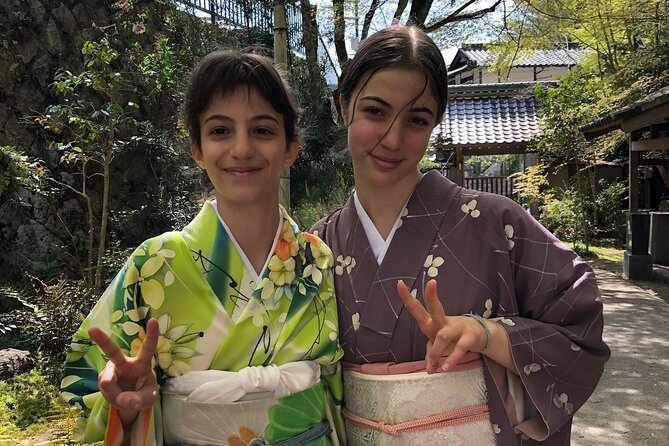
The clothing also changes the way you see the temple grounds. Walking through a garden in a kimono gives the photo session a sense of place. You are not only posing indoors against a plain background. Staff take pictures outside and throughout the activity, creating a record of the full experience.
A practical point: selection depends on available garments and sizes. One participant was pleased that a suitable size was available, but it is wise not to expect every design in every size. The information confirms a minimum age of six, so children can take part, although dressing and movement may take more patience for younger children.
The activity also suits men. One group specifically noted that the men enjoyed the experience, so this is not limited to a women’s dress-up activity. The focus is Japanese tradition, not fashion alone.
Learning tea ceremony manners at the temple
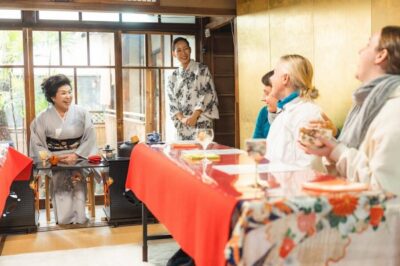
After dressing, you watch a tea ceremony and learn how it works. The session then becomes hands-on: you make your own matcha after seeing the proper movements.
The appeal is in the small actions. Tea ceremony is built around order, care, and respect, so gestures that look simple from a distance have meaning. With an English explanation, you can follow the purpose of the steps instead of treating them as a performance with no context.
The tea bowls are described as pieces by local artisans, which adds another layer to the lesson. You are not only learning how to prepare matcha. You are also handling an object made for this setting and seeing how the bowl, tea, movements, and room work together.
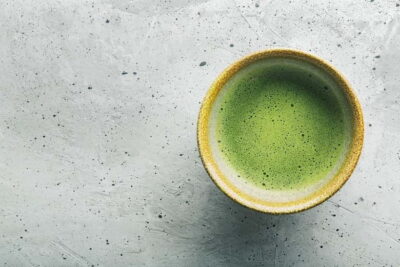
You should expect matcha to taste like matcha. It is grassy, bitter, and not sweet in the way a café latte is. The value here comes from preparing it and understanding the ceremony, not from ordering a dessert drink.
I appreciate that you get to try the process yourself. Watching a skilled host can be beautiful, but participation helps the lesson stay with you. The instructions are presented in English, and the mood is described as both serious and fun. That is the right combination for a first introduction.
The tea segment may be especially welcome after a busy morning on Miyajima. The setting provides a pause from the island’s main sightseeing routes, while the activity keeps you engaged rather than simply seated.
More Kimono Experiences in Hiroshima:
- Cultural Activities :Kimono, tea ceremony, Calligraphy and Amulet
★ 5.0 · 44 reviews - Kimono and Calligraphy Experience in Miyajima
★ 5.0 · 16 reviews - [Kyoto & Nara Day Tour] Sagano Scenic Railway & Nara Park & Fushimi Inari Taisha Thousand Torii Gates & Togetsukyo Bridge & Bamboo Grove & Kimono Forest (Departing from Osaka)
★ 4.9 · 10,942 reviews - Tokyo Asakusa Kimono&Yukata Rental at Kimono Miyabi Asakusa Station
★ 4.9 · 8,489 reviews
Trying Japanese calligraphy with your own hands
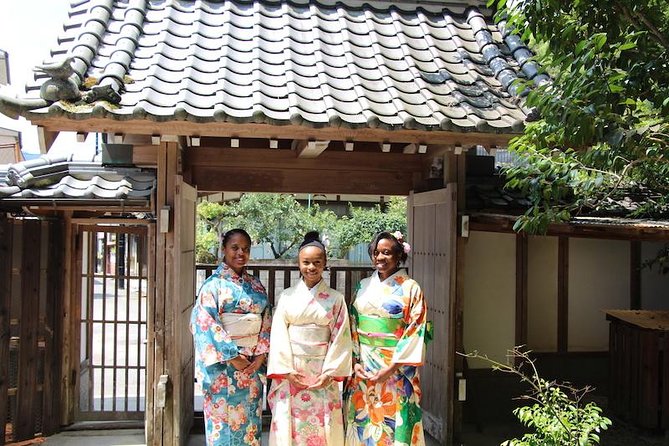
Calligraphy follows the tea portion. You practice Japanese characters, including kanji and your own names, rather than just watching someone write.
This part can be harder than it looks. Brush control, spacing, and stroke order require concentration, even when you are writing only a few symbols. That is precisely why it adds value. You gain a better sense of the skill involved in Japanese writing after making your own attempts.
Some participants write on wooden spoons, which are then beautifully wrapped as souvenirs. That is a particularly nice detail because it turns practice into something you can take home. The activity is not reduced to a disposable worksheet or a photograph of a teacher’s work.
Calligraphy also gives the experience a useful change of pace. Kimono dressing is visual and social. Tea ceremony is controlled and ceremonial. Calligraphy is quiet, practical, and slightly challenging. The three sections feel distinct, so the 90-minute format does not rely on one activity carrying the whole visit.
If you are traveling with children aged six or older, calligraphy may be the most immediately interactive part for them. Younger children may need help, but the chance to write a name or character gives them a clear task.
Temple gardens, photos, and the human touch
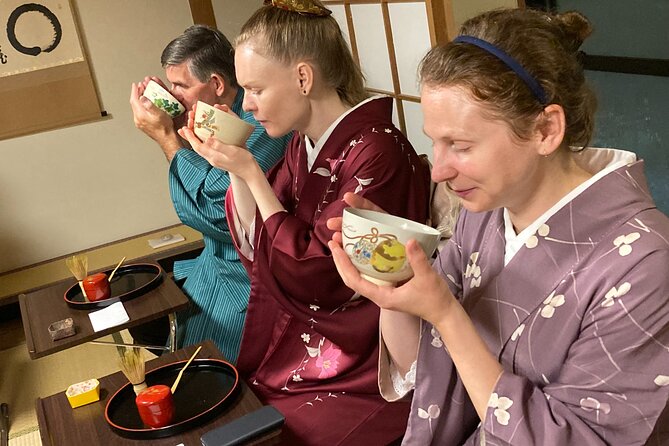
The photo session is more than an optional extra. Staff take many pictures during the visit, including family photographs, group shots, and images in the garden. For a kimono experience, this makes practical sense: getting dressed is a large part of the fun, and the photos preserve the details that are difficult to capture in a quick self-timer picture.
The staff’s role is important here. They help choose accessories, take photographs, and guide you from one activity to the next. The strongest praise is directed at their kindness, warmth, and willingness to spend time with each group.
There is one small technical caution. A participant had trouble with the app used to share the photographs, and the provider acknowledged the issue. That does not erase the value of the photo service, but I would check how and when the images will be delivered before leaving.
The temple setting also gives the activity emotional weight. One person described it as a good place for quiet reflection after the more serious parts of a Hiroshima visit. You should not expect a formal memorial program here, but the calm surroundings can offer a useful change of mood.
How much value do you get for $132.14?
At $132.14 per person, this is a premium short activity. You are paying for several things at once: professional kimono dressing, access to a temple setting, a guided tea ceremony, your own matcha preparation, calligraphy practice, staff attention, and photographs.
The small group limit helps explain the price. An eight-person maximum allows the staff to help with clothing and correct your tea or calligraphy technique. A large group could offer the same basic activities, but it would likely feel more like a staged demonstration.
The photos also affect the value. If you are already planning a kimono rental and a separate tea ceremony, this bundled experience may save time and simplify your day. If you mainly want one quick photo in traditional clothing, the price will feel high.
I would consider it a good splurge for a special day on Miyajima, particularly for families, couples, and people who want a structured cultural activity rather than another sightseeing stop. The high satisfaction level and full recommendation rate support that judgment, but the cost remains real. Budget-conscious visitors should compare it with simply visiting Miyajima’s public sights at no extra activity fee.
The timing matters too. The experience is listed as approximately 1 hour 30 minutes, while the itinerary gives a two-hour allocation. Plan around the longer window so you do not rush to another booking or ferry connection.
Who should book this experience?
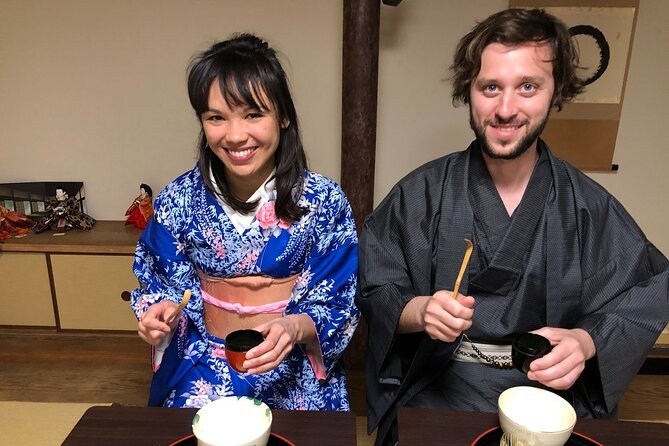
I would recommend it to you if you want personal instruction and photographs, not just a quick look at Japanese customs. It is particularly suitable for:
- Families with children aged six and above
- Couples seeking a shared cultural activity
- Small groups who value individual attention
- Visitors who want to wear a kimono without arranging every detail themselves
- First-time visitors who want clear English explanations
- Anyone looking for a calmer activity after visiting Hiroshima’s memorial sites
It also works well for mixed-age groups. The dressing and photos appeal to people who enjoy presentation, while tea and calligraphy give the visit more substance. Men are welcome, and the experience is not framed as a women-only activity.
You may want to skip it if you dislike structured demonstrations, have no interest in wearing traditional clothing, or are watching every yen. The experience is also not ideal for a very tight schedule because it requires a ferry trip to Miyajima and takes up a meaningful part of your visit.
Booking details worth knowing
Confirmation is provided at booking, and the activity is near public transportation. Most people can participate, and the minimum age is six. The group maximum is eight.
Morning and afternoon departures offer flexibility, but your chosen start time still needs to fit your ferry plans. The meeting point and ending point are the same, so you can arrange your own next stop on Miyajima.
Free cancellation is available if you cancel at least 24 hours before the local start time. Cancellations or changes made within 24 hours are not accepted for a refund. That is a useful safety net, but it does not cover a last-minute change of plans.
Should you book the kimono, tea, and calligraphy experience?
Yes, if you want your Miyajima visit to include participation rather than sightseeing alone. The kind staff, small group, temple setting, and steady mix of activities make this feel more substantial than a simple kimono photo stop.
I would book it for the cultural instruction and personal attention, with the photos as a welcome bonus. At $132.14, it is best treated as a special experience, not a bargain attraction. If that price fits your Hiroshima budget and you can spare up to two hours, Okeiko Japan offers a memorable way to connect clothing, tea, writing, and place.
FAQ
Where does the experience take place?
It takes place at Okeiko Japan Miyajima, inside the historic Tokujuji Temple area on Miyajima.
How far is the meeting point from the ferry port?
The meeting point is about a five-minute walk from the Miyajima ferry port, heading toward Tokujuji.
How long does the experience last?
The experience is listed as approximately 1 hour 30 minutes. The itinerary information allows up to two hours, so plan for the longer period.
What activities are included?
You learn to wear a kimono, take part in a tea ceremony, make your own matcha, and practice Japanese calligraphy.
Do I get to choose a kimono?
Yes. Staff help you choose from available kimonos in your size and assist with the clothing and accessories.
Are photographs included?
Staff take photographs throughout the experience, including during the kimono portion and in the temple gardens. A photo-sharing app has been used to deliver images.
Is the experience offered in the morning and afternoon?
Yes. Morning and afternoon start times are available.
What is the minimum age?
The minimum age is six.
How large is the group?
The activity has a maximum of eight participants.
Can I cancel for a full refund?
Yes, if you cancel at least 24 hours before the experience start time. Cancellations or changes made less than 24 hours in advance are not refunded or accepted.
Just added in Hiroshima
- Hiroshima Peace Memorial Museum Ticket★ 4.8 · 2,727 reviews
- Hiroshima Peace Memorial Museum Admission★ 4.6 · 1,308 reviews
- Private Full Day Hiroshima Tour★ 4.5 · 29 reviews
- The Peace Memorial to Miyajima : Icons of Peace and Beauty★ 4.5 · 31 reviews
- Shore Excursion from Hiroshima Port : Private Tour in Hiroshima★ 5.0 · 17 reviews
- Hiroshima & Miyajima All-Inclusive Tour w/Licensed guide Pancho★ 5.0 · 54 reviews
- Hiroshima Country Cycling: Explore Rural Life 1 HR from City★ 5.0 · 22 reviews
- Hiroshima Saijo Sake Tasting Tour with visit to 7 Breweries★ 5.0 · 104 reviews
Tea Ceremonies, compared.
Tea Ceremony in a Traditional Tea House in Kiyomizu
Read our review →
World Heritage Kyoto & Nara Uji Authentic Matcha Experience
Read our review →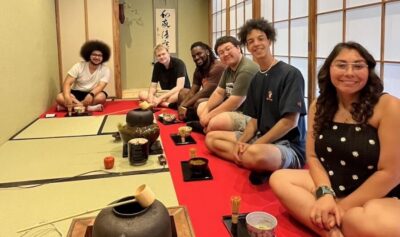
Browse the lists this tour appears in