
Reviewed · TEMPLES AND SHRINES
Fushimi Inari Hidden Hiking Tour (Private Option Available)
Fushimi Inari rewards those who leave the pavement. This three-hour hike takes you from the Tofukuji area through forest paths, bamboo, and small shrines before reaching Kyoto’s famous Fushimi Inari-Taisha. I like the quiet approach to the torii gates and the chance to ask a guide about fox statues, shrine customs, and inscriptions along the way. The main catch is simple: this is a real uphill hike, not a gentle stroll.
The small group size, capped at seven people, gives you room to set a sensible pace and ask questions. Guides such as Emi, Naru, Hina, Yuko, Josh, Shin, Matt, and Yukari have been praised for clear explanations, good company, thoughtful pacing, and helpful photos. You will need grippy shoes, water, and enough fitness for roughly 7 kilometers of uneven ground and stairs.
In This Review
- Key points before you book
- Why this route changes Fushimi Inari
- From Tofukuji toward the mountain
- The forest trail and natural bamboo
- The uphill work: what 7 kilometers feels like
- Meeting the torii gates from the back
- The view toward Fushimi-Momoyama Castle
- Guides, group size, and the human side
- Weather, insects, and what to bring
- Is $63.14 a fair price?
- Who should book this hike?
- Should you book the Fushimi Inari Hidden Hiking Tour?
- FAQ
- How long is the Fushimi Inari Hidden Hiking Tour?
- Where does the tour begin?
- Where does the tour finish?
- Is this a difficult hike?
- What should I wear and bring?
- What happens if the weather is poor?
Key points before you book
- A back-door route to Fushimi Inari: Reach the shrine through forest trails instead of joining the busiest approach from the main entrance.
- Natural bamboo and a minor shrine: The route includes peaceful spots that many self-guided visitors miss.
- About 7 kilometers in three hours: Expect steady uphill walking, stairs, and some slippery ground.
- Small groups capped at seven: You get direct access to the guide and a better chance to move at your own pace.
- Fushimi-Momoyama Castle views: From high on the mountain, you can see toward the castle area.
- Best practical gear: Wear shoes with good grip, bring water, and use long sleeves, long pants, and mosquito repellent.
Why this route changes Fushimi Inari
Fushimi Inari-Taisha is one of Kyoto’s great sights, but its fame creates a problem. The lower torii gates and main entrance can become crowded, especially during peak foliage season and Japanese holiday periods. A visit that should feel reflective can quickly turn into a slow shuffle for photographs.
This tour solves much of that problem by approaching the shrine from less-used paths. You begin near FamilyMart Nakai Tofukuji at 12-chōme-232 Honmachi, then walk toward the mountain rather than heading straight into the main entrance crowd. The exact flow can vary. One guide reversed the route, beginning near the upper section and finishing at the busy entrance, which helped the group avoid the heaviest crowds as the morning progressed.
That flexibility matters. The tour does not promise an empty Fushimi Inari, and you will meet more people once you reach the main shrine areas. But the forest section and upper mountain can feel far calmer than the approach below. In some cases, you may have long stretches of trail largely to yourself, even on a busy day.
The reward is not only fewer people. You see how the shrine fits into the wooded mountain around it. The orange gates become part of a longer walk through nature, rather than a quick photo stop.
More Temples and Shrines in Kyoto
- [Kyoto & Nara Day Tour] Sagano Scenic Railway & Nara Park & Fushimi Inari Taisha Thousand Torii Gates & Togetsukyo Bridge & Bamboo Grove & Kimono Forest (Departing from Osaka)
★ 4.9 · 10,942 reviews - Kyoto: Fushimi Inari, Kinkakuji, Bamboo Grove 1 Day Bus Tour
★ 4.8 · 4,316 reviews - Kyoto: Tea Ceremony in a Traditional Tea House in Kiyomizu
★ 4.9 · 3,519 reviews
From Tofukuji toward the mountain
The meeting point is in front of FamilyMart Nakai Tofukuji. This is near public transportation and gives the hike a practical starting point away from Fushimi Inari’s main entrance. You finish at Fushimi Inari-Taisha, in front of the main shrine at 68 Fukakusa Yabunouchichō.
The opening section takes you through the Tofukuji area and toward Fushimi Inari. The route can include a residential neighborhood before reaching forest, which gives you a useful contrast. You see an ordinary part of Kyoto first, then watch the city give way to wooded slopes and religious sites.
I like this start because it avoids the feeling of arriving at a famous attraction through a wall of people. You have time to settle into the pace, learn how the hike works, and ask your guide questions before reaching the most recognizable gates.
Your guide handles the navigation. That is a real benefit here. The less-used paths are not the kind of routes most people would confidently find on their own, and a wrong turn could waste time or pull you away from the planned route. The guide also helps you understand what you are seeing instead of treating the walk as a physical challenge alone.
The forest trail and natural bamboo
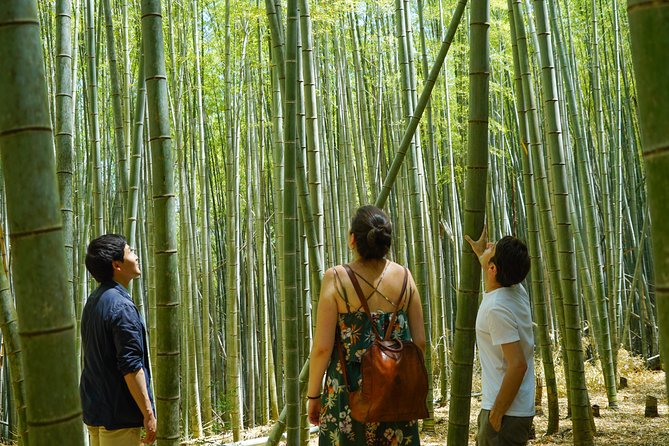
The main attraction of this experience is the forest route. You leave paved paths and follow a narrow mountain trail through trees and bamboo. Some sections are uneven, and the ground can become slippery, particularly after rain.
The bamboo forest is smaller and quieter than Kyoto’s famous Arashiyama bamboo grove. That is part of its appeal. You are not going for a long corridor of towering stalks packed with photo stops. Instead, the bamboo appears as one part of a wider mountain walk, alongside trees, slopes, shrines, and quiet turns in the trail.
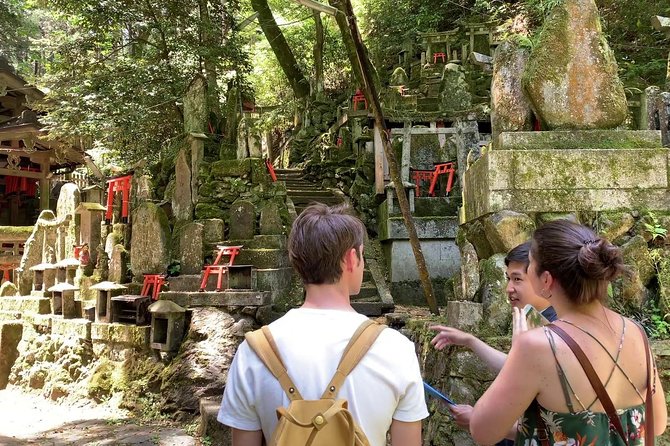
The route also reaches a small Inari shrine away from the standard tourist path. This gives your guide a chance to explain the local religious setting in a more personal way. The larger Fushimi Inari complex is famous for its torii gates, but small side shrines help you see how worship is spread through the mountain.
Some accounts of the route also describe tucked-away water features, including small waterfalls. These details can depend on the exact conditions and path used, so I would treat them as possible bonuses rather than guaranteed stops.
This section is where the tour earns its price. You could walk around the lower shrine area on your own for free, but the quiet trail, route finding, and interpretation are the real product here. You are paying for access to a path that is difficult to discover casually and for a local who can connect the scenery with the shrine’s customs.
The uphill work: what 7 kilometers feels like
The distance is about 7 kilometers, or roughly 4.3 miles, over approximately three hours. That works out to a moderate outing, but distance alone does not tell the full story. The walk includes uphill sections, narrow trails, stairs, and a descent from the shrine areas.
You do not need to be an athlete. Several people found the pace manageable, especially because the guides stopped regularly and adjusted the walk when needed. Still, the operator recommends a moderate level of fitness, and that advice is worth taking seriously.
If you have trouble walking or are not in regular condition, this is not the right Kyoto activity. The trail is described as moderate, with some partially technical sections. The phrase hike, not stroll is the useful distinction.
Your guide may offer options depending on your energy. Matt was praised for doing this, and other guides kept groups engaged while slowing down when needed. Even so, the tour has a fixed duration and route. You should arrive ready to walk rather than expecting a flexible sightseeing circuit.
Rain can make the outing harder. One wet-weather outing remained worthwhile because the guide continued to explain the shrines and adjust the pace, but slippery steps and muddy ground change the experience. The activity requires good weather, and poor conditions may lead to a new date or a full refund.
A completely different kind of day out:
- PERFECT KYOTO 1-Day Bus Tour
★ 5.0 · 13,518 reviews - Kyoto: Gion Make Your Own Chopsticks with Engraving Option
★ 5.0 · 3,465 reviews - Kyoto Nara Day Trip │ Kiyomizu-dera Temple + Fushimi Inari-taisha Shrine + Nara Park (Departing from Osaka/Kyoto)
★ 4.7 · 3,408 reviews - Kyoto Geisha Walking Tour: Gion District & Hidden Gems
★ 4.7 · 3,273 reviews
Meeting the torii gates from the back
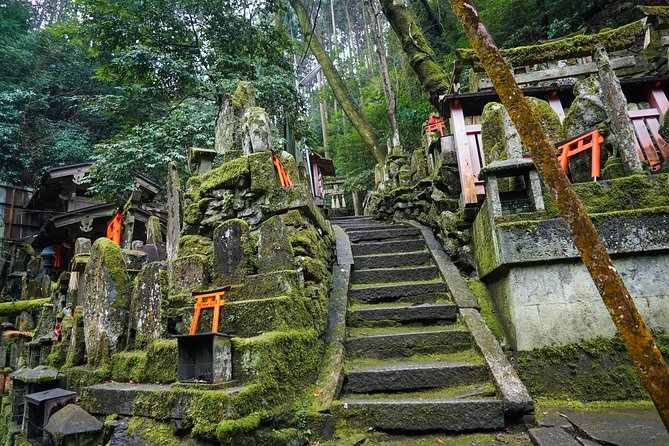
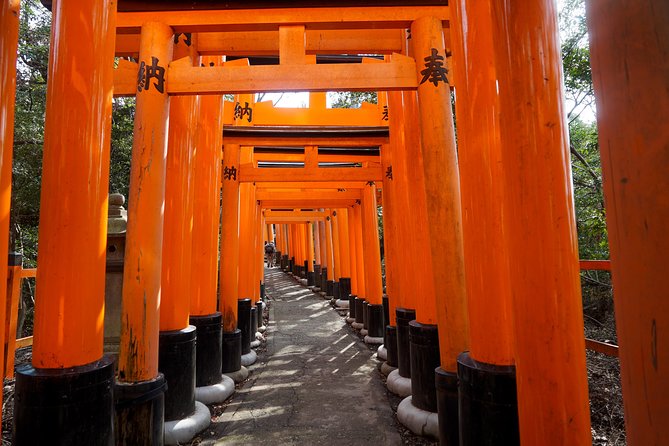
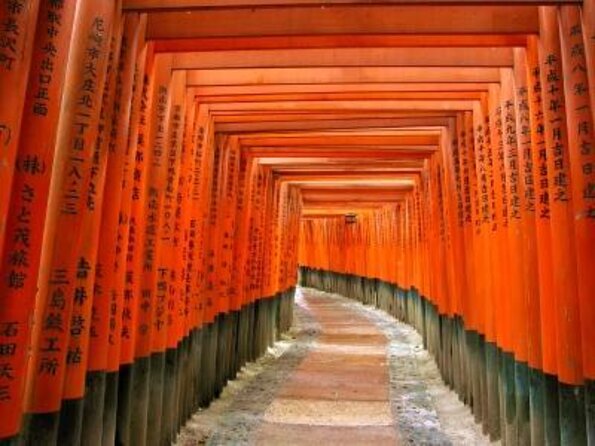
Eventually, the forest trail brings you to Fushimi Inari-Taisha. The shrine is famous for its thousands of orange torii gates, donated by individuals and businesses and placed along the mountain paths. The gates create a striking sequence of color, shade, and movement as you climb.
Approaching from the rear gives you a different first impression. Instead of beginning at the most crowded entrance and working upward with the largest stream of people, you encounter the upper sections after earning the view through the woods. You can then make your way toward the main shrine area.
The upper mountain is usually calmer than the base, though the tour does not remove crowds entirely. As you descend toward the main entrance, the number of people may increase. That arrangement is useful because the quieter parts come first, while the busier area becomes your finish rather than the entire visit.
A guide adds value here by explaining the fox imagery and the meaning of the shrine setting. Guides have also read inscriptions on gates and answered questions about Japanese traditions and religious customs. This turns a beautiful sequence of orange arches into a place you can better understand.
Expect stairs. The route includes steep climbs and many steps, especially around the shrine sections. Bring your camera, but do not let the gates turn the hike into a nonstop photo session. The best moments may be the quieter stretches between the major shrine spots.
The view toward Fushimi-Momoyama Castle
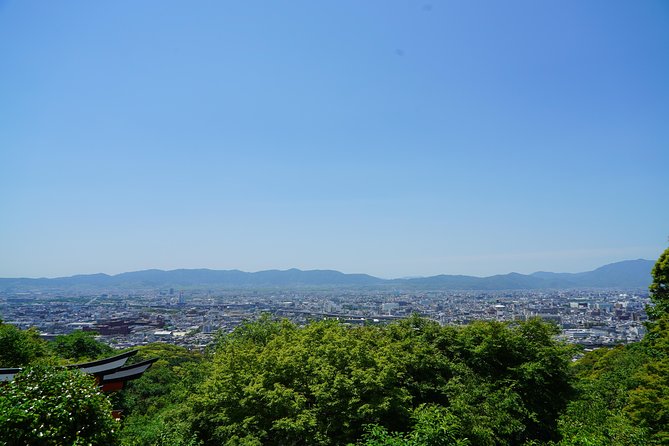
From high on Fushimi Inari, the tour includes a view toward Fushimi-Momoyama Castle. The castle was associated with Hideyoshi and later rebuilt under Ieyasu, and the area is also linked with peach trees after the castle’s reconstruction.
This is not a separate castle visit. You do not tour the interior or spend a long time at the site. Think of it as a scenic viewpoint and a chance to connect the mountain walk with Kyoto’s wider political past.
The view also gives the hike a satisfying high point before the route turns toward the shrine areas and the final entrance. Your guide can provide the context, while you get a broad look across the surrounding area.
Guides, group size, and the human side
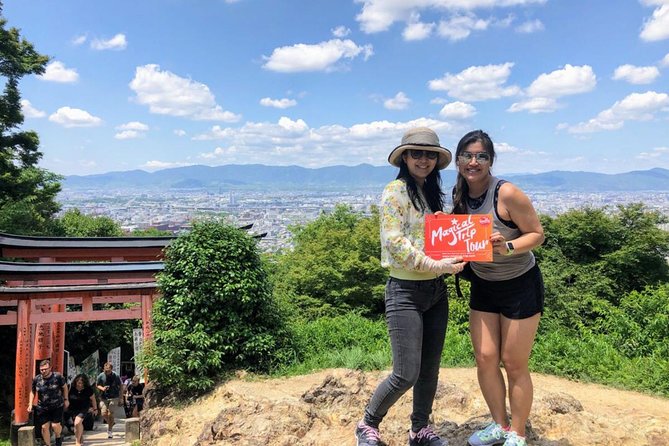
The maximum group size is seven. That is small enough for direct conversation, and it prevents the guide from becoming a distant voice at the front of a long line. If your group is smaller, the experience can feel almost private. One booking had only one participant, while another included two guides because a trainee was present.
The guides are a major part of the tour’s appeal. Emi was praised for starting early and helping the group avoid the growing crowds. Naru was noted for balancing information with humor and for taking strong family photos. Yuko carried mosquito repellent on a very hot day and kept an energetic pace on the more technical sections.
Josh, Shin, Hina, Matt, Yukari, Skito, Duncan, and others were also praised for their friendly manner, local explanations, photography, patience, and practical help. One guide even helped a couple find the subway after the walk. These small acts matter because a three-hour hike gives you plenty of time to talk.
The tour includes photos taken during the walk. That is useful if you want pictures of the group without constantly stopping to set up a phone. You should not expect a formal photography tour, but the guides have been praised for finding creative angles, especially in the bamboo and torii sections.
Weather, insects, and what to bring
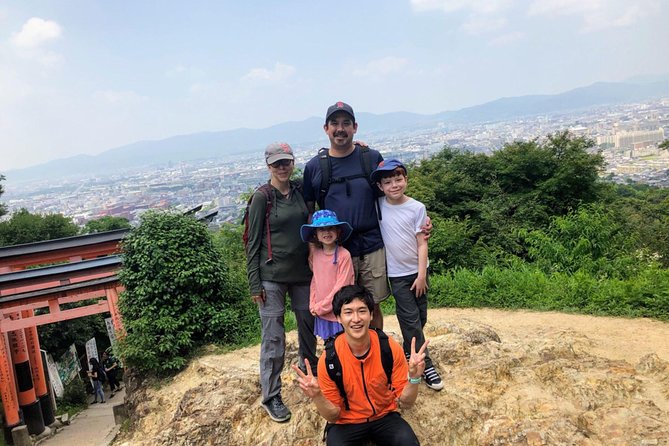
Kyoto’s summer heat and humidity can make this hike much tougher. Bring water, wear a hat, and plan for heat rather than assuming the forest will keep you cool. The mountain provides shade, but it does not erase the humidity.
Mosquitoes and other insects are possible because you spend time in the woods. Long sleeves and long pants are recommended, and mosquito repellent is a smart addition. Yuko’s preparation with repellent was especially useful on a hot outing.
Wear shoes with good grip. Running shoes with worn soles are a poor choice if the trail is damp. Hiking shoes are not required by the stated information, but secure footwear is important on narrow paths, slippery ground, and stairs.
Food and drinks are not included. Eat beforehand and bring your own water. The tour lasts only about three hours, but the uphill effort makes hydration more important than it would be on a standard city walk.
Is $63.14 a fair price?
At $63.14 per person, this is not the cheapest way to see Fushimi Inari. The shrine itself has no admission charge, and you can walk the public paths without booking a guide.
The value comes from the route and the guidance. You get a roughly 7-kilometer hike, forest and bamboo sections, a small group, navigation on less-used trails, shrine interpretation, castle views, and tour photos. If you would otherwise spend time trying to locate the back route or worrying about getting lost, the fee is reasonable.
The price makes less sense if you only want to photograph the lower torii gates or if uphill walking is not appealing. You can visit the main shrine independently and avoid paying for an activity whose central feature is physical effort.
Group discounts may reduce the per-person cost for larger bookings. A private option is also available, which could suit families or couples who want a more personal pace, though the supplied details do not specify the private price or exact arrangements.
Who should book this hike?
I would choose this tour if you want Fushimi Inari to feel like an outing rather than a quick attraction stop. It suits people who enjoy walking, want quieter paths, and like learning the meaning behind shrine symbols and customs.
Families with older children and adult children can enjoy it, provided everyone can manage the distance and stairs. Couples and small groups may appreciate the photos and the chance to avoid the busiest approach.
I would skip it if you have difficulty walking, dislike uneven trails, or want a relaxed city tour with frequent cafés and places to sit. Hot summer weather, rain, and insects are not minor details here. They can shape the whole experience.
Free cancellation is available up to 24 hours before the start time. Changes or cancellations inside that window are not refunded, and poor weather may lead to a different date or a full refund.
Should you book the Fushimi Inari Hidden Hiking Tour?
Book it if your ideal Fushimi Inari visit includes bamboo, forest, small shrines, local explanations, and fewer people on the approach. The strongest reason to go is not simply seeing the orange gates. It is seeing them after a quiet mountain walk, with a guide who can handle the route and explain what the symbols mean.
Skip it if you want only the famous entrance, a short walk, or a fully paved route. For everyone else, this is a well-priced way to see a more peaceful side of one of Kyoto’s busiest sights. Bring sturdy shoes, water, and repellent, and you will be prepared for the parts that make this tour special.
FAQ
How long is the Fushimi Inari Hidden Hiking Tour?
The experience lasts approximately three hours and covers about 7 kilometers in total.
Where does the tour begin?
It begins at FamilyMart Nakai Tofukuji, located at 12-chōme-232 Honmachi, Higashiyama Ward, Kyoto.
Where does the tour finish?
The tour ends in front of the main shrine of Fushimi Inari-Taisha at 68 Fukakusa Yabunouchichō, Fushimi Ward, Kyoto.
Is this a difficult hike?
The hike is described as moderate rather than highly difficult, but it includes uphill walking, stairs, narrow paths, and uneven or slippery ground. A moderate level of fitness is recommended.
What should I wear and bring?
Wear shoes with good grip, long sleeves, and long pants. Bring water, a hat, and mosquito repellent. Food and drinks are not included.
What happens if the weather is poor?
The activity requires good weather. If it is canceled because of poor conditions, you will be offered another date or a full refund.
More Hiking and Trekking in Kyoto
- Kyoto: 3-Hour Fushimi Inari Shrine Hidden Hiking Tour
★ 4.9 · 270 reviews - Kyoto Hiking Tour: The Nature and Legends of Kurama and Kibune
★ 5.0 · 75 reviews - Kyoto: Hike and Hot Springs in Kurama
★ 5.0 · 49 reviews - Kyoto: Fushimi Inari Hidden Hike (Private)
★ 5.0 · 31 reviews
Just added in Kyoto
- The “Golden Route” and Ancient Japan by DIAMIR Erlebnisreisen – 14-Day Tour★ 2.0 · 2 reviews
- Japan: Castles & Cuisine by G Adventures – 6-Day Kyoto to Osaka Tour★ 4.5 · 4 reviews
- Cycle Japan by Explore! – 13-Day Kyoto to Tokyo Tour★ 4.7 · 12 reviews
- Cycle Japan by Intrepid Travel – 11-Day Kyoto to Tokyo Tour★ 4.8 · 2 reviews
- Classic Japan by Intrepid Travel – 11-Day Kyoto to Tokyo Tour★ 4.4 · 14 reviews
- Ancient & Modern Japan 14-Day Tour by Exodus Adventure Travels★ 4.4 · 40 reviews
- 5 Day Cultural Adventure of Kyoto, Nara & Osaka by Tourist Journey★ 2.5 · 2 reviews
- 12 Days Kinosaki Onsen Escape: A Journey Through Japan’s Timeless Towns by UME Travel★ 4.8 · 5 reviews
Temples and Shrines, compared.
![[Kyoto & Nara Day Tour] Sagano Scenic Railway & Nara Park & Fushimi Inari Taisha Thousand Torii Gates & Togetsukyo Bridge & Bamboo Grove & Kimono Forest (Departing from Osaka)](https://media.japanvisits.com/wp-content/uploads/kyoto-nara-day-tour-sagano-scenic-railway-nara-park-fushimi-inari-taisha-thousand-torii-gates-togetsukyo-bridge-bamboo-grove-kimono-forest-departing-from-osaka-k110001-400x257.jpg)

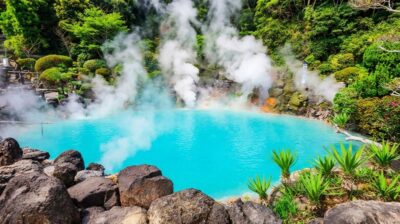
Kyushu One-Day Tour: Yufuin no Mori Train & Yufuin Town & Nyoirin-ji Temple & Dazaifu & Hell Hot Springs (Departing from Fukuoka)
Read our review →
Fushimi Inari, Kinkakuji, Bamboo Grove 1 Day Bus Tour
Read our review →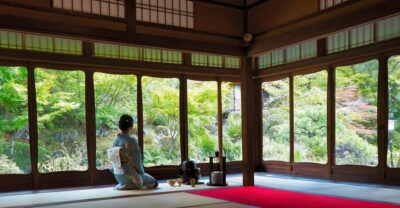
Tea Ceremony in a Traditional Tea House in Kiyomizu
Read our review →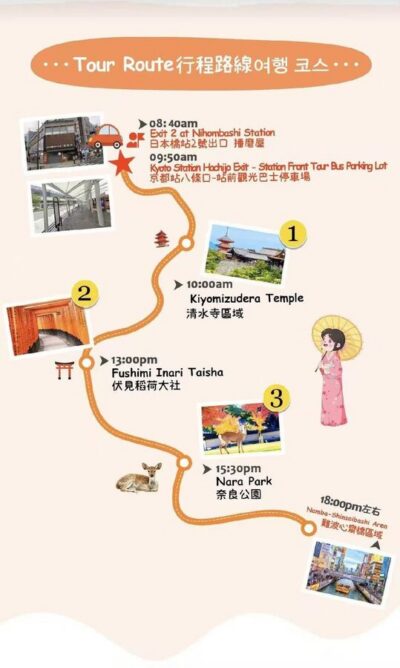
Kyoto Nara Day Trip │ Kiyomizu-dera Temple + Fushimi Inari-taisha Shrine + Nara Park (Departing from Osaka/Kyoto)
Read our review →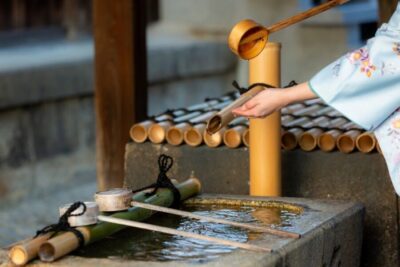
Browse the lists this tour appears in