
Reviewed · MUSEUMS AND GALLERIES
Samurai and Ninja Experience at the Samurai & Ninja Museum in Tokyo
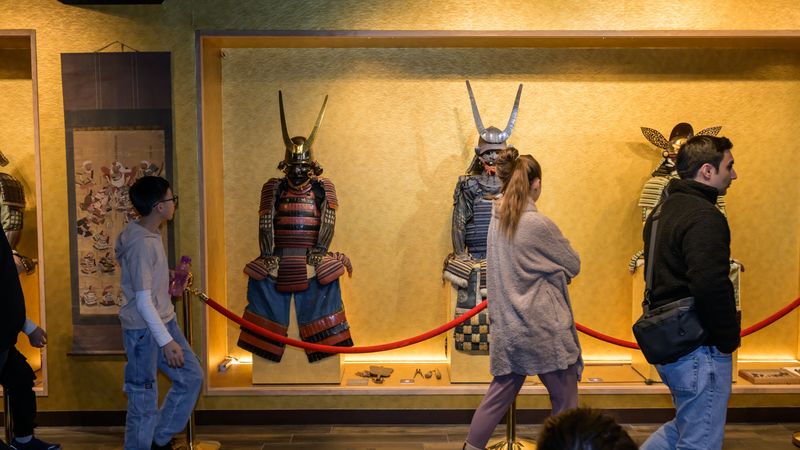
Samurai armor, ninja history, and a chance to try throwing a ninja star all fit into this compact Asakusa visit. The one-hour guided format gives you a clear introduction to the subject, then shifts from looking at displays to taking part yourself.
I like two things in particular: the guide explains the history in English, and the activities give children and adults something to do beyond reading exhibit labels. Dressing up in samurai gear and posing with replica swords also makes for a memorable photo. One consideration: this is a group-led tour, not a museum visit where you can browse at your own pace, and some visitors feel the time passes quickly.
In This Review
- At a glance
- The tour starts with samurai and ninja history
- Looking closely at armor, swords, and artifacts
- From watching to dressing up
- The ninja-star challenge brings the energy
- How much time to set aside
- Is the $21.29 starting price good value?
- Getting to the museum in Asakusa
- Who will enjoy this experience most?
- Practical details before you book
- Should you book it?
- FAQ
- How long is the Samurai and Ninja Experience?
- Is the tour conducted in English?
- What activities are included?
- Where is the museum?
- How do I get to the museum by train?
- Are children allowed?
- Is the venue wheelchair-accessible?
- Can I cancel or change my booking?
At a glance
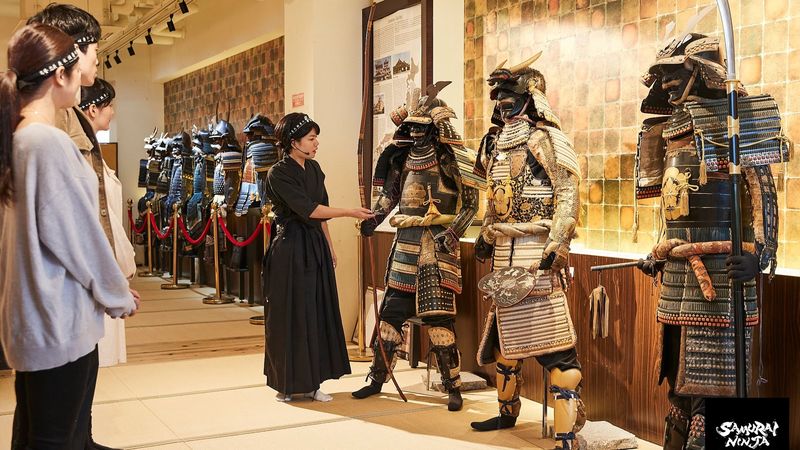
- A guided introduction: The English-language tour covers samurai and ninja history, with guides including Yu, Ann, Mami, and others.
- Artifacts at close range: See preserved objects and displays, including samurai armor and swords.
- Your turn to try: Put on samurai costume gear, pose with replica swords, and take part in a supervised ninja-star activity.
- A short visit: Plan for about an hour, though some visitors have found the actual tour closer to 40 minutes.
- In Asakusa: The museum is a short walk from Asakusa stations on the Tokyo Metro and Tsukuba Express.
- A family-friendly option: Children from age 3 can attend with a paying adult. Children 0 to 2 enter free.
The tour starts with samurai and ninja history
This is a guided museum experience, not a large collection you explore alone. A museum guide takes the group through the displays and explains the history in English or Japanese. The English tour is the practical choice for most international visitors, and the guide-led format means you can ask questions and follow the story as you go.
The subject can easily get reduced to costumes and movie myths. Here, the introductory talk gives you historical context before the hands-on activities begin. Guides use clear explanations and, at times, quizzes to keep the group involved. That combination works especially well for families: children have a reason to listen, while adults get more than a quick photo stop.
The guides are a big part of the experience. Yu, Ann, Mami, and other named hosts have been praised for making the explanations engaging and easy to follow. You cannot request a particular guide based on the information available, but the tour is hosted by staff in English and Japanese.
More Castles and Historic Sites in Tokyo
- Tokyo: Imperial Palace and Shogun Historical Walking Tour
★ 5.0 · 2,251 reviews - Tokyo Castle & Imperial PalaceーShogun Walking Tour
★ 4.7 · 1,068 reviews - Tokyo: Samurai Ninja Museum Guided tour and Experience
★ 4.6 · 1,010 reviews
Looking closely at armor, swords, and artifacts
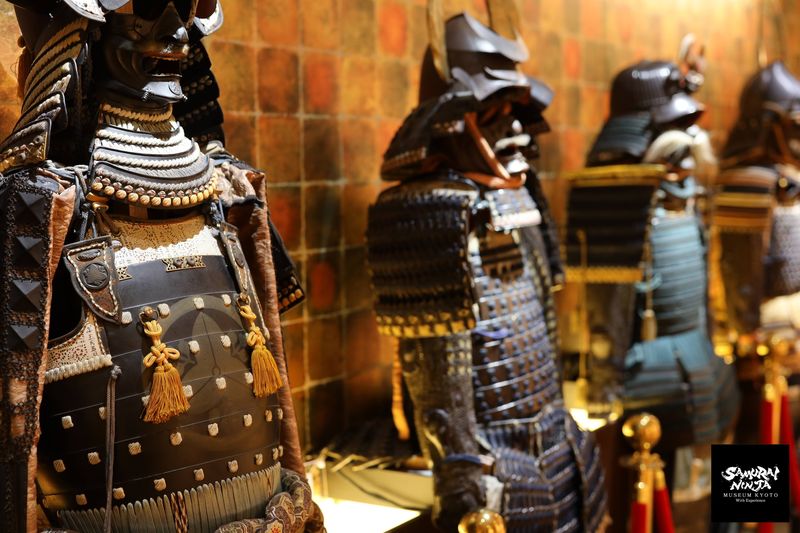
The museum displays preserved artifacts and gives you a chance to see samurai and ninja-related objects up close. The collection provides a visual anchor for the guide’s explanations. Armor and swords are more immediate than a history lesson alone, especially if you are visiting with children or have only a passing interest in Japanese history.
The tour moves as a group through the exhibits, so don’t expect a long stretch of quiet, independent browsing. That has an upside: the guide keeps the visit moving and gives each display context. The trade-off is less time to linger over individual objects or read every bit of information. If the collection matters more to you than the activities, keep that limitation in mind.
A few visitors have wished for more time to look at the armor and sword displays. If you like to study museum objects at your own pace, this format may feel brisk. If you prefer a short, guided overview with a lively host, the pace is more likely to suit you.
From watching to dressing up
After the history and displays, the experience turns hands-on. You can wear samurai armor costume pieces and pose with replica swords. This is not a chance to handle historic weapons; the swords used for posing are replicas, and the costume activity is designed to be fun and approachable.
For families, this part can be the payoff. Children who have listened through the history talk get a chance to play the role of samurai, while adults can join in or take photos. It’s also a good way to create a tangible memory of the visit without needing any background knowledge.
The dress-up activity is an experience, not a full costume fitting or a long photo session. The guided schedule keeps things moving, and the time available for photos may be limited. If you want a family picture, have your camera ready rather than waiting until the last minute.
The ninja-star challenge brings the energy
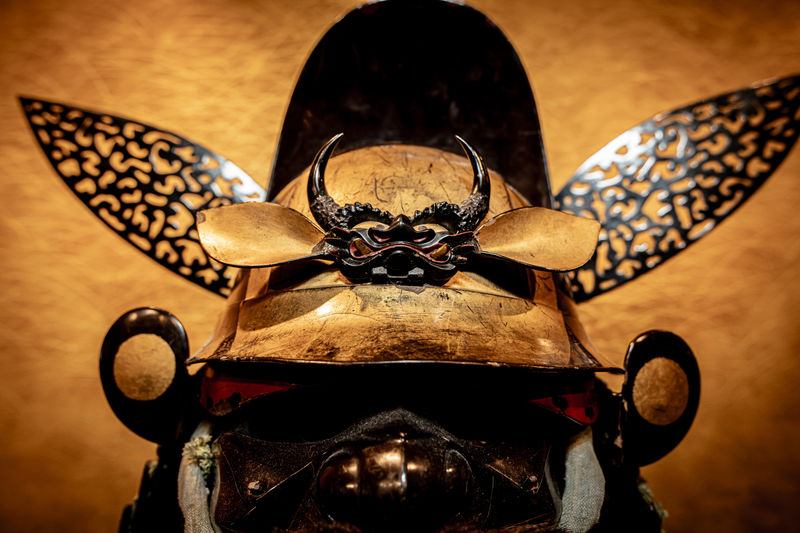
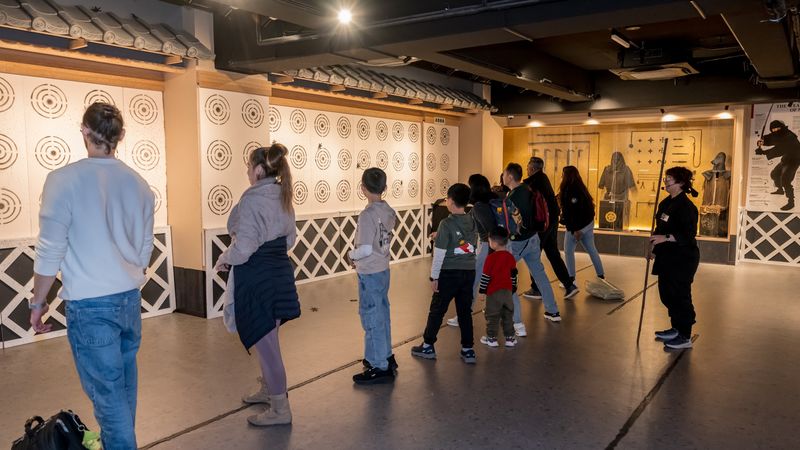
The ninja activity includes throwing a ninja star, also called a shuriken. The activity is supervised by museum staff, and the stars used in the experience are described as rubber in visitor accounts. Some groups turn it into a friendly challenge or competition, which gives the final part of the tour a playful finish.
This is the portion most likely to win over someone who came mainly for the fun. The throwing activity adds a physical element to a visit that might otherwise be all talk and display cases. It is also a useful change of pace for kids after listening to the guide.
Keep your expectations sensible. This is a short, supervised activity, not an extended martial-arts class or a lesson in weapon technique. The value is in trying something unusual in a controlled setting and connecting it to the history you have just heard.
More Museums and Galleries in Tokyo
- teamLab Borderless Tickets: MORI Building DIGITAL ART MUSEUM
★ 4.7 · 24,126 reviews - teamLab Planets TOKYO Ticket
★ 4.7 · 21,663 reviews - Tokyo: teamLab Planets TOKYO Digital Art Museum Entry Ticket
★ 4.6 · 9,779 reviews - Art Aquarium Museum GINZA Ticket
★ 4.6 · 5,577 reviews
How much time to set aside
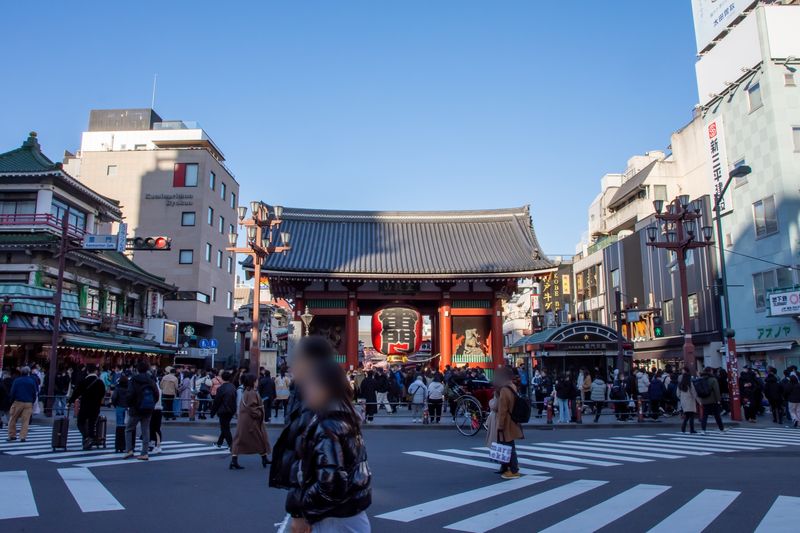
The stated duration is one hour, including the guided visit and activities. Some visitors have found the tour takes around 40 minutes, while others describe it as a short, satisfying visit. The actual timing may vary, so avoid planning a tight connection immediately afterward.
The compact length is convenient in Tokyo, where a one-hour activity can fit between other plans. It also makes the visit manageable for children or for anyone who wants an introduction rather than a half-day commitment. But if you want extended time with every display, one hour may feel short.
Treat this as a focused experience, not a full museum afternoon. You will get a guided overview, a look at artifacts, and time for the activities. You will not have unlimited time to move back through the exhibits on your own.
Is the $21.29 starting price good value?
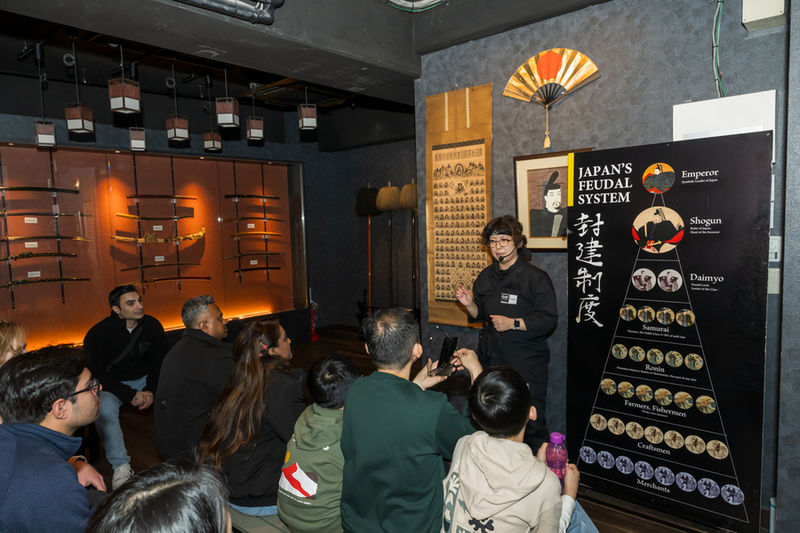
Prices start at $21.29 for the ticket-and-experience package. That includes admission to the Samurai Ninja Museum Tokyo, a guided tour inside, and an English-speaking guide for 60 minutes. Transport and personal expenses are not included.
The price makes more sense when you count the guide and activities together. You are paying for an organized introduction, access to the displays, costume dress-up, and a supervised ninja-star activity, rather than admission to a collection alone. For a family or a first-time visitor with limited time, that mix can be worthwhile.
Value depends on what you want from a museum. If your priority is a deep, self-paced study of samurai objects, a short group tour may not be the best fit. If you want a lively introduction with hands-on moments and a clear schedule, the package offers more than a basic entry ticket.
The museum has a 4.7 out of 5 rating from 560 ratings, and the strongest themes are the guides’ clear, entertaining explanations and the fun of the dress-up and throwing activities. A smaller number of visitors have found the visit too short or expected more time with the displays. Those are useful clues: the experience’s main strength is its blend of history and participation, not the length of the museum visit.
Getting to the museum in Asakusa
The address is 1-chome-8-13 Nishiasakusa, Taito City, Tokyo. From Exit 1 of Asakusa Station on the Tokyo Metro Ginza Line or Asakusa Line, it is about a six-minute walk. From Exit A4 of Asakusa Station on the Tsukuba Express, it is about two minutes on foot.
Transport is not included, so you will need to get to the museum yourself. The central Asakusa location makes it practical to pair the visit with other plans in the area, but allow time to find the correct station exit and reach the entrance.
The museum is open daily from 9 a.m. to 6 p.m. The supplied hours list a later opening, 1 p.m. to 6 p.m., for January 1, 2027. Check the date and opening hours when planning your visit, especially around that holiday.
Who will enjoy this experience most?
I’d recommend this for families, first-time visitors to samurai and ninja history, and anyone who likes a museum visit with a bit of participation. The guided format helps if you want explanations in English, and the costume and shuriken activities give children a clear reason to stay engaged.
It can also work well for adults who are curious but not ready to spend hours in a specialist museum. The tour is short, the subject is easy to follow, and the activities keep the visit from feeling like a lecture.
You may want another option if you strongly prefer to explore independently or need plenty of time to study exhibits. The museum visit is group-led, and the schedule may leave less time for browsing than you would choose on your own. It’s also a light introduction rather than an in-depth history course.
Practical details before you book
Book for the date and time you plan to visit: the voucher is valid only for the selected date and, when applicable, time. You can enter the venue directly with the voucher. Free cancellation is available with at least 24 hours’ notice, and booking changes are free when made at least 24 hours before the activity, subject to stated exclusions.
Children aged 0 to 2 are free. Children aged 3 to 12 must be accompanied by a paying adult, and ages 13 and up are charged the adult rate. The venue is stroller- and wheelchair-accessible, though you should consult the venue’s official site for details about accessibility for people with disabilities. Pets are not allowed, except service animals with valid identification.
Should you book it?
Book this if you want a short, guided introduction to samurai and ninja history with activities that make the subject fun for a family. The guide-led history, armor dress-up, and supervised star throwing are the main reasons to go, and the Asakusa location is easy to reach.
Skip it if you want a long, quiet visit with time to study every object. The tour is concise, and some people find it shorter than expected. For most first-time visitors who want history with a playful finish, the one-hour format is a practical use of time and a fair deal at the starting price.
FAQ
How long is the Samurai and Ninja Experience?
The stated duration is one hour, including the guided tour. The time can feel shorter, and some visitors have reported a tour of about 40 minutes.
Is the tour conducted in English?
Yes. An English-speaking guide is included for the 60-minute experience. Tours and activities are hosted in English and Japanese.
What activities are included?
The experience includes wearing samurai armor costume pieces, posing with replica swords, and taking part in a supervised ninja-star activity.
Where is the museum?
It is at 1-chome-8-13 Nishiasakusa, Taito City, Tokyo 111-0035, Japan.
How do I get to the museum by train?
It is about a six-minute walk from Exit 1 of Asakusa Station on the Tokyo Metro Ginza Line or Asakusa Line, and about two minutes from Exit A4 of Asakusa Station on the Tsukuba Express.
Are children allowed?
Yes. Children aged 0 to 2 are free. Children aged 3 to 12 must be accompanied by a paying adult, and children aged 13 and older are charged the adult rate.
Is the venue wheelchair-accessible?
The activity information describes the venue as wheelchair- and stroller-accessible. For more details about accessibility for people with disabilities, check the venue’s official website.
Can I cancel or change my booking?
You can get a full refund if you cancel at least 24 hours before the activity, using destination local time. Changes made at least 24 hours before the activity are free, though some booking types and vouchers are excluded.
Just added in Tokyo
- Japanese Home Cooking Class & Walk in Todoroki Temple Tokyo★ 5.0 · 88 reviews
- A One-of-a-Kind Sushi Experience in a Special Place of Japan★ 5.0 · 15 reviews
- Tokyo Cute Bento Cooking Class – Make a Kawaii Character Lunchbox★ 5.0 · 126 reviews
- Japan Tokyo Tower Observatory Deck E-Ticket★ 4.0 · 34 reviews
- Catch a Baseball Game in Tokyo with a Local – Tickets Included★ 5.0 · 24 reviews
- JDM Experience with Fast&Furious RX-7 (English speaking Driver)★ 5.0 · 57 reviews
- Tokyo Private Day Tour by Car with English speaking Driver Guide★ 4.0 · 29 reviews
- Japan Classic 10 Day – One Life Adventures★ 5.0 · 129 reviews
Museums and Galleries, compared.

teamLab Borderless Tickets: MORI Building DIGITAL ART MUSEUM
Read our review →

teamLab Planets TOKYO Digital Art Museum Entry Ticket
Read our review →



Browse the lists this tour appears in