
Reviewed · MUSEUMS AND GALLERIES
Samurai Ninja Museum Asakusa: Kid-Friendly Ninja Training
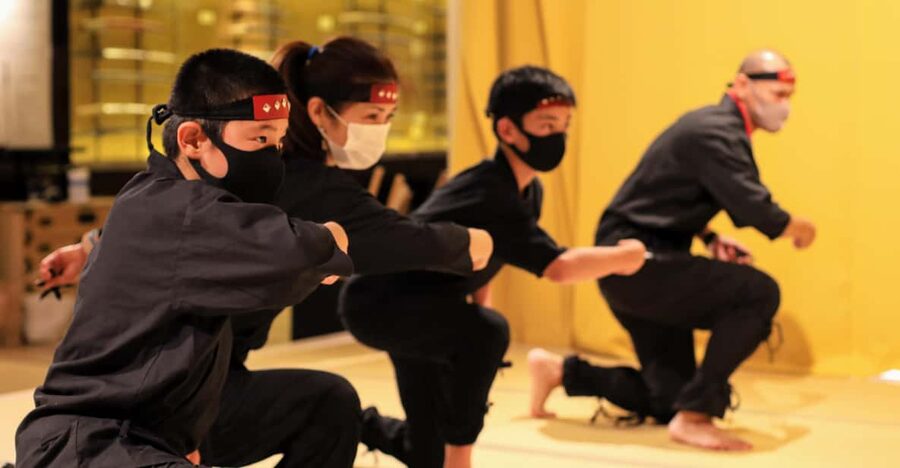
Ninja training starts with a costume. This 75-minute Asakusa experience lets you dress in a full ninja outfit, practice a blowgun, throw ninja stars, and join a treasure hunt. I like the hands-on format and the chance to take photos in costume, especially for families who want more than a quiet museum visit. The main drawback is the $56 price, which may feel high for a short activity.
The English-speaking guides make the session easy to follow, and Koki has earned special praise for his friendly manner and clear explanations. I also like that children under three may enter the venue, even though they cannot take part in the ninja training. The activity is wheelchair accessible, but you should check the group size when booking because the information lists both a limit of five and a maximum of 20 people.
In This Review
- Key points to know before you book
- Getting into character in Asakusa
- Learning the ninja spirit through hands-on activities
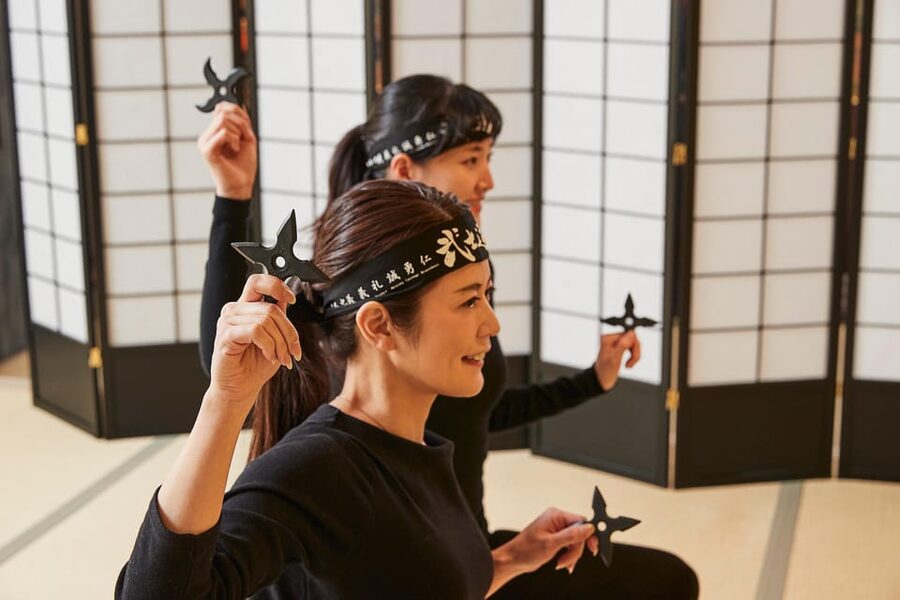
- Throwing ninja stars in a friendly contest
- Trying the ninja blowgun
- The treasure hunt keeps children moving
- What the guides add to the experience
- Is $56 a fair price for 75 minutes?
- Who will enjoy this most?
- Practical advice for making the most of it
- Should you book the Asakusa ninja training?
- FAQ
- Where does the ninja training take place?
- How long does the experience last?
- How much does it cost?
- Is the activity conducted in English?
- Can children under three participate?
- What activities are included?
- Is a museum visit included?
- Is the photo session included?
- Is the venue wheelchair accessible?
- Can I cancel for a full refund?
Key points to know before you book
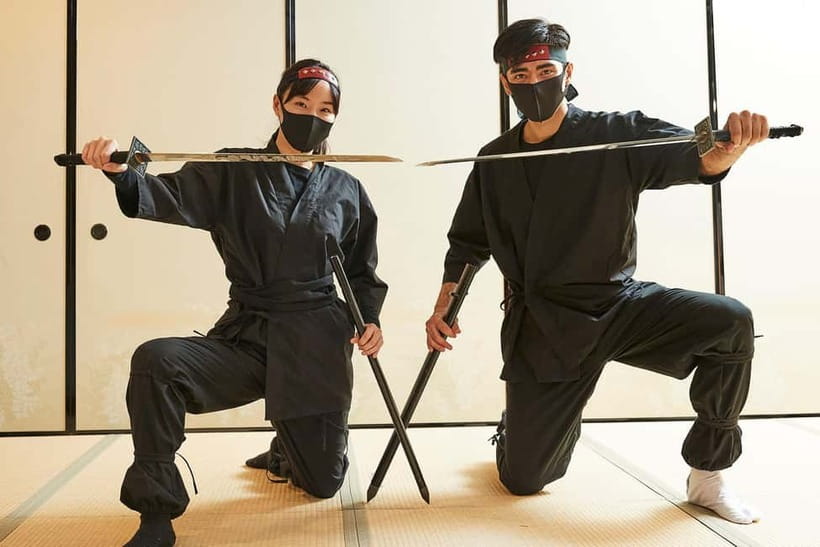
- Full ninja clothing turns the lesson into a photo opportunity, not just a museum stop.
- The shuriken competition adds a playful challenge for children and adults.
- A ninja blowgun gives you a hands-on skill to try, with guidance from an English-speaking instructor.
- The treasure hunt keeps younger children involved between the demonstrations and games.
- Koki is noted for being kind and clear, a useful detail for families who want patient instruction.
- The $56 cost is easiest to justify for families, since the ticket includes the museum, activities, treasure hunt, and photo session.
Getting into character in Asakusa
The experience begins at the Tokyo Samurai and Ninja Museum, where the costume changes the mood right away. Instead of standing back and looking at displays, you step into the role of a stealth warrior. The full ninja outfit is the central prop, and it gives children a clear part to play from the start.
That matters in a city with many temples, shops, and museums competing for your attention. A child may not remember every exhibit label, but they are likely to remember putting on ninja clothing and posing for a photograph. Adults can enjoy the same novelty without taking the activity too seriously.
The photo session is included in the price. I would treat it as part of the experience rather than a separate portrait service. The supplied information does not specify how many photos you receive or how they are delivered, so ask the guide if that detail matters to you.
The session is conducted in English. That is important for an activity built around instructions, safety, and timing. You will need to listen closely during the weapon practice, and a clear guide can make the difference between a fun challenge and a confusing one.
More Castles and Historic Sites in Tokyo
- Tokyo: Imperial Palace and Shogun Historical Walking Tour
★ 5.0 · 2,251 reviews - Tokyo Castle & Imperial PalaceーShogun Walking Tour
★ 4.7 · 1,068 reviews - Tokyo: Samurai Ninja Museum Guided tour and Experience
★ 4.6 · 1,010 reviews
Learning the ninja spirit through hands-on activities
The museum visit includes an introduction to samurai and ninja traditions, followed by practical activities. The aim is not to provide a long academic lesson. Instead, you get a short cultural experience that connects historical ideas with movement, costume, and games.
I like this approach for families. Children can learn a little about Japan’s warrior traditions without being asked to remain quiet and still for a long period. Adults also get a chance to ask questions and place the activities in a broader cultural setting.
The phrase secrets of ninja should be read as playful tour language, not a promise of professional martial arts training. You will learn basic ideas and try simple activities under instruction. The value comes from participation and shared family memories, not from leaving with expert combat skills.
The museum’s interactive exhibits add useful context. You can see the samurai and ninja theme before or around the training session, giving the costume and demonstrations a setting. The available information does not list each exhibit, so I would not book this expecting a full museum tour with extensive collections or a long historical lecture.
Throwing ninja stars in a friendly contest
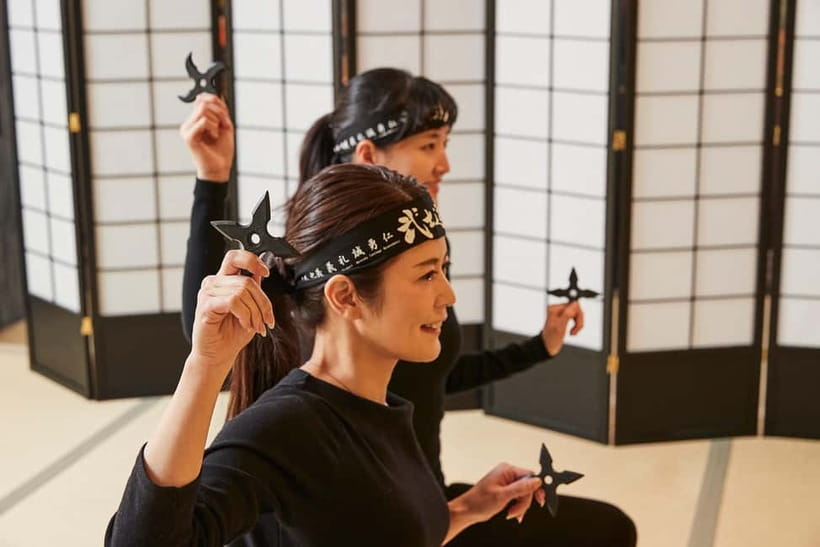
The ninja star throw is one of the clearest highlights. You get to test your aim in a competition, which gives the activity a simple goal and a bit of friendly pressure. Children often respond well to a clear challenge, and adults may find themselves taking the contest more seriously than expected.
The competition also helps break up the session. The day is not just a talk followed by a photograph. You move from learning to trying, then to competing, which keeps the 75 minutes active.
Safety instructions will matter here, so listen before taking your turn. The precise rules, number of throws, and scoring system are not provided, and they may vary with the group. If your family has younger children, ask how the instructor adapts the activity for them.
The shuriken contest is likely to be most enjoyable when everyone treats it as a game. You do not need to be athletic or coordinated to take part. The point is to try the technique, cheer for one another, and enjoy the novelty of using a ninja-style prop in a controlled setting.
Trying the ninja blowgun
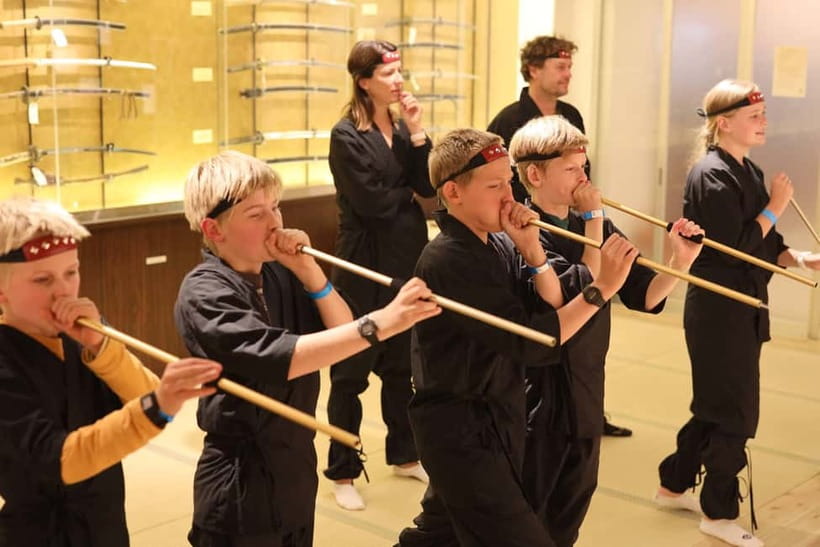
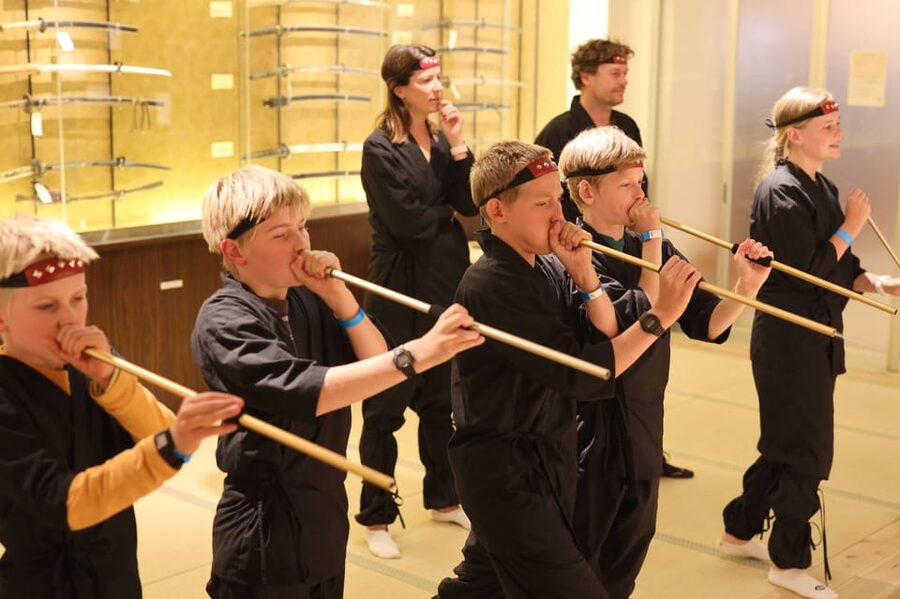
The blowgun is another hands-on part of the lesson. It gives you a different kind of challenge from the star throw, because success depends on breath, aim, and patience rather than a throwing motion.
For families, this is a good example of why the experience works better than a standard costume photograph. You are not only dressed as a ninja. You also get to handle an activity associated with the theme and see how your aim changes after the instructor gives guidance.
The supplied details do not say what targets are used or how many attempts each person receives. Keep expectations modest. This is a short cultural activity, not a formal weapons course, and the fun is in trying something unfamiliar.
If your child is eager to take part, remind them to follow the guide’s directions closely. The English-language instruction should help, but children still need to pay attention before using the equipment.
More Museums and Galleries in Tokyo
- teamLab Borderless Tickets: MORI Building DIGITAL ART MUSEUM
★ 4.7 · 24,126 reviews - teamLab Planets TOKYO Ticket
★ 4.7 · 21,663 reviews - Tokyo: teamLab Planets TOKYO Digital Art Museum Entry Ticket
★ 4.6 · 9,779 reviews - Art Aquarium Museum GINZA Ticket
★ 4.6 · 5,577 reviews
The treasure hunt keeps children moving
The ninja treasure hunt is included and is described as especially popular with children. It gives younger participants a goal beyond the weapon activities and can make the museum setting feel like a game.
A treasure hunt is also useful for mixed-age groups. One child may enjoy throwing stars, while another prefers searching for clues or completing a task. Since the exact clues and prizes are not specified, you should see it as a themed activity rather than expect a large reward or elaborate story.
This part may be less important to adults who want a serious museum visit. For families, though, it can be the feature that keeps children interested through the full session. I would encourage parents to take part rather than watch from the side. Shared participation makes the experience feel less like a children’s drop-in program and more like a family outing.
Children under three cannot join the ninja experience, but they can enter the venue. That distinction is useful for parents with a toddler and an older child. The younger child will not be able to wear the outfit or use the activity equipment, so plan around that limitation.
What the guides add to the experience
The guide can make or break a short activity. Here, the strongest praise centers on friendly, clear instruction. Koki is specifically noted for being very kind and explaining things well, while another visitor described the instructor as amazing. Those details matter because the session moves through several activities in a limited amount of time.
You can expect an English-speaking guide to lead the experience. Clear explanations are particularly valuable during the shuriken and blowgun practice, when you need to understand the technique before taking a turn.
The guide also sets the tone. A warm instructor can help shy children join in and stop adults from feeling self-conscious in costume. I would not expect a private lesson at this price, but the listed booking information describes the activity as small group, limited to five participants. It also gives a maximum of 20 travelers for the activity, so confirm the expected group size for your date.
The difference between five and 20 people could change the feel considerably. A group of five should allow more turns and personal attention. A larger group may feel more like a shared demonstration, with less time for each person. This is one of the most useful details to clarify before paying.
Is $56 a fair price for 75 minutes?
At $56 per person, this is not a cheap add-on. The cost covers entrance, the ninja treasure hunt, the photo session, costume use, guided instruction, star throwing, and blowgun practice. You are paying for a packaged activity rather than museum admission alone.
I think the price makes the most sense for families who want one memorable Tokyo activity built around children. A five-year-old may find the costume, treasure hunt, and games worth far more than an adult interested mainly in exhibits. One parent described the experience as cute and said their five-year-old enjoyed it, but also felt it was somewhat overpriced. That is a fair warning.
The value improves if several people in your group take part. You get a shared photo session, competition, and stories to talk about later. If only one person is interested and the others plan to stand aside, the cost becomes harder to defend.
The 75-minute duration is long enough to feel like a real activity, but short enough to fit into a busy Asakusa day. You can pair it with other sightseeing, though the exact timing should be checked when you select a start time. The booking system offers free cancellation up to 24 hours in advance and lets you reserve now and pay later, which helps if your Tokyo schedule is still changing.
Who will enjoy this most?
I would recommend the experience to families with children who like costumes, contests, and active games. It also suits adults who want a light cultural activity and do not mind looking a little theatrical for the camera.
It is a good fit if you want:
- A short activity in Asakusa
- English-language guidance
- A child-friendly introduction to samurai and ninja traditions
- Several hands-on activities in one visit
- A souvenir-style photo in ninja clothing
- A small-group format, if confirmed at booking
I would hesitate if you want an extended museum visit, advanced martial arts instruction, or a low-cost attraction. The experience is built around fun and participation, not a detailed study of Japanese military history.
The wheelchair accessibility is a helpful feature, but the information does not explain which parts of the activities can be adapted. If a member of your group needs specific assistance with the costume, star throwing, or blowgun, contact the provider before arrival.
Practical advice for making the most of it
Wear clothes that are easy to change around. The activity includes a full ninja outfit, but no further clothing details are provided, so simple layers are the safest choice.
Arrive ready to listen. The star throw and blowgun are the memorable parts, but they work best when you follow the instructor’s directions. Children may want to rush ahead, so a quick reminder about taking turns can make the session smoother.
Ask about the group size, photo details, and activity order when you arrive. The published information confirms the main inclusions but does not state how many photos you receive, how the treasure hunt works, or how long each activity lasts.
If you are visiting with a toddler, remember that children under three may enter but cannot participate. An adult may need to stay with the younger child while another adult joins the older child’s training.
Should you book the Asakusa ninja training?
Book it if you want a lively, family-friendly activity with costumes, simple cultural context, and plenty of chances to take part. The friendly guides, especially Koki, are a real strength, and the mix of star throwing, blowgun practice, treasure hunting, and photographs gives the 75 minutes a clear rhythm.
Think twice if $56 feels steep for a short session or if you want a serious museum experience. For a child who loves ninjas, the price may buy a favorite Tokyo memory. For an adult seeking detailed history, it may not offer enough depth. Confirm the group size before booking, then choose this experience for fun, not for formal training.
FAQ
Where does the ninja training take place?
The experience takes place at the Tokyo Samurai and Ninja Museum in Asakusa, Tokyo, on Honshu.
How long does the experience last?
The ninja experience lasts 75 minutes.
How much does it cost?
The listed price is $56 per person.
Is the activity conducted in English?
Yes. The experience includes an English-speaking live guide.
Can children under three participate?
No. Children under three cannot join the ninja experience, but they can enter the venue.
What activities are included?
The session includes wearing a full ninja outfit, learning ninja techniques, throwing ninja stars in a competition, using a ninja blowgun, and taking part in a ninja treasure hunt.
Is a museum visit included?
Yes. The package includes entrance and a complimentary tour of the Samurai and Ninja Museum.
Is the photo session included?
Yes. A photo shoot is included in the experience.
Is the venue wheelchair accessible?
Yes. The activity is listed as wheelchair accessible.
Can I cancel for a full refund?
Yes. You can cancel up to 24 hours in advance for a full refund.
Just added in Tokyo
- A One-of-a-Kind Sushi Experience in a Special Place of Japan★ 5.0 · 15 reviews
- Tokyo Cute Bento Cooking Class – Make a Kawaii Character Lunchbox★ 5.0 · 126 reviews
- Japanese Home Cooking Class & Walk in Todoroki Temple Tokyo★ 5.0 · 88 reviews
- Japan Tokyo Tower Observatory Deck E-Ticket★ 4.0 · 34 reviews
- Catch a Baseball Game in Tokyo with a Local – Tickets Included★ 5.0 · 24 reviews
- JDM Experience with Fast&Furious RX-7 (English speaking Driver)★ 5.0 · 57 reviews
- Tokyo Private Day Tour by Car with English speaking Driver Guide★ 4.0 · 29 reviews
- Japan Classic 10 Day – One Life Adventures★ 5.0 · 129 reviews
Museums and Galleries, compared.

teamLab Borderless Tickets: MORI Building DIGITAL ART MUSEUM
Read our review →

teamLab Planets TOKYO Digital Art Museum Entry Ticket
Read our review →

Browse the lists this tour appears in