
Reviewed · CASTLES AND HISTORIC SITES
Ninja Samurai 2-hour hands-on lesson by Japanese master in Tokyo
Come ready to play the part. This two-hour class gives you a lively introduction to ninja and samurai skills in a small Tokyo dojo, with sword practice, shuriken throwing, blow darts, meditation, and historical context. I especially like the maximum six-person group, which gives the instructor room to correct your movements, and the wide mix of activities, so the session feels like much more than a costume photo stop. The $86.22 price is not pocket change, but it is fair if you want an active cultural experience rather than another sightseeing tour.
The main thing to consider is the setting. This is a working dojo in Shiomi, not a polished theme-park attraction, and one visitor had trouble finding the building by taxi. You may also need to climb four short flights of stairs if the elevator is not working, so arrive early and wear clothes that let you move comfortably.
In This Review
- Quick takeaways from the dojo
- What the two-hour class is really like
- Changing into ninja clothes
- Kuji-In meditation and the ninja mindset
- Ninja tools, trick-house ideas, and target practice
- Drawing and using a samurai sword
- Why the English instruction matters
- The Shiomi location and arrival advice
- Is $86.22 good value?
- Who should book this experience?
- Booking, cancellation, and practical details
- What makes this class memorable
- Should you book the Ninja Samurai lesson?
- FAQ
- How long does the Ninja Samurai lesson last?
- Where does the experience take place?
- Where does the activity end?
- How many people can join the class?
- Is the lesson taught in English?
- Are ninja clothes included?
- What activities are included?
- Do I need previous martial arts experience?
- Is transportation included?
- What is the cancellation policy?
Quick takeaways from the dojo
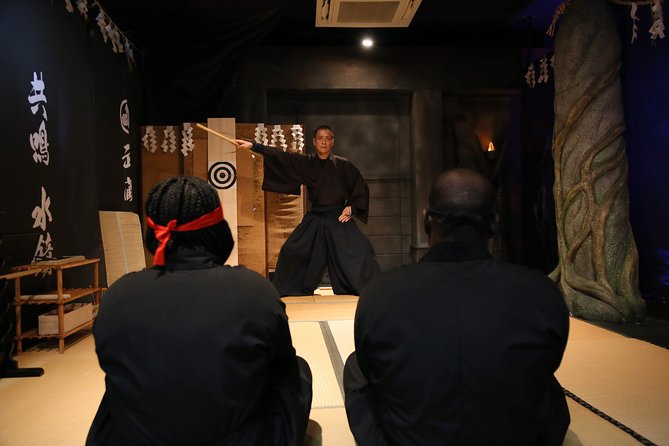
- Small groups make a difference: The class has a maximum of six participants, allowing more personal instruction and target practice.
- You try several traditional tools: The session can include a samurai sword, ninja sword, shuriken, blow darts, chopsticks, and other ninja equipment.
- The lesson mixes skill and culture: Kuji-In meditation, ninja philosophy, samurai spirit, history, and myth-busting accompany the physical activities.
- English instruction is included: Japanese masters and instructors teach the class in English, with names including Hyoga, Asami, Onel, Buddy, and others mentioned by participants.
- Ninja clothes are provided: Changing into training clothes helps set the mood and makes the final demonstrations more memorable.
- Expect a real dojo, not a stage set: The space is functional and simple, which some people appreciate, while others may expect a more elaborate attraction.
What the two-hour class is really like
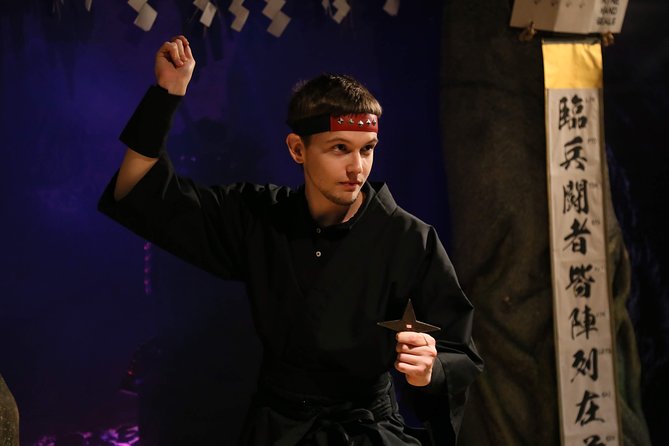
This experience is built around participation. You are not simply watching a sword demonstration while someone else does the interesting work. You change into ninja clothing, listen to explanations, practise movements, and handle several pieces of equipment under supervision.
The exact order can vary, but the class generally moves between short explanations and hands-on drills. That rhythm works well. You learn a little, try it yourself, receive guidance, then move on before the session becomes repetitive.
The small group matters here. With only six people allowed, you have a better chance of getting individual attention when drawing a sword, throwing a shuriken, or aiming a blow dart. Several participants also described classes with fewer than six people, which can make the lesson feel almost private.
The instructors are a major part of the experience. Hyoga is praised for combining history, patience, and humor. Asami is described as clear and skilled at explaining ninja and samurai techniques. Other classes have been led by Onel and Buddy, both described as friendly and entertaining. Since different instructors may lead different sessions, the tone may vary, but English instruction is part of the experience.
More Castles and Historic Sites in Tokyo
- Tokyo: Imperial Palace and Shogun Historical Walking Tour
★ 5.0 · 2,251 reviews - Tokyo Castle & Imperial PalaceーShogun Walking Tour
★ 4.7 · 1,068 reviews - Tokyo: Samurai Ninja Museum Guided tour and Experience
★ 4.6 · 1,010 reviews
Changing into ninja clothes
The class includes rental ninja clothing for use during training. This is not just a photo prop. Putting on the outfit helps you shift from sightseeing mode into the lesson, especially if you are visiting with children or friends who enjoy theatrical experiences.
You do not need to arrive as an athlete or martial arts expert. People of different ages and fitness levels have completed the class, including families with children aged 11 and 13 and a group ranging from 11 to 73. Still, the class is active. One description notes running and jumping, so anyone with movement restrictions should think carefully before booking.
Wear comfortable clothing underneath the rental outfit. You will be handling equipment and practising physical movements, so stiff travel clothes are a poor match. You should also expect to return the clothing before leaving.
Kuji-In meditation and the ninja mindset
The class begins, or at least includes, ninja meditation known as Kuji-In. This gives the experience a useful pause before the weapons practice begins.
The meditation section helps explain that the ninja tradition was not only about stealth, tricks, and weapons. The class presents ideas about focus, discipline, and the spirit behind the techniques. That context adds value because it keeps the session from turning into a simple action-game routine.
You may also hear historical explanations about Japanese feudal times, the difference between ninja and samurai, and the gap between popular myths and historical practice. One of the strongest parts of the lesson is this mix of entertainment and correction. Anime and film have shaped many ideas about ninjas, and the instructor explains where those ideas do not match traditional practice.
The history is delivered in a practical way, not as a long lecture. You get enough background to understand what you are doing, then return to physical training.
Ninja tools, trick-house ideas, and target practice
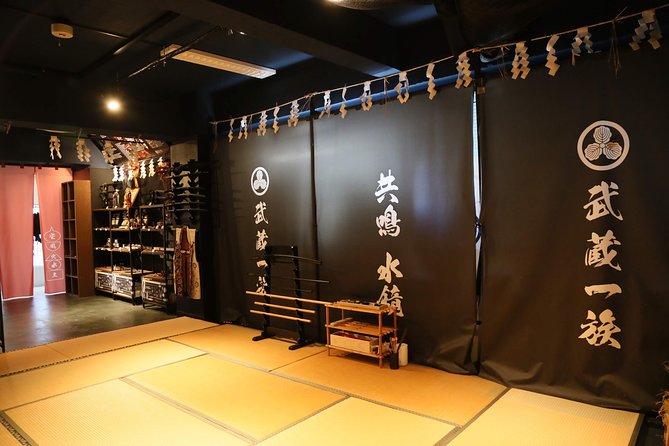
The ninja portion introduces several weapons and tools. Depending on the class flow, you may learn about shuriken, sometimes called ninja stars, blow darts, chopsticks, ninja swords, and other equipment.
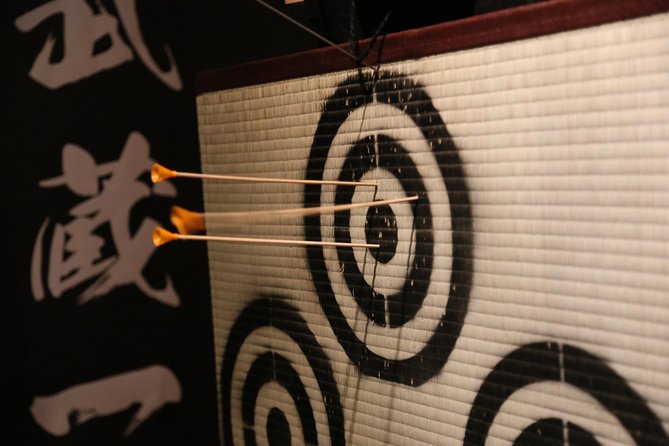
Shuriken practice is one of the most memorable parts for many people. You get to throw the stars at targets rather than merely see them in a display case. The activity is simple enough for beginners but still gives you something specific to work on: stance, aim, and control.
The blowgun section adds a different challenge. Rather than relying on strength, you need to focus your breath and aim. It is a good example of how the class varies the physical skills instead of making every activity a sword drill.
The introduction to ninja weapons and tools is paired with an explanation of how they were used. That distinction matters. You are not just picking up a strange object and posing with it. The instructor provides a basic sense of purpose and technique.
The class may also introduce a gimmick or trick house connected with ninja methods. The supplied details do not give a full description of this feature, so you should treat it as a short introduction rather than expect a large maze or full attraction. The main value is seeing how the idea of hidden movement and deception fits into the broader lesson.
A completely different kind of day out:
- Tokyo Disney Resort – Tokyo Disneyland & Tokyo DisneySea Park Tickets
★ 4.8 · 99,488 reviews - SHIBUYA SKY Ticket
★ 4.7 · 46,509 reviews - JR Whole Japan Rail Pass
★ 4.8 · 29,150 reviews - Mt Fuji and Hakone 1-Day Bus Tour Return by Bullet Train
★ 5.0 · 26,383 reviews
Drawing and using a samurai sword
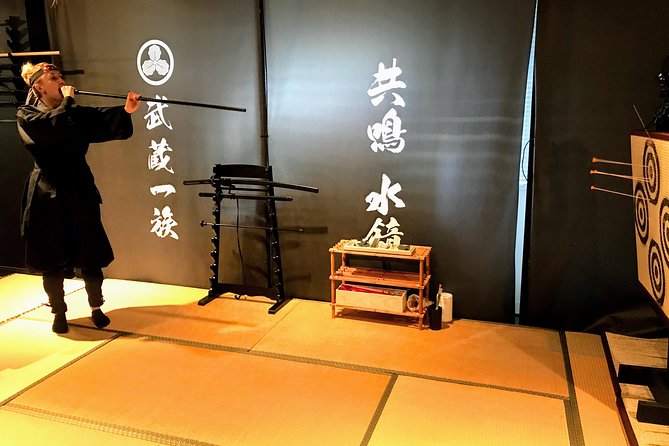
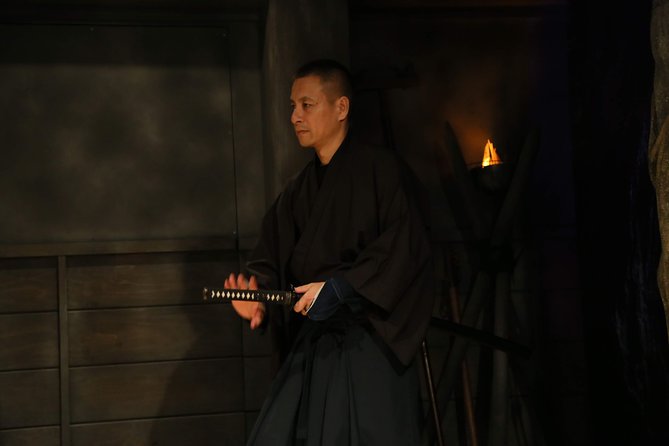
The samurai portion focuses on the Japanese sword and the discipline surrounding it. You learn how to draw the sword and how to use it in controlled movements. The distinction between a ninja sword and a samurai sword is also explained, which is useful because popular culture often blends the two.
The sword lesson is handled as instruction, not free-form play. You follow the teacher’s movements and practise the correct sequence. A few participants specifically noted using a real metal sword, while others had experienced wooden practice swords in similar classes, so the equipment may differ by session. Follow the instructor’s safety directions closely and do not treat the sword as a toy.
The samurai section also introduces the idea of samurai spirit. You learn that the class is about conduct and discipline as well as technique. This gives the sword demonstration more meaning and makes the final performance feel like a small presentation of what you have learned.
You may get a chance to watch and take part in a samurai performance at the end. This is a satisfying finish because you can see how the separate drills fit together. It also gives families and groups a natural moment for photos and video, provided the instructor allows recording at that point.
Why the English instruction matters
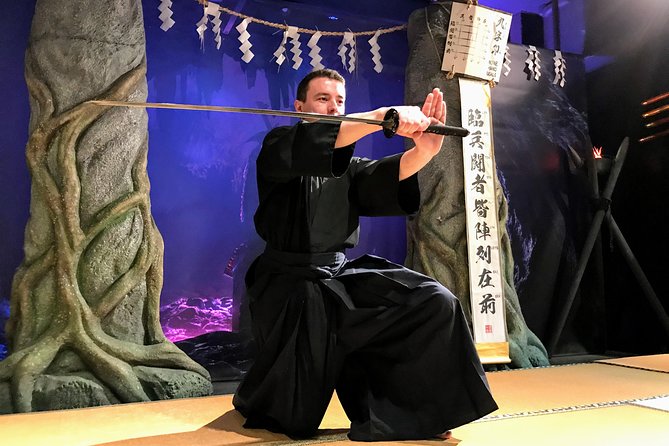
A hands-on class can lose much of its value if the teacher cannot explain the movements clearly. Here, the instruction is in English, and participants have specifically praised the instructors’ ability to explain history, signs, sword movements, and weapon use.
The best part is not simply understanding the words. It is being able to ask for help when your stance feels awkward or your throw misses the target. In a class with only six people, that feedback can come quickly.
The humor also helps. Multiple descriptions highlight instructors who were funny as well as capable. That is useful when you are trying something unfamiliar and may feel self-conscious. A relaxed teacher makes it easier to accept that your first shuriken throw or sword movement may not look very graceful.
Do not expect a formal academic seminar. The lesson is designed to entertain as well as teach. You receive historical and cultural background, but the main focus remains active practice.
The Shiomi location and arrival advice
The meeting point is NINJA SAMURAI TOKYO in Shiomi, Koto City, at 2-chome 39, Bayfrere Shiomi, EAST 4F, Tokyo 135-0052. The activity ends at the same place.
The location is near public transportation, and one family described walking directly from the station. Another group travelled by train from Yokohama and found the journey manageable. The address is in a regular city building rather than a famous central Tokyo landmark, so leave enough time to identify the entrance.
A taxi may not be the easiest choice if the driver cannot match the building name or address. One person missed the class after being unable to locate it by taxi, so I would use the provided address carefully, confirm the building before the start time, and avoid arriving at the last minute.
The dojo itself is simple. One visitor noted that some promotional photos show a space that may look more elaborate than the actual room. You should picture a functional training area, not a large historical compound. For many people, that plain setting is part of the appeal. It feels like a lesson rather than a staged performance.
An elevator was reported as out of service during one visit, requiring four short flights of stairs. That may have been temporary, but it is worth keeping in mind if anyone in your group has difficulty with stairs.
Is $86.22 good value?
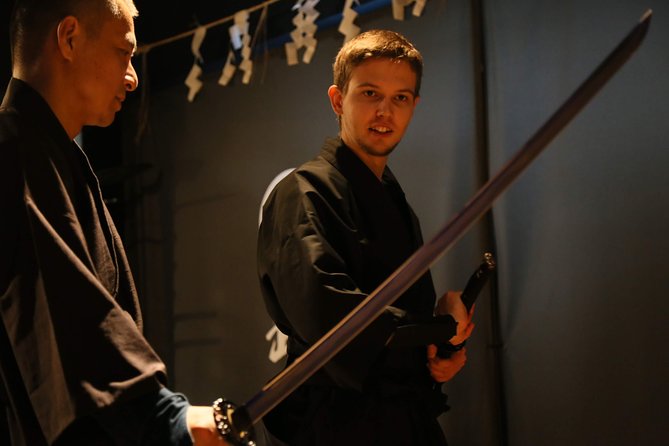
At $86.22 per person, this is priced above a basic museum visit but below many full-day guided activities. The comparison that matters is not simply time. You receive two hours of instruction, clothing rental, admission, an English-speaking Japanese sensei, and access to several hands-on activities.
The value is strongest if you plan to take part in everything. Sword practice, meditation, shuriken throwing, blow darts, ninja tools, history, and a final performance give the lesson a full schedule. You are paying for teaching and equipment, not just admission to a room.
The price may feel high if you only want a quick costume photograph or a short sword demonstration. It is also less suitable for someone who prefers quiet cultural sightseeing. This class asks you to move, listen, practise, and participate.
For a family, couple, or group of friends, the cost can be easier to justify because the activity creates a shared memory. It also fills a useful two-hour slot when you want something different from temples, shopping, and city viewpoints.
Who should book this experience?
I would recommend it for:
- Families with older children who can follow instructions and handle an active class.
- Couples looking for an unusual shared activity.
- Friends who enjoy costume, performance, and target games.
- First-time visitors who want historical context with physical participation.
- Adults who are curious about ninja and samurai but have no prior training.
- Mixed-age groups, provided everyone can manage the movement and stairs.
The experience is not limited to young or highly athletic people. The reported age range is broad, and the instructors appear to adapt to different abilities. Still, the mention of running and jumping means you should not book it expecting a fully seated activity.
It may not suit you if you dislike costumes, weapons, group instruction, or physical movement. You should also skip it if your schedule is so tight that a delayed train or a few minutes spent finding the building would create stress.
Booking, cancellation, and practical details
Your confirmation is provided at booking, and the activity uses a mobile ticket. The maximum group size is six, and a minimum number of participants is required for the class to operate.
You can cancel for a full refund up to 24 hours before the start time. Cancellations or changes made within 24 hours are not refunded or accepted. If poor weather or too few participants causes the operator to cancel, you are offered another date or experience, or a full refund.
The tour does not include bottled water or private transportation. Bring your own water, and plan your route to Shiomi in advance. Since the session is active, drinking water before and after class is sensible.
What makes this class memorable
The strongest feature is the combination of variety and personal attention. In two hours, you can move from meditation to weapons, from history to performance, without spending long stretches waiting for other people.
I also like the balance between fun and correction. You get to dress as a ninja and throw stars, but you also learn the difference between ninja and samurai swords, hear about feudal Japan, and practise the ideas of focus and discipline behind the movements.
The instructors receive the highest praise for good reason. Their humor helps, their English makes the class accessible, and their patience matters when the techniques feel unfamiliar. The class seems designed to make beginners feel capable rather than embarrassed.
The weak spots are practical rather than cultural: the building can take some effort to find, the room may not match polished promotional images, and stairs could be a problem. None of these issues cancels out the experience, but you should plan for them.
Should you book the Ninja Samurai lesson?
Book it if you want a hands-on Tokyo activity with real instruction, several types of equipment, and a small group. At $86.22, it offers good value for people who will actively participate and appreciate the cultural explanations alongside the fun.
I would especially choose it for a family, couple, or friend group seeking a memorable break from standard sightseeing. Arrive early, check the route to the Shiomi building, wear comfortable clothes, and keep your expectations focused on a real dojo lesson rather than a grand theatrical show. If that sounds right, this is a strong choice and one of the more unusual two-hour activities in Tokyo.
FAQ
How long does the Ninja Samurai lesson last?
The class lasts approximately two hours.
Where does the experience take place?
It takes place at NINJA SAMURAI TOKYO in Shiomi, Koto City, Tokyo, at Bayfrere Shiomi, EAST 4F.
Where does the activity end?
The class ends back at the meeting point.
How many people can join the class?
The maximum group size is six travelers.
Is the lesson taught in English?
Yes. A Japanese sensei who has trained in Ninja-Arts teaches the experience in English.
Are ninja clothes included?
Yes. Ninja clothes are rented for use during the training.
What activities are included?
The class includes Kuji-In ninja meditation, an introduction to ninja weapons and tools, ninja sword training, samurai sword instruction, shuriken practice, and ninja blowgun practice. It may also include an introduction to a ninja trick-house feature and a samurai performance.
Do I need previous martial arts experience?
No previous experience is stated as a requirement. The experience is designed for general participants, and most travelers can participate.
Is transportation included?
No. Private transportation is not included, and bottled water is also not included. The meeting point is near public transportation.
What is the cancellation policy?
You can cancel at least 24 hours before the start time for a full refund. Cancellations or changes made less than 24 hours before the start time are not refunded or accepted. If the class is canceled because of poor weather or too few participants, you are offered another date or experience or a full refund.
Just added in Tokyo
- Tokyo Cute Bento Cooking Class – Make a Kawaii Character Lunchbox★ 5.0 · 126 reviews
- Japanese Home Cooking Class & Walk in Todoroki Temple Tokyo★ 5.0 · 88 reviews
- A One-of-a-Kind Sushi Experience in a Special Place of Japan★ 5.0 · 15 reviews
- Japan Tokyo Tower Observatory Deck E-Ticket★ 4.0 · 34 reviews
- Catch a Baseball Game in Tokyo with a Local – Tickets Included★ 5.0 · 24 reviews
- JDM Experience with Fast&Furious RX-7 (English speaking Driver)★ 5.0 · 57 reviews
- Tokyo Private Day Tour by Car with English speaking Driver Guide★ 4.0 · 29 reviews
- Japan Classic 10 Day – One Life Adventures★ 5.0 · 129 reviews
Castles and Historic Sites, compared.



Imperial Palace and Shogun Historical Walking Tour
Read our review →
Tokyo Castle & Imperial PalaceーShogun Walking Tour
Read our review →
Nijo-jo Castle and Ninomaru Palace Guided Tour
Read our review →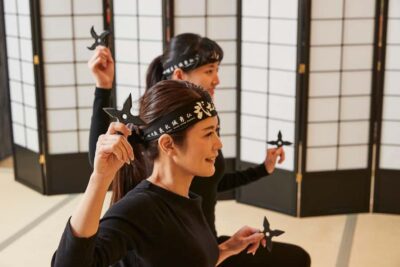
Samurai Ninja Museum Guided tour and Experience
Read our review →Browse the lists this tour appears in