
Reviewed · CASTLES AND HISTORIC SITES
Tokyo: Best Samurai Experience
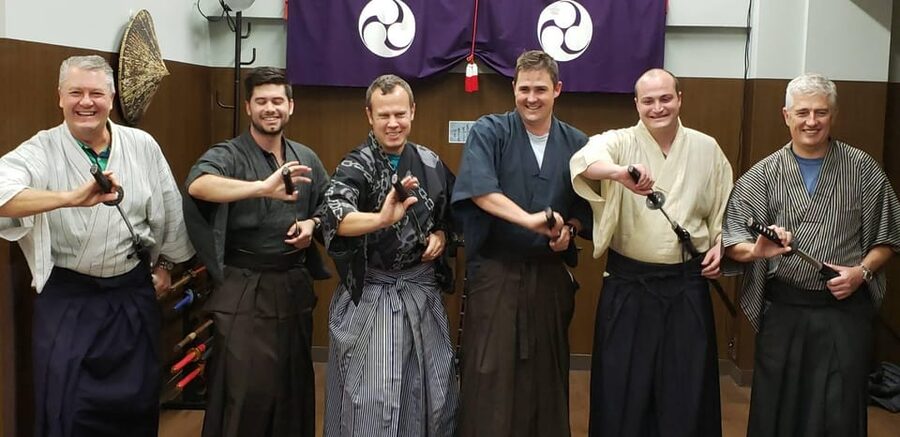
Bring your inner samurai. This one-hour activity gives you a kimono, hakama, fake sword, and a chance to perform a choreographed battle in a traditional-looking dojo. I like the mix of hands-on sword training and theatrical fun, and I especially like that the staff helps record photos and videos on your own phone. The main drawback is time: one hour passes quickly, so this is a lively introduction rather than a serious martial arts lesson.
The price is $63 per person, which feels fair if you value the costume, instruction, small group setting, and final performance. You should also know that wearing the displayed armor costs extra, and the activity is not suitable for pregnant women, wheelchair users, visually impaired people, very young children, or people over 95.
In This Review
- Key Things To Know Before You Book
- Entering Samurai Theater Tokyo
- Choosing Your Kimono and Hakama
- Learning the Sword, Step by Step
- Practicing a Chanbara Fight
- The Music, Lights, and Final Performance
- Photos and Videos You Can Actually Keep
- How Much Value Do You Get for $63?
- Who Will Enjoy This Most?
- What This Experience Is Not
- My Verdict: Book It If You Want to Be Part of the Show
- FAQ
- Where does the samurai experience take place?
- How long does the activity last?
- How much does it cost?
- What languages are available?
- How many people can join the group?
- Is the sword real?
- What clothing is included?
- Can I wear the armor displayed at the dojo?
- Can I take photos and videos?
Key Things To Know Before You Book
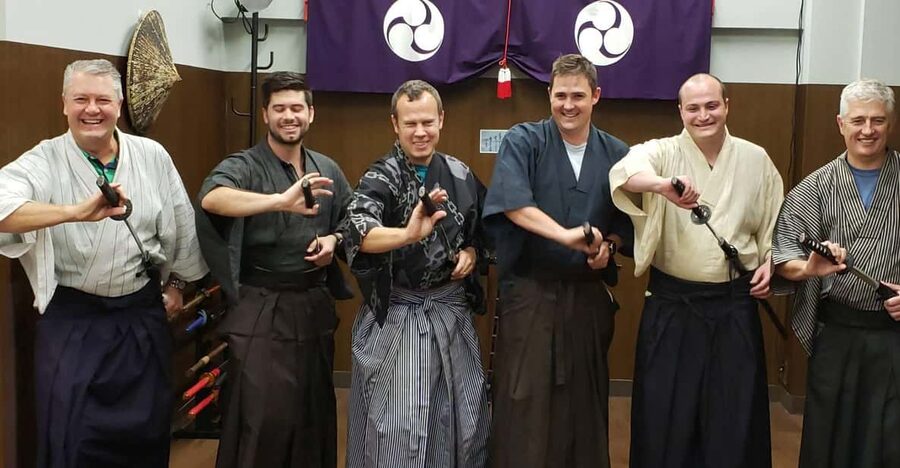
- You wear a full kimono and hakama: Staff help you change before the sword lesson begins.
- You use a non-cutting practice sword: The activity teaches handling and movement without using a sharp blade.
- You learn a complete fight routine: Expect sword drawing, stances, swings, defensive moves, and a mock battle.
- The finale feels like a stage show: Lights, music, and energetic instruction turn the final scene into a performance.
- Your phone becomes the camera crew: Assistants can take pictures and videos while you train and fight.
- The group is limited to 10 people: The small size gives the instructors room to guide each participant.
Entering Samurai Theater Tokyo
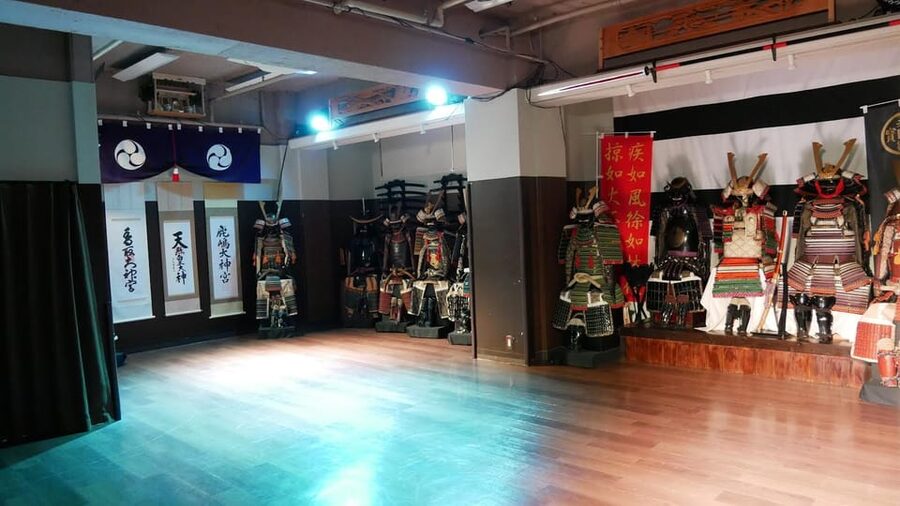
The meeting point is Samurai Theater Tokyo. To find it, search that exact name in Google Maps. This detail matters because the meeting instructions are not given as a full street address in the activity information, so I would save the map location before setting out.
Inside, you find a space designed to feel removed from modern Tokyo. Swords, spears, and armor are displayed around the dojo, giving you something to look at while the group gathers. The setting is not a museum visit, but these objects help frame the activity and make the costume session feel more than a quick photo stop.
The experience is offered in English and Japanese. That makes the basic instruction accessible to international visitors, although the precise amount of English support may depend on the session and the instructors present.
Groups are capped at 10 people. I consider that an important feature. Sword practice requires personal correction, and a smaller group gives you more space to follow demonstrations and perform your fight scene without getting lost in a crowd.
More Castles and Historic Sites in Tokyo
- Tokyo: Imperial Palace and Shogun Historical Walking Tour
★ 5.0 · 2,251 reviews - Tokyo Castle & Imperial PalaceーShogun Walking Tour
★ 4.7 · 1,068 reviews - Tokyo: Samurai Ninja Museum Guided tour and Experience
★ 4.6 · 1,010 reviews
Choosing Your Kimono and Hakama
The session begins with costume selection. You choose a kimono and hakama, then change into the outfit with help from the staff. The clothing is one of the strongest parts of the experience because it changes your posture and makes the sword routine feel more like a scene from a period drama.
The hakama is the traditional trouser-like garment worn over the kimono. For many people, putting on the costume is as memorable as learning the sword movements. It also creates better photos than ordinary street clothes, especially once you are holding the practice sword in the dojo.
Allow time to get changed without rushing. The total activity lasts only one hour, and part of that hour is used for costumes, instruction, and photography. If you arrive late, tell the staff as soon as possible. One person can join alone, so you do not need a family, couple, or large party to make the booking worthwhile.
Armor is displayed at the dojo, but wearing it requires an optional extra fee. If the armor is important to you, check the additional cost before booking. The included costume is the kimono and hakama, not armor.
Learning the Sword, Step by Step
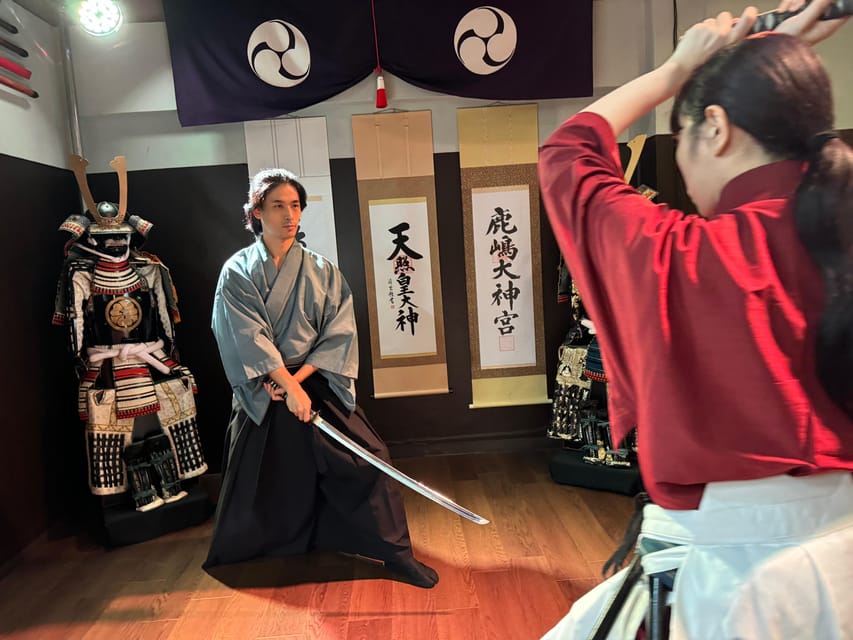
Once dressed, you receive a practice sword. It is a fake sword that cannot cut, so the activity is built around safe movement and performance rather than handling a sharp weapon.
The instructor explains the parts of the blade, including Japanese terms. You then work through the basic actions:
- Drawing the sword
- Holding it correctly
- Taking a proper stance
- Swinging the sword
- Using offensive and defensive movements
- Retracting the sword
The instruction is not only about waving a prop. One participant described learning stance names and how to execute them properly, while another praised the balance between learning a skill and having fun. That is a good way to set your expectations. You will pick up a small set of formal movements, but you will not leave with professional sword-fighting ability after 60 minutes.
The instructors demonstrate each movement, then have you repeat it. This approach helps if you have no martial arts background. You do not need to arrive fit, flexible, or experienced with weapons. The staff focus on making the movements clear and entertaining.
The session can be active, but the supplied information does not give a detailed physical intensity level. If you have concerns about movement, balance, or costume comfort, contact the provider before reserving.
Practicing a Chanbara Fight
After the basic lesson, you practice a simple chanbara fight. Chanbara is a staged sword-fighting style designed for action and performance. The point here is not to strike hard. It is to learn a sequence, react to the instructor, and make the scene look convincing.
This is where the experience becomes especially social. You may fight another participant or a samurai instructor, depending on the session. The teachers guide the routine so that beginners can take part without needing to invent their own choreography.
The instructors bring plenty of energy to the scene. One participant described the faux fight as feeling real because of the instructor’s performance, while another praised the patient demonstrations of offensive and defensive moves. That energy matters. A quiet lesson could feel awkward, but an enthusiastic teacher gives you permission to be playful.
You should still remember that it is a staged performance. If you are looking for contact combat, sparring, or a serious sword class, this is not the right choice. If you want to learn a few formal movements and perform a memorable fight in costume, it fits the brief very well.
A completely different kind of day out:
- Tokyo Disney Resort – Tokyo Disneyland & Tokyo DisneySea Park Tickets
★ 4.8 · 99,488 reviews - SHIBUYA SKY Ticket
★ 4.7 · 46,509 reviews - JR Whole Japan Rail Pass
★ 4.8 · 29,150 reviews - Mt Fuji and Hakone 1-Day Bus Tour Return by Bullet Train
★ 5.0 · 26,383 reviews
The Music, Lights, and Final Performance
The final part adds music and lights as you fight the bad guys in a choreographed scene. This turns the lesson into a small samurai show, with you in the middle of it.
The theatrical finish is one reason this activity works for families and mixed-age groups. You do not need to be outgoing or comfortable performing in public. The staff lead the action, explain what to do, and help you pose. One participant who described being shy still found the session inviting and entertaining.
The performance also gives the hour a clear shape. You start by changing clothes, learn the movements, rehearse the fight, then use those movements in a final scene. You are not simply handed a costume and left to pose.
The music and lights may not appeal to someone seeking a quiet cultural lecture. This is samurai culture presented through performance, costume, and action. It is lively and accessible, but it should not be confused with a historical tour or a formal study of Japanese warrior traditions.
Photos and Videos You Can Actually Keep
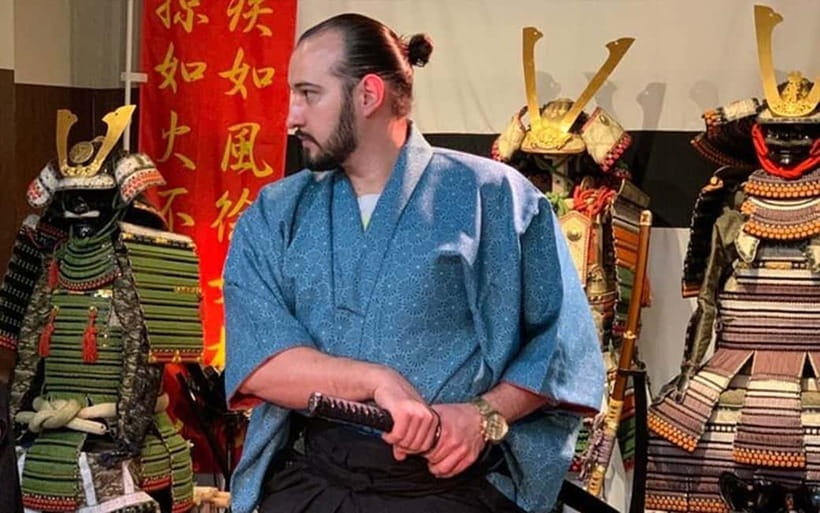
Bring your smartphone. Assistants take photos and videos during the activity, including costume poses and fight scenes. This is a major value point because it lets you focus on the routine instead of asking a companion to stand outside and record everything.
The staff can capture the group in action, as well as photos with a samurai. You can create a short record of the whole experience rather than leaving with only a single posed picture.
This also helps solo participants. Since one person can book the activity, you do not need to bring someone whose main job is to film you. The available feedback repeatedly praises the assistants for capturing the moments on personal phones.
I would still arrive with enough storage space and a charged battery. That is simple practical advice, not a special requirement from the provider. Since the recording is done on your phone, the quality and available space depend on your own device.
How Much Value Do You Get for $63?
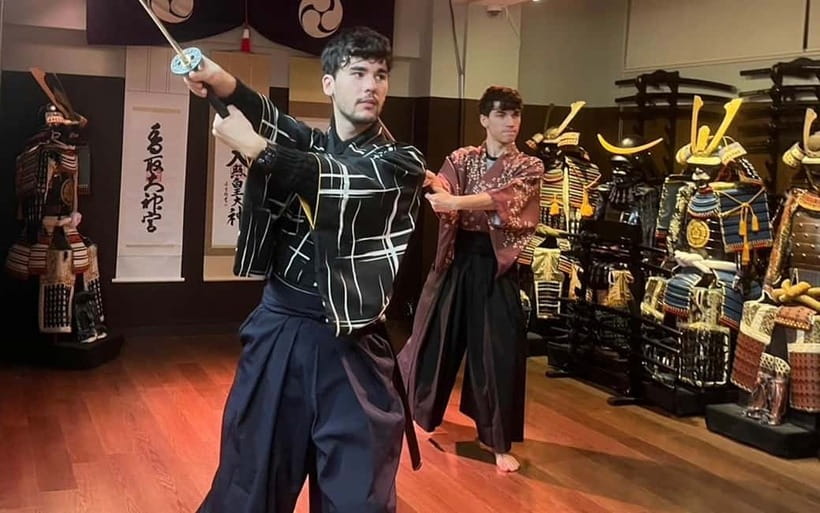
At $63 per person, this is not the cheapest costume photo opportunity in Tokyo. But it includes much more than a quick change of clothes. You receive a kimono and hakama, a sword lesson, an explanation of sword parts, use of a non-cutting practice sword, a staged fight, and a photo with a samurai.
The small group limit adds value. With no more than 10 participants, the instructors can demonstrate movements and keep the session moving. You are paying for personal participation, not simply watching a show from the audience.
The one-hour length keeps the activity easy to fit into a busy Tokyo day. You could place it between other sights without giving up half a day. The trade-off is that you should not expect a long cultural lecture, extensive historical background, or advanced training.
The optional armor fee affects the final cost. The basic price covers the kimono and hakama, while armor is an extra. If your main goal is to wear armor, ask about that charge before you commit.
Free cancellation is available up to 24 hours in advance for a full refund. You can also reserve now and pay later, which helps if your Tokyo schedule is still changing. Same-day reservations may be possible, but you should check availability rather than count on a last-minute place.
Who Will Enjoy This Most?
I would recommend this experience to several types of visitors:
- Families looking for an activity that keeps children and adults involved
- Fans of samurai films, Japanese dramas, and martial arts
- Solo visitors who want personal photos and a guided activity
- Couples or friends who enjoy dressing up and performing together
- First-time visitors who want a quick introduction to samurai-themed culture
- People who prefer active participation over simply viewing a display
The activity has also worked well for older adults. A 61-year-old participant described having a great time with the whole family, which suggests that age alone does not prevent you from enjoying it. Still, the provider lists several age and accessibility limits, so read those carefully before reserving.
It is not suitable for children under the listed age limits, babies, people under 90 centimeters tall, pregnant women, wheelchair users, visually impaired people, or people over 95. The information lists children under 2, 3, and 4 separately, so check the current booking rules if you are bringing a young child.
What This Experience Is Not
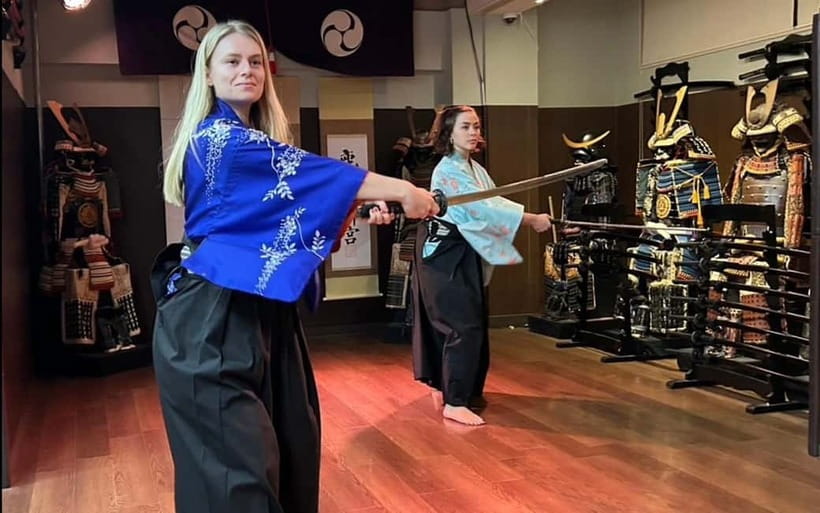
This is not a museum tour, a historical lecture, or a lesson with real blades. The sword is designed not to cut, and the fight is choreographed.
That is a strength for most people. You can enjoy the drama without worrying about sharp weapons or needing previous training. It also makes the session suitable for people who like samurai stories but have never handled a sword.
The trade-off is authenticity of type. The instructors are described as authentic teachers who have appeared in major Japanese dramas and movies, and the dojo uses traditional clothing and weapon displays. But the activity is still built for fun and performance. You are learning selected movements for a staged scene, not recreating a full historical training session.
Knowing that difference helps you make the right choice. If you want an entertaining cultural activity with a real sense of participation, this should please you. If you want detailed military history or a long technical class, choose something else.
My Verdict: Book It If You Want to Be Part of the Show
I would book this for the right kind of Tokyo afternoon. The strongest features are the small group, patient demonstrations, attractive costume, lively instructors, and staff who record the action on your phone. The final music and lights give the hour a proper finish rather than leaving you with a few disconnected poses.
You should book it if you enjoy dressing up, learning a simple routine, and pretending to fight samurai in a theatrical setting. The $63 price is reasonable for a compact, all-in-one activity with instruction, costume, performance, and photos.
Skip it if you want serious martial arts training, a quiet historical presentation, or a long visit. For most people seeking a memorable and easy-to-share Tokyo experience, though, this is a good choice. Check the meeting point, arrive ready to change, charge your phone, and be prepared to swing a harmless sword with plenty of theatrical confidence.
FAQ
Where does the samurai experience take place?
The meeting point is Samurai Theater Tokyo. Search Samurai Theater Tokyo in Google Maps to find the location.
How long does the activity last?
The experience lasts one hour.
How much does it cost?
The listed price is $63 per person.
What languages are available?
Instruction is available in English and Japanese.
How many people can join the group?
The group is limited to 10 participants.
Is the sword real?
No. You use a fake sword that cannot cut.
What clothing is included?
Changing into a kimono and hakama is included.
Can I wear the armor displayed at the dojo?
Wearing the displayed armor requires an optional additional fee.
Can I take photos and videos?
Yes. You can take photos and videos with your smartphone, and assistants can record parts of the experience for you.
Just added in Tokyo
- A One-of-a-Kind Sushi Experience in a Special Place of Japan★ 5.0 · 15 reviews
- Tokyo Cute Bento Cooking Class – Make a Kawaii Character Lunchbox★ 5.0 · 126 reviews
- Japanese Home Cooking Class & Walk in Todoroki Temple Tokyo★ 5.0 · 88 reviews
- Japan Tokyo Tower Observatory Deck E-Ticket★ 4.0 · 34 reviews
- Catch a Baseball Game in Tokyo with a Local – Tickets Included★ 5.0 · 24 reviews
- Tokyo Private Day Tour by Car with English speaking Driver Guide★ 4.0 · 29 reviews
- Japan Classic 10 Day – One Life Adventures★ 5.0 · 129 reviews
- JDM Experience with Fast&Furious RX-7 (English speaking Driver)★ 5.0 · 57 reviews
Castles and Historic Sites, compared.


Imperial Palace and Shogun Historical Walking Tour
Read our review →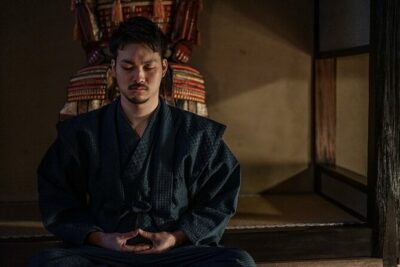
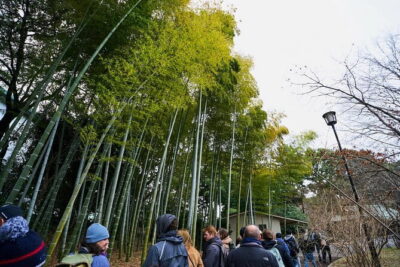
Tokyo Castle & Imperial PalaceーShogun Walking Tour
Read our review →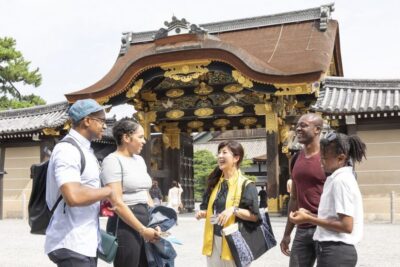
Nijo-jo Castle and Ninomaru Palace Guided Tour
Read our review →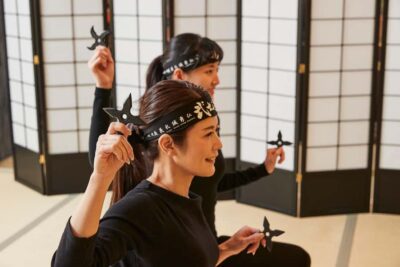
Samurai Ninja Museum Guided tour and Experience
Read our review →Browse the lists this tour appears in