
Reviewed · CASTLES AND HISTORIC SITES
Tokyo:Samurai sword and archery class from a samurai descendant
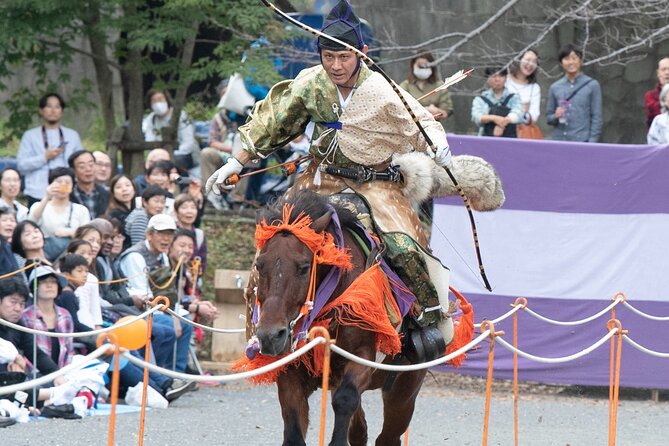
Samurai training is harder than it looks. At a dojo in Machida, just outside central Tokyo, you learn sword handling, formal cutting movements, mock combat, target slashing, and traditional archery under master instructor Yoshioki Sumida. The class lasts about two and a half hours and provides the training clothes and equipment, so you can focus on learning rather than preparing for a staged photo session.
I like the way the class connects sword practice with the construction and purpose of the katana. I also like the small-group format, with a maximum of 15 people, since Sumida can correct your stance and movement instead of simply giving a speech. The main drawback is the location. The dojo can be difficult to find, and one participant needed about 1.5 hours from Tokyo Daiba, so you should allow plenty of time.
The experience costs $198.20 per person. That is a serious price for a short activity, but it includes several different lessons, a practice uniform, mock swords, a real bow and arrows, and hands-on instruction. If you want a polished samurai costume photo, this is not the right choice. If you want a demanding introduction to Japanese swordsmanship in a real dojo setting, it offers much more substance.
In This Review
- Key points to know before booking
- Getting to the Machida dojo
- Changing into training clothes
- Understanding the katana before using it
- Iai practice with a mock sword
- Gekken sparring and defensive timing
- Cutting targets with a sword
- Trying the bow and arrows
- The Toyama-ryu demonstration
- How authentic is the experience?
- Group size, pace, and physical demands
- Is $198.20 good value?
- Who should book this class?
- Final verdict: a serious class, not a samurai photo stop
- FAQ
- Where does the samurai sword and archery class take place?
- How long does the experience last?
- What activities are included?
- Is equipment provided?
- How many people can join the class?
- Do I need previous martial arts experience?
- Can I cancel for a refund?
Key points to know before booking
- Four distinct training sections: Expect a lecture, iai sword forms, gekken sparring, target cutting, and archery rather than one repeated demonstration.
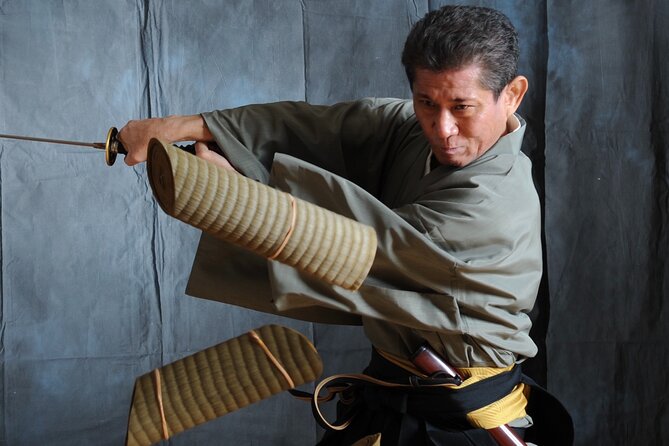
- Master instructor Yoshioki Sumida: Sumida teaches swordsmanship and horseback archery, with staff support during the class.
- Real physical effort: Moving while slashing several targets is difficult, and you may feel sore for a day or two afterward.
- Training gear is supplied: The price includes practice clothing, a practice sword, bokken, and a real bow and arrows.
- A genuine dojo setting: The class focuses on technique, discipline, and cultural context rather than a tourist show.
- Machida location: You finish where you began at 3-chōme-14-14 Haramachida, Machida, Tokyo 194-0013.
Getting to the Machida dojo
The first practical point is simple: this is not a central Tokyo activity. The meeting point is in Haramachida, Machida, and the dojo is near public transportation, but the studio may take some effort to locate. Plan extra time, especially if you are coming from areas such as Daiba or eastern Tokyo.
That travel time can affect the value of the experience. You are not adding it to a morning of sightseeing around Asakusa or Shibuya without thought. Instead, plan this as a dedicated half-day outing, with the class itself taking about 2 hours and 30 minutes.
I would arrive early and keep the meeting instructions easy to reach on your phone. The ticket is mobile, and confirmation arrives when you book. Since the activity ends back at the meeting point, you do not need to arrange a second pickup location.
Machida also gives you a different view of Tokyo. It is described by one participant as a peaceful city worth walking around before heading to the dojo. That is not the same as visiting a famous samurai site, but it can make the outing feel less like a quick attraction squeezed between major sights.
More Castles and Historic Sites in Tokyo
- Tokyo: Imperial Palace and Shogun Historical Walking Tour
★ 5.0 · 2,251 reviews - Tokyo Castle & Imperial PalaceーShogun Walking Tour
★ 4.7 · 1,068 reviews - Tokyo: Samurai Ninja Museum Guided tour and Experience
★ 4.6 · 1,010 reviews
Changing into training clothes
When you arrive, you receive a short introduction and change into practice wear. The provider asks for your height and weight in advance so the clothing can be prepared.
This is a small detail, but it matters. You do not need to pack a martial arts uniform or wonder if ordinary travel clothes will restrict your movement. You will be handling swords, practicing footwork, and using a bow, so comfortable training clothing is far more useful than a costume.
The atmosphere is meant to be respectful and instructional. Participants describe Sumida and his staff as welcoming, patient, and encouraging, while also stressing that the class requires concentration. That balance is important. You are treated kindly, but you are not simply handed a sword for a photograph.
Understanding the katana before using it
The class begins with a lecture on Japanese swords. You learn about the blade, its construction, and the way it was used. Some sessions also cover assembling and disassembling a sword, giving you a better sense of the object beyond its familiar image in films and television.
This opening section gives the physical practice some meaning. A katana is not just a long metal prop, and the way you hold it affects safety, control, and the line of the cut. Learning about the sword first helps you understand why the instructor insists on careful movements.
I especially like this part for first-time participants. You do not need previous martial arts training to follow the class, and the instruction moves step by step. If you already practice martial arts, you may find the cultural and technical background more useful than the basic stance work.
Iai practice with a mock sword
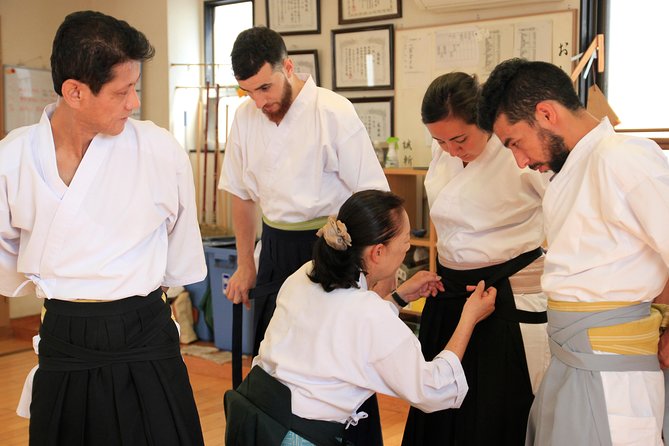
The iai lesson introduces the way to handle and swing the practice sword. You learn formal movements known as kata, including the stance, draw, swing, and control of the blade line.
The mock sword lets you focus on body position and timing without beginning with a sharp blade. That does not make the lesson easy. Proper sword movement uses more than the arms, and the instructor watches how you stand, turn, and finish each action.
This is also where the class begins to feel different from a stage performance. You are not watching a samurai demonstrate a perfect sequence while you clap. You repeat the movements yourself, receive corrections, and discover how much coordination is required to make a cut look controlled.
The provider describes multiple target cuts while moving as especially difficult. That is a useful warning. A stationary swing may seem manageable, but stepping, turning, and maintaining the correct blade line at the same time demands much more control.
A completely different kind of day out:
- Tokyo Disney Resort – Tokyo Disneyland & Tokyo DisneySea Park Tickets
★ 4.8 · 99,488 reviews - SHIBUYA SKY Ticket
★ 4.7 · 46,509 reviews - JR Whole Japan Rail Pass
★ 4.8 · 29,150 reviews - Mt Fuji and Hakone 1-Day Bus Tour Return by Bullet Train
★ 5.0 · 26,383 reviews
Gekken sparring and defensive timing
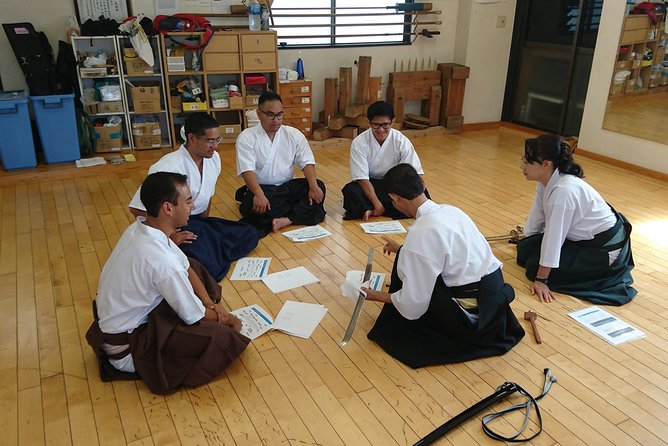
The gekken section introduces attack and defense with practice swords. You work with a mock sword and spar with another participant, using the timing and movements taught by the instructor.
This is likely to be the most playful part of the class, but it still has a clear purpose. Sparring shows you that swordsmanship is not only about making a strong cut. You must read distance, react to an attack, protect yourself, and choose the right moment to move.
The practice swords make this suitable for beginners, though you should still listen closely and avoid treating it like a casual fight. Safety is emphasized throughout the class. One instructor may even spar with participants, which adds a memorable challenge while keeping the exercise under close supervision.
Families and friends often like this section because it creates direct interaction. A parent and child, two friends, or a couple can practice together rather than standing apart during a demonstration. Still, the physical nature of the lesson means you should be ready to concentrate and follow directions.
Cutting targets with a sword
The cutting exercise is one of the class highlights. You may try slashing a target with a mock sword and practice cutting tatami-style mats or similar blocks, depending on the session setup.
The goal is not brute force. The instructor watches the blade line, angle, distance, and follow-through. Cut correctly and the target gives way. Use the wrong movement and you quickly learn that a sword does not do the work for you.
This is a satisfying part of the class because it gives you a clear result. You can feel the difference between a swing that looks right and one that is actually controlled. Participants describe the cutting as fun, challenging, and more difficult than it appears.
You should treat the target work seriously. Do not arrive expecting an action-movie stunt. The class is designed to teach control and safe handling, and the result depends on applying the earlier lessons.
Trying the bow and arrows
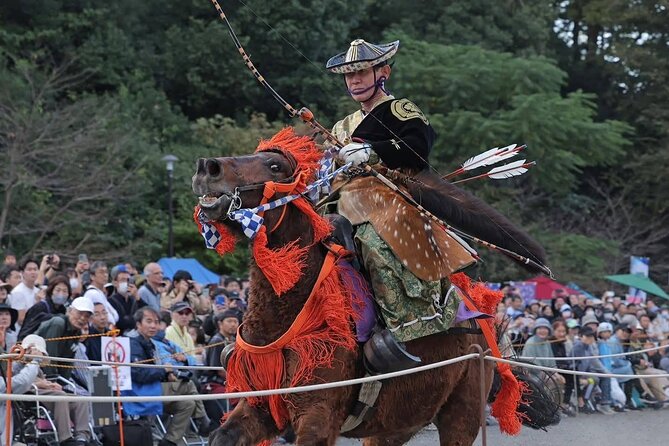
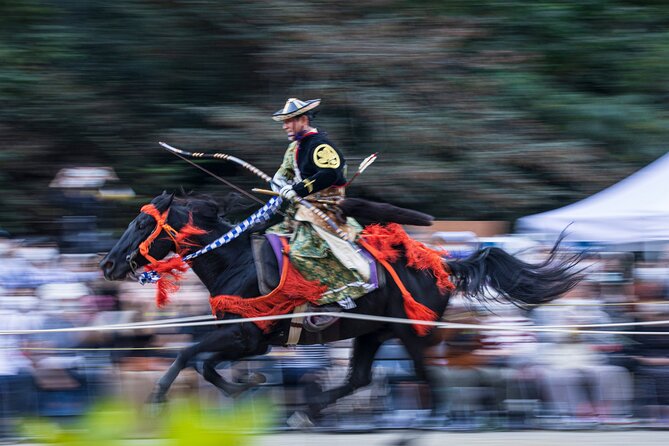
The archery lesson broadens the experience beyond sword work. You can try a traditional bow and arrows, described here as the main weapon of the samurai a thousand years ago.
This makes the class more than a katana workshop. The bow requires a different type of control, and it gives you another way to think about the samurai warrior tradition. You are not simply repeating sword poses. You are comparing the body position, focus, and timing needed for two different weapons.
The supplied equipment includes a real bow and arrows. That is why the safety instructions matter. Follow the instructor carefully, keep your attention on the range, and do not handle the equipment casually.
Archery also gives people with different interests a chance to find their strongest section. You might arrive mainly for the katana and discover that the bow work is your favorite, or the reverse.
The Toyama-ryu demonstration
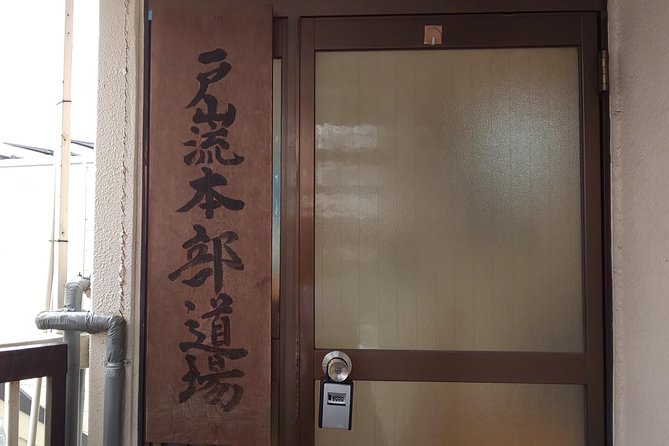
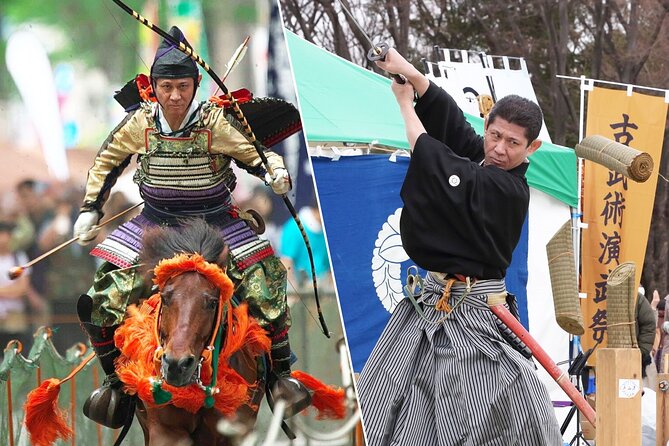
A live demonstration of Toyama-ryu is included, presented by a seventh-grade practitioner. The demonstration features difficult techniques and is not designed as entertainment.
That distinction is worth understanding before you book. You will see a serious display of swordsmanship, not a theatrical show with costumes, music, or exaggerated combat. The value is in watching details that are too advanced to teach in a single introductory class.
The demonstration also gives you a standard for comparison. After practicing a few basic forms, you can see how much precision, speed, and control the advanced work demands. It puts your own effort in perspective without making the beginner portion feel pointless.
How authentic is the experience?
The strongest reason to choose this class is its tone. The instruction focuses on Japanese sword culture, sword construction, forms, sparring, cutting, and archery. The setting is a dojo, and the teacher presents the work as training rather than a themed attraction.
Sumida is repeatedly described as passionate, patient, funny, and serious about both swordsmanship and heritage. That combination matters. A strict instructor who cannot explain the movements would make this hard for beginners, while a purely casual host would weaken the cultural side.
The class also avoids the most common problem with martial arts activities: spending more time posing than learning. You do get practical instruction and repeated practice, with little idle time between sections.
Still, keep your expectations sensible. Two and a half hours cannot make you a samurai swordsman. You will gain a short but demanding introduction, a better understanding of the discipline, and a taste of how difficult the techniques are when performed correctly.
Group size, pace, and physical demands
The class accepts a maximum of 15 participants. That is small enough for personal attention, though the exact amount of individual coaching will depend on the final group size and the number of instructors present.
The pace appears active, with several activities arranged into one session. You should expect to stand, move, swing, spar, and use your arms for much of the class. The work can leave you tired, and participants specifically warn that your body may ache during the following day or two.
You do not need to be a martial artist. The class has welcomed beginners, older participants, families, and people who do not usually play sports. The important requirement is a willingness to listen, work carefully, and accept that the techniques will not come easily.
If you have physical limitations, the provided information does not give specific accommodation details. Contact the provider before booking if you need adjustments or have concerns about the activity level.
Is $198.20 good value?
At $198.20 per person, this is expensive compared with a simple cultural demonstration or short lesson. The price makes more sense when you count what is included: approximately 150 minutes of instruction, practice clothing, a practice sword, bokken, and bow and arrows.
You also receive several different forms of activity. The lecture, iai forms, gekken sparring, target cutting, archery, and advanced demonstration would be difficult to replicate through separate short attractions in Tokyo.
The value depends on your goal. If you mainly want a souvenir photograph, the price is too high. If you care about learning and want an instructor who can explain why the techniques work, the cost is easier to justify.
A private facility charter is not part of the standard price. If you want exclusive use of the facility, you need to contact the provider, and separate charter fees will apply.
Who should book this class?
I would recommend it to visitors who have a real interest in Japanese martial arts, samurai culture, or hands-on activities. It suits couples, friends, families with older children, and solo participants who enjoy learning by doing.
It is also a strong choice if your Tokyo schedule already includes temples, shrines, food tours, and museums, but lacks a physical activity. You leave with more than a photo because you have tried the basic mechanics yourself.
I would think twice if you dislike structured instruction, physical exertion, or activities where careful repetition matters. This is not a drop-in attraction where you can drift through at your own pace.
Book early if the date matters to you, since the maximum group size is 15 and the activity is highly rated. Free cancellation is available until 24 hours before the start time. Cancellations or changes made inside that window are not refunded or accepted, and poor weather can lead to a new date or a full refund.
Final verdict: a serious class, not a samurai photo stop
I would book this experience if I wanted an authentic, hands-on introduction to swordsmanship near Tokyo. The best parts are the range of activities, the careful teaching, the target cutting, and the chance to watch advanced Toyama-ryu technique.
The main tradeoffs are the price, the trip to Machida, and the physical effort. Allow extra time to find the dojo, send your height and weight in advance, and arrive ready to listen rather than perform.
For a staged tourist show, choose something else. For a demanding afternoon with Sumida Sensei, real instruction, and a better sense of what samurai technique requires, this is a strong choice.
FAQ
Where does the samurai sword and archery class take place?
The meeting point is 3-chōme-14-14 Haramachida, Machida, Tokyo 194-0013, Japan. The activity ends back at the same meeting point.
How long does the experience last?
The class lasts approximately 2 hours and 30 minutes.
What activities are included?
You receive a lecture on Japanese swords, practice iai kata, learn attack and defense timing in gekken sparring, try target cutting with a mock sword, and practice with a bow and arrows. You can also watch a Toyama-ryu demonstration.
Is equipment provided?
Yes. The included equipment consists of a practice uniform, practice sword, bokken, and a real bow and arrows. You should provide your height and weight so the practice clothing can be prepared.
How many people can join the class?
The activity has a maximum of 15 participants.
Do I need previous martial arts experience?
The provided information says most people can participate, and the class teaches the techniques step by step. Previous martial arts experience is not listed as a requirement.
Can I cancel for a refund?
Yes. You can cancel at least 24 hours before the experience start time for a full refund. Cancellations and changes made less than 24 hours before the start time are not accepted for a refund. If poor weather causes the provider to cancel, you will be offered another date or a full refund.
Just added in Tokyo
- Tokyo: Shinjuku Bar Hopping & Night Walking Tour★ 5.0 · 53 reviews
- Tokyo Ultimate Daikoku & JDM Experience (R35 GTR Private Tour)★ 5.0 · 27 reviews
- Authentic Geisha Performance with Dinner in Tokyo★ 4.5 · 101 reviews
- Tokyo: Asakusa Walking Tour with Japanese Comedian★ 5.0 · 43 reviews
- Asakusa: 1400-year history exploration★ 5.0 · 155 reviews
- Tokyo Asakusa Temple & Shrine Walking Tour with Local Guide★ 5.0 · 52 reviews
- Asakusa Night Evening Walking Tour with English-Speaking Guide★ 5.0 · 16 reviews
- Tokyo Nights: Shibuya Photo Adventure★ 5.0 · 20 reviews
Castles and Historic Sites, compared.


Imperial Palace and Shogun Historical Walking Tour
Read our review →
Tokyo Castle & Imperial PalaceーShogun Walking Tour
Read our review →
Nijo-jo Castle and Ninomaru Palace Guided Tour
Read our review →
Samurai Ninja Museum Guided tour and Experience
Read our review →Browse the lists this tour appears in