
Reviewed · CASTLES AND HISTORIC SITES
Best Samurai Experience in Tokyo
Pick a kimono, then learn to wield a sword. This one-hour activity turns a museum-like dojo in Shinjuku into a friendly stage for samurai training. I like the hands-on sword lesson, which covers drawing, holding, swinging, and returning the blade. I also like the way the instructors make room for photos and videos, even when you come alone. The main drawback is time: one hour passes quickly, especially if you want more background about samurai culture.
You choose your own kimono and hakama, change into the costume, and work through simple movements before performing a choreographed sword fight. The instructors are described as authentic performers who have appeared in major Japanese dramas and films, which helps explain the polished demonstrations and theatrical finish. The venue can be a little tricky to spot on its side roads, so allow time to find the flag leading to Samurai Theater Tokyo.
In This Review
- Key points to know before booking
- Entering the Edo-style dojo in Shinjuku
- Choosing a kimono and hakama
- Learning the katana basics
- The choreographed chambara battle
- Photos, videos, and the final performance
- How authentic is the samurai experience?
- What the $65 price includes
- Who will enjoy this most?
- Booking, timing, and cancellation advice
- Should you book Samurai Theater Tokyo?
- FAQ
- Where does the samurai experience take place?
- How long does the activity last?
- What does the ticket include?
- Is transportation included?
- Does the activity begin and end at the same location?
- Can one person book the experience?
- Are photos and videos allowed?
- How many people can join the group?
- Can I cancel for a full refund?
Key points to know before booking
- A real activity, not just a costume photo: You learn basic katana handling and perform a short choreographed battle.
- Set in an Edo-period-style dojo: Armor, swords, spears, and other weapons create a strong period atmosphere.
- Good for families and solo visitors: One person can book, and staff take photos and video for solo participants.
- Small groups help: The maximum group size is 10, so instruction should feel more personal than a large stage show.
- A one-hour commitment: It fits neatly into a Tokyo day, but the schedule leaves little time for extended cultural explanation.
- Good value at $65: Costume, instruction, admission, and taxes are included, with no separate transport cost because you make your own way there.
Entering the Edo-style dojo in Shinjuku
Samurai Theater Tokyo is at 40 Yokoteramachi, Shinjuku City, Tokyo 162-0831. The activity begins and ends at this same location, and the venue is near public transportation, so you do not need to arrange a private transfer.
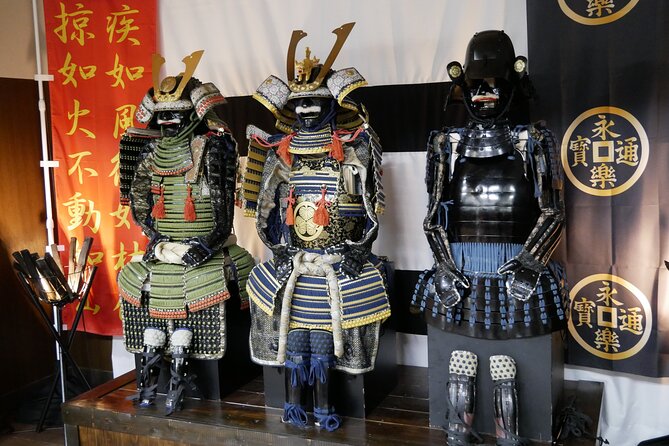
The setting is designed to resemble a dojo from the Edo period, roughly 400 years ago. It is not a functioning samurai residence or an archaeological site, but it gives the lesson a much better backdrop than a plain studio. Armor is displayed around the room, along with swords, spears, and other weapons. You get the feeling of entering a performance space built around samurai culture rather than a modern classroom.
One practical point matters here: the venue is up side roads, and the entrance can be easy to miss at first. Look for the flag that directs you down to the theater. If you are arriving on a tight schedule, do not cut it close. A few extra minutes for finding the entrance will make the start much less rushed.
The maximum group size is 10 people. That is small enough for the instructors to watch your movements and help with the sequence. It also means the activity can feel lively without becoming a crowded photo line.
More Castles and Historic Sites in Tokyo
- Tokyo: Imperial Palace and Shogun Historical Walking Tour
★ 5.0 · 2,251 reviews - Tokyo Castle & Imperial PalaceーShogun Walking Tour
★ 4.7 · 1,068 reviews - Tokyo: Samurai Ninja Museum Guided tour and Experience
★ 4.6 · 1,010 reviews
Choosing a kimono and hakama
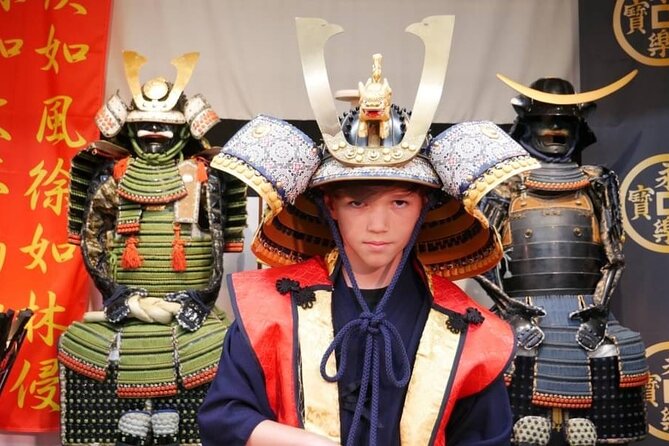
The first major part of the activity is dressing up. You choose a favorite kimono and hakama before changing into the samurai costume. This is more enjoyable than being handed one standard outfit, since your choice becomes part of the final photos and video.
The formal clothing is also more comfortable than some first-time participants expect. The costume gives you a clear sense of transformation without requiring you to bring anything special. It is not merely a quick robe thrown over street clothes for one picture. You wear it while learning the movements and taking part in the staged battle.
This is a strong choice for families. Children can take the costume seriously for about five minutes, then start grinning when the sword practice begins. Adults get just as much out of the theatrical side, especially if you enjoy dressing for the setting rather than simply looking at displays.
The activity is also well suited to a solo booking. Staff can take photos and film you during the lesson, so you do not need a companion to document the main moments. That is a useful detail for solo visitors who often have to choose between taking part and taking pictures.
Learning the katana basics
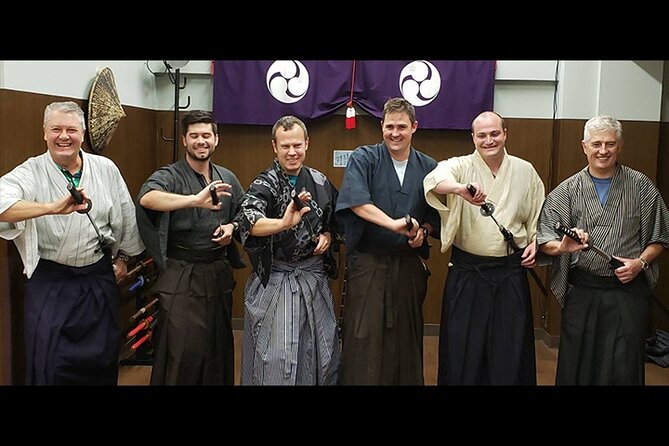
Once dressed, you learn the basic way to use a Japanese sword. The lesson includes how to draw the sword, hold it, swing it, and retract it. You also learn several simple sword movements before putting them together in a short routine.
This is not a full martial arts course, and you should not expect a serious study of historical swordsmanship in one hour. The value is in the guided introduction. The instructors break the movements into manageable parts, demonstrate them clearly, and keep the pace friendly for beginners.
Safety is part of the teaching. You are shown how to handle the sword properly before the battle sequence begins. The lesson is structured so that you learn the moves first, then practice a set piece rather than inventing a free-for-all sword fight.
That structure makes the activity approachable. You do not need previous experience, and the program is designed for beginners. The instructors are described as professional performers with experience in Japanese dramas and films, so they know how to combine clear instruction with a little stage flair.
The most praised feature is the staff. They are repeatedly described as friendly, patient, welcoming, and engaging. That matters here because sword choreography can feel awkward at first. A patient teacher helps you relax, remember the order, and enjoy the performance instead of worrying about getting every movement perfect.
The choreographed chambara battle
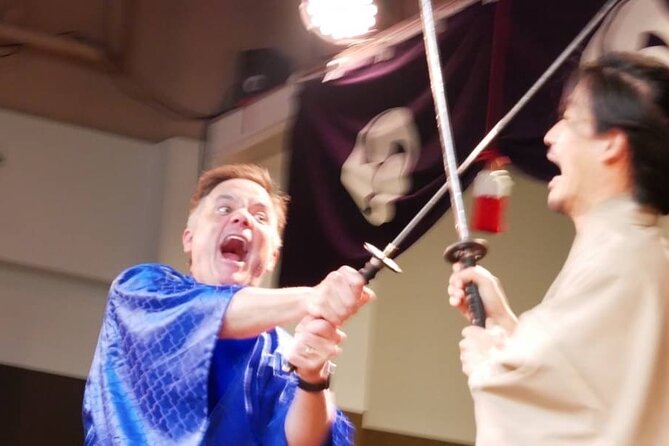
After practicing the basics, you take part in a simple chambara, or staged sword fight. The point is not to test strength or speed. It is to perform a short sequence that looks exciting on camera while keeping the movements controlled.
The battle is paired with music, and a later scene involves fighting off bad guys to the soundtrack. This gives the activity a playful movie quality. You are not only learning a sequence, you are also learning how to present it with timing and expression.
That theatrical finish is why this works for mixed-age groups. Younger participants can enjoy the adventure and sound effects. Teenagers and adults can focus on the choreography, costumes, and photos. The instructors keep the tone light, so the class does not become stiff or overly formal.
You may find that the battle is the quickest part of the session. The program must fit costume changes, instruction, practice, filming, and photographs into roughly an hour. If you are hoping for several different fight scenes or a long explanation of sword design, this will feel limited. If you want a polished samurai-themed activity that fits between sightseeing stops, the short format is a strength.
A completely different kind of day out:
- Tokyo Disney Resort – Tokyo Disneyland & Tokyo DisneySea Park Tickets
★ 4.8 · 99,488 reviews - SHIBUYA SKY Ticket
★ 4.7 · 46,509 reviews - JR Whole Japan Rail Pass
★ 4.8 · 29,150 reviews - Mt Fuji and Hakone 1-Day Bus Tour Return by Bullet Train
★ 5.0 · 26,383 reviews
Photos, videos, and the final performance
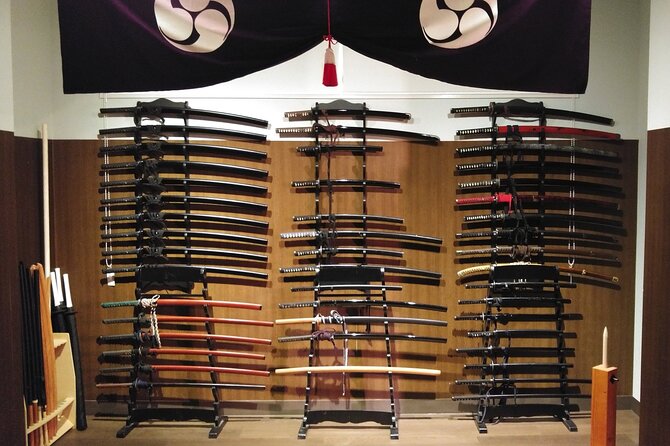
Photography and video recording are allowed inside the museum-like space. You can use your own smartphone, and the staff are happy to help capture the action. This is especially helpful during the sword routine, when you cannot film yourself.
The final footage gives the experience lasting value. A costume photo is nice, but a short video of you performing the sequence shows the full point of the activity. You get the outfit, the dojo-style setting, the sword movements, and the music in one keepsake.
Staff also take photos with participants. Solo visitors are not left to manage this alone, and families can get pictures with everyone together. Several families found the photo and video support particularly useful because it allowed parents to join the activity rather than stay behind the phone.
If you are taking your own pictures, keep the phone secure and follow staff instructions during the movement practice. The room contains displayed armor and weapons, so you want to focus on the lesson rather than backing into a display while trying to frame a shot.
How authentic is the samurai experience?
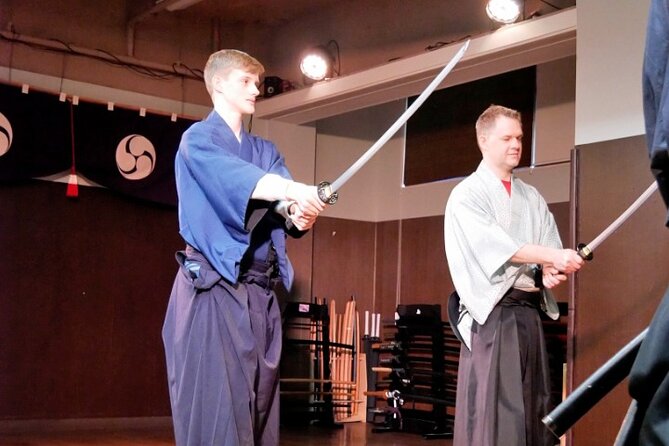
The word authentic needs a little care here. You are not training as a historical samurai, and this is not a traditional school offering a long course in classical swordsmanship. It is a staged cultural activity built around real costume elements, basic sword handling, performance skills, and an Edo-style setting.
That does not make it shallow. The instructors teach the sequence properly, explain sword safety, and show you how to make the movements look convincing. Their background in Japanese film and television helps create the polished, dramatic tone that the activity promises.
I would describe it as a samurai theater workshop with cultural touches. You learn a few basic techniques, wear formal clothing, see armor and weapons, and take part in a controlled performance. That is a fair and useful expectation.
The program also introduces a little Japanese language and the role-playing helps you remember what you learned. For many people, physically practicing a sword movement will be more memorable than reading a museum label about one.
What the $65 price includes
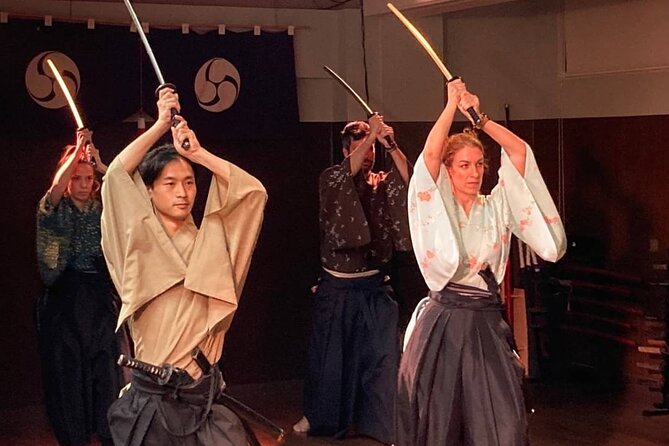
At $65 per person, the activity is not the cheapest one-hour stop in Tokyo. Still, the price includes the costume, professional guide or instructor, admission-related costs, and all taxes. You do not pay extra for the lesson or the outfit.
The best value comes from the combination of several short activities:
- Choosing and wearing a kimono and hakama
- Learning basic katana movements
- Practicing a choreographed fight
- Taking photos and videos in the dojo-style setting
- Receiving instruction from professional performers
If you only want to put on a costume for a quick photograph, $65 may feel high. If you want a structured activity with teaching, performance, and staff-assisted filming, the price is easier to justify.
The one-hour length also helps with planning. You can place it between other Tokyo activities without giving up half a day. Since transportation is not included, you need to cover your own train or taxi costs, but the meeting point is near public transportation and the activity returns you to the same place.
Who will enjoy this most?
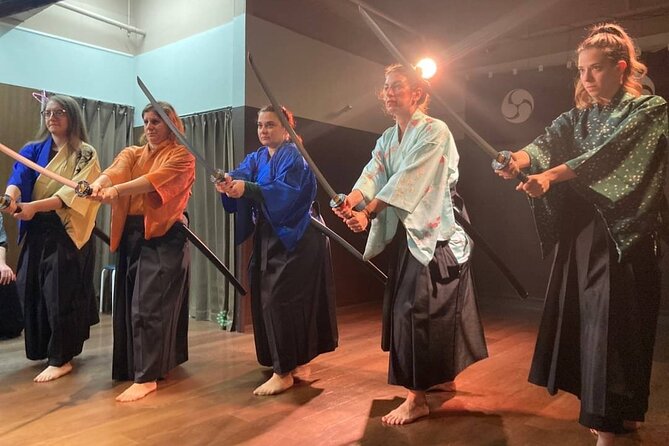
I would recommend this for families with children, couples, groups of friends, and solo visitors who want an activity rather than another observation deck or shopping street. The friendly teaching style works well for beginners, and the group limit keeps the session manageable.
It is particularly good for children who enjoy role-playing. A six-year-old can take part and leave with memorable photos, while older children and adults can appreciate the choreography and costume details. The instructors are described as patient with children and good at keeping different ages involved.
It also suits anyone who wants a strong visual memory of Tokyo. The costume, armor displays, music, and sword sequence give you photos that look different from the usual shrine or city-view pictures.
You may want to choose another activity if your main goal is a long lecture on samurai history, advanced martial arts training, or a quiet museum visit. The atmosphere is energetic and theatrical. You will be moving, posing, and performing rather than standing silently in front of artifacts.
Booking, timing, and cancellation advice
Confirmation is provided when you book, and same-day reservations are possible. That flexibility helps if rain, jet lag, or a changed Tokyo schedule affects your plans. One person can also join, so you do not need to form a group.
The activity is capped at 10 people, but it is still wise to book ahead if you have a fixed sightseeing plan. It has been booked multiple times in a day, and a small-group activity can fill more quickly than a large attraction.
Free cancellation is available if you cancel at least 24 hours before the start time. A cancellation made less than 24 hours in advance is not refunded, and changes inside that window are not accepted. The cut-off follows local Tokyo time, so check the clock carefully if you are changing plans from another time zone.
Should you book Samurai Theater Tokyo?
Book it if you want to do more than look at samurai culture. For $65, you get a costume, a guided introduction to sword movements, a staged battle, and useful photos or video from the session. The staff are the heart of the activity, and their patience makes it work for families, beginners, and solo visitors.
Skip it if you want a serious historical seminar or advanced sword instruction. This is a lively, movie-style performance lesson, not a full martial arts course.
For most first-time visitors to Tokyo, I would call it a good choice, especially if you have children or want one memorable activity in Shinjuku. Allow extra time to find the flag and entrance, arrive ready to take part, and expect a fun hour rather than a long museum visit.
FAQ
Where does the samurai experience take place?
It takes place at Samurai Theater Tokyo, 40 Yokoteramachi, Shinjuku City, Tokyo 162-0831, Japan.
How long does the activity last?
The experience lasts approximately one hour.
What does the ticket include?
The ticket includes all fees and taxes, a professional guide or instructor, and samurai costumes.
Is transportation included?
No. Private transportation is not included. You make your own way to Samurai Theater Tokyo, which is near public transportation.
Does the activity begin and end at the same location?
Yes. The activity ends back at the meeting point.
Can one person book the experience?
Yes. Solo participants can join the activity.
Are photos and videos allowed?
Yes. Photography and video recording are allowed inside the museum-like venue. Staff can also help take photos and video during the activity.
How many people can join the group?
The activity has a maximum of 10 participants.
Can I cancel for a full refund?
Yes, if you cancel at least 24 hours before the scheduled start time. Cancellations made less than 24 hours before the start time are not refunded, and changes within that period are not accepted.
Just added in Tokyo
- A One-of-a-Kind Sushi Experience in a Special Place of Japan★ 5.0 · 15 reviews
- Tokyo Cute Bento Cooking Class – Make a Kawaii Character Lunchbox★ 5.0 · 126 reviews
- Japanese Home Cooking Class & Walk in Todoroki Temple Tokyo★ 5.0 · 88 reviews
- Japan Tokyo Tower Observatory Deck E-Ticket★ 4.0 · 34 reviews
- Catch a Baseball Game in Tokyo with a Local – Tickets Included★ 5.0 · 24 reviews
- JDM Experience with Fast&Furious RX-7 (English speaking Driver)★ 5.0 · 57 reviews
- Tokyo Private Day Tour by Car with English speaking Driver Guide★ 4.0 · 29 reviews
- Japan Classic 10 Day – One Life Adventures★ 5.0 · 129 reviews
Castles and Historic Sites, compared.
Imperial Palace and Shogun Historical Walking Tour
Read our review →
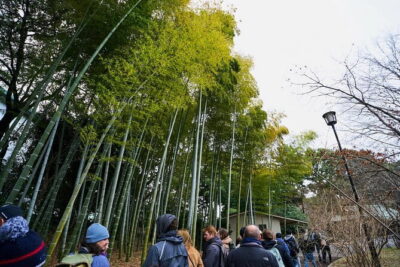
Tokyo Castle & Imperial PalaceーShogun Walking Tour
Read our review →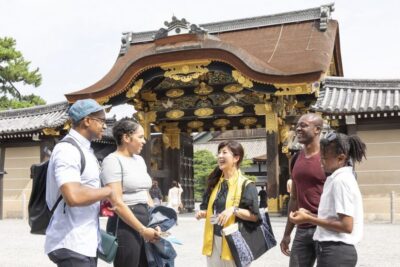
Nijo-jo Castle and Ninomaru Palace Guided Tour
Read our review →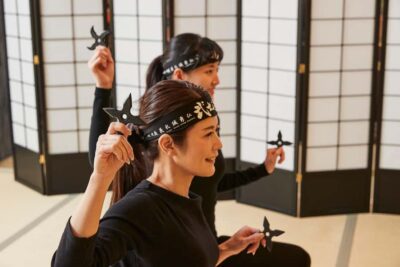
Samurai Ninja Museum Guided tour and Experience
Read our review →Browse the lists this tour appears in