
Reviewed · PRIVATE TOURS IN TOKYO
Tokyo Customized Private Tour: See Top Attractions in 1 Day
Tokyo rewards a little local help. This private tour combines major sights with neighborhood wandering, giving you a practical first look at temples, markets, shrines, shopping streets, and modern Tokyo without forcing your group into a fixed route. You can choose a 4, 6, or 8-hour outing and shape the day around food, history, family interests, shopping, or Japanese pop culture.
I especially like the chance to learn Tokyo’s subway system while you use it, rather than simply being driven from one photo stop to another. I also like the personal service: guides such as Tak, Yoko, Ike, Fumi, Keiko, and Osamu have helped families adjust plans, explain customs, find food that works for children, and make the city feel less intimidating. The main drawback is that the itinerary can feel under-structured if you do not arrive with clear priorities. Four hours allows only two or three areas, and entrance fees, meals, and train fares are extra.
In This Review
- Key points to know before booking
- What this private Tokyo tour does best
- Senso-ji and Asakusa: Tokyo’s traditional starting point
- Tsukiji Outer Market: Come hungry and ask questions
- Imperial Palace and Hama Rikyu Gardens: Two calmer choices
- Meiji Jingu and Harajuku: Old Japan beside youth culture
- Shibuya, Shinjuku, and Ginza: Choose your modern Tokyo
- Yanaka Ginza and Ueno: A more local-feeling option
- Tokyo Skytree and Odaiba: Save these for a longer outing
- How much can you really see in 4, 6, or 8 hours?
- Price, extra costs, and the real value
- Who should book this Tokyo experience?
- Final decision: book it for guidance, not just sightseeing
- FAQ
- How long does the private Tokyo tour last?
- Can the itinerary be customized?
- Is hotel pickup available?
- Does the tour use public transportation?
- Is a private vehicle included?
- Are entrance fees included?
- Are meals and drinks included?
- What happens if it rains?
Key points to know before booking
- Choose your own Tokyo mix: Pair Senso-ji and Asakusa with Meiji Shrine and Harajuku, or focus on markets, gardens, museums, shopping, or local streets.
- The subway becomes part of the lesson: Your guide can help you handle Tokyo’s complex rail network, obtain a children’s pass, and understand how to get around later.
- Four hours is a sampler: Plan on two or three locations. Six hours allows about three or four, while eight hours allows roughly four or five.
- Tsukiji is a strong food stop: The outer market offers a chance to browse stalls and taste food, so arriving hungry may be wise.
- A private vehicle costs extra: It can save time, but public transport is included in the character of the tour and helps you learn the city.
- Expect lots of walking: Comfortable shoes matter, and the tour operates in rain or shine.
What this private Tokyo tour does best
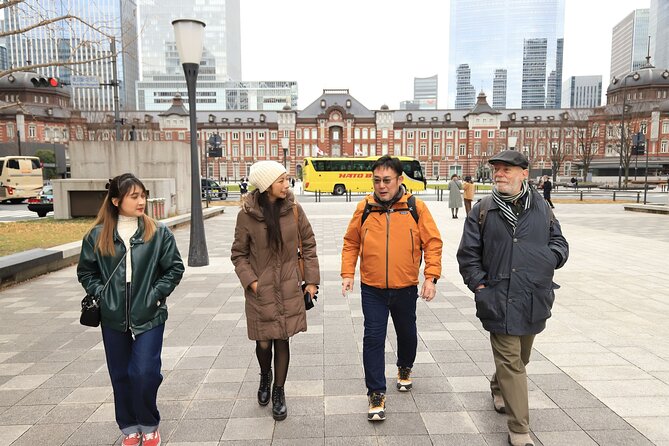
This is not a standard bus tour with a guide pointing at buildings from behind glass. You meet a local guide at your hotel when pickup is arranged, then move around Tokyo on foot and by metro. That format works well because Tokyo’s major sights are spread across different districts.
The best part is the conversation. Guides have explained Japanese history, shrine etiquette, food customs, youth culture, and everyday life while walking between stops. Yoko has helped visitors understand language and customs as well as train travel. Fumi has shown families both famous attractions and quieter local areas. Ike has handled food allergies, found a ramen restaurant, and even helped a child look for a soccer jersey.
Those small acts are where a private tour earns its keep. You are not just collecting landmark photos. You can ask why people bow at a shrine, how to make an offering, where to eat next, or how to reach your hotel after the tour.
The experience has earned a 5.0 rating from 1,351 reviews, with 99 percent recommending it. That is a strong record, though it does not remove the need to plan your day carefully. A private guide can respond to your interests, but you should tell the company what those interests are before setting out.
More Private Tours in Tokyo
- Tokyo 6hr Private Tour with Government-Licensed Guide
★ 5.0 · 3,902 reviews - Private Tour to Mt. Fuji and Hakone (Fully Licenced Operator)
★ 5.0 · 1,910 reviews - Tokyo Customized Private Tour (Must See Places in 1 Day)
★ 5.0 · 1,499 reviews
Senso-ji and Asakusa: Tokyo’s traditional starting point
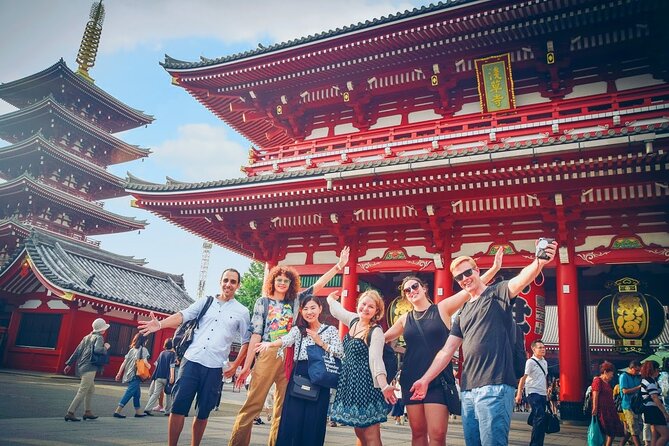
Senso-ji Temple in Asakusa is one of the most useful first stops because it gives you an immediate sense of old Tokyo. You can approach the temple, learn how to behave at a Buddhist site, and walk through the surrounding traditional district.
The nearby shopping streets add more than a quick temple photograph. Your guide can explain the meaning behind common customs and point out details you might miss alone. One guide provided coins for an offering and explained the process, a thoughtful touch for first-time visitors unsure of what to do.
Allow enough time here to look around rather than rushing through the gate, temple, and shops. The advertised stop times are short, but the actual pace depends on your chosen route and interests. If you want food, shopping, and temple details, Asakusa can easily become one of your main areas rather than a fifteen-minute photo stop.
The Asakusa Culture Tourist Information Center is another possible stop. From there, you can see the wider Asakusa area, making it useful for orientation and photographs. It pairs naturally with Senso-ji, but including both means you may need to drop another district.
Tsukiji Outer Market: Come hungry and ask questions
Tsukiji is one of the most popular choices on this tour, and for good reason. The outer market is a lively food district where you can browse stalls and sample Japanese specialties while your guide helps you understand what you are seeing.
You should not expect the old wholesale fish market experience here. The tour specifically visits the outer market, which is a food and shopping area. That makes it accessible for a short visit, especially if you want to taste rather than spend hours studying market operations.
One useful tip comes directly from the shape of the experience: do not eat a large breakfast before arriving. The market works best when you have room for small bites. Your guide can also offer suggestions for food beyond the tour, as several guides have done.
Tsukiji is especially valuable for families and first-time visitors because food creates an easy way into Japanese culture. Still, meals and drinks are not included, so budget separately for what you choose to eat. You also pay your guide’s meal cost if the guide eats with you.
Imperial Palace and Hama Rikyu Gardens: Two calmer choices
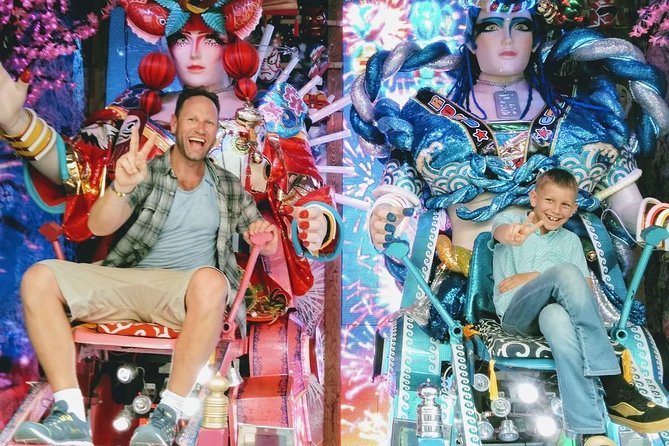
The Imperial Palace East Gardens offer a change of pace from shopping streets and train stations. You can include them if you want open space, imperial history, and a quieter walk in central Tokyo. The gardens are listed as an optional area, so confirm your preferred route in advance.
Hama Rikyu Gardens provide another garden choice. This traditional Japanese garden near the waterfront can add balance to a day filled with dense streets and commercial districts. Entrance fees may apply, and you pay for both yourself and your guide when a paid site is included.
These stops are best for visitors who value scenery and historical context more than checking off as many districts as possible. Do not try to fit both gardens, Tsukiji, Asakusa, Harajuku, and Shibuya into a short tour. Tokyo distances and station transfers take real time.
A completely different kind of day out:
- Tokyo Disney Resort – Tokyo Disneyland & Tokyo DisneySea Park Tickets
★ 4.8 · 99,488 reviews - SHIBUYA SKY Ticket
★ 4.7 · 46,509 reviews - JR Whole Japan Rail Pass
★ 4.8 · 29,150 reviews - Mt Fuji and Hakone 1-Day Bus Tour Return by Bullet Train
★ 5.0 · 26,383 reviews
Meiji Jingu and Harajuku: Old Japan beside youth culture
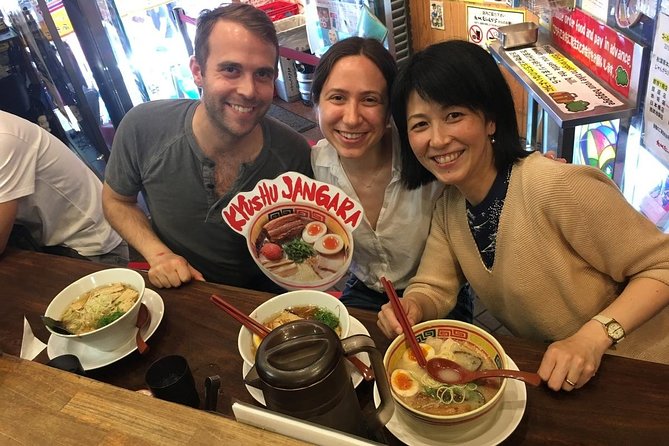
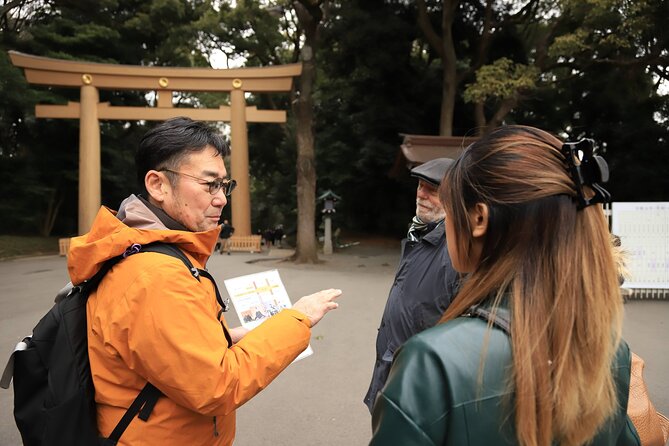
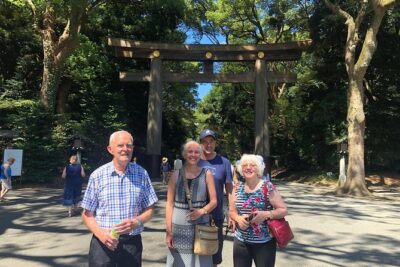
The Meiji Jingu Shrine and Harajuku combination is one of the tour’s clearest contrasts. Meiji Jingu is a major Shinto shrine surrounded by forest, while nearby Takeshita Street is linked with young fashion, pop culture, and unusual shops.
At the shrine, your guide can show you how to pay respects and explain the setting. The forested approach offers a quieter experience after busy streets, even though you are still in central Tokyo. It is a strong choice if you want culture and calm without leaving the city.
Takeshita Street shifts the mood completely. You can browse youth-oriented shops and see a different side of Tokyo’s style. Guides can explain how the area connects with Japanese youth culture instead of leaving you to view it as a row of colorful storefronts.
Osamu made this pairing especially effective for one visitor by explaining the history of Asakusa, the changes in Harajuku fashion, and the meaning of Meiji Jingu. That three-part route gives you traditional Tokyo, modern creative culture, and a peaceful shrine in one day.
Shibuya, Shinjuku, and Ginza: Choose your modern Tokyo
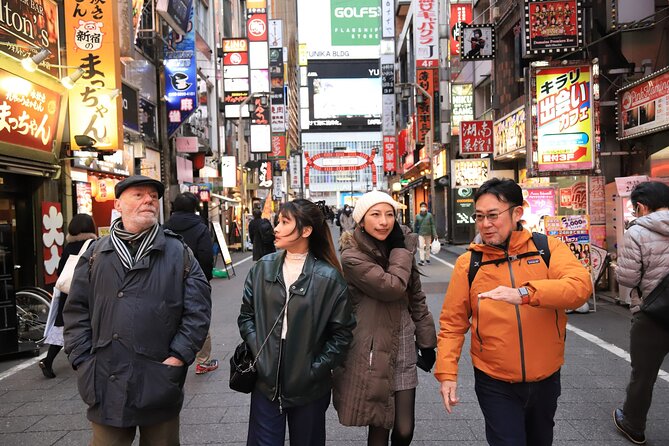
Shibuya Crossing is the obvious choice if you want one of Tokyo’s most famous urban scenes. The stop is short, around twenty minutes in the sample plan, so treat it as a concentrated visit rather than a full neighborhood tour.
Your guide can help you understand how to reach the crossing and suggest what to do afterward. One family had their crossing filmed by their guide, which can be helpful if you want a group memory without asking a stranger to handle your phone.
Shinjuku offers a different modern-city feel, with large commercial streets and access to Shinjuku Gyoen National Garden. The garden is optional and may require an entrance fee. It is worth considering if your group wants a break from signs, crowds, and concrete.
Ginza is the best fit for polished shopping and department-store browsing. It makes sense for visitors with a specific interest in retail, upscale brands, or modern architecture. An eight-hour tour pairing Ginza with Tokyo Skytree worked well for one group that wanted shopping followed by dinner.
You should not assume these districts are interchangeable. Shibuya is a quick landmark experience, Ginza is shopping-focused, and Shinjuku can combine city streets with a garden. Tell your guide what kind of modern Tokyo you want.
Yanaka Ginza and Ueno: A more local-feeling option
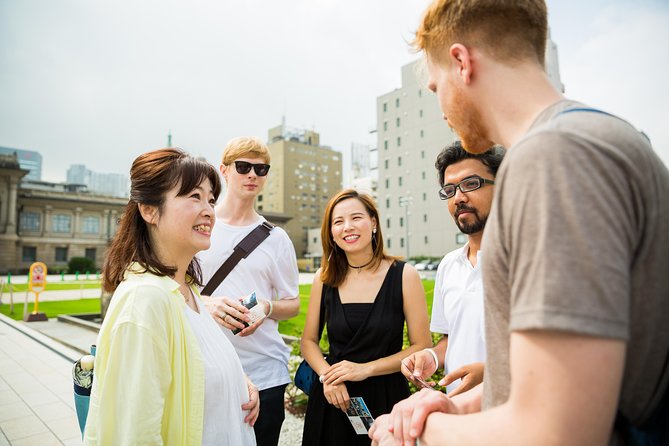
Yanaka Ginza Shopping Street is one of the most appealing alternatives to the headline attractions. It offers a local street atmosphere and a chance to see a less polished, more everyday side of Tokyo.
I would choose Yanaka Ginza if you have already seen major temples in another city or prefer neighborhood life to famous landmarks. It can also pair well with Asakusa for a day centered on traditional streets, small shops, and local food.
Ueno Park is another possible stop, especially during cherry blossom season. The park can be paired with the Tokyo National Museum, one of Tokyo’s major museums. Museum admission is optional and extra, as are any other paid attractions.
The tradeoff is simple: museums and parks require time. A fifteen-minute visit will only give you a taste. If the Tokyo National Museum matters to you, make it a main destination and cut several smaller stops.
Tokyo Skytree and Odaiba: Save these for a longer outing
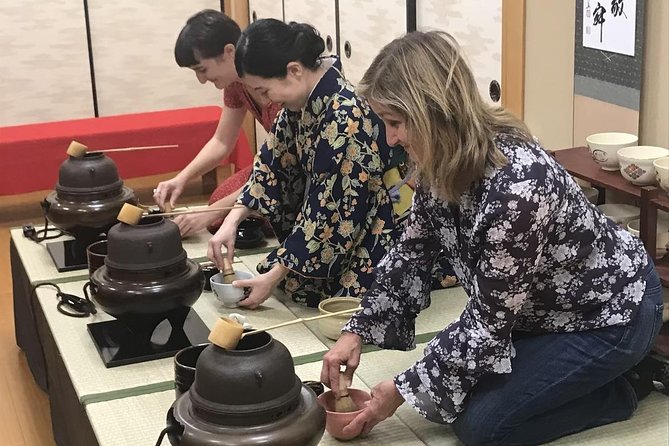
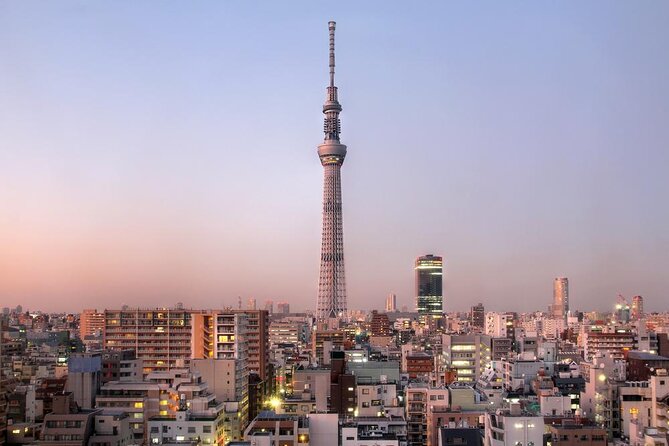
Tokyo Skytree is Japan’s tallest building and makes a strong choice if you want a major viewpoint. The observation experience requires extra admission, including the guide’s ticket, so ask about total costs before committing.
Odaiba gives you a waterfront district and a different view of Tokyo. It is farther from several central neighborhoods, so it works better on a longer tour or with a private vehicle option. Trying to combine Odaiba with every central highlight would make the day rushed.
A private van can reduce some walking and simplify the day for families or people who do not want repeated station changes. It costs extra, and the vehicle option is limited to the Tokyo metropolitan area. Hotel pickup and drop-off are not available for hotels in the Urayasu area, including those near Tokyo Disney Resort.
For most first-time visitors, I would use the train unless mobility, luggage, or family needs make a vehicle especially useful. The subway is not just a means of transport here. Learning it can make the rest of your Tokyo stay much easier.
How much can you really see in 4, 6, or 8 hours?
The four-hour option is best for a focused introduction. Choose two or three connected areas, such as Tsukiji and Asakusa, or Meiji Jingu, Harajuku, and Shibuya. A guide helped one family make a rainy four-hour plan that included temples, shopping, and an arcade, proving that a shorter tour can still feel personal when the route is tight.
Six hours gives you room for three or four areas and is probably the best balance for many groups. You can include a market, a temple district, and one modern neighborhood without turning the day into a race.
Eight hours allows about four or five areas, but more time does not mean you can see everything on the long list. Tokyo is enormous, and station transfers, lunch, shopping, photographs, and walking all use the clock.
Be direct about your priorities. If you care most about history, say so. If you want food, tell the guide to build around Tsukiji or another market stop. If your children need variety, mention that before the day begins.
Price, extra costs, and the real value
The listed price is $145.91 per person. That is not a cheap way to sightsee, especially because public transport, meals, drinks, private vehicle service, and paid admissions are not included.
The value comes from the private format. Your guide can adjust the route, answer questions all day, help with train tickets, explain customs, and respond to family needs. Guides have helped obtain children’s passes, manage food allergies, find requested shopping items, and change plans at the last minute.
The cost makes more sense when shared by a small group, especially if you would otherwise pay for several separate tours or lose time figuring out Tokyo’s rail system. Group discounts are available, so check the price for your party rather than judging only by the per-person figure.
You should also budget for entrance fees for sites such as Shinjuku Gyoen, Tokyo National Museum, Ueno Park attractions, Tokyo Skytree, and Hama Rikyu Gardens. The guide’s admission can also be your responsibility.
Who should book this Tokyo experience?
I would recommend it most strongly to first-time visitors, families, and anyone uneasy about Tokyo’s train system. It is also useful if you have only one day and want a local person to help you choose between competing neighborhoods.
It suits families particularly well. Guides have adapted routes for children, helped with food allergies, included arcades and games, and even done origami with young visitors during lunch. That kind of attention is hard to get on a large group tour.
History and culture fans should provide a clear request. Hiro built a four-hour route around the Imperial Palace, Asakusa, and the Asakusa Culture Tourist Information Center after discussing the group’s interests. Sean tailored a day around shrines and temples, while Osamu connected traditional sites with modern Harajuku.
The tour is less suitable if you want a fixed, lecture-heavy program with guaranteed entrance to many attractions. One dissatisfied guest found the day too limited and ended earlier than expected. That risk is easy to reduce by confirming the number of stops, preferred themes, and finishing time before you start.
Final decision: book it for guidance, not just sightseeing
Book this tour if you want a flexible introduction to Tokyo and value a guide who can teach you how the city works. The strongest experiences combine two or three contrasting districts, plenty of questions, and enough time to stop for food or local details.
I would choose six or eight hours for a first visit, unless your schedule is tight. Send a clear wish list, but keep it realistic. Ask about train fares, guide admissions, meal arrangements, and the extra cost of a van.
Skip it if you prefer to plan every station and sight yourself, or if you want a low-cost walk with no added expenses. For everyone else, the tour’s best souvenir may be confidence: after a day with someone like Yoko, Ike, Fumi, Keiko, or Osamu, Tokyo’s rail map may look much less frightening.
FAQ
How long does the private Tokyo tour last?
The tour lasts approximately 4 to 8 hours. A four-hour tour generally covers two or three spots, six hours covers three or four, and eight hours covers four or five.
Can the itinerary be customized?
Yes. The private tour can be adjusted to your interests, including history, food, temples, shrines, shopping, gardens, museums, youth culture, and family activities.
Is hotel pickup available?
Hotel pickup is offered. If you choose the private vehicle option, pickup and drop-off are not available for hotels in the Urayasu area, including hotels near Tokyo Disney Resort.
Does the tour use public transportation?
Yes. The standard experience includes walking and public transportation. All transport fares for you and your guide are extra.
Is a private vehicle included?
A private vehicle is optional and costs an additional fee. With this option, you can visit locations within the Tokyo metropolitan area, but not destinations outside Tokyo.
Are entrance fees included?
No. Entrance and admission fees for both you and your guide are not included. Optional paid sites include places such as Shinjuku Gyoen, Tokyo National Museum, Tokyo Skytree, and Hama Rikyu Gardens.
Are meals and drinks included?
No. Meals and drinks for you and your guide are not included. If your guide eats with you, you are responsible for the guide’s meal as well.
What happens if it rains?
The tour operates rain or shine. A moderate amount of walking is involved, so comfortable walking shoes and suitable rain protection are important.
Just added in Tokyo
- MT. FUJI/ Private Tour delivered and guided by a top-tier driver★ 5.0 · 27 reviews
- Mt fuji & Hakone customizable day tour w/ English speaking driver★ 5.0 · 45 reviews
- Fuji Speedway Self Drive & Mt. Fuji Private Tour pickup & dropoff★ 5.0 · 14 reviews
- Mt.Fuji Trekking 1 Day Tour up to the summit★ 5.0 · 14 reviews
- Seasonal Mt. Fuji Scenic Views, Fruit Picking and Ropeway Ride!★ 4.5 · 35 reviews
- Customisable Mt.Fuji Private Day Trip, English Speaking Driver★ 5.0 · 22 reviews
- Private Mt Fuji Tour from Tokyo: Scenic BBQ and Hidden Gems★ 5.0 · 146 reviews
- Private Mount Fuji Tour in Luxury Vehicle with English Guide★ 4.5 · 39 reviews
Private Tours in Tokyo, compared.
Tokyo 6hr Private Tour with Government-Licensed Guide
Read our review →
Private Tour to Mt. Fuji and Hakone (Fully Licenced Operator)
Read our review →
Tokyo Customized Private Tour (Must See Places in 1 Day)
Read our review →
Mount Fuji Full-Day Private Tour from Tokyo (Customizable)
Read our review →
Tokyo 4hr Private Tour with Government-Licensed Guide
Read our review →
Mt Fuji Private Tour with English Speaking Driver
Read our review →
Mt. Fuji & Hakone Private Day Tour with English-Speaking Driver
Read our review →
Tokyo Private Day Trip – Enjoy Your First-Time Visit to Tokyo!
Read our review →Browse the lists this tour appears in