
Reviewed · YOKOHAMA TOURS
Guided History & Nature Exploration in the Yokohama Hill Area
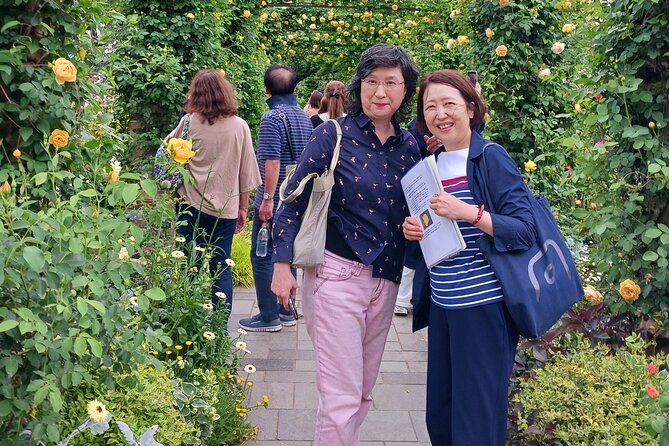
Yokohama reveals its past one hillside at a time. This four-hour walk with Sayumi, an Official Kanagawa Tour Guide, links port views, Western-style residences, a traditional garden, and one of the city’s oldest shopping streets. I especially like the clear contrast between Yamate’s international past and Sankeien’s traditional Japanese beauty. The small group, capped at six people, also gives the outing a personal feel.
I also like the included Japanese tea break and Sankeien admission, which add real value to the $45.98 price. The main consideration is the walking: it is an ordinary town walk, but the hill district has some ups and downs, and the 220-yen bus ride to Sankeien is extra. Weather matters, too, since the tour may be rescheduled or canceled in poor conditions.
In This Review
- Key points to know before booking
- Why this four-hour Yokohama walk works
- Harbor View Park gives you the right opening view
- The Foreign General Cemetery makes the port’s story personal
- Yamate Bluff mixes old houses with movie memories
- Tea at a salon gives the afternoon breathing room
- Motomachi shows Yokohama as a meeting place
- The bus to Sankeien changes the pace
- Sankeien Gardens delivers the quiet finale
- The OMO5 observation deck adds a modern finish
- What the timing and walking are really like
- Who will get the most from this experience
- Should you book Sayumi’s Yokohama hill tour?
- FAQ
- Where does the tour start?
- Where does the tour end?
- How long does the tour last?
- How much does the tour cost?
- What is included in the price?
- Is transportation included?
- How large is the group?
- Is the walk difficult?
- Is the Sankeien admission included?
- What happens if the weather is poor?
Key points to know before booking
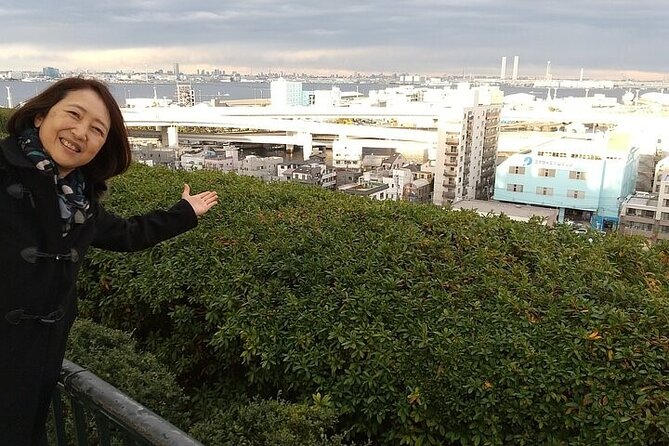
- See Yokohama from above: Harbor View Park offers one of the best port viewpoints, with an escalator helping you reach the park from Motomachi-Chukagai Station.
- Follow the city’s international story: The Foreign General Cemetery, Yamate Bluff, and Motomachi show how Yokohama changed after the port opened about 150 years ago.
- Visit movie-linked streets: Fans of Studio Ghibli’s From Up on Poppy Hill may recognize parts of the Yamate area.
- Take a real tea break: A stop at a popular tea salon gives the walking tour a calm pause and includes coffee or tea.
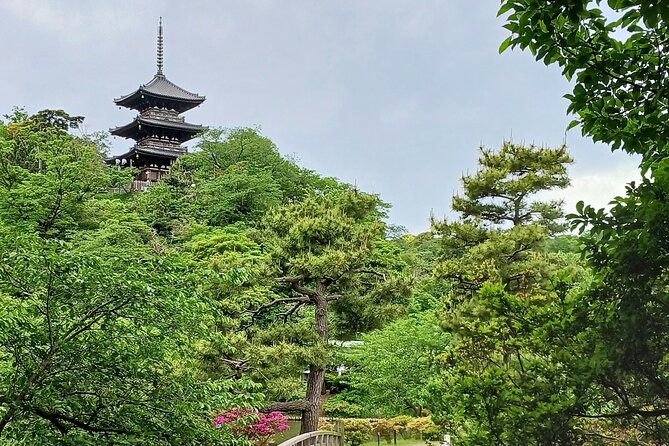
- See Japan in one garden: Sankeien gathers traditional buildings from different parts of Japan in a broad garden setting.
- Finish high above the city: Weather permitting, the 46th-floor view at OMO5 Yokohama Bashamichi reaches across Yokohama and toward Tokyo Bay.
Why this four-hour Yokohama walk works
Yokohama can feel scattered if you see it only as a port, shopping district, or modern waterfront. This tour gives the city a useful shape. You begin with the harbor and the arrival of foreign residents, then move through Yamate’s old hillside quarter, Motomachi’s commercial streets, and finally Sankeien’s traditional buildings and gardens.
I like that the route is not just a parade of photo stops. Each place helps explain the next one. The port made Yokohama internationally important. Foreign residents shaped Yamate. Motomachi became a meeting point between local residents and newcomers. Sankeien then offers a very different side of Japanese culture, one based on gardens, historic buildings, and quiet movement through space.
The group size matters here. With no more than six people, Sayumi can answer questions and adjust the pace more easily than a large city tour. Several past participants praised her warmth, organization, and personal connection to Yokohama. She grew up in the city and once walked through this hill area regularly during her school years, so her connection is not limited to prepared dates and facts.
The tour is priced at $45.98 per person. That is a fair rate for a private-feeling small-group experience lasting about four hours, especially since tea and the Sankeien entrance are included. You should budget another 220 yen for the bus from Motomachi to Sankeien. The price is less attractive if you want only famous sights you can easily visit on your own, but it makes good sense if you value local context and efficient routing.
A few more options to weigh up in Yokohama
- EVO, WRX, Skyline – JDM Night Run to Daikoku Car Meet
★ 4.9 · 478 reviews - Tokyo: Best Price Daikoku Parking Area JDM Car Meet
★ 4.9 · 192 reviews - Daikoku & Tokyo Private JDM Tour by 700HP R34 GT-R
★ 4.9 · 101 reviews
Harbor View Park gives you the right opening view
The tour begins at Motomachi-Chukagai Station, then heads uphill toward Harbor View Park by escalator. This is a practical start, since the escalator removes some of the initial climb and gets you quickly to the first major view.
Allow about 30 minutes here. The point is not to rush through a garden or museum, but to take in the port and get a visual sense of Yokohama. You can use this first stop to understand the city’s geography before walking through its older neighborhoods.
This is also the main photo stop. The view helps connect Yokohama’s past as an international port with its present-day city shape. If you are carrying a camera, this is the time to take the broad harbor photographs before the tour turns into a closer look at buildings and streets.
The Foreign General Cemetery makes the port’s story personal
The Yokohama Foreign General Cemetery is a short, approximately 15-minute stop. It represents the international community that formed in Yokohama after the port opened to the outside world.
This is a symbolic place rather than a long sightseeing visit. The cemetery gives a human scale to the city’s early contact with foreign residents. Instead of thinking only about ships, trade, and new architecture, you begin to see the people who came to live and die in Yokohama.
I would pay close attention to Sayumi’s explanation here. The historical value comes from the connection between the cemetery, the opening of the port, and the foreign settlement on the hill. Without that context, it might look like a quiet cemetery with a view. With it, the stop becomes a key to understanding the rest of the walk.
Yamate Bluff mixes old houses with movie memories
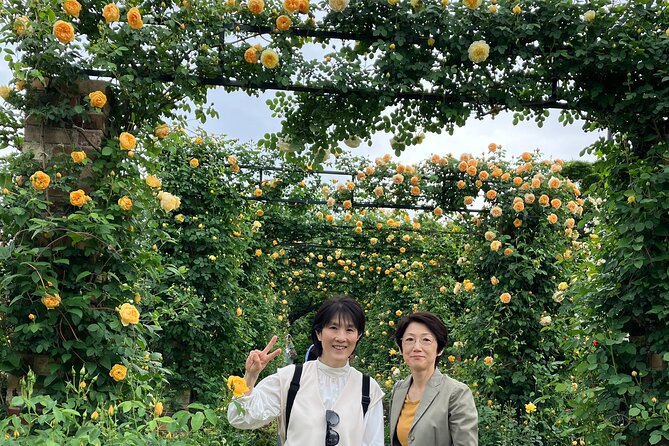
The Yamate Bluff area is the historical center of the tour. Foreign residents lived here after Yokohama opened its port roughly 150 years ago, and the district still has a distinct architectural character and relaxed atmosphere.
The schedule allows about an hour for one or two historic properties. Berrick Hall may be one of the chosen stops, although the exact buildings can vary. That flexibility is useful because it lets Sayumi respond to the group, the weather, and the time available rather than forcing every outing into the same rigid pattern.
Berrick Hall represents the old residential side of Yamate. The appeal is not just the building itself. You are seeing how foreign residents lived and how their presence gave this hillside a different look from older Japanese neighborhoods.
Studio Ghibli fans may find the area especially appealing because From Up on Poppy Hill is set here. The tour does not promise a formal movie pilgrimage, but you can visit places with a familiar feeling from the film. Even if you have not seen it, the streets and buildings offer a pleasant view of Yokohama’s layered past.
The hill setting does require sensible footwear. This is not a strenuous hike, but the route includes inclines and declines. Take your time on uneven sections and expect the experience to feel more like a neighborhood walk than a museum tour.
A completely different kind of day out:
- Tokyo 8hr Private Tour with Licensed Guide from Yokohama
★ 5.0 · 94 reviews - 【Tokyo】JDM Daikoku Parking Area & Nissan Facility Tour
★ 5.0 · 87 reviews - Shuttle Van Transfer, Yokohama(Port)⇒Tokyo, Narita, Haneda, TDR
★ 5.0 · 63 reviews - R34Skyline Daikoku PA Fast & Furious Private Experience
★ 5.0 · 63 reviews
Tea at a salon gives the afternoon breathing room
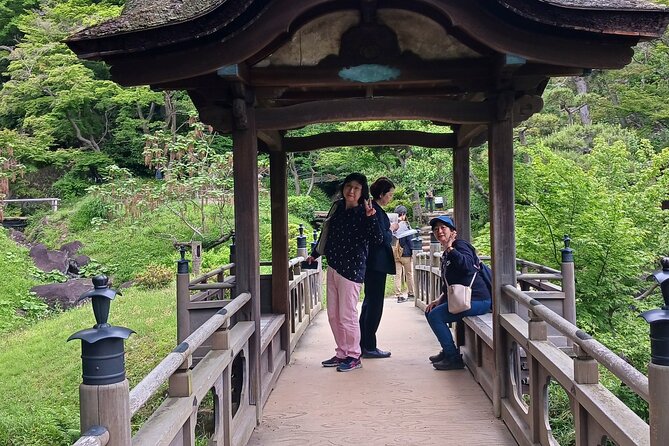
A tea salon stop breaks up the history walk with coffee or tea and authentic Japanese tea service. This is one of the details I value most because it turns the outing into a social experience, not just a series of explanations.
The tea stop also gives you time to ask questions. Sayumi’s strongest quality appears to be her ability to connect facts with personal stories and everyday details. Past participants especially appreciated her storytelling, gentle manner, and willingness to adapt the schedule.
The salon is described as popular, so the stop is part of the tour’s rhythm rather than a guaranteed long café visit. You should see it as a relaxing pause, not a full meal. Food is not listed as included, and the tour does not describe lunch.
Motomachi shows Yokohama as a meeting place
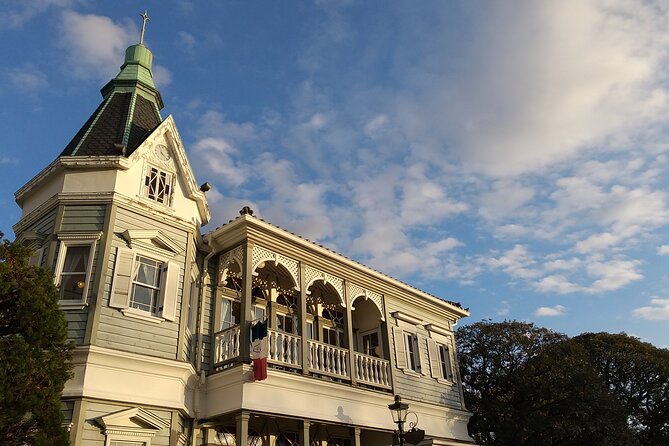
From Yamate, the tour continues to Motomachi Shopping Street for about an hour. This street became a link between local Japanese residents and foreign residents after the port opened, and it still has a distinctive shopping atmosphere.
Motomachi is a useful counterpoint to Yamate. The bluff shows where many foreign residents lived. Motomachi shows where cultures met through commerce, services, and daily life. The shops are described as fashionable and suitable for gifts and souvenirs, but the value is not limited to shopping.
You will have time to browse rather than simply walk through. If you want gifts with a Yokohama connection, this is the place to ask Sayumi for suggestions. The tour description does not promise specific stores or discounts, so keep your expectations focused on the street’s character and the chance to explore with local guidance.
This stop also gives the group a chance to slow down before the bus ride. The first part of the tour is concentrated in the hill district, while Motomachi feels more like an active city street. That change keeps the half-day from becoming visually repetitive.
The bus to Sankeien changes the pace
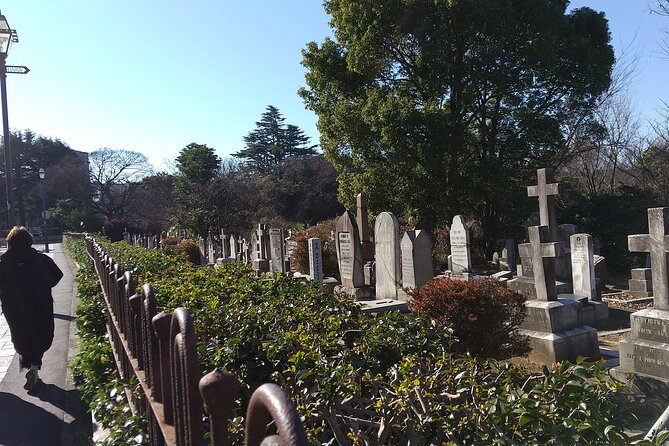
The trip from Motomachi to Sankeien takes about 20 minutes by bus, with a fare of 220 yen per person. The fare is not included, so carry some cash or confirm the preferred payment method with Sayumi before departure.
This short ride is important because Sankeien is not immediately beside the Motomachi hill area. The tour saves you the trouble of planning the connection yourself, while still keeping the route compact enough for a half-day outing.
Once you arrive, the city atmosphere gives way to broad paths, gardens, and traditional architecture. The change is one of the tour’s best features. You have just explored a district shaped by international contact, and now you are looking at buildings and garden design associated with older Japanese traditions.
Sankeien Gardens delivers the quiet finale
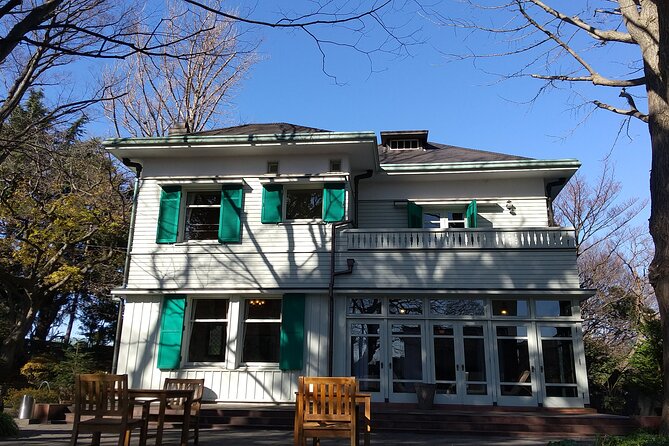
The tour allows about an hour at Sankeien, and the garden admission is included. Sayumi chooses which parts to visit and explains what to notice in the buildings, structures, and garden design.
Sankeien is valuable because it gathers historic Japanese architecture from different regions in one setting. Past participants compared the experience to seeing elements associated with Kyoto, Kamakura, and Shirakawa-go close to Tokyo. That does not mean the garden replaces those destinations, but it does make Sankeien an efficient way to see several kinds of traditional design without a long intercity journey.
The garden also rewards a slower pace. You can look at the placement of buildings, paths, water, plants, and views instead of treating each structure as an isolated object. Sayumi’s guidance is particularly useful here because the meaning of a garden often lies in relationships between its parts.
Seasonal timing may add something special. Sayumi has arranged an autumn moon-watching experience for a past group, complete with traditional Japanese music. That event is not promised on every departure, so do not book expecting it, but it shows how the guide may respond to seasonal opportunities when timing allows.
An hour is enough for an introduction, but not enough for every corner of the grounds. If Sankeien is your main reason for visiting Yokohama, you may want a separate, longer visit. On this tour, its role is to provide a well-chosen taste of traditional architecture and garden design after the urban history portion.
The OMO5 observation deck adds a modern finish
The stated final stop is Bashamichi, where you can enjoy an evening view from the 46th floor of OMO5 Yokohama Bashamichi. The hotel’s new observation spot opened in January 2026, and the view depends on weather.
This ending neatly brings the tour back to modern Yokohama. After seeing the port from Harbor View Park and learning about the city’s early international role, you look over the present-day city from above. On a clear day, you may see across Yokohama and toward Tokyo Bay, with a chance of views extending toward Mount Fuji.
The stop lasts about 15 minutes, so it is a short finale rather than a long observation-deck visit. That suits the tour. You get a final orientation point and evening photograph without spending another hour indoors.
The official end point is OMO5 Yokohama Bashamichi. Sayumi can be flexible if you want to return to the starting point or a nearby area such as Chinatown. Confirm your preferred ending before the tour finishes, especially if you have dinner plans or a train to catch.
What the timing and walking are really like
The tour lasts about four hours, with time divided between six stops. The pace is organized but not described as rushed. You will walk through town, use an escalator, take a bus, and spend time in both historic buildings and open garden space.
The main physical issue is the Yamate terrain. The walk is suitable for most people, and service animals are allowed, but you should expect some uphill and downhill sections. Comfortable shoes matter more than speed.
The group maximum of six is a major advantage. You can ask about Yokohama’s port history, architecture, film connections, garden design, or shopping without trying to catch a guide’s attention across a crowd.
The experience is also dependent on weather. Poor conditions can lead to a different date or a full refund. Free cancellation is available if you cancel at least 24 hours before the start time. Changes or cancellations made later are not accepted for a refund.
Who will get the most from this experience
I would choose this tour if you want Yokohama explained as a city of contrasts. It works especially well for first-time visitors who want more than the waterfront, and for repeat visitors looking for older neighborhoods and a quieter garden.
It suits you if you enjoy:
- Architecture and local history
- Short walks with regular stops
- Small groups and direct conversation with a guide
- Japanese gardens and traditional buildings
- Browsing distinctive shops
- Photo opportunities with both old and modern Yokohama
It may be less suitable if you want a food-focused tour, a long shopping session, or a completely flat route. The tea break is included, but this is not a meal tour. The garden visit is meaningful, yet limited to about an hour.
Should you book Sayumi’s Yokohama hill tour?
I would book it if you want a thoughtful half-day introduction to the city’s past and present. Sayumi’s local connection, flexible approach, and strong storytelling are the main reasons to choose this experience over visiting the same places alone.
The best value comes from the combination: Harbor View Park for orientation, Yamate for international history, Motomachi for city life, tea for a pause, Sankeien for traditional Japan, and OMO5 for the modern skyline. At $45.98, with tea and Sankeien admission included, the cost is reasonable for a group of no more than six.
Skip it if you prefer to move independently, dislike hills, or already know Yamate and Sankeien well. For most visitors with four free hours in Yokohama, though, this is a well-shaped route that gives the city a human story instead of just a list of attractions.
FAQ
Where does the tour start?
The tour starts at Motomachi-Chukagai Station in Yamashitacho, Naka Ward, Yokohama.
Where does the tour end?
The planned ending is OMO5 Yokohama Bashamichi by Hoshino Resorts. Sayumi can also accompany you back toward the starting point or a nearby area such as Chinatown if requested.
How long does the tour last?
The experience lasts approximately four hours.
How much does the tour cost?
The price is $45.98 per person.
What is included in the price?
Coffee or tea at the tea salon and admission to Sankeien Gardens are included.
Is transportation included?
The bus from Motomachi to Sankeien is not included. It costs 220 yen per person.
How large is the group?
The tour accepts a maximum of six people.
Is the walk difficult?
It is described as a normal walk around town, but there are some uphill and downhill sections.
Is the Sankeien admission included?
Yes. The Sankeien Gardens admission fee is included in the guide fee.
What happens if the weather is poor?
The experience requires good weather. If poor weather causes cancellation, you can choose another date or receive a full refund. Free cancellation is also available when you cancel at least 24 hours before the start time.
Just added in Yokohama
- Yokohama and Kamakura 6hr Private Trip Government-Licensed Guide★ 5.0 · 25 reviews
- Yokohama Private Tour★ 5.0 · 21 reviews
- Shuttle Van Transfer, Yokohama(Port)⇒Tokyo, Narita, Haneda, TDR★ 5.0 · 63 reviews
- Yokohama Half Day Walking Tour with an Expert Local Guide★ 4.5 · 22 reviews
- Japanese Tea Ceremony at Private Home in Yokohama, suburban Tokyo★ 5.0 · 32 reviews
- Yokohama Ramen Adventure From a Local Noodle Factory to Home★ 5.0 · 60 reviews
- 【Tokyo】JDM Daikoku Parking Area & Nissan Facility Tour★ 5.0 · 87 reviews
- Yokohama Private Tour with a Local: Highlights & Hidden Gems★ 4.5 · 21 reviews
Yokohama Tours, compared.

EVO, WRX, Skyline – JDM Night Run to Daikoku Car Meet
Read our review →

Daikoku & Tokyo Private JDM Tour by 700HP R34 GT-R
Read our review →
Tokyo 8hr Private Tour with Licensed Guide from Yokohama
Read our review →
【Tokyo】JDM Daikoku Parking Area & Nissan Facility Tour
Read our review →
R34Skyline Daikoku PA Fast & Furious Private Experience
Read our review →
Shuttle Van Transfer, Yokohama(Port)⇒Tokyo, Narita, Haneda, TDR
Read our review →
Yokohama Ramen Adventure From a Local Noodle Factory to Home
Read our review →Browse the lists this tour appears in