
Reviewed · PRIVATE TOURS IN YOKOHAMA
Yokohama and Kamakura 6hr Private Trip Government-Licensed Guide
Kamakura rewards a slower look. This six-hour private trip lets you choose three or four sights in Yokohama or Kamakura, with a licensed English-speaking guide shaping the day around your interests. I like the freedom to focus on temples, samurai-era history, gardens, food, or modern Yokohama. I also like the personal help with trains and local customs that guides such as Mami, Yoshi, Sami, and Yuichi have provided. The main drawback is that transport, admission fees, lunch, and private vehicles cost extra, so the final bill can rise.
This is not a bus tour with a fixed checklist. It is a walking tour that begins within a designated area, and the guide helps you move around by public transport when needed. The six-hour limit works well for a focused visit, but you cannot sensibly cover every place in the long list of possible stops, especially if you try to combine Yokohama and Kamakura.
In This Review
- Key points to know before booking
- Why the private format works in Yokohama and Kamakura
- Building a three-stop Kamakura day
- Tsurugaoka Hachimangu, the city’s major shrine
- The Great Buddha at Kotoku-in
- Hasedera and its hillside views
- Hokoku-ji and its bamboo grove
- Choosing among Kamakura’s Zen temples
- Smaller Kamakura shrines and seasonal choices
- A Yokohama day with gardens, port views, and food
- Ramen and modern Yokohama
- How much value do you get for $154.84?
- Guide quality and practical limits
- Who should book this private day?
- Should you book it?
- FAQ
- Is this a private tour?
- How long does the tour last?
- Can I choose which places to visit?
- Is transportation included?
- Are entrance fees included?
- Can I cancel for a full refund?
Key points to know before booking
- Choose three or four stops: The long attraction list is a menu, not a promise to visit everything.
- Kamakura is best for temples and shrines: Tsurugaoka Hachimangu, the Great Buddha, Hasedera, and Zen temples make a strong first visit.
- Yokohama offers a different day: Chinatown, the waterfront, Sankeien Garden, and Minato Mirai give you a mix of food, port history, and modern city views.
- Your guide can make public transport easier: Past guides have helped with trains, taxis, and IC cards, useful if you are unsure of Japanese transit.
- Expect walking and extra costs: Admission, trains, meals, and other personal expenses are not included.
- The service is highly rated but not risk-free: The overall rating is 4.8 from 25 reviews, with 96 percent recommending it, though one booking was canceled when a guide could not be secured.
Why the private format works in Yokohama and Kamakura
Yokohama and Kamakura are close enough to tempt you into combining them, yet each deserves a different kind of attention. Kamakura is compact in spirit but spread among temple districts, hills, and coastal stops. Yokohama is more urban, with waterfront promenades, foreign settlement history, gardens, and food districts.
A private guide helps most when you already know what kind of day you want. You can ask for a religious focus, a look at samurai-era Japan, modern architecture, Japanese gardens, or a lighter day with Chinatown and ramen. The guide can then suggest a practical group of stops rather than forcing you through a standard route.
The private setup also suits families and mixed-age groups. Sami adjusted a Kamakura plan to reduce stairs, while Shinji patiently helped an 83-year-old visitor on wet, slippery steps during a rainy day. That does not make the route effortless, but it shows the value of having someone who can change the pace and order of the visit.
You meet the guide on foot within the designated Yokohama or Kamakura area. Pickup is offered, but it is not a private car pickup. If you are staying outside the meeting area, confirm the meeting point before you commit to a tight schedule.
More Private Tours in Yokohama
- Tokyo 8hr Private Tour with Licensed Guide from Yokohama
★ 5.0 · 94 reviews - Kamakura 6hr Private Walking Tour with Government-Licensed Guide
★ 5.0 · 42 reviews - Yokohama 4hr Private Tour with Government-Licensed Guide
★ 5.0 · 34 reviews
Building a three-stop Kamakura day
Kamakura offers far more possible sights than six hours can hold. I would treat the following places as a set of choices, not a race.
Tsurugaoka Hachimangu, the city’s major shrine
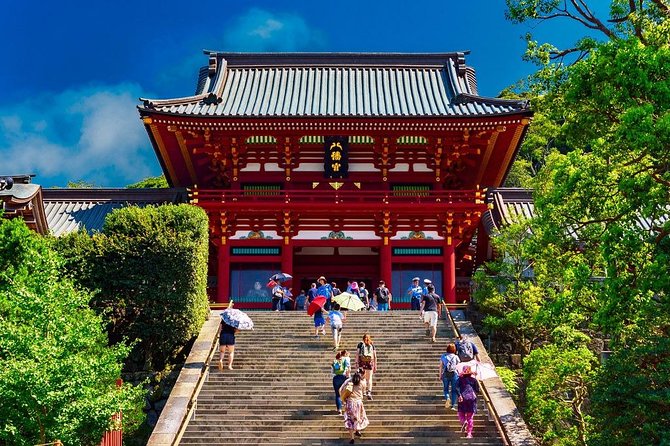
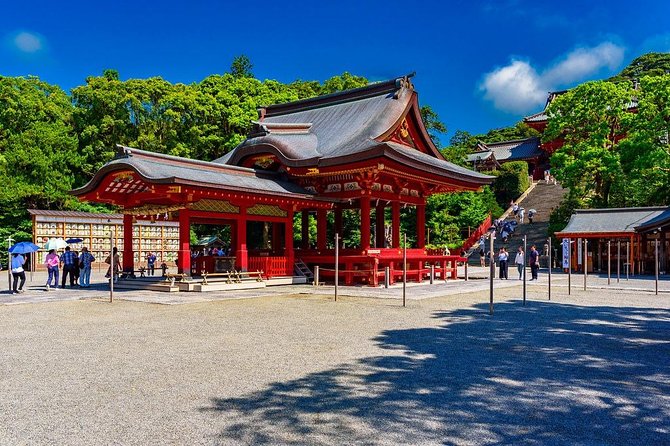
Tsurugaoka Hachimangu is a strong starting point for first-time visitors. It is dedicated to Hachiman, associated with Emperor Ojin and closely linked with the Minamoto family and the samurai tradition.
The shrine gives your guide room to explain how religion, military power, and political authority overlapped in medieval Japan. The grounds are broad enough to provide a sense of ceremony and scale, while the central setting makes it easy to pair with other Kamakura sights.
Admission is listed as free. Because the visit is generally straightforward, it works well as one of several stops rather than the sole focus of your morning.
The Great Buddha at Kotoku-in
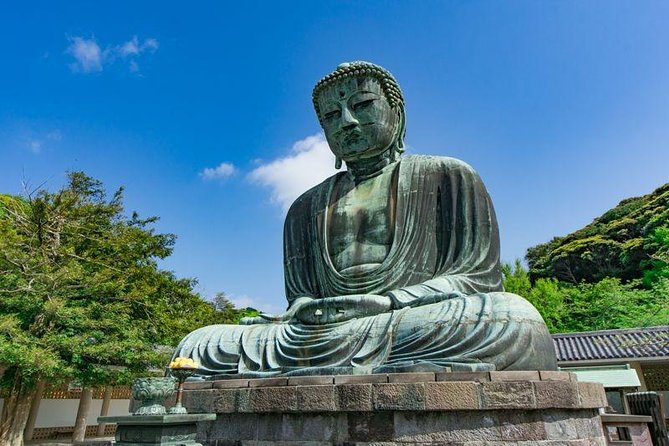
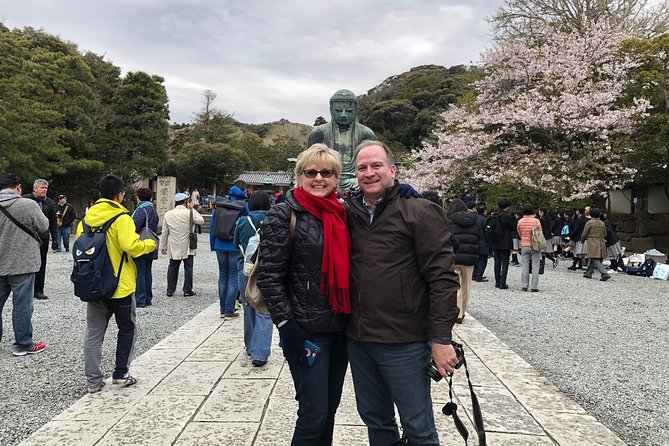
The bronze Amida Buddha is Kamakura’s most familiar sight. At 11.4 meters, it is large enough to impress without feeling like a modern monument built only for photographs.
The statue sits outdoors at Kotoku-in Temple. The temple admission is not included, so budget for that separately. The published visit time is very short, which suggests this stop is best paired with nearby Hasedera rather than treated as a long visit on its own.
Your guide can add useful context about Amida Buddha and the role of the statue in Kamakura’s religious life. This is one of the stops I would prioritize if you have never visited the city.
A completely different kind of day out:
- EVO, WRX, Skyline – JDM Night Run to Daikoku Car Meet
★ 4.9 · 478 reviews - Tokyo: Best Price Daikoku Parking Area JDM Car Meet
★ 4.9 · 192 reviews - Daikoku & Tokyo Private JDM Tour by 700HP R34 GT-R
★ 4.9 · 101 reviews - 【Tokyo】JDM Daikoku Parking Area & Nissan Facility Tour
★ 5.0 · 87 reviews
Hasedera and its hillside views
Hasedera is famous for its eleven-headed Kannon, a gilded wooden statue associated with mercy. The statue is 9.18 meters tall, making the interior feel much more powerful than a quick exterior visit might suggest.
The temple is also known for its grounds and hillside position. You should expect some walking and possibly stairs, so tell your guide about mobility limits before the day begins. The temple admission is extra.
Pairing Hasedera with the Great Buddha creates an efficient western Kamakura route. You get two major religious sights without spending much of your six-hour day crossing the city.
Hokoku-ji and its bamboo grove
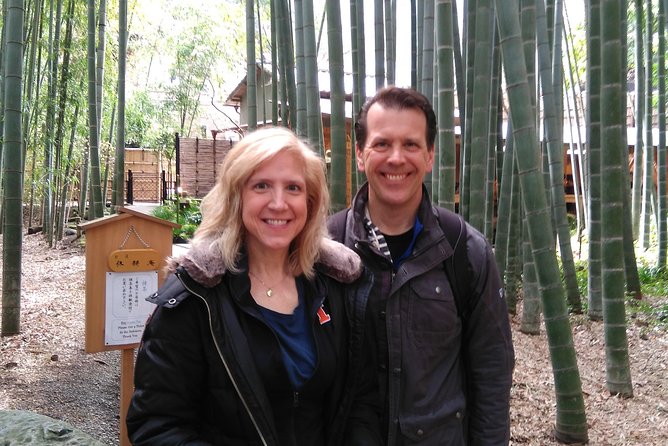
Hokoku-ji is a smaller temple with a bamboo grove of more than 2,000 stalks behind the main hall. Narrow paths lead through the grove, creating a quiet pause after larger, more formal temple grounds.
This is a good choice if you want scenery and atmosphere rather than another large monument. The visit time is listed as brief, but the stop may appeal more to photographers and garden lovers than to visitors trying to collect famous landmarks.
Admission is not included. Ask the guide about pairing it with Jomyo-ji, which is in the same general eastern Kamakura area, though the day’s timing and transport will determine if that makes sense.
Choosing among Kamakura’s Zen temples
Kamakura’s five great Zen temples give the city a different character. You do not need to visit all five to understand their importance. One or two, explained well, will usually be more rewarding than a hurried temple count.
Engaku-ji is ranked number two among the five great Zen temples and was founded in 1282 by Hojo Tokimune. Its grounds provide a useful introduction to Zen temple design and Kamakura’s religious past. The planned visit is longer than the quick photo stops, at about 30 minutes, so it deserves room in your schedule.
Kencho-ji is ranked number one and was founded in 1253. It is the oldest Zen temple in Kamakura, making it an obvious pick for visitors who want historical context. Like Engaku-ji, it is allotted about 30 minutes and requires a separate admission fee.
Jochi-ji is ranked number four and belongs to the Rinzai school. Tokei-ji, only a few hundred meters from Engaku-ji, is another branch temple of the same school and has a connection with women seeking refuge from unhappy marriages. Jufuku-ji, ranked number three, was established at the order of Minamoto Yoritomo’s wife, Masako.
Jomyo-ji, ranked number five, was founded by the Ashikaga family. It offers a different link between religious buildings and powerful families. Eisho-ji is also unusual because it is the only surviving nunnery in Kamakura, founded in the early Edo period by a woman connected to the Tokugawa family.
These stops are not interchangeable. If you want major temple architecture, choose Engaku-ji or Kencho-ji. If you want a quieter, more distinctive story, Jochi-ji, Tokei-ji, Jufuku-ji, or Eisho-ji may suit you better.
Smaller Kamakura shrines and seasonal choices
Zeniarai Benten is one of Kamakura’s most memorable small shrines. Visitors wash money in its spring, following the belief that washed money will multiply. The admission is free, but the experience is more participatory than a standard temple visit.
Meigetsu-in is known as Hydrangea Temple because hydrangeas flower in abundance on its grounds. It belongs to the Rinzai school and was founded in 1160. If your visit falls during hydrangea season, it may be especially appealing, but the flowers are naturally seasonal.
Ankokuron-ji and Myohon-ji belong to Kamakura’s Nichiren Buddhist tradition and sit among the southeastern hills. Zuisen-ji is farther east, at the back of a narrow valley surrounded by wooded hills. These are good choices if you want less emphasis on the most famous sights, though the extra distance makes careful planning more important.
Enoshima can also be included, but I would ask for a clear plan before choosing it. The island is connected to the mainland by a bridge and offers shrines and other attractions. It is only a short train ride west of Kamakura, yet adding it to a temple-heavy day can make the schedule feel hurried.
One guest described a day with Mami that included Enoshima and Kamakura, with help arranging a taxi, trains, and an IC card. That is exactly the kind of support that can make a complicated day manageable. Still, the six-hour limit means you should choose between depth and range.
A Yokohama day with gardens, port views, and food
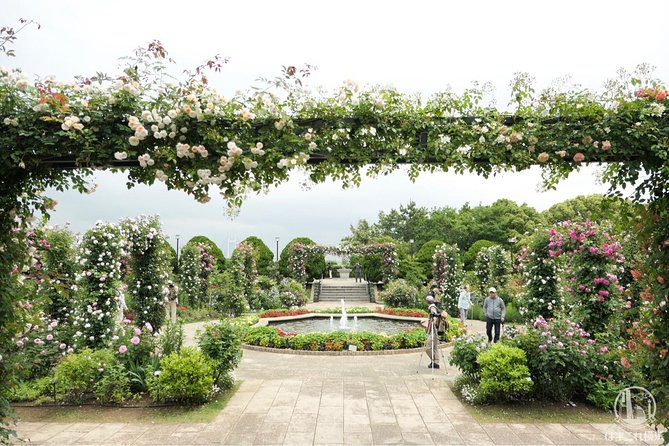
Yokohama works well if you want a break from temple visits. Sankeien Garden is in southern Yokohama and contains historic buildings moved from different parts of Japan. Ponds, small rivers, flowers, and walking paths give the garden a slower pace than the city center.
Sankeien is a good choice for anyone interested in Japanese gardens and old buildings. The admission fee is extra, and the published stop time is short, so ask the guide to allow enough time if gardens are your main interest.
Yokohama Chinatown is Japan’s largest Chinatown, with restaurants and shops packed into narrow, colorful streets. Admission is free, and the area is an easy choice if food matters as much as sightseeing. One guide took a guest from Kamakura to Chinatown after visiting temples, creating a day with two very different sides of the region.
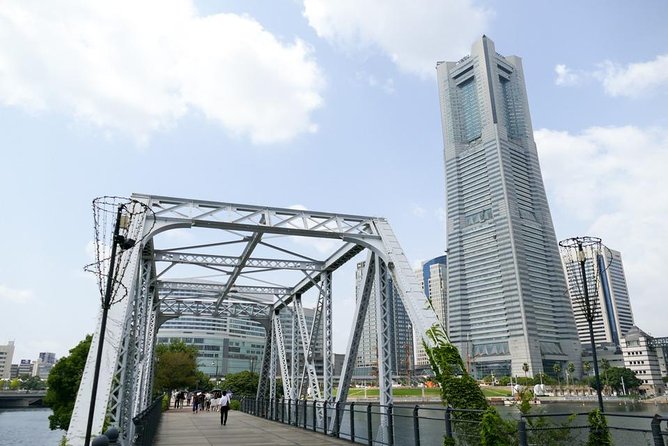
Minato Mirai 21 means harbor of the future. This waterfront district is defined by high-rises, including Landmark Tower, and gives you Yokohama’s modern face. It pairs naturally with Yamashita Park or Osanbashi Pier.
Yamashita Park runs for about 750 meters beside the waterfront. It is free and provides open green space, a welcome change after crowded streets or temple paths. Osanbashi International Passenger Terminal lies between Minato Mirai and Yamashita Park. Its admission is not included, and the stop is listed at about 30 minutes.
Motomachi Park and the nearby Yamate 234ban Residence help explain Yokohama’s opening to foreign trade after the long Edo-period restrictions on contact with other countries. Yokohama became one of the Japanese ports connected to the outside world in the 1850s, and the western-style buildings in the Yamate area reflect that change.
If you want a short historical walk rather than a museum visit, this is an appealing section of the city. Both stops allow about 30 minutes, though admission is extra for the residence.
Ramen and modern Yokohama
The Cup Noodles Museum in Minato Mirai is a playful, interactive look at the history of instant ramen and the work of Momofuku Ando. It is a useful pick for families and anyone who wants a lighter cultural stop.
The Shinyokohama Ramen Museum takes a broader look at ramen, a noodle dish introduced from China and adapted in Japan. It combines food culture with museum displays, making it a good alternative when you want something beyond shrines and waterfront views.
Both museums require separate admission. Their listed stop times are short, so ask what you can realistically see in the time available. If you want to eat, remember that lunch is not part of the tour price. Guides have helped guests find local ramen, including a reasonably priced, high-quality noodle shop in Kamakura, but restaurant costs remain your responsibility.
How much value do you get for $154.84?
At $154.84 per person, the tour is not the cheapest way to sightsee. You also pay for trains or taxis, temple and museum admission, lunch, and personal purchases. Private transport is not included.
The value comes from the guide’s time and planning help. A private six-hour service can be worthwhile for a first visit, a family group, or anyone who does not want to spend hours comparing temple locations and train routes. It is also useful if you have a specific request, such as fewer stairs, more historical explanation, or a mix of Kamakura and Yokohama.
Group discounts may improve the price for larger parties, but the provided details do not state the discount amount. The service is private, and only your group participates. That gives you control over pace and questions, which is more useful than a low headline price if you value personal attention.
The tour includes a licensed local English-speaking guide and a custom plan of three or four sites. It does not include a car, so you should see the price as a guiding and planning fee, not an all-inclusive day trip.
Guide quality and practical limits
The strongest pattern in the feedback is personal care. Mami helped with transport and tailored the day to individual interests. Sami planned around stairs and sent ideas ahead of time. Shinji helped an older visitor on wet steps. Yuichi adjusted to the group’s pace, answered questions, and found a good ramen lunch.
The guides named in the feedback include Mami, Kahori, Yasuho Suzuki, Sami, Ken, Shun, Yoshi, Shinji, Kozee, and Mizutome Yuichi. Your guide will depend on availability, so you should not assume you will receive a particular person unless the operator confirms it.
English ability appears to have been strong in the praised experiences, with clear explanations of Japanese history, culture, and beliefs. One Yokohama outing included a modern Japanese art gallery in a department store, showing that the day can move beyond the published sightseeing names when your interests call for it.
There is one important caution. A booking was canceled and refunded because the operator could not find a guide, following a request to change the date during a busy period. The operator handled the refund politely, but this is a reminder to avoid last-minute changes and to confirm availability early if your schedule is tight.
Free cancellation is available up to 24 hours before the start time. Changes or cancellations inside that window are not accepted for a refund.
Who should book this private day?
I would choose this experience if you want one of the following:
- A first, focused look at Kamakura’s temples and shrine
- A Yokohama day shaped around food, gardens, port history, or modern sights
- Help using trains between Yokohama, Kamakura, and Enoshima
- A slower pace for an older family member
- A private guide who can explain religious customs instead of leaving you to read signs
- A flexible plan rather than a fixed group schedule
I would be cautious if you want to see many attractions without extra transport costs. Six hours goes quickly, and three or four sites is the realistic limit. You should also avoid treating Yokohama and Kamakura as two full destinations in one day. The trip between them takes about 30 minutes each way, before you count station transfers and walking.
Should you book it?
Book this tour if personal planning help matters more to you than the lowest possible price. The best use of the six hours is a focused Kamakura route, such as Tsurugaoka Hachimangu, the Great Buddha, and Hasedera, or a focused Yokohama route built around Chinatown, Yamashita Park, and the waterfront.
For a more unusual day, ask about Zen temples, Zeniarai Benten, Sankeien Garden, or Yokohama’s foreign settlement buildings. Tell the guide your walking limits and top interests before the meeting day.
Skip it if you are comfortable planning trains and temple visits yourself, or if you want a private vehicle and all entrance fees covered. For everyone else, the combination of flexibility, local explanation, and thoughtful pacing makes this a useful six-hour introduction to two very different places near Tokyo.
FAQ
Is this a private tour?
Yes. Only your group participates in the activity, and the tour uses a licensed local English-speaking guide.
How long does the tour last?
The tour lasts approximately six hours.
Can I choose which places to visit?
Yes. The tour includes a customizable plan covering three or four sites selected from the Yokohama and Kamakura options.
Is transportation included?
No. Transportation fees are not included, and the tour does not provide private transportation. The tour is primarily a walking experience, with public transport used when needed.
Are entrance fees included?
No. Entrance fees are generally extra. Guide entry fees are covered only for sights listed among the tour options.
Can I cancel for a full refund?
Yes, if you cancel at least 24 hours before the experience begins. Cancellations or changes made less than 24 hours before the start time are not accepted for a refund.
Just added in Yokohama
- Yokohama Private Tour★ 5.0 · 21 reviews
- Shuttle Van Transfer, Yokohama(Port)⇒Tokyo, Narita, Haneda, TDR★ 5.0 · 63 reviews
- Yokohama Half Day Walking Tour with an Expert Local Guide★ 4.5 · 22 reviews
- Japanese Tea Ceremony at Private Home in Yokohama, suburban Tokyo★ 5.0 · 32 reviews
- Yokohama Ramen Adventure From a Local Noodle Factory to Home★ 5.0 · 60 reviews
- Guided History & Nature Exploration in the Yokohama Hill Area★ 5.0 · 17 reviews
- 【Tokyo】JDM Daikoku Parking Area & Nissan Facility Tour★ 5.0 · 87 reviews
- Yokohama Private Tour with a Local: Highlights & Hidden Gems★ 4.5 · 21 reviews
Private Tours in Yokohama, compared.
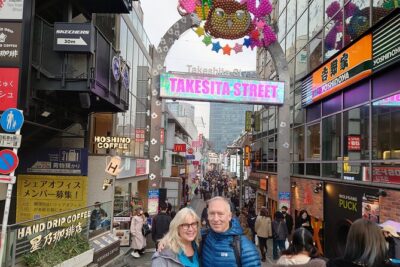
Tokyo 8hr Private Tour with Licensed Guide from Yokohama
Read our review →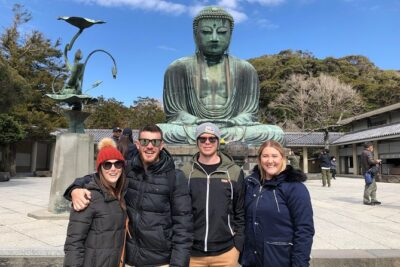
Kamakura 6hr Private Walking Tour with Government-Licensed Guide
Read our review →
Yokohama 4hr Private Tour with Government-Licensed Guide
Read our review →
Tokyo Full Day Tour with Licensed Guide and Vehicle from Yokohama
Read our review →
Yokohama Private Tour with a Local: Highlights & Hidden Gems
Read our review →
Browse the lists this tour appears in