
Reviewed · DAY TRIPS
Tokyo Full Day Tour with Licensed Guide and Vehicle from Yokohama
Tokyo rewards a smart plan. This private eight-hour outing from Yokohama lets you cover major sights without wrestling with the subway, and I especially like the private vehicle and the chance to shape the day around your interests. A licensed English-speaking guide adds context at places such as Senso-ji, Meiji Jingu, and the Imperial Palace.
I also like the personal touch. Guides including Atsushi Kayukawa, Toshi, Fumiko, An, Ryuta, and Noripy have adjusted routes, added stops, helped with dining choices, and worked around delayed cruise disembarkation. The main catch is simple: Tokyo is huge, so you choose only three to four sites, and entrance fees, lunch, and personal spending are extra.
In This Review
- Key points to know before booking
- A private way to handle Tokyo from Yokohama
- How the three to four stop plan really works
- Asakusa and Senso-ji: Tokyo’s old downtown flavor
- Imperial Palace and Tokyo’s formal center
- Shinjuku Gyoen and Tokyo’s quieter side
- Shibuya, Harajuku, and Meiji Jingu
- Tsukiji, food, and the limits of a short market stop
- Akihabara and Roppongi Hills: two modern Tokyo choices
- Gardens for a slower, more traditional day
- Tokyo National Museum and Odaiba
- Shibamata, Nezu, and the older neighborhoods
- What the guides add to the day
- Who should book this Tokyo day trip?
- Should you book this private Tokyo tour?
- FAQ
- How long does the Tokyo tour last?
- Where does the tour start?
- How many people can join the private tour?
- How many Tokyo sights can I visit?
- Is a private vehicle included?
- Are entrance fees and lunch included?
- Can I cancel for a full refund?
Key points to know before booking
- You choose three to four Tokyo sights: The long list includes temples, gardens, shopping streets, markets, museums, and modern districts, but this is not a 17-stop sightseeing marathon.
- A private vehicle saves time: Pickup is offered in Yokohama, and your group travels together rather than changing trains across Tokyo.
- The guide can tailor the day: Your interests may shape the route, with past outings adjusted for shopping, food, gardens, temples, and cruise schedules.
- The price favors small groups: At $854.91 for up to two people, the cost is high for one person but more reasonable when shared by two.
- Tokyo’s contrasts fit this format: You can pair old Asakusa with modern Shibuya, or a quiet garden with Akihabara’s pop-culture shops.
- Extra costs need planning: Admission fees, lunch, and personal purchases are not included, and only guide entry fees for listed sights are covered.
A private way to handle Tokyo from Yokohama
The central idea is practical: start in Yokohama, ride into Tokyo with a private vehicle, and use your guide to make a large city manageable in one day. You do not need to study complicated train routes or spend valuable time finding the right platform.
That convenience matters most if you are visiting from a cruise ship, traveling with older family members, or seeing Tokyo for the first time. One outing had to work around a much later disembarkation than planned, yet the guide and driver still adjusted the day. That kind of flexibility is hard to get from a fixed group excursion.
The price is $854.91 per group of up to two. For a solo visitor, that is a serious expense. For two people, it comes to about $427.46 each before admission fees and food. You are paying for a private vehicle, a licensed local English-speaking guide, and a custom route, not simply transportation between fixed stops.
I would judge the value by your priorities. If you want the cheapest way to see Tokyo, public transport will cost far less. If you want a calm, private day with someone handling the route and explaining what you see, the cost becomes easier to defend.
More Private Tours in Yokohama
- Tokyo 8hr Private Tour with Licensed Guide from Yokohama
★ 5.0 · 94 reviews - Kamakura 6hr Private Walking Tour with Government-Licensed Guide
★ 5.0 · 42 reviews - Yokohama 4hr Private Tour with Government-Licensed Guide
★ 5.0 · 34 reviews
How the three to four stop plan really works
The supplied choices cover far more than you can reasonably visit in eight hours. Some locations are listed with 15 or 30 minutes, but those times should be treated as brief sample visits rather than a promise that you will complete every stop.
You need to choose a sensible group of sights. Asakusa, Senso-ji, and Tokyo Skytree sit naturally together. Meiji Jingu, Takeshita Street, Shibuya, and Shinjuku Gyoen can form another useful cluster. Tsukiji, Hama Rikyu Gardens, and the Imperial Palace offer a different mix of food, formal gardens, and national symbols.
Your guide should help you avoid an overpacked route. I would rather spend a proper morning around Asakusa and one modern Tokyo district than spend the whole day jumping out of the car for rushed photographs.
The private format also means your interests matter. Past guides have added Shinjuku for shopping, arranged time at a casual ramen restaurant, and helped groups find souvenirs and drugstores. If food, gardens, temples, fashion, or electronics matter most to you, say so clearly before the day begins.
Asakusa and Senso-ji: Tokyo’s old downtown flavor
Asakusa is one of the strongest choices for a first visit. It represents shitamachi, the old downtown area, where Tokyo’s earlier character remains easier to feel than in the office districts.
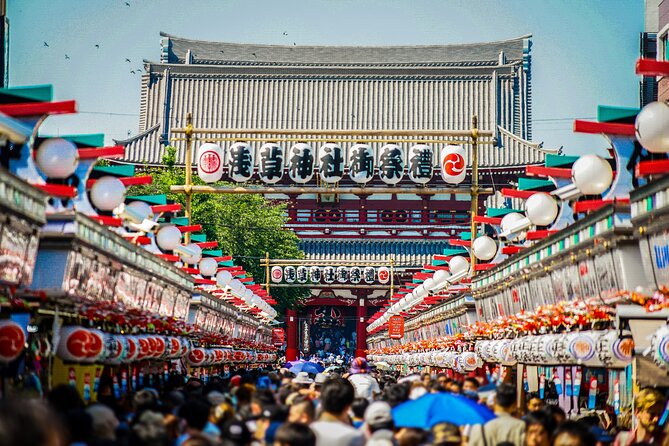
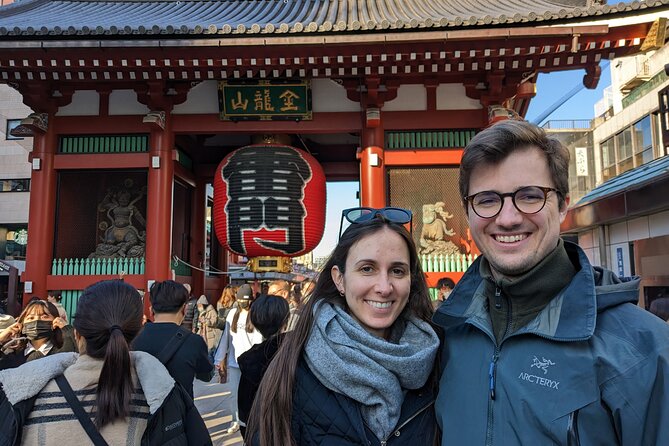
Senso-ji is the center of the visit. It is a Buddhist temple and one of Tokyo’s most popular religious sites, with a colorful approach and a long-standing connection to local legend. The story tells of two fishermen who found a statue of Kannon in the Sumida River in 628, leading to the temple’s founding tradition.
The planned time for Asakusa is about 30 minutes, with another 15 minutes listed for Senso-ji. That is enough for a first look, a quick explanation from your guide, and some photographs. It is not enough for a slow wander through every lane, shop, and temple building.
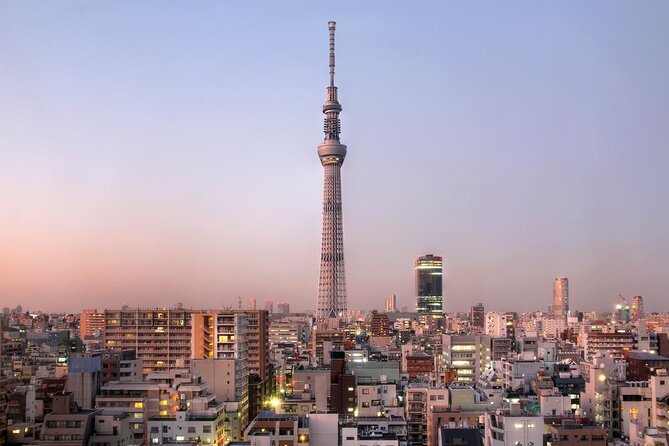
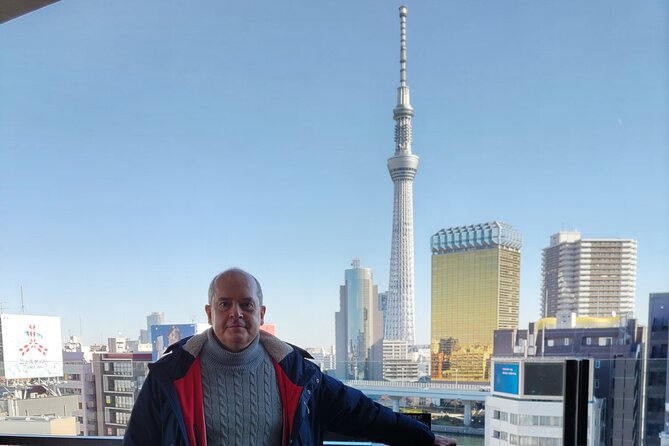
I would combine Asakusa with Tokyo Skytree if you want old and new in one area. The contrast is useful: one stop gives you temple grounds and traditional streets, while the tower gives you a modern symbol of the city. Skytree admission is not included.
Imperial Palace and Tokyo’s formal center
The Imperial Palace occupies the former site of Edo Castle, surrounded by broad park areas, moats, and large stone walls. Even a short stop can help you understand how Tokyo grew from the seat of the Tokugawa shoguns into Japan’s capital.
Be clear about the limits. This outing does not include access inside the Imperial Palace. You are seeing the exterior area and surrounding grounds, not touring the private imperial buildings.
The palace works well for people who want a major national sight without committing to a museum visit. It also gives the day a change of pace after Asakusa. The drawback is that a 30-minute stop can feel brief if you want detailed architectural context or a long walk around the grounds.
A completely different kind of day out:
- EVO, WRX, Skyline – JDM Night Run to Daikoku Car Meet
★ 4.9 · 478 reviews - Tokyo: Best Price Daikoku Parking Area JDM Car Meet
★ 4.9 · 192 reviews - Daikoku & Tokyo Private JDM Tour by 700HP R34 GT-R
★ 4.9 · 101 reviews - R34Skyline Daikoku PA Fast & Furious Private Experience
★ 5.0 · 63 reviews
Shinjuku Gyoen and Tokyo’s quieter side
Shinjuku Gyoen National Garden is one of Tokyo’s largest public parks, with lawns, walking paths, and calmer scenery close to Shinjuku Station. The listed visit is only 15 minutes, so you should think of it as a short pause rather than a full garden visit.
I like the idea of including it when you need a break from city streets. Tokyo can feel relentless, and even a quick look at open lawns and planted paths changes the rhythm of the day.
For a garden-focused outing, ask your guide about another option from the list. Koishikawa Korakuen and Rikugien each receive longer suggested visits of 15 or 30 minutes, though admission is extra. Hama Rikyu Gardens adds Tokyo Bay, tidal seawater ponds, and a teahouse. These are better choices if Japanese garden design matters more to you than department stores or electronics.
Shibuya, Harajuku, and Meiji Jingu
Shibuya Scramble Crossing gives you one of Tokyo’s most recognizable modern scenes. Pedestrians cross in several directions in front of Shibuya Station’s Hachiko exit while traffic stops. It is a quick visual lesson in the scale and order of the city.
Nearby Harajuku offers a different mood. Takeshita Street is known for youth fashion, shops, and strong teenage style. The area also sits close to Meiji Jingu, a shrine dedicated to the deified spirits of Emperor Meiji and Empress Shoken.
Meiji Jingu supplies a useful contrast to Takeshita Street. The shrine is beside busy Harajuku Station, yet the visit turns toward Shinto worship and wooded paths rather than fashion and shopping. Admission is listed as free.
This combination may be the best choice for a first-time visitor who wants Tokyo in miniature: modern crowds, youth culture, and a major shrine within the same broad part of town. You will not have time to browse every shop and study the shrine at length, so decide which matters more before setting out.
Tsukiji, food, and the limits of a short market stop
Tsukiji Outer Market occupies the streets beside the former wholesale market site. Small wholesale and retail shops, restaurants, and narrow lanes make it a natural choice for anyone interested in Japanese food.
The visit is listed at about 30 minutes, which is enough to look around and perhaps choose a place for lunch, but not enough for a leisurely food crawl. Lunch is not included, and the guide can help with the day’s dining plan, as one outing included a casual ramen restaurant and another featured sushi lunch.
Do not expect the old wholesale market itself. The stop is the outer market district. That distinction matters if you arrive expecting the former inner market auction experience.
Tsukiji pairs well with Hama Rikyu Gardens or the Imperial Palace. You get food, water-side scenery, and formal public spaces without crossing the city several times.
Akihabara and Roppongi Hills: two modern Tokyo choices
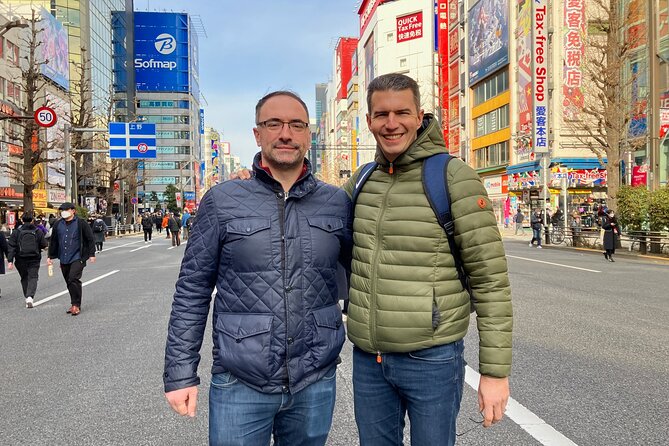
Akihabara is the pick for electronics, Japanese pop culture, and shopping. The district is famous for electronics stores and has also become a center for anime, manga, and related interests.
The listed 30-minute visit works best if you want a quick introduction or have one clear shopping goal. It will feel short if you plan to browse several stores. Personal purchases are your responsibility, and the tour does not include shopping expenses.
Roppongi Hills offers another version of modern Tokyo. This large city complex includes offices, apartments, shops, restaurants, a hotel, and art facilities. It is less about traditional Tokyo and more about how the city builds a self-contained urban district.
I would not choose both Akihabara and Roppongi Hills unless modern city life is your main interest. They offer different experiences, but the day benefits from contrast. A temple, garden, or market will give you a broader sense of Tokyo.
Gardens for a slower, more traditional day
Koishikawa Korakuen is one of Tokyo’s oldest and finest Japanese gardens. It was created during the early Edo period for the Mito branch of the ruling Tokugawa family. The suggested visit is only 15 minutes, and admission is not included.
Rikugien is another major garden choice. It was built around 1700 for the fifth Tokugawa shogun, and its name refers to six types of Chinese poetry. The planned 30-minute stop makes it a stronger choice for a garden-centered route.
Hama Rikyu Gardens sits beside Tokyo Bay and uses seawater ponds that change with the tides. Its teahouse adds another detail that helps you see how Japanese gardens combine water, paths, plants, and carefully framed views.
These stops are not interchangeable with a quick photo stop. If you enjoy quiet scenery and traditional design, tell the guide that you want time to walk. The trade-off is fewer famous city districts.
Tokyo National Museum and Odaiba
The Tokyo National Museum is Japan’s oldest and largest national museum of its kind. Its collections can provide a useful introduction to Japanese art and culture, but the suggested 15-minute visit is extremely short for a museum of this size.
I would choose it only if you want a brief exterior visit or a quick look at selected displays. Entrance fees are extra, and a serious museum visit deserves more time than this full-day format usually allows.
Odaiba gives you another modern option. This shopping and entertainment district sits on a man-made island in Tokyo Bay and began as a group of fortified islands. A 30-minute stop lets you sample the area, but it is not a full shopping or entertainment session.
Shibamata, Nezu, and the older neighborhoods
Shibamata lies on Tokyo’s eastern edge near the Edogawa River and retains an old-fashioned town feel. It is a good choice if you want something beyond the standard central Tokyo route.
Nezu, along with nearby Yanaka, survived major damage from wars and natural disasters and keeps much of its last-century character. The area offers a look at old Tokyo streets rather than the polished image found around Shibuya or Roppongi.
These two choices are especially useful for a repeat visit or for anyone who wants local atmosphere over famous landmarks. The drawback is distance. From Yokohama, adding an eastern or northern neighborhood may limit how many other areas fit into the day.
What the guides add to the day
The guide is not simply there to point at buildings. The strongest part of this format is the ability to explain a place, answer questions, and adjust the day as your interests become clearer.
Atsushi Kayukawa is described as licensed through the Japan Travel Agency and deeply proud of his country. Toshi has been praised for combining temples, gardens, busy streets, local dining, shopping, and cultural explanation.
An contacted a group before the outing and personalized the route. Fumiko organized a full day for a family of two adults and three young adults, while Noripy handled communication before the visit and helped arrange a sushi lunch. Ryuta and his driver adjusted the day around the places a group most wanted to see.
These details point to an important tip: tell the guide what you want before pickup. The more specific you are, the easier it is to build a sensible three or four stop route.
Who should book this Tokyo day trip?
I would recommend it most strongly to:
- Cruise passengers staying in Yokohama
- First-time visitors who want an overview
- Families or couples who value privacy
- People who dislike navigating large train stations
- Visitors with mobility concerns who want a private vehicle
- Small groups with clear interests in food, gardens, temples, or shopping
The tour is less suitable if you want long museum visits, extended shopping, or a slow look at several gardens. It is also poor value for a solo visitor on a tight budget, since the full group price applies to up to two people.
Only a limited number of car seats and booster seats are available. Rear-facing car seats are not available, so contact the provider directly if you need child seating. Service animals are allowed, and the activity is private, so only your group participates.
Free cancellation is available if you cancel at least 24 hours before the local start time. Changes or cancellations inside that window are not accepted for a refund.
Should you book this private Tokyo tour?
Book it if your goal is to get your bearings fast and see a thoughtful sample of Tokyo from Yokohama. The private car, licensed guide, and flexible route solve real problems, especially on a cruise stop or a first visit.
I would choose three contrasting areas rather than four similar ones. Asakusa with Senso-ji, Meiji Jingu with Harajuku, and Tsukiji or a garden would give you temples, city life, food, and a quieter pause. Add Shibuya or Skytree if modern Tokyo matters most.
Skip it if low cost or slow sightseeing comes first. At $854.91 for two, it is not a bargain in the ordinary sense. But for a private, guided introduction to a very large city, it can be a sensible use of one precious day.
FAQ
How long does the Tokyo tour last?
The experience lasts approximately eight hours.
Where does the tour start?
Pickup is offered from Yokohama.
How many people can join the private tour?
The listed price covers a group of up to two people. Only your group participates.
How many Tokyo sights can I visit?
The tour includes a customizable choice of three to four sites from the listed options.
Is a private vehicle included?
Yes. A private vehicle and a licensed local English-speaking guide are included.
Are entrance fees and lunch included?
No. Entrance fees, lunch, and other personal expenses are not included. Guide entry fees are covered only for sights listed in the tour information.
Can I cancel for a full refund?
Yes, if you cancel at least 24 hours before the experience start time. Cancellations or changes made less than 24 hours beforehand are not accepted for a refund.
More Day Trips in Yokohama
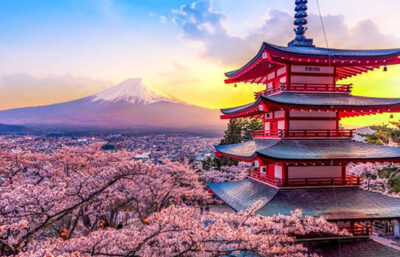
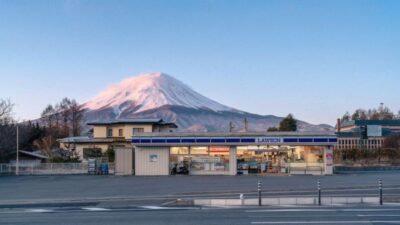
- Mt. Fuji Instagram-Worthy Spots Day Tour: Ladder Town, Oshino Hakkai, Lake Kawaguchi, Lawson Convenience Store (Departing from Tokyo Station or Shinjuku Station)
★ 4.8 · 35,467 reviews - 【Mount Fuji Magnificent Scenery Exploration Day Tour】Arakurayama Sengen Park & Kawaguchiko Oishi Park & Oshino Hakkai & INS Famous Lawson & Hikawa Clock Shop (Departing from Tokyo)
★ 4.9 · 12,075 reviews - [Kyoto & Nara Day Tour] Sagano Scenic Railway & Nara Park & Fushimi Inari Taisha Thousand Torii Gates & Togetsukyo Bridge & Bamboo Grove & Kimono Forest (Departing from Osaka)
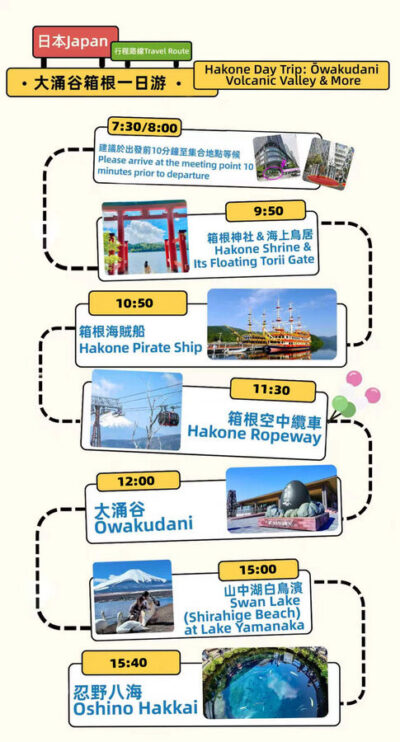
★ 4.9 · 10,942 reviews - Mount Fuji & Hakone – Lake Ashi Torii Gate, Hakone Shrine, Hakone Pirate Ship, Hakone Ropeway, Owakudani, Lake Yamanaka & Oshino Hakkai Day Trip: Sea, Land, and Air Panoramic Tour from Tokyo
★ 4.8 · 7,989 reviews
Just added in Yokohama
- Tokyo/Yokohama: Private JDM Daikoku/大黒 Car Meet With Driver★ 4.7 · 20 reviews
- 【R34 GTR Over 400 hp】Tokyo: Private Daikoku Tour in R34 GTR★ 5.0 · 25 reviews
- Tokyo: Fast & Furious Authentic Drift and JDM Experience★ 4.9 · 21 reviews
- Tokyo: Best Price Daikoku Parking Area JDM Car Meet★ 4.9 · 192 reviews
- R34Skyline Daikoku PA Fast & Furious Private Experience★ 5.0 · 63 reviews
- Daikoku & Tokyo Private JDM Tour by 700HP R34 GT-R★ 4.9 · 101 reviews
- Daikoku & Tokyo JDM Night Tour in R34 or TopSecret R35 GT-R★ 4.8 · 27 reviews
- Yokohama: Guided Cup Noodles Museum Tour & Make Your Own Cup★ 4.9 · 27 reviews
Day Trips, compared.
![[Kyoto & Nara Day Tour] Sagano Scenic Railway & Nara Park & Fushimi Inari Taisha Thousand Torii Gates & Togetsukyo Bridge & Bamboo Grove & Kimono Forest (Departing from Osaka)](https://media.japanvisits.com/wp-content/uploads/kyoto-nara-day-tour-sagano-scenic-railway-nara-park-fushimi-inari-taisha-thousand-torii-gates-togetsukyo-bridge-bamboo-grove-kimono-forest-departing-from-osaka-k110001-400x257.jpg)
Kyoto Amanohashidate & Ine Funaya & Ine Bay Scenic Day Trip (Departing from Osaka or Kyoto)
Read our review →
Kyushu: Mount Aso, Kusasenri & Takachiho Gorge Day Tour (Optional Takachiho Boat Ride Experience)
Read our review →
Kyushu One-Day Tour: Yufuin no Mori Train & Yufuin Town & Nyoirin-ji Temple & Dazaifu & Hell Hot Springs (Departing from Fukuoka)
Read our review →
Browse the lists this tour appears in