
Reviewed · TEA CEREMONIES
Japanese Tea Ceremony at Private Home in Yokohama, suburban Tokyo
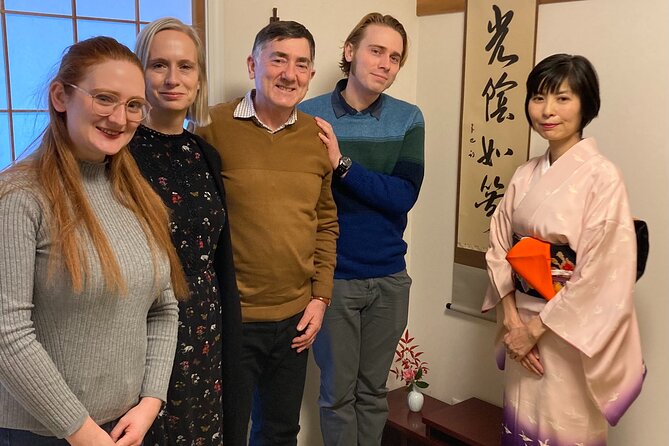
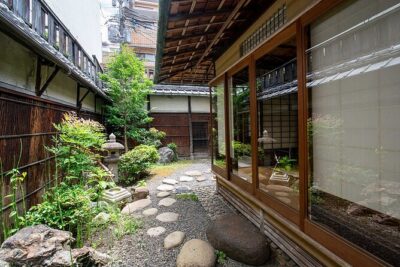
Tea begins with quiet attention. This 90-minute workshop brings you into a private Yokohama home, where an experienced tea master introduces you to the manners, tools, sweets, and careful movements of Japanese tea ceremony. I like the intimate home setting, and I like that you do more than watch: you make your own bowl of matcha. The main consideration is location, since the meeting point is in Aoba Ward, away from central Tokyo’s main sights.
You also get a rare look at the charcoal procedure, in which the tea master adds charcoal to heat the water. Handmade seasonal wagashi, including possible nerikiri, gyuhi, or manjyu, make the lesson feel personal rather than packaged. The room is traditional and tatami-floored, so you must bring socks.
In This Review
- Key points at a glance
- Why this home workshop feels different
- Getting to the tatami room in Aoba Ward
- The opening demonstration and guest manners
- The charcoal procedure is the rare highlight
- Handmade wagashi change with the season
- Making and drinking your own matcha
- The value of a $52.71 private session
- Who should book this experience
- Timing, booking, and cancellation
- A practical plan for the day
- Should you book the Yokohama tea ceremony?
- FAQ
- Where does the tea ceremony take place?
- How long does the workshop last?
- Is this a private activity?
- What is included in the price?
- How many cups of matcha will I drink?
- Do I need to bring anything?
- Can I cancel for a full refund?
Key points at a glance
- A private home setting: Only your group takes part, giving the session a more personal pace.
- More than a demonstration: You watch the tea ceremony, then prepare your own matcha and drink two cups in total.
- Rare charcoal procedure: The tea master shows how charcoal is added to heat the water, an unusual sight even for many Japanese people.
- Seasonal handmade wagashi: The sweets are made by the tea master and may include nerikiri, gyuhi, manjyu, or dried Japanese sweets.
- Forty years of tea study: The teacher has practiced Japanese tea ceremony for more than 40 years and taught for more than 15.
- A quiet Yokohama setting: The workshop meets near Azamino in Aoba Ward, with public transportation nearby and pickup offered as a feature.
Why this home workshop feels different
Many visitors first meet Japanese tea ceremony through a formal performance. You sit quietly, watch the host prepare matcha, and try to follow a long list of customs. That can be beautiful, but it can also leave you unsure about what you just saw.
This workshop gives you room to ask questions. The tea master explains the history of tea ceremony and shows you how to act as a guest in a traditional tatami room. That practical focus matters. You learn not only what the host does, but also how you receive the tea, eat the sweet, and take part respectfully.
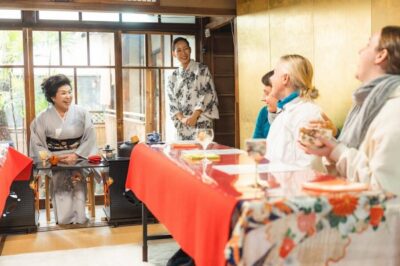
The private format is another strong point. Your group is the only group attending, so the session does not have the feel of a large class. A family who attended with a baby appreciated the friendly conversation with the Kono family and the warmth of the visit. That detail suggests this is more than a quick cultural display. It is a chance to meet a Japanese family in their own home and talk about everyday life as well as tea.
The teacher has studied the ceremony for over four decades and has taught it for more than 15 years. That background gives the demonstration substance, but you should still expect a welcoming lesson rather than a demanding school of tea. The format is designed for people who are curious, not for students already trained in tea ceremony.
More Tea Ceremonies in Yokohama:
- Kyoto: Tea Ceremony in a Traditional Tea House in Kiyomizu
★ 4.9 · 3,519 reviews - Kyoto: Tea Ceremony Ju-An at Jotokuji Temple
★ 4.9 · 3,207 reviews - Kyoto: 45-Minute Tea Ceremony Lesson Experience
★ 4.3 · 2,378 reviews
Getting to the tatami room in Aoba Ward
The meeting point is listed at Dresse Azamino Gardens, in Obacho, Aoba Ward, Yokohama, postal code 225-0023. The area is near public transportation. Pickup is offered, although you should confirm the exact arrangement and meeting instructions when your booking is confirmed.
This is not a central Tokyo activity that you can simply add between visits to Asakusa and Shibuya. It takes place in suburban Yokohama, so allow time for the journey and keep your schedule loose around the 1.5-hour session. The distance is also part of the appeal. You leave the busiest sightseeing zones and see a quieter residential side of the Tokyo-Yokohama region.
The area can pair well with a visit to the Shin-Yokohama Ramen Museum. From Azamino Station, the Yokohama subway takes about 15 minutes to the closest station for Shin-Yokohama. That nearby attraction is mentioned as a useful add-on, not as part of the tea workshop, so plan and pay for that separately.
Once you arrive, prepare to remove your shoes before entering the tatami room. Bring clean socks, even if you normally go barefoot indoors. This is a small detail, but forgetting it can make a formal room entrance awkward.
The opening demonstration and guest manners
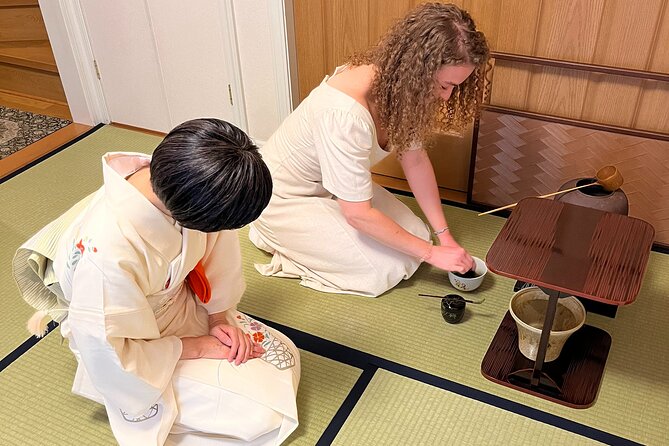
The tea master begins by demonstrating the ceremony. Your first job is simply to watch. Pay attention to the sequence, the placement of the tea tools, and the way the host handles the bowl and sweets.
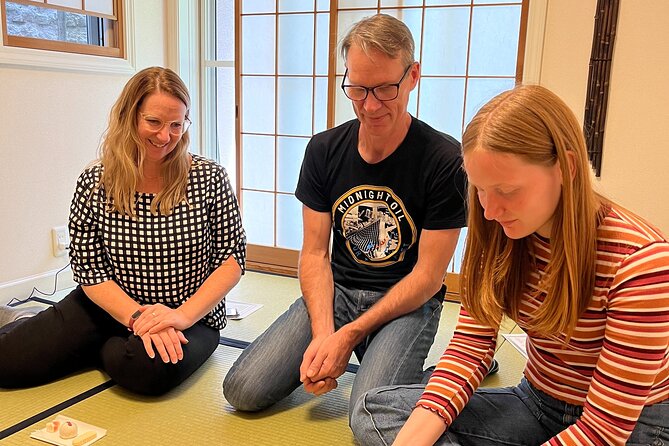
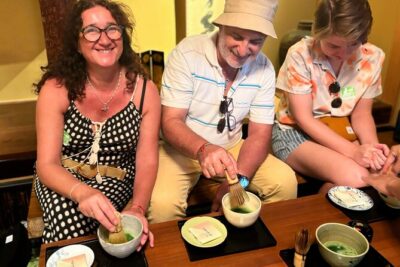
You learn how to be a guest in a Japanese tea ceremony. The host explains the customs while you eat wagashi and dried Japanese sweets. This makes the lesson easier to follow because the explanation is tied to something you are doing at the moment.
The ceremony is not only about drinking green tea. It is built around care, order, season, and respect between host and guest. Even in a short workshop, small actions have meaning. The way a bowl is presented, the way a sweet is eaten, and the way you receive the tea all form part of the experience.
Do not worry about memorizing every rule before you arrive. The teacher demonstrates the process and guides you through it. You will get more from the session if you watch carefully and ask direct questions instead of trying to perform every movement perfectly.
The charcoal procedure is the rare highlight
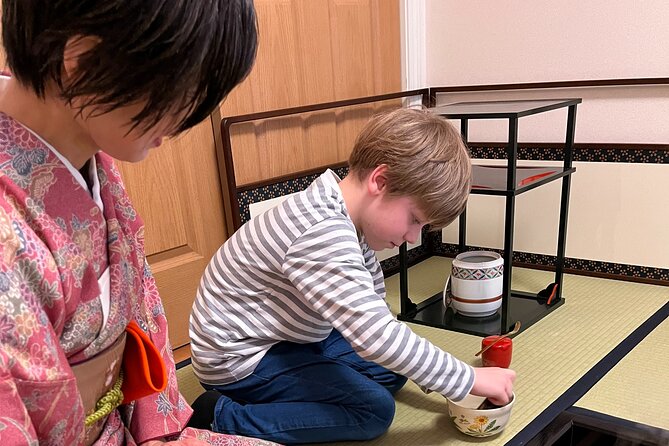
One of the most unusual parts is the charcoal procedure. The tea master adds charcoal to heat the water used for the tea. This is not simply a behind-the-scenes kitchen step. It is part of the traditional preparation and gives you a clearer sense of how the ceremony developed before modern electric appliances.
The procedure is described as rare even for Japanese people to see. That makes it particularly valuable for anyone interested in the older methods behind the ceremony. You are not only seeing powdered green tea whisked in a bowl. You are watching the water source and heat become part of the ritual.
The charcoal portion also slows the workshop down in a useful way. Modern travel often trains you to expect quick results. Here, the pace is deliberate. You have time to notice the tools, the heat, and the order of preparation.
The exact amount of time devoted to the charcoal procedure is not specified, so you should not expect a long separate performance. Think of it as one important part of the broader demonstration.
A few more options to weigh up in Yokohama
- EVO, WRX, Skyline – JDM Night Run to Daikoku Car Meet
★ 4.9 · 478 reviews - Tokyo: Best Price Daikoku Parking Area JDM Car Meet
★ 4.9 · 192 reviews - Daikoku & Tokyo Private JDM Tour by 700HP R34 GT-R
★ 4.9 · 101 reviews - Tokyo 8hr Private Tour with Licensed Guide from Yokohama
★ 5.0 · 94 reviews
Handmade wagashi change with the season
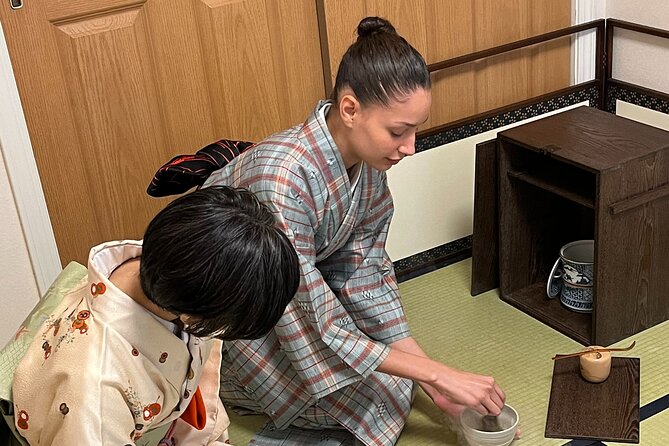
The tea master prepares the wagashi served during the session. Depending on the season, you might receive nerikiri, gyuhi, manjyu, or another Japanese sweet, along with dried sweets.
Nerikiri is often shaped and colored to reflect the season. Gyuhi is a soft mochi-style sweet, while manjyu is a filled confection. You may not receive all of these. The tea master chooses what to serve based on the time of year, which means the food is not fixed into one identical menu for every date.
This seasonal approach helps explain why sweets are served with matcha. They balance the tea’s earthy bitterness and give the guest something to enjoy before drinking. The food also gives you a practical reason to learn guest manners rather than only watching a demonstration from across the room.
The included snacks are described as suitable for vegan and gluten-free diets. If you have a serious allergy or strict dietary requirement, confirm the details before booking, since the information provided does not specify ingredients, preparation surfaces, or possible cross-contact.
Making and drinking your own matcha
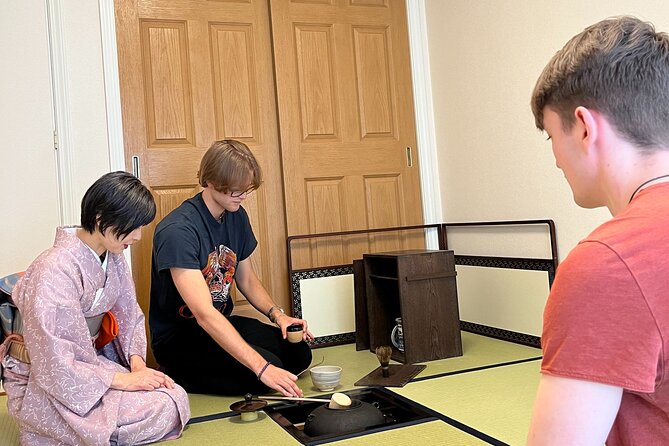
After the demonstration, you get to prepare matcha yourself. The teacher shows you how to mix the powdered green tea, and you make a bowl for your own drink.
This hands-on section is what makes the price easier to justify. A performance gives you a look at tea ceremony. Here, you also gain the basic feel of preparing the drink. You can see how much effort goes into a bowl that might look simple when served in a café.
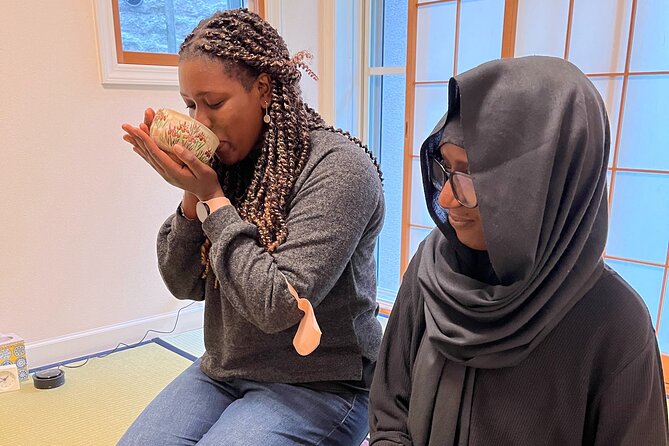
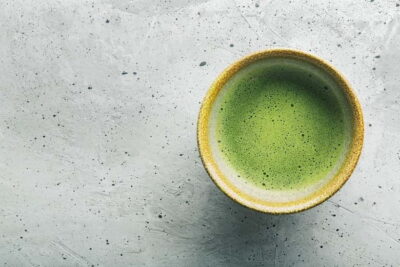
You drink two cups of matcha in total. The first is prepared for you during the teacher’s demonstration, and the second is the one you make yourself. That gives you a useful comparison. You can notice the difference between watching an experienced tea master and trying the whisking technique on your own.
The session is not presented as a professional certification or a full course of tea study. It is a short cultural workshop. If you want a relaxed introduction with a clear chance to participate, it fits well. If you want detailed training in every school, utensil, and formal movement, 90 minutes will feel limited.
The value of a $52.71 private session
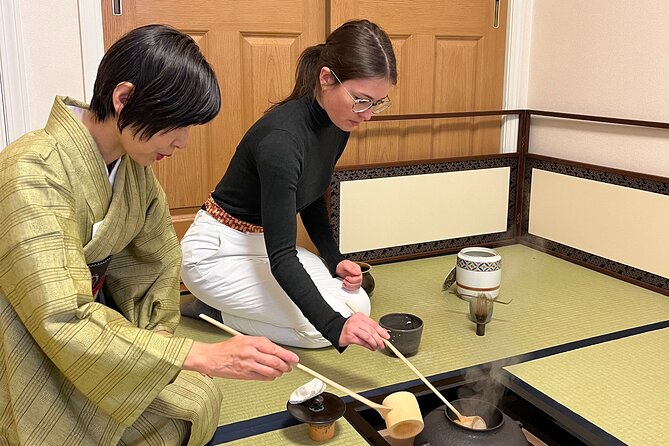
At $52.71 per person, this is not the cheapest way to drink matcha in Japan. You can find green tea for far less at a café or sweets shop. The comparison is not really fair, though, because this price includes a private lesson, two cups of matcha, handmade wagashi, a history talk, the charcoal procedure, and access to a traditional room in a private home.
The private format is the key value. Only your group participates, so you are not paying for a large crowd experience. You can ask questions about tea ceremony and Japanese culture without waiting for a general question period or competing with a room full of people.
The cost makes the most sense for couples, families, and small groups who want a personal cultural activity. It is also a good choice if you have already seen major temples and gardens and want to understand a Japanese tradition through direct instruction.
The value is weaker if you are mainly seeking a quick photo opportunity or a central Tokyo activity. You must make the trip to Azamino, and the workshop takes 90 minutes before you add transport time. For some schedules, the suburban location will be an inconvenience rather than a benefit.
Who should book this experience
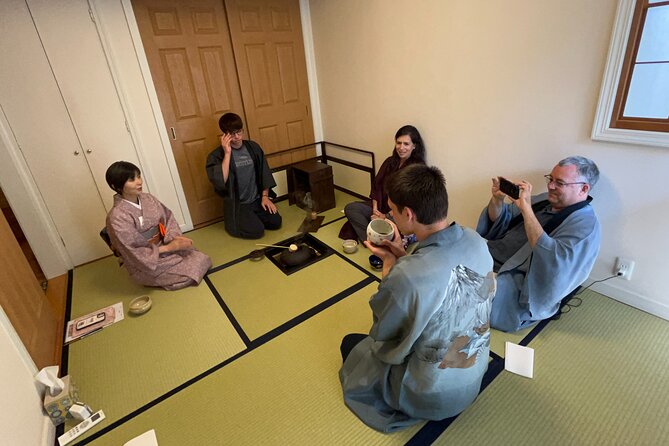
I would recommend this workshop to first-time visitors who want an introduction to Japanese customs without committing to a long formal course. You do not need prior knowledge of tea ceremony, and the teacher demonstrates each major stage before you try it.
Families may also like the private setup. A personal home can be easier than a large group class, especially when different people in your party have different levels of interest. The warm exchange with the Kono family, including conversation with a family traveling with a baby, adds to that impression.
This also suits visitors who care about food traditions. The sweets are handmade and seasonal, rather than a single standard snack served year-round. Vegans and people avoiding gluten may find the included food helpful, though special dietary needs should be confirmed in advance.
You may want to skip it if your schedule is built around central Tokyo and you have no spare time for Yokohama. You may also prefer a different activity if sitting on tatami, following quiet etiquette, or removing shoes is uncomfortable.
Timing, booking, and cancellation
The workshop lasts about one hour and 30 minutes. The experience begins and ends at the meeting point, with the listed start point in Aoba Ward. Since it is booked an average of 38 days ahead, plan early if your Japan schedule is fixed.
Booking confirmation is provided within 48 hours, subject to availability. That detail matters because you should not treat the reservation as fully settled until confirmation arrives.
Free cancellation is available up to 24 hours before the local start time for a full refund. Cancellations or changes made less than 24 hours before the start are not accepted for a refund. Keep the local time in mind if you are arranging this from another time zone.
A practical plan for the day
I would place this workshop on a day when you can give the cultural lesson your full attention. Arrive with socks, comfortable clothing, and enough time to find the meeting point without rushing into the tatami room.
You can combine the outing with the Shin-Yokohama Ramen Museum, using the Yokohama subway connection from Azamino. Do not pack too many other major sights into the same window. The tea ceremony has a calm pace, and rushing away can undercut what makes the visit special.
Bring questions. You can ask about the history of tea ceremony, the meaning of the guest’s actions, the sweets, or the preparation of matcha. The teacher specifically invites questions, and the private setting gives you a good chance to make use of that.
Should you book the Yokohama tea ceremony?
Book it if you want personal contact, seasonal sweets, and hands-on practice rather than a quick demonstration. The experienced tea master, private home, charcoal procedure, and two cups of matcha give the $52.71 price a fair basis.
Think twice if central Tokyo convenience is your main concern. The trip to suburban Yokohama takes planning, and the tatami setting requires socks and respectful participation. For visitors willing to make the journey, this is a gentle, focused way to learn how tea ceremony works and how to take part as a guest.
FAQ
Where does the tea ceremony take place?
It takes place at a private home in Aoba Ward, Yokohama. The listed meeting point is Dresse Azamino Gardens, Obacho, Yokohama, Kanagawa 225-0023.
How long does the workshop last?
The Japanese tea ceremony workshop lasts approximately one hour and 30 minutes.
Is this a private activity?
Yes. Only your group participates in the activity.
What is included in the price?
The experience includes matcha, handmade wagashi, and dried Japanese sweets. The food is described as suitable for vegan and gluten-free diets.
How many cups of matcha will I drink?
You drink two cups in total. The tea master prepares one during the demonstration, and you prepare one yourself.
Do I need to bring anything?
You should bring socks because you enter a tatami room for the tea ceremony.
Can I cancel for a full refund?
Yes, if you cancel at least 24 hours before the local start time. Cancellations or changes made less than 24 hours before the start are not refunded or accepted.
Just added in Yokohama
- Yokohama and Kamakura 6hr Private Trip Government-Licensed Guide★ 5.0 · 25 reviews
- Yokohama Private Tour★ 5.0 · 21 reviews
- Shuttle Van Transfer, Yokohama(Port)⇒Tokyo, Narita, Haneda, TDR★ 5.0 · 63 reviews
- Yokohama Half Day Walking Tour with an Expert Local Guide★ 4.5 · 22 reviews
- Yokohama Ramen Adventure From a Local Noodle Factory to Home★ 5.0 · 60 reviews
- 【Tokyo】JDM Daikoku Parking Area & Nissan Facility Tour★ 5.0 · 87 reviews
- Yokohama Private Tour with a Local: Highlights & Hidden Gems★ 4.5 · 21 reviews
- Guided History & Nature Exploration in the Yokohama Hill Area★ 5.0 · 17 reviews
Tea Ceremonies, compared.
Tea Ceremony in a Traditional Tea House in Kiyomizu
Read our review →
World Heritage Kyoto & Nara Uji Authentic Matcha Experience
Read our review →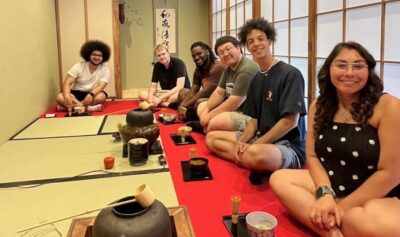
Browse the lists this tour appears in