
Reviewed · FUKUOKA TOURS
Fukuoka: Nakasu Food Stall Private Guided Tour with Tastings
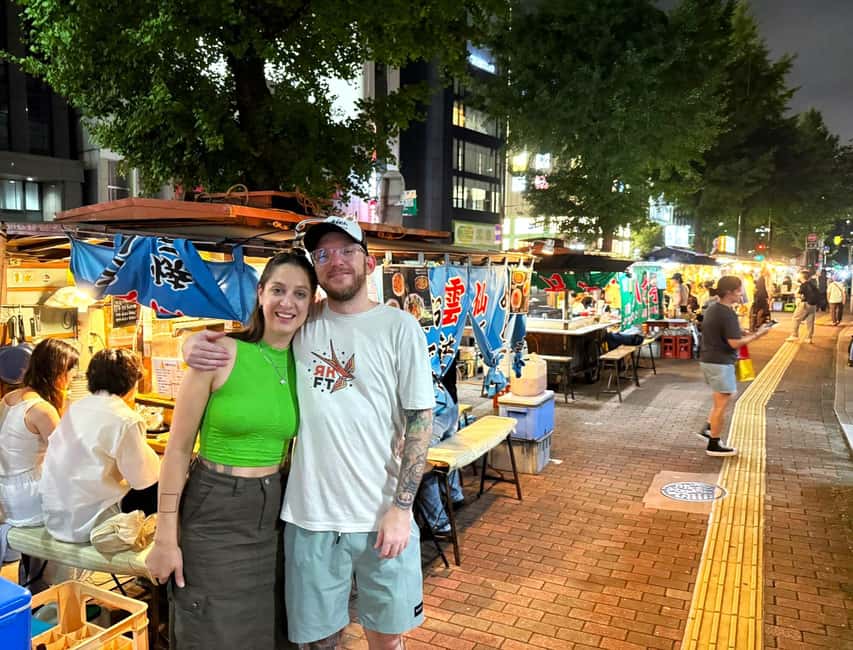
Fukuoka tastes best after dark. This two-hour private tour leads you through Nakasu’s famous yatai, or food stalls, with an English-speaking guide who helps you order, explains local customs, and keeps the evening moving. I especially like the chance to try several foods without guessing at a Japanese menu, and the guide’s local connections can steer you away from the most obvious tourist stops. The main catch is price: at $101 per person, this is far more than simply eating at a stall on your own.
I also like the personal scale. You meet one guide at FamilyMart Tenjin 1-chome, then visit multiple stalls rather than sitting through a long restaurant meal. Still, stall opening times can be uneven, and bad weather may force the group indoors or limit the number of outdoor stalls available.
In This Review
- Key points at a glance
- Why Nakasu food stalls matter in Fukuoka
- Meeting at FamilyMart Tenjin 1-chome
- First impressions of Nakasu after dark
- What you may eat at the stalls
- How the 1,000 yen subsidy affects value
- Why the guide can make or break the evening
- Timing, queues, and rainy-night changes
- Who will enjoy this tour most
- Practical details before you book
- Should you book the Nakasu yatai tour?
- FAQ
- Where does the tour begin?
- Where does the tour finish?
- How long does the experience last?
- Is the tour conducted in English?
- Is this a private tour?
- What food can I expect to taste?
- How much food and drink is included?
- What should I bring?
Key points at a glance
- Two hours around Nakasu: See Fukuoka’s yatai district and return to the Tenjin meeting point within a compact evening outing.
- 1,000 yen per stall: Your included food and drink subsidy helps cover tastings at each food stall.
- Private English-language guiding: Ask questions freely, get help with ordering, and learn how the stalls work without a language barrier.
- Classic Fukuoka dishes: Expect opportunities to sample ramen, oden, yakitori, and stewed specialties.
- Guides with personality: Morry is known for close-up magic and lively conversation, while guides such as Rie, Aya, Manabu, and Shota have each brought their own local knowledge.
- Cash and good shoes matter: You should bring cash and wear comfortable shoes. Smoking is not allowed during the activity.
Why Nakasu food stalls matter in Fukuoka
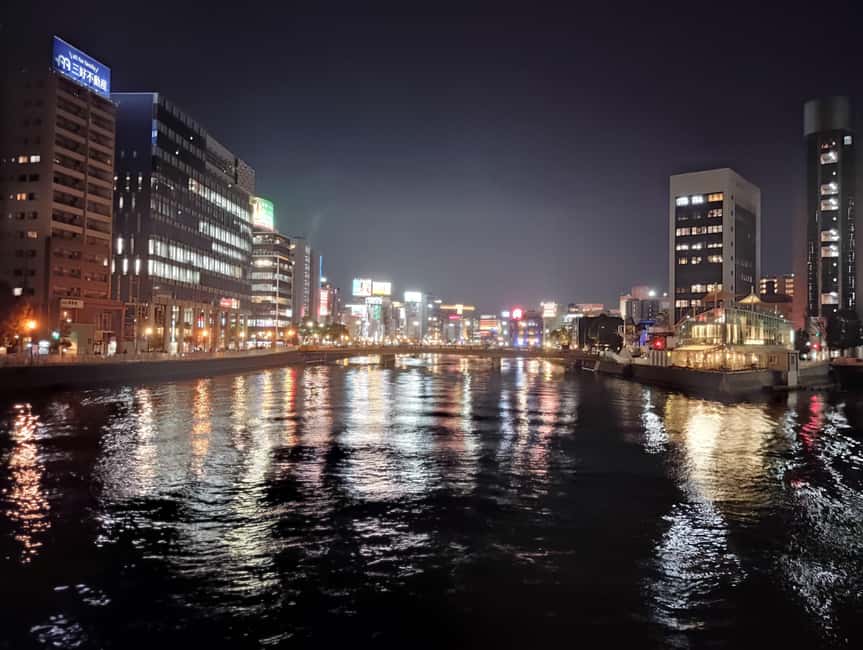
Fukuoka’s yatai are small, temporary food stalls that appear in the evening and serve compact, satisfying meals. They are part of the city’s food identity, especially around Nakasu and Tenjin, where the stalls line the streets near the river.
Nakasu sits between the historic areas of Hakata and Fukuoka. That location gives the tour more context than a simple meal. You are not just moving from one plate to the next. Your guide explains how the area developed, why yatai remain important, and how local eating habits differ from the restaurant experience you may already know from Tokyo or Kyoto.
The stalls are also social places. Seating is close, menus may be brief, and the person beside you could be a local or another visitor. That can be part of the fun, but it can also feel slightly awkward if you do not know how to enter, order, or leave. A private guide removes much of that uncertainty.
I see this as an introduction to Fukuoka’s evening food culture, not a formal history lesson. The best moments will likely come from a quick explanation, a chat with a stall owner, or the simple pleasure of eating shoulder to shoulder in a tiny space.
A few more options to weigh up in Fukuoka
- Kyushu: Mount Aso, Kusasenri & Takachiho Gorge Day Tour (Optional Takachiho Boat Ride Experience)
★ 4.9 · 4,957 reviews - Kyushu One-Day Tour: Yufuin no Mori Train & Yufuin Town & Nyoirin-ji Temple & Dazaifu & Hell Hot Springs (Departing from Fukuoka)
★ 4.9 · 4,474 reviews - teamLab Forest Fukuoka Ticket
★ 4.7 · 1,925 reviews
Meeting at FamilyMart Tenjin 1-chome
The tour begins in front of FamilyMart Tenjin 1-chome. Look for a guide holding a yellow sign marked DeepExperience. This is a useful meeting point in the Tenjin area, but you should allow a little extra time to find the correct FamilyMart if you are arriving after dark.
The walk then heads toward Nakasu. Exact routes can change with stall availability, weather, and the guide’s plan for the night. That flexibility is useful because yatai do not operate like fixed museum exhibits. A stall might be full, delayed in opening, or unavailable because of rain.
Several guides have received praise for clear communication before the tour. Morry, in particular, has been described as organized and good at explaining the evening’s plan at the start. That small briefing matters. Two hours passes quickly when you are visiting food stalls, waiting for seats, ordering, eating, and walking between stops.
Some guides may also meet you at your hotel in unusual situations. One guest described being collected after a delayed flight, but you should not treat hotel pickup as a standard inclusion. The listed meeting point remains FamilyMart Tenjin 1-chome.
First impressions of Nakasu after dark
Nakasu feels different once the stalls are set up. Lanterns, narrow counters, cooking smells, and the movement of people create a lively street scene. Your guide helps you understand what you are seeing instead of leaving you to wander between unfamiliar menus.
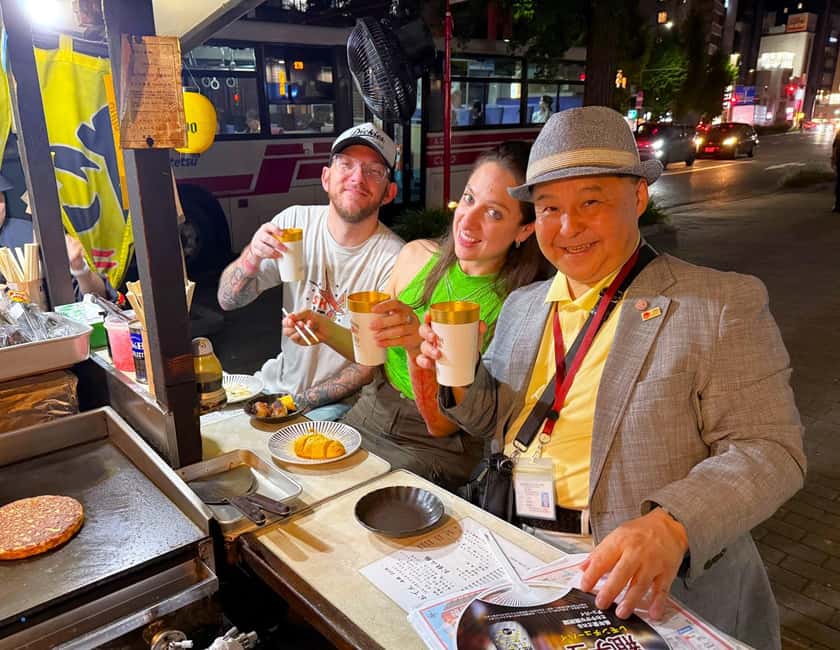
This is where the private format earns its keep. You can ask what a dish contains, which stall is best for a certain food, and how much you should order. You also have someone to explain the social rhythm of the stall: take a seat, order a few items, eat without lingering too long, and pay before moving on.
The experience is not a restaurant crawl with a large group. You have a private group and a live English-speaking guide. That lets you shape the conversation around your interests, from Japanese food customs to Fukuoka’s neighborhoods and local recommendations.
Morry has become especially memorable for some groups because he performs close-up magic and mentalist tricks while people wait. That is a charming bonus, particularly when a popular stall has a queue. It is not the reason to book the tour, but it can turn an unavoidable wait into part of the evening.
What you may eat at the stalls
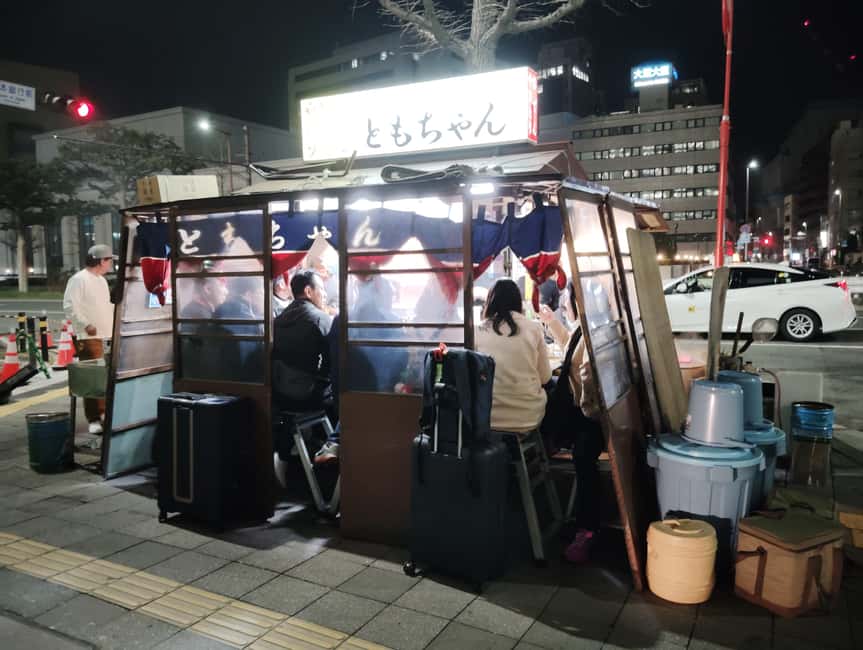
The food list covers several familiar Fukuoka and Japanese comfort foods. The exact dishes depend on the stalls open that night, but the tour is designed to give you variety rather than one large serving.
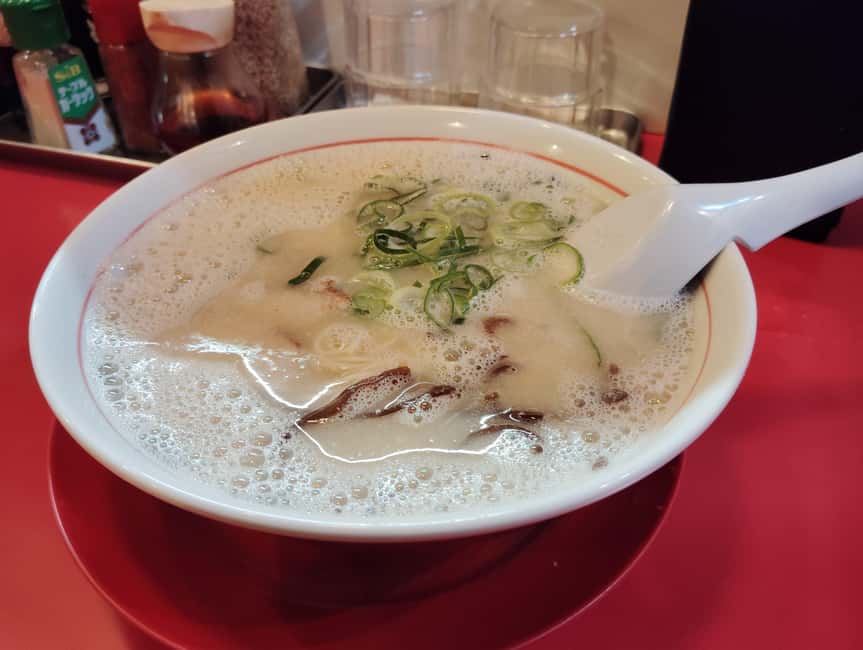
Ramen is often the headline dish. Fukuoka is associated with tonkotsu ramen, a pork-bone broth served with thin noodles, though the exact bowl you receive is determined by the stall. One guest singled out the ramen as the best dish of a rainy evening and said it was worth waiting in line.
Oden is a warm choice on a cool night. Ingredients simmer in broth, allowing you to try several small portions rather than committing to one heavy meal. It is a good example of how yatai food can be simple, quick, and filling.
Yakitori gives you a chance to sample grilled items in small portions. If you do not know the Japanese names for each skewer, your guide can help you choose and explain what you are ordering.
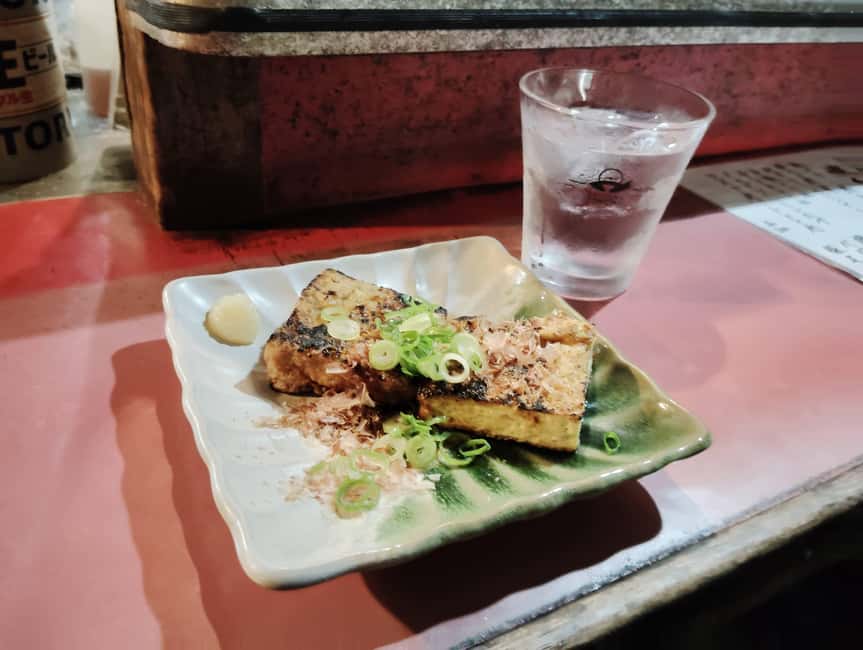
You may also find stewed dishes and other stall specialties. These are useful for tasting local cooking beyond the foods most visitors already recognize. The goal is not fine dining. It is to sample several flavors in compact surroundings.
Keep your expectations sensible. One account noted that the atmosphere was stronger than some of the food, with ramen the clear favorite. That is fair. Yatai are popular partly because of the setting, the social contact, and the memory of eating outdoors at a tiny counter. If you want a carefully paced culinary tasting with polished presentation, this may feel rough around the edges.
A completely different kind of day out:
- Shiraito Falls & Forest Cafe & Handmade Flower Salt Pudding & Grilled Seafood & Totoro Forest & Sakurai Futamigaura & Angel’s Wings & Coconut Tree Swing Day Tour (Departing from Hakata Station, with Mandarin, English, and Cantonese speaking guide)
★ 4.9 · 1,840 reviews - Fukuoka Tower Admission Ticket
★ 4.8 · 1,804 reviews - Uminonakamichi Marine World Admission Ticket in Fukuoka
★ 4.8 · 1,298 reviews - Mt. Aso & Takachiho Gorge Tour with Optional Boat Ride
★ 4.7 · 222 reviews
How the 1,000 yen subsidy affects value
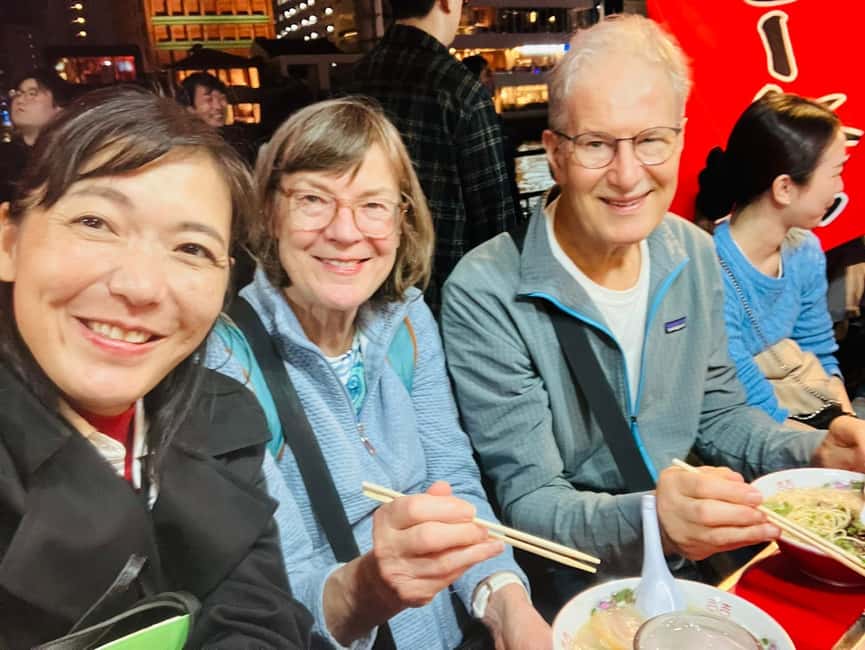
The tour includes a 1,000 yen food and beverage subsidy per stall. Since the activity visits multiple stalls, this gives you spending help at each stop and makes it easier to order without worrying about every small purchase.
You should still bring cash. The subsidy is not the same as unlimited food or drink, and the tour does not promise that every item will be fully covered. Think of it as a practical allowance that helps you sample dishes while keeping the evening relaxed.
At $101 per person, the real cost is the private guide rather than the food itself. If you are comfortable ordering alone, finding stalls, waiting for a seat, and handling menus in Japanese, you can spend much less by eating independently.
I think the price makes more sense for a first evening in Fukuoka, a couple who wants personal attention, or anyone who feels unsure about yatai etiquette. You are paying for access, translation, local judgment, and a guided introduction to a food culture that can be confusing at first.
For solo visitors, the value can also be strong. Eating alone at a packed stall may feel uncomfortable, while a guide gives you company and makes the experience feel more natural. The subsidy softens the food cost, but it does not turn this into a budget activity.
Why the guide can make or break the evening
The strongest part of this experience is the human element. The guide is not only translating a menu. The guide can explain which stalls are local favorites, introduce you to owners, describe the background of a dish, and answer the questions that arise while you eat.
Morry has been praised for his warmth, organization, food advice, and magic. Manabu has been described as thoughtful and good at offering a local perspective. Rie is noted for fluent English and an easy manner around stall owners. Aya brings direct experience from working at a yatai, which can give her explanations a particularly practical touch.
Shota has tailored outings around personal food interests and offered restaurant suggestions beyond the stalls. That is useful if your Fukuoka stay continues after the tour. A good guide can help you build the rest of your food plan, not just fill two hours.
Guide assignments can vary, so you should not assume Morry will lead your tour. The important point is the private format and the range of guide strengths. If you enjoy conversation, ask questions. This experience gives you room to do that.
Timing, queues, and rainy-night changes
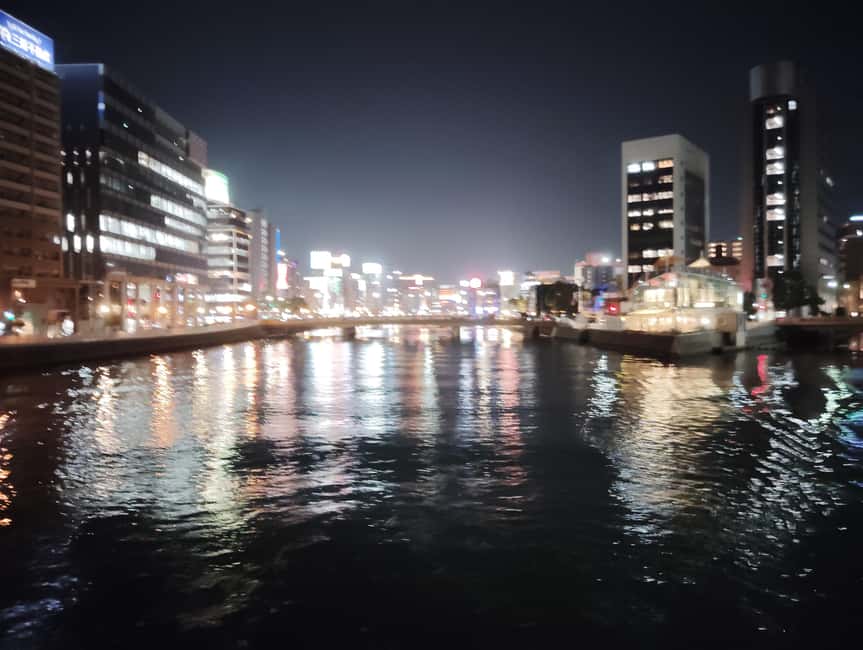
The tour lasts two hours, which is enough for a focused introduction but not enough to sample every kind of yatai food in Nakasu. You will spend part of the time walking and may spend part of it waiting for a seat at a popular stall.
Start time matters. An early slot around 5:30 may be too soon for some stalls, since setup can continue past 6. A guide may adjust the plan, but you should understand that yatai operate on their own schedule. If tasting at several outdoor stalls is your main goal, a later start may offer a better chance of finding more stalls open.
Rain also changes the experience. Poor weather can reduce the number of outdoor stalls operating and may send the group to an indoor location. One rainy outing included an indoor stall and still worked well, but the atmosphere was less like the classic open-air yatai scene.
Bring comfortable shoes because you will walk through the district. Bring a camera if you want to record the lantern-lit streets and compact counters, but do not let photography delay ordering or crowd the small spaces. Smoking is not allowed.
Who will enjoy this tour most
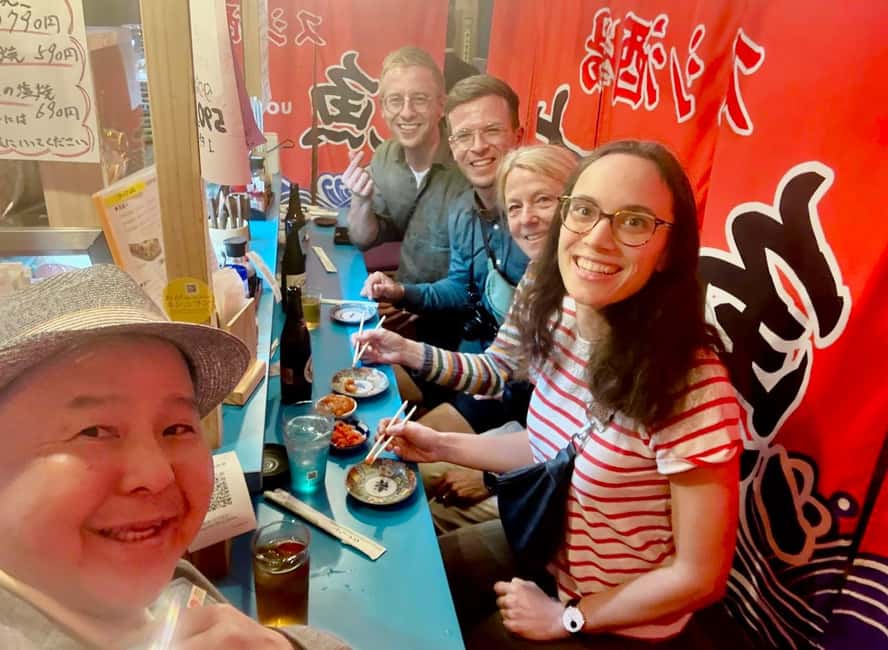
This tour suits first-time visitors to Fukuoka who want an easy introduction to the city’s street food. You get help with language, ordering, timing, and local customs, all in one short outing.
It is also a good choice for:
- Solo visitors who would rather not eat alone at a tiny counter
- Couples who want a private evening with local conversation
- Food-focused visitors who want several small tastings
- People curious about Fukuoka beyond major sights
- Anyone who wants restaurant suggestions from a local guide
- Visitors who enjoy stories, questions, and informal cultural explanation
It may be less suitable if you want a large meal, a fixed menu, or guaranteed access to a specific stall. The selection depends on what is open and what has space. It is also not the best value for confident independent eaters who already understand Japanese food-stall customs.
Vegetarians should discuss their needs with the guide. One outing successfully adapted the food for a non-strict vegetarian, but the tour description does not promise a vegetarian menu. Strict dietary restrictions may be difficult in small stalls with limited menus.
Practical details before you book
The tour is conducted in English and operates as a private group. You receive a professional guide and the food and drink subsidy at each stall, with a stated duration of two hours.
Free cancellation is available up to 24 hours before the activity for a full refund. You can also reserve and pay later, which helps if your Fukuoka schedule may change.
Plan to carry cash. Wear shoes suitable for walking and standing. Arrive at the FamilyMart meeting point with enough time to identify the yellow DeepExperience sign.
I would also keep your evening flexible after the tour. If you find a favorite dish or receive a good restaurant tip, you may want to continue eating. The tour can be a complete small meal, but it may not satisfy a very large appetite.
Should you book the Nakasu yatai tour?
Book it if you want a friendly local guide to handle the confusing parts of yatai culture. The private format, English support, food allowance, and local explanations make this a comfortable first step into Fukuoka’s evening food scene.
The strongest reasons to go are the personal attention and the guides’ ability to make the night fun. Morry’s magic, Aya’s yatai experience, Rie’s English, Manabu’s local perspective, and Shota’s food recommendations show how much personality can shape the outing.
Skip it if you are mainly looking for the cheapest way to eat ramen and skewers. You can spend far less on your own, and the food quality may vary from stall to stall. At $101, this is a guided cultural food experience with tastings, not simply dinner.
FAQ
Where does the tour begin?
It begins in front of FamilyMart Tenjin 1-chome. The guide will hold a yellow sign marked DeepExperience.
Where does the tour finish?
The tour returns to FamilyMart Tenjin 1-chome.
How long does the experience last?
The tour lasts two hours.
Is the tour conducted in English?
Yes. The activity includes a live English-speaking guide.
Is this a private tour?
Yes. It is offered for a private group.
What food can I expect to taste?
Possible dishes include oden, ramen, yakitori, and stewed specialties. The exact food depends on the stalls visited that evening.
How much food and drink is included?
The tour includes a 1,000 yen food and beverage subsidy per stall.
What should I bring?
Bring comfortable shoes, a camera, and cash. Smoking is not allowed during the activity.
Just added in Fukuoka
- Treasures of Kyushu 7-Day Tour by Europamundo★ 5.0 · 1 review
- Kyushsu Half Island Express Tour (8 Days) by MW Tours★ 5.0 · 1 review
- teamLab Forest Fukuoka Ticket★ 4.7 · 1,925 reviews
- Fukuoka Nakasu River Cruise Ticket★ 4.6 · 164 reviews
- Shiraito Falls & Forest Cafe & Handmade Flower Salt Pudding & Grilled Seafood & Totoro Forest & Sakurai Futamigaura & Angel’s Wings & Coconut Tree Swing Day Tour (Departing from Hakata Station, with Mandarin, English, and Cantonese speaking guide)★ 4.9 · 1,840 reviews
- Uminonakamichi Marine World Admission Ticket in Fukuoka★ 4.8 · 1,298 reviews
- Fukuoka Tower Admission Ticket★ 4.8 · 1,804 reviews
- Kyushu One-Day Tour: Yufuin no Mori Train & Yufuin Town & Nyoirin-ji Temple & Dazaifu & Hell Hot Springs (Departing from Fukuoka)★ 4.9 · 4,474 reviews
Fukuoka Tours, compared.
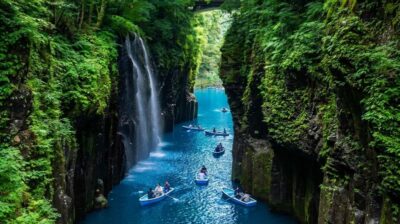
Kyushu: Mount Aso, Kusasenri & Takachiho Gorge Day Tour (Optional Takachiho Boat Ride Experience)
Read our review →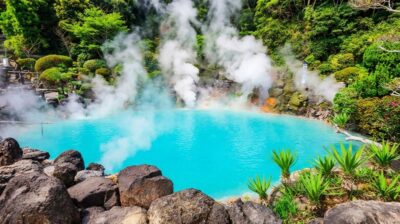
Kyushu One-Day Tour: Yufuin no Mori Train & Yufuin Town & Nyoirin-ji Temple & Dazaifu & Hell Hot Springs (Departing from Fukuoka)
Read our review →
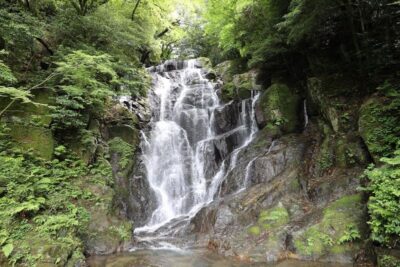
Shiraito Falls & Forest Cafe & Handmade Flower Salt Pudding & Grilled Seafood & Totoro Forest & Sakurai Futamigaura & Angel’s Wings & Coconut Tree Swing Day Tour (Departing from Hakata Station, with Mandarin, English, and Cantonese speaking guide)
Read our review →

Uminonakamichi Marine World Admission Ticket in Fukuoka
Read our review →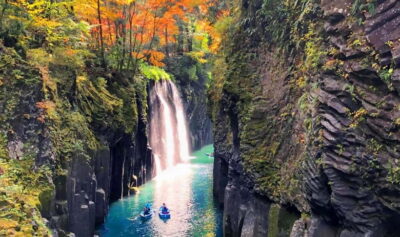
Mt. Aso & Takachiho Gorge Tour with Optional Boat Ride
Read our review →
Browse the lists this tour appears in