
Reviewed · 7-DAY EXPERIENCES
Treasures of Kyushu 7-Day Tour by Europamundo: Itinerary & Reviews
Kyushu packs a striking range of Japan into one week: the peace sites of Nagasaki, the steaming volcanic ground at Unzen, and Mount Aso’s enormous caldera. I love the contrast between those powerful places and the quiet rituals of shrines and gardens. I also like that the route includes a ferry crossing and visits to hot spring towns, not just a string of city stops.
The trade-off is the pace. You cover a lot of ground, with several long coach days and some free time that is brief or built around the group schedule. Mount Aso’s crater access can also close for safety, so the day’s headline view is not guaranteed.
In This Review
- Kyushu in seven useful details
- Why this route makes a good first look at Kyushu
- Days 1 and 2: Arrive in Fukuoka, then meet the city
- Day 3: Dazaifu and Nagasaki’s layered past
- Day 4: Unzen’s steam vents, then castle walls in Kumamoto
- Day 5: Aso, Yufuin and Beppu’s geothermal sights
- Day 6: Usa Jingu and the return to Fukuoka
- Day 7: Breakfast, then the tour ends
- What the price covers, and what it does not
- Group size, guiding and pace
- Should you book Treasures of Kyushu?
- FAQ
- Where does the tour start and end?
- How long is the tour?
- Are flights included?
- Is an airport or arrival transfer included?
- What meals are included?
- Is the tour guided in English?
- How large can the group be?
- Is the Mount Aso crater visit guaranteed?
- Is the Aso Volcano Museum included?
- What kind of hotels should I expect?
Kyushu in seven useful details
- Nagasaki’s Atomic Bomb Museum and Peace Park bring essential context to the trip, with time also set aside for Dejima and Oura Church.
- Unzen Jigoku is a sensory stop: expect steaming vents, boiling mud and a strong sulfur smell.
- Mount Aso’s caldera is about 25 kilometers across, with a shuttle ride toward the active Nakadake crater when conditions allow.
- Beppu’s Hells are geothermal sights, not bathing stops: admission includes Umi Jigoku and Kamado Jigoku.
- Breakfast is included each morning, along with hotels, an arrival transfer and many named admissions.
- The group can range from 2 to 73 people, so the feel of the trip may vary considerably by departure.
Why this route makes a good first look at Kyushu
Kyushu is Japan’s southernmost main island, and this route gives you a quick survey of its cities, religious sites, volcanic terrain and hot spring culture. It begins and ends in Fukuoka, making the tour’s shape easy to understand, while a ferry from Shimabara to Kumamoto breaks up the overland travel.
I like that the stops are not all built around the same kind of sight. You move from a major Shinto shrine to a Christian church, from a solemn museum to a castle, and from landscaped gardens to active geothermal areas. That variety helps explain Kyushu’s character in a short time.
This is a guided group tour, not an independent rail trip. Your guide handles the route and visits, and coach transport links places that would take more planning to combine on your own. The benefit is a ready-made itinerary across several parts of the island. The cost is less control over how long you linger at any one place.
A few more options to weigh up in Fukuoka
- Kyushu: Mount Aso, Kusasenri & Takachiho Gorge Day Tour (Optional Takachiho Boat Ride Experience)
★ 4.9 · 4,957 reviews - Kyushu One-Day Tour: Yufuin no Mori Train & Yufuin Town & Nyoirin-ji Temple & Dazaifu & Hell Hot Springs (Departing from Fukuoka)
★ 4.9 · 4,474 reviews - teamLab Forest Fukuoka Ticket
★ 4.7 · 1,925 reviews
Days 1 and 2: Arrive in Fukuoka, then meet the city
Day 1 is an arrival day. A transfer takes you to the hotel, and the rest of the afternoon is free to settle in. The tour information is provided later that day, with the proper group sightseeing beginning the next morning. Flights are not included, so arrange your arrival separately and allow enough time to reach the hotel.
Fukuoka is Kyushu’s largest city, but the first guided day is a gentle introduction. You get free time after breakfast, then meet the guide late in the morning for Canal City Hakata. This large shopping complex is organized around an artificial canal, with fountain shows every 30 minutes. It is a practical place to walk around and find lunch, though it is a modern commercial stop rather than a glimpse of old Japan.
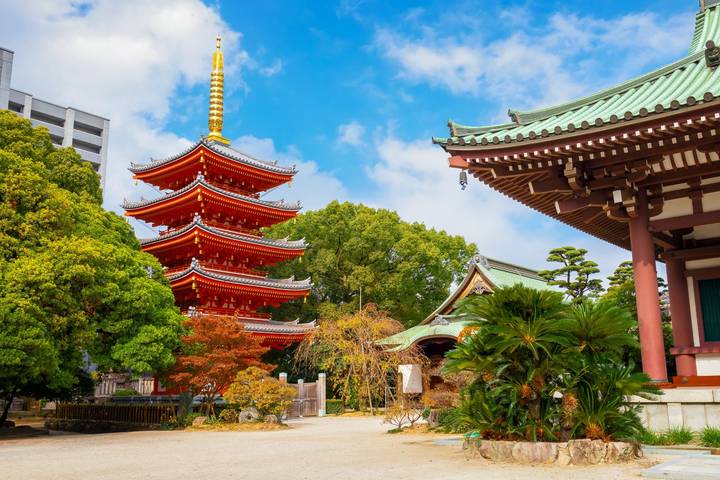
Tocho-ji Temple gives the day a more traditional counterpoint. Founded in 806, it is known for its five-story pagoda, large Buddha and image of Senju Kannon, the thousand-armed deity. You have free time afterward, which is useful if you want to explore more of Fukuoka at your own pace.
Day 3: Dazaifu and Nagasaki’s layered past
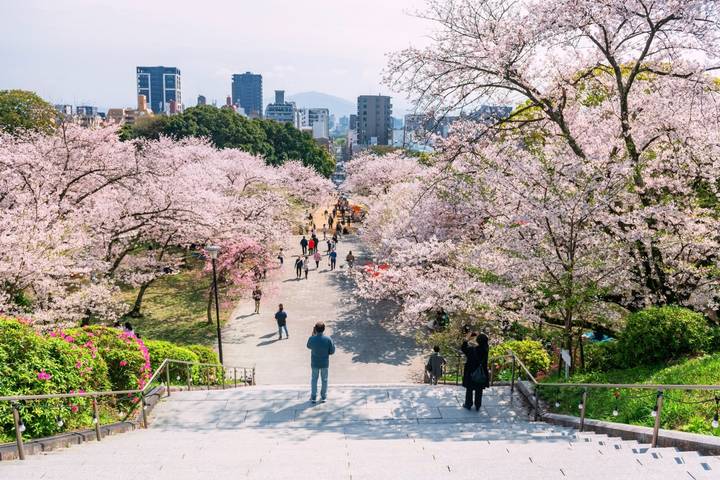
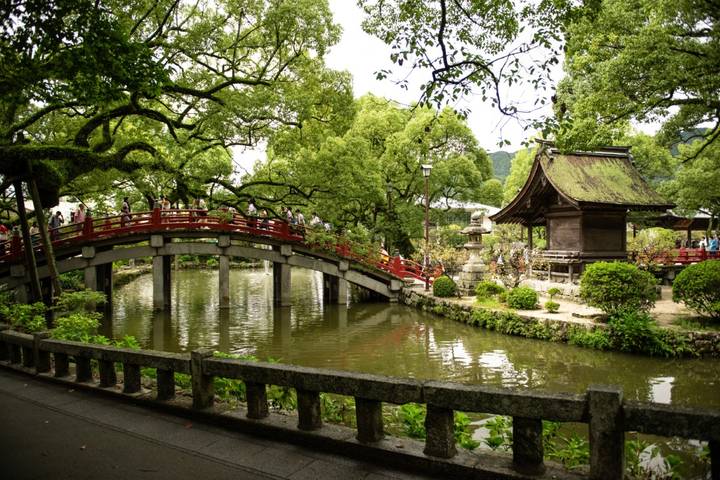
The day begins at Dazaifu Tenmangu, a major Shinto shrine dedicated to Sugawara no Michizane, associated with learning and scholarship. Gardens, ponds and more than 6,000 plum trees make the grounds a draw in their own right. The trees bloom in late winter, so the timing of your trip affects what you see. Even outside bloom season, the shrine offers a calm start before the longer drive to Nagasaki.
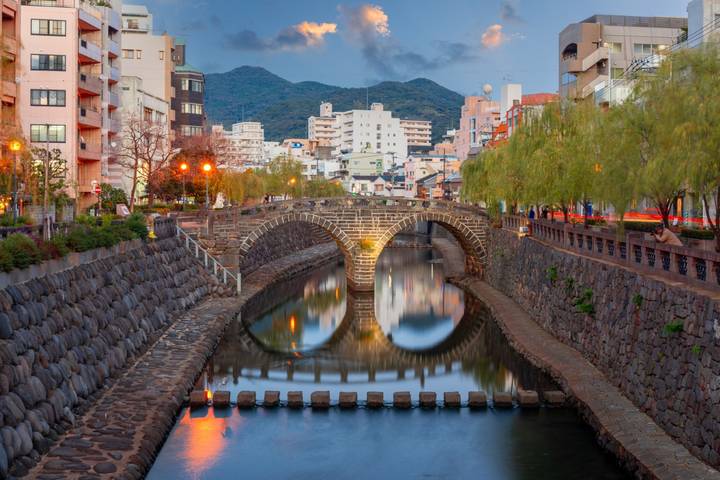
Nagasaki combines cultural history with the sobering record of the atomic bombing. Oura Church, dedicated to the 26 Martyrs of Nagasaki, is described as Japan’s oldest Christian church and is part of a UNESCO World Heritage listing. Its Gothic form and local elements reflect the city’s distinctive Christian history.
Lunch is free in Chukagai, Nagasaki’s Chinatown. That gives you a chance to choose a restaurant or food stall rather than eat as a group, but lunch is not included. In the afternoon, the Atomic Bomb Museum and Peace Park offer a serious, necessary visit. The museum admission is included, as is Dejima, the reconstructed district where Dutch merchants lived during a period when it served as Japan’s only point of contact with the outside world.
This is a full day of distinct visits, and the subject matter is emotionally demanding. I would treat the museum and Peace Park as more than quick photo stops. The schedule gives you an introduction, but not unlimited time for reflection.
Day 4: Unzen’s steam vents, then castle walls in Kumamoto
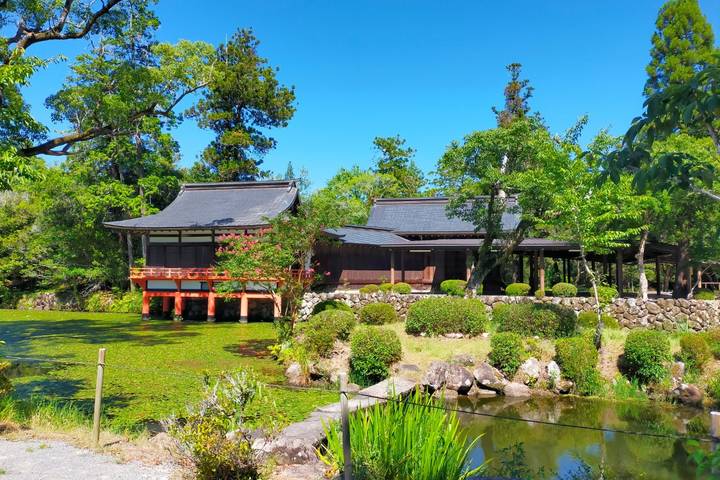
The route from Nagasaki crosses the Shimabara Peninsula, a region shaped by volcanic activity. At Unzen Jigoku, you walk among steam vents and bubbling pools of hot mud. The sulfur smell is strong, so this is not a polished garden stroll. It is a direct encounter with the forces that shaped the area, and the site also carries a difficult history of Christian persecution in the 17th century.
From Shimabara, you board a ferry for a crossing of about 45 minutes to Kumamoto. This is a welcome change from the coach and a useful link across the water. Afterward, there is free time for lunch and a walk in the shopping area around the castle.
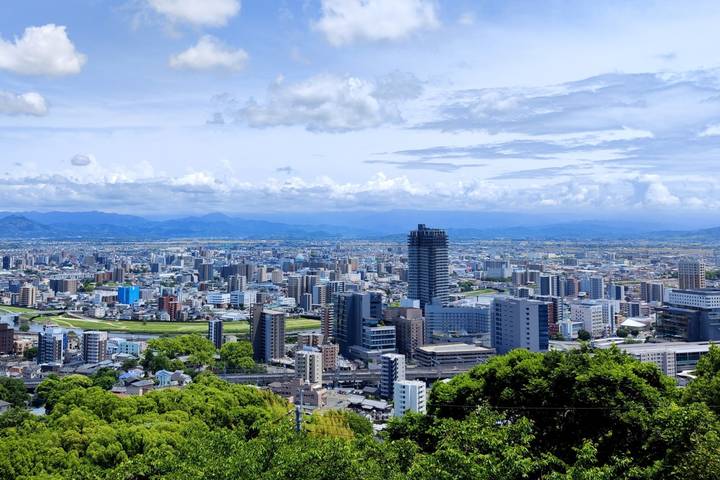
Kumamoto Castle is one of Japan’s three great castles, known for black towers and massive stone walls. Some sections were still being restored after damage from the 2016 earthquake, so you may see repair work alongside the historic structure. That ongoing restoration is part of the visit’s context, not a reason to skip it.
Suizenji Jojuen offers a quieter finish. The landscaped garden uses miniature scenes of mountains and lakes, giving you a compact, designed version of Japan’s natural scenery. You have free time in Kumamoto afterward, though the day already includes several transfers and visits.
A completely different kind of day out:
- Shiraito Falls & Forest Cafe & Handmade Flower Salt Pudding & Grilled Seafood & Totoro Forest & Sakurai Futamigaura & Angel’s Wings & Coconut Tree Swing Day Tour (Departing from Hakata Station, with Mandarin, English, and Cantonese speaking guide)
★ 4.9 · 1,840 reviews - Fukuoka Tower Admission Ticket
★ 4.8 · 1,804 reviews - Uminonakamichi Marine World Admission Ticket in Fukuoka
★ 4.8 · 1,298 reviews - Mt. Aso & Takachiho Gorge Tour with Optional Boat Ride
★ 4.7 · 222 reviews
Day 5: Aso, Yufuin and Beppu’s geothermal sights
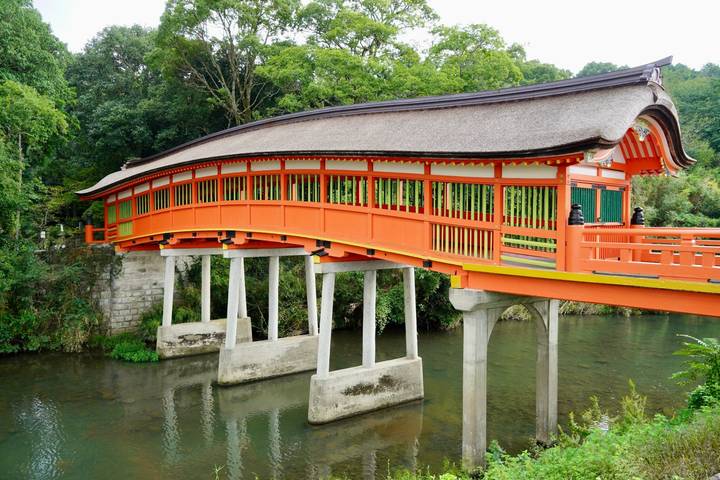
Mount Aso is the tour’s biggest natural spectacle. Its caldera measures about 25 kilometers across, and several volcanic peaks sit within it. A shuttle takes you from the base toward the Nakadake crater, where you may see a steaming sulfur lake. Access depends on volcanic activity and safety conditions, so the crater visit can be restricted. Keep your expectations flexible; this is an active volcano, not a fixed museum display.
The Aso Volcano Museum is optional, with admission not included. The area also has walking trails, restaurants and shops, though the time available depends on the day’s schedule. If the crater is closed, the museum or a walk nearby may provide a worthwhile alternative, but do not assume a specific replacement plan.
Yufuin is a smaller stop, set in a valley among rice fields. The tour allows time for coffee and a walk, rather than a long stay. It offers a softer pause between Aso and Beppu, but if you want an extended visit to this onsen town, this itinerary may feel too brief.
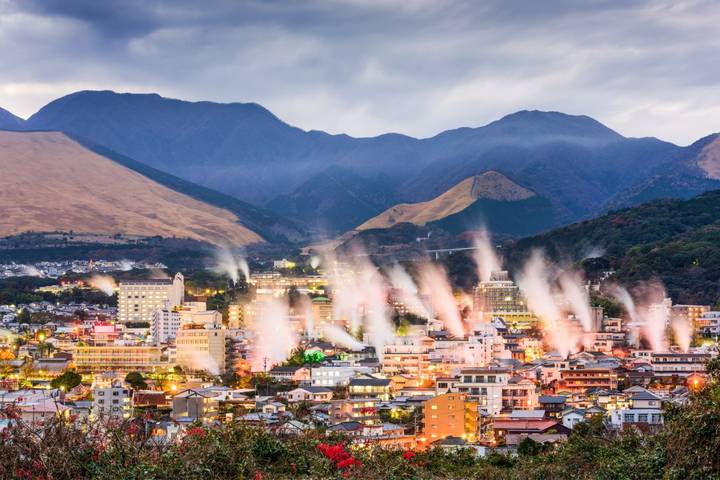
Beppu is known for more than 3,000 hot springs. The included visits are Umi Jigoku, with its striking blue water and gardens, and Kamado Jigoku, with pools in different colors and temperatures and decorative demon figures. These Hells are geothermal attractions to look at, not a promise of a hot spring bathing session. The evening is free after transfer to the hotel, giving you time to rest.
Day 6: Usa Jingu and the return to Fukuoka
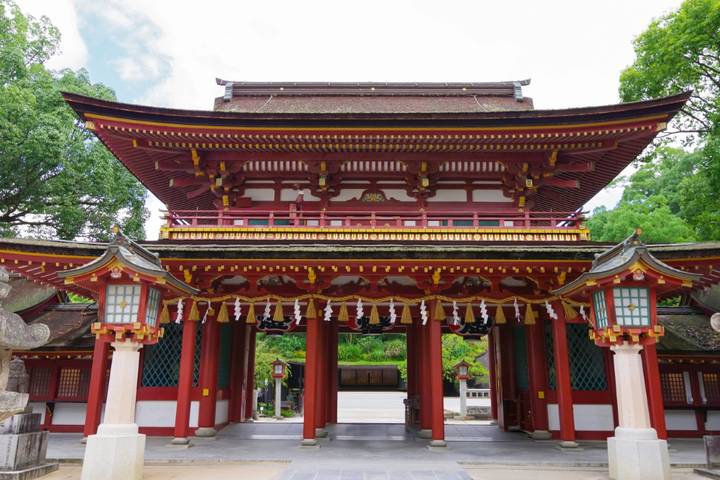
Usa Jingu is a major Hachiman shrine and the head sanctuary for more than 40,000 Hachiman shrines across Japan. Founded in the 8th century, it has traditional buildings, broad gardens and a red bridge. The visit gives you a final chance to see a religious site in a quieter natural setting before returning to Fukuoka.
You are due back around lunchtime. That timing leaves the afternoon open, though the tour does not specify planned activities after arrival. Use it to revisit a favorite Fukuoka area or simply enjoy a free evening before departure.
Day 7: Breakfast, then the tour ends
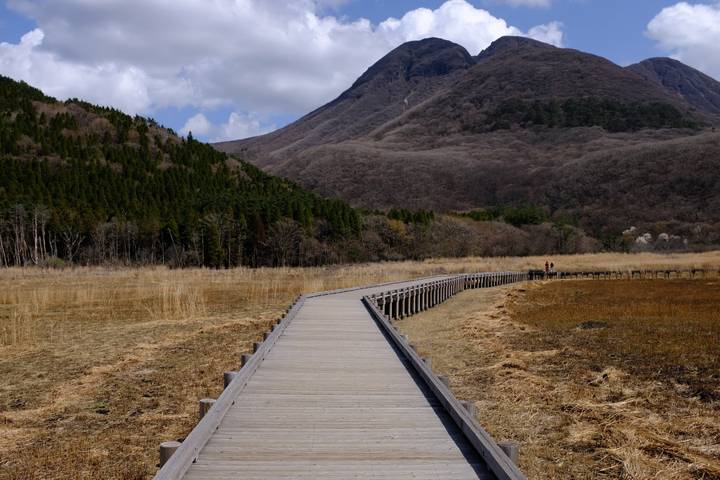
The final morning is simple: breakfast at the hotel, then departure. There is no sightseeing scheduled, so plan any onward travel with the hotel checkout and airport transfer details in mind. Only the arrival transfer is specified as included, so do not assume a departure transfer is part of the package.
What the price covers, and what it does not
The starting price is $1,571, based on the cheapest room. For seven days, that works out to roughly $224 per day before airfare and other personal costs. The value depends on what you would otherwise spend arranging transport and admission across this many destinations. Hotels, daily buffet breakfasts, an arrival transfer, guided touring and a number of admissions are included.
Named included entries cover Tocho-ji, Oura Church, the Nagasaki Atomic Bomb Museum, Dejima, Kumamoto Castle, Suizenji Jojuen, the Aso Volcano visit, and Umi Jigoku and Kamado Jigoku. The ferry crossing is part of the route. The Aso Volcano Museum is optional and costs extra, and lunches are not included.
The hotels are selected for quality, price and location, but they are not luxury properties. Most are outside city centers, with public transportation nearby. Rooms have private bathrooms and TVs; room dimensions and bed sizes can vary between hotels. If a central hotel or a spacious room is important to you, check the specific hotel details for your departure before booking.
The balance is due 50 days before departure, and the booking terms list a $125 deposit with interest-free payments every two weeks. Flights before and after the tour are separate. The operator may also change visits or their order because of weather, traffic, safety, strikes or other difficult conditions, so treat the day-by-day sequence as a plan rather than a guarantee.
Group size, guiding and pace
The tour is fully guided in English and described as low intensity, with all ages welcome. Low intensity does not mean sitting still: you will walk around temples, gardens, castle grounds and geothermal sites. The schedule includes several different stops in one day, so comfortable walking footwear is a sensible choice.
Group size ranges from 2 to 73. That is a wide spread: a small departure can feel quite different from a large coach group, especially when assembling at busy sites. The guide may also change during the trip. English service can sometimes be bilingual, usually English and Spanish, with either two tour leaders or one guide explaining in both languages, depending on group numbers.
Emma and José are two names associated with warm, well-organized guiding on this route. Guide assignments can change, so think of them as examples rather than a promise about your departure. The practical point is that good guiding matters here: the trip moves through religious, historical and volcanic sites where context helps make a short visit count.
Should you book Treasures of Kyushu?
Book this tour if you want a guided sampler of Kyushu and value having transport, hotels, breakfasts and many admissions organized for you. It is particularly well suited to a first visit, a family group comfortable with a full sightseeing schedule, or anyone keen to combine Nagasaki’s memorial sites with volcanoes, shrines and hot spring towns.
Look elsewhere if you prefer slow travel, long stays in each town, luxury hotels or full control over daily timing. The coach itinerary is efficient, but that efficiency means limited time in places such as Yufuin and Nagasaki. If Mount Aso is your main reason for booking, remember that crater access may close.
For a week-long introduction, the mix is compelling: serious history, striking geology and everyday city life, all linked across Kyushu. Go with flexible expectations, and you will get more from the route than a checklist of famous sights.
FAQ
Where does the tour start and end?
It starts in Fukuoka and returns there on Day 6. The tour ends after breakfast in Fukuoka on Day 7.
How long is the tour?
The tour lasts seven days.
Are flights included?
No. Flights before and after the tour are not included.
Is an airport or arrival transfer included?
An arrival transfer is included. A departure transfer is not specified as included.
What meals are included?
Hotel buffet breakfast is included each day. Lunches and other meals are not listed as included.
Is the tour guided in English?
Yes. It is guided in English. Depending on group numbers, the guide service may be bilingual, usually in English and Spanish.
How large can the group be?
The stated group size is from 2 to 73 people.
Is the Mount Aso crater visit guaranteed?
No. Access to Mount Nakadake can be restricted because of volcanic activity or safety conditions.
Is the Aso Volcano Museum included?
No. It is optional, and admission is not included.
What kind of hotels should I expect?
The hotels are not luxury properties. Most are outside city centers but have public transportation nearby, and rooms have private bathrooms and TVs.
Just added in Fukuoka
- Kyushsu Half Island Express Tour (8 Days) by MW Tours★ 5.0 · 1 review
- teamLab Forest Fukuoka Ticket★ 4.7 · 1,925 reviews
- Fukuoka Nakasu River Cruise Ticket★ 4.6 · 164 reviews
- Shiraito Falls & Forest Cafe & Handmade Flower Salt Pudding & Grilled Seafood & Totoro Forest & Sakurai Futamigaura & Angel’s Wings & Coconut Tree Swing Day Tour (Departing from Hakata Station, with Mandarin, English, and Cantonese speaking guide)★ 4.9 · 1,840 reviews
- Uminonakamichi Marine World Admission Ticket in Fukuoka★ 4.8 · 1,298 reviews
- Fukuoka Tower Admission Ticket★ 4.8 · 1,804 reviews
- Kyushu One-Day Tour: Yufuin no Mori Train & Yufuin Town & Nyoirin-ji Temple & Dazaifu & Hell Hot Springs (Departing from Fukuoka)★ 4.9 · 4,474 reviews
- Kyushu: Mount Aso, Kusasenri & Takachiho Gorge Day Tour (Optional Takachiho Boat Ride Experience)★ 4.9 · 4,957 reviews
7-Day Experiences, compared.
Essential Japan GO by Europamundo – 7-Day Tokyo to Osaka Tour
Read our review →
Tokyo, Kyoto and Hiroshima end Tokyo by Europamundo – 7-Day Tour
Read our review →
Tokyo, Kyoto and Hiroshima end Tokyo GO 7-Day Tour by Europamundo
Read our review →
Tokyo, Kyoto and Hiroshima 7-Day Tour by Europamundo
Read our review →
Tokyo, Kyoto and Hiroshima GO by Europamundo – 7-Day Tour
Read our review →
7-Day Best Japan Mini Group Tour with 3/4 Stars Hotels by Agate Travel
Read our review →
Browse the lists this tour appears in