
Reviewed · 7-DAY EXPERIENCES
7 Days Highlights of Japan by Tomato Travel – Reviews & Prices
Tokyo’s waterfront, Mount Fuji, Osaka’s neon-lit Dotonbori and Kyoto’s temple sights all fit into one week on this guided route. You also get a ninja museum visit and a ride on the Shinkansen, so the trip mixes modern Japan with its older landmarks.
I like the variety of the route, which moves from Tokyo’s city sights to Mount Fuji and the historic centers of Kyoto and Osaka. I also like that coach transport, a guide, six hotel nights, daily breakfast and listed admission fees are included, making much of the planning straightforward.
The trade-off is a fast-moving schedule, with several long coach journeys and little time for independent sightseeing in Kyoto. Guide quality and hotel standards have varied, so it’s worth booking for the convenience of a structured overview rather than expecting a bespoke or deeply flexible trip.
In This Review
- At a glance: the route and what is included
- A week that connects Japan’s big contrasts
- Day 1: arrive near Narita and settle in
- Day 2: Tokyo from Odaiba to Asakusa
- Day 3: Mount Fuji views, then on to Hamamatsu
- Day 4: ninja history, Osaka Castle and Dotonbori
- Day 5: Kyoto’s red gates, bamboo and Golden Pavilion
- Day 6: a free day to make Osaka your own
- Day 7: leave from Osaka
- Guides, group size and pace
- Is $1,466 good value?
- Who should book this tour?
- FAQ
- Where does the tour start and finish?
- Which airports are suggested?
- Are airport transfers included?
- What accommodation is included?
- Are meals included?
- Is the Shinkansen ride part of the tour?
- How large is the group, and what language is the tour guided in?
- Is the tour wheelchair accessible?
At a glance: the route and what is included
- A one-way Japan route: Start in Tokyo and finish in Osaka, with stops in the Mount Fuji area, Hamamatsu, Kyoto and Nara.
- A guided group format: The advertised group size is 20 to 40, with an English-speaking guide throughout.
- Six nights in three-star hotels: Properties may vary, but the listed examples include Hotel Mystays Premier Narita, Loisir Hotel Shinagawa Seaside and Hotel it Osaka Shinmachi.
- Transport is mostly arranged: Dedicated air-conditioned coach travel covers the road legs, and the Kyoto excursion includes a Shinkansen ride.
- Meals are simple: Breakfast is included each day after the first night. Lunches and dinners are your own arrangements.
- A packed sightseeing day in Kyoto: Fushimi Inari, Arashiyama and Kinkakuji are all on the schedule, leaving limited time to explore beyond them.
A week that connects Japan’s big contrasts
This seven-day tour is designed to cover a lot of ground with little day-to-day planning from you. Tokyo’s waterfront and temples give way to views of Mount Fuji, a ninja museum, Osaka Castle and Kyoto’s best-known sights.
That breadth is the main appeal. You get a useful first look at several destinations without having to book each hotel and intercity transfer yourself. The cost of that convenience is time: the route has multiple coach journeys, and some stops are visits rather than leisurely stays.
The advertised price starts at $1,466, based on the cheapest room option. For that, you get six nights in three-star hotels, breakfast, a guide, coach transport, the Shinkansen excursion and entrance fees for the monuments listed in the itinerary. Flights, insurance, most meals, personal spending and optional activities are not included, so budget beyond the headline price.
The ratings give a mixed but generally encouraging picture. Tour scores are 4.2 out of 5 overall, with stronger marks for transport and the guide, both 4.5, and itinerary, 4.3. Accommodation is rated 4.2, while food is lower at 3.8. Those numbers fit a trip whose strengths are logistics and sightseeing, not included dining or a uniform hotel experience.
A few more options to weigh up in Tokyo
- Tokyo Disney Resort – Tokyo Disneyland & Tokyo DisneySea Park Tickets
★ 4.8 · 99,488 reviews - SHIBUYA SKY Ticket
★ 4.7 · 46,509 reviews - JR Whole Japan Rail Pass
★ 4.8 · 29,150 reviews
Day 1: arrive near Narita and settle in
The first night is listed at Hotel Mystays Premier Narita or a similar three-star property. It is about 15 minutes by car from Narita Airport, so the starting point is convenient if you fly into NRT, but it is not central Tokyo.
You make your own way to the hotel and have the rest of the day free. There is no scheduled sightseeing or included meal on arrival day, which leaves room to rest after a long flight. Confirm the current airport-transfer arrangements before booking: transfers were included only on tours through 2024 and are listed as excluded from 2025 onward.
Day 2: Tokyo from Odaiba to Asakusa
The first full day gives you a sampler of Tokyo’s different faces. Odaiba is a waterfront district where you can see Rainbow Bridge and a replica of the Statue of Liberty. It is a striking, modern opening, though the replica is more a photo stop than a deep look at Japanese culture.
At Tsukiji Fish Outer Market, the schedule gives you a chance to browse stalls and choose your own lunch. Sushi and other seafood are available around the market, but lunch is not included, so bring spending money and make time for your own meal.
The Tokyo Metropolitan Government Building observation deck, about 200 meters high, offers a broad view across the city. Then the tour heads to Asakusa’s Sensoji Temple, through the Kaminarimon gate and along Nakamise-dori, a traditional shopping street lined with snacks and souvenirs. The contrast between the city view and the temple district makes this a strong day for first-time visitors.
The hotel changes to Loisir Hotel Shinagawa Seaside or a similar three-star property. That means you should expect to pack and move between hotels rather than use one Tokyo base for the whole stay.
Day 3: Mount Fuji views, then on to Hamamatsu
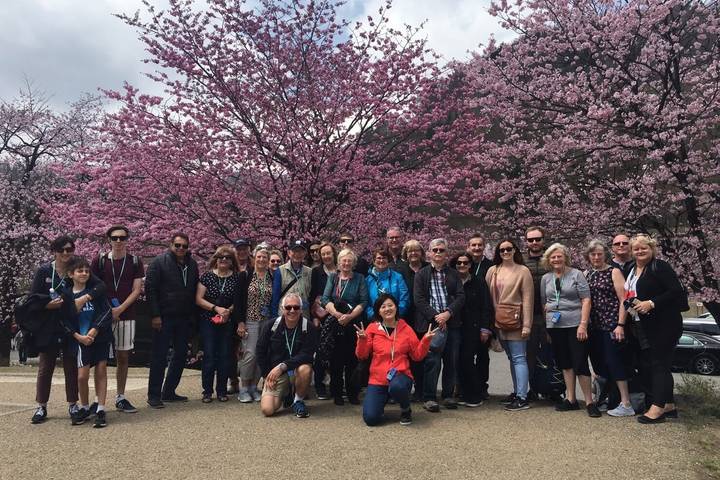
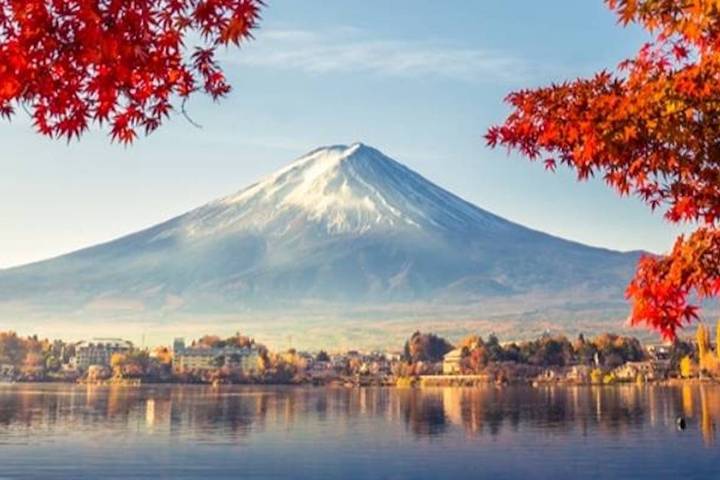
The coach heads toward the Mount Fuji area, stopping at Gotemba Peace Park for views of the mountain. Fuji is famously weather-dependent, so treat a clear view as a bonus, not a promise. The park stop gives you a chance to take in the mountain from a distance, rather than hike or spend a full day in the surrounding region.
The Mt. Fuji World Heritage Centre adds cultural and geological context. Designed by architect Shigeru Ban, the building has a cone-like form and a wooden lattice facade. Inside, exhibits cover the mountain’s history, geology and place in Japanese art and literature. This is a useful stop if you want more than a photograph, although one past participant would have preferred a cherry blossom stop to the museum.
Afterward, the coach continues to Hamamatsu for an evening at leisure. The listed hotel is Hotel Associa Toyohashi or similar, which is in Toyohashi rather than Hamamatsu. Check the exact property and location for your departure so you know where you will be sleeping and how much independent time you will have.
A completely different kind of day out:
- Mt Fuji and Hakone 1-Day Bus Tour Return by Bullet Train
★ 5.0 · 26,383 reviews - TOKYO SKYTREE® Ticket
★ 4.7 · 25,136 reviews - teamLab Borderless Tickets: MORI Building DIGITAL ART MUSEUM
★ 4.7 · 24,126 reviews - teamLab Planets TOKYO Ticket
★ 4.7 · 21,663 reviews
Day 4: ninja history, Osaka Castle and Dotonbori
The day begins at the Iga-ryu Ninja Museum in Iga City, where exhibits introduce the history and culture of ninja. A past family group particularly enjoyed the ninja show, but the tour details do not specify that a performance is included on every departure. Think of it as a chance to learn about the subject, with any show dependent on the day’s arrangements.
Next comes Osaka Castle, built by Toyotomi Hideyoshi in 1583 as part of his effort to unify Japan. The castle is one of the country’s best-known landmarks and gives the day a strong historical anchor. The itinerary includes the listed monument entrance fees, but the precise amount of time at each stop is not provided.
In the evening, Dotonbori supplies a sharp change of mood. Its neon signs and oversized Glico running-man and Kani Doraku crab billboards make this a lively place to walk around and pick up dinner. The meal is at your own expense, giving you a chance to choose what suits your appetite and budget.
The group stays at Hotel it Osaka Shinmachi or similar for the next three nights. A few past participants praised the arrangements and hotels, while one older account described a poor Hamamatsu hotel experience. Since properties can vary, confirm the current hotel names rather than assuming every departure uses precisely the same rooms.
Day 5: Kyoto’s red gates, bamboo and Golden Pavilion
The Kyoto day begins with a Shinkansen ride from Osaka. The train can reach speeds of up to 320 kilometers per hour, and even a short trip offers a memorable taste of Japan’s celebrated rail system. The itinerary describes travel from Osaka to Kyoto by train, then a return to Osaka by coach.
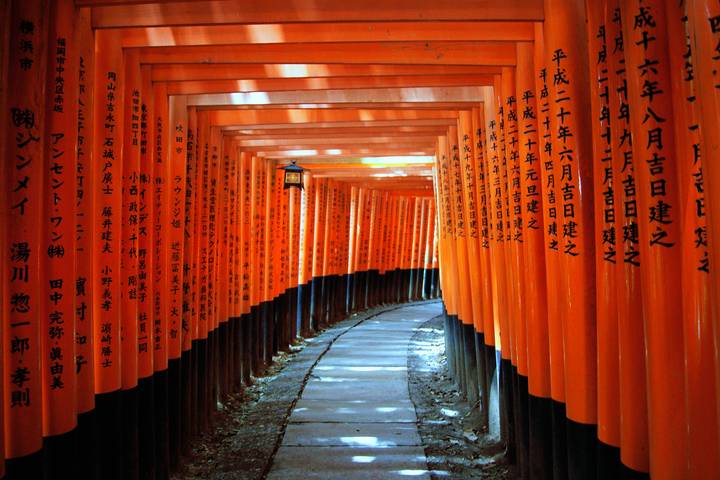
At Fushimi Inari Taisha, the thousands of red torii gates create one of Japan’s most recognizable shrine settings. The scale is impressive, but this is a popular site, and the schedule does not promise time to walk the full mountain route. Follow your guide’s meeting instructions closely so you can enjoy the visit without worrying about rejoining the group.
Arashiyama’s bamboo grove offers a very different scene: a walk among tall bamboo rather than shrine architecture. The stop is appealing, but it is brief within a day that also includes travel and another major temple.
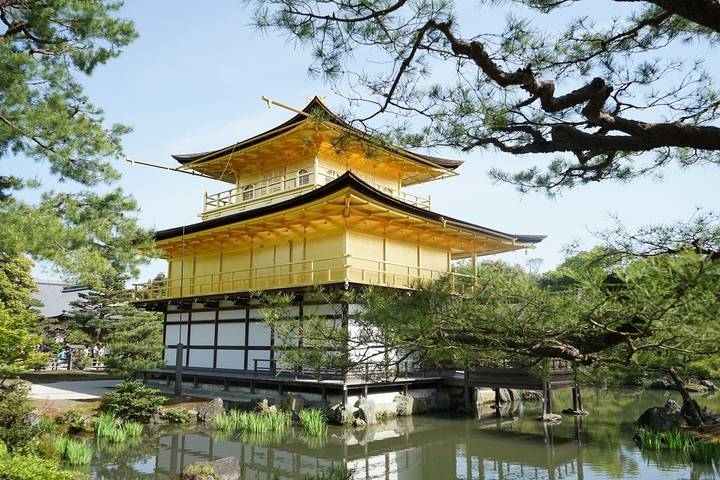
Kinkakuji, the Golden Pavilion, finishes the sightseeing. Its gold-colored exterior beside the pond makes it one of Kyoto’s most famous sights. The itinerary covers three major locations in one day, which is efficient but leaves little room for lesser-known temples or an unhurried Kyoto meal. If Kyoto is your main reason for visiting Japan, this tour may feel too compressed.
Day 6: a free day to make Osaka your own
A full day in Osaka gives you a welcome pause after the packed Kyoto excursion. You can revisit Dotonbori, choose a museum, explore another neighborhood or settle into a cafe. These are suggestions rather than included activities, and any transport, admissions and meals you arrange yourself are extra.
The day also gives you flexibility if you prefer a slower pace. On the other hand, the tour does not provide a planned group activity, so you will need to make your own plans. If you like free time, that is a plus. If you prefer every hour arranged, it may feel like an abrupt break in a guided trip.
Day 7: leave from Osaka
The tour ends in Osaka, and you make your own way to the airport at a time that suits your flight. Kansai International Airport (KIX) is the suggested departure airport. Flights are not included, so book your return travel separately and allow enough time for the trip to the airport, check-in and security.
The route’s one-way structure is practical if you can fly into Narita and out of Kansai. It avoids returning to Tokyo just to catch a flight, but you should check flight prices and schedules before choosing dates.
Guides, group size and pace
The tour is fully guided in English, with an advertised group size of 20 to 40 and a low-intensity physical rating. That rating does not mean you will avoid walking: temple grounds, shopping streets and sightseeing stops all involve time on your feet. The itinerary is not wheelchair accessible.
Guide experiences have been notably different from departure to departure. Several past participants praised guides for their professionalism, cultural knowledge and care, naming people such as Makiko, Masa, Ali and Sam. Others wanted clearer English, more historical explanation or better communication to a large group. These are individual experiences, not a guarantee of who will lead your departure, so keep expectations realistic.
The strongest pattern is that a good guide can make this route much more rewarding by adding context at the sites and keeping a large group moving. If hearing detailed history is important to you, ask the operator what language support and guiding arrangements apply to your specific date.
Is $1,466 good value?
At the starting price, the package bundles hotels, daily breakfast, coach travel, a guide, the Shinkansen ride and listed monument admissions. That is a useful base for comparing costs, particularly if you value having transport and a route organized across several cities.
But the price does not cover flights, insurance, lunch, dinner or personal expenses. You also need to factor in your own airport transfers, since those are excluded from tours from 2025 onward. The cheapest-room price may not apply to every date or room arrangement, so check the total for your party before comparing it with independent travel.
The value is strongest if you want a quick, guided introduction to Japan and are comfortable following a set schedule. It is less compelling if you prefer boutique hotels, long stays in each city, extensive free time or a guarantee of one particular guide.
Who should book this tour?
I’d consider this tour if you have one week, want to see Japan’s headline sights and would rather not organize every intercity transfer yourself. Families may appreciate the variety, especially the ninja museum, while first-time visitors get a useful mix of urban Japan, temples, a mountain view and a fast train ride.
I’d hesitate if Kyoto is your priority, if you need wheelchair access, or if you want detailed independent time in each destination. Before paying, confirm the exact hotel names, airport-transfer arrangements, guide language support and the total price for your dates. If those details fit your needs, the tour offers a practical, wide-ranging introduction; if you want depth over coverage, plan a slower trip.
FAQ
Where does the tour start and finish?
It starts in Tokyo and ends in Osaka. The first night is usually at Hotel Mystays Premier Narita or a similar hotel near Narita Airport.
Which airports are suggested?
Narita Airport (NRT) is recommended for arrival, and Kansai International Airport (KIX) is suggested for departure from Osaka.
Are airport transfers included?
Return airport transfers were included on tours through 2024. For tours from 2025 onward, they are listed as not included, so confirm arrangements for your departure.
What accommodation is included?
The package includes six nights in standard three-star hotels. Listed examples include Hotel Mystays Premier Narita, Loisir Hotel Shinagawa Seaside, Hotel Associa Toyohashi and Hotel it Osaka Shinmachi, or similar properties.
Are meals included?
Breakfast is included daily after the first night. Lunches and dinners are not included.
Is the Shinkansen ride part of the tour?
Yes. The itinerary includes a Shinkansen ride from Osaka to Kyoto, followed by coach transport back to Osaka.
How large is the group, and what language is the tour guided in?
The advertised group size is 20 to 40 people, and the tour is guided in English.
Is the tour wheelchair accessible?
No. The tour is not wheelchair accessible.
Just added in Tokyo
- Wonders Of Japan 10-Day Tour by Travel Talk★ 4.5 · 14 reviews
- Wonders of Japan end Tokyo GO 15-Day Tour by Europamundo★ 4.2 · 10 reviews
- Wonders of Japan end Tokyo 15-Day Tour by Europamundo★ 4.2 · 10 reviews
- Wonders of Japan End Osaka by Europamundo – 12-Day Tour★ 4.2 · 58 reviews
- Wonders of Japan End Osaka (including Fukuyama) 12-Day Tour by Europamundo★ 4.2 · 58 reviews
- Wonders of Japan End Osaka GO by Europamundo – 12-Day Tour★ 4.2 · 58 reviews
- Walk Japan – Kumano Kodo Trail 12-Day Tour by Explore!★ 4.7 · 20 reviews
- Visions of Japan with Hiroshima & Osaka 15-Day Tour by Globus★ 5.0 · 75 reviews
7-Day Experiences, compared.


Essential Japan GO by Europamundo – 7-Day Tokyo to Osaka Tour
Read our review →
Tokyo, Kyoto and Hiroshima end Tokyo by Europamundo – 7-Day Tour
Read our review →
Tokyo, Kyoto and Hiroshima end Tokyo GO 7-Day Tour by Europamundo
Read our review →
Tokyo, Kyoto and Hiroshima 7-Day Tour by Europamundo
Read our review →
Tokyo, Kyoto and Hiroshima GO by Europamundo – 7-Day Tour
Read our review →
7-Day Best Japan Mini Group Tour with 3/4 Stars Hotels by Agate Travel
Read our review →
7-Day Japan Delight: Tokyo, Mt. Fuji, Kyoto by Intertrips
Read our review →Browse the lists this tour appears in