
Reviewed · TRAIN EXPERIENCES
Full Day Hiroshima and Miyajima Tour by Bullet Train from Osaka
Some days are worth the long haul. This 13-hour-10-minute trip links Osaka with two of western Japan’s most meaningful sights: Miyajima’s Itsukushima Shrine and Hiroshima’s Peace Memorial Park. I like the reserved Shinkansen ride, which removes a major transport headache, and I like the mix of beauty, culture, and serious history in one day. The main drawback is time. You cover a lot of ground, and Hiroshima can feel rushed.
The tour costs $397.73 per person, with transport and listed admission fees included, but lunch is not. I also like the care taken with transfers, from the Hotel Granvia Osaka meeting point to Shin-Osaka and back to Osaka Station. You need to be punctual, though. A train-based day runs on Japan’s clock, not on flexible sightseeing time.
In This Review
- Key points to know before booking
- Why this Osaka to Hiroshima day trip works
- Meeting at Hotel Granvia Osaka at 7:40 am
- Riding the Shinkansen to Hiroshima
- Miyajima and the Itsukushima Shrine area
- Choosing lunch on Miyajima
- Entering Hiroshima’s Peace Memorial Park
- Seeing the Atomic Bomb Dome
- What the guide adds, and where the group format shows
- Is $397.73 good value?
- Who should book this full-day tour?
- My verdict on Hiroshima and Miyajima from Osaka
- FAQ
- How long does the tour last?
- Where does the tour begin?
- Where does the tour end?
- Is the bullet train included?
- Is lunch included?
- Is admission to Itsukushima Shrine included?
- How much time is spent at the Hiroshima Peace Memorial Museum?
- How large can the tour group be?
- Can I cancel for a full refund?
Key points to know before booking
- Two major destinations in one long day: See Miyajima and Hiroshima without changing hotels or planning several train and ferry connections yourself.
- Reserved bullet train seating: The Shinkansen connects Hiroshima and Osaka quickly, with standard and Green Car seating available.
- Miyajima lunch is at your own cost: Allow time and money for oysters, Hiroshima-style okonomiyaki, or conger eel rice bowls.
- The Hiroshima portion is emotionally serious: The Peace Memorial Museum and Atomic Bomb Dome are not casual sightseeing stops.
- Timing is tight on Miyajima: You get about an hour for lunch and island time, so hiking, shopping, and the ropeway are not realistic priorities.
- Guide quality can shape the day: Guides such as Takeshi, Yuko, Mayumi, Akiko, Keiko, Sato, and Nob have been praised, but some visitors found English explanations too soft or brief.
Why this Osaka to Hiroshima day trip works
If you are based in Osaka and have only one spare day, this tour solves a real problem. Hiroshima is far enough away that independent planning involves several moving parts: the Shinkansen, local transport, the Miyajima ferry, island admission, and the return train. Here, those pieces are arranged for you.
The reward is variety. Miyajima offers a calm, scenic opening with shrine buildings, sea views, deer, food stalls, and traditional streets. Hiroshima then shifts the mood completely. The Peace Memorial Park, museum, and Atomic Bomb Dome ask for quiet attention rather than quick photos.
That contrast is one of the best features of the day. The island gives you room to breathe before Hiroshima’s painful story takes center stage. It also helps you understand that Hiroshima is not only a memorial site. It is a living city with a beautiful nearby island and a strong sense of place.
The tradeoff is pace. The tour lasts roughly 13 hours and 10 minutes, while several people experienced it as closer to 14 hours once all movements were counted. You leave at 7:40 am and return to Osaka Station around 9:00 pm. This is not a relaxed regional outing. It is a one-day survey of two destinations that each deserve more time.
A few more options to weigh up in Osaka
- Sagano Romantic Train & Arashiyama, Kiyomizudera, Fushimi Inari Taisha Day Tour
★ 4.5 · 171 reviews - Hiroshima & Miyajima 1 Day Bus Tour with Bullet Train Tickets
★ 4.5 · 105 reviews - From Osaka: Hiroshima and Miyajima Day Trip by Bullet Train
★ 4.6 · 83 reviews
Meeting at Hotel Granvia Osaka at 7:40 am
The meeting point is the elevator hall on the first floor of Hotel Granvia Osaka, at 3-chōme-1-1 Umeda. From there, staff guide you through public transport to Shin-Osaka Station.
Read the meeting instructions carefully. One person had difficulty finding the correct area because the hotel lounge was closed and the location description was not immediately clear. The practical lesson is simple: arrive early, confirm the first-floor elevator hall, and do not wait until the scheduled departure time to find the group.
The operator’s communication before departure has been praised, but this remains a strict start. If the group has to catch a scheduled train, a late arrival may not be easy to accommodate. You should also keep your ticket and tour information handy on your phone, since the experience uses a mobile ticket.
The first transport stage takes about 1 hour and 20 minutes. Staff escort you toward the Shinkansen platform, which is useful in a large, unfamiliar station. That escort is especially valuable if Osaka Station and Shin-Osaka are new to you.
Riding the Shinkansen to Hiroshima
The bullet train is more than a practical transfer. For many people, it is one of the memorable parts of the day. The train gives you a fast, comfortable ride between Osaka and Hiroshima, with reserved seating in either a standard car or the premium Green Car.
The exact seat type may depend on the booking, and seats may not always be designated in advance. Check your confirmation carefully rather than assuming you have a particular seat or carriage.
The return segment from Hiroshima Station to Shin-Osaka also takes about 1 hour and 20 minutes. The tour then finishes at Osaka Station, not at your hotel. You will need to make your own way onward from there, so factor that into your evening plans.
The train makes this trip possible in one day, but it does not make the day short. You still have transfers, ferry travel, guided walks, lunch, and museum time packed between the two rail journeys.
Miyajima and the Itsukushima Shrine area
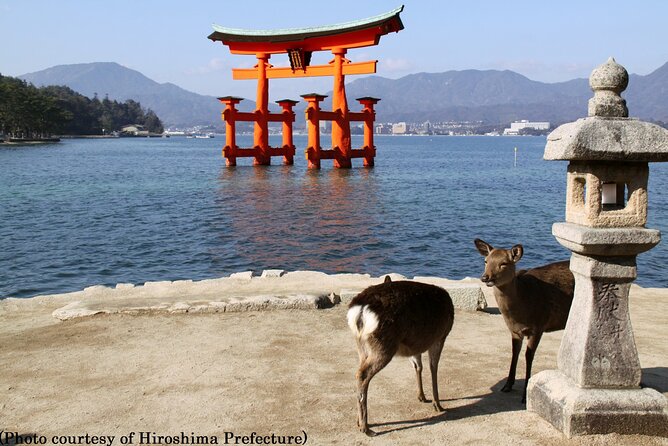
From Hiroshima, the group continues to Miyajimaguchi by vehicle or train, then boards a boat for Miyajima. The ferry crossing gives the island portion a pleasant change of pace after the railway journey.
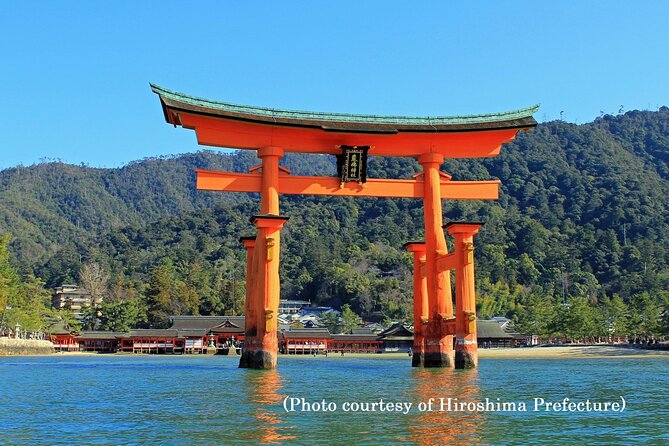
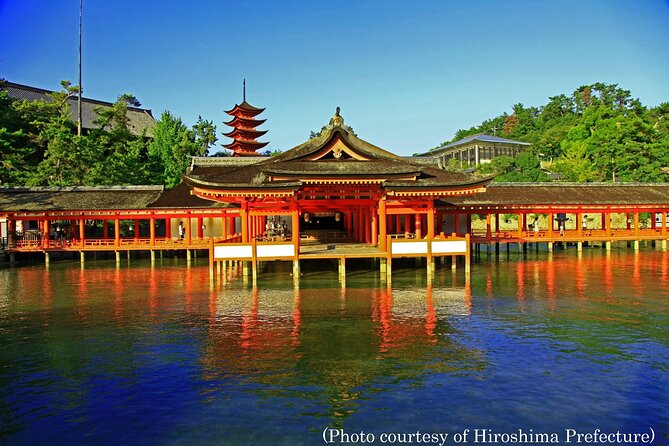
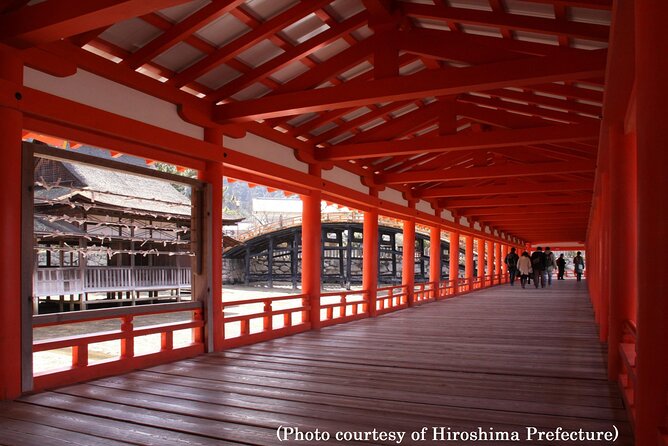
Miyajima is often called a sacred island, and its main draw is Itsukushima Shrine. The shrine was established in the sixth century and is noted for its Shinden-zukuri style, an architectural form associated with aristocratic residences of the Heian period.
The shrine’s setting is the real magic. Buildings and water meet in a way that makes the visit feel different from a normal temple or shrine stop. The great torii gate is a major focal point, and the tide can change the view. One memorable account noted seeing the gate at both high and low tide, though your timing will depend on the day’s schedule and natural conditions.
The listed shrine stop lasts about one hour and includes admission. That is enough for an introduction, but not enough for every corner of Miyajima. You may also find deer, shopping streets, food stalls, and opportunities to walk farther into the island, but the tour does not give you a free afternoon to pursue them all.
This is where the schedule can frustrate you. Miyajima has options for hiking, riding the gondola, shopping, and lingering near the shrine. With only about an hour set aside for lunch and island time, you will need to choose. If the island is your main reason for visiting, a separate overnight stay would give you a much better experience.
A completely different kind of day out:
- Universal Studios Japan Studio Pass
★ 4.8 · 89,883 reviews - Universal Studios Japan Express Pass
★ 4.7 · 53,138 reviews - Osaka Amazing Pass
★ 4.7 · 21,697 reviews - Osaka Aquarium Kaiyukan Ticket
★ 4.8 · 14,894 reviews
Choosing lunch on Miyajima
Lunch is not included, which keeps the choice flexible but adds to the cost. You can select your own meal in the local dining area, with oysters, Hiroshima-style okonomiyaki, and conger eel rice bowls among the regional specialties available.
The one-hour lunch period requires some discipline. You may not have time to study every menu, wait through a long meal, and browse the shops before meeting the group again. If you want to eat comfortably, decide quickly and keep an eye on the meeting time.
The food allowance is worth planning into your budget. At $397.73, the tour is already a substantial purchase, and the final cost rises once you add lunch and any personal shopping. Still, the fee covers the expensive and complicated parts: Shinkansen tickets, ferry and other transport costs, Miyajima visitor tax, and listed admissions.
Entering Hiroshima’s Peace Memorial Park
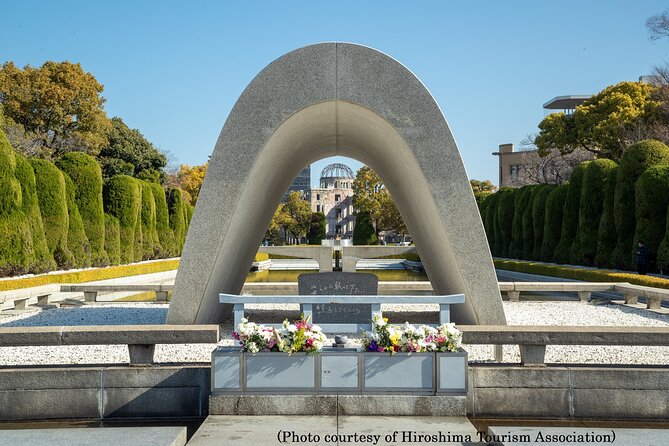
After returning by boat, the tour turns toward Hiroshima’s central memorial area. The Peace Memorial Park was created in 1949 after the Pacific War and now serves as a place for remembrance and peace.
This part of the tour is emotionally heavy. The museum presents the human effects of the atomic bombing, including the physical destruction and the city’s recovery. It is not a light stop to squeeze between attractions, and I recommend leaving room afterward for quiet reflection.
The museum visit lasts about one hour and admission is included. That is useful, but it is also the point where the schedule feels most limited. The museum contains more material than you can absorb in a brief visit, and you may want extra time for displays that affect you personally.
Several guides have made this portion especially powerful by connecting the site to family experience. Mayumi shared that she was the daughter of an atomic bomb survivor. Another guide, Nob, explained his mother’s survival story. Keiko and Akiko were also praised for adding personal details and answering questions with care.
Those personal accounts can give the museum visit a human connection. At the same time, guide quality is not guaranteed to feel identical on every departure. A few people found the commentary too general, or the English too quiet to follow in a large group. If your group approaches the maximum of 40 people, staying close to the guide matters.
Seeing the Atomic Bomb Dome
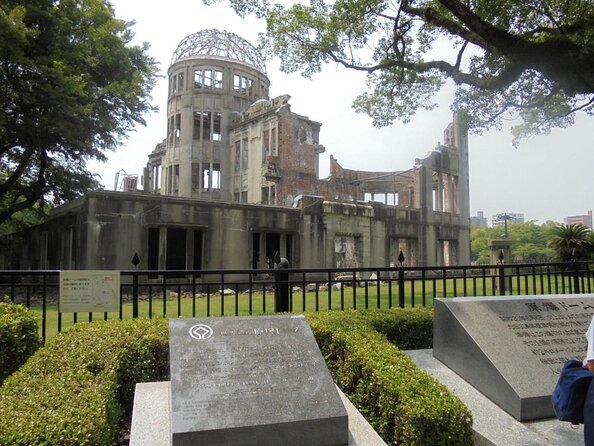
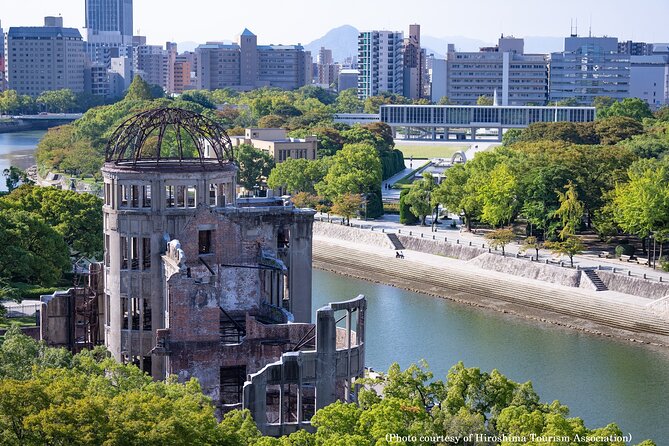
The Atomic Bomb Dome is scheduled for about 40 minutes, with no separate admission charge. Its skeletal remains survived the 1945 atomic bombing and have been preserved as a peace symbol.
The building is powerful because it is so visibly damaged, yet still recognizable. You do not need a long explanation to understand its force, but a good guide can place it in context and explain why it remains preserved.
The Dome is reached by bus as part of the Hiroshima sightseeing portion. That saves you from navigating the city while also keeping the schedule moving. You will have time to view the structure and hear the main explanation, but not necessarily enough time for a long independent walk around the surrounding area.
The order of the Hiroshima stops may change because of traffic and congestion. Keep this in mind if you are trying to arrange a separate evening plan in Osaka. The published return time is around 9:00 pm, but a full-day route with roads, trains, and ferry connections always needs a little breathing room.
What the guide adds, and where the group format shows
The Hiroshima segment includes a National Government Licensed English Guide Interpreter. That matters because the sites are not self-explanatory. A guide can explain the shrine’s architecture, the island’s traditions, and the events connected to Hiroshima without making you research each stop while moving between them.
Strong guides have been a major reason people found the tour worthwhile. Takeshi was praised for asking questions and keeping the group involved. Yuko was described as deeply connected to Hiroshima. Sato was noted for answering questions clearly, while Hiro, Masako, Mayumi, Akiko, Keiko, and Nob each received warm praise for their care and explanations.
But this is a group tour, not a private visit. One group had more than 10 people, while the maximum is 40. Larger groups can mean waiting for stragglers, gathering people after free time, and difficulty hearing a guide in crowded places.
A microphone or other audio equipment would help in busy areas. You can improve your own experience by staying near the guide, listening for the next meeting point, and asking questions when the group is stopped rather than while walking.
Is $397.73 good value?
The price is high for a day trip that does not include lunch. If you are comfortable buying train tickets, finding the ferry, and planning local transport, you could potentially spend less independently.
The value comes from convenience and time. You avoid building a complicated route between Osaka, Hiroshima, Miyajima, and back again. You also receive reserved Shinkansen transport, admission fees, visitor tax, transfers, and a licensed English guide for the Hiroshima portion.
For a first visit to Japan, that support can be worth paying for. You are not left to decode Shin-Osaka Station, locate the correct ferry, or work out how to return to Osaka after a long day. The tour also helps you see both the island and the memorial sites when your schedule does not allow an overnight stay.
I would not choose it if you want a slow, detailed visit to either destination. Miyajima deserves more time for its walks and food, while the Peace Memorial Museum deserves more than a quick hour if you want to read and reflect carefully.
Who should book this full-day tour?
I would recommend it to you if Osaka is your base, Hiroshima is high on your list, and you have only one available day. It is also a good fit if train logistics make you uneasy or if you prefer having a guide at Hiroshima’s memorial sites.
The tour suits adults and most people who can manage a full day of walking, transfers, and fixed meeting times. Children up to age five may join free, but no bus seat is provided for them. If a bus seat is needed, they must be booked under the child rate.
Participants under 18 need written parental permission. Anyone under 15, or not yet enrolled in middle school, must join with a parent or guardian.
I would think twice if you dislike fixed schedules, large groups, or emotionally difficult museums. I would also avoid stacking another major evening activity onto the return to Osaka. The day ends late, and the final stop is Osaka Station, with no hotel drop-off.
My verdict on Hiroshima and Miyajima from Osaka
Book this tour if you want an efficient first look at Hiroshima and Miyajima, and you accept that efficiency means compromise. The Shinkansen, ferry, admissions, and guided transport make the route far easier than arranging it alone, while the island and memorial sites offer a strong contrast in one day.
Skip it if you can spare an overnight stay. More time would improve both halves of the experience, especially Miyajima’s walks and the Peace Memorial Museum.
For a one-day visit from Osaka, I find the tour worthwhile, provided you arrive early, budget separately for lunch, wear comfortable shoes, and prepare yourself for a long and moving day.
FAQ
How long does the tour last?
The stated duration is approximately 13 hours and 10 minutes. The tour begins at 7:40 am and ends at Osaka Station around 9:00 pm.
Where does the tour begin?
The meeting point is the elevator hall on the first floor of Hotel Granvia Osaka, at 3-chōme-1-1 Umeda, Kita Ward, Osaka.
Where does the tour end?
The tour ends at Osaka Station. Hotel drop-off is not provided, so you must continue to your next destination on your own.
Is the bullet train included?
Yes. Shinkansen tickets are included for the Osaka to Hiroshima and Hiroshima to Osaka segments. Reserved seating is provided in either a standard car or Green Car, though seats may not be designated.
Is lunch included?
No. Lunch is at your own expense on Miyajima. Local choices include oysters, Hiroshima-style okonomiyaki, and conger eel rice bowls.
Is admission to Itsukushima Shrine included?
Yes. Admission fees listed for the tour are included, including the Itsukushima Shrine Treasure Hall stop.
How much time is spent at the Hiroshima Peace Memorial Museum?
The scheduled museum visit lasts about one hour. The itinerary can change because of traffic and congestion.
How large can the tour group be?
The maximum group size is 40 people. Children up to age five may join free, but they are not provided with a bus seat unless booked under the child rate.
Can I cancel for a full refund?
Yes, if you cancel at least 24 hours before the experience start time. Cancellations or changes made less than 24 hours before the start time are not accepted for a refund.
Just added in Osaka
- Tour – Japan Bonsai (12 Days) by Bavaria Fernreisen★ 4.0 · 4 reviews
- Stunning Japan with Shirakawa-go by Stunning Tours – 8-Day Osaka to Tokyo Tour★ 4.4 · 105 reviews
- South Japan Express 6-Day Tour by Europamundo★ 4.6 · 28 reviews
- Southern Japan Experience by Intrepid Travel – 12 Days from Osaka★ 4.0 · 10 reviews
- Osaka Hiroshima Snapshot 6 Day – One Life Adventures★ 4.9 · 15 reviews
- Osaka Discovery 4 Days – Universal Fun & Kyoto Heritage by Vio Travel★ 5.0 · 1 review
- On Trails through Ancient Japan 16-Day Tour by DIAMIR Erlebnisreisen★ 5.0 · 1 review
- Japan to the World Expo (incl. flight) 10-Day Tour by MEIERS WELTREISEN★ 3.0 · 1 review
Train Experiences, compared.
Mt Fuji and Hakone 1-Day Bus Tour Return by Bullet Train
Read our review →![[Kyoto & Nara Day Tour] Sagano Scenic Railway & Nara Park & Fushimi Inari Taisha Thousand Torii Gates & Togetsukyo Bridge & Bamboo Grove & Kimono Forest (Departing from Osaka)](https://media.japanvisits.com/wp-content/uploads/kyoto-nara-day-tour-sagano-scenic-railway-nara-park-fushimi-inari-taisha-thousand-torii-gates-togetsukyo-bridge-bamboo-grove-kimono-forest-departing-from-osaka-k110001-400x257.jpg)
Mt Fuji & Hakone Cruise, Drum Show Bullet Train 1 Day from Tokyo
Read our review →
Tokyo Mt Fuji 5th St & Hakone Cruise Bus Tour w/Bullet Train
Read our review →
Kyushu One-Day Tour: Yufuin no Mori Train & Yufuin Town & Nyoirin-ji Temple & Dazaifu & Hell Hot Springs (Departing from Fukuoka)
Read our review →
Mt. Fuji & Hakone Tour w/ Return by Bullet Train
Read our review →
Kyoto Arashiyama Scenic Train & Hozugawa River Boat Ride Day Trip (From Osaka / Kyoto)
Read our review →Browse the lists this tour appears in