
Reviewed · DAY TRIPS
Full Day Tour to Mount Fuji in Spanish
Mount Fuji rewards a full day. This 10 to 11 hour excursion links waterfalls, lakes, shrines, villages, caves, and the famous Chureito Pagoda, with explanations in Spanish and a small maximum group of nine people. I like the way it treats Mount Fuji as more than a photo stop, bringing in local culture, religion, food, and the people who live around the mountain.
I also like the flexible route. Guides such as Darío, Tito, Riomy, and Min adjust the order of stops to suit the weather and daylight, which matters because Fuji often hides behind cloud. The main consideration is the long day and the number of stops. You will see a great deal, but some visits last only 30 minutes, and lunch is not included.
In This Review
- Key points to know before booking
- Why this Mount Fuji day trip feels different
- Starting from Mishima at 8:00 in the morning
- Shiraito Falls and the volcanic water of Mount Fuji
- Motosuko and Saiko, two very different lakes
- Saiko Iyashi no Sato Nemba and old village life
- Lake Kawaguchiko and the guide’s personal discoveries
- Oshino Hakkai and traditional Japanese food
- Aokigahara Forest, approached with care
- Chureito Pagoda, the classic Fuji photograph
- Kitaguchi Hongu Fuji Sengen Jinja and the mountain’s sacred side
- Lake Yamanaka and a chance to feed the birds
- Fugaku Wind Cave and Fuji’s volcanic remains
- What the $96.17 price includes
- Who will enjoy this tour most
- FAQ
- Where does the Mount Fuji tour start?
- Where does the tour end?
- How long does the excursion last?
- Is lunch included?
- Is the tour conducted in Spanish?
- What happens if bad weather prevents the tour?
- Should you book the Spanish Mount Fuji day tour?
Key points to know before booking
- Spanish-speaking guidance with cultural depth: Darío and the Japanese-Peruvian guide team explain Japanese culture and religion in clear Spanish.
- A small group capped at nine people: This allows for a more personal outing than a large coach tour.
- Eleven Mount Fuji area stops in one day: You visit lakes, waterfalls, a forest, two shrines, a historic village, a pagoda, and a lava cave.
- The route changes with the weather: The guides try to place you at the best viewpoints when Fuji is visible.
- Snacks, drinks, and entrance fees are included: You only need to budget separately for lunch.
- A strong record for service: The experience carries a 4.9 rating from 279 reviews, with 98 percent recommending it.
Why this Mount Fuji day trip feels different
Many Fuji outings are built around one famous viewpoint. This one takes a broader approach. You see the mountain from several lakes and villages, but you also visit places tied to pilgrimage, religion, volcanic activity, rural life, and modern Japanese memory.
That variety gives the day a clear purpose. If Fuji disappears into cloud, you still have a full program. If the mountain appears, the many stops give you repeated chances for a good view rather than one all-or-nothing photo stop.
The Spanish language is a major advantage. The guides explain the meaning behind shrines, religious customs, local food, and the mountain itself without leaving you to decode signs or rely on short English summaries. Darío is praised for his first-hand understanding of Japanese culture, while Tito, Riomy, and Min are also named for their attentive service.
The group size helps too. With a maximum of nine people, the outing should feel more like a shared excursion than a large bus circuit. The description presents it as a day among friends, with conversation, jokes, and time for questions. That tone will suit you if you prefer a warm guide who interacts with the group instead of simply reading facts at each stop.
More Day Trips in Japan:
- Mt. Fuji Instagram-Worthy Spots Day Tour: Ladder Town, Oshino Hakkai, Lake Kawaguchi, Lawson Convenience Store (Departing from Tokyo Station or Shinjuku Station)
★ 4.8 · 35,467 reviews - 【Mount Fuji Magnificent Scenery Exploration Day Tour】Arakurayama Sengen Park & Kawaguchiko Oishi Park & Oshino Hakkai & INS Famous Lawson & Hikawa Clock Shop (Departing from Tokyo)
★ 4.9 · 12,075 reviews - [Kyoto & Nara Day Tour] Sagano Scenic Railway & Nara Park & Fushimi Inari Taisha Thousand Torii Gates & Togetsukyo Bridge & Bamboo Grove & Kimono Forest (Departing from Osaka)
★ 4.9 · 10,942 reviews
Starting from Mishima at 8:00 in the morning
The listed meeting point is the Tokai Bus Mishima Information Office at 17-1 Ichibanchō, Mishima, Shizuoka 411-0036. The scheduled start is 8:00 am, and the tour returns to this same meeting point at the end of the day.
Some tour information also describes pickup at Mishima Station, so you should check your confirmation carefully and verify the exact meeting spot before departure. The location is near public transportation, which makes Mishima a practical base for this excursion.
A 10 to 11 hour day requires a little planning. Wear comfortable shoes, bring layers, and keep your schedule free after the tour. The day includes outdoor stops at lakes, waterfalls, a forest, a shrine, and the pagoda, so conditions may change from one place to the next.
Snacks and drinks are included, but lunch is not. You will want to plan for a midday meal or ask the guide how the lunch break is handled. One particularly appealing detail from the experience is that a lunch location may offer a view of Mount Fuji when conditions allow, but the meal itself remains your responsibility.
Shiraito Falls and the volcanic water of Mount Fuji
The first stop is Shiraito Falls, a curtain of clear water formed by past eruptions of Mount Fuji. Water flows from the mountain and nearby ranges, creating a broad waterfall rather than a single narrow drop.
You get about 30 minutes here, with admission included at no extra charge. That is enough for a look, photographs, and a short explanation, though not a long walk around the area.
This is an excellent opening stop because it introduces Fuji as a volcano, not just a pretty cone. The water, rock, and forest all connect to the mountain’s past eruptions. If you enjoy natural features with a clear geological story, Shiraito Falls gives the day a strong start.
Motosuko and Saiko, two very different lakes
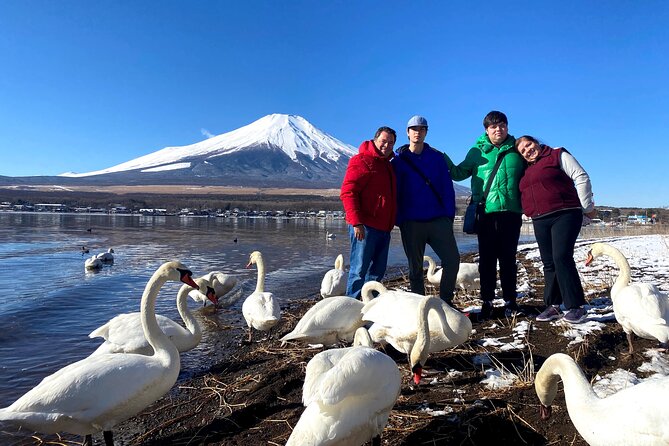
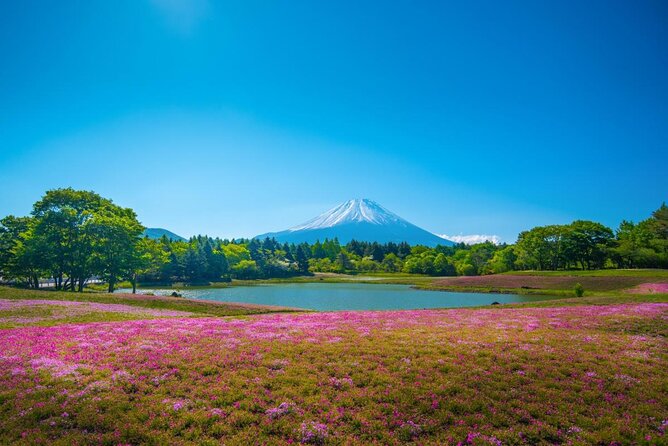
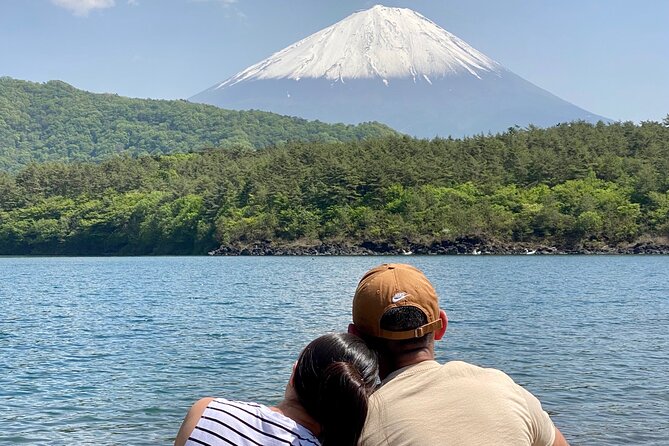
Lake Motosu is visited for one especially Japanese detail: its view appears on the back of the ¥1,000 bill. You have around 30 minutes to take in the scene and compare the real view with the image familiar to people across Japan.
The stop is free, but the short timing means you should be ready to get out, enjoy the view, and move on. Weather will make a major difference here. A clear day can give you the classic Fuji view, while cloud may turn the stop into a quieter lake visit.
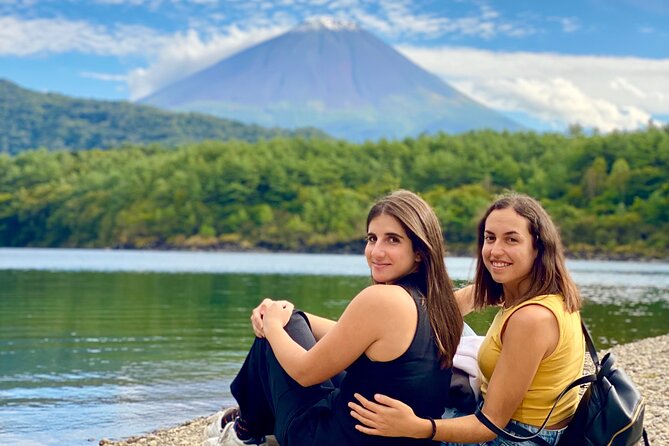
Next comes Lake Saiko, another 30 minute stop. It sits beside the Aokigahara Forest and has also provided settings for films. The appeal is less about one famous object and more about the atmosphere of the lake, the forest, and the mountain country around it.
Together, Motosu and Saiko show why the route changes with conditions. A guide who watches the light and cloud can give you a better chance at strong views than a fixed schedule can.
A completely different kind of day out:
- Tokyo Disney Resort – Tokyo Disneyland & Tokyo DisneySea Park Tickets
★ 4.8 · 99,488 reviews - Universal Studios Japan Studio Pass
★ 4.8 · 89,883 reviews - Universal Studios Japan Express Pass
★ 4.7 · 53,138 reviews - SHIBUYA SKY Ticket
★ 4.7 · 46,509 reviews
Saiko Iyashi no Sato Nemba and old village life
Saiko Iyashi no Sato Nemba receives a full hour and includes admission. This reconstructed ancestral village lies between the mountains and was destroyed before being rebuilt decades later.
The site adds a human scale to the day. After waterfalls and lakes, you see a traditional settlement and learn about a rural community shaped by the surrounding mountains. The guide’s explanations are useful here because buildings and village displays can be pleasant to photograph without making their cultural meaning obvious.
An hour is a sensible amount of time. You can walk through the village at an easy pace, take pictures, and listen without feeling rushed. If you prefer living culture and local stories to a string of viewpoints, this is likely to be one of the day’s most satisfying stops.
Lake Kawaguchiko and the guide’s personal discoveries
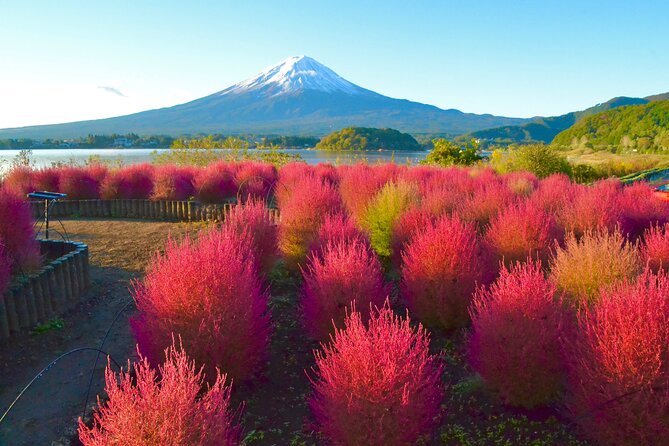
Lake Kawaguchiko gets about 50 minutes. The guide describes two less-publicized scenic places around the lake, found through years of exploring the area and later shared with tour groups.
The phrase hidden places should be taken in a modest sense. This is not a promise of an empty, secret location, and the exact spots may change with conditions. It does suggest a more personal route than simply stopping at the best-known lakefront view.
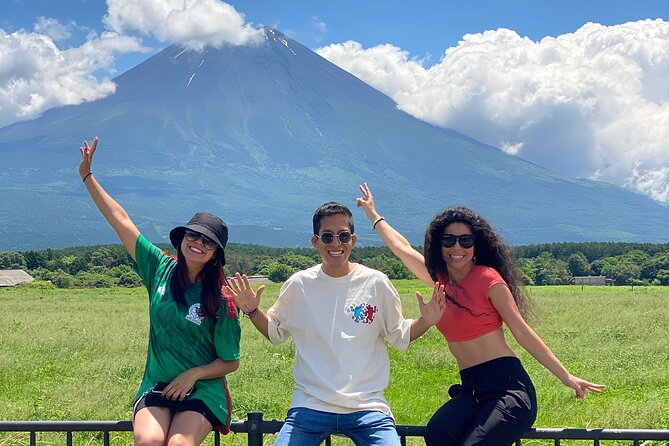
Kawaguchiko is one of the main places to hope for a clear Fuji sighting. The guide team adapts the order when possible, seeking a good viewing point rather than treating the schedule as fixed. Darío is also praised for helping with photography, which can be a real benefit when you want more than a quick snapshot.
Oshino Hakkai and traditional Japanese food
Oshino Hakkai is a 45 minute stop in an old village known for a range of traditional Japanese foods. This is a good place to see how the Fuji area presents local food and village customs to visitors.
Admission is listed as free, though food purchases are your own expense. Since lunch is not included in the tour price, Oshino Hakkai may be a useful place to buy something, depending on the day’s schedule and what the guide arranges.
Do not expect a long, leisurely meal here. Forty-five minutes passes quickly when you are walking, sampling food, and taking photographs. Still, the stop gives you a chance to try regional flavors instead of spending the entire day at scenic overlooks.
Aokigahara Forest, approached with care
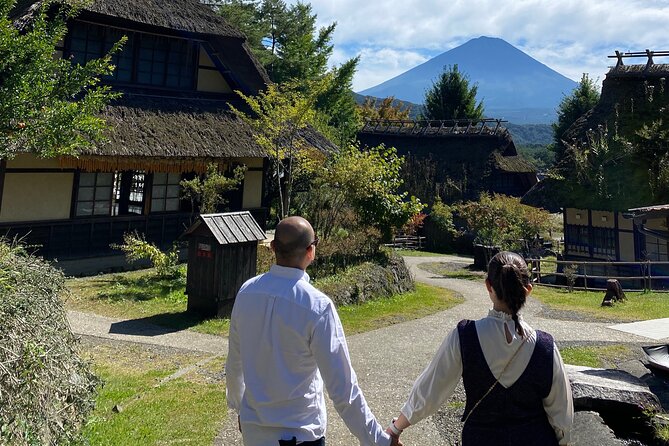
Aokigahara is visited for about 45 minutes. It is often called the Forest of Suicides, a label tied to painful stories and tragic associations. The tour description is careful to note that it is also a normal forest, despite the dark stories attached to it.
That distinction matters. You should approach this stop respectfully, without treating the subject as a spooky attraction. The guide can provide context, but the forest itself is a natural place of trees, volcanic ground, and quiet paths.
The experience may feel different from the rest of the day. It is less cheerful than a lake or village stop, and some people may find the subject uncomfortable. If you prefer a tour focused only on scenic views, this is worth considering before you book. If you value a fuller account of the area, the stop adds an honest and serious note.
Chureito Pagoda, the classic Fuji photograph
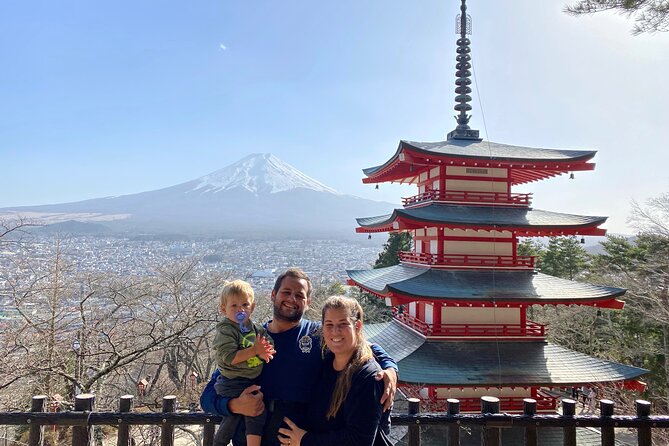
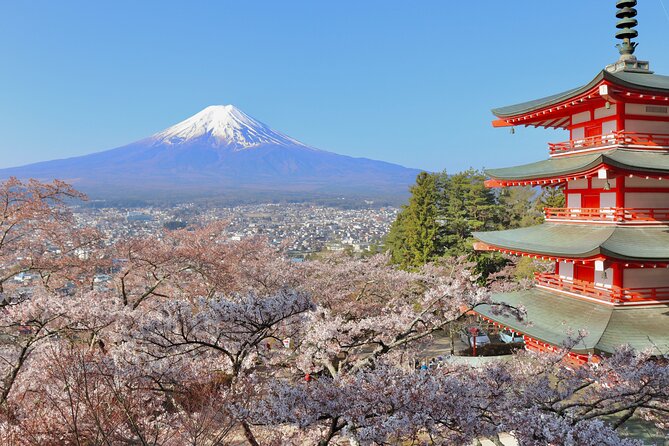
Chureito Pagoda is one of Japan’s most recognizable Fuji viewpoints. It represents Fujiyoshida and appears in countless guides and travel photographs.
You have 45 minutes here. That sounds generous, but the stop can involve walking and time spent reaching the viewing area, so comfortable footwear is important. The view is famous for a reason: pagoda, mountain, and surrounding scenery create a strong image when Fuji is visible.
Cloud is the key variable. The pagoda remains worth seeing, but the famous composition depends on the mountain showing itself. The guides’ willingness to adjust the route can help, but no tour can guarantee clear skies. The experience is best understood as a search for Fuji, not a guaranteed photograph.
Kitaguchi Hongu Fuji Sengen Jinja and the mountain’s sacred side
Kitaguchi Hongu Fuji Sengen Jinja Shrine is dedicated to Mount Fuji and to the people who climb it. It also served as a starting point for ascents toward the mountain.
The 30 minute visit gives you a compact look at Fuji’s religious importance. This is where the tour moves beyond scenery and shows why the mountain has long carried spiritual meaning in Japan.
A guide is especially valuable at a shrine. You can observe the setting respectfully, but an explanation in Spanish helps you understand what connects the shrine to Fuji worship and climbing traditions. The stop is short, so listen closely and save questions for the guide or the drive between locations.
Lake Yamanaka and a chance to feed the birds
Yamanakako-mura is the largest of the five lakes around Mount Fuji. The 30 minute visit may include seeing swans, koi, and other birds, with the option to feed them.
This is one of the lighter stops on the route. After the serious subject of Aokigahara and the religious focus of the shrine, the lake offers a simple change of pace. Families and anyone who enjoys wildlife will likely appreciate it.
The stop is free, but feeding opportunities can depend on what is available on the day. Think of it as a short lakeside break, not a dedicated wildlife outing.
Fugaku Wind Cave and Fuji’s volcanic remains
The final listed stop is Fugaku Wind Cave, a natural underground formation created by past eruptions of Mount Fuji. The cave still contains volcanic lava remains, and admission is included.
You spend about 30 minutes here. The visit gives you a physical sense of the volcanic forces introduced at Shiraito Falls and Lake Motosu. Instead of only seeing Fuji from a distance, you enter a space shaped by its eruptions.
Caves can have uneven surfaces and may feel cool, so sensible shoes and a light layer are useful. The visit is brief, but it rounds out the day’s geological story before the return to Mishima.
What the $96.17 price includes
At $96.17 per person, this is not the cheapest way to see one Fuji viewpoint. It is a fair price for a full-day route that covers 11 locations, includes transport between them, provides Spanish-speaking guides, supplies snacks and drinks, and covers entrance fees at Saiko Iyashi no Sato Nemba and Fugaku Wind Cave.
The value comes from the range. Visiting these places independently would require careful planning across several lakes, villages, shrines, and natural sites. You would also need to work out transport connections and decide which stops to sacrifice.
Lunch is the main extra cost. You should also allow for any food purchases at Oshino Hakkai. The small group and guide attention add value, especially if you want explanations rather than a vehicle that simply drops you at viewpoints.
The rating of 4.9 from 279 reviews and a 98 percent recommendation rate support the price, particularly for Spanish-speaking visitors. The strongest praise focuses on punctuality, organization, cultural explanations, friendly service, and the guides’ ability to adjust the day to the weather.
Who will enjoy this tour most
I would recommend this outing to Spanish-speaking visitors who want a broad introduction to the Mount Fuji area in one day. It suits first-time visitors, couples, families, and solo participants who prefer a small group and direct guidance.
It is also a strong choice if Japanese culture and religion matter as much to you as photographs. The shrine, reconstructed village, traditional food stop, and explanations from Japanese-Peruvian guides add substance to the views.
You should think twice if you want a slow day at one lake, a long hike, or a guaranteed sight of Fuji. The itinerary is busy, and the weather remains beyond anyone’s control. Eleven stops mean variety, but they also mean limited time at each one.
Free cancellation is available up to 24 hours before the 8:00 am start for a full refund. Cancellations or changes within 24 hours are not refundable, and poor weather or failure to reach the minimum group size can lead to a rescheduled date or full refund.
FAQ
Where does the Mount Fuji tour start?
The listed starting point is the Tokai Bus Mishima Information Office at 17-1 Ichibanchō, Mishima, Shizuoka 411-0036, Japan. The scheduled start time is 8:00 am.
Where does the tour end?
The activity ends back at the meeting point in Mishima.
How long does the excursion last?
The tour lasts approximately 10 to 11 hours.
Is lunch included?
No. Lunch is not included, although snacks and drinks are provided.
Is the tour conducted in Spanish?
Yes. The guides explain Japanese culture, religion, and the Mount Fuji area in Spanish.
What happens if bad weather prevents the tour?
If poor weather causes cancellation, you will be offered another date or a full refund. A minimum number of participants is also required, and if that minimum is not met, you will be offered another date or experience, or a full refund.
Should you book the Spanish Mount Fuji day tour?
Book it if you want the fullest possible one-day introduction to Mount Fuji’s surrounding area, especially with Spanish explanations and a small group. The route gives you waterfalls, four of the famous lakes and lake areas, a traditional village, a shrine, a forest, a pagoda, and a lava cave, while the guides work around the weather.
Skip it if you want a relaxed single-destination visit or a guaranteed Fuji photograph. For everyone else, the mix of scenery, culture, volcanic history, and practical guide support makes the $96.17 fare good value. Fuji may hide, but this tour gives you plenty to see while you wait for the mountain to appear.
Just added in Japan
- Japanese Home Cooking Class & Walk in Todoroki Temple Tokyo★ 5.0 · 88 reviews
- A One-of-a-Kind Sushi Experience in a Special Place of Japan★ 5.0 · 15 reviews
- Tokyo Cute Bento Cooking Class – Make a Kawaii Character Lunchbox★ 5.0 · 126 reviews
- Japan Tokyo Tower Observatory Deck E-Ticket★ 4.0 · 34 reviews
- Catch a Baseball Game in Tokyo with a Local – Tickets Included★ 5.0 · 24 reviews
- JDM Experience with Fast&Furious RX-7 (English speaking Driver)★ 5.0 · 57 reviews
- Tokyo Private Day Tour by Car with English speaking Driver Guide★ 4.0 · 29 reviews
- Japan Classic 10 Day – One Life Adventures★ 5.0 · 129 reviews
Day Trips, compared.
![[Kyoto & Nara Day Tour] Sagano Scenic Railway & Nara Park & Fushimi Inari Taisha Thousand Torii Gates & Togetsukyo Bridge & Bamboo Grove & Kimono Forest (Departing from Osaka)](https://media.japanvisits.com/wp-content/uploads/kyoto-nara-day-tour-sagano-scenic-railway-nara-park-fushimi-inari-taisha-thousand-torii-gates-togetsukyo-bridge-bamboo-grove-kimono-forest-departing-from-osaka-k110001-400x257.jpg)
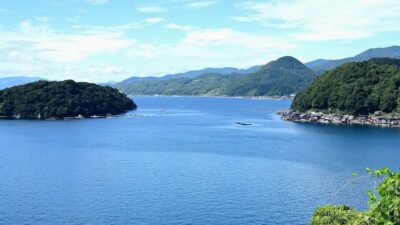
Kyoto Amanohashidate & Ine Funaya & Ine Bay Scenic Day Trip (Departing from Osaka or Kyoto)
Read our review →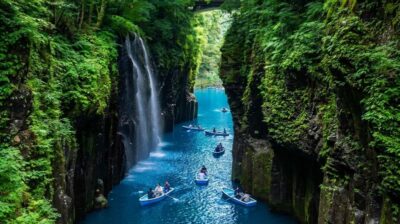
Kyushu: Mount Aso, Kusasenri & Takachiho Gorge Day Tour (Optional Takachiho Boat Ride Experience)
Read our review →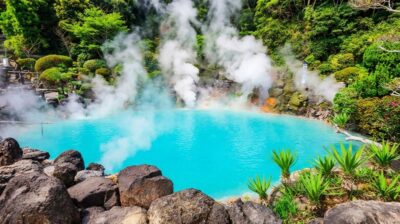
Kyushu One-Day Tour: Yufuin no Mori Train & Yufuin Town & Nyoirin-ji Temple & Dazaifu & Hell Hot Springs (Departing from Fukuoka)
Read our review →
Browse the lists this tour appears in