
Reviewed · TRAIN EXPERIENCES
Hiroshima & Miyajima 1 Day Bus Tour with Bullet Train Tickets
History meets island beauty. This full-day trip links Hiroshima’s Peace Memorial sites with Miyajima’s famous floating torii gate, using the Shinkansen, an air-conditioned bus, and a ferry. I like the round-trip bullet train tickets and the included Hiroshima-style okonomiyaki lunch, two costly and useful pieces of planning taken care of for you. I also like the careful station assistance at departure, especially if Japanese rail travel feels intimidating.
The trade-off is time. You get the main sights, but the schedule is tight, the Peace Memorial Museum can feel rushed, and there is a fair amount of walking. At $270.88 per person, this is not a cheap day out, but the price makes more sense once you account for the Shinkansen, ferry, bus, admissions, guide, and lunch.
In This Review
- Key points at a glance
- Why this day trip works from Osaka
- The Shinkansen ride to Hiroshima
- The Atomic Bomb Dome and Hiroshima’s difficult morning
- One hour at the Peace Memorial Museum
- Hiroshima-style okonomiyaki for lunch
- Ferry views and the approach to Miyajima
- Itsukushima Shrine in a tightly timed hour
- Omotesando Street, deer, and island food
- Walking, weather, and the size of the day
- Guide quality and group rhythm
- Is $270.88 a fair price?
- Who should book this Hiroshima day trip?
- Should you book it?
- FAQ
- Where does the tour depart from Osaka?
- Can I join the tour from Kyoto?
- Is there a departure from Fukuoka?
- Are Shinkansen tickets included?
- Is the Miyajima ferry included?
- Is lunch included?
- How much time is spent at the Peace Memorial Museum?
- Is the tour conducted in English?
- Can I cancel for a full refund?
Key points at a glance
- The Shinkansen does the heavy lifting: You travel from Osaka, Kyoto, or Fukuoka to Hiroshima by reserved bullet train, then return the same evening.
- Hiroshima and Miyajima offer a strong contrast: The morning focuses on remembrance and peace, while the afternoon brings shrine views, deer, shops, and the sea.
- Okonomiyaki is part of the experience: Lunch is a proper Hiroshima-style version with cabbage, noodles, egg, pork, fish powder, and other toppings, with several dietary options.
- The ferry takes the scenic route: The specified Great Torii Ferry Route brings you close to Miyajima’s famous gate from the water.
- Your day is tightly managed: The tour runs for about 12 hours, with fixed train times and short visits at several stops.
- Guide quality matters: Guides such as Joe, Kane, Hiro, Tom, Miyuki, and Takane have been praised for clear explanations, kindness, organization, and help in hot weather.
Why this day trip works from Osaka
Hiroshima is far enough from Osaka to make independent planning feel like a small project. You need to choose a train, find the right platform, reach the Peace Memorial area, arrange transport to Miyajima, buy ferry and shrine tickets, and still get back for the evening rail journey.
This tour removes most of that work. You meet the staff at Shin-Osaka Station, receive your Shinkansen ticket, and get help boarding. Once you reach Hiroshima, an English-speaking guide and a comfortable tour bus handle the local route.
That convenience is the main reason to book. You are paying not only for transport, but also for a day that has been arranged around two major sights that are not next door to each other.
The day begins early. For the Osaka departure, meet at the Central Gate on the third floor of Shin-Osaka Station by 8:18 a.m. The assistant helps you at the Osaka end, but does not ride with you to Hiroshima, so pay close attention to the instructions and keep your ticket handy.
The Kyoto departure leaves at 8:03 a.m. from the second-floor Shinkansen Central Gate at Kyoto Station. The Fukuoka option begins at 8:23 a.m. at Hakata Station’s Chikushi Gate, in front of three mailboxes. These meeting points are specific, but large Japanese stations can still be confusing, so arrive early rather than trying to cut it close.
A few more options to weigh up in Osaka
- Sagano Romantic Train & Arashiyama, Kiyomizudera, Fushimi Inari Taisha Day Tour
★ 4.5 · 171 reviews - Full Day Hiroshima and Miyajima Tour by Bullet Train from Osaka
★ 4.5 · 117 reviews - From Osaka: Hiroshima and Miyajima Day Trip by Bullet Train
★ 4.6 · 83 reviews
The Shinkansen ride to Hiroshima
The bullet train is one of the strongest parts of the package. From Shin-Osaka, the listed journey takes you to Hiroshima in the morning, then returns you on Nozomi 56 from Hiroshima at 6:43 p.m., arriving at Shin-Osaka at 8:04 p.m. The Kyoto return reaches Kyoto at 8:19 p.m.
From Hakata, the return is Sakura 565, leaving Hiroshima at 6:52 p.m. and arriving in Hakata at 7:59 p.m. The exact train details matter because you cannot treat the return as an open-ended evening.
Several people found the station handoff especially reassuring. Staff helped with tickets, directions, and boarding, while the Hiroshima guide waited at the North Exit on the second floor of Hiroshima Station. You should still watch the clock and stay with the group, since missing the planned train would create a serious problem.
The train also helps explain the price. A large portion of the $270.88 cost goes toward round-trip Shinkansen travel, which can be expensive on its own. If you are staying in Osaka and want Hiroshima without changing hotels, the package can offer fair value despite its high headline price.
The Atomic Bomb Dome and Hiroshima’s difficult morning
The first Hiroshima stop is the Atomic Bomb Dome, with about 30 minutes to view the building and its surroundings. This is a short visit, but the structure gives you a powerful physical point of reference before entering the museum.
The dome is not simply another old building. Its damaged frame remains tied to the atomic bombing of Hiroshima, and seeing it in person places the morning’s subject in a real city setting rather than treating it as a distant date in a textbook.
The pace here is brisk. You will have time for photographs and an introduction from the guide, but not an unhurried architectural study. Guides including Joe, Kane, Tom, Hiro, and Takane have been praised for explaining the history with care and helping visitors reflect on what happened.
Expect this part of the tour to be emotionally heavy. The mood is quiet and serious, and that is appropriate. The schedule then gives you about 60 minutes at the Hiroshima Peace Memorial Museum, admission included.
One hour at the Peace Memorial Museum
The museum is the most important stop for understanding Hiroshima, but it is also where the schedule feels most restrictive. One hour can give you a clear introduction, yet the exhibits may require more time than that, especially when the museum is crowded.
You may find the visit moving, upsetting, and difficult to take in quickly. One useful approach is to focus on the main exhibits and listen closely to the guide’s explanation rather than trying to read every panel. If you prefer a slow museum visit, you may want to return independently on another day.
The tour uses an English-speaking guide, and the quality of the explanation can shape the experience. The strongest guide comments describe clear English, thoughtful pacing, detailed historical context, and a calm approach to a painful subject. A few people found a guide difficult to understand, so this is one area where your experience may vary.
If the Peace Memorial Museum is closed, the itinerary substitutes the Hiroshima National Peace Memorial Hall for the Atomic Bomb Victims. The museum is closed December 30 through 31 and February 16 through 21. Check the date before booking if the museum itself is a priority.
A completely different kind of day out:
- Universal Studios Japan Studio Pass
★ 4.8 · 89,883 reviews - Universal Studios Japan Express Pass
★ 4.7 · 53,138 reviews - Osaka Amazing Pass
★ 4.7 · 21,697 reviews - Osaka Aquarium Kaiyukan Ticket
★ 4.8 · 14,894 reviews
Hiroshima-style okonomiyaki for lunch
Lunch introduces you to one of Hiroshima’s best-known local foods. This is not a small snack. The traditional version includes pork, cabbage, bean sprouts, fish powder, noodles, and eggs.
The noodles are an important part of the Hiroshima style, giving the dish a layered, filling quality. If you have never tried okonomiyaki, this is a practical way to taste it with an explanation rather than guessing your way through a restaurant menu.
Three menu choices are available:
- Regular okonomiyaki
- No pork with eggs
- No pork, no fish powder, and no eggs
Tell the operator about allergies or dietary restrictions when you book. Menu changes cannot be made on the day, and you should not bring your own food or drinks into the restaurant.
The meal is valuable because it combines food and place. You are eating a local specialty in Hiroshima rather than grabbing something generic between stops. It also saves you from searching for lunch during a packed schedule, though you may still want to budget for extra drinks or snacks later.
Ferry views and the approach to Miyajima
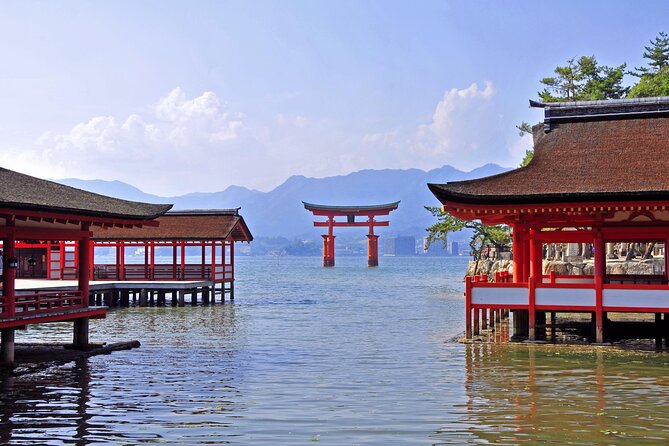
After Hiroshima, the tour bus takes you to Miyajimaguchi. From there, you board the ferry to Miyajima, with the included Great Torii Ferry Route taking you closest to the gate from the sea.
This short crossing is more than a transport link. It gives you the classic approach to Itsukushima Shrine, with the water opening up around the island and the torii gate providing the famous photograph. Conditions at the shore can affect how the gate looks, so do not expect one identical view every time.
The ferry ticket is included, and you do not need to sort out payment at the pier. That matters on a day when every saved minute helps.
Miyajima provides a welcome change after the serious morning. The island has a slower visual rhythm, with the shrine, water, deer, food stalls, and shopping streets giving you room to shift your attention toward scenery and daily life.
Itsukushima Shrine in a tightly timed hour
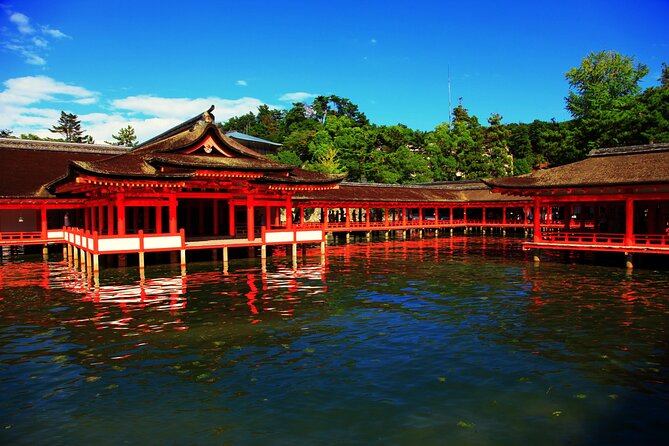
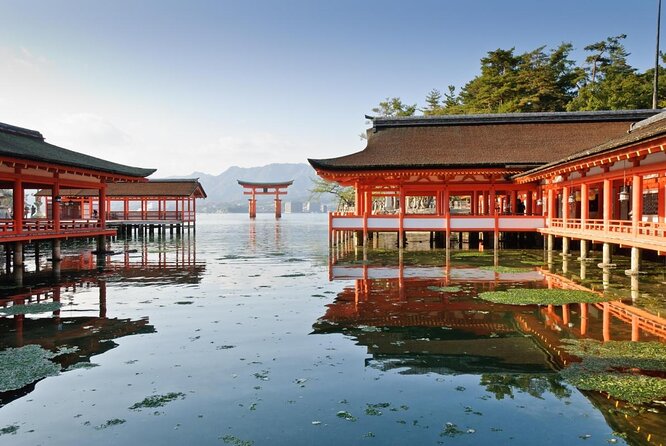
You have about 60 minutes at Itsukushima Shrine. The shrine is the heart of Miyajima, and its setting over the water is the reason the island appears on so many Japan itineraries.
The tour entrance fee is included. Your guide can explain the shrine and point out the best areas for photographs, while you get a structured look at the complex without needing to plan a route.
Still, one hour is not generous. If you want to linger at every hall, take many photographs, or visit additional parts of Miyajima, you will feel the clock. The schedule gives you the highlights rather than a slow island day.
The famous torii gate may appear to float at high tide. At other times, the water level changes the view and may allow a closer look from shore. The ferry route is especially useful because it gives you a perspective that is hard to get from land.
Omotesando Street, deer, and island food
The final major stop is about 60 minutes of free time on Miyajima’s Omotesando Shopping Street. This is your chance to browse shops, find local snacks, and enjoy the island at your own pace.
The street is also where you can add food beyond lunch. Popular island treats include oysters and other seafood options, though personal purchases are not included. One practical warning: the deer are accustomed to people and may try to eat anything you are carrying. Keep food and paper items close.
You should treat this hour as free time, not as a chance to cover the whole island. The itinerary does not include a long hike or a broad exploration of Miyajima. If your main interest is the shrine, street, and torii gate, the hour can work well. If you want a mountain visit or a quiet afternoon away from shops, this tour will feel too short.
Walking, weather, and the size of the day
This is a long day, usually from around 8 a.m. until 8 p.m. It includes station transfers, museum walking, outdoor sightseeing, bus boarding, a ferry, shrine paths, and shopping streets.
Wear comfortable shoes. The tour is not recommended for anyone who has difficulty walking for long periods. You may also find toilet breaks limited because the schedule is packed.
Weather makes a real difference. Hiroshima and Miyajima can feel hot, and one guide, Tom, was praised for finding shade and encouraging people to drink water. The bus has air conditioning, and bottled water was provided on at least one hot-day outing, but you should still carry water and protect yourself from the sun.
Rain does not erase Miyajima’s appeal, but it can reduce comfort and photo quality. The tour requires good weather, and if poor weather causes cancellation, you are offered another date or a full refund.
Luggage can be stored in the bus luggage compartment during the tour. That is helpful if you are moving between hotels, though you should keep essential items with you on the train and while walking.
Guide quality and group rhythm
The guide is the person who turns a crowded schedule into a coherent day. Strong guides such as Kane, Hiro, Tom, Joe, Miyuki, and Takane have been praised for clear explanations, warmth, patience, and good timekeeping.
Kane was particularly praised for keeping the group together and explaining Hiroshima’s connection to the places visited. Miyuki was noted for excellent English and well-paced timing. Tom was praised for being organized and considerate in hot weather, while Hiro was described as friendly, clear, and patient when some people arrived late.
The tour is conducted in English only. Because the group can be large, you need to accept some waiting and keep an eye on the guide. A few late arrivals can delay everyone, so punctuality is not a minor courtesy here.
Earphone guides are supplied during the tour. Handle them carefully and return them at the end. Loss or damage may result in a replacement charge of up to 18,000 yen.
Is $270.88 a fair price?
The price is high for a day trip, but it includes the items that usually make Hiroshima planning expensive and time-consuming:
- Round-trip Shinkansen tickets from Osaka, Kyoto, or Fukuoka
- Air-conditioned bus transport in Hiroshima
- English-speaking guide
- Hiroshima-style okonomiyaki lunch
- Itsukushima Shrine admission
- Hiroshima Peace Memorial Museum admission
- Miyajima ferry ticket
The best value comes when you are staying in Osaka or Kyoto and want to see both Hiroshima and Miyajima in one day. You avoid booking a hotel, arranging several local connections, and figuring out how to return after the island visit.
The value is weaker if you already have rail passes, prefer independent travel, or want many hours at the museum and Miyajima. You are paying for structure and convenience, not a slow, flexible day.
The tour has a 4.7 rating from 105 reviews, with 94 percent recommending it. That fits the pattern of the experience: excellent logistics, strong guides on many departures, tasty lunch, and memorable sights, balanced by crowds, walking, and limited time.
Who should book this Hiroshima day trip?
I would choose this tour if you are based in Osaka, Kyoto, or Fukuoka and have only one free day for Hiroshima. It suits first-time visitors who want the major peace sites and Miyajima without handling the rail and ferry arrangements alone.
It also works well for families with older children or teenagers. The day has enough variety to hold attention, moving from history to food, train travel, shrine architecture, sea views, and deer.
I would hesitate if your priority is an in-depth museum visit. The one-hour allocation may leave you wanting more. I would also hesitate if long walking days are difficult, if you dislike fixed departure times, or if you prefer small private tours.
Book at least 24 hours before departure if you need the free cancellation option. Cancellations made less than 24 hours before the start time are not refunded, and changes within that period are not accepted. The tour also requires a minimum number of participants.
Should you book it?
Book it if you want maximum coverage with minimum planning. The Shinkansen, bus, ferry, lunch, admissions, and station assistance make a difficult day trip much easier to manage.
Go in knowing that this is a fast introduction, not a leisurely Hiroshima stay. You will see the Atomic Bomb Dome, Peace Memorial Museum, Itsukushima Shrine, and Omotesando Street, but you must keep moving.
For many people, that compromise is worthwhile. The morning asks for attention and reflection, while Miyajima gives you beauty, food, and breathing room. If that balance matches your Japan plans, this is a practical and memorable way to make Hiroshima happen from Osaka.
FAQ
Where does the tour depart from Osaka?
You meet the assistant at Shin-Osaka Station’s Central Gate on the third floor. The departure time is 8:18 a.m.
Can I join the tour from Kyoto?
Yes. The Kyoto departure meets at the Shinkansen Central Gate on the second floor of Kyoto Station at 8:03 a.m.
Is there a departure from Fukuoka?
Yes. The Fukuoka option meets at Hakata Station’s Chikushi Gate, in front of three mailboxes, at 8:23 a.m.
Are Shinkansen tickets included?
Yes. The package includes round-trip Shinkansen tickets from Osaka, Kyoto, or Fukuoka to Hiroshima.
Is the Miyajima ferry included?
Yes. The Miyajima ferry ticket is included, using the Great Torii Ferry Route that approaches the gate from the sea.
Is lunch included?
Yes. Lunch is Hiroshima-style okonomiyaki. Regular, no-pork with eggs, and no-pork, no-fish-powder, and no-eggs options are available.
How much time is spent at the Peace Memorial Museum?
The scheduled visit lasts 60 minutes. If the museum is closed, the tour visits the Hiroshima National Peace Memorial Hall for the Atomic Bomb Victims instead.
Is the tour conducted in English?
Yes. The tour is conducted by an English-speaking guide only.
Can I cancel for a full refund?
You can cancel for a full refund up to 24 hours before the experience starts. Cancellations or changes made less than 24 hours before the start time are not accepted, and poor-weather or minimum-participant cancellations offer a different date or a full refund.
Just added in Osaka
- Tour – Japan Bonsai (12 Days) by Bavaria Fernreisen★ 4.0 · 4 reviews
- Stunning Japan with Shirakawa-go by Stunning Tours – 8-Day Osaka to Tokyo Tour★ 4.4 · 105 reviews
- South Japan Express 6-Day Tour by Europamundo★ 4.6 · 28 reviews
- Southern Japan Experience by Intrepid Travel – 12 Days from Osaka★ 4.0 · 10 reviews
- Osaka Hiroshima Snapshot 6 Day – One Life Adventures★ 4.9 · 15 reviews
- Osaka Discovery 4 Days – Universal Fun & Kyoto Heritage by Vio Travel★ 5.0 · 1 review
- On Trails through Ancient Japan 16-Day Tour by DIAMIR Erlebnisreisen★ 5.0 · 1 review
- Japan to the World Expo (incl. flight) 10-Day Tour by MEIERS WELTREISEN★ 3.0 · 1 review
Train Experiences, compared.
Mt Fuji and Hakone 1-Day Bus Tour Return by Bullet Train
Read our review →![[Kyoto & Nara Day Tour] Sagano Scenic Railway & Nara Park & Fushimi Inari Taisha Thousand Torii Gates & Togetsukyo Bridge & Bamboo Grove & Kimono Forest (Departing from Osaka)](https://media.japanvisits.com/wp-content/uploads/kyoto-nara-day-tour-sagano-scenic-railway-nara-park-fushimi-inari-taisha-thousand-torii-gates-togetsukyo-bridge-bamboo-grove-kimono-forest-departing-from-osaka-k110001-400x257.jpg)
Mt Fuji & Hakone Cruise, Drum Show Bullet Train 1 Day from Tokyo
Read our review →
Tokyo Mt Fuji 5th St & Hakone Cruise Bus Tour w/Bullet Train
Read our review →
Kyushu One-Day Tour: Yufuin no Mori Train & Yufuin Town & Nyoirin-ji Temple & Dazaifu & Hell Hot Springs (Departing from Fukuoka)
Read our review →
Mt. Fuji & Hakone Tour w/ Return by Bullet Train
Read our review →
Kyoto Arashiyama Scenic Train & Hozugawa River Boat Ride Day Trip (From Osaka / Kyoto)
Read our review →Browse the lists this tour appears in