
Reviewed · OKINAWA TOURS
Karate History Tour in Okinawa
Karate’s birthplace tells its story through people. This private Naha tour links monuments, a museum, a shrine, and a respected karate goods shop into one focused day, making Okinawa’s martial arts past easier to understand than it would be on your own. I especially like the chance to meet Tetsuhiro Hokama, a Goju-ryu 10th dan master, and the fact that your guide arranges lunch rather than leaving you to find food between stops. The main consideration is the pace: five to seven hours devoted largely to karate may feel too narrow if you want a broad introduction to Okinawa.
I also like the personal side of the guiding. Yoshi is praised for his friendly manner and good English, while Kenny brings his own experience as a 7th dan Okinawan karate teacher. Carlo has also guided the tour, and his background helped make the visits to masters, shrines, and museum displays feel connected rather than random. At $125.50 per person, the value depends on your interest, but included admissions, lunch, transport arrangements, and a private format make it a fair price for serious karate fans.
In This Review
- Four details that shape the day
- Why this Naha tour is different
- Matsuyama Park and two important names
- The Okinawa Prefecture Karate Museum and Tetsuhiro Hokama
- A Japanese lunch organized by your guide
- Okino-gu Shrine and Gichin Funakoshi
- Shureido, Okinawa karate goods, and souvenirs
- Guide quality is a major part of the value
- What $125.50 really buys you
- Practical points before you book
- Who should choose this experience?
- Should you book the Karate History Tour?
- FAQ
- How long does the Karate History Tour in Okinawa last?
- What is included in the tour price?
- Is the tour private?
- Which karate-related sites are visited?
- Can I meet a karate master?
- What is the cancellation policy?
Four details that shape the day
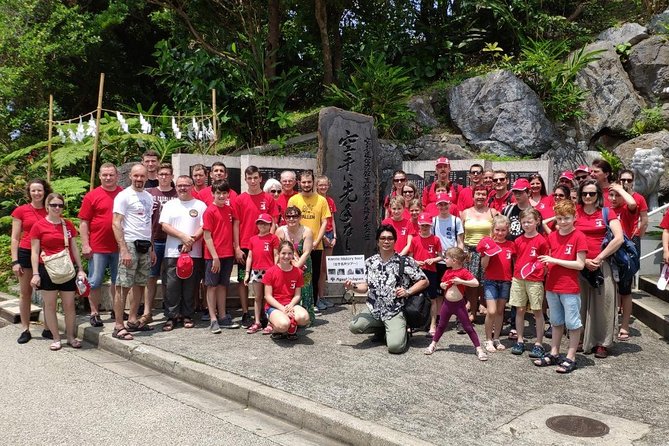
- A real connection to Okinawan karate: The tour visits monuments honoring Kanryo Higaonna, Chojun Miyagi, and Gichin Funakoshi.
- A rare museum meeting: At the Okinawa Prefecture Karate Museum, you may meet Tetsuhiro Hokama, a Goju-ryu 10th dan master.
- Lunch is handled for you: Your guide organizes a Japanese meal, with sushi included in at least one tour experience.
- Private rather than crowded: Only your group takes part, so the day can feel more personal and easier to discuss.
- Shopping with a purpose: Shureido gives you a chance to buy Okinawa karate goods, not just ordinary souvenirs.
- A practical booking window: The tour is commonly reserved about 50 days ahead, so last-minute plans may not work.
Why this Naha tour is different
Many Okinawa sightseeing days focus on beaches, castles, or wartime history. This one follows a narrower trail: the people, places, and training traditions that shaped karate. That focus is its strength. You are not simply looking at a statue and moving on. You are given a chance to connect names, styles, teachers, monuments, and modern practice.
I would choose this experience if karate is already part of your life, or if you want to understand why Okinawa matters to the martial art. It should also suit families and small private groups that prefer conversation to a large coach tour. The published rating is 5 out of 5 from 42 ratings, with a 100 percent recommendation rate, and the strongest praise centers on the guides, the museum, and the personal access to senior karate figures.
The day lasts roughly five to seven hours. That is a useful amount of time for the subject, but the broad range matters. Traffic, meal timing, and the length of conversations may affect the final schedule. You should keep the rest of your day flexible rather than booking a tight evening plan.
Pickup is offered, and a mobile ticket keeps the practical side simple. Since this is a private activity, only your group participates. That gives you room to ask basic questions without feeling self-conscious, or to discuss technical points if you already train.
A few more options to weigh up in Naha
- Official Street Go-Kart Tour – Okinawa Shop
★ 5.0 · 699 reviews - Naha: North Okinawa Sightseeing Tour & Churaumi Aquarium
★ 4.4 · 472 reviews - Okinawa: From Naha: Kerama Islands 1-day snorkeling tour
★ 4.4 · 423 reviews
Matsuyama Park and two important names
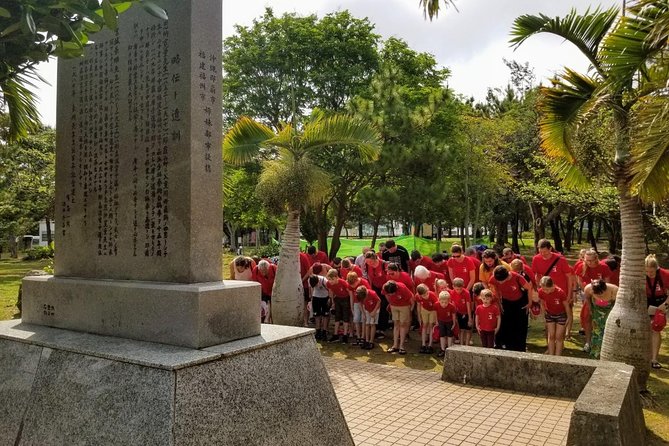
The first stop is Matsuyama Park, where you see monuments to Kanryo Higaonna and Chojun Miyagi. The visit lasts about 15 minutes, and admission is included.
This is a short stop, but the names matter. Higaonna is associated with the development of Naha-te, one of the Okinawan traditions that helped shape modern karate. Chojun Miyagi, his student, founded Goju-ryu. If you know the style, these monuments have real weight. If you do not, your guide can give the names a place in the larger story.
Do not expect a large museum presentation here. The value is in standing at a physical marker connected to important teachers. It is the sort of stop that can seem small on a general sightseeing route, yet makes sense when the entire day is about karate’s roots.
The 15-minute timing also tells you how the tour works. You get several focused visits rather than a long stay at one attraction. If you enjoy compact stops with a guide explaining why they matter, the rhythm should suit you. If you prefer to linger, photograph every detail, or read at your own pace, you may want to tell your guide early in the day.
The Okinawa Prefecture Karate Museum and Tetsuhiro Hokama
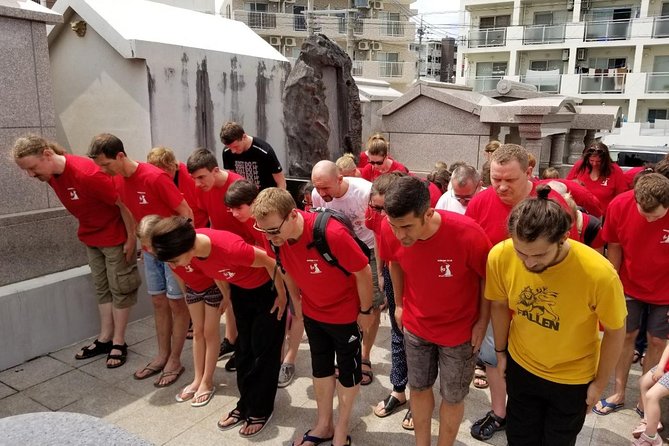
The museum is the heart of the experience. You spend about 45 minutes there, with admission included, looking at karate-related historical goods and learning how the art developed in Okinawa.
The most important part is the chance to meet Tetsuhiro Hokama, a Goju-ryu 10th dan master. That is not a routine museum encounter. A senior teacher can give the displays a human connection, particularly if you want to ask about training, Goju-ryu, or the transition from older Okinawan practices to the karate known around the world today.
The museum also uses three videos to explain the origins of karate. That helps if you arrive without much background. Martial arts history can quickly become a string of unfamiliar names and styles, so visual material gives you a clearer frame before you move on to monuments and shrines.
I would allow yourself to ask questions here. The private format is especially useful at this stop because you are not trying to hear a guide over a large group. If you train in karate, bring the questions you normally cannot answer from a general travel book. If you are new to the subject, ask your guide to explain the difference between the people and styles introduced during the day.
The 45-minute visit is long enough for a useful overview but not so long that it becomes a full study session. You should not expect an enormous national museum. This is a specialist stop, and that is precisely why it suits people who want a direct connection to Okinawa’s karate tradition.
A Japanese lunch organized by your guide
Lunch is part of the day, and your guide arranges a Japanese meal. That removes one common problem on a busy tour: losing time choosing a restaurant or trying to explain what your group needs while moving between stops.
One experience included an excellent sushi lunch. Since the exact meal can depend on the day and arrangements, I would treat sushi as a possibility rather than a fixed promise. The important point is that food is built into the schedule, not added as an afterthought.
This is also a chance to continue the conversation. A meal with a guide who speaks good English can help you sort out what you have seen so far. Yoshi is described as friendly, helpful, and genuinely interested in giving families a good day. That kind of attitude matters on a private tour, since the guide shapes much of the experience.
If you have dietary needs, mention them when booking or as soon as the guide contacts you. The available information confirms that lunch is organized, but it does not specify a vegetarian, vegan, allergy-friendly, or other special menu. Do not assume that a change will be possible without advance notice.
A completely different kind of day out:
- From Naha: Tokashiki Island Day Trip by Boat
★ 4.3 · 385 reviews - Naha, Okinawa: Keramas Island Snorkeling Day Trip with Lunch
★ 4.7 · 370 reviews - Naha, Okinawa: Kerama Islands Half-Day Whale Watching Tour
★ 4.4 · 241 reviews - Naha, Okinawa: Kerama Islands Full-Day Intro-Diving Trip
★ 4.6 · 203 reviews
Okino-gu Shrine and Gichin Funakoshi
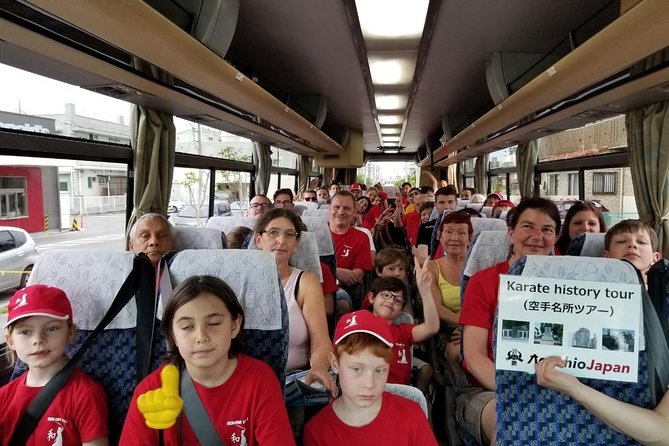
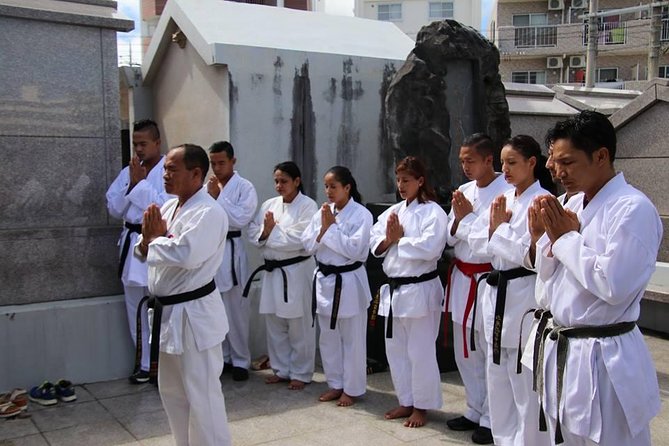
The next major stop is Okino-gu Shrine, visited for about 30 minutes. You see a monument to Gichin Funakoshi and also visit this well-known Okinawan shrine. Admission is included.
Funakoshi is a central name in the spread of karate beyond Okinawa. His monument gives the tour another angle: the story is not limited to one local school or one family of teachers. You can begin to see how Okinawan karate moved from its island roots into a wider international practice.
The shrine setting also breaks up the museum portion of the day. You are not spending every hour indoors or looking at objects behind glass. A 30-minute visit gives you time to see the site and listen to the explanation without turning the stop into a long religious sightseeing visit.
I like this combination because it keeps the focus on karate while showing you a broader piece of Okinawan culture. Still, you should come with the right expectation. The shrine is included as part of the karate route, not presented as a full shrine tour with extensive religious interpretation.
Respect the setting as you would any Japanese shrine. Your guide can help explain what you are seeing and how the monument fits into the tour. The visit works best when you treat it as both a place of worship and a site linked to karate history.
Shureido, Okinawa karate goods, and souvenirs
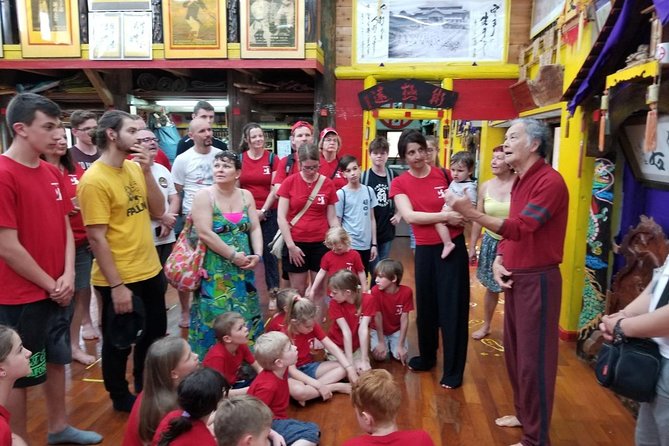
The final listed stop is Shureido, a famous Okinawa karate goods shop. You spend about 30 minutes here.
This is more useful than a generic souvenir stop. If you practice karate, you may find equipment or clothing connected to the tradition you have been learning about all day. Even if you do not train, the shop gives you a chance to take home something tied directly to Okinawa’s martial arts culture.
Thirty minutes is enough for a look around and a purchase, but it is not a long shopping appointment. If you already know what you want, that is plenty of time. If you plan to compare equipment, ask detailed questions, or shop for several people, you may need to keep an eye on the clock.
I would save some room in your luggage. The tour specifically includes time to shop for karate goods, and that is a better souvenir than another mass-produced trinket if you want something connected to the day. You can also ask your guide which items make sense for practice and which are mainly keepsakes.
Guide quality is a major part of the value
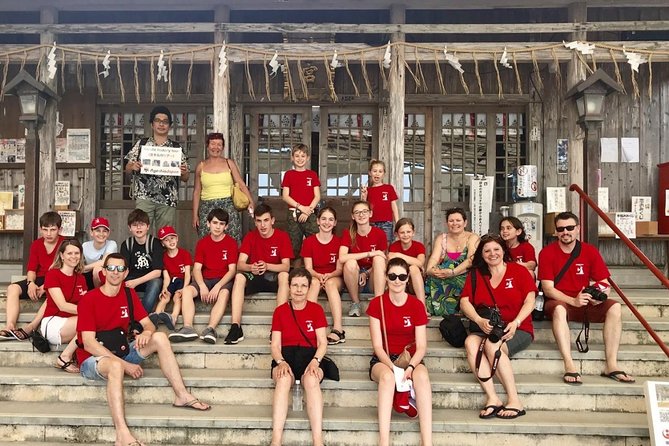
This tour can be good with a competent guide, but it can be memorable with the right one. The available guide experiences point to three names: Yoshi, Kenny, and Carlo.
Yoshi is praised for being extremely helpful, friendly, and comfortable in English. His warm approach should suit families and first-time visitors who want clear explanations without a formal lecture.
Kenny is a 7th dan black belt and an Okinawan karate teacher himself. His experience gives the tour more authority, especially at the museum and during discussions about martial arts practice. You should not assume every departure has Kenny, but his involvement shows the level of expertise associated with the experience.
Carlo is also described as a friendly guide who explained karate history in an interesting way. His tour included the Okinawa Karate Visitors Memorial and a visit to a training studio connected with a 10th degree black belt master. The exact route or guide may vary, so confirm what is planned for your date if meeting a particular person is essential.
The guiding style seems to be one of the tour’s best features. You are not just being driven between four locations. You are given context, introductions, and a chance to connect the pieces. That is where the private format earns its keep.
What $125.50 really buys you
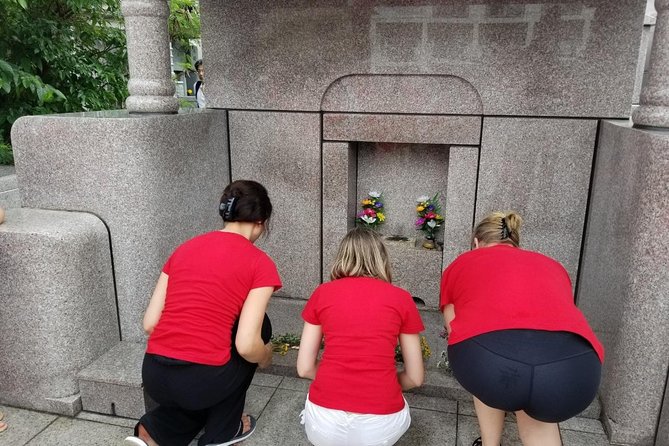
At $125.50 per person, this is not a cheap way to fill a morning. I would judge it as a specialist experience rather than a general sightseeing bargain.
The price includes entrance fees to all listed stops, a Japanese lunch organized by the guide, pickup, and a private tour for your group. It also gives you access to a focused route that would take more planning to arrange independently. The museum meeting is the biggest value point, since a normal self-guided visit may not provide the same introduction to a senior karate master.
The cost makes the most sense for karate students, instructors, families with a serious interest in martial arts, and visitors who want cultural context rather than a quick photo stop. If you are only mildly curious about karate, the price may feel high for a day built around a single subject.
The group size is not specified, but only your group participates. That distinction matters. You avoid a shared tour where everyone has different interests, and you can ask your guide to spend more time on the museum, monuments, or shopping if the schedule allows.
Practical points before you book
The tour is commonly booked about 50 days in advance. That suggests you should reserve early, particularly if your Okinawa visit falls during a busy period or you want a certain guide.
Confirmation arrives within 48 hours of booking, subject to availability. The experience requires good weather, and if poor weather causes cancellation, you are offered another date or a full refund. A minimum number of participants is also required. If that minimum is not met, you can choose another date or experience, or receive a full refund.
Free cancellation is available up to 24 hours before the start time. Less than 24 hours before the start, refunds are not provided and changes are not accepted. The cut-off uses local Okinawa time, so check the clock carefully if you are booking from abroad.
Service animals are allowed, the tour is near public transportation, and most people can participate. These points make it fairly accessible as a general sightseeing activity, though the supplied information does not give detailed guidance about wheelchair access, walking distances, or the exact pickup area.
Who should choose this experience?
I would book this tour if you fit one of these descriptions:
- You practice karate and want to understand its Okinawan roots.
- You are interested in Goju-ryu, its teachers, or the wider development of karate.
- You prefer a private guide who can answer questions as the day unfolds.
- You want a Japanese lunch and included admissions without planning each stop yourself.
- You are traveling with family or friends who share a strong interest in martial arts.
I would think twice if your priority is a broad Naha introduction. The route does not promise a general tour of Okinawa’s major sights. It gives you monuments, a museum, a shrine, lunch, and a karate goods shop, all tied to one subject.
Should you book the Karate History Tour?
Book it if karate is more than a passing curiosity. The combination of Matsuyama Park, the specialist museum, Tetsuhiro Hokama, Okino-gu Shrine, and Shureido gives you a clear route through Okinawa’s martial arts story. The guides are a major strength, and the private setting lets you ask the questions that make a focused tour worthwhile.
Skip it if you want beaches, castles, or a general city tour instead. At $125.50, you should care about the subject enough to value the museum access and expert conversation. For the right audience, this is one of the most direct ways to connect Okinawa’s places with the people who shaped karate.
FAQ
How long does the Karate History Tour in Okinawa last?
The experience lasts approximately five to seven hours.
What is included in the tour price?
Entrance fees to all stops are included, and your guide organizes a Japanese lunch. Pickup is offered, and the activity is private for your group.
Is the tour private?
Yes. Only your group participates in the activity.
Which karate-related sites are visited?
The route includes Matsuyama Park, the Okinawa Prefecture Karate Museum, Okino-gu Shrine, and Shureido, an Okinawa karate goods shop.
Can I meet a karate master?
At the Okinawa Prefecture Karate Museum, the tour includes a meeting with Tetsuhiro Hokama, a Goju-ryu 10th dan master. Specific guide or meeting arrangements can depend on availability.
What is the cancellation policy?
You can cancel up to 24 hours before the experience starts for a full refund. Cancellations or changes made less than 24 hours before the start are not accepted for a refund. If poor weather or an insufficient minimum number of participants cancels the tour, you are offered another date or experience, or a full refund.
Just added in Naha
- Zodiac Shrines and Naha Backstreets Cycling Tour★ 5.0 · 29 reviews
- E-Bike Nature Tour in Shuri★ 5.0 · 25 reviews
- Sushi Making Experience Class in Naha Makishi Public Market★ 5.0 · 35 reviews
- Tokashiki Island Day Trip from Naha★ 4.0 · 15 reviews
- Port Pick-Up: Naha Private Tour Licensed Guide& Vehicle★ 4.5 · 16 reviews
- Okinawa:Kerama Islands experience Diving/Snorkeling/WhaleWatching★ 4.5 · 16 reviews
- Kintsugi Experience in Naha, Okinawa – Art from Broken Pieces!★ 5.0 · 28 reviews
- Traditional Japanese Costumes “Kimono”, “Yukata”, “Ryuso”, “Photograph Course “Hair Set & Lipstick & Kimono & Photography”★ 5.0 · 17 reviews
Okinawa Tours, compared.


Naha: North Okinawa Sightseeing Tour & Churaumi Aquarium
Read our review →
Okinawa: From Naha: Kerama Islands 1-day snorkeling tour
Read our review →

Naha, Okinawa: Keramas Island Snorkeling Day Trip with Lunch
Read our review →![[Miyako Island/Half Day] Sea Turtle Snorkeling](https://media.japanvisits.com/wp-content/uploads/miyako-island-half-day-sea-turtle-snorkeling-400x267.jpg)


Snorkeling in the Blue Cave area【Okinawa Prefecture: Free feeding & photo images!English and Chinese speaking guide available!
Read our review →Browse the lists this tour appears in