

Reviewed · CYCLING AND E-BIKE TOURS
Zodiac Shrines and Naha Backstreets Cycling Tour
See Naha beyond the main streets. This small-group ride takes you through quiet lanes, old temple grounds, sacred springs, and Shuri sites tied to Okinawa’s Ryukyu Kingdom past. I like the electric bicycles, which make Naha’s hills far easier, and I like the chance to visit places most short city tours skip. The main drawback is that part of the ride uses busy streets, so you need to feel comfortable cycling near traffic.
The tour also has a human touch. Guides such as Maria and Jojo have helped visitors understand Okinawan worship customs, answer questions, and take memorable photos. At $108.72 per person, the price is not low for a four-hour outing, but it includes the bike, helmet, pilgrim’s book, snacks, and a very different view of Naha.
In This Review
- Key points to know before booking
- Why this four-hour ride is different from a standard Naha tour
- Starting at Makishi, then trading streets for electric power
- Shuri Kannondo, a vermilion view over the city
- Ankoku-ji and the old residential lanes
- Shuri Castle’s ceremonial gate
- Sairaiin, the Daruma Temple
- Seikoji, an old site beside the modern city
- Shuritobarucho, the spring found in the forest
- Sogenji-dori and the royal burial grounds
- What the guides add to the ride
- The goshuin-cho and included snacks
- Is $108.72 a fair price?
- Who should book this ride?
- My final recommendation
- FAQ
- Where does the Zodiac Shrines and Naha Backstreets Cycling Tour begin?
- Where does the tour end?
- How long does the cycling tour last?
- How much does the tour cost?
- How many people can join the tour?
- Is the bicycle included?
- Is water included?
- Can young children join?
- What happens if the weather is poor?
Key points to know before booking
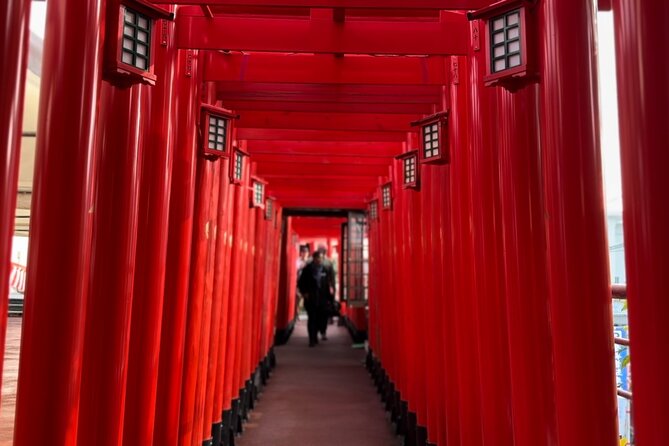
- Electric bikes matter on Naha’s hills: The route climbs toward Shuri, and pedal assistance can make the ride much more pleasant.
- Small groups keep the experience personal: The maximum is five people, so you can ask questions and keep a reasonable pace.
- The sights are religious and local: You visit temples, shrines, a sacred spring, and royal burial grounds rather than only famous photo stops.
- The tour begins at Makishi Station: The shop is about a one-minute walk from Makishi Monorail Station at 3-chōme-13-20 Makishi.
- You receive a goshuin-cho: This traditional pilgrim’s book gives the journey a practical souvenir and a sense of purpose.
- Weather can change the plan: Heavy rain or a precipitation chance above 70 percent may lead to a change of date or a full refund.
Why this four-hour ride is different from a standard Naha tour
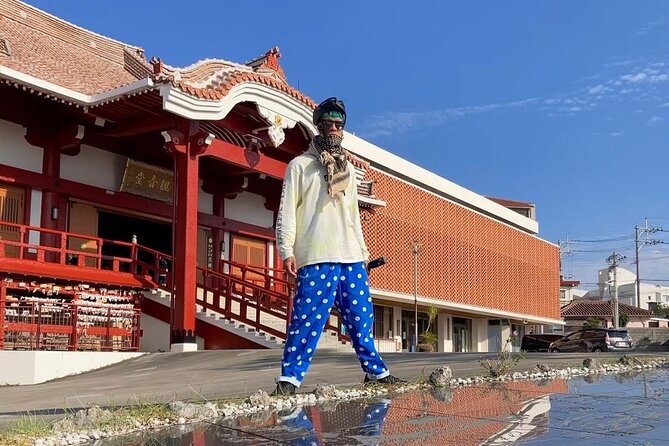
Naha is easy to enjoy from its main roads. Kokusai Street, the market area, and Shuri Castle draw most visitors, but the city’s older religious life is less obvious. This tour takes you into the lanes between those better-known places, where the connection between modern Naha and the Ryukyu Kingdom becomes easier to see.
The focus is not simply on sightseeing. You are following a loose pilgrimage route through zodiac-related shrines and Buddhist sites. Your guide explains how people still pray for health, pregnancy, family well-being, and good fortune. The customs reach back to the Ryukyu Kingdom era, but they are not treated as museum pieces. You may see people making offerings and observing familiar rituals as part of ordinary life.
I like this approach because the sites are small enough to feel personal. You are not trying to understand an enormous palace complex in a rush. Instead, you pause at a temple carving, a vermilion gate, a spring, or a burial site and learn why it matters.
The group limit of five is a real advantage. A larger bike group would be harder to manage on narrow streets and would make quiet temple visits feel less quiet. Here, you can ask about the zodiac, Okinawan Buddhism, or local customs without waiting for a long line of people to catch up.
More Temples and Shrines in Naha:
- Naha: Guided E-Bike Tour of the 12 Zodiac Temples
★ 4.9 · 50 reviews - [Kyoto & Nara Day Tour] Sagano Scenic Railway & Nara Park & Fushimi Inari Taisha Thousand Torii Gates & Togetsukyo Bridge & Bamboo Grove & Kimono Forest (Departing from Osaka)
★ 4.9 · 10,942 reviews - Mount Fuji & Hakone – Lake Ashi Torii Gate, Hakone Shrine, Hakone Pirate Ship, Hakone Ropeway, Owakudani, Lake Yamanaka & Oshino Hakkai Day Trip: Sea, Land, and Air Panoramic Tour from Tokyo
★ 4.8 · 7,989 reviews
Starting at Makishi, then trading streets for electric power
Meet at the tour shop near Makishi Monorail Station. The location is practical if you are staying in central Naha, and the shop is only about a one-minute walk from the station. You receive an electric bicycle, an included cycling helmet, and a short safety briefing before setting off.
The briefing matters because this is not a completely traffic-free ride. Some sections use busy streets, and you need to pay attention around cars, crossings, and other cyclists. The electric assistance helps with the hills, but it does not replace basic road awareness.
The bikes are especially useful as the route heads toward Shuri. Naha can feel deceptively flat near the shopping streets, then suddenly rise. The pedal assist lets you spend more energy looking around and less energy worrying about the next climb.
Bring your own water. Bottled water is not included, although snacks are provided. A phone holder and camera mount are also not included, so keep your phone in a pocket or bag and be ready to stop when you want photos.
Shuri Kannondo, a vermilion view over the city
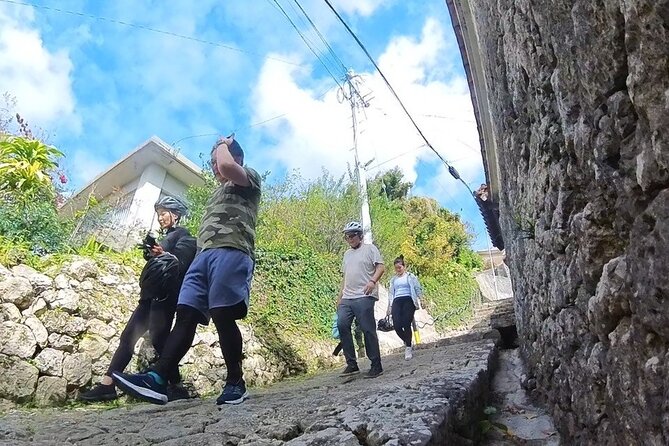
The first major stop is Shuri Kannondo, a temple associated with Kannon Bodhisattva, regarded here as a guardian deity of the Ryukyu Kingdom. The bright vermilion building gives you an immediate introduction to the color and design language found across Okinawan religious and royal sites.
Look for the carvings and decorative details rather than rushing straight to the view. From the temple, you can look over Shuri and Naha, which helps you understand the route you have just traveled from the lower city.
This stop lasts about 20 minutes. That is enough time for an explanation, a few photographs, and a quiet look around, though it is not enough for a long independent visit. The guide adds value here because the meaning of Kannon and the temple’s connection to the kingdom may not be obvious from the building alone.
Ankoku-ji and the old residential lanes
The ride continues through a local part of Naha where several traditional houses remain. This is one of the route’s more useful sections because you are seeing the city between the headline attractions.
Ankoku-ji has practiced Okinawan Buddhism for more than 500 years. The age of the temple gives the stop weight, but the setting is just as important. You pass from ordinary residential streets into a religious site with an older feel, a change that shows how temples can remain part of daily neighborhoods.
Expect around 20 minutes here. The stop is best for listeners who enjoy cultural context. If you want only dramatic buildings and long photo sessions, it may feel brief and understated. I would treat it as a chance to notice the small details, including the temple’s older features and the way the surrounding area has changed.
More Bike Tours in Naha:
- Afternoon Adventure: Okinawa Local Cycling with Spectacular Views
★ 5.0 · 92 reviews - E-Bike Nature Tour in Shuri
★ 5.0 · 25 reviews - Bike Tour Exploring North Kyoto plus Lunch
★ 5.0 · 1,087 reviews - Tokyo Great Cycling Tour
★ 5.0 · 811 reviews
Shuri Castle’s ceremonial gate
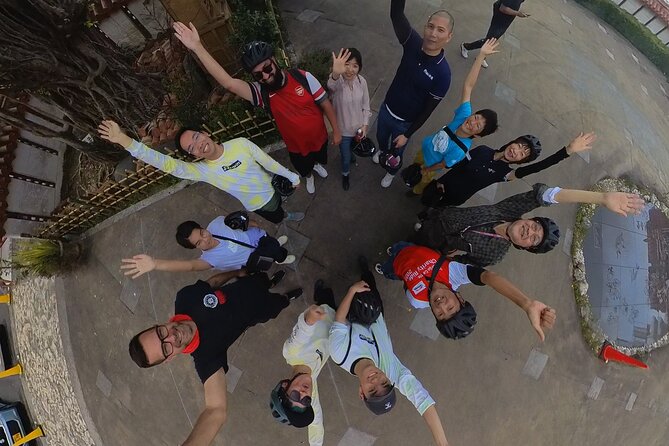
The Shuri Castle stop focuses on a special ceremonial gate rather than a long castle visit. Its vermilion color and balanced design make it one of the clearest symbols of Okinawa, and you can pose with your bicycle in front of it.
That bicycle photo is a nice touch. It connects the modern city ride with the royal history of Shuri without turning the stop into a formal portrait session.
You have about 20 minutes. Keep your expectations clear: this experience does not present itself as a full Shuri Castle tour. The available information specifically centers on the ceremonial gate, so anyone wanting an extended castle visit should plan separate time before or after the ride.
Sairaiin, the Daruma Temple
Sairaiin is known as the Daruma Temple, and its bright red Daruma dolls give the stop a very different look from the royal gate and older Buddhist sites. People visit to pray for good health and pregnancy, while also giving thanks for their current lives.
The themes here are personal and practical. You are not just looking at colorful objects. You are seeing how religious places can serve as settings for hope, gratitude, and family concerns.
This is another 20-minute stop. The red Daruma figures should make for strong photographs, but remember that this is an active religious place. Watch what your guide does, listen to instructions, and keep your camera use respectful.
Seikoji, an old site beside the modern city
Seikoji arrives after a change of pace. You cross the main street and pass beneath the monorail, then reach a temple with a quieter atmosphere. That contrast is one of the tour’s best visual ideas: modern transport overhead, religious space below.
The current temple was rebuilt after the war, while an ancient Japanese stone remains beside it. The combination gives you a concise lesson in Okinawa’s difficult past and its continuing religious traditions. The site does not need a long visit to make its point.
Allow roughly 20 minutes. This stop rewards anyone who pays attention to contrasts, including new construction beside old stone, elevated transport beside a sacred site, and city noise giving way to a calmer temple setting.
Shuritobarucho, the spring found in the forest
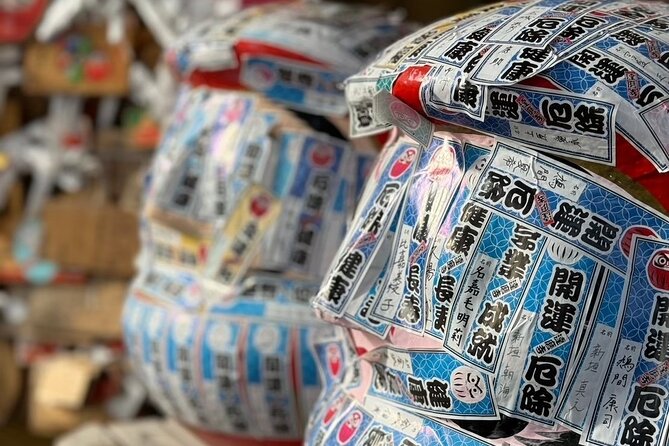
The route then turns toward Shuritobarucho, a spring linked to an Okinawan princess. According to the local story, she noticed waterfowl in the area, leading to the discovery of water deep in the forest.
You spend about 15 minutes here. The stop is shorter than the temples, but it changes the mood. Instead of focusing on a building, you are looking at water and the natural setting around it. The spring offers a direct link between a place, a story, and the people who still value it.
This is a good reminder that Okinawan sacred places are not limited to temples and shrines. Water itself can carry memory and meaning. Do not expect a major attraction with extensive facilities. The appeal is the small scale and the story your guide provides.
Sogenji-dori and the royal burial grounds
Near Sogenji-dori, you enjoy a downhill ride to the place where successive Ryukyu kings were entombed. The descent adds a little fun after the uphill sections, but take care with speed, especially if you are still getting used to the electric bike.
The royal burial site is now a city park with clean air and a calmer feel. A stone gate and an old banyan tree remain important parts of the setting. Here, the royal past feels less formal than it does at a palace. You are seeing a memorial place that has become part of the city’s everyday open space.
The stop lasts about 15 minutes. It is short, so your guide’s explanation will help you understand what you are seeing. I would also save a little attention for the banyan tree and the gate, not only the burial grounds themselves.
What the guides add to the ride
The guides are central to the experience. Maria has been praised for handling the route through busy streets and explaining Okinawan culture. Jojo has been singled out for being friendly, answering questions, and helping with photographs. Sally has also led a nature-focused version that included the castle and other interesting areas.
Those details suggest a tour style that is flexible and personal rather than rigid. One small group even had the route adjusted into a nature trip, showing that the operator may change the emphasis when needed. You should still confirm any requested changes with the staff, but the guiding style appears open to conversation.
The guide also helps with small practical moments. You may want a photograph at the castle gate, need help understanding a shrine custom, or wonder how the pilgrim’s book fits into the visit. A good guide makes those moments easy.
The goshuin-cho and included snacks
The included goshuin-cho, or pilgrim’s book, is more meaningful than a standard tour souvenir. It gives you a place to record the religious stops and turns the ride into a personal pilgrimage rather than a string of unrelated locations.
The tour also includes snacks. Since water is not included, bring a bottle with you. You should also bring sun protection suited to the day, though the supplied information does not specify what kind of shade or rest facilities are available at each stop.
The helmet is included, as is the electric bicycle. You do not receive a camera mount or mobile phone holder, so do not count on mounting your phone to the handlebars.
Is $108.72 a fair price?
At $108.72 per person, this costs more than renting a bicycle and visiting a few Naha sites independently. The price makes more sense when you count the electric bike, helmet, guide, snacks, small group size, route planning, and cultural interpretation.
You are also paying for access to a route that would be difficult to assemble efficiently on your own. The temples, spring, royal burial grounds, and castle gate are spread across Naha and Shuri. A self-guided cyclist would need to plan the order, handle the hills, and research the meaning of each place.
The value is strongest for a first visit to Okinawa, a short stay, or anyone who wants cultural context without spending a full day in museums. It is weaker if you already know Naha well, dislike cycling near traffic, or prefer to linger at each site for a long time.
Who should book this ride?
I would recommend it to active visitors who want more than Kokusai Street and the usual city circuit. It suits couples, solo visitors, and small families who like local stories, religious sites, and a moderate amount of physical activity.
Children aged one to five can ride in a child seat attached to a parent’s bicycle, but you need to consult the staff first. The maximum group size is five, which helps families avoid being folded into a large cycling crowd.
You should think twice if you are uncomfortable on roads or if heavy rain is likely. The tour requires good weather, and plans may change when the precipitation probability exceeds 70 percent or severe weather threatens. If the operator cancels because of weather, you can receive another date or a full refund.
Free cancellation is available until 24 hours before the start time. Changes or cancellations made within 24 hours are not accepted for a refund.
My final recommendation
Book this tour if you want to connect Naha’s streets with Okinawa’s living religious traditions. The e-bike handles the hills, the five-person limit keeps the ride friendly, and guides such as Maria and Jojo add the explanations that make small temples and springs worth your time.
Skip it if your priority is a long visit inside Shuri Castle, a completely traffic-free ride, or a cheap way to cover the city. For everyone else, this is a smart half-day choice, especially early in an Okinawa visit when you want to understand what lies behind Naha’s main streets.
FAQ
Where does the Zodiac Shrines and Naha Backstreets Cycling Tour begin?
It begins at the tour shop at 3-chōme-13-20 Makishi, Naha, Okinawa 900-0013, Japan. The shop is about a one-minute walk from Makishi Monorail Station.
Where does the tour end?
The tour ends back at the same shop where you return the bicycle.
How long does the cycling tour last?
The tour lasts approximately four hours, including the cycling, safety briefing, and visits to the listed sites.
How much does the tour cost?
The listed price is $108.72 per person.
How many people can join the tour?
The tour has a maximum of five travelers.
Is the bicycle included?
Yes. The tour includes use of an electric bicycle and a cycling helmet.
Is water included?
No. Bottled water is not included, so you should bring your own.
Can young children join?
Children aged one to five can have a child seat attached to a parent’s bicycle. You should consult the staff for details before booking.
What happens if the weather is poor?
If the precipitation probability exceeds 70 percent or severe weather is expected, the operator may change the plans and contact you the day before. If the experience is canceled because of poor weather, you can choose another date or receive a full refund.
Just added in Naha
- Northern Okinawa: Churaumi Aquarium & Kouri Island & Cape Manza & American Village Day Tour (Departing from Naha & Chatan)★ 4.8 · 1,115 reviews
- (Okinawa’s No. 1 Popular Northern Day Trip) Chinese-speaking guide · Includes admission tickets · 1 person can book: Churaumi Aquarium · Cape Manzamo · Kouri Island · American Village★ 4.7 · 1,846 reviews
- E-Bike Nature Tour in Shuri★ 5.0 · 25 reviews
- Sushi Making Experience Class in Naha Makishi Public Market★ 5.0 · 35 reviews
- Tokashiki Island Day Trip from Naha★ 4.0 · 15 reviews
- Port Pick-Up: Naha Private Tour Licensed Guide& Vehicle★ 4.5 · 16 reviews
- Okinawa:Kerama Islands experience Diving/Snorkeling/WhaleWatching★ 4.5 · 16 reviews
- Kintsugi Experience in Naha, Okinawa – Art from Broken Pieces!★ 5.0 · 28 reviews
Cycling and E-Bike Tours, compared.


3h Tokyo E-Bike Tour: Hidden Gems, and Local Life with guide
Read our review →
Arashiyama Bamboo Forest & Hidden Gems Bike Tour (Early Bird)
Read our review →
5 Top Highlights of Kyoto Full Day Bike Tour (E-bike option)
Read our review →

Hiroshima 2hr Peace Cycling Tour with Local Guide
Read our review →Browse the lists this tour appears in