
Reviewed · TEA CEREMONIES
Tea ceremony experience with simple kimono in Okinawa
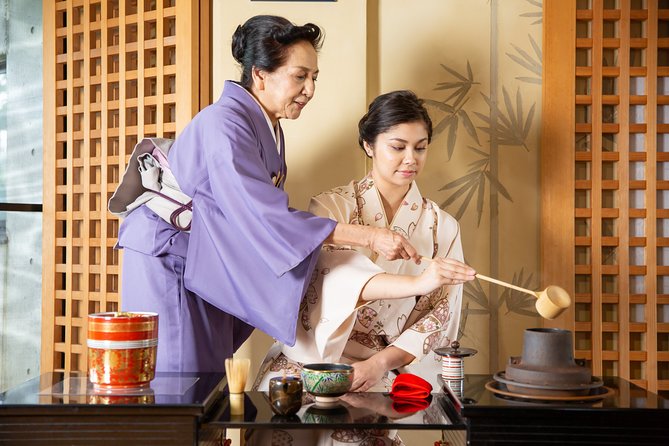
Slow down for a cup of matcha. This 75-minute activity in Onna-son gives you a rare look at Japanese tea culture in a traditional tea room, then lets you take part rather than simply watch. I especially like the chance to wear a simple kimono and make your own green tea. The small-group setting, capped at six people, should also make it easier to ask questions and follow the instructions.
The main consideration is price: at $85.39 per person, this is not a quick photo stop. You are paying for a guided cultural lesson, clothing, sweets, tea, and a carefully arranged setting. It also requires a reservation at least three days ahead, and the activity needs good weather even though much of the ceremony takes place indoors.
In This Review
- Key points to know before booking
- Why this tea ceremony feels different in Okinawa
- Changing into a simple kimono
- Entering through the small tea-room entrance
- Moving to the Ryurei-style table
- Tasting Okinawan and Japanese sweets
- Learning the tools before making matcha
- Making and tasting your own green tea
- A calm experience with strong family appeal
- What the $85.39 price includes in practical terms
- Timing, transport, and booking advice
- Who should book this Okinawa tea ceremony
- Should you book Sasagirian?
- FAQ
- Where does the tea ceremony take place?
- How long does the activity last?
- What is the price?
- Is a reservation required?
- How many people can join?
- Can children participate?
- Can I participate if I cannot sit upright?
- Is transportation available?
- What will I drink and eat?
- What happens if the activity is canceled because of weather?
Key points to know before booking
- A rare Okinawa tea-room setting: You enter through the small entrance of a traditional tea room, an important part of the ceremony itself.
- Simple kimono included: You change into a simple kimono for the activity and take photos in front of a gold folding screen.
- You make your own matcha: The tea master teaches you how to handle the tools, cleanse them, add hot water, and whisk your own tea.
- Okinawan sweets are part of the lesson: You taste both Japanese and Okinawan sweets before drinking the bitter tea.
- A good family activity: Children over age four can participate, and the format has suited families ranging from adults in their fifties to 11-year-old twins.
- Small, timed, and reservation-only: The session lasts about 1 hour and 15 minutes, requires at least two people, and is limited to six participants.
Why this tea ceremony feels different in Okinawa
Okinawa is best known for beaches, island scenery, and its distinct Ryukyuan culture. That makes this activity a useful counterpoint. You are not simply looking at a display of Japanese objects. You learn how a tea room works, why its details matter, and how to prepare the drink yourself.
The setting is Japanese rather than specifically beach-oriented Okinawan, but local touches appear through the sweets and the setting in Onna-son. You get a quiet cultural hour in the middle of a holiday often built around driving, swimming, and sightseeing.
The ceremony takes place at the Japanese Cultural Experience Facility Sasagirian, also written as 笹桐庵. The address is 1765-8 Nakama, Onna, Kunigami District, Okinawa 904-0401. The activity begins and ends there, so you do not need to track down a second location after the ceremony.
I like that the experience includes instruction at every stage. The tea master introduces the utensils and explains the manners, while a translator helps make the ceremony understandable for English-speaking participants. That combination matters. Without explanation, a tea ceremony can feel beautiful but mysterious. Here, you get the meaning behind the movements.
More Tea Ceremonies in Okinawa:
- Kyoto: Tea Ceremony in a Traditional Tea House in Kiyomizu
★ 4.9 · 3,519 reviews - Kyoto: Tea Ceremony Ju-An at Jotokuji Temple
★ 4.9 · 3,207 reviews - Kyoto: 45-Minute Tea Ceremony Lesson Experience
★ 4.3 · 2,378 reviews
Changing into a simple kimono
Your first step is changing into a simple kimono. This is not presented as a full formal dressing service, so you should think of it as comfortable cultural clothing for the session rather than an elaborate costume appointment.
That distinction is useful. You get the visual pleasure of traditional dress without turning the whole activity into a long clothing rental experience. The kimono also helps mark a clear change from ordinary sightseeing to the more formal mood of the tea room.
The activity later includes time for photos in front of a gold folding screen. Bring a phone or camera if you want to record the moment, but remember that the main value is the ceremony itself. The photos are a pleasant final touch, not the whole point.
The clothing may also help children and first-time participants feel that they are part of the activity. Families have used the session successfully with children as young as 11, and children over four are allowed to take part. Children under three are not permitted.
Entering through the small tea-room entrance
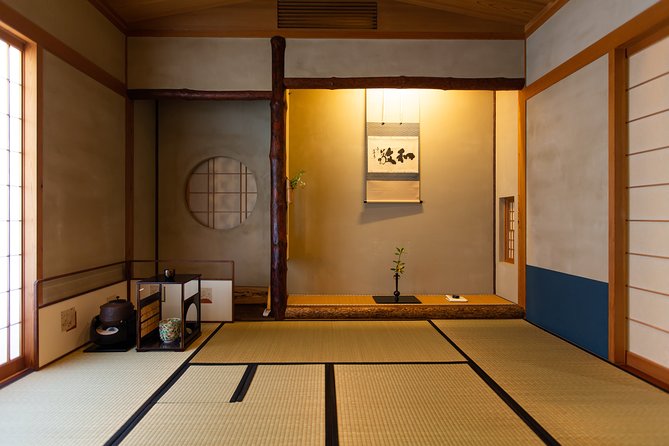
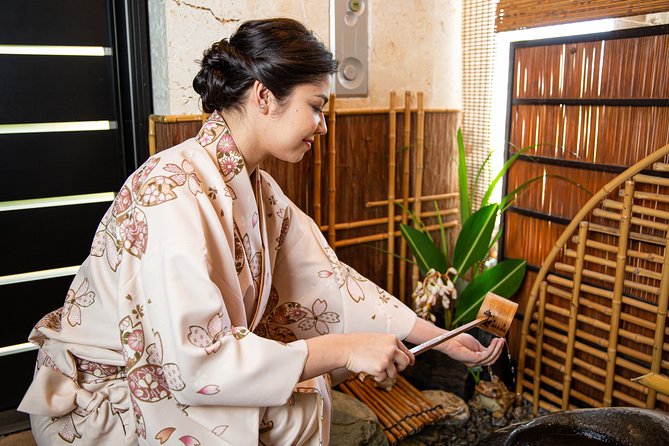
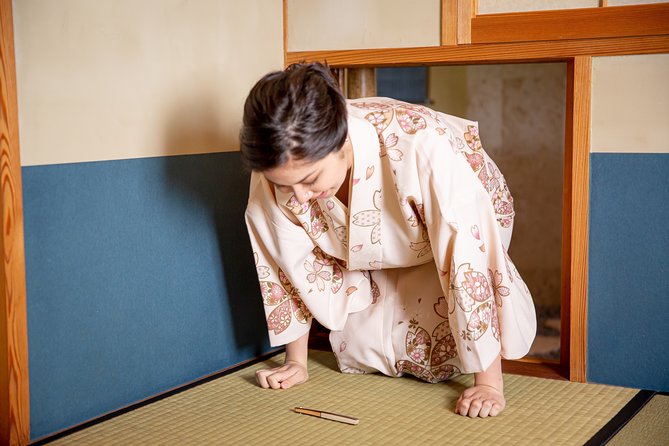
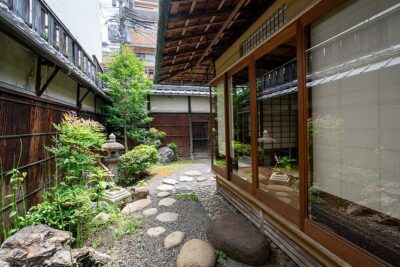
After washing your hands, you enter the tea room through a small entrance. This is one of the most meaningful parts of the experience because the entrance is designed to encourage humility and a respectful attitude.
You do not simply walk into a room and sit down. The act of cleansing your hands and entering carefully gives the ceremony a beginning and a rhythm. The tea master explains the manners, so you are not expected to know the correct movements before arriving.
Inside, you have time to appreciate the hanging scroll, flowers, and tea utensils. These details are not just decoration. They help create the calm, focused atmosphere that makes the ceremony feel separate from the rest of your day.
I particularly like this portion because it asks you to look closely. The scroll, flowers, and tools are easy to overlook in a fast sightseeing program, but here they become part of what you are learning. The ceremony gives each object a place and purpose.
You should also expect a quiet and respectful mood. This is not a noisy demonstration with a running commentary at every second. The translator fills in what you need to understand, while the structure of the ceremony allows the room itself to do some of the teaching.
Moving to the Ryurei-style table
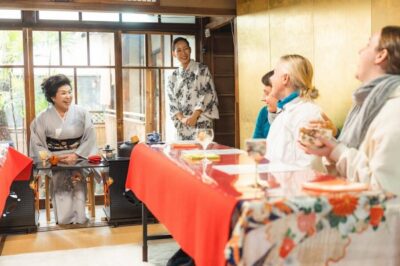
After the tea-room introduction, you move to a separate space arranged in the Ryurei style. This means the tea ceremony is conducted at tables and chairs rather than on the floor.
That is an important practical advantage. Traditional tea ceremonies can involve kneeling or sitting in positions that are difficult for some people. The activity specifically confirms that you can participate even if you cannot sit upright, making the table-and-chair format more accessible.
The change in room also gives the experience a natural progression. First, you learn how to enter and observe the tea room. Then you sit at the table for the tasting and hands-on preparation.
The Ryurei arrangement may feel less formal than a floor-based ceremony, but it is likely more comfortable for an international audience and for families. You can concentrate on the instructions instead of worrying about your legs, posture, or how long you can remain seated.
More Kimono Experiences in Okinawa:
- Traditional Japanese Costumes “Kimono”, “Yukata”, “Ryuso”, “Photograph Course “Hair Set & Lipstick & Kimono & Photography”
★ 5.0 · 17 reviews - Walking around town in a kimono, you can choose your favorite kimono from the traditional Okinawan costumes “Ryuso”, “Kimono”, “Yukata” 《Hairset & Lipstick & Kimono & Rental Fee》All Comic Book
★ 4.5 · 14 reviews - [Kyoto & Nara Day Tour] Sagano Scenic Railway & Nara Park & Fushimi Inari Taisha Thousand Torii Gates & Togetsukyo Bridge & Bamboo Grove & Kimono Forest (Departing from Osaka)
★ 4.9 · 10,942 reviews - Tokyo Asakusa Kimono&Yukata Rental at Kimono Miyabi Asakusa Station
★ 4.9 · 8,489 reviews
Tasting Okinawan and Japanese sweets
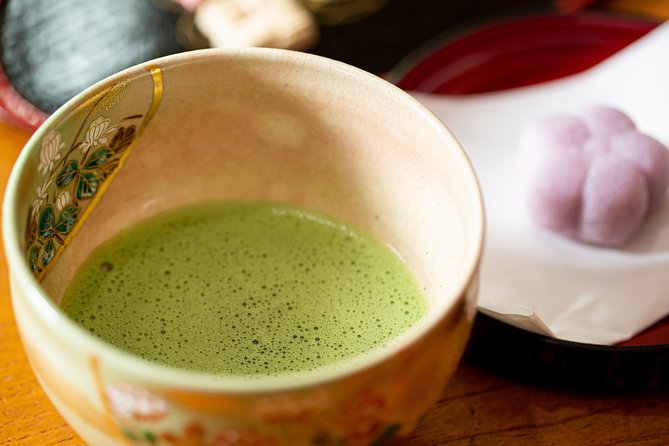
Before you prepare the tea, you taste Japanese and Okinawan sweets. This is not a random snack break. Sweets are traditionally served with matcha because their sweetness balances the tea’s bitter flavor.
The Okinawan element adds local character to an otherwise broadly Japanese ceremony. You get a chance to compare the two types of sweets and see how food fits into the ritual.
The order matters. You eat the sweets before drinking the tea, so the bitterness of the matcha becomes part of the intended contrast. If you are new to matcha, do not expect a sweet, milky drink. The tea is green, earthy, and bitter, and the sweets prepare your palate for it.
This is also a nice family-friendly section. Children who may not yet appreciate the tea itself can still connect with the food, the clothing, and the visual details of the room. Adults get the cultural explanation, while younger participants have something immediately familiar to enjoy.
Learning the tools before making matcha
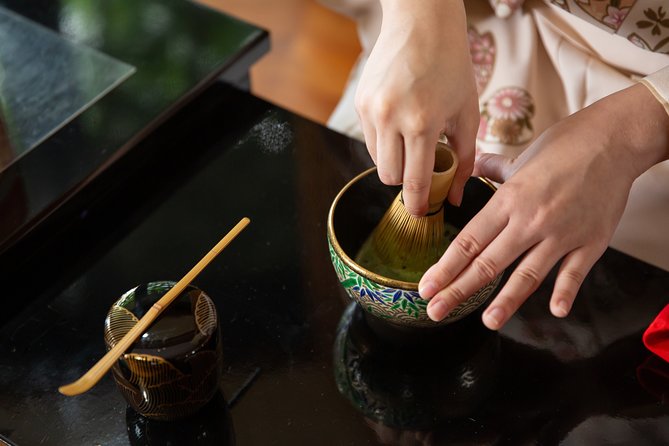
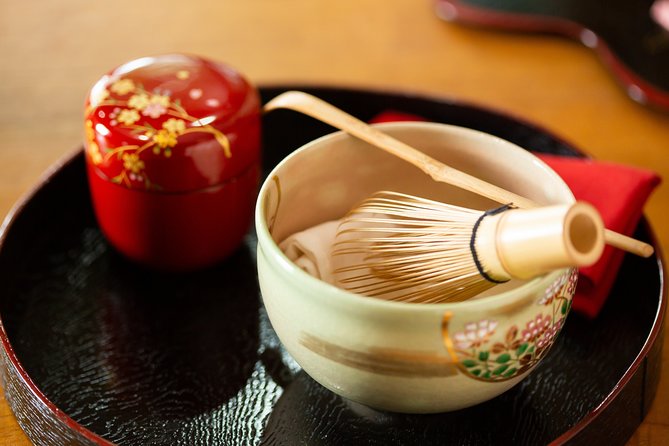
The hands-on lesson begins with the silk cloth and tea utensils. You learn how to handle the cloth and cleanse the tea tools before preparing your drink.
These motions can seem small, but they are the heart of the experience. The ceremony values care, order, and attention. Cleaning the tools is not rushed housekeeping. It is a visible sign of respect for the tea, the room, and the people sharing the moment.
The tea master demonstrates the process, and the translator explains anything you do not understand. That makes this suitable for complete beginners. You do not need previous knowledge of tea ceremony etiquette, Japanese language, or matcha preparation.
I also like that you are taught the reason for the movements rather than being handed a bowl and told to copy someone. The tools become less intimidating once you know what each one does.
The group size helps here. The activity is limited to six participants according to the additional information, though another description gives a maximum of eight. I would plan on a maximum of six when considering the atmosphere. Either way, this is a small class rather than a large performance.
Making and tasting your own green tea
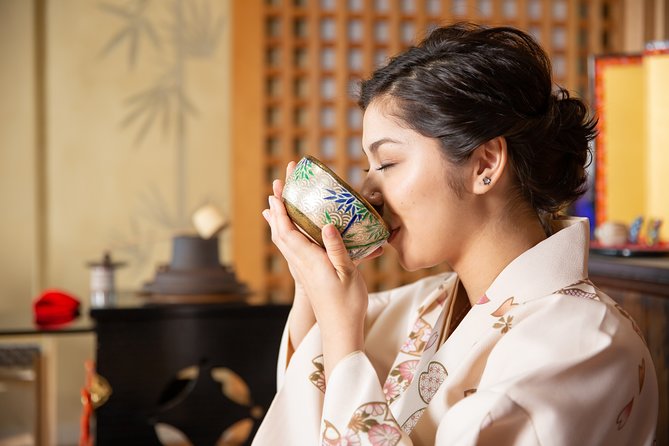
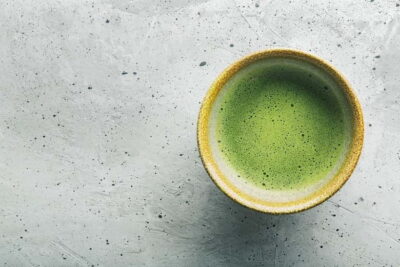
At the key hands-on stage, you add matcha green tea and hot water to the tea bowl, then prepare your own drink. The tea master guides you through how to treat the equipment and how to make the tea.
This is where the $85.39 price begins to make more sense. You are not only observing a specialist. You receive clothing, instruction, sweets, access to a traditional tea room, and the chance to make the tea yourself.
Your bowl may not look exactly like a tea master’s after one lesson, and that is part of the fun. The goal is not to pass a test. The goal is to understand the care behind a drink that many people encounter only as a menu item.
After you make the tea, you taste it. Since you have prepared the bowl yourself, the final sip has a little more meaning than tea served to you by someone else.
If you dislike bitter flavors, keep your expectations realistic. The sweets soften the experience, but matcha remains matcha. I would recommend this activity to curious eaters rather than anyone seeking a sweet beverage or a purely decorative photo session.
A calm experience with strong family appeal
The tone of this activity works for more than one type of visitor. Couples can treat it as a quiet cultural break. Parents can use it as an easy introduction to Japanese customs. Older adults may appreciate the chair-based format and the short duration.
The age guidance is clear: participants over four are welcome, while children under three cannot join. The fact that the session has worked for a family including adults aged 53 and 11-year-old twins suggests a broad age range can enjoy it, provided everyone is willing to listen and take part.
The translator is especially valuable for mixed-language families. The tea master leads the ceremony, while the translator fills in the explanations. That gives you access to the cultural details without requiring Japanese language skills.
The group format also encourages a more personal lesson. With six people or fewer, you should have a better chance of seeing the tools clearly and receiving help with the tea-making steps.
What the $85.39 price includes in practical terms
At $85.39 per person, this is expensive compared with an ordinary cup of matcha or a quick cultural demonstration. It becomes better value if you want several elements in one appointment.
You receive:
- A simple kimono to wear during the session
- Guided entry into a traditional tea room
- An explanation of the scroll, flowers, and tea tools
- Japanese and Okinawan sweets
- Instruction in handling the silk cloth and cleansing the utensils
- The chance to make and drink your own matcha
- Time for photos in front of a gold folding screen
- A session lasting about 1 hour and 15 minutes
I would not book this solely for the food or the photos. The value lies in the teaching and setting. If you have limited time in Okinawa and want an activity that explains a cultural practice in a personal way, the price is easier to justify.
The small group and translator also add value. A larger demonstration might cost less, but it would not necessarily give you the same chance to handle the tools or prepare your own bowl.
Timing, transport, and booking advice
The meeting point is Japanese Cultural Experience Facility Sasagirian in Nakama, Onna-son. The activity is near public transportation, and the mobile ticket makes arrival straightforward once you have the location saved on your phone.
Plan for the full 75 minutes, plus a little extra time around changing clothes. The stated duration is approximate, so avoid scheduling another fixed activity immediately afterward.
You must reserve at least three days before the experience. This is important because the class needs a minimum of two people and has limited capacity. It is booked an average of 22 days in advance, so I would not leave it until the final days of an Okinawa holiday.
The cancellation policy is generous if your plans change. You can cancel up to 24 hours before the start time for a full refund. Changes or cancellations made inside that 24-hour window are not accepted for a refund.
The activity requires good weather. If poor weather causes a cancellation, you are offered another date or a full refund. Since the session is indoors, this condition may relate to operating arrangements or getting to the facility, so keep your schedule flexible during unsettled weather.
Who should book this Okinawa tea ceremony
I would recommend it if you want:
- A quiet cultural activity between outdoor excursions
- A guided introduction to Japanese tea ceremony
- An activity that includes dressing up without a long formal costume session
- A hands-on lesson rather than a demonstration
- A family experience suitable for children over four
- A chair-based format instead of floor seating
- A small group with translation support
- A meaningful souvenir in the form of photos and a new skill
I would think twice if you want a fast, casual stop, dislike bitter tea, or are mainly looking for a large-scale Okinawan performance. This is a focused lesson with rules, manners, and quiet moments. You need to be willing to slow down.
Should you book Sasagirian?
Yes, if you want one carefully structured hour away from Okinawa’s usual beach-and-resort routine. The strongest parts are the small traditional tea room, the simple kimono, the Okinawan sweets, and the chance to make your own matcha under the tea master’s guidance.
At $85.39, it is a special-occasion activity rather than a budget attraction. Book it at least three days ahead, allow the full 75 minutes, and choose it because you want to understand the ceremony, not just pose in costume.
For families, couples, and first-time visitors to Japan, this is a thoughtful choice. It gives you something to do, something to taste, and something to remember after the bowl is empty.
FAQ
Where does the tea ceremony take place?
It takes place at Japanese Cultural Experience Facility Sasagirian, located at 1765-8 Nakama, Onna, Kunigami District, Okinawa 904-0401, Japan.
How long does the activity last?
The tea ceremony lasts approximately 1 hour and 15 minutes.
What is the price?
The listed price is $85.39 per person.
Is a reservation required?
Yes. You must reserve at least three days before the experience.
How many people can join?
The activity requires a minimum of two people. The additional information lists a maximum of six participants, while another description gives a maximum of eight.
Can children participate?
Children over four years old can participate. Children under three are not allowed to join.
Can I participate if I cannot sit upright?
Yes. The activity uses Ryurei-style tables and chairs, and participation is allowed even if you cannot sit upright.
Is transportation available?
The meeting point is near public transportation. The activity begins and ends at Sasagirian.
What will I drink and eat?
You will taste Japanese and Okinawan sweets, then prepare and drink your own matcha green tea.
What happens if the activity is canceled because of weather?
If poor weather causes a cancellation, you will be offered a different date or a full refund.
Just added in Okinawa
- Okinawa Zoo & Museum Admission Ticket★ 4.8 · 673 reviews
- JUNGLIA Ticket in Okinawa★ 4.2 · 2,317 reviews
- Okinawa FunPASS (Value Series)★ 4.7 · 2,081 reviews
- Northern Okinawa: Churaumi Aquarium & Kouri Island & Cape Manza & American Village Day Tour (Departing from Naha & Chatan)★ 4.8 · 1,115 reviews
- Okinawa FunPASS (Churaumi Series)★ 4.7 · 1,060 reviews
- (Okinawa’s No. 1 Popular Northern Day Trip) Chinese-speaking guide · Includes admission tickets · 1 person can book: Churaumi Aquarium · Cape Manzamo · Kouri Island · American Village★ 4.7 · 1,846 reviews
- Okinawa Churaumi Aquarium Ticket★ 4.7 · 7,707 reviews
- Blue Cave Private Snorkeling with Photoshoot★ 4.5 · 49 reviews
Tea Ceremonies, compared.
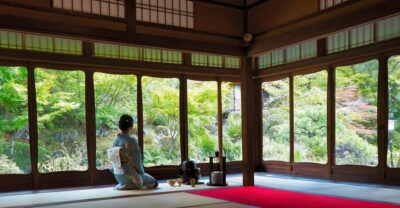
Tea Ceremony in a Traditional Tea House in Kiyomizu
Read our review →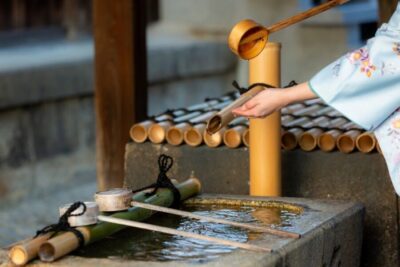
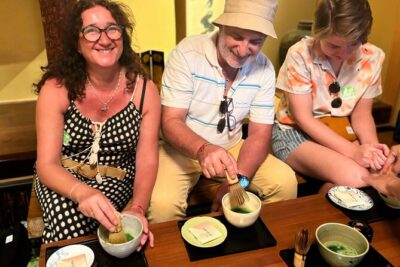
World Heritage Kyoto & Nara Uji Authentic Matcha Experience
Read our review →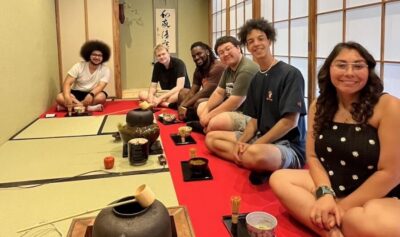
Browse the lists this tour appears in