
Reviewed · COOKING CLASSES
Sushi Making Experience Class in Naha Makishi Public Market
Fresh fish, local guidance, and sushi you make yourself.
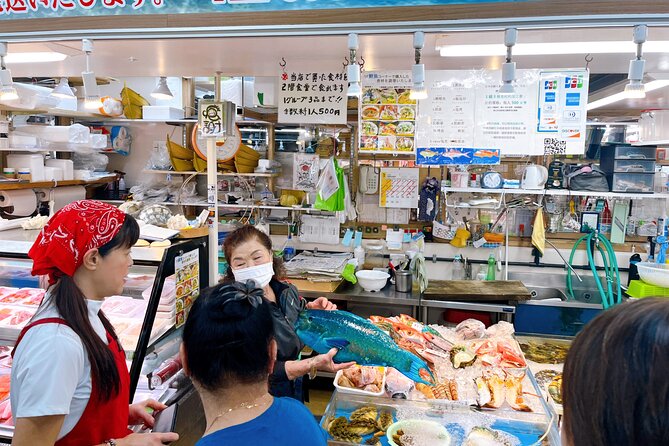
This 2.5-hour sushi class begins inside Naha’s Makishi Public Market, where you tour fish stalls and select ingredients used for the meal. I like the direct connection to Okinawan food culture, and I like that the class ends with eight pieces of sushi, red soup stock, gari, and green tea rather than a quick demonstration with no meal.
The main consideration is the price: $164.72 per person is a serious spend for a short cooking class. Alcohol costs extra, aprons are not supplied, and the activity is non-refundable, so you will want to be sure this market visit and hands-on meal match your plans.
In This Review
- Key things to know before booking
- Starting at Makishi Public Market in Naha
- Learning sushi from the instructor
- Eating your own eight pieces of sushi
- What the $164.72 price really buys
- The 20-day booking pattern and timing
- Who will enjoy this market cooking class most
- Strengths and drawbacks at a glance
- Should you book it?
- FAQ
- Where does the sushi-making experience begin and end?
- How long does the experience last?
- How many pieces of sushi will I make?
- Which fish will be used?
- Is alcohol included in the price?
- Is an apron provided?
Key things to know before booking
- You shop for the fish inside Makishi Public Market: The class includes a guided visit to fresh fish shops before the cooking begins.
- The menu changes with the season: Possible fish includes mibai, red machi, irabucha, stew machi, local bonito, local tuna, kubushimi, and salmon.
- You make eight pieces of sushi: The instructor teaches the process, then you prepare your own sushi and eat it with the group.
- The class is capped at 20 people: It is a group activity, not a private lesson, though discounts may be available for larger groups.
- Alcohol is available but costs extra: Sake starts at 1,000 yen, and beer starts at 500 yen.
- A tenugui towel is included: The RYUKYUMONO original towel is supplied as a bonus, along with use of the galley and all required fees and taxes.
Starting at Makishi Public Market in Naha
The meeting point is Makishi Public Market at 2-chōme-10-1 Matsuo, Naha, Okinawa 900-0014. The activity begins and ends at this same location, which makes the class easy to fit into a day in central Naha.
The market is the important first part of the experience. You are not simply handed a plate of preselected fish. Instead, the class takes you through the fresh fish area to see the ingredients being purchased for your sushi. That gives the meal a stronger sense of place.
I especially like this format for first-time visitors to Okinawa. Makishi Public Market offers a chance to encounter local fish and the people who sell it, while the instructor explains how those ingredients become sushi. You get a food lesson and a small cultural introduction in the same outing.
The market tour is also useful if you do not know Okinawan fish names. The possible ingredients can include local varieties such as mibai, red machi, irabucha, stew machi, kubushimi, bonito, and tuna. Salmon may appear as well, but the selection depends on the season. That changing menu is a plus for freshness, though it means you should not book expecting one exact list of fish.
One practical point: the market is part of a working food district, not a quiet classroom. You will be looking at seafood, moving through public market areas, and taking part in a group activity. If you prefer a polished studio kitchen with every ingredient arranged in advance, this may feel less controlled. If you like seeing where the food comes from, it is the better choice.
More Cooking Classes in Naha:
- Sushi Making Tokyo Roll and Authentic Japanese Sushi Class
★ 5.0 · 3,971 reviews - Tokyo: Roll and Authentic Sushi Making Class in Asakusa
★ 4.9 · 1,957 reviews - Ramen Cooking Class at Ramen Factory in Kyoto
★ 5.0 · 1,937 reviews
Learning sushi from the instructor
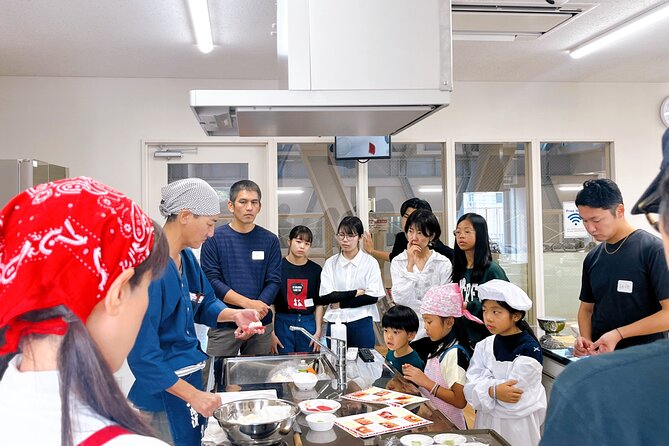
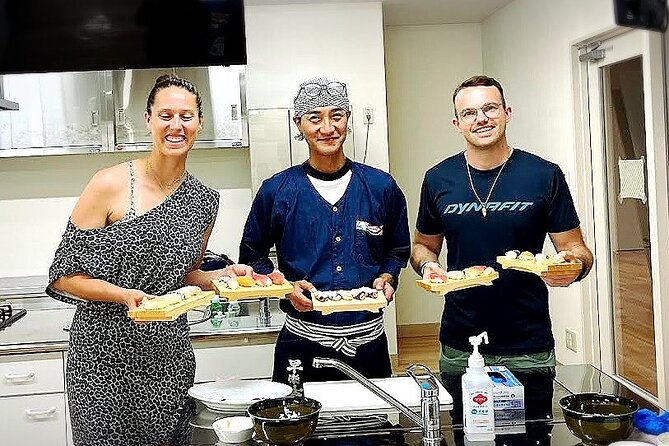
After the market visit, the class moves to the sushi-making portion. The instructor shows you how to prepare the sushi, then gives you the chance to make your own pieces. The structure is simple and approachable: watch, try, assemble, and eat.
You should not need professional cooking skills. This is a tour-style lesson designed around participation, not a chef certification. The most valuable part is the chance to handle fish purchased for the class and turn it into your own meal.
The class has received strong praise for the teaching style. One instructor, identified in English as I, was described as patient, fun, and clear while guiding the group. Another participant singled out the instructor and interpreter as the people who made the market and food lesson easy to follow. That matters because a sushi class can become frustrating if instructions move too quickly or language gets in the way.
The available information does not specify the exact teaching language or the full language support offered at every session. It does indicate that an interpreter has helped make the experience accessible to international participants. If detailed language assistance is important to you, confirm the arrangements before booking.
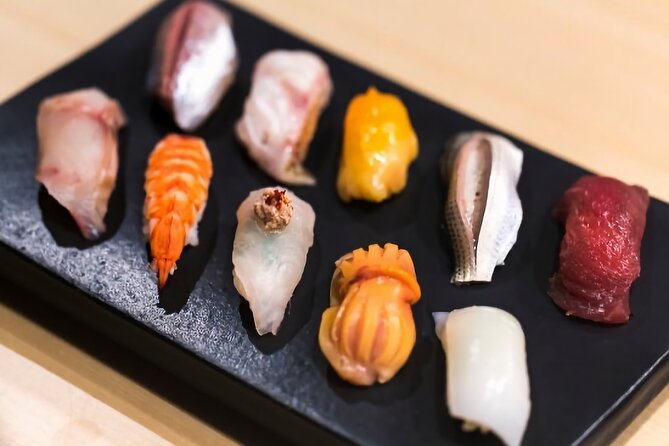
You will make eight pieces of sushi. That is enough for a satisfying tasting meal, though it is not a full restaurant dinner for everyone. The menu may draw from local bonito, local tuna, mibai, red machi, irabucha, stew machi, kubushimi, salmon, and other seasonal options.
The cooking element is hands-on, but you should keep your expectations sensible. This is a short cultural activity, not an advanced lesson in knife work, rice preparation, or fish aging. The value comes from combining a local market visit with a meal you make yourself.
Eating your own eight pieces of sushi
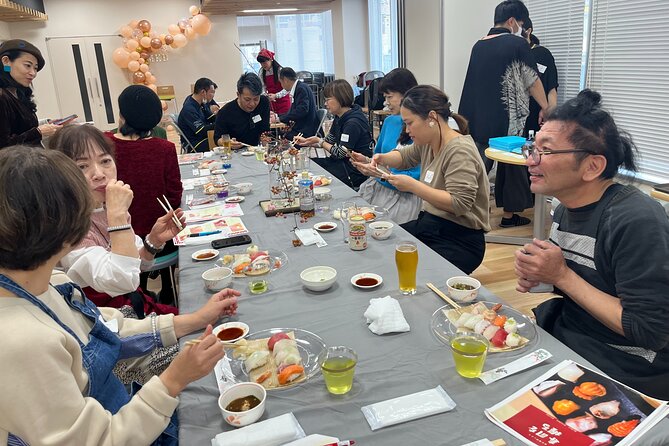
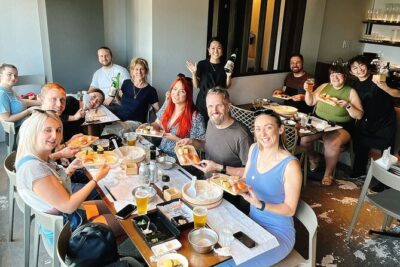
The final stage is communal: everyone eats the sushi they prepared. Along with the eight pieces, you receive red soup stock, gari, and green tea. This gives the class a proper finish instead of leaving you with a few samples and a recipe card.
I like the simple logic of this meal. You see the fish at the market, learn the method, make the sushi, and then eat the result. It creates a clear connection between the market and the plate.
The food has also been a major strength of the experience. Participants have described the sushi as delicious and the whole meal as a memorable part of their Naha visit. That praise is useful, but the seasonal ingredient note is more important for planning. The exact fish will vary, so think of the meal as an introduction to Okinawan seafood rather than a fixed tasting menu.
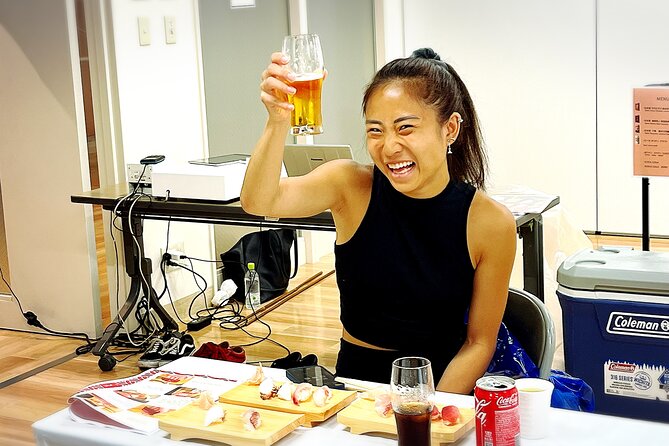
Gari adds the familiar pickled ginger accompaniment, while red soup stock and green tea round out the meal. Alcohol is optional. Sake is sold separately from 1,000 yen, and beer from 500 yen. You can enjoy a drink with the sushi, but remember that these costs are not part of the advertised tour price.
The minimum drinking age is 18. If you are traveling with younger members of your group, they can still take part in the food activity, but alcohol is not an option for them.
What the $164.72 price really buys
At $164.72 per person, this is not a bargain meal. You can find less expensive ways to eat sushi in Naha. The price makes more sense if you want the guided market visit, instruction, fresh ingredients, group meal, and cultural context all in one scheduled activity.
The package includes all fees and taxes, use of the galley, and the RYUKYUMONO original tenugui towel. The towel is a small extra, but it is more useful than a generic souvenir. A tenugui is a traditional Japanese cloth that can be used as a hand towel, wrap, or simple travel item.
The price does not include alcohol or an apron. If you want to protect your clothes, bring your own apron. That is an easy preparation step, but it is worth knowing because many cooking classes provide one.
Group discounts may improve the value for families or parties booking together. The maximum group size is 20 people, so the class can have a social feel. A larger group also means the instructor’s attention may be shared more widely. The praised teaching suggests the staff handle group instruction well, but this is not the setting for a private, one-on-one lesson.
I would judge the price by how much you value the market access and instruction. If you only want to eat eight pieces of sushi, the cost is high. If you want an organized way to meet Okinawan fish, learn a practical skill, and share a meal at the market, the package is easier to justify.
More Markets and Food Halls in Naha:
- Tokyo Tsukiji Fish Market Food and Culture Walking Tour
★ 5.0 · 3,184 reviews - Tokyo: Tsukiji Fish Market Food and Walking tour
★ 5.0 · 1,724 reviews - Senkyaku Banrai Toyosu Manyo Club Onsen Experience in Tokyo
★ 4.7 · 1,690 reviews - Tokyo: Tsukiji Fish Market Guided Walking Tour
★ 4.9 · 1,397 reviews
The 20-day booking pattern and timing
This class is booked, on average, about 20 days in advance. That is a useful planning signal. You may not want to leave it until the last morning of your Naha stay, especially if your itinerary has limited flexibility.
The activity lasts about two hours and 30 minutes. That is long enough to keep the market visit from feeling rushed and still leave you time for other plans during the day. Since the activity ends where it begins, you do not need to arrange a separate return transfer.
The meeting point is near public transportation. You should still allow time to reach Makishi Public Market and locate the exact starting point. The supplied information does not give a hotel pickup service, so plan to meet at the market rather than waiting for transportation elsewhere.
The activity requires a minimum number of participants. If the provider cancels because that minimum is not reached, you will be offered another date or experience, or receive a full refund. That protection applies to a provider cancellation, not to a change of your own plans.
Your own booking is non-refundable and cannot be changed for any reason. That is the biggest logistical weakness. Do not reserve this class until your Naha schedule is firm.
Who will enjoy this market cooking class most
I would recommend this experience to food-focused visitors who want more than a restaurant meal. It suits you if you enjoy seeing ingredients at their source, learning from an instructor, and eating in a group.
It is also a good fit for families and small groups. The activity has group discounts, and the eight-piece format gives everyone a clear task and a defined meal. The instructor’s patient style, along with interpreter support, should help make the class comfortable for people who do not have sushi-making experience.
Couples and solo visitors can enjoy it too, especially if they like meeting other participants around a shared meal. The group limit of 20 keeps it from being an intimate private lesson, but it also gives the final meal a friendly social quality.
This class is less suitable if you have strict dietary needs that are not addressed in the available information. The menu centers on fresh fish, and the ingredients change by season. The details do not specify vegetarian, allergy, or substitution arrangements, so ask the provider before paying.
It may also disappoint serious sushi students. You will learn how to make sushi and prepare eight pieces, but the class is not described as an advanced technical course. The emphasis is on market culture, local seafood, and a pleasant meal.
Strengths and drawbacks at a glance
The strongest part is the connection between place and food. You walk through Makishi Public Market, see the seafood being chosen, and then use it in the class. That is far more meaningful than making sushi from ingredients with no local story.
The second major strength is the teaching. The instructors have been praised for being fun, patient, and encouraging. The interpreter has also played an important role in helping participants understand the market and class. Those details suggest a warm approach rather than a stiff demonstration.
The food is another clear positive. You receive eight pieces of sushi, with soup, gari, and green tea. The exact fish changes, but that gives the meal a seasonal Okinawan character.
The drawbacks are straightforward. The price is high, alcohol costs extra, and you need to bring your own apron if you want one. The non-refundable policy also means you should avoid booking until your schedule is settled.
The class size can reach 20 people. That is manageable for a tour, but the experience may feel less personal than a small cooking lesson. The market setting adds authenticity, though it may also mean more movement and less quiet than a dedicated cooking studio.
Should you book it?
Book this sushi class if you want a market-based Okinawan food experience, not simply a cheap sushi lunch. The combination of fresh local fish, an instructor-led lesson, eight pieces of sushi, soup, gari, green tea, and a tenugui towel gives you a full two-and-a-half-hour activity in central Naha.
I would make the booking if you have room in your budget, enjoy seafood, and want a structured introduction to Makishi Public Market. I would skip it if you are mainly looking for the lowest-cost meal, need a flexible reservation, or want an advanced private cooking lesson.
Bring an apron, budget extra for sake or beer, and expect the fish selection to change with the season. With those points understood, this is a friendly, practical way to connect Okinawan market life with the food on your plate.
FAQ
Where does the sushi-making experience begin and end?
It begins at Makishi Public Market, 2-chōme-10-1 Matsuo, Naha, Okinawa 900-0014, Japan. The activity ends back at the same meeting point.
How long does the experience last?
The activity lasts approximately two hours and 30 minutes.
How many pieces of sushi will I make?
You will make eight pieces of sushi. The meal also includes red soup stock, gari, and green tea.
Which fish will be used?
The fish depends on the season. Possible ingredients include mibai, red machi, irabucha, stew machi, local bonito, local tuna, kubushimi, and salmon.
Is alcohol included in the price?
No. Sake and beer are sold separately. Sake starts at 1,000 yen, and beer starts at 500 yen. The minimum drinking age is 18.
Is an apron provided?
No. Aprons are not provided, so bring your own if you want to wear one. All fees and taxes, use of the galley, and the RYUKYUMONO original tenugui towel are included.
Just added in Naha
- Northern Okinawa: Churaumi Aquarium & Kouri Island & Cape Manza & American Village Day Tour (Departing from Naha & Chatan)★ 4.8 · 1,115 reviews
- (Okinawa’s No. 1 Popular Northern Day Trip) Chinese-speaking guide · Includes admission tickets · 1 person can book: Churaumi Aquarium · Cape Manzamo · Kouri Island · American Village★ 4.7 · 1,846 reviews
- Zodiac Shrines and Naha Backstreets Cycling Tour★ 5.0 · 29 reviews
- E-Bike Nature Tour in Shuri★ 5.0 · 25 reviews
- Tokashiki Island Day Trip from Naha★ 4.0 · 15 reviews
- Port Pick-Up: Naha Private Tour Licensed Guide& Vehicle★ 4.5 · 16 reviews
- Okinawa:Kerama Islands experience Diving/Snorkeling/WhaleWatching★ 4.5 · 16 reviews
- Kintsugi Experience in Naha, Okinawa – Art from Broken Pieces!★ 5.0 · 28 reviews
Cooking Classes, compared.
Sushi Making Tokyo Roll and Authentic Japanese Sushi Class
Read our review →
Roll and Authentic Sushi Making Class in Asakusa
Read our review →
Ramen Cooking Class at Ramen Factory in Kyoto
Read our review →
Sushi Making Class in a Happi Coat near a Famous Spot
Read our review →
Sushi Making Osaka Roll and Authentic Japanese Sushi Class
Read our review →
Tokyo Sushi Making Class in Tsukiji with Professional Chef
Read our review →
Ramen & Gyoza Cooking Class in Tokyo with Local Supermarket Visit
Read our review →Browse the lists this tour appears in