
Reviewed · OKINAWA TOURS
Kintsugi Accessory Experience in Naha, Okinawa
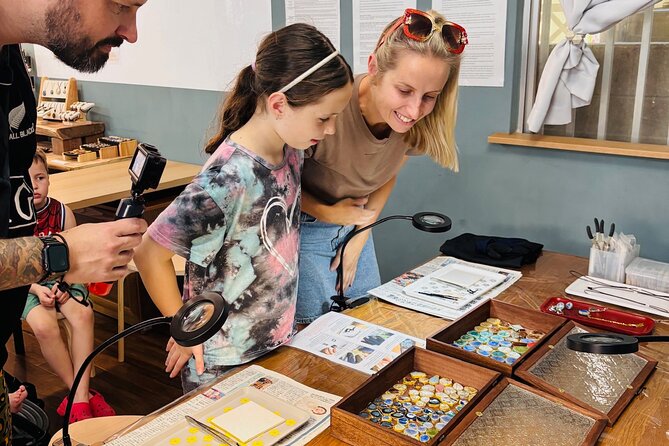
Broken pottery gets a second life here. In about 90 minutes, you choose a prepared ceramic piece, repair it with gold or silver-colored lacquer, and turn it into a necklace or bracelet. I like the hands-on format and the fact that you leave with something you made yourself, not another factory-produced souvenir. I also like the calm, thoughtful mood of the workshop, where the craft connects to a Japanese idea of finding beauty in damage.
The main consideration is that this is a simplified beginner workshop, not a full traditional pottery restoration course. The ceramic pieces are prepared in advance, and the materials are gold or silver-colored rather than precious metal. At $50.30 per person, the price is fair for a small-group creative activity, but you should book it for the making and meaning, not for a formal masterclass in antique repair.
In This Review
- Key points at a glance
- Why kintsugi makes a better souvenir than another trinket
- Arriving at Urushi Studio Kodemari in Maejima
- Choosing your ceramic piece
- Learning the simplified kintsugi technique
- Turning repaired pottery into a necklace or bracelet
- A calm activity for couples, families, and solo visitors
- What $50.30 includes, and where the value lies
- Timing, transport, and practical planning
- What this workshop does especially well
- Should you book the Naha kintsugi accessory experience?
- FAQ
- Where does the kintsugi accessory experience begin?
- Where does the activity end?
- How long does the workshop last?
- How much does the experience cost?
- What can I make during the workshop?
- Do I need previous art experience?
- Are tools and materials provided?
- How many people can join the activity?
- Can I cancel for a refund?
Key points at a glance
- Choose a prepared ceramic fragment: You select the piece that will become your personal necklace or bracelet.
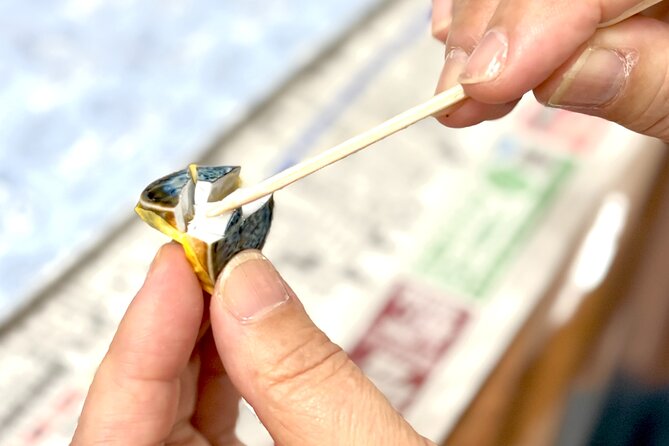
- Learn a beginner-friendly kintsugi method: The instructor guides you through the repair using gold or silver-colored materials.
- Leave with wearable art: Your finished accessory is both a keepsake and a reminder of renewal.
- Small groups keep the lesson personal: The workshop accepts a maximum of eight people.
- A good rainy-day plan in Naha: The indoor activity suits solo visitors, couples, and families seeking a break from sightseeing.
- Guides add warmth to the craft: Mia, Asa, Mayo, and Keiko are praised for patient, welcoming instruction.
Why kintsugi makes a better souvenir than another trinket
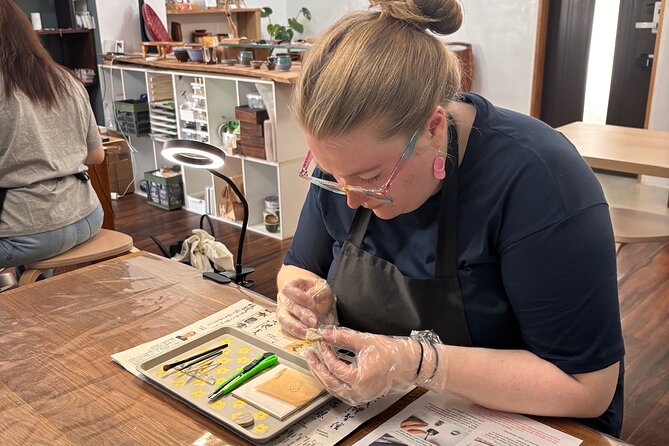
Kintsugi is the Japanese practice of mending broken pottery with visible lines of precious-metal-colored material. Instead of trying to hide a crack, the repair becomes part of the object’s character. That idea gives this Naha workshop more weight than a simple craft class.
You are not just decorating a blank item. You begin with a ceramic fragment that already has a break or imperfection, then make choices about how to join and wear it. The finished accessory carries a visible record of the repair. It is small, personal, and easy to pack.
I especially like this format for a souvenir because it links the object to a moment in Okinawa. You do not simply buy something made in a workshop by someone else. You spend time learning a Japanese art, make decisions with your own hands, and take home the result.
Keep expectations sensible. This is an accessible version of kintsugi designed for beginners. The gold or silver-colored lacquer creates the look and spirit of golden joinery, but the class is not advertised as using solid gold or silver. That distinction matters if you are comparing it with high-end restoration work.
A few more options to weigh up in Naha
- Official Street Go-Kart Tour – Okinawa Shop
★ 5.0 · 699 reviews - Naha: North Okinawa Sightseeing Tour & Churaumi Aquarium
★ 4.4 · 472 reviews - Okinawa: From Naha: Kerama Islands 1-day snorkeling tour
★ 4.4 · 423 reviews
Arriving at Urushi Studio Kodemari in Maejima
The workshop begins at 漆工房 小手毬 Urushi Studio Kodemari, at 2-chōme-16-6 Maejima, Naha, Okinawa 900-0016. The location is near public transportation, which makes it a practical choice when you are staying in central Naha or moving around without a car.
Plan your route before setting out. The meeting point is specific, and a hands-on class has less flexibility than a general sightseeing stop. A scheduling mistake caused one participant to miss the class, so check the date and local start time carefully. The operator later worked to accommodate the problem, but it is better not to rely on a last-minute fix.
The studio setting matters. You are entering a working craft space rather than a large attraction with crowds and timed queues. That gives the activity a quieter pace and helps the instruction feel direct. With a maximum of eight people, you should have a reasonable chance to ask questions and get help while assembling your piece.
The activity ends at the same meeting point. That makes it easy to pair with other plans in Naha, though you should allow time to reach your next stop rather than scheduling something immediately after the 90-minute session.
Choosing your ceramic piece
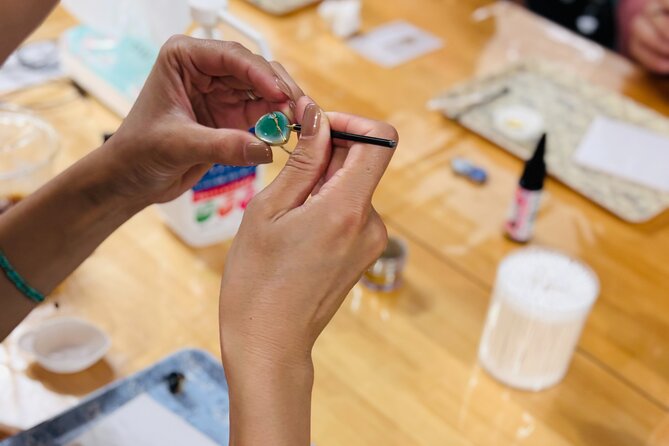
The first creative decision is choosing from pre-prepared ceramic pieces. This is a useful design choice by the organizers. If you had to break and prepare pottery during the same short session, the class would become more technical and much less predictable.
Instead, you can focus on color, shape, and the kind of accessory you want to wear. The piece you select becomes the starting point for the final design. You might prefer a subtle fragment for everyday use, or a more noticeable shape that makes the repair lines part of the decoration.
Because the pieces are prepared ahead of time, each participant can begin the main work without a long setup. That helps the 90-minute format work. It also means your finished item will be an accessory rather than a complete repaired plate or bowl.
One past participant planned to return later to make a plate. That detail helps clarify the scope of this particular session: the accessory class is a compact introduction to the technique, while larger pottery repairs may be offered separately. If you want a wearable souvenir, this format is focused and efficient. If you hope to restore a meaningful family dish, ask the studio about other options before booking.
Learning the simplified kintsugi technique
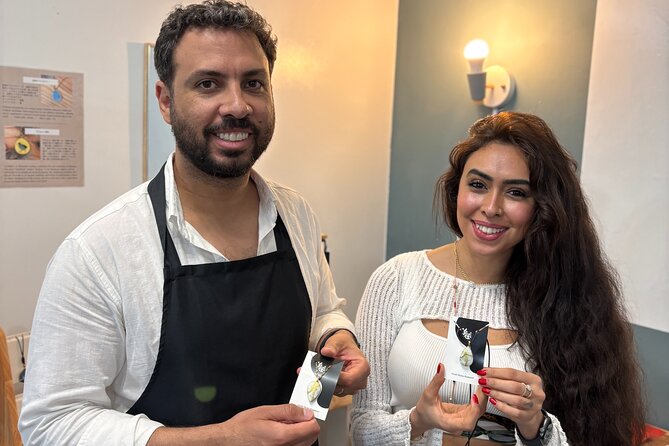
After choosing your ceramic piece, the instructor explains the basic repair process. The class uses gold or silver-colored materials that are suitable for beginners. You do not need previous art experience, and all tools and materials are provided.
The instruction is likely to be the most valuable part of the session. The craft can look simple from a distance, but the finished lines depend on careful handling and patience. The workshop gives you a chance to understand the basic steps without requiring specialist training.
Mia and her team have been praised for explaining the traditional process and then showing each stage of making the necklaces. Asa, Mayo, and Keiko have also been specifically thanked for their kind help. Those names are useful if you value a personal teaching style. The strongest praise for the class focuses on the instructors’ welcome, patience, and clear guidance.
You should expect help rather than a lecture. The point is to make the object yourself, with support when you need it. That balance suits beginners well. You can enjoy the concentration of the work without worrying that one imperfect line will ruin the piece.
The gold or silver-colored finish also gives you a visual choice. Gold creates the classic kintsugi look, while silver offers a cooler, more understated effect. The available options may depend on the session, but both are included in the activity description.
A completely different kind of day out:
- From Naha: Tokashiki Island Day Trip by Boat
★ 4.3 · 385 reviews - Naha, Okinawa: Keramas Island Snorkeling Day Trip with Lunch
★ 4.7 · 370 reviews - Naha, Okinawa: Kerama Islands Half-Day Whale Watching Tour
★ 4.4 · 241 reviews - Naha, Okinawa: Kerama Islands Full-Day Intro-Diving Trip
★ 4.6 · 203 reviews
Turning repaired pottery into a necklace or bracelet
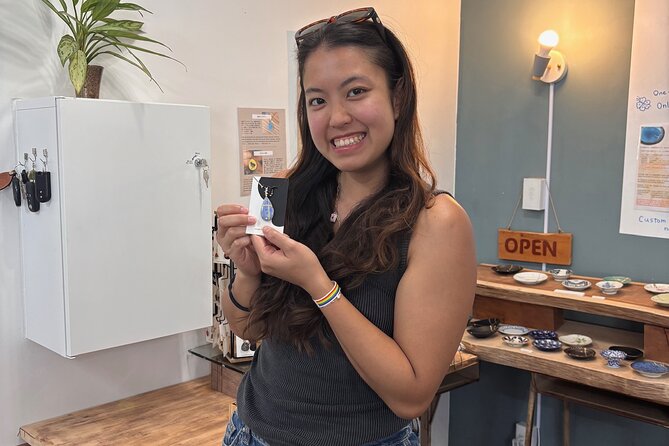
Once the ceramic fragment has been mended, you assemble it as wearable art. The listed options include a necklace or bracelet, with the necklace appearing to be a popular choice. The assembly stage gives the object a practical purpose and turns the repair into something you can use during the rest of your trip.
This is where the experience becomes more than a pottery exercise. A repaired fragment on a shelf is attractive, but an accessory can travel with you. You can wear it at home and explain how you made it in Okinawa. That makes the souvenir easier to remember and share.
The final design will depend on the ceramic piece you choose and your own decisions during the class. Do not expect identical results across the group. That variation is part of the appeal. Each person leaves with a different combination of shape, repair line, and accessory style.
If you are making a gift, consider who will wear it before you begin. A necklace may be the safer choice for someone who likes simple jewelry, while a bracelet can feel more casual. The workshop is also suitable for solo participation, so you do not need to arrive with a companion to enjoy the process.
A calm activity for couples, families, and solo visitors
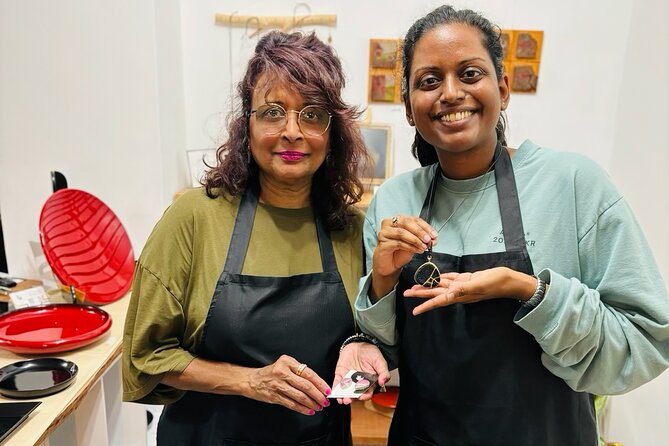
This workshop suits a wide range of people because the task is creative but not physically demanding. A couple can make matching or contrasting pieces. A family can work side by side, with adults helping younger participants as needed. A solo visitor can settle into the process without feeling out of place.
The activity has also been described as therapeutic and meditative. That does not mean it is a wellness treatment. It simply reflects the focused pace of repairing a small object by hand. After busy days of sightseeing, that slower rhythm can be welcome.
For families, the workshop offers more than a rainy-day distraction. It gives children and adults a practical connection to Japanese craftsmanship. Still, the supplied information does not specify a minimum age, so confirm suitability for young children before booking if that is important for your group.
The maximum group size of eight is another plus. Small groups usually make it easier to see the demonstration and receive help. It also keeps the class from feeling like a mass-market souvenir activity. The tradeoff is that spaces are limited, so popular dates may fill.
What $50.30 includes, and where the value lies
At $50.30 per person, this is not the cheapest souvenir activity in Naha. You are paying more than the cost of buying a ready-made accessory in a shop. The value comes from the instruction, the materials, the use of the studio, and the time spent making a personal item.
I think the price works best for people who place a value on the process. You receive a finished necklace or bracelet, but you also get a short cultural lesson and a story attached to the piece. That is a better deal than it may first appear if you were already looking for a creative activity.
The price is less compelling if you only want inexpensive jewelry. You can likely find ready-made accessories elsewhere, and this class does not promise precious-metal materials. Book it because you want to learn and create, not because you expect a bargain ornament.
The current score is 4.7 from 12 ratings, with 92 percent recommending the activity. That is a strong signal, though the sample is still small. The praise centers on the welcoming staff, the clear instruction, the finished jewelry, and the sense of Japanese craftsmanship. One one-star rating came from a missed booking date rather than a complaint about the workshop itself, which makes date checking especially important.
Timing, transport, and practical planning
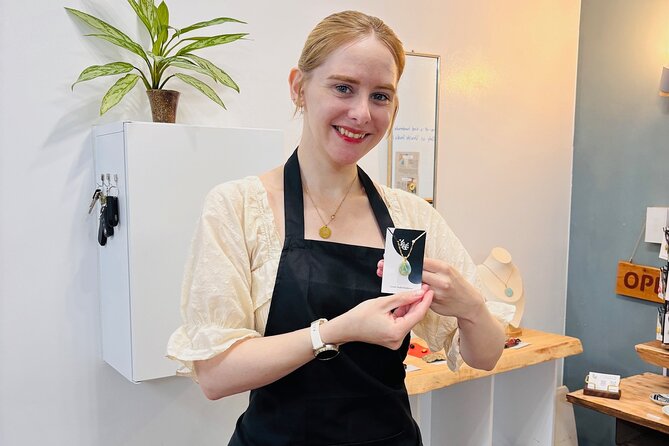
The session lasts approximately one hour and 30 minutes. That is long enough to learn the basic method and complete an accessory, but short enough to fit into a day of Naha sightseeing.
I would place it between larger activities rather than at the end of a tightly timed day. The workshop finishes at the starting point, so you do not need to arrange a separate return transfer. Still, allow extra time for finding Urushi Studio Kodemari and arriving ready to begin.
The mobile ticket is convenient. Keep the confirmation available on your phone, along with the studio address. Confirmation is sent at booking, and the activity is near public transportation.
Most people can participate, according to the available information. The class provides the tools and materials, so you do not need to bring art supplies. If you have specific mobility, hand-use, or other access needs, contact the operator before booking because detailed accessibility information is not provided.
Cancellation is free up to 24 hours before the start time. Cancel at least 24 hours ahead for a full refund. Changes or cancellations made inside that window are not accepted and are not refunded. The cut-off follows Okinawa local time.
What this workshop does especially well
The greatest strength is its balance of meaning and simplicity. Kintsugi can carry a large idea about accepting damage and repair, but you do not need a long art background to take part. The instructor-led format gives you enough context to understand the philosophy, then lets you work with your hands.
The staff’s approach is another major strength. The repeated praise for Mia, Asa, Mayo, and Keiko points to a warm studio atmosphere. Friendly instruction can make a big difference when you are trying a craft for the first time.
The finished object is also well chosen. A necklace or bracelet is more useful than a fragile pottery souvenir, especially if you are continuing to move around Japan. You can pack it easily and keep the memory visible.
The main limits are clear. The class uses prepared pieces, takes only about 90 minutes, and uses colored lacquer rather than precious metal. It gives you an introduction, not the full scope of traditional restoration. The workshop may also be less satisfying for someone who prefers to watch rather than make.
Should you book the Naha kintsugi accessory experience?
You should book this experience if you want a quiet, creative break in Naha and like the idea of taking home something you made yourself. It is particularly well suited to couples, families, solo visitors, and anyone seeking a souvenir with a story.
I would also recommend it for people who enjoy Japanese craft but do not have time for a long class. The small group size, prepared ceramic pieces, and patient guidance keep the activity approachable. The high rating is supported by specific strengths: kind instructors, clear steps, attractive jewelry, and a meaningful connection to Japanese craftsmanship.
Skip it if you want a full traditional kintsugi course, precious-metal restoration, or the cheapest possible accessory. Also check your date carefully, arrive at the Maejima meeting point on time, and leave room in your schedule for the class to finish without a rush.
For $50.30, this is a fair-value Naha activity when the making matters as much as the object. You leave with a small piece of wearable art, and the visible repair gives it a character no mass-produced souvenir can match.
FAQ
Where does the kintsugi accessory experience begin?
It begins at 漆工房 小手毬 Urushi Studio Kodemari, located at 2-chōme-16-6 Maejima, Naha, Okinawa 900-0016, Japan.
Where does the activity end?
The activity ends back at the meeting point at Urushi Studio Kodemari.
How long does the workshop last?
The experience lasts approximately one hour and 30 minutes.
How much does the experience cost?
The listed price is $50.30 per person.
What can I make during the workshop?
You can transform a prepared ceramic piece into wearable art, such as a necklace or bracelet.
Do I need previous art experience?
No. The activity is beginner-friendly, and an instructor provides guidance through the simplified kintsugi process.
Are tools and materials provided?
Yes. All tools and materials needed for the workshop are provided.
How many people can join the activity?
The maximum group size is eight people.
Can I cancel for a refund?
Yes. You can cancel at least 24 hours before the local start time for a full refund. Cancellations or changes made less than 24 hours before the start time are not accepted and are not refunded.
Just added in Naha
- Zodiac Shrines and Naha Backstreets Cycling Tour★ 5.0 · 29 reviews
- E-Bike Nature Tour in Shuri★ 5.0 · 25 reviews
- Sushi Making Experience Class in Naha Makishi Public Market★ 5.0 · 35 reviews
- Tokashiki Island Day Trip from Naha★ 4.0 · 15 reviews
- Port Pick-Up: Naha Private Tour Licensed Guide& Vehicle★ 4.5 · 16 reviews
- Okinawa:Kerama Islands experience Diving/Snorkeling/WhaleWatching★ 4.5 · 16 reviews
- Kintsugi Experience in Naha, Okinawa – Art from Broken Pieces!★ 5.0 · 28 reviews
- Traditional Japanese Costumes “Kimono”, “Yukata”, “Ryuso”, “Photograph Course “Hair Set & Lipstick & Kimono & Photography”★ 5.0 · 17 reviews
Okinawa Tours, compared.


Naha: North Okinawa Sightseeing Tour & Churaumi Aquarium
Read our review →
Okinawa: From Naha: Kerama Islands 1-day snorkeling tour
Read our review →

Naha, Okinawa: Keramas Island Snorkeling Day Trip with Lunch
Read our review →![[Miyako Island/Half Day] Sea Turtle Snorkeling](https://media.japanvisits.com/wp-content/uploads/miyako-island-half-day-sea-turtle-snorkeling-400x267.jpg)


Snorkeling in the Blue Cave area【Okinawa Prefecture: Free feeding & photo images!English and Chinese speaking guide available!
Read our review →Browse the lists this tour appears in