
Reviewed · DAY TRIPS
Kyoto: Miyama Village, Amanohashidate & Ine Bay Day Trip
Japan rewards the curious beyond the city. This $63 day trip from Osaka reaches three very different places: Ine’s boat houses, Amanohashidate’s pine-covered sandbar, and Miyama’s thatched village. I like the variety, and I like that comfortable transport handles routes that would be awkward to connect by public transportation. The guide team, especially Liu, Cave, and other multilingual guides praised for clear explanations and careful timekeeping, adds real value.
The main tradeoff is time. You spend roughly six and a half hours on the road, leaving about 40 minutes in Ine, two hours around Amanohashidate, and 40 minutes in Miyama. Optional rides cost extra, including the ropeway or chairlift to the Amanohashidate viewpoint and, when available, the Ine Bay boat ride. You should book this for access and variety, not for a slow village day.
In This Review
- Key points at a glance
- Why this day trip is worth considering
- Early departure from Nipponbashi
- Ine and its boat houses over the sea
- Amanohashidate, the bridge to heaven
- Miyama Kayabuki-no-Sato and old rural Japan
- The real value of a $63 price
- Who will enjoy this route most
- What the guide adds to a packed schedule
- Timing, weather, and return planning
- Should you book the Miyama, Amanohashidate, and Ine tour?
- FAQ
- Where does the tour meet in Osaka?
- What time should I arrive?
- How long does the tour last?
- Which languages does the guide speak?
- Is lunch included?
- Is the Amanohashidate cable car included?
- Is the Ine Bay boat ride included?
- What should I bring?
- Can the tour return late?
- Can people with mobility impairments join?
Key points at a glance
- Three distinct settings in one day: a fishing village, a famous sandbar, and a mountain settlement.
- Ine’s 230 funaya boat houses: traditional homes with boat storage directly over the water.
- Amanohashidate’s 3.6-kilometer sandbar: more than 8,000 pine trees form one of Japan’s best-known scenic views.
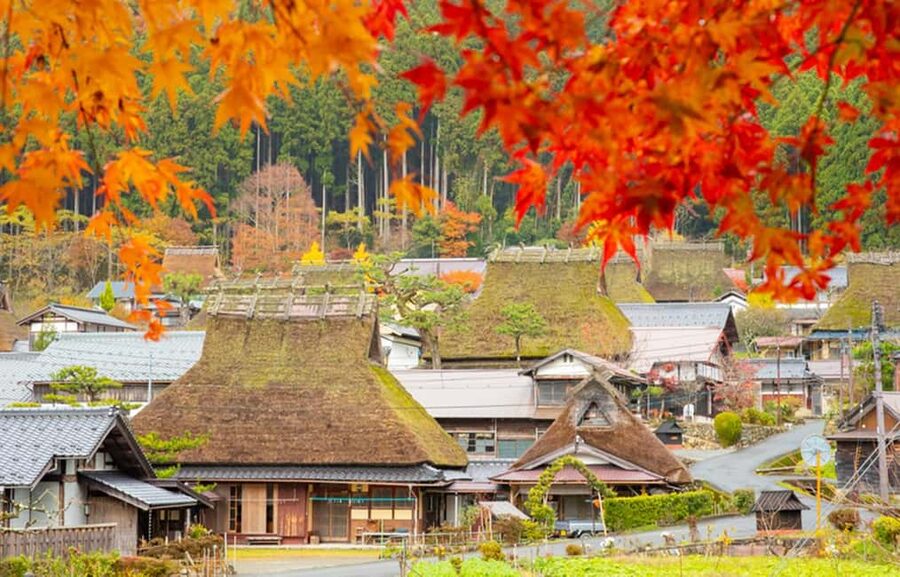
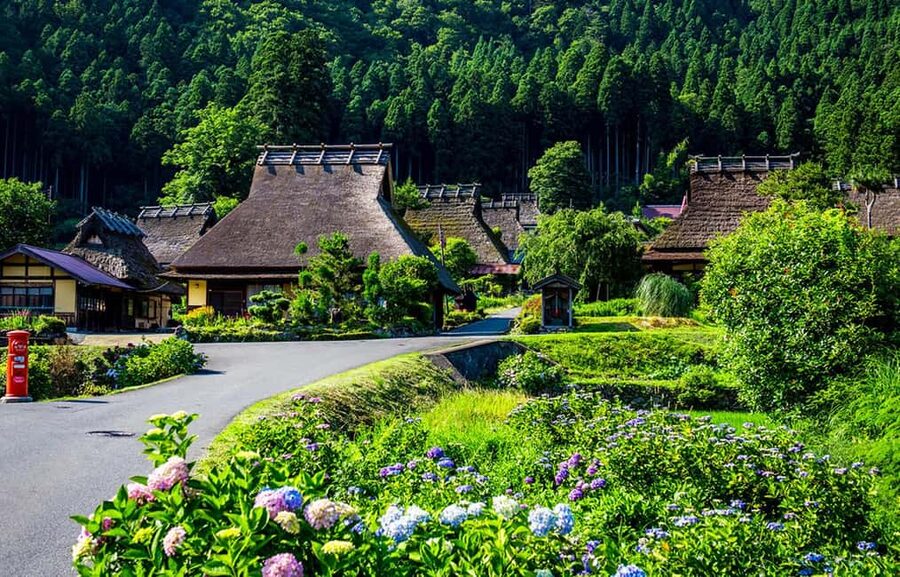
- Miyama’s Edo-period character: over 40 thatched-roof houses create a calm rural stop.
- Strong guide support: English, Japanese, and Traditional Chinese commentary keeps a mixed-language group moving.
- Good value for independent-minded visitors: transport, driver, parking, and guiding are covered for $63, but food and optional attractions are not.
Why this day trip is worth considering
Osaka and central Kyoto can fill your schedule with temples, shopping streets, and crowds. Northern Kyoto Prefecture feels different. The coast around Ine has working fishing homes, Amanohashidate offers a classic Japanese view, and Miyama gives you a look at rural architecture that is easy to miss on a first visit.
I like the way this trip changes mood three times. Ine is quiet and maritime. Amanohashidate is open and scenic, with room for a beach walk and temple visit. Miyama is small, old-fashioned, and surrounded by mountain scenery. That variety makes the day feel bigger than a standard city excursion.
Still, this is a carefully packed schedule. The bus takes about two and a half hours to reach Ine, then around 40 minutes to Amanohashidate, 90 minutes to Miyama, and two hours back to Osaka. The bus is reported to be clean and comfortable, which matters a great deal on these roads, but you need to be happy resting between stops.
More Day Trips in Japan:
- Mt. Fuji Instagram-Worthy Spots Day Tour: Ladder Town, Oshino Hakkai, Lake Kawaguchi, Lawson Convenience Store (Departing from Tokyo Station or Shinjuku Station)
★ 4.8 · 35,467 reviews - 【Mount Fuji Magnificent Scenery Exploration Day Tour】Arakurayama Sengen Park & Kawaguchiko Oishi Park & Oshino Hakkai & INS Famous Lawson & Hikawa Clock Shop (Departing from Tokyo)
★ 4.9 · 12,075 reviews - [Kyoto & Nara Day Tour] Sagano Scenic Railway & Nara Park & Fushimi Inari Taisha Thousand Torii Gates & Togetsukyo Bridge & Bamboo Grove & Kimono Forest (Departing from Osaka)
★ 4.9 · 10,942 reviews
Early departure from Nipponbashi
The meeting point is at Nipponbashi Station Exit 2, at 1-chōme-3-6 Nipponbashi in Osaka’s Namba and Shinsaibashi area. You should arrive by 7:05 AM for a 7:20 AM departure. The bus leaves on time and does not wait for late arrivals, so build in extra time for finding the correct exit.
The exact vehicle depends on the size of the group. You cannot choose the bus in advance, but transport is air-conditioned and includes a driver and parking fees. The evening before departure, you receive information about the guide, driver, and vehicle by email. Check your spam folder too.
This is a shared group outing with English, Japanese, and Traditional Chinese explanations. A good guide matters here because the schedule is tight. Liu received repeated praise for switching between languages smoothly, explaining the next stop with pictures, and reminding people when to return to the bus. Cave was also praised for clear Mandarin and English commentary.
Bring comfortable shoes, sunglasses, weather-appropriate clothing, a camera, and cash. Lunch is not included, and some scenic spots, cafés, and restaurants may accept cash only.
Ine and its boat houses over the sea
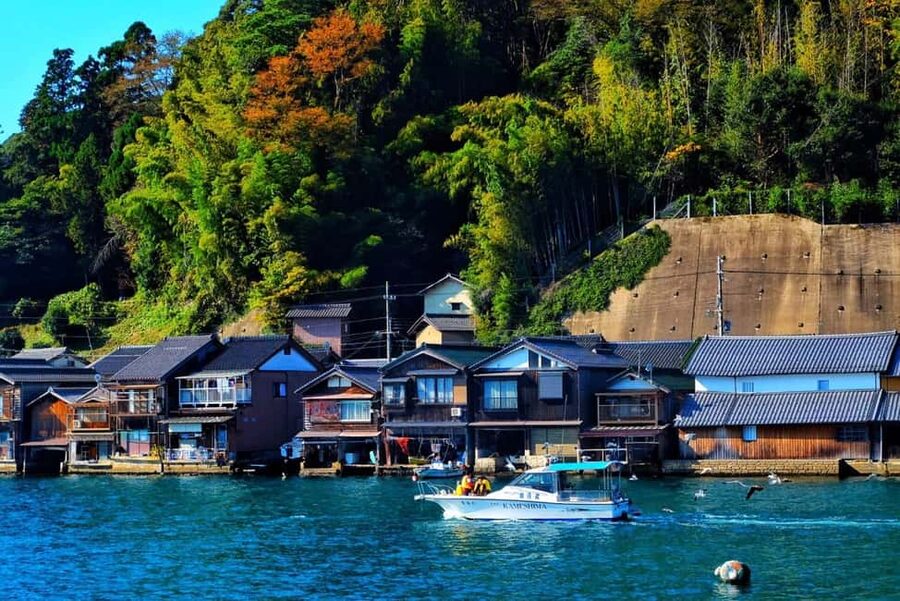
Ine is the most unusual stop on the route. Its traditional funaya are boat houses built directly along Ine Bay. The lower level stores a fishing boat, while the upper level serves as living space. Around 230 of these structures line the water, creating a village shaped by fishing rather than by modern roads.
The short visit lasts about 40 minutes, so think of it as an introduction, not a full exploration. You can walk the quiet lanes, take photographs, and look for a seaside café with bay views. If you choose the optional Ine Bay boat ride, you may also see the boat houses from the water. One visitor particularly enjoyed the cruise and the playful sight of seagulls nearby, but the boat fare is not part of the $63 price.
That extra cost is worth knowing before you leave Osaka. The advertised fare covers transport and guiding, not every activity at each stop. Carrying cash lets you decide on the spot instead of missing an activity because of payment problems.
Ine works best for people who enjoy ordinary life and distinctive buildings more than large monuments. The village is not a theme park. The homes still relate to fishing, and that practical design is the point. Be cautious around eagles in the area, and do not feed animals.
Amanohashidate, the bridge to heaven
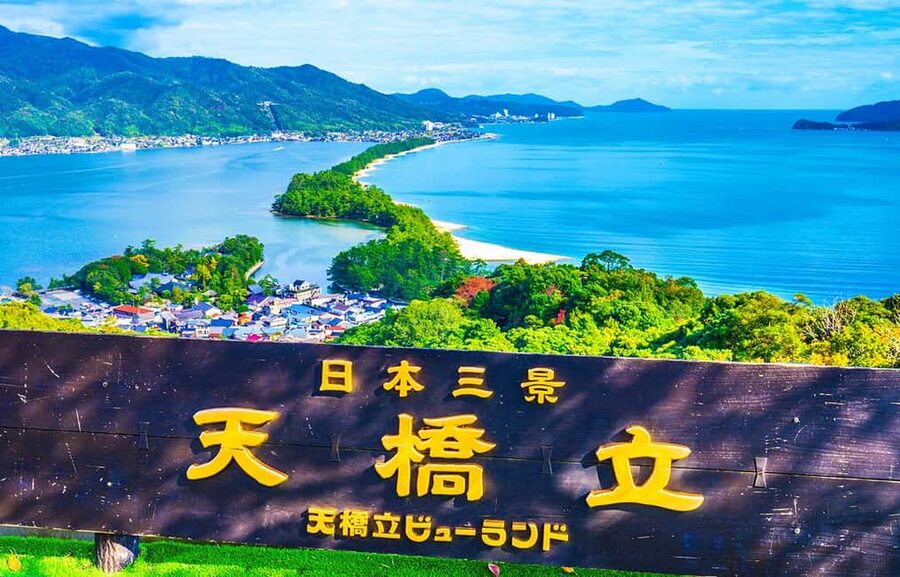
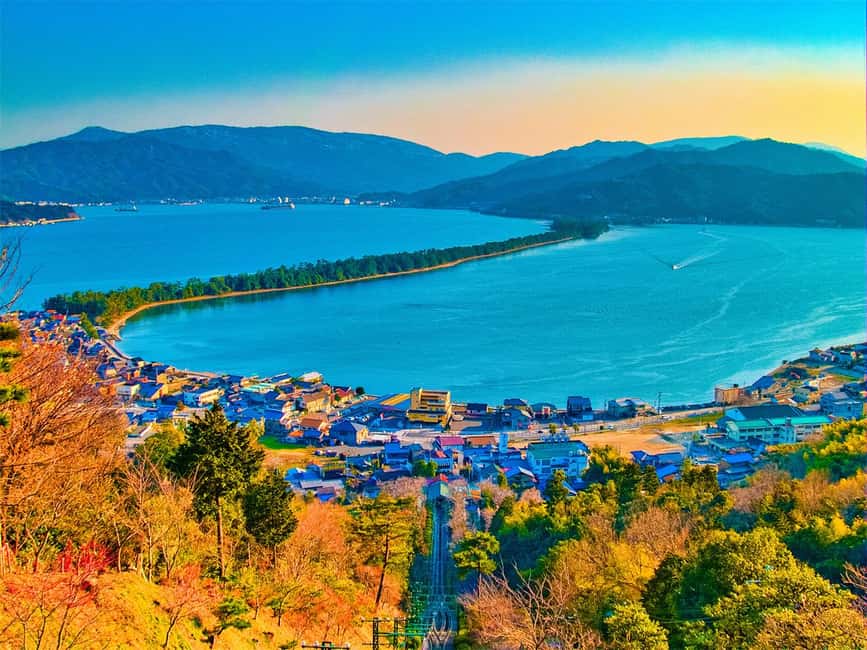
The next stop is Amanohashidate, a 3.6-kilometer sandbar covered with more than 8,000 pine trees. From above, it stretches across the bay like a long green dragon. This is one of Japan’s three most celebrated scenic spots, and it gives the day its grandest view.
The best panorama comes from View Land, reached by a cable car or chairlift for an additional fee. The view is often called the Flying Dragon View. If you are willing to pay for the ride, this is one of the smartest uses of your free time because the sandbar’s full shape is difficult to understand from ground level.
You can also try the traditional matanozoki pose, bending over and looking at the sandbar between your legs. The reversed view is said to resemble a dragon rising toward the sky and is associated with good fortune. It is an amusing tradition, but it also helps you appreciate how much this place depends on perspective.
At ground level, you have time for several smaller stops. Chion-ji Temple and Monju-do Hall are connected with prayers for academic success. Amanohashidate Shrine offers another brief spiritual visit, while Isoshimizu Spring is listed among Japan’s top 100 natural waters. You can cleanse your hands there before making a wish.
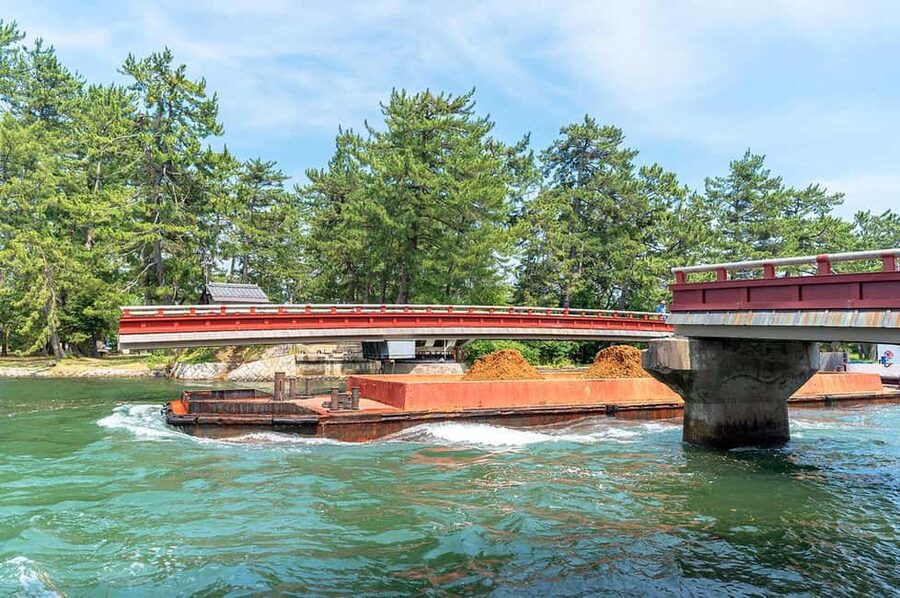
The rotating bridge is another pleasant surprise. It turns to allow ships through, so you may catch this bit of local engineering during your free time. Amanohashidate Beach gives you a chance to walk beside the water, though two hours is not enough for an unhurried visit to every point of interest.
This is the stop most likely to feel short. Some people find the cable car or chairlift essential, while others prefer to keep the money and explore on foot. If the viewpoint matters to you, budget for it before the morning begins. Several visitors felt the additional charge should have been included, so the cost is a real part of the value calculation.
A completely different kind of day out:
- Tokyo Disney Resort – Tokyo Disneyland & Tokyo DisneySea Park Tickets
★ 4.8 · 99,488 reviews - Universal Studios Japan Studio Pass
★ 4.8 · 89,883 reviews - Universal Studios Japan Express Pass
★ 4.7 · 53,138 reviews - SHIBUYA SKY Ticket
★ 4.7 · 46,509 reviews
Miyama Kayabuki-no-Sato and old rural Japan
After another long bus ride, the tour reaches Miyama Kayabuki-no-Sato. The village has more than 40 thatched-roof houses built in an Edo-period style. It is one of Japan’s remaining traditional thatched settlements, and it offers a strong contrast to the coastal scenery earlier in the day.
The roofs are not just decorative. The crossed beams, called chigi, and the snow-cutting rods, called yukiwari, show how the buildings were designed for local weather and heavy winter conditions. You can see how architecture grew from practical needs rather than from a desire to impress.
The stop lasts about 40 minutes. You can walk through the village, photograph the roofs, visit a preserved thatched house, and look at objects from rural life. Café Gallery Saika is a good place to pause for local ice cream and a view of the village. One visitor also enjoyed trying a fermented soba drink, though food and drinks are personal purchases.
Miyama is beautiful precisely because it is modest. There are no grand gates or sweeping temple courtyards. You get lanes, roofs, fields, and a quiet sense of how northern Kyoto communities once looked. The drawback is clear: 40 minutes allows a pleasant taste, not a full visit. If Miyama is your main reason for booking, a dedicated trip would give you more breathing room.
The real value of a $63 price
At $63 per person, the tour is priced well for the amount of ground it covers. The fee includes round-trip bus transport from central Osaka, a driver, parking, and a multilingual guide. Reaching all three areas independently in one day would require careful connections and would leave little margin for delays.
The price is less of a bargain once you add lunch, drinks, and the optional viewpoint ride. The Ine boat trip may also require a separate payment. One Australian visitor estimated the chairlift and boat together at about AUD 50, though prices can vary. Treat the advertised price as the base cost, then set aside extra cash for the activities you most want.
The bus adds value in another way. You can rest during the long transfers instead of changing trains and buses in rural areas. Families and solo visitors both benefit from having the route organized, and one family with a 22-month-old found the schedule workable despite warm weather.
The cost is not ideal for someone who dislikes group timing. You must return to the bus promptly at every stop, and the guide will keep the group on schedule. Traffic, bad weather, crowds, or Japanese holiday periods can shorten, change, or cancel parts of the day, and the return to Osaka may be delayed.
Who will enjoy this route most
I would recommend this day trip to you if you want to see a side of northern Kyoto that is difficult to arrange independently. It suits people who value access, scenery, and cultural variety over long, relaxed visits.
It is especially useful for:
- First-time visitors based in Osaka
- Solo visitors who want simple transport and a guide
- Families comfortable with a full day in a vehicle
- Photography enthusiasts
- People interested in traditional buildings and rural life
- Anyone who has already seen Osaka’s main sights and wants a change of pace
It is less suitable if you have mobility limitations, since the activity is not recommended for people with mobility impairments. It also may not suit very young children who need frequent breaks, though one family reported managing well.
Wear shoes that can handle walking on village lanes and around temples. Sunglasses and weather-appropriate layers will help, especially because the day moves between open coastal areas and mountain surroundings.
What the guide adds to a packed schedule
Without a guide, the three stops could become a race to find transport and locate the right viewpoints. Here, the guide handles explanations, departure reminders, and group coordination. That lets you spend your limited free time taking photographs or choosing a café instead of checking bus timetables.
The best guide comments focus on practical details. Liu was praised for giving clear overviews, showing pictures before arrival, and keeping people informed during free time. He also received strong marks for taking photographs and helping visitors feel looked after. Those small services matter when the schedule leaves little room for confusion.
A multilingual tour does mean explanations may be repeated in several languages. That can make the commentary take longer than a single-language tour, but the guides praised in the feedback were able to move between English, Japanese, and Chinese efficiently.
Timing, weather, and return planning
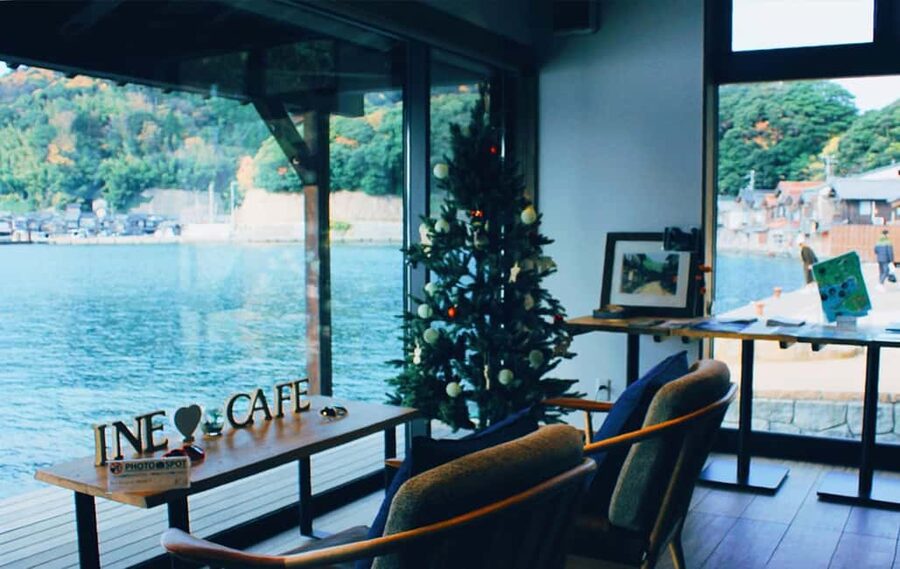
The day begins early and usually finishes around ten hours later at Nipponbashi. You should not schedule a train, flight, restaurant reservation, or another fixed activity immediately after the tour. Traffic on the return journey can change the arrival time.
The schedule is most comfortable in good weather, when you can enjoy the beach, bay, viewpoints, and village paths. In heat, bring water and protect yourself from the sun. In poor weather, some scenic stops may be shortened or rearranged.
Free cancellation is available up to 24 hours before departure for a full refund, and you can reserve now and pay later. Those terms help if your Osaka plans are still changing, but they do not remove the need to arrive early on the day itself.
Should you book the Miyama, Amanohashidate, and Ine tour?
Book it if you want three memorable settings in one day and are willing to accept long bus rides. The combination of boat houses, pine-covered sandbar, temples, and thatched homes is unusual, and $63 is a fair starting price for the transport and guidance involved.
Skip it if you want deep time in any one place, especially Miyama or Amanohashidate. You should also skip it if paid add-ons bother you or if a strict group schedule feels restrictive.
For the best day, arrive early, carry cash, budget for the View Land ropeway, and treat the long transfers as part of the bargain. This is a practical way to reach remote northern Kyoto, with enough free time to make each stop your own, but not enough time to linger.
FAQ
Where does the tour meet in Osaka?
The meeting point is Nipponbashi Station Exit 2 at 1-chōme-3-6 Nipponbashi, Chuo Ward, Osaka, 542-0073, in the Namba and Shinsaibashi area.
What time should I arrive?
You should meet the group at 7:05 AM. Departure is scheduled for 7:20 AM, and the bus does not wait for late arrivals.
How long does the tour last?
The stated duration is 10 hours, including transportation between Osaka and the three destinations.
Which languages does the guide speak?
Guiding is available in English, Japanese, and Traditional Chinese.
Is lunch included?
No. Lunch is not included, so you should bring money for food and drinks.
Is the Amanohashidate cable car included?
No. The cable car or chairlift to View Land is paid separately.
Is the Ine Bay boat ride included?
No. The boat ride is an optional activity with an additional cost.
What should I bring?
Bring comfortable shoes, sunglasses, a camera, cash, and clothing suited to the weather.
Can the tour return late?
Yes. Traffic, bad weather, crowds, and holiday periods can delay the return or change the time available at attractions. Do not plan another fixed activity immediately afterward.
Can people with mobility impairments join?
The tour is not considered suitable for people with mobility impairments.
Just added in Japan
- A One-of-a-Kind Sushi Experience in a Special Place of Japan★ 5.0 · 15 reviews
- Tokyo Cute Bento Cooking Class – Make a Kawaii Character Lunchbox★ 5.0 · 126 reviews
- Japanese Home Cooking Class & Walk in Todoroki Temple Tokyo★ 5.0 · 88 reviews
- Japan Tokyo Tower Observatory Deck E-Ticket★ 4.0 · 34 reviews
- Catch a Baseball Game in Tokyo with a Local – Tickets Included★ 5.0 · 24 reviews
- JDM Experience with Fast&Furious RX-7 (English speaking Driver)★ 5.0 · 57 reviews
- Tokyo Private Day Tour by Car with English speaking Driver Guide★ 4.0 · 29 reviews
- Japan Classic 10 Day – One Life Adventures★ 5.0 · 129 reviews
Day Trips, compared.
![[Kyoto & Nara Day Tour] Sagano Scenic Railway & Nara Park & Fushimi Inari Taisha Thousand Torii Gates & Togetsukyo Bridge & Bamboo Grove & Kimono Forest (Departing from Osaka)](https://media.japanvisits.com/wp-content/uploads/kyoto-nara-day-tour-sagano-scenic-railway-nara-park-fushimi-inari-taisha-thousand-torii-gates-togetsukyo-bridge-bamboo-grove-kimono-forest-departing-from-osaka-k110001-400x257.jpg)
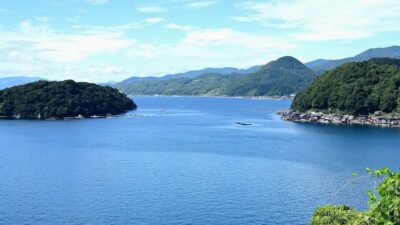
Kyoto Amanohashidate & Ine Funaya & Ine Bay Scenic Day Trip (Departing from Osaka or Kyoto)
Read our review →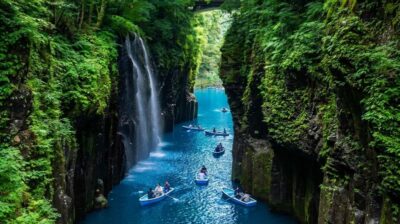
Kyushu: Mount Aso, Kusasenri & Takachiho Gorge Day Tour (Optional Takachiho Boat Ride Experience)
Read our review →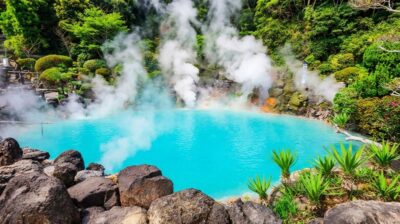
Kyushu One-Day Tour: Yufuin no Mori Train & Yufuin Town & Nyoirin-ji Temple & Dazaifu & Hell Hot Springs (Departing from Fukuoka)
Read our review →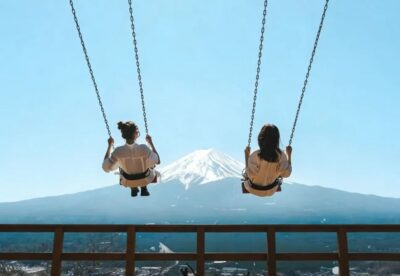
Browse the lists this tour appears in