
Reviewed · DAY TRIPS
Nagano Private Two Day Tour
Snow monkeys are only part of the story. This Nagano trip pairs the famous Jigokudani macaques with Zenkoji Temple, historic Obuse, and an overnight stay in a traditional ryokan. I like the private format, which lets your guide adjust the day to your interests, and I like that local food stops, sake tasting, and extra scenic visits may fit into the schedule. The main catch is that the guide joins you only on day one, while day two is free time unless you add another excursion.
The price is $489.55 per person, which is serious money, but it covers a guide, first-day transportation within Nagano, major entrance fees, and a traditional Japanese overnight stay. You should also budget for meals, drinks, optional activities, and possibly a private onsen session. Guides such as Wei Wei Fan, Toru, Hiroaki Horiuchi, and Ilhom have helped make this experience feel personal rather than mechanical.
In This Review
- Key points to know before booking
- Why this two-day Nagano plan works
- Starting at Nagano Station at 8:45 a.m.
- Jigokudani Snow Monkey Park and the hot spring question
- Zenkoji Temple, the spiritual heart of Nagano
- Obuse for small-town food and local character
- The ryokan night and what the onsen really includes
- Day two: Hakuba, free time, or an add-on
- What the $489.55 price delivers
- Guides, flexibility, and the private format
- Who should book this Nagano experience?
- FAQ
- Where does the tour start?
- Is the tour private?
- Is a guide included on both days?
- Is transportation included?
- Is the ryokan included?
- Is a private onsen included?
- Will I definitely see the snow monkeys bathing?
- Are meals included?
- Should you book it?
Key points to know before booking
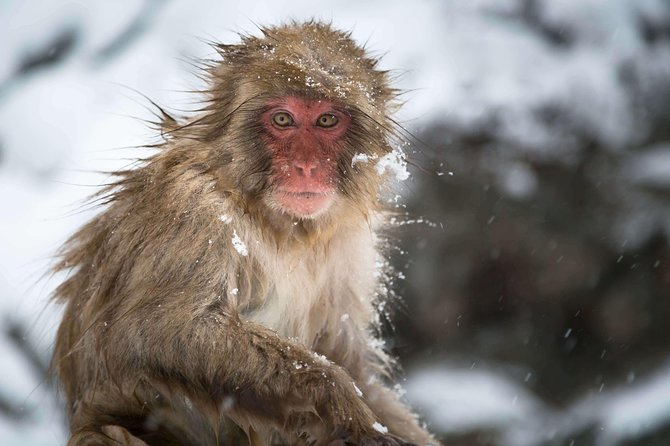
- The snow monkeys are wild: Winter gives you the best chance of seeing them in the hot spring, but bathing is never guaranteed.
- Your guide is present on day one only: Day two is yours to plan unless you purchase an add-on with a guide and private vehicle.
- A ryokan changes the pace: Expect traditional Japanese lodging, futons or Japanese-style rooms, and access to a hotel or nearby onsen.
- Obuse adds local flavor: The small historic town can bring sake, wine, soba, seasonal food, and a quieter contrast to Nagano City.
- Transport affects the experience: You can choose public transportation or a private chartered vehicle for the first day.
- The tour suits small private groups: Only your party participates, with adult, child, and young child pricing available.
Why this two-day Nagano plan works
Nagano is easy to visit as a quick stop from Tokyo, but its best sights are spread across the prefecture. Jigokudani is outside the city, Zenkoji sits in central Nagano, Obuse has its own small-town character, and Hakuba lies farther west. Trying to connect these places alone can mean sorting out trains, buses, walking routes, entrance tickets, and luggage.
This tour takes care of the basic structure. You meet at Nagano Station at 8:45 a.m., spend the first day with an English-speaking guide, sleep in a ryokan, and keep the second day open. That last point is important. This is not a fully guided 48-hour program. It is a guided introduction followed by independent time.
I see that as a strength for some people. You get help with the harder regional sightseeing, then a free day to rest, shop, revisit a favorite area, or choose an add-on. If you want a guide beside you from breakfast through dinner on both days, you need to arrange that separately.
The private setup also matters. Your guide can slow down at a temple, spend more time on food, or suggest a stop that fits your interests. The experience is not locked into a large coach schedule. Past guides including Wei Wei Fan and Ilhom were praised for being friendly, flexible, and willing to adjust the day.
More Day Trips in Nagano
- Nagano: Snow Monkeys, Zenkoji Temple & Sake Day Trip
★ 4.9 · 833 reviews - From Tokyo: Snow Monkey 1 Day Tour with Beef Sukiyaki Lunch
★ 4.6 · 295 reviews - Tokyo: Snow Monkey & Nagano Customiseable Private Day Tour
★ 4.8 · 138 reviews
Starting at Nagano Station at 8:45 a.m.
The meeting point is Nagano Station in Kurita, Nagano. The early start helps you make good use of the day, especially if you are arriving from Tokyo by train. Train tickets from Tokyo can be arranged as an add-on, and those tickets are sent to your Tokyo hotel if you provide the hotel name, booking name, confirmation number, and dates of stay.
You should treat the start time seriously. A late arrival could affect a private schedule with several stops. The tour operator asks you to complete a Nagano information form after booking, ideally at least seven days before departure. That form helps establish your transportation choice, accommodation details, and any second-day add-ons.
The first-day transport within Nagano may use public transportation or a chartered vehicle, depending on the option you select. Public transport can feel more local and may cost less, while a private vehicle gives you more control and reduces the effort of changing between regional connections. Families and anyone carrying luggage will likely appreciate the vehicle option.
A current passport is required on the day of the tour, and you must provide your birth date when booking. The tour operates in all weather, so pack shoes that can handle a moderate amount of walking and clothing suited to the season.
Jigokudani Snow Monkey Park and the hot spring question
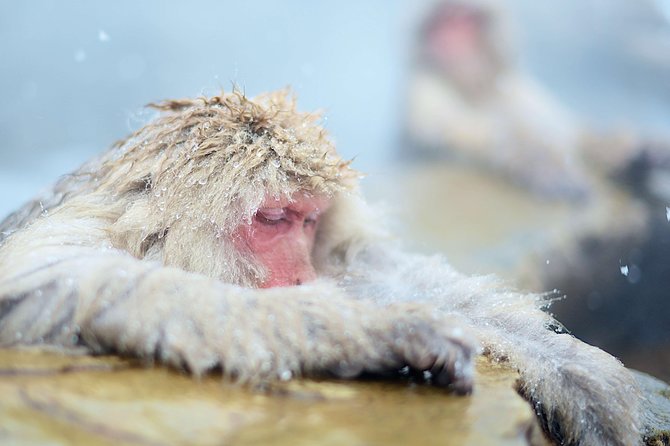
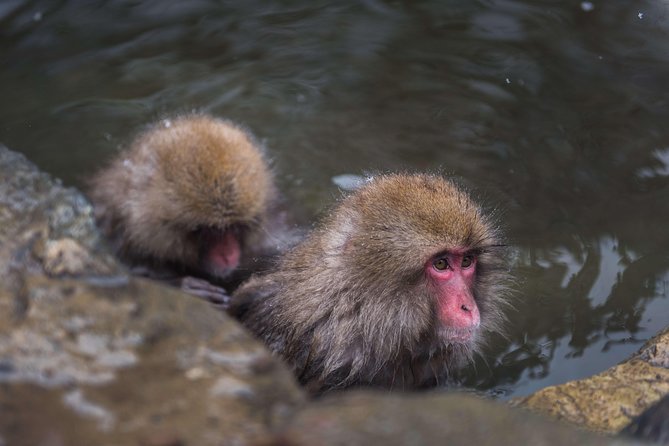
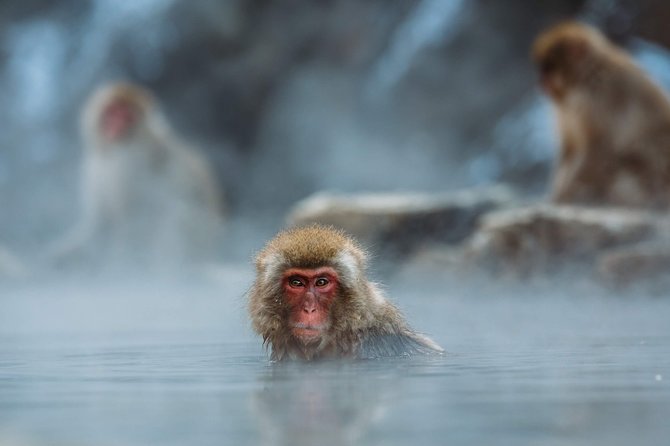
The snow monkey park is the headline stop. Jigokudani is home to Japanese macaques that use a natural hot spring. Seeing these animals close to the steaming water is unusual, and it gives the visit a clear purpose beyond simply looking at wildlife behind a fence.
The listed stop is about 40 minutes, with admission included. That is enough time for a focused visit, but it is not an all-day wildlife outing. You will need to walk, so comfortable shoes matter. The park can be especially appealing in winter, when snow and cold weather make the monkeys’ hot-spring habit most likely.
Do not book this tour on the assumption that every monkey will be bathing. The monkeys are wild, and their behavior changes with the weather. From March onward, snow begins to melt and the animals may enter the water less often. On warm, sunny days, they may move around, groom one another, or ignore the bath entirely. Park staff may offer food, which can sometimes encourage a swim, but there is no guarantee.
Your guide can help with timing and explain what you are seeing. Ilhom was praised for knowing when the monkeys were most likely to bathe, but good timing cannot control wild animals. I would treat the hot spring scene as a bonus, not a promise.
The park is still worth visiting if the monkeys stay dry. You are visiting a distinctive mountain setting and seeing Japanese macaques in their natural area. Just keep your expectations realistic, especially outside the coldest months.
Zenkoji Temple, the spiritual heart of Nagano
Zenkoji Temple gives the tour a strong cultural anchor. The temple was built in the seventh century, and Nagano City grew around it. That detail helps explain why Zenkoji is not just another stop on a sightseeing route. It is part of the reason the city exists where it does.
The visit is listed at around 40 minutes, with admission included. That makes it a compact introduction rather than an extensive temple study. Your guide can add context, point out important features, and help you understand the place without requiring you to decode every sign alone.
I like the contrast between Zenkoji and the snow monkey park. One stop is a major Buddhist temple in the city; the other is a wildlife area reached beyond the urban center. Together, they show two very different sides of Nagano.
Allow for walking around the temple grounds and nearby streets. The tour information describes a moderate amount of walking, so this is not a sit-back-and-watch excursion. If you want a long, quiet temple visit, you may need to choose between extended time here and the other stops.
A completely different kind of day out:
- 1-Day Snow Monkeys, Zenko-ji Temple & Sake in Nagano
★ 5.0 · 1,020 reviews - [Nagoya Kamikochi Hiking Tour] One-Day Nature Forest Hiking Tour of Kamikochi & Taisho Pond & Tashiro Pond & Kappa Bridge & Myojin Pond & Hotaka Mountain Range & Hotaka Shrine Okumiya (Departure from Nagoya)
★ 4.7 · 423 reviews - Matsumoto Castle Tour & Samurai Experience
★ 4.9 · 128 reviews - 1-Day Tour from Nagano and Matsumoto Kamikochi & Matsumoto Castle
★ 5.0 · 105 reviews
Obuse for small-town food and local character
Obuse is a small historic town in Nagano. Its appeal is less about a single blockbuster sight and more about the change in pace. After the major temple and popular monkey park, Obuse can feel calmer and more local.
The exact order and length of this stop can vary with your transportation choice and custom itinerary. That flexibility is useful because the guides can shape the day around your interests. Food is one of the strongest reasons to include Obuse. The experience may include a soba lunch, local sake, wine tasting, or other regional specialties.
Several guides received praise for making food part of the day. Toru reportedly stopped at a local soba restaurant, while Wei Wei Fan took people to a well-regarded soba spot and suggested local delicacies. Another guide introduced spicy ice cream, a small but memorable detail that shows how a private tour can include more than the standard checklist.
Lunch is not included, so these food stops come at your own cost. I consider that a fair arrangement because you can choose what suits your appetite and budget. Still, remember that the tour price does not cover lunch, snacks, or drinks.
The ryokan night and what the onsen really includes
The overnight ryokan is one of the most distinctive parts of the experience. A ryokan is a traditional Japanese inn, and staying in one gives you a chance to experience a different style of lodging than a standard Western hotel.
The base accommodation is a three-star traditional Japanese hotel. A four- or five-star hotel option is available at checkout, though upgrading changes the price. Rooms are non-smoking unless otherwise requested, with designated outdoor smoking areas.
The onsen arrangement needs careful reading. Access to hot springs is included, but the bath may be located somewhere in the hotel rather than connected to your room. At times, there may be no onsen inside your particular hotel, in which case you will have access to an onsen in the ryokan area.
A private onsen is not included. It usually costs about 1,500 to 2,500 Japanese yen for one hour at the ryokan. This may be worth paying for if you prefer privacy or feel unsure about using a communal bath. If you are comfortable with a shared onsen, the included access should be enough.
The food rules are also relevant for families. Children from one to five years old do not receive a ryokan meal automatically. Adults must arrange separate food or share their meal, and young children normally sleep on the same futon or bed as their parents. A separate futon may be available for an additional charge.
Day two: Hakuba, free time, or an add-on
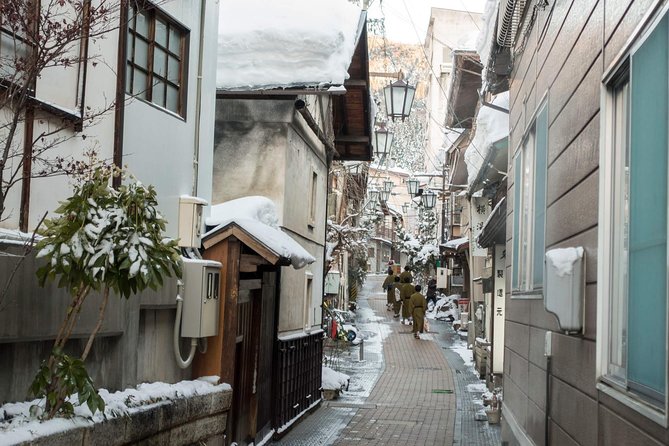
The second day is intentionally less structured. Hakuba Happoone Winter Resort is listed as a possible destination, but the basic tour does not include a guide on day two. You have free time unless you choose an add-on.
Hakuba is known as a ski resort on Mount Karamatsu and hosted alpine events during the 1998 Nagano Winter Olympics. It can make a strong second-day choice if you want mountain scenery, winter sports, or a change from temple and town sightseeing.
You can also request a guided add-on with a private vehicle to places such as Matsumoto, Kamikochi, Hakuba, or other nearby areas. These excursions cost extra, and the operator sends an invoice if you select one. Since day two is otherwise independent, decide before arrival how much planning you want to do yourself.
This open day suits independent people who enjoy setting their own pace. It is less suitable if you expect every hour to be organized. I would use it as a breathing space after the first day, unless you have a clear reason to add another full excursion.
What the $489.55 price delivers
At $489.55 per person, this is not a budget sightseeing trip. The value comes from combining several services that can be awkward to arrange separately: a private guide, first-day transportation, entrance fees for Jigokudani and Zenkoji, overnight ryokan accommodation, and access to an onsen.
The private vehicle upgrade can increase the cost, as can a four- or five-star hotel, a private onsen, train tickets from Tokyo, meals, and second-day activities. You need to compare the final checkout total rather than judging the base price alone.
For a solo visitor, the price may feel high. For a small group splitting a private vehicle and guide cost, it can make more sense. The group discount feature is worth checking, particularly if you are traveling with family or friends.
I also see value in the guide’s local help. Soba recommendations, sake or wine tasting, timing at the monkey park, and flexible stops are hard to price on their own. The tour is strongest for people who want Nagano made easier without giving up all personal choice.
The tour is booked about 30 days ahead on average, but the operator recommends reserving closer to three months ahead when custom arrangements, restaurants, or add-ons matter. Do not leave the planning form until the last minute.
Guides, flexibility, and the private format
The guides are central to the experience. Hiroaki Horiuchi was praised for combining the monkey park, Obuse, local sake, food, and the ryokan into an enjoyable day. Toru was noted for building a personal schedule and making sure key sights were covered.
Wei Wei Fan received especially warm feedback for being friendly, helpful, and relaxed. She was also praised for giving people space when they wanted to take in a sight quietly. Ilhom was described as warm, patient, and willing to explain each place while allowing time for photographs and personal interests.
Those details point to the real advantage of a private tour. You are not simply being moved from stop to stop. You can ask questions, request food recommendations, and adjust the rhythm within the day’s limits.
That said, guide quality can vary because different people may lead the tour. The strong names associated with the experience are encouraging, but you should still view the guide as an important part of the value rather than a guaranteed personality match.
Who should book this Nagano experience?
I would recommend this tour to first-time visitors who want to see Nagano’s major sights but do not want to manage every transfer. It is also a good fit for couples, families, and small groups who value private attention and want to try a ryokan.
Families with young children should think through the walking, the early start, the shared sleeping arrangements, and the food rules for children aged one to five. The private vehicle option may be especially helpful with small children or luggage.
Independent visitors can also enjoy it, provided they understand the day-two arrangement. You get a guide when regional logistics matter most, then a free day for your own plans.
I would hesitate if your main goal is guaranteed snow in the monkey park, a fully guided second day, or a low-cost itinerary. I would also hesitate if a communal onsen does not suit you and you do not want to pay extra for a private bath.
Cancellation terms require care. The supplied terms include a moderate policy offering a full refund up to four days before the start time, but another statement describes the experience as non-refundable and not changeable. Check the exact terms shown at checkout before paying, especially because a 15 percent service fee may become nonrefundable after custom planning begins.
FAQ
Where does the tour start?
The tour starts at Nagano Station in Kurita, Nagano, at 8:45 a.m.
Is the tour private?
Yes. Only your group participates in the private activity.
Is a guide included on both days?
No. An English-speaking local guide is included on the first day only. The second day is free time unless you book an additional guided activity.
Is transportation included?
Transportation within Nagano City on the first day is included through either public transportation or a chartered vehicle, depending on the option selected. Train tickets from Tokyo are an optional add-on.
Is the ryokan included?
Yes. The base package includes one night at a traditional Japanese hotel rated at three stars. Four- or five-star hotel options are available at an additional cost.
Is a private onsen included?
No. Onsen access is included, but a private onsen session usually costs about 1,500 to 2,500 Japanese yen for one hour.
Will I definitely see the snow monkeys bathing?
No. The monkeys are wild, and bathing is not guaranteed. They are more likely to use the hot spring in cold winter weather, while warm-season visits may show them grooming or moving around instead.
Are meals included?
Lunch, snacks, and drinks are not included. Ryokan meal arrangements for children aged one to five also require attention, since meals are not automatically provided for them.
Should you book it?
Book this Nagano tour if you want the big sights, a taste of local food, and a traditional overnight stay without handling every regional detail yourself. Its best features are the private guide on day one, flexible food and sightseeing suggestions, and the chance to sleep in a ryokan.
Before you commit, choose your transport, confirm the hotel level, decide if you want a private onsen, and make a plan for day two. If you accept that the monkeys may not bathe and the second day is mostly your responsibility, the tour offers a convenient and personal way to get beyond central Nagano.
Just added in Nagano
- [Nagoya Kamikochi Hiking Tour] One-Day Nature Forest Hiking Tour of Kamikochi & Taisho Pond & Tashiro Pond & Kappa Bridge & Myojin Pond & Hotaka Mountain Range & Hotaka Shrine Okumiya (Departure from Nagoya)★ 4.7 · 423 reviews
- Snow Monkey Park & Miso Production Day Tour from Nagano★ 5.0 · 18 reviews
- Snow Monkeys, Hokusai & Sake: A Perfect Day in Nagano★ 5.0 · 19 reviews
- Wasabi Farm Walking Tour & Lunch★ 4.5 · 20 reviews
- Ski or Snowboard Lesson in Shiga Kogen (4Hours)★ 5.0 · 34 reviews
- Snow Monkey & Shibu Onsen Afternoon Tour (Depart: Iiyama & Nozwa)★ 5.0 · 54 reviews
- 1-Day Tateyama-Kurobe Tour: Walking on the ‘Roof of Japan’★ 5.0 · 20 reviews
- Nagano Spring: 1-Day Cherry Blossoms & Snow Monkeys Guided Tour★ 5.0 · 31 reviews
Day Trips, compared.
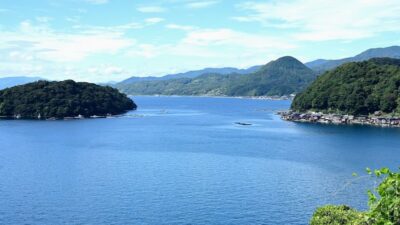
Kyoto Amanohashidate & Ine Funaya & Ine Bay Scenic Day Trip (Departing from Osaka or Kyoto)
Read our review →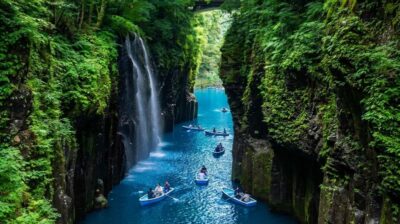
Kyushu: Mount Aso, Kusasenri & Takachiho Gorge Day Tour (Optional Takachiho Boat Ride Experience)
Read our review →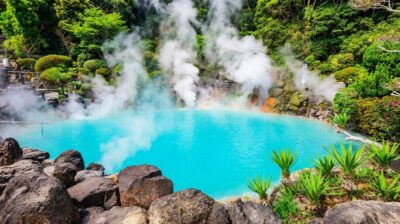
Kyushu One-Day Tour: Yufuin no Mori Train & Yufuin Town & Nyoirin-ji Temple & Dazaifu & Hell Hot Springs (Departing from Fukuoka)
Read our review →
Browse the lists this tour appears in