
Reviewed · JAPAN
Ecotourism and Woodcraft with a Mountain Artist Near Tokyo
Tokyo’s best forest breaks may be closer than you think. In Hanno, Saitama, this small-group outing brings you into a normally closed private forest, where a forestry master explains Nishikawa timber, thinning, and the work of a family that has cared for woodland for more than 300 years. I especially like the chance to cut a real log and the quiet time spent beneath a tree, followed by a useful pyrography craft shaped like Edo Castle. The main drawback is that the $93.93 price does not include your train fare or lunch.
The tour also has a strong human touch. Shun-san guides visitors through the woods, explains the family’s customs, and provides helmets and gloves for the practical work. You will not simply look at trees from a path. You will handle wood, feel the effort needed to saw it, and take home a smartphone stand marked with your chosen kanji.
- A private forest near Tokyo: Enter woodland normally closed to the public in Hanno.
- A 300-year forestry tradition: Learn how the Inoue family and local foresters care for Nishikawa timber.
- Three kinds of wood: Smell and examine different woods while learning how each is used.
- Real log cutting: Try thinning-related work yourself, with safety gear provided.
- Quiet forest time: Choose a tree that speaks to you and rest beneath its canopy.
- Edo Castle woodcraft: Burn a kanji into a wooden piece that becomes a phone stand.
In This Review
- Why Nishikawa Timber Matters in Hanno
- Meeting at Higashi-Agano Station
- Kirari, the Woodworking Studio and Forest Base
- Sawing a Log Gives the Lesson Some Muscle
- Forest Bathing Without a Script
- The Edo Castle Craft Makes a Useful Souvenir
- What the Two and a Half Hours Feel Like
- Is $93.93 a Fair Price?
- Who Will Enjoy This Forest Experience?
- Practical Details Before You Book
- Should You Book It?
- FAQ
- Where does the tour begin?
- How long does the experience last?
- Is transportation included?
- Is lunch included?
- How many people can join?
- What will I make during the craft activity?
- What happens if the weather is poor?
Why Nishikawa Timber Matters in Hanno
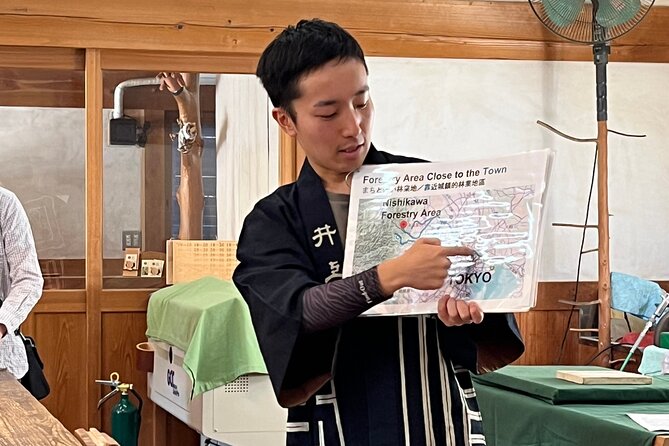
The word Nishikawa refers to wood from the western side of Tokyo. Before modern building materials took over, timber from this area was prized in Tokyo construction and architecture. That gives the tour a useful link between the quiet hills of Saitama and the city only about an hour away by train.
You will hear how forestry is not simply a matter of planting trees and cutting them later. A healthy forest needs care over time. Trees may need to be thinned so that the remaining growth receives better access to light, air, and space. The work calls for judgment, patience, and a feel for the woods.
That is why the local term mountain artist fits the people who manage these forests. Their work is practical, but it also has a creative side. They shape the forest without treating it as a warehouse of lumber. This idea gives the experience more weight than a basic craft class.
The family connection adds another layer. The forestry tradition here reaches back more than 300 years, and the head of the Kirari millwork shop is described as the family’s 15th generation. You get a sense of a trade passed down through people, tools, and daily decisions, not just a display of old objects.
Meeting at Higashi-Agano Station
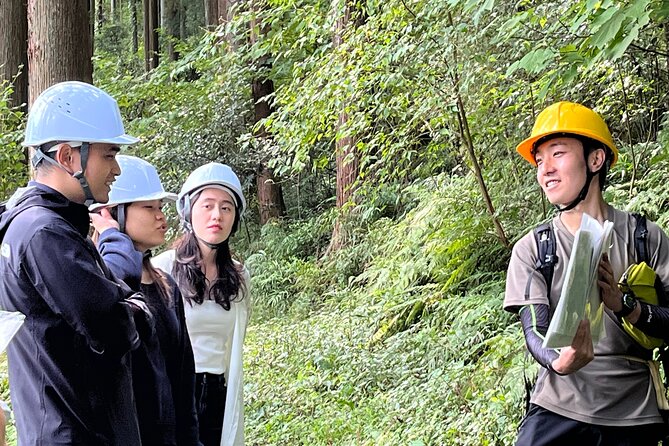
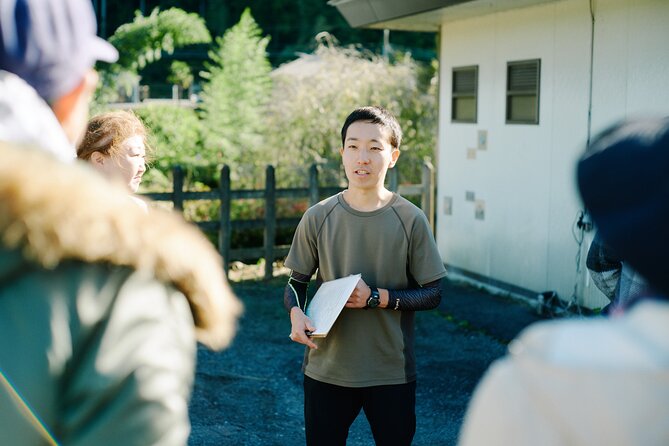
The outing begins at Higashi-Agano Station, a simple meeting point surrounded by greenery. After leaving the ticket gate, look for the guide holding a tour placard. This is a useful arrangement if you are not familiar with the station, since you do not need to search for a distant office or studio.
You must arrange your own transportation to Higashi-Agano. The tour price covers the air-conditioned vehicle from the station to the activity site, but it does not cover train or other transportation costs. Keep this in mind when comparing the total cost with a standard sightseeing trip.
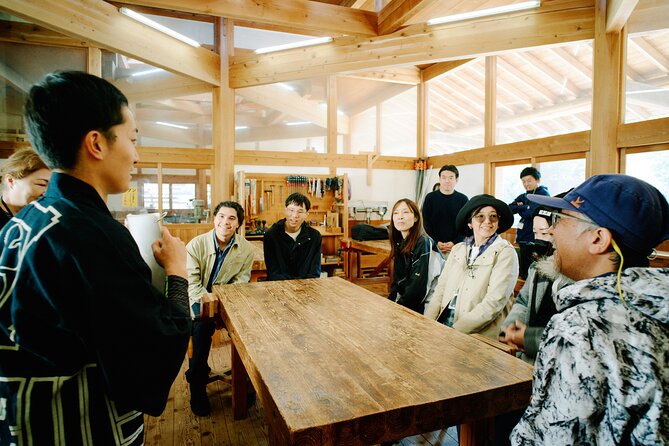
The group is capped at eight people. That matters here. Forestry instruction works better when you can see the tools, ask questions, and take your turn without being lost in a crowd. A small group also suits the quiet mood of the woods.
At the station, expect a short briefing before the drive. The station stop is listed at about 10 minutes, and the guide then takes you to Kirari. Since the full experience lasts about two and a half hours, the pace is active but not rushed.
Other trips worth a look in Japan:
- Tokyo Disney Resort – Tokyo Disneyland & Tokyo DisneySea Park Tickets
★ 4.8 · 99,488 reviews - Universal Studios Japan Studio Pass
★ 4.8 · 89,883 reviews - Universal Studios Japan Express Pass
★ 4.7 · 53,138 reviews
Kirari, the Woodworking Studio and Forest Base
Kirari is the setting for the main portion of the outing. Here, the forestry master introduces Nishikawa timber and the area’s forestry customs before you begin the practical activities.
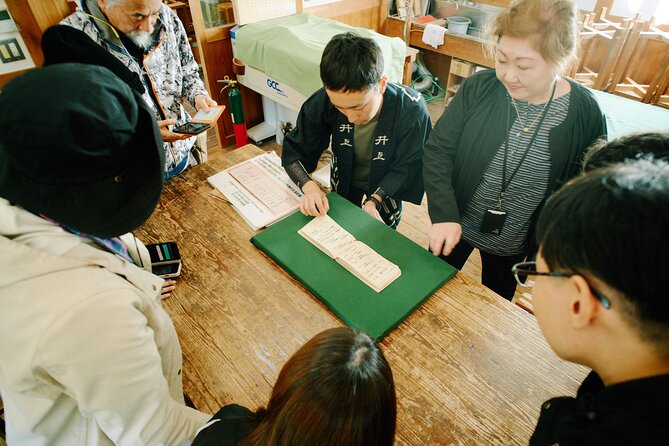
The first lesson concerns the types of wood. You will encounter the aromas of three kinds of timber, with cedar and cypress among the trees discussed during the experience. This is a small but valuable detail. In Japan, you may see these trees in buildings, shrines, baths, and household goods without thinking about how different woods smell, feel, or perform.
The talk also puts local forestry into plain terms. Thinning can sound like a technical word in a brochure, but it becomes clearer when you see the size and condition of trees in an actual forest. You learn why removing selected trees can help the rest of the woodland stay healthy and why good forestry is not the same as clear-cutting.
The private setting is one of the strongest parts of the tour. This forest is internationally certified and normally closed to the public, so you are not just following a standard public trail. Access is limited, and that makes the visit feel more personal and purposeful.
Sawing a Log Gives the Lesson Some Muscle
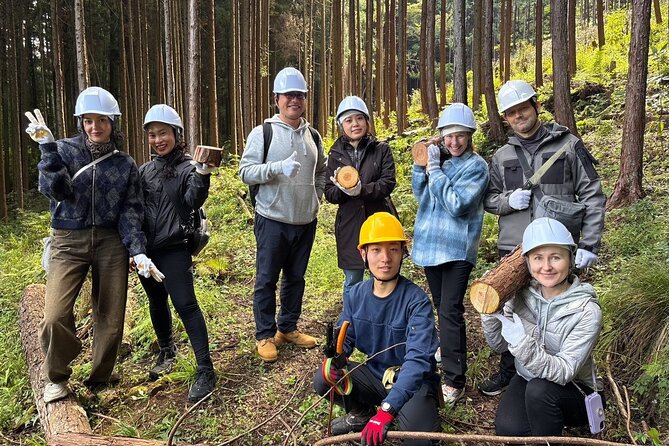
The log-cutting session changes the mood from listening to doing. You will try sawing a log yourself and feel how much effort the task takes. One useful tip is to arrive ready for hands-on work rather than treating this as a photo stop.
The saw may not move through the wood as quickly as you expect. That is part of the point. A log that looks manageable can demand steady pressure, coordination, and patience. The exercise helps you understand the physical side of forestry far better than a talk alone.
Safety is taken seriously. Helmets and gloves are provided, according to the guide’s practice, and the group receives instructions before handling tools. Still, you should follow directions closely and wear clothing and shoes suitable for outdoor activity.
The activity is not presented as a professional logging lesson. It is a short, supervised taste of the work. You will not leave with a new trade, but you will have a better sense of the energy, skill, and time behind a piece of Japanese timber furniture.
Forest Bathing Without a Script
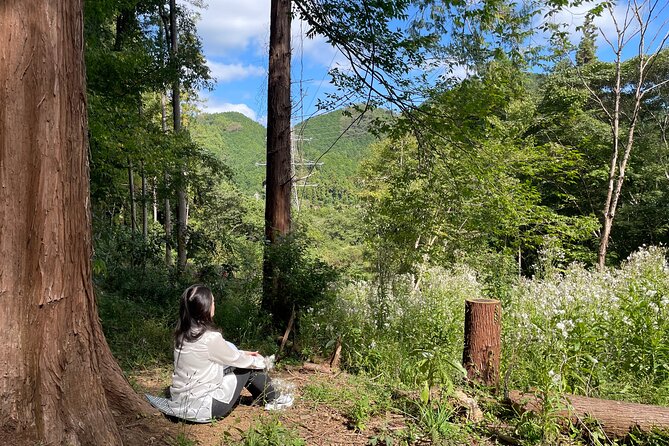
After the practical work, the tour slows down. You are invited to find a tree that speaks to you, sit or rest beneath its canopy, and spend a quiet moment in the forest.
This part may sound simple, but it is central to the experience. Many visitors to Japan move from one famous sight to the next, collecting temples, viewpoints, and train rides. Here, you are asked to stop and pay attention to air, scent, sunlight, and silence.
The guide also explains the family’s custom of offering thanks to the mountain gods before entering the forest. You do not need to share the same beliefs to appreciate the respect shown toward the place. It frames the visit as a relationship with the mountain rather than a quick recreational stop.
The forest-bathing portion is not a medical treatment, and the tour does not promise a cure for stress. Its value is more direct. You get time away from traffic and screens, with permission to be quiet for a while. If you like nature but do not want a strenuous hike, this section should suit you.
A completely different kind of day out:
- SHIBUYA SKY Ticket
★ 4.7 · 46,509 reviews - Mt. Fuji Instagram-Worthy Spots Day Tour: Ladder Town, Oshino Hakkai, Lake Kawaguchi, Lawson Convenience Store (Departing from Tokyo Station or Shinjuku Station)
★ 4.8 · 35,467 reviews - JR Whole Japan Rail Pass
★ 4.8 · 29,150 reviews - Mt Fuji and Hakone 1-Day Bus Tour Return by Bullet Train
★ 5.0 · 26,383 reviews
The Edo Castle Craft Makes a Useful Souvenir
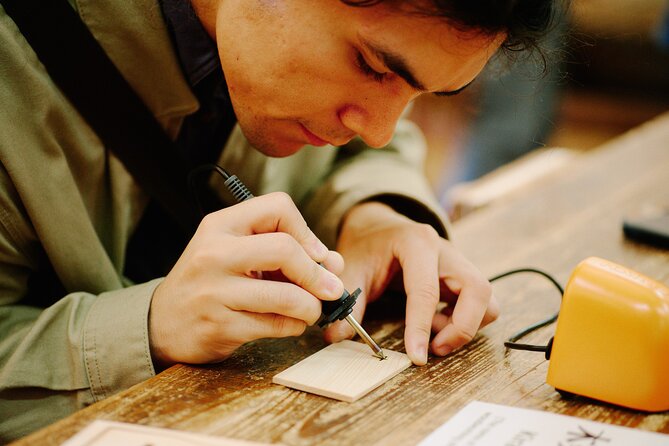
Back at Kirari, you make a small piece of wood shaped like Edo Castle. Using a pyrography pen, you inscribe a kanji of your choice into the surface. The finished piece becomes a smartphone stand.
This is a smart souvenir because it combines a local material with a personal mark. You choose the character, so the object can represent a name, a value, a place, or a hope. The Edo Castle shape also links your small craft to Tokyo’s past and to the timber once used in the capital.
Pyrography is approachable, but you still need to work carefully. The pen burns the design into the wood, so this is not the place for a rushed scribble. The activity gives you a calmer finish after the physical effort of cutting the log.
I like that the craft does not pretend to be an antique or a masterwork. You make it yourself, with the natural grain and small imperfections left visible. It feels more honest than buying a mass-produced souvenir in central Tokyo.
What the Two and a Half Hours Feel Like
The tour is compact. About 10 minutes is set aside at the station at the beginning, about two hours at Kirari, and another short station transfer at the end. The main section has several changes of pace: a forestry talk, wood examination, log cutting, quiet time in the forest, and pyrography.
That mix keeps the experience from becoming either a lecture or a craft class. You learn first, use your hands next, slow down afterward, and finish with something to take home.
The small group limit of eight helps with this rhythm. Each person should have a reasonable chance to take part, though the exact timing of each activity can depend on the guide and group. The format is best for people who prefer a focused local experience over a packed schedule.
The tour finishes back at Higashi-Agano Station. Around lunchtime, you can continue toward Hannō Station and choose from local restaurants recommended by the guide. Lunch is not included, so leave room in your plans and budget for that meal.
Is $93.93 a Fair Price?
At $93.93 per person, this is not a cheap way to fill two hours. You also pay your own transportation to Higashi-Agano and your lunch. If you only want a short forest walk, a public park will cost much less.
The value improves if you count the access and instruction. You receive transport from the meeting station to a private, internationally certified forest, direct teaching from a forestry family, supervised log cutting, forest time, and a handmade phone stand. The experience also offers something difficult to arrange independently: a close look at a working forestry tradition normally kept outside the public visitor circuit.
Group discounts may make the cost more attractive for families or friends. With only eight places, the setting is also more personal than a large bus tour. I would see the price as fair for a specialized cultural activity, but not as a bargain sightseeing ticket.
Book it for the substance, not for the number of attractions. You are paying for access, time, and a real connection to local woodcraft. If you need a low-cost outing or a full-day schedule of major sights, this is probably not the right choice.
Who Will Enjoy This Forest Experience?
I would recommend it most strongly to people interested in Japanese architecture, traditional industries, craft, or environmental care. An architecture student, for example, can connect the material in a building to the forest where it began.
It also suits visitors who want a gentle break from Tokyo without giving up practical access by train. Hanno is near Chichibu, Kawagoe, and Moomin Valley Park, so you may be able to pair this activity with another local stop, though the tour itself remains the focus.
Families and mixed-age groups may appreciate the variety. The activities are not limited to sitting through a talk, and most people can participate. Still, anyone uncomfortable with tools, uneven outdoor conditions, or a quiet nature-focused pace should think carefully before booking.
This is less suitable if you want dramatic mountain scenery, a long hike, or a polished museum presentation. The attraction is the working forest and the people who care for it. Expect a modest, hands-on setting rather than a major tourist facility.
Practical Details Before You Book
The activity has a mobile ticket and confirmation is provided when you book. It operates near public transportation, but your own fare to the starting point is separate from the tour price.
Wear clothes that can handle contact with wood and outdoor work. Good footwear is sensible, even though the supplied information does not describe the route as a demanding hike. Follow the guide’s instructions when using the saw and pyrography pen.
The experience depends on good weather. If poor weather forces a cancellation, you are offered another date or a full refund. The tour also requires a minimum number of participants, so a cancellation for that reason brings the same choice of another date, another experience, or a full refund.
You can cancel for a full refund up to 24 hours before the start time. Changes or cancellations inside that window are not accepted, and the cut-off uses local time.
Should You Book It?
Book this tour if you want to understand how Japanese timber moves from mountain to craft, and if you enjoy learning by doing. The best parts are the private forest access, the clear connection to a 300-year family tradition, the surprisingly physical log-cutting task, and the quiet hour beneath the trees.
Skip it if you are looking for a bargain, a major landmark, or a full day of sightseeing. For the right visitor, though, this is a thoughtful half-day escape from Tokyo, with a useful souvenir and a better appreciation for the wood in Japan’s built culture.
FAQ
Where does the tour begin?
The tour begins at Higashi-Agano Station in Hanno, Saitama Prefecture. Meet the guide after exiting the ticket gate, where the guide will hold a tour placard.
How long does the experience last?
The experience lasts approximately two hours and 30 minutes. The main activity at Kirari takes about two hours, with short station transfers at the beginning and end.
Is transportation included?
An air-conditioned vehicle takes you from Higashi-Agano Station to the activity site. Transportation costs to the meeting point are not included in the tour price.
Is lunch included?
No. Lunch is not included. The tour finishes back at Higashi-Agano Station, and you can use the guide’s local restaurant suggestions for a meal around lunchtime.
How many people can join?
The tour has a maximum of eight participants. Group discounts are available.
What will I make during the craft activity?
You will use a pyrography pen to write a kanji of your choice on a wooden piece shaped like Edo Castle. The finished item can be used as a smartphone stand.
What happens if the weather is poor?
The experience requires good weather. If it is canceled because of poor weather, you can choose another date or receive a full refund.
Just added in Japan
- A One-of-a-Kind Sushi Experience in a Special Place of Japan★ 5.0 · 15 reviews
- Tokyo Cute Bento Cooking Class – Make a Kawaii Character Lunchbox★ 5.0 · 126 reviews
- Japanese Home Cooking Class & Walk in Todoroki Temple Tokyo★ 5.0 · 88 reviews
- Japan Tokyo Tower Observatory Deck E-Ticket★ 4.0 · 34 reviews
- Catch a Baseball Game in Tokyo with a Local – Tickets Included★ 5.0 · 24 reviews
- JDM Experience with Fast&Furious RX-7 (English speaking Driver)★ 5.0 · 57 reviews
- Tokyo Private Day Tour by Car with English speaking Driver Guide★ 4.0 · 29 reviews
- Japan Classic 10 Day – One Life Adventures★ 5.0 · 129 reviews