
Reviewed · ENTRY TICKETS
Enoshima Aquarium: Admission Ticket
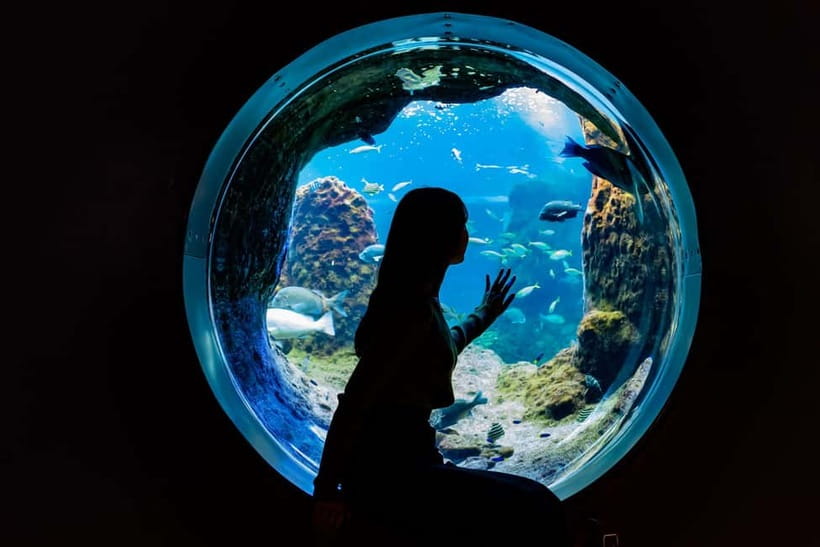
Some aquariums feel like wet museums. Enoshima Aquarium feels more connected to the sea, with Sagami Bay exhibits, Pacific Ocean life, jellyfish, and deep-sea creatures arranged around the idea that ocean life is linked. I especially like the strong local focus and the mix of learning, animal displays, shows, and seasonal programs. The main caution is timing: special events or private bookings can change hours, and one visitor had to leave early because a private event was not announced ahead of time.
At $18 per person, this is a reasonable one-day stop if you are visiting Enoshima or nearby Kamakura. I also like the easy access from Katase Enoshima Station, only about three minutes on foot. Still, the ticket is non-refundable, so check the aquarium’s current opening hours before you commit.
In This Review
- Key points to know before you go
- Why Enoshima Aquarium is more than a fish display
- Starting with Sagami Bay near Enoshima
- From familiar marine life to the deep sea
- Why the jellyfish area deserves time
- Shows, explanations, and seasonal programs
- How long should you plan for the aquarium?
- Getting there from three nearby stations
- Opening hours and the private-event warning
- Is $18 good value?
- Practical rules for bags, cameras, and access
- Who will enjoy Enoshima Aquarium most?
- Should you book the Enoshima Aquarium ticket?
- FAQ
- Where is Enoshima Aquarium located?
- How much does admission cost?
- How long is the ticket valid?
- How close is the aquarium to Katase Enoshima Station?
- How far is it from Enoshima Station?
- How far is it from Shonan Enoshima Station?
- What are the regular opening hours?
- Can opening hours change?
- Is the aquarium wheelchair accessible?
- Are discounts available for disabled persons?
- Can I bring large luggage inside?
- Can I use a flash, tripod, or selfie stick?
- Can admission be restricted?
- Is the ticket refundable?
Key points to know before you go
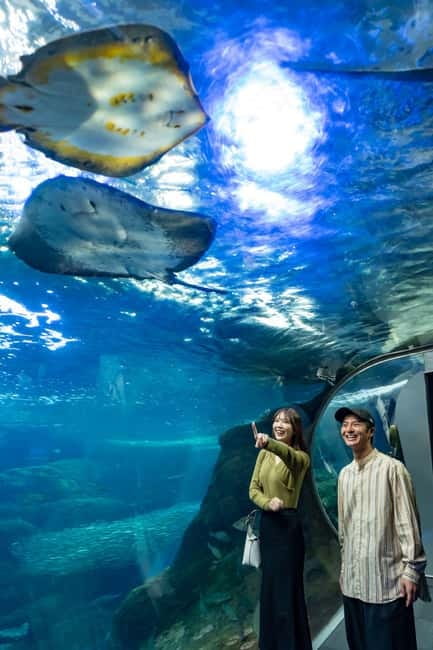
- Sagami Bay comes first: The aquarium begins with marine life from the waters just off the coast, giving the visit a clear sense of place.
- Jellyfish and deep-sea creatures add variety: These displays offer a change from the more familiar fish and coastal animals.
- The Pacific Ocean theme links the exhibits: The aquarium explains how ocean creatures and their surroundings affect one another.
- Seasonal programs can change the visit: Temporary displays, shows, and special activities may be running during your visit.
- Katase Enoshima Station is the easiest arrival point: The walk takes about three minutes from the Odakyu Enoshima Line station.
- Allow time for crowd controls and luggage rules: Admission can be limited when the building is busy, and large or long bags are not allowed inside.
Why Enoshima Aquarium is more than a fish display
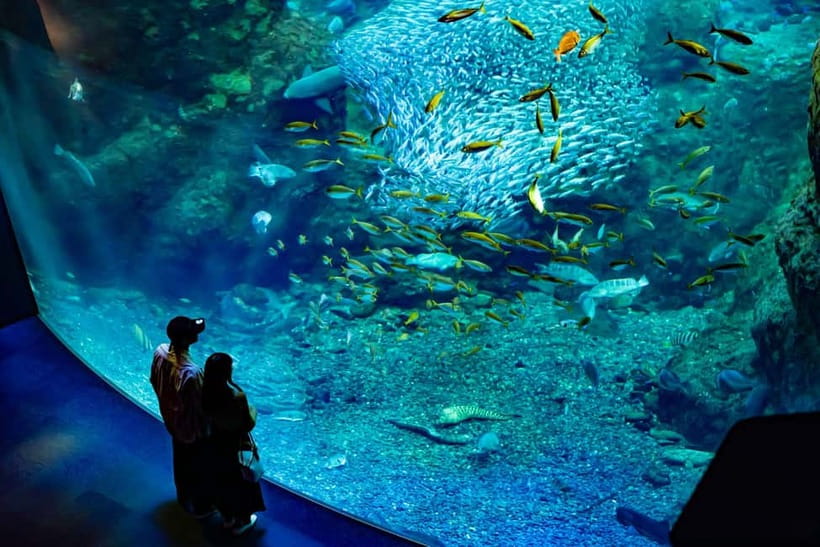
Enoshima Aquarium is built around two ideas: Sagami Bay and the Pacific Ocean. That matters because the aquarium does not treat its animals as isolated attractions. The exhibits aim to show how many forms of ocean life exist together and how the sea connects one creature to another.
I like this approach for families and curious adults alike. You can look at the animals, then read or hear explanations about their surroundings and behavior. The visit has a gentle educational purpose, but it does not sound like a school lesson. The stated goal is to create surprise, excitement, and a sense of calm, which is a useful combination for a day of sightseeing.
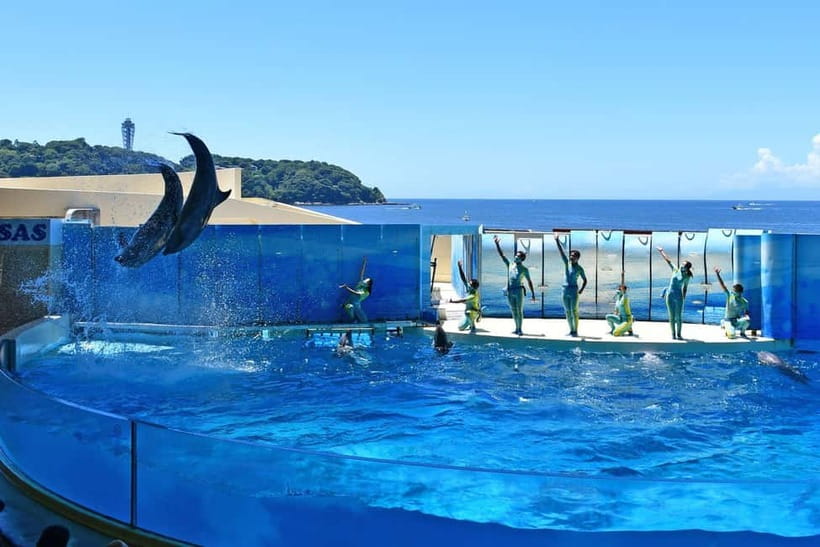
The aquarium also gives you more than fixed tanks. Shows, explanations, and programs provide chances to engage with marine life in different ways. The exact schedule can change, so you should check what is offered on your date rather than assuming every program runs year-round.
More Entry Tickets in Japan:
- Tokyo Disney Resort – Tokyo Disneyland & Tokyo DisneySea Park Tickets
★ 4.8 · 99,488 reviews - Universal Studios Japan Studio Pass
★ 4.8 · 89,883 reviews - Universal Studios Japan Express Pass
★ 4.7 · 53,138 reviews
Starting with Sagami Bay near Enoshima
The first major theme is Sagami Bay, the nearby body of water that gives the aquarium its local character. Instead of beginning with faraway creatures and general ocean facts, Enoshima Aquarium starts close to home.
That is a smart choice. You are not simply looking at animals from an unnamed blue tank. You are being introduced to the sea around the Shonan coast, then guided toward the wider Pacific. The sequence gives the visit a sense of movement, from local waters to the much larger ocean system.
Expect explanations about the creatures and the waters around them. The supplied details do not list every species or tank, so I would not arrive expecting a fixed checklist of animals. The strength here is the connection between the exhibits, not just the number of species on display.
For children, this section can make the ocean feel less distant. For adults, it adds useful context to an Enoshima visit. You are seeing the coastal setting around you represented indoors, which helps tie the aquarium to the seaside town outside.
From familiar marine life to the deep sea
After Sagami Bay, the aquarium moves toward the deep sea and other marine animals. This change in subject gives the visit a good rhythm. You begin with a recognizable local setting, then reach creatures and habitats that are harder to see in ordinary coastal waters.
The deep-sea displays are likely to be one of the most memorable parts for anyone who enjoys unusual marine life. The information specifically highlights deep-sea creatures, but it does not name individual species. That means I would focus on the sense of discovery rather than expecting a particular animal to be guaranteed.
This part also supports the aquarium’s wider message. The ocean is not only the bright, shallow water you see from a beach. It has darker, less familiar zones with their own animals and conditions. Even a short explanation can change how you look at the Pacific after leaving the building.
The order of the visit works well because it avoids presenting the ocean as one flat environment. You get a progression through different settings, with each area offering a new reason to pay attention.
Why the jellyfish area deserves time
Jellyfish are often the quiet highlight of an aquarium, and Enoshima Aquarium gives them a clear place in the visit. Their movement is slow and almost weightless, creating a sharp contrast with the busier displays of fish and other animals.
The aquarium describes its jellyfish area as part of the main sequence after Sagami Bay and the deep sea. I would not rush through it. Even if you arrive with children who want to see larger animals, this section can provide a welcome pause.
The jellyfish displays also fit the aquarium’s idea of healing. The word can sound grand, but the practical point is simple: some exhibits are meant to calm you as well as teach you. After moving through several animal areas, the jellyfish section gives you a quieter moment to watch rather than hurry.
Photography rules matter here and elsewhere. Flash photography is prohibited in some exhibit areas, and tripods or selfie sticks may be restricted when the aquarium is crowded. Bring your camera, but be prepared to put it away when signs or staff require it.
A completely different kind of day out:
- SHIBUYA SKY Ticket
★ 4.7 · 46,509 reviews - Mt. Fuji Instagram-Worthy Spots Day Tour: Ladder Town, Oshino Hakkai, Lake Kawaguchi, Lawson Convenience Store (Departing from Tokyo Station or Shinjuku Station)
★ 4.8 · 35,467 reviews - JR Whole Japan Rail Pass
★ 4.8 · 29,150 reviews - Mt Fuji and Hakone 1-Day Bus Tour Return by Bullet Train
★ 5.0 · 26,383 reviews
Shows, explanations, and seasonal programs
The aquarium offers explanations, shows, and programs that can make the visit feel more active than a walk past tanks. These activities are intended to help you interact with or better understand marine creatures.
The exact content and schedule are not fixed in the information provided. Seasonal exhibits and temporary events are also part of the program, so the aquarium can feel different at different times of year. If you have already visited once, a later trip may not be identical.
This is also where timing becomes important. A one-day ticket gives you admission for the day, but it does not guarantee access to every program at every hour. I would check the aquarium’s website on the day of your visit for current hours and event details.
The seasonal changes are a plus if you are planning a flexible Enoshima day. They are less helpful if you want a precise, fixed itinerary. Keep some room in your schedule, especially during holidays and busy periods.
How long should you plan for the aquarium?
The ticket is valid for one day, but no fixed visit length is provided. You can treat the aquarium as a short stop or give it a larger part of your day, depending on how closely you read the explanations and how many programs are running.
I would allow enough time for the full progression: Sagami Bay, the deep sea, jellyfish, marine animals, and any shows or temporary exhibits available that day. The building may also be busy, which can slow your movement through popular areas.
The one-day validity gives you flexibility, but it does not mean you can come and go without checking the rules. The important point is that you are buying access for that date, not a guided tour with a set departure time.
Crowding can also affect admission. The aquarium may restrict entry when it reaches capacity, so arriving close to opening is sensible if your schedule is tight. This is especially important during spring holidays, summer holidays, year-end, New Year holidays, and special events.
Getting there from three nearby stations
Katase Enoshima Station on the Odakyu Enoshima Line is the simplest choice. The aquarium is about a three-minute walk from the station, making this route especially useful if you are carrying only a small day bag.
Enoshima Station on the Enoshima Dentetsu Line is about ten minutes away on foot. Shonan Enoshima Station on the Shonan Monorail Line is also about ten minutes away.
All three options are practical, but the walk from Katase Enoshima is the shortest. If you are choosing your train route specifically for the aquarium, I would favor that station.
The published location is approximately 35.3100048, 139.479428. You do not need the coordinates for ordinary planning, but they can help if you are using a map application or arranging a meeting point.
Opening hours and the private-event warning
From March through November, the aquarium is scheduled to open from 9:00 a.m. to 5:00 p.m. From December through February, it opens from 10:00 a.m. to 5:00 p.m.
Those hours are not guaranteed every day. Spring holidays, summer holidays, year-end and New Year holidays, and special events can change the schedule. The most useful advice is to check the aquarium website before setting out, particularly if you are visiting on December 30 or another holiday date.
There is a specific reason to take this seriously. On December 30, 2025, a visitor found that the aquarium was closing early for a private event and that the change had not been shared in advance. The exhibits were described as good, but the early closure meant leaving before seeing everything.
That is not a reason to reject the aquarium. It is a reason to avoid treating the posted hours as permanent. If your visit is important, check again shortly before arrival and consider going early in the day.
Is $18 good value?
At $18, the ticket is fairly priced for a full aquarium visit with local marine exhibits, deep-sea life, jellyfish, educational material, seasonal displays, and possible shows or programs.
The value depends on how you use the admission. If you rush through in thirty minutes, the price may feel less attractive. If you take time with the Sagami Bay displays, read the explanations, watch the animals, and fit in a program or temporary exhibit, the ticket makes more sense.
The strongest value is for people already spending time around Enoshima. The short walk from Katase Enoshima Station makes the aquarium easy to add before or after other sightseeing. You do not need to build a complicated day around transportation.
The price is also easier to justify for families, since the aquarium offers both entertainment and simple ocean education. Older children can enjoy the unusual animals, while adults may appreciate the local Pacific setting and the calm jellyfish areas.
The non-refundable policy makes advance planning more important. Check the date, hours, and possible special closures before purchasing. That small step protects the value of the ticket.
Practical rules for bags, cameras, and access
The aquarium is wheelchair accessible. Disabled persons and one accompanying person each can receive half-price admission when the required certificate is presented onsite.
High school students must show a student ID. Bring it if you are using the relevant admission category.
Large or long luggage is not allowed inside. Paid coin lockers are available on the second floor, so use them before trying to enter with bulky bags. This is particularly useful if the aquarium is one stop during a larger day out.
Flash photography is prohibited in some areas. Tripods and selfie sticks may also be restricted during busy periods. The practical rule is to keep your equipment small and be ready to follow signs or staff instructions.
These details are not exciting, but they can save time. A light bag, a valid student ID if needed, and a quick check of the day’s rules will make the entrance easier.
Who will enjoy Enoshima Aquarium most?
I would recommend this experience to families, couples, solo visitors, and anyone who likes aquariums with a clear sense of place. The local Sagami Bay opening gives the visit more meaning than a random collection of tanks.
It is also a good choice for anyone interested in jellyfish, deep-sea creatures, and the wider Pacific Ocean. The blend of animal displays and explanations means you can keep the visit relaxed without giving up the chance to learn something.
You may want to reconsider if you need a guaranteed full-day schedule, a fixed list of animals, or certainty that every exhibit and program will be open. Temporary events and private functions can affect the day, and the aquarium may limit admission when crowded.
The best plan is to arrive early, check the current schedule, and leave room for the visit to unfold at its own pace. That approach fits the aquarium better than trying to race through it between tightly timed activities.
Should you book the Enoshima Aquarium ticket?
Book it if you want a pleasant, educational stop near Enoshima and you enjoy marine life beyond the usual large fish displays. The Sagami Bay-to-Pacific structure, jellyfish area, deep-sea focus, and seasonal programs give the aquarium enough range to justify the $18 price.
I would be most careful about the date rather than the ticket itself. Since admission is non-refundable and early closures can occur for private events, check the official hours shortly before you go. If the schedule works, this is an easy-to-reach attraction with strong family value and enough variety for adults too.
FAQ
Where is Enoshima Aquarium located?
Enoshima Aquarium is on Honshu, Japan, near Enoshima. Its coordinates are approximately 35.3100048, 139.479428.
How much does admission cost?
Admission costs $18 per person.
How long is the ticket valid?
The ticket is valid for one day.
How close is the aquarium to Katase Enoshima Station?
The aquarium is about a three-minute walk from Katase Enoshima Station on the Odakyu Enoshima Line.
How far is it from Enoshima Station?
Enoshima Station on the Enoshima Dentetsu Line is about a ten-minute walk from the aquarium.
How far is it from Shonan Enoshima Station?
Shonan Enoshima Station on the Shonan Monorail Line is about a ten-minute walk away.
What are the regular opening hours?
From March through November, the scheduled hours are 9:00 a.m. to 5:00 p.m. From December through February, the scheduled hours are 10:00 a.m. to 5:00 p.m.
Can opening hours change?
Yes. Hours may change during spring holidays, summer holidays, year-end and New Year holidays, and special events. Check the aquarium website for the current schedule.
Is the aquarium wheelchair accessible?
Yes, the aquarium is wheelchair accessible.
Are discounts available for disabled persons?
Disabled persons and one accompanying person each can receive half-price admission. The required certificate must be presented onsite.
Can I bring large luggage inside?
No. Large or long luggage is not allowed inside. Paid coin lockers are available on the second floor.
Can I use a flash, tripod, or selfie stick?
Flash photography is prohibited in some exhibit areas. Tripods and selfie sticks may be restricted during busy periods.
Can admission be restricted?
Yes. Admission may be restricted when the aquarium is crowded.
Is the ticket refundable?
No. This activity is non-refundable.
Just added in Japan
- A One-of-a-Kind Sushi Experience in a Special Place of Japan★ 5.0 · 15 reviews
- Tokyo Cute Bento Cooking Class – Make a Kawaii Character Lunchbox★ 5.0 · 126 reviews
- Japanese Home Cooking Class & Walk in Todoroki Temple Tokyo★ 5.0 · 88 reviews
- Japan Tokyo Tower Observatory Deck E-Ticket★ 4.0 · 34 reviews
- Catch a Baseball Game in Tokyo with a Local – Tickets Included★ 5.0 · 24 reviews
- JDM Experience with Fast&Furious RX-7 (English speaking Driver)★ 5.0 · 57 reviews
- Tokyo Private Day Tour by Car with English speaking Driver Guide★ 4.0 · 29 reviews
- Japan Classic 10 Day – One Life Adventures★ 5.0 · 129 reviews
Entry Tickets, compared.

Tokyo Disney Resort – Tokyo Disneyland & Tokyo DisneySea Park Tickets
Read our review →


teamLab Borderless Tickets: MORI Building DIGITAL ART MUSEUM
Read our review →
Browse the lists this tour appears in