
Reviewed · OKINAWA TOURS
Kintsugi Experience in Naha, Okinawa – Art from Broken Pieces!
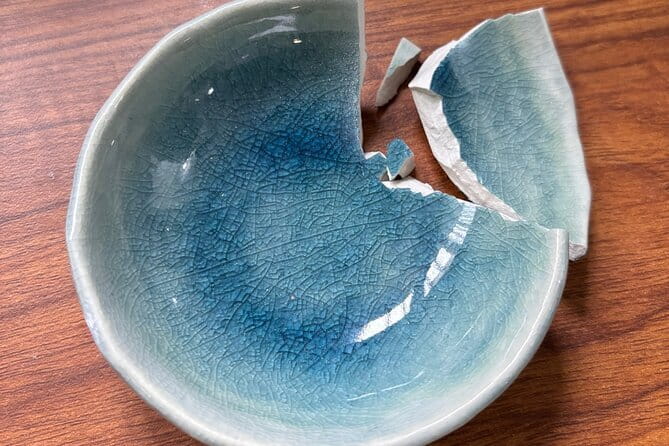
Broken pottery gets a second life here. This two hour workshop in Naha gives you a calm, hands on introduction to kintsugi, the Japanese art of repairing pottery with gold or silver colored lines. I love that you make a personal souvenir rather than buy another factory made trinket, and I love that beginners, families, and older children can all take part. The main catch is that your finished piece is decorative only, not safe for eating or drinking.
You work at your own pace while friendly instructors explain each step. The class also offers a welcome break from Okinawa’s heat, with an indoor setting and, according to one account, cold tea at the end. The pieces are small, often smaller than a saucer, so set your expectations accordingly. What you take home may not look like museum art, but its cracks, colors, and small quirks make it yours.
In This Review
- Five things to know before you book
- Why broken pottery makes a meaningful souvenir
- Arriving at Urushi Studio Kodemari
- The opening lesson: a simple introduction to kintsugi
- Choosing and preparing your pottery
- Applying the gold or silver lines
- A peaceful break from Naha sightseeing
- Why families and first time artists fit well
- What you take home at the end
- Timing, price, and cancellation details
- Is this Naha kintsugi workshop worth booking?
- FAQ
- Where does the Kintsugi Experience take place?
- How long does the workshop last?
- How much does the experience cost?
- Do I need previous artistic experience?
- What will I repair during the class?
- Can I use the finished pottery for food or drinks?
- What can I do with the finished piece?
- How many people can join the activity?
- Is cancellation free?
Five things to know before you book
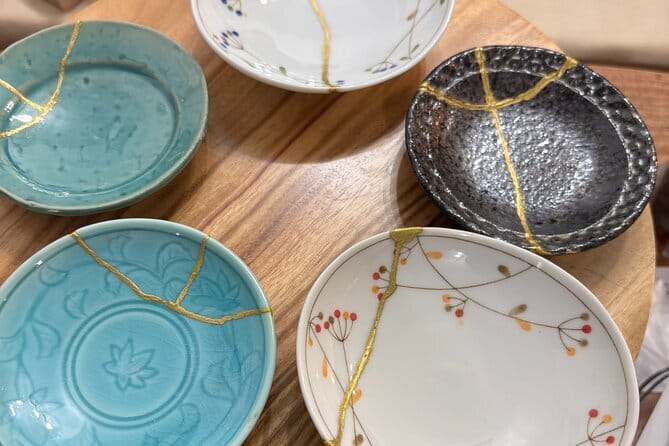
- You repair a real piece of broken pottery, using a shortened version of traditional kintsugi methods.
- No artistic experience is needed, and instructors provide help throughout the process.
- The finished work is for decoration, an accessory tray, or display, not food or drink.
- The mood is quiet and restorative, making this a good counterpoint to sightseeing in the Okinawan sun.
- The class lasts about 1.5 to 2 hours, costs $56.01 per person, and accepts a maximum of 10 people.
- The studio is near public transportation, but it has no car park, so plan your arrival without a rental car.
Why broken pottery makes a meaningful souvenir
Kintsugi is more than a way to patch a cracked bowl. The idea is to repair damage rather than hide it, using the new lines as part of the object’s beauty. That gives the class a little more weight than a standard craft session. You are not simply decorating a blank plate. You are helping an imperfect object continue its life.
The workshop uses gold and silver colors to highlight the repaired areas. The result should look visibly repaired, not restored to an untouched state. That is the point. If you prefer perfect symmetry and polished results, you may find the process less satisfying. If you like objects with a story, the uneven line or slight wobble becomes part of the souvenir.
I especially like the way this changes your idea of a Japanese keepsake. Instead of choosing something from a shop shelf, you spend time making an object connected to your visit. It can later sit on a desk, shelf, or dresser and remind you of Naha, the studio, and the hour or two you spent working with your hands.
A few more options to weigh up in Naha
- (Okinawa’s No. 1 Popular Northern Day Trip) Chinese-speaking guide · Includes admission tickets · 1 person can book: Churaumi Aquarium · Cape Manzamo · Kouri Island · American Village
★ 4.7 · 1,846 reviews - Northern Okinawa: Churaumi Aquarium & Kouri Island & Cape Manza & American Village Day Tour (Departing from Naha & Chatan)
★ 4.8 · 1,115 reviews - Official Street Go-Kart Tour – Okinawa Shop
★ 5.0 · 699 reviews
Arriving at Urushi Studio Kodemari
The activity begins at 漆工房 小手毬, also called Urushi Studio Kodemari, at 2-chōme-16-6 Maejima, Naha, Okinawa 900-0016. The meeting point is near public transportation. There is no car park, so a rental car is not the easy choice for this outing.
Because the address is specific and the workshop has a small maximum of 10 people, I would allow extra time to find the studio. Your mobile ticket provides booking confirmation, but it does not replace basic arrival planning. Check the location before leaving your hotel, especially if you are fitting the class between a morning visit and an evening meal.
The studio setting appears to be part of the appeal. This is not a large commercial attraction with a crowd moving from station to station. The small group size lets you work at a slower pace and ask for help when you need it. It also means the atmosphere may depend on the mix of people in your particular session. A quiet group will make the class feel almost meditative, while a family group will bring more chatter and energy.
The opening lesson: a simple introduction to kintsugi
Once the class begins, the instructor explains the basic process and gives you a broken pottery piece to repair. The workshop is designed as a shortened version of traditional kintsugi, so you get the central idea without committing to a long specialist course.
The teaching is aimed at complete beginners. You do not need prior experience with pottery, painting, or Japanese lacquer work. The instructors demonstrate what to do, then let you try it yourself. Help is available when you need it, but you are not expected to copy a professional result.
The cultural explanation is present, though it may not be equally detailed in every session. Some accounts describe a useful introduction to the history of kintsugi and lacquer, while one person wanted more explanation about the tradition and how the studio began. That is a fair point. The hands on portion is the main focus, so this is better understood as a practical introduction with cultural context, not a full lecture on Japanese craft.
Still, the concept comes through clearly because you experience it directly. Seeing a repaired object is one thing. Holding a broken piece, deciding how to treat the line, and watching it become decorative art gives the idea a more lasting meaning.
Choosing and preparing your pottery
The available pottery pieces are small. One finished item was described as smaller than a saucer, which is useful to know before you arrive. You may be working on a small plate, bowl, or similar piece, depending on what is available in the session.
Some accounts also describe choosing the piece you want to work on. That choice adds a personal touch, though you should not expect a large selection or a big item suitable for practical household use. The best way to approach it is as a small art object, not a replacement for your favorite breakfast bowl.
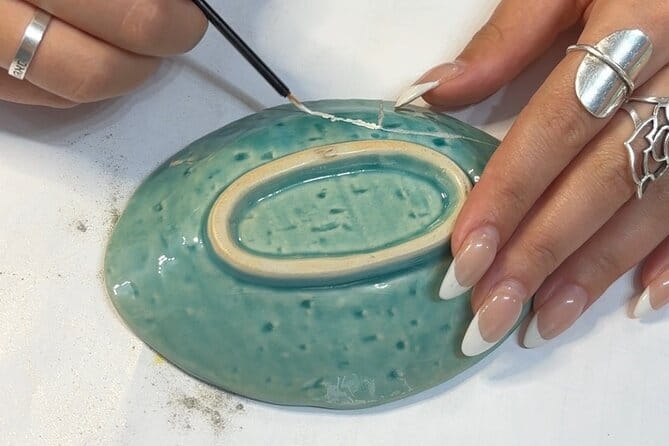
The instructor guides you through preparing the broken areas and joining the pieces. You are not left to figure out the craft from a printed sheet. At the same time, the class allows you to make decisions and work at your own speed. That balance is important. Too much help would turn the activity into a demonstration. Too little would leave beginners nervous about ruining the pottery.
The most praised feature of the instruction is the patient, kind manner of the staff. That matters in a craft where your first attempt may look uneven. You are encouraged to accept the result instead of chasing a perfect finish.
A completely different kind of day out:
- Naha: North Okinawa Sightseeing Tour & Churaumi Aquarium
★ 4.4 · 472 reviews - Okinawa: From Naha: Kerama Islands 1-day snorkeling tour
★ 4.4 · 423 reviews - From Naha: Tokashiki Island Day Trip by Boat
★ 4.3 · 385 reviews - Naha, Okinawa: Keramas Island Snorkeling Day Trip with Lunch
★ 4.7 · 370 reviews
Applying the gold or silver lines

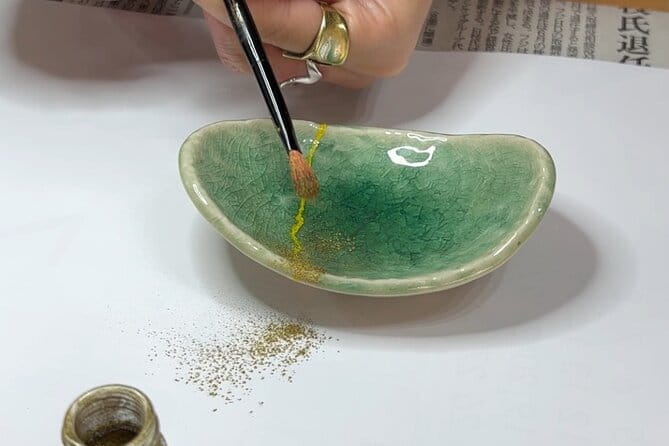
The most memorable part is the visible repair. Once the pottery has been joined, you work with gold or silver color along the cracks. These lines become the design feature, drawing attention to the places where the object was broken.
This is where the class rewards a relaxed attitude. Your work may not be perfectly smooth. The line may be thicker in one place or bend slightly in another. That is not a failure. The workshop is built around the thought that repair can add character, and your piece will show the hand of the person who made it.
You should also remember that this is a shortened workshop. It introduces the look and spirit of kintsugi, but it is not the same as training in every traditional material, curing stage, or professional restoration method. The piece is not made for contact with food or drink. Use it as interior art, a small display item, or an accessory tray.
That limitation is worth considering when you compare the $56.01 price with other activities. You are paying for instruction, materials, studio time, and a handmade keepsake, not for a functional kitchen item. For someone who values a personal craft experience, the price is reasonable. For someone mainly seeking a useful bowl or plate, it may feel high.
A peaceful break from Naha sightseeing

The workshop takes about two hours, although the activity is also described as lasting roughly 1.5 to 2 hours. That is long enough to feel worthwhile but short enough to fit into a busy Naha schedule.
I would place it during the hottest part of the day if your plans allow. Several accounts describe the class as a good escape from the summer heat, and the indoor setting gives you time away from direct sun. One family was even able to start early, which suggests that asking politely about timing may be worthwhile, though you should not count on an early start unless arranged in advance.
The pace is another strength. You are not rushed from one task to the next. The quiet, repeated actions can settle your mind after a morning of shopping, sightseeing, or navigating city streets. For some people, the class will feel therapeutic. For others, the quiet may feel too slow if they want a lively group activity.
A small cup of cold tea at the end has also been part of the experience. It is a modest touch, but a welcome one in Okinawa. The class is not a full food experience, so do not book it expecting a meal or extended tea ceremony.
Why families and first time artists fit well

This is one of the more approachable cultural activities in Naha. Families have taken part with children around 11 and 14, and the instructions are simple enough for people who do not see themselves as artistic. The instructors help without making the process feel like a test.
It also works well for different generations. Parents and children can each create a separate piece, then compare the results. Couples can turn it into a slower shared activity. A solo visitor can enjoy the same process without needing a group, though the social atmosphere will depend on the other people booked that day.
You should book this if you like making things with your hands, want a quieter cultural activity, or prefer a souvenir with a personal story. It may not suit you if you dislike careful detail work, want a large finished object, or expect a formal and lengthy lesson in traditional Japanese restoration.
English support appears to be strong. One person specifically praised an instructor’s English, and several accounts describe the explanations as clear and easy to follow. The exact amount of English guidance may vary, but the class is clearly set up for international visitors.
What you take home at the end
The repaired pottery returns with you as a one of a kind souvenir. It will not be perfect, and that is part of its charm. The finished object can decorate your home or office, hold small accessories, or simply sit where you can see the repair lines.
Pack it with care for the journey home. The information provided does not describe special shipping or protective packing, so you should ask the studio how best to carry it before leaving. Since the item is small, it should be manageable, but handmade pottery still deserves some protection inside your luggage.
The souvenir also carries the lesson of the class. You remember not just Naha, but the act of repairing something instead of throwing it away. That makes it more personal than a purchased magnet or mass produced ornament.
Timing, price, and cancellation details
At $56.01 per person, this is not the cheapest two hour activity in Naha. Its value depends on what you want from your day. The fee makes more sense if you count the instruction, materials, studio setting, cultural explanation, and finished artwork as one package.
The maximum group size is 10 people, which helps protect the calm pace. Confirmation is provided at booking, and the mobile ticket is handy for a day when you are moving between Naha sights. Public transportation is nearby, but there is no car park.
You can cancel for a full refund up to 24 hours before the start time. Cancellations within 24 hours are not refunded, and changes inside that same window are not accepted. The cut off follows local Okinawa time, so check the clock carefully if you are changing plans from another time zone.
Is this Naha kintsugi workshop worth booking?
I would book this experience if you want a small, personal connection to Japanese culture rather than another quick photo stop. The kind instructors, beginner friendly steps, small group size, and thoughtful idea behind kintsugi make it especially good for families, couples, solo visitors, and anyone seeking a calm indoor break.
Go in expecting a decorative piece, not usable tableware, and accept that your work will look handmade. If you want a detailed history lesson or professional restoration training, this shortened class may leave you wanting more. For most visitors, though, the combination of a peaceful activity and a souvenir you made yourself offers solid value at $56.01.
FAQ
Where does the Kintsugi Experience take place?
The workshop starts and ends at 漆工房 小手毬, Urushi Studio Kodemari, at 2-chōme-16-6 Maejima, Naha, Okinawa 900-0016, Japan.
How long does the workshop last?
The experience takes approximately two hours. It is also described as lasting about 1.5 to 2 hours.
How much does the experience cost?
The listed price is $56.01 per person.
Do I need previous artistic experience?
No. The workshop is designed for beginners, and the instructor explains the process step by step.
What will I repair during the class?
You will work on a broken pottery piece and restore it with gold or silver colored kintsugi lines.
Can I use the finished pottery for food or drinks?
No. The shortened workshop process creates a decorative piece that is not suitable for eating or drinking.
What can I do with the finished piece?
You can display it as interior art or use it as a small accessory tray.
How many people can join the activity?
The maximum group size is 10 travelers.
Is cancellation free?
Yes, if you cancel at least 24 hours before the experience start time. Cancellations or changes made within 24 hours are not refunded or accepted.
Just added in Naha
- Northern Okinawa: Churaumi Aquarium & Kouri Island & Cape Manza & American Village Day Tour (Departing from Naha & Chatan)★ 4.8 · 1,115 reviews
- (Okinawa’s No. 1 Popular Northern Day Trip) Chinese-speaking guide · Includes admission tickets · 1 person can book: Churaumi Aquarium · Cape Manzamo · Kouri Island · American Village★ 4.7 · 1,846 reviews
- Zodiac Shrines and Naha Backstreets Cycling Tour★ 5.0 · 29 reviews
- E-Bike Nature Tour in Shuri★ 5.0 · 25 reviews
- Sushi Making Experience Class in Naha Makishi Public Market★ 5.0 · 35 reviews
- Tokashiki Island Day Trip from Naha★ 4.0 · 15 reviews
- Port Pick-Up: Naha Private Tour Licensed Guide& Vehicle★ 4.5 · 16 reviews
- Okinawa:Kerama Islands experience Diving/Snorkeling/WhaleWatching★ 4.5 · 16 reviews
Okinawa Tours, compared.




Northern Okinawa: Churaumi Aquarium & Kouri Island & Cape Manza & American Village Day Tour (Departing from Naha & Chatan)
Read our review →

Browse the lists this tour appears in