
Reviewed · DAY TRIPS
Kyoto and Nara Day Trip from Osaka
Two former capitals in one long day. This tour packs Nijo Castle, Kinkaku-ji, and Nara’s Great Buddha into an 11-hour outing from Osaka, which makes it a useful first look at Japan’s cultural heart. I like the time-saving rail connections and the fact that admission fees, transportation, and an English-speaking guide are included. The tradeoff is clear: each major stop gets roughly an hour, so the day feels more like a highlights reel than a slow cultural visit.
I also like the strong route planning. You move from Osaka to Kyoto, then from Kyoto to Nara, and return to Osaka without having to work out several complicated train connections yourself. Guides such as Momo, KC, and Hatchi have earned special praise for their warmth and clear explanations. Still, the large-group format, quick pace, and uneven lunch quality may frustrate anyone who prefers quiet exploration or detailed time at each site.
In This Review
- Key points to know before booking
- Why this Osaka day trip makes sense
- Nijo Castle and the Tokugawa shoguns
- Kinkaku-ji, Kyoto’s Golden Pavilion
- Kyoto Imperial Palace and possible substitutes
- Lunch: convenient, but not the main attraction
- Kasuga Grand Shrine and Nara’s deer
- Todai-ji and the Great Buddha
- Getting back to Osaka
- Pace, group size, and walking demands
- Who should book this tour?
- FAQ
- How long is the tour?
- Where does the tour begin?
- Where does the tour end?
- Is transportation included?
- Are train seats reserved?
- What sights are included in Kyoto?
- What happens if Kyoto Imperial Palace is closed?
- What happens if Nijo Castle is closed?
- Is lunch included?
- Can children join the tour?
- Should you book this Kyoto and Nara day trip?
Key points to know before booking
- Three major Kyoto sights before lunch: Nijo Castle, Kinkaku-ji, and Kyoto Imperial Palace are all included.
- Nara brings the day’s biggest sights: You visit Kasuga Grand Shrine, Nara Park, and Todai-ji Temple, home of the Great Buddha.
- Rail travel saves time: The route uses rapid or local rail, the Shinkansen between Shin-Osaka and Kyoto, and Kintetsu Railway or a bus back from Nara, depending on conditions and group arrangements.
- The pace is brisk: Stops range from 40 minutes to 1 hour 10 minutes, with walking and transfers between them.
- Lunch needs careful selection: Western-style, Indian thali, and no-lunch choices are available, but meal changes cannot be made on the day.
- It ends at Osaka-Namba Station: You return around 6:30 p.m. and make your own way back to your hotel.
Why this Osaka day trip makes sense
Kyoto and Nara are easy to reach from Osaka, but seeing both in one day takes planning. You need to coordinate rail stations, buses, temple admission, timing, and a route that does not waste the morning. This tour handles those pieces for you.
The price is $198.15 per person, which is not cheap for a day using public transportation. You are paying for more than the train tickets. The package also covers admission to Nijo Castle, Kinkaku-ji, Kasuga Grand Shrine, and Todai-ji, along with tour staff, transfers, and the convenience of having someone keep the day moving.
I think the price makes the most sense if you have only one free day for Kyoto and Nara, or if navigating Japanese stations feels stressful. It is harder to justify if you are comfortable arranging rail travel and prefer spending half a day at one temple. Independent travel will give you more freedom and may cost less, but it will not give you this much structure in a single day.
The tour begins at 7:15 a.m. at Hotel Granvia Osaka in Umeda. An English-speaking assistant accompanies the group toward Kyoto. Depending on the departure, the Osaka to Kyoto portion may use a rapid or local train, a Shinkansen from Shin-Osaka, or a bus. Seats on public transportation are non-reserved, so you should not expect a guaranteed seat.
At Kyoto Station, the group walks to the Sunrise Tours Desk in Kyoto Avanti B1. From there, a bus takes you to the Kyoto sights. This transfer is useful, but it also explains why the morning can feel longer than the headline sightseeing time suggests.
More Day Trips in Osaka
- From Osaka: Himeji Castle, Arima Onsen & Mt. Rokko Day Tour
★ 4.6 · 339 reviews - Osaka Day Tour: Amanohashidate & Ine Bay
★ 5.0 · 280 reviews - Osaka: Minoh, Katsuoji Temple, & Minoh Falls Full-day Tour
★ 4.9 · 172 reviews
Nijo Castle and the Tokugawa shoguns
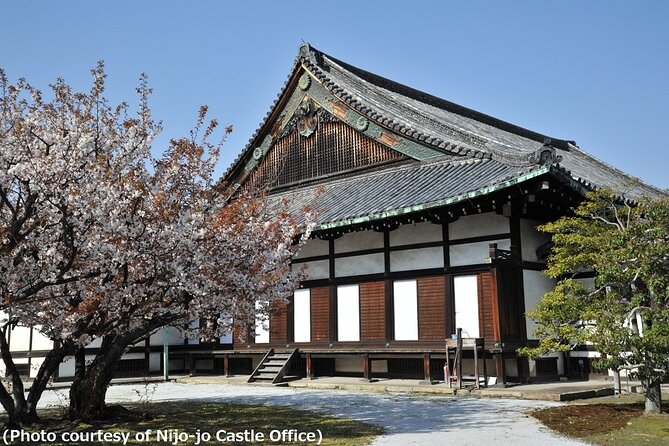
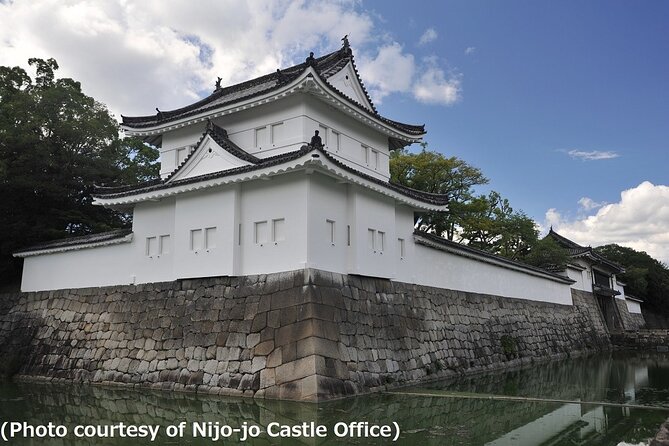
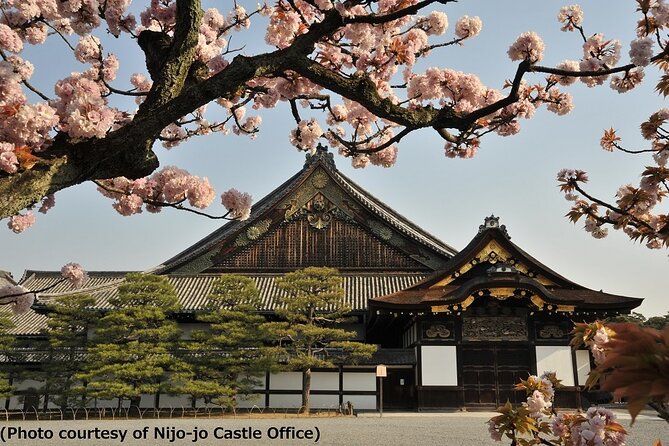
Nijo Castle is a fine first stop because it gives you both architecture and politics. Completed in 1626, it was built as lodging for the Tokugawa shogun and as a stronghold near the Kyoto Imperial Palace.
You see an impressive exterior, decorative carvings, formal gardens, and lavish interior rooms. The castle is also known for its famous nightingale floors, designed to squeak underfoot as a warning against intruders. The tour allows about 50 minutes, which is enough to see the main route and hear the basic story, but not enough for a leisurely look at every detail.
I like this opening stop because it sets up the contrast between military authority and imperial tradition. The drawback is that the group must keep moving. If you want to study the paintings, woodwork, or garden design carefully, you will probably wish for more time.
Nijo Castle closes on certain Tuesdays in January, July, August, and December, with the following day used when a holiday affects the schedule. If it is closed, the substitute stop is Ryoan-ji Temple. There is no refund for the change, so check the date before booking if Nijo Castle is a priority.
Kinkaku-ji, Kyoto’s Golden Pavilion
Kinkaku-ji is the tour’s most instantly recognizable sight. The wooden pavilion is covered in thin layers of pure gold and sits beside a pond in a carefully arranged garden.
The visit lasts about 45 minutes. That is enough to reach the viewing area, take photographs, walk through part of the garden, and listen to the guide’s explanation. It is not enough to wander every path or linger away from the main viewing point.
The pavilion is beautiful, but it is also one of Kyoto’s busiest attractions. School groups can fill the paths, and the main viewing area may feel crowded. I recommend staying close to your guide, listening for the meeting time, and taking photographs promptly. A distracted photo stop can easily leave you searching for a group among many similar tour parties.
This is a good example of the tour’s basic promise: you will see the famous sight, understand why it matters, and move on before the schedule slips. If your dream is to sit quietly beside the pond, this format will not deliver that. If your goal is to see the Golden Pavilion during a short stay, it does the job.
Kyoto Imperial Palace and possible substitutes
The Kyoto Imperial Palace was used as the Emperor’s residence until about 150 years ago. Its design favors clean lines and restrained elegance, offering a different feel from Nijo Castle’s more decorative interiors.
The scheduled visit lasts about 40 minutes. You follow the guide through the palace grounds and hear about imperial life, ceremonies, and the shift of the capital away from Kyoto. The short stop gives you useful context, but it is another place where you will need to accept a quick look rather than a full study.
The palace is closed to visitors on Mondays, the following day when Monday is a holiday, and on dates affected by an Imperial Household Agency event. In those cases, the tour visits Kitano Tenmangu Shrine instead. If the closure falls on the 25th, the substitute is Nishi Hongan-ji Temple.
These replacements can still be worthwhile, but you should book with the understanding that the exact Kyoto lineup can change. The tour does not offer a refund when an alternate site is used.
More Day Trips in Japan:
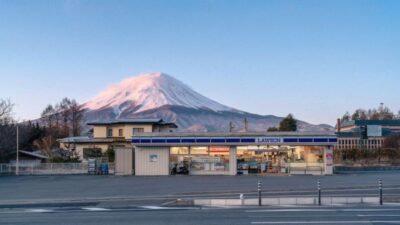
- Mt. Fuji Instagram-Worthy Spots Day Tour: Ladder Town, Oshino Hakkai, Lake Kawaguchi, Lawson Convenience Store (Departing from Tokyo Station or Shinjuku Station)
★ 4.8 · 35,467 reviews - 【Mount Fuji Magnificent Scenery Exploration Day Tour】Arakurayama Sengen Park & Kawaguchiko Oishi Park & Oshino Hakkai & INS Famous Lawson & Hikawa Clock Shop (Departing from Tokyo)
★ 4.9 · 12,075 reviews - [Kyoto & Nara Day Tour] Sagano Scenic Railway & Nara Park & Fushimi Inari Taisha Thousand Torii Gates & Togetsukyo Bridge & Bamboo Grove & Kimono Forest (Departing from Osaka)
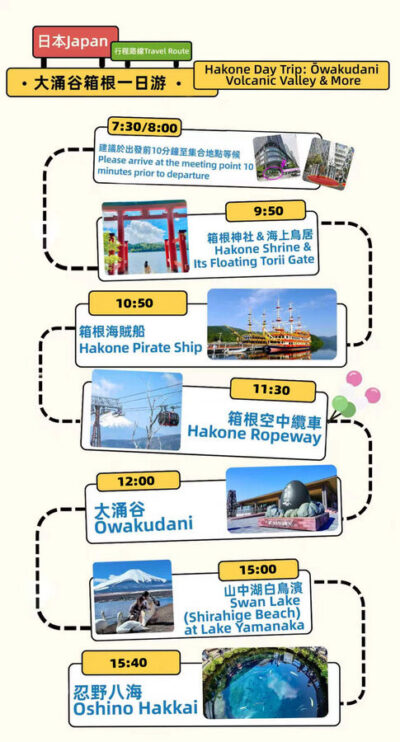
★ 4.9 · 10,942 reviews - Mount Fuji & Hakone – Lake Ashi Torii Gate, Hakone Shrine, Hakone Pirate Ship, Hakone Ropeway, Owakudani, Lake Yamanaka & Oshino Hakkai Day Trip: Sea, Land, and Air Panoramic Tour from Tokyo
★ 4.8 · 7,989 reviews
Lunch: convenient, but not the main attraction
Lunch depends on the option you choose. You may book a Western-style meal, an Indian thali lunch, or no lunch.
The Western-style meal has been described as a buffet or set meal, but the food quality can be uneven. Some people find it filling and convenient, while others find it ordinary and less Japanese than expected. If you want a traditional meal, this part may disappoint.
The Indian thali option is vegetarian and includes three curries, vegetable pakora, yogurt, naan or roti, rice, salad, and a non-alcoholic drink. It is served in a separate dining area from the Western meal. You cannot switch between the two options on the day.
The no-lunch choice gives you free time to eat around Kyoto Station. I think this is the best option for confident eaters who want more control over food, though it removes the convenience of a prepared meal. Vegetarian requests for the Western option must be made when booking. Halal, gluten-free, and other meal requests are not available.
Kasuga Grand Shrine and Nara’s deer
After Kyoto, the tour continues to Nara. Kasuga Grand Shrine is a World Heritage site from the Nara period, known for its lanterns and its connection with the deer of Nara Park. The deer are traditionally regarded as messengers of the shrine.
The visit lasts about an hour and includes the Main Sanctuary special visit area when operations allow. Events or other conditions can close that area. In that case, the tour may visit the Kasuga Taisha Museum or Todaiji Museum instead.
Nara’s deer are friendly but not always gentle. You can buy crackers in the park, and the deer may bow before taking them. Hold the crackers carefully, feed them one at a time, and be ready to show empty hands once the food is gone. Groups of deer can crowd around you quickly, so children need close supervision.
The Nara portion often feels less rushed than the Kyoto morning, though the total day remains demanding. Guides have been praised for keeping the group together, adding quizzes and stories, and helping people return to the meeting point on time.
Todai-ji and the Great Buddha
Todai-ji Temple is the grand finale. Its enormous wooden main hall houses the bronze Great Buddha, one of Japan’s most memorable religious statues. The temple is also a symbol of the Nara period and one of the world’s largest wooden structures.
You have about 1 hour 10 minutes here. That is the longest scheduled stop, and it matters. The scale of the hall, the Buddha, and the surrounding grounds deserves more than a quick photograph.
The tour description also refers to thousands of antique bronze and stone lanterns connected with the temple and shrine complex. You will have time to take in the main hall and nearby grounds, but do not expect to cover every corner of the wider Nara Park area.
Nara can be crowded with school groups, especially during busy school-trip periods. Keep track of your guide and meeting point. The temple grounds are large enough that a few minutes of wandering can become a serious delay.
Getting back to Osaka
The tour ends at Osaka-Namba Station around 6:30 p.m. The return may use Kintetsu Railway with non-reserved seating, or a bus depending on the number of participants and conditions. An English-speaking assistant accompanies the group from Kintetsu Nara Station to Namba.
There is no hotel drop-off. Namba is a useful transport hub, but it is a large station complex with underground passages. If you are staying near Umeda or Hotel Granvia, allow extra time to find your onward route. Save your hotel address in your phone and check the station exit before leaving the group.
This ending is practical rather than polished. The tour gets you back into Osaka, but you must finish the last leg yourself.
Pace, group size, and walking demands
The published maximum is 40 people, although some departure accounts describe much larger groups. That difference matters. A group of 40 can already take time to load onto a bus, cross a station, or regroup outside a temple. A much larger group can make explanations harder to hear and slow down every transfer.
Some guides receive especially warm praise. Momo is noted for being friendly, KC for keeping the group moving while adding useful information, and Hatchi for making history lively with humor and stories. Guide quality can shape the day, but even an excellent guide cannot remove the basic time limits.
You should expect steady walking, stairs or uneven temple grounds, crowded paths, station transfers, and long periods on buses or trains. The tour is not ideal for anyone who needs frequent rest or wants to move at a relaxed pace. It is also not a strong match for very young children, especially since the day is long and some children may not have a bus seat unless booked under the child rate.
Who should book this tour?
I would choose this experience if you are staying in Osaka, have only one day for Kyoto and Nara, and want a guided introduction to the region’s major sights. It is especially useful for a first visit, for families who prefer prearranged transport, and for anyone uneasy about managing multiple Japanese rail connections.
I would skip it if you have several days in Kansai. With more time, you can visit Kyoto and Nara separately, spend longer at each temple, choose your own meals, and avoid the pressure of keeping up with a large group.
The tour is also a good fit if your goal is coverage. You will see major landmarks that would be difficult to combine casually in one day. It is a poor fit if your goal is quiet gardens, detailed photography, or extended time inside one historic site.
FAQ
How long is the tour?
The tour lasts approximately 11 hours and 15 minutes. It starts at 7:15 a.m. and ends at Osaka-Namba Station around 6:30 p.m.
Where does the tour begin?
The meeting point is Hotel Granvia Osaka at 3-chōme-1-1 Umeda, Kita Ward, Osaka.
Where does the tour end?
The tour ends at Osaka-Namba Station. Hotel drop-off is not provided.
Is transportation included?
Yes. Admission fees and transportation costs are included. Depending on the departure, the tour may use rapid or local trains, the Shinkansen, buses, and Kintetsu Railway.
Are train seats reserved?
No. Public transportation seats are non-reserved, and seating is not guaranteed.
What sights are included in Kyoto?
The Kyoto portion includes Nijo Castle, Kinkaku-ji Temple, also called the Golden Pavilion, and Kyoto Imperial Palace.
What happens if Kyoto Imperial Palace is closed?
The tour visits Kitano Tenmangu Shrine instead. If the closure falls on the 25th, the substitute is Nishi Hongan-ji Temple.
What happens if Nijo Castle is closed?
Ryoan-ji Temple will be visited instead. No refund is provided when an alternate destination is used.
Is lunch included?
Lunch is included only with the lunch option you select when booking. Choices include a Western-style meal, an Indian thali lunch, or no lunch.
Can children join the tour?
Children up to 5 years old may join free of charge, but they will not receive a bus seat or lunch unless booked under the child rate. Anyone under 18 needs written parental permission, and participants under 15 or not yet enrolled in middle school must be accompanied by a parent or guardian.
Should you book this Kyoto and Nara day trip?
Book it if you want a well-organized first look at two former capitals and accept a fast pace. The combination of Nijo Castle, the Golden Pavilion, the Imperial Palace, Kasuga Shrine, Nara Park, and Todai-ji is impressive for one day.
Skip it if you value time over coverage. At $198.15, the convenience is real, but you are paying for structure rather than leisure. For a short Osaka stay, that trade may be worthwhile. For a longer Japan visit, I would split Kyoto and Nara into separate days and explore at your own speed.
Just added in Japan
- Tokyo: Meiji Shrine Walking Tour — Shintoism & Imperial System★ 5.0 · 209 reviews
- Bar Hopping Tour with a local Guide in Shinjuku★ 5.0 · 21 reviews
- Tokyo life after 5 – Foods & Drinks★ 5.0 · 32 reviews
- Tokyo: Shinjuku Food Tour Highlights (Best Eats)★ 5.0 · 100 reviews
- Tokyo Shinjuku Night Tour with Pachinko Gaming Experience★ 5.0 · 14 reviews
- Tokyo: Shinjuku Local Bar Hopping Walking Tour★ 5.0 · 186 reviews
- Shinjuku Go Karting Tour with Funny Costume★ 5.0 · 21 reviews
- Tokyo Shibuya Crossing & Hidden Streets Walking Tour★ 5.0 · 103 reviews
Day Trips, compared.
![[Kyoto & Nara Day Tour] Sagano Scenic Railway & Nara Park & Fushimi Inari Taisha Thousand Torii Gates & Togetsukyo Bridge & Bamboo Grove & Kimono Forest (Departing from Osaka)](https://media.japanvisits.com/wp-content/uploads/kyoto-nara-day-tour-sagano-scenic-railway-nara-park-fushimi-inari-taisha-thousand-torii-gates-togetsukyo-bridge-bamboo-grove-kimono-forest-departing-from-osaka-k110001-400x257.jpg)
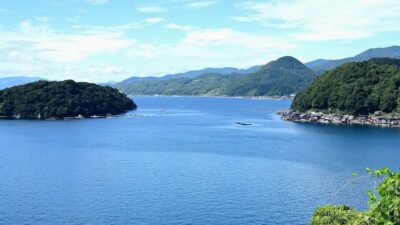
Kyoto Amanohashidate & Ine Funaya & Ine Bay Scenic Day Trip (Departing from Osaka or Kyoto)
Read our review →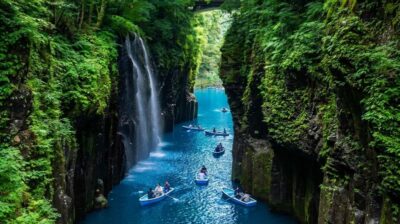
Kyushu: Mount Aso, Kusasenri & Takachiho Gorge Day Tour (Optional Takachiho Boat Ride Experience)
Read our review →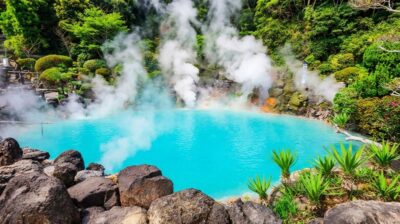
Kyushu One-Day Tour: Yufuin no Mori Train & Yufuin Town & Nyoirin-ji Temple & Dazaifu & Hell Hot Springs (Departing from Fukuoka)
Read our review →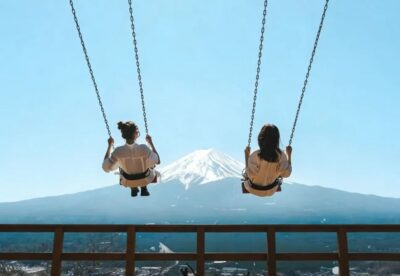
Browse the lists this tour appears in