
Reviewed · SAPPORO TOURS
Mondo’s most popular plan! Experience making soba noodles and the king of Japanese cuisine, tempura, in Sapporo!
Fresh noodles taste better when you cut them yourself. At Mondo, you learn to mix buckwheat flour, stretch the dough, and slice your own soba before sitting down to eat it with tempura. I like the hands-on 30-minute lesson and the warm, small-shop setting led by Taku and his partner. I also like that the meal includes both cold and warm soba sauce, plus soba-yu, the traditional finishing drink.
The main thing to know is that you make the soba, not the tempura. The restaurant prepares the tempura for you, so anyone expecting a full tempura cooking class may feel disappointed. At $85.79 per person, this is a worthwhile food experience for people who value personal instruction and a meal, but it is not the cheapest way to eat noodles in Sapporo.
In This Review
- Key points before you book
- Why making soba in Sapporo is worth your time
- Finding Mondo near Miyanosawa Station
- The 30-minute soba lesson, step by step
- Mixing the buckwheat flour
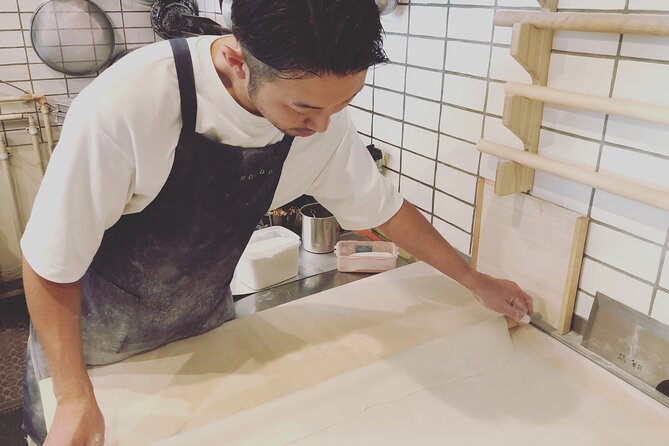
- Stretching the dough
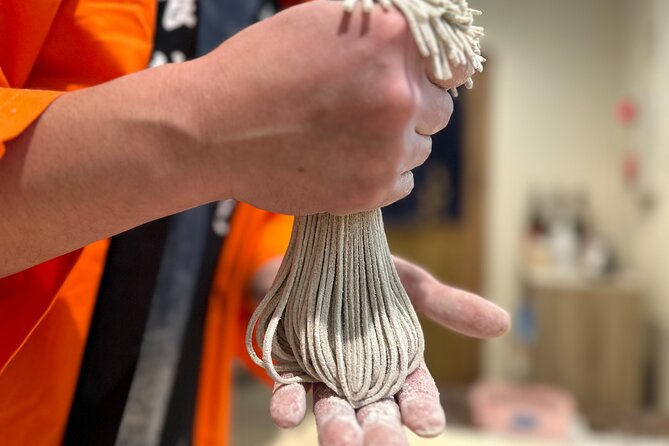
- Cutting the noodles
- Eating your noodles with two kinds of soba sauce
- Tempura brings the meal together
- A friendly private activity for families and small groups
- English support and communication
- Is $85.79 a fair price?
- Timing, punctuality, and cancellation
- Who should book Mondo?
- Should you book this Sapporo soba experience?
- FAQ
- How long does the Mondo soba-making experience take?
- Where does the experience start and finish?
- How do I reach Mondo by public transportation?
- Can I park at the restaurant?
- Do I make the tempura as well as the soba?
- Is the experience available in English?
- Can children or guests with dietary needs take part?
- What is the cancellation policy?
Key points before you book
- You make noodles from buckwheat flour and water: The short lesson covers mixing, stretching, and cutting the dough.
- Tempura is prepared by the restaurant: You eat it with your soba, but you do not learn how to fry it.
- Taku leads the English-language experience: His humor and patient instruction help children and first-time cooks take part.
- The full visit takes about 1 hour and 15 minutes: The actual soba-making portion lasts around 30 minutes, followed by cooking and the meal.
- Mondo is a small local shop near Miyanosawa Station: It is a five-minute walk from the station, with four parking spaces in front.
- The activity is private for your group: The experience requires at least two participants, and group customers can contact the restaurant directly.
Why making soba in Sapporo is worth your time
Soba is one of Japan’s classic foods, alongside sushi and tempura. It looks simple on the plate, but handmade noodles depend on small movements, timing, and even pressure from the knife. That makes a short workshop more useful than simply ordering a bowl and moving on.
Mondo’s course gives you a clear look at the process. You begin with buckwheat flour, add water, and work the mixture into dough. You then stretch it into a thin sheet before cutting it into noodles. The steps are easy enough for children, but the final shape may not be perfect. That is part of the fun. Handmade food has a way of making you appreciate the skill behind an ordinary lunch.
I especially like that the lesson ends with your own noodles on the table. You are not just watching a chef perform. You handle the dough, try the knife work, and then taste the result. The meal gives the activity a proper finish instead of leaving you with a cooking demonstration and no lunch.
The setting also matters. Mondo is a handmade soba restaurant, not a large cooking school built only for tourists. The experience takes place in the same kind of small shop where the restaurant serves its regular customers. Several people found the atmosphere intimate and friendly, with Taku and his partner offering patient help and plenty of humor.
A few more options to weigh up in Sapporo
- Sapporo Bar Hopping Food Tour
★ 5.0 · 232 reviews - Hokkaido Seasonal: Lake Toya & Noboribetsu Jigokudani Valley
★ 4.7 · 173 reviews - Sapporo Private Tour with a Local – Highlights & Hidden Gems
★ 5.0 · 91 reviews
Finding Mondo near Miyanosawa Station
Mondo is at 9-chōme-17-28 Hassamu 6 Jō in Sapporo’s Nishi Ward. From Miyanosawa Station on the Sapporo Subway Tozai Line, the walk takes about five minutes.
That sounds simple, but finding the shop may take a little care. One person found the location difficult to identify, so give yourself extra time rather than arriving at the starting minute. This is particularly important because the restaurant serves lunch, and a late arrival can disrupt the session for the rest of the group.
If you drive, four parking spaces are available in front of the restaurant. That is useful, but spaces are limited. Public transportation is the safer choice if you are visiting during a busy part of the day.
The experience returns to the same meeting point. You do not need to arrange a separate ending location or transport after the meal.
The 30-minute soba lesson, step by step
The soba-making portion lasts about 30 minutes. It is short enough to hold a child’s attention and long enough to give you a real sense of the work.
Mixing the buckwheat flour
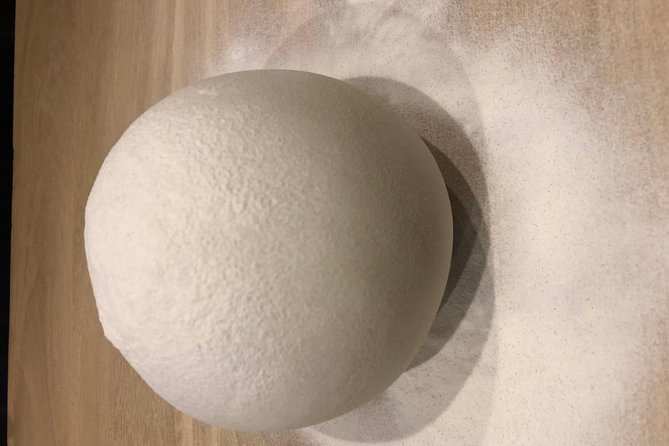
The first step is mixing the buckwheat flour with water. This is where you begin to see why noodle making takes practice. The mixture must come together into workable dough, and your hands give you a better feel for the process than a written recipe would.
The instruction is in English. Taku’s patient approach helps, especially if you have never made noodles before. You do not need to bring ingredients, equipment, or special clothing.
A completely different kind of day out:
- Sapporo: Sumo Show Experience with Japanese food & Photo
★ 4.9 · 81 reviews - Popular in SapporoExperience authentic hand-made soba at a real soba shop!
★ 5.0 · 77 reviews - 【Private Car】Asahiyama Zoo, Blue Pond, Shirahige Falls, Ningle Terrace (from Sapporo)
★ 5.0 · 60 reviews - Sapporo 6hr Private Tour with Government Licensed Guide
★ 5.0 · 57 reviews
Stretching the dough
Next, you stretch the dough into a thin sheet. This is a satisfying stage because the rough mixture begins to look like something that can become noodles.
The technique requires care. If you rush, the sheet may not be even. If you are visiting with children, this is a good moment to let them take part while an adult follows the instructor’s lead. The activity is designed so small children can enjoy it, though children under two are free rather than active participants in the stated price structure.
Cutting the noodles
Cutting is the most memorable part for many people. You use the traditional method to slice the stretched dough into strands. The knife work gives you a quick lesson in why handmade soba can vary in thickness.
Do not worry if your noodles look rustic. You are not being tested for restaurant-quality precision. The point is to understand the process and feel the difference between factory-made noodles and something shaped by hand.
The workshop is practical rather than academic. You learn how to make soba, but there is limited detail about cooking history or broader Japanese culinary technique. If you want a long cultural lecture, this may feel too brief. If you want to work with your hands and eat the result, the format fits well.
Eating your noodles with two kinds of soba sauce
After the lesson, the restaurant cooks your noodles and serves them to you. The meal includes two types of soba sauce, one for cold noodles and one for warm noodles.
That small choice adds useful context. Japanese diners eat soba in different ways, and the staff explains the proper method in clear English. You are shown how to handle the noodles and how to finish the meal with soba-yu, the hot cooking water traditionally added to the remaining dipping sauce.
This guidance is one of the best parts of the visit. It turns lunch into a lesson in everyday Japanese food customs without making the process stiff or formal. You can simply enjoy the bowl, but you also leave knowing why the sauces and final drink are served as they are.
Your noodles may not have the exact thickness or length of the restaurant’s own soba. That does not make them a failure. In fact, the uneven pieces can make the meal more personal. The pride comes from recognizing your own work in the bowl.
Tempura brings the meal together
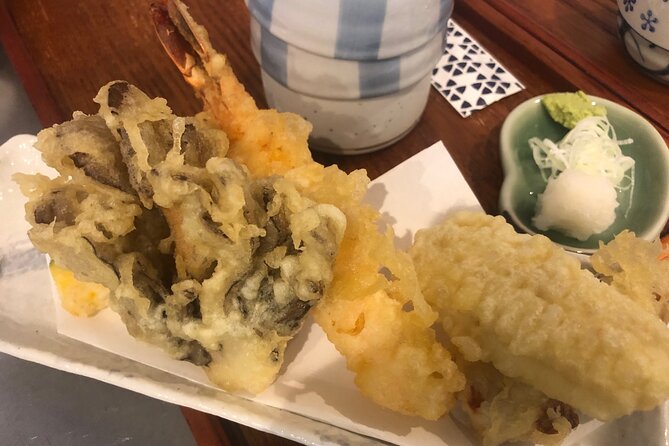
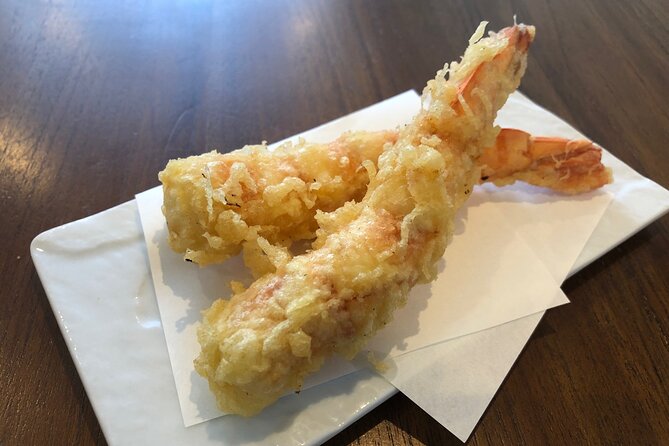
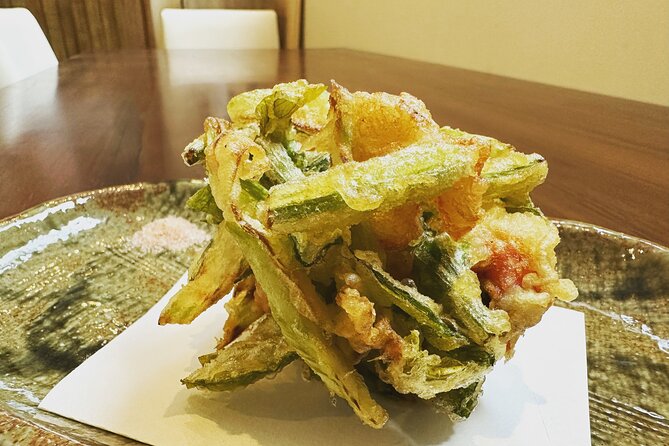
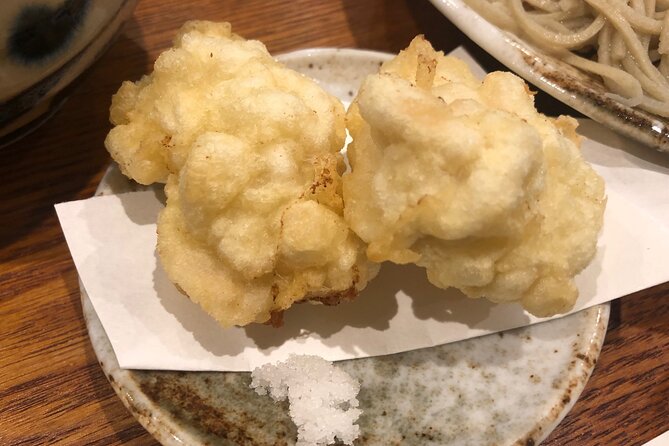
The course includes tempura made by a Japanese food craftsman. The selection may include shrimp, eggplant, scallops, seasonal vegetables, and other local ingredients. The exact items can vary, so do not book this expecting one fixed plate.
Tempura works well with soba because the crisp batter contrasts with the smooth noodles and savory sauce. This pairing is a familiar part of Japanese dining, and Mondo uses it to show how two classic foods complement each other.
The tempura is widely praised for its flavor and fresh ingredients. It is also one of the reasons the price makes more sense than a simple noodle lesson. You receive an actual meal prepared by the restaurant, not just a small tasting after working with dough.
Still, be clear about the division of labor. You do not make or fry the tempura. One participant had expected to prepare both dishes and found the experience did not match that expectation. The description presents tempura as part of the meal, not as a second hands-on class, so plan accordingly.
A friendly private activity for families and small groups
This is a private activity, meaning only your group participates. The intimate setup suits couples, families, and small groups who want direct help instead of a crowded class.
The event is held for two or more people. A small group of three can expect a particularly personal session, while larger groups should contact the restaurant directly about arrangements and group discounts.
Children are a strong match for this activity. Several families appreciated that children could mix, stretch, and cut the noodles themselves. A 10-year-old enjoyed taking part, and younger children can also join in with support.
The tone sounds relaxed rather than formal. Taku is described as funny and kind, while his partner helps create a welcoming atmosphere. That matters when you are trying an unfamiliar food skill. You are less likely to worry about making a mistake when the instruction feels friendly.
Dietary needs require advance planning. Halal and vegan arrangements can be accommodated if you contact the restaurant beforehand. The available information also includes a request for a vegan option from one family, so do not assume a suitable meal will be ready without notice.
Service animals are allowed. The experience is near public transportation, and no special items need to be brought.
English support and communication
The experience is conducted in English, which makes the practical instruction accessible to international visitors. The staff explains the soba process and how to eat the finished noodles.
There is an important limitation: the restaurant cannot provide English support by phone or through other direct methods. Questions should be sent by email through VIRTOR. The restaurant is described as responding quickly by email, so use that channel for dietary requests, group questions, or clarification about the activity.
Do not wait until the day of the experience if you have an important question. The shop operates as a regular handmade soba restaurant during lunch, and staff may not be able to answer inquiries while serving customers.
Is $85.79 a fair price?
At $85.79 per person, Mondo is priced as a private cultural activity with a meal, not as a basic restaurant lunch. The value comes from three parts: personal instruction, the chance to make your own noodles, and soba served with artisan-made tempura.
I would consider the price fair if you want something active and memorable to add to a Sapporo visit. The hands-on work gives you a story to take home, and the meal lets you taste the result immediately. The small private format is also more personal than a large group class.
The value is weaker if your main goal is simply to eat soba and tempura. You can spend much less at a restaurant for a good meal. It is also not the right choice if you expect to learn tempura preparation, receive a long lecture on Japanese food history, or spend several hours cooking.
The activity is often reserved about 33 days ahead. That suggests you should not leave it until the last moment, especially if you need a particular date or are traveling with a group. Group discounts may be available, so larger parties should ask before booking.
Timing, punctuality, and cancellation
The hands-on work takes around 30 minutes, while the complete visit takes about 1 hour and 15 minutes. The basic tour summary lists approximately one hour, so allow the longer figure when planning a train connection or another Sapporo activity.
Arrive before the scheduled start time. The restaurant warns that a late arrival can inconvenience other participants, and arriving after the start may be treated as a no-show. This is another reason to leave extra time for locating the shop.
Free cancellation is available if you cancel at least 24 hours before the local start time. Cancellations within 24 hours are not refunded, and changes during that period are not accepted.
Who should book Mondo?
I would book this for families, couples, and food-focused visitors who want a small-scale activity away from Sapporo’s main sightseeing routine. It is especially good for anyone who enjoys learning by doing rather than watching a chef work.
It also suits visitors interested in Hokkaido ingredients. Hokkaido is Japan’s leading soba-producing region, with conditions well suited to buckwheat. Tokachi and Furano are known for high-quality soba, and the local connection gives the meal a stronger sense of place than a generic noodle class.
I would skip it if you need a fully vegan meal without advance contact, if you want to prepare tempura yourself, or if you are looking for an in-depth history lesson. I would also avoid booking it too tightly against other plans because the full visit can run to 1 hour and 15 minutes.
Should you book this Sapporo soba experience?
Yes, if you want a friendly, hands-on food experience with a real meal at the end. Mondo combines simple instruction, local soba culture, and tempura in a way that works well for families and small private groups.
Just set the right expectations. You will make and cut the soba, while the restaurant prepares the tempura. Email ahead about vegan, halal, or group needs, arrive early for the five-minute walk from Miyanosawa Station, and allow the full 1 hour and 15 minutes. For a visitor who values personal contact and a memorable meal over the lowest possible price, this is a strong choice in Sapporo.
FAQ
How long does the Mondo soba-making experience take?
The soba-making portion takes around 30 minutes. The entire activity, including tasting your noodles and eating tempura, takes about 1 hour and 15 minutes.
Where does the experience start and finish?
It starts at 9-chōme-17-28 Hassamu 6 Jō, Nishi Ward, Sapporo, Hokkaido 063-0826, Japan. The activity ends back at the same meeting point.
How do I reach Mondo by public transportation?
Mondo is about a five-minute walk from Miyanosawa Station on the Sapporo Subway Tozai Line.
Can I park at the restaurant?
Yes. Four parking spaces are available in front of the shop.
Do I make the tempura as well as the soba?
No. You make the soba noodles, while the restaurant prepares the tempura for your meal.
Is the experience available in English?
Yes. The activity is conducted in English. The restaurant cannot provide English support by phone, so send questions by email through VIRTOR.
Can children or guests with dietary needs take part?
Children can enjoy the soba-making activity, and children under two years old are free. Halal and vegan arrangements can be accommodated with advance contact. Service animals are allowed.
What is the cancellation policy?
You can receive a full refund if you cancel at least 24 hours before the experience’s local start time. Cancellations or changes made within 24 hours are not refunded or accepted.
Just added in Sapporo
- Hokkaido 7 Days Noboribetsu, Asahikawa, Biei by Delightful Travel★ 5.0 · 1 review
- 6 Days Hokkaido’s Floral Symphony Tour by UME Travel★ 5.0 · 2 reviews
- Full Day Private Skiing / Snowboarding Tour in Sapporo★ 5.0 · 30 reviews
- Snowshoe Hike Tour from Sapporo include hotel p/up & drop off★ 5.0 · 16 reviews
- Wagashi traditional japanese sweets class★ 5.0 · 49 reviews
- Snowshoeing and Onsen Adventures in a Winter Wonderland -Sapporo.★ 5.0 · 30 reviews
- Authentic Sapporo: Nijo Market Seafood Lunch & Local History Tour★ 5.0 · 13 reviews
- Sapporo Sumo Show Experience with Japanese Food and Photo★ 4.5 · 38 reviews
Sapporo Tours, compared.

Hokkaido Seasonal: Lake Toya & Noboribetsu Jigokudani Valley
Read our review →
Sapporo Private Tour with a Local – Highlights & Hidden Gems
Read our review →
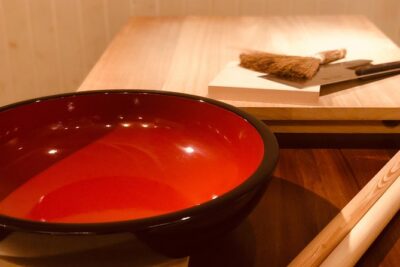
Popular in SapporoExperience authentic hand-made soba at a real soba shop!
Read our review →
【Private Car】Asahiyama Zoo, Blue Pond, Shirahige Falls, Ningle Terrace (from Sapporo)
Read our review →
Sapporo 6hr Private Tour with Government Licensed Guide
Read our review →
Browse the lists this tour appears in