
Reviewed · MOUNT FUJI TOURS
Mt Fuji Area Private Guided Tours in English-Nature up close, quiet, personal
Fuji is best seen away from the crowds. This private tour takes you around Lake Kawaguchiko, Lake Saiko, forests, waterfalls, and shrines with a local English-speaking guide. I especially like the focus on quiet nature and the freedom to adjust the day to your interests.
I also like the thoughtful practical help. Guides Chris and Yumi have provided hiking boots, warm clothing, walking sticks, tea, blankets, and even help with train and bus connections. The main drawback is the $320 per-person price, which is high for a five-to-six-hour outing, especially for solo visitors or couples.
In This Review
- Key points before you book
- Why this private Mt. Fuji tour feels different
- Starting at Kawaguchi Asama Shrine
- Mother’s White Falls and the Teru River
- Oishi Flower Park and Lake Kawaguchiko views
- Entering Aokigahara Jukai, the Sea of Trees
- The wider Fuji Five Lakes route
- A relaxed pace, with room for local food
- What the $320 price buys you
- The guides: Chris, Yumi, and personal attention
- Who should book this experience?
- Timing, weather, and cancellation details
- Should you book the Mt. Fuji private tour?
- FAQ
- Where does the tour take place?
- How long does the tour last?
- Is the tour private?
- Is pickup available?
- Is the tour conducted in English?
- What is included in the price?
- Does the tour include a visit to Kawaguchi Asama Shrine?
- Can children join the tour?
- What happens if bad weather cancels the tour?
Key points before you book
- Private transport keeps the day moving: Pickup is available from Kawaguchiko Station or hotels in the Fujikawaguchiko area.
- The route favors peaceful places: Expect shrines, waterfalls, lakes, cedar forests, and a lava-rock forest rather than a checklist of crowded photo stops.
- Chris and Yumi are the main guides: Both are praised for local knowledge, calm pacing, and personal attention.
- The itinerary can be adjusted: You can share your priorities, then let the guide shape the route around weather, walking ability, and the season.
- Outdoor gear may be available: Boots, socks, coats, gloves, hats, rain gear, blankets, and walking sticks have been supplied when needed.
- Weather matters: Mt. Fuji can disappear behind clouds, and poor weather may lead to a new date or a full refund.
Why this private Mt. Fuji tour feels different
Most visitors reach the Fuji Five Lakes area by bus, then hurry between a few famous viewpoints. That can work, but it leaves you tied to fixed routes and crowded stops. This experience uses a private vehicle and a guide who knows the roads, side paths, and quieter viewpoints around Fujikawaguchiko.
That matters because Mt. Fuji is not one single sight. The mountain changes with the weather, the light, and your position around the lakes. One viewpoint may be cloudy while another has a clear view. A flexible driver-guide can respond to those changes instead of following a rigid schedule.
The tour lasts about five to six hours. It is best understood as a relaxed half-day or extended half-day outing, not a strenuous full-day expedition. You will spend much of the time riding between sights, with short walks and pauses to take in the surroundings.
The private format is the heart of the experience. Only your group takes part, so you are not waiting for strangers or trying to keep up with a large crowd. You can linger at a waterfall, take a slower walk through the forest, stop for food, or change the balance between sightseeing and nature.
A few more options to weigh up in Fujikawaguchiko machi
- Explore Mt. Fuji Ice Cave in Aokigahara Forest
★ 5.0 · 243 reviews - Private guided hidden gems tour by local English speaking driver
★ 5.0 · 142 reviews - Ramen Cooking Class at Ramen Factory in Mt.Fuji
★ 5.0 · 101 reviews
Starting at Kawaguchi Asama Shrine
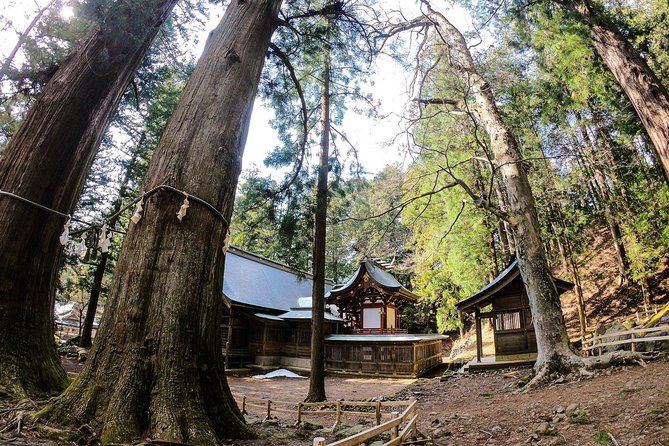
The route begins at Kawaguchi Asama Shrine, one of the area’s most atmospheric cultural sites. It is associated with Mt. Fuji and is included within the mountain’s World Cultural Heritage designation.
The setting is especially memorable. Giant cedar trees, said to be more than 1,200 years old, rise around the shrine grounds. This is not simply a quick stop for a photograph. The trees create a cool, quiet approach, and the scale of the forest helps explain why mountain worship has such a strong place in this region.
Your guide can add context about the shrine, local traditions, and the connection between the mountain and the surrounding communities. That explanation is useful here because the atmosphere can be easy to admire without understanding what makes the site important.
You should still keep expectations realistic. This is a small local shrine visit, not a large temple complex with hours of exhibits. Its appeal comes from the old trees, the setting, and the feeling of stepping into a living place of worship.
Mother’s White Falls and the Teru River
Near the shrine is Haha no Shirataki, usually translated as Mother’s White Falls. The waterfall is valued for its natural setting and views toward Mt. Fuji and Lake Kawaguchiko.
The walk to a waterfall gives the day a welcome change of pace. Instead of looking at Fuji from a roadside platform, you hear moving water and enter the forest. In colder weather, the falls can take on a different character, with ice forming around the water. The Teru River feeds the falls and continues toward the lake.
The stop may appeal most to people who enjoy small natural features rather than grand attractions. It is not presented as a major waterfall spectacle, so do not expect a long trail or a large park complex. The reward is the combination of falling water, trees, mountain views, and a quieter mood.
The guide’s flexibility is useful here. Weather and walking conditions affect how enjoyable a waterfall visit will be. If you need more time, a slower pace, or fewer steps, say so clearly at the start.
Oishi Flower Park and Lake Kawaguchiko views
Oishi Flower Park sits along the route toward Lake Saiko and offers another way to see Mt. Fuji. The park adds open views and seasonal plant displays to a day otherwise centered on forest, water, and shrine grounds.
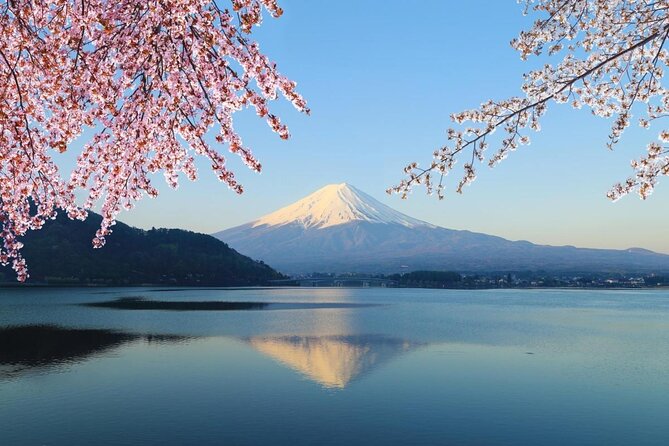
This is likely to be one of the easier stops for photography. You can frame Fuji with the lake and flowers, rather than with buildings and traffic. The exact appearance changes by season, so the park is more appealing if you enjoy seeing how the area shifts through the year.
The park also helps break up the walking. After the shrine and waterfall, you can spend time in a more open setting before continuing toward the western lakes. If Fuji is hidden by cloud, the flowers and lake still give you something to enjoy, though the mountain view is naturally the main prize.
A completely different kind of day out:
- Early Morning Kayaking With Views of Mt Fuji at Lake Kawaguchiko
★ 5.0 · 69 reviews - Johnny’s Exclusive: Mt. Fuji Adventure from Kawaguchiko
★ 5.0 · 62 reviews - Mt. Fuji Five Lakes Area Private Tour with Licensed Guide(Kawaguchiko area Dep)
★ 5.0 · 55 reviews - Cute & Fun E-Car tour following guide around Lake Kawaguchiko
★ 5.0 · 54 reviews
Entering Aokigahara Jukai, the Sea of Trees
The most distinctive part of the route is Aokigahara Jukai, known as the Sea of Trees. The tour visits the Wild Birds Forest Park, also called Yacho no Mori Koen, where you can walk through forest growing on old volcanic lava.
This ground changes the feel of the walk. Lava creates an uneven, dark surface, and tree roots, moss, and rock formations give the forest a striking texture. You are not simply walking through an ordinary woodland. The forest reflects the volcanic forces that shaped the area around Mt. Fuji.
A short walk here can be deeply rewarding for anyone interested in plants, geology, wildlife, or quiet places. Chris has described the forest’s biodiversity and ecosystem in detail, including warnings about poisonous mushrooms. That sort of practical information makes the walk more engaging, but you should follow the guide closely and avoid touching plants or fungi.
The forest has a serious reputation, and the guide’s calm, factual approach is helpful. The experience is about nature and local knowledge, not sensational stories. Trails may feel rougher than paved sightseeing paths, so comfortable footwear matters.
Some visitors have been supplied with hiking boots and socks. Confirm what is available for your date instead of assuming equipment is guaranteed. If you have mobility limits, tell the guide before the tour. One guest with mobility issues found the pace comfortable, but the exact route should be discussed in advance.
The wider Fuji Five Lakes route
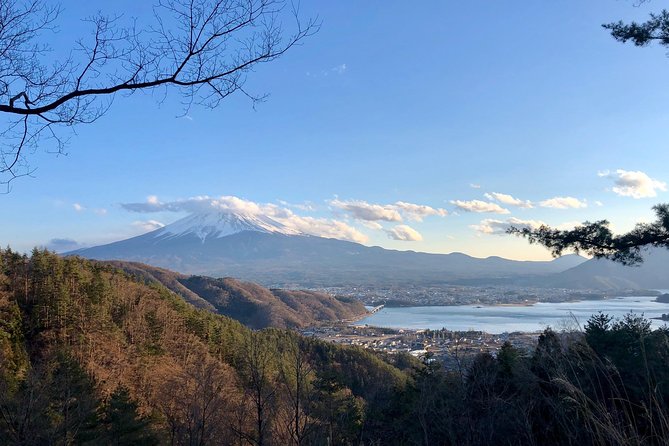
The tour description centers on Lake Kawaguchiko and Lake Saiko, while the guide may select viewing points around the area based on your wishes and the day’s weather. The Fuji Five Lakes region gives Mt. Fuji several different settings, from broad lake views to forested shorelines.
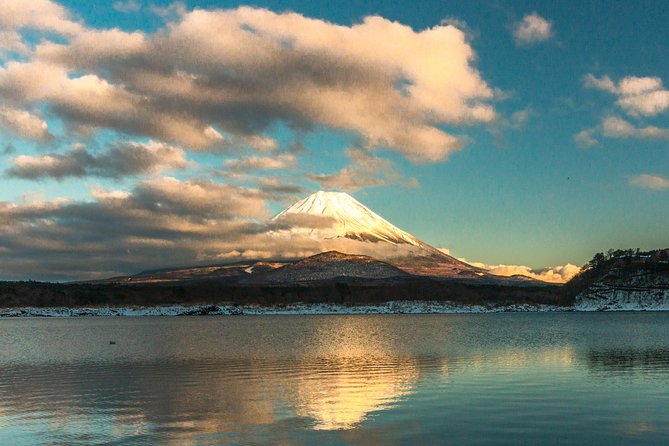
The quieter lakes are often the reason to choose this tour over a standard city-to-Fuji excursion. Shoji Lake, for example, has been used for especially striking mountain views, including the local Kodaki Fuji view where Mt. Fuji appears to embrace nearby Mount Omuro.
That kind of stop is not guaranteed on every departure, and you should ask about the route when booking. Still, it shows the value of having a guide who knows more than the standard bus circuit. The best view may depend on cloud cover, season, and time of day.
The vehicle also makes it practical to connect several places in a short period. Public buses serve the region, but routes and waiting times can limit how much ground you cover. With private transport, you can spend your time looking at the scenery rather than checking the next departure.
A relaxed pace, with room for local food
The tour includes neither lunch nor drinks, but food stops can be worked into the day. Past outings have included local eateries, snacks, French pastries, coffee, and breakfast for guests who arrived earlier than expected.
One local meal mentioned is a vegetable and noodle soup that reflects the food of the region. The exact restaurant is not specified, so you should ask the guide what is possible on your date and budget for meals separately.
I like the way food fits into this experience. It is not a formal dining tour, but a chance to pause between sights and eat somewhere local. Bathroom breaks and snack stops can also make the day easier for families, older visitors, or anyone who does not want a tightly packed schedule.
The tradeoff is that the price does not cover these extras. At $320 per person, you need to view the tour as a private guide, driver, vehicle, and flexible local service rather than as an all-inclusive day.
What the $320 price buys you
The cost is substantial. A family or group of five pays a serious total, though group discounts may be available. You should compare the price with the cost of separate transport, a guide, and the time lost figuring out the area on your own.
For a solo visitor, the value is harder to justify. You pay the same kind of premium for privacy and personal attention, but there are fewer people to share the cost. Couples and families may find the price more reasonable, especially if they want private transport and help with outdoor gear.
The strongest value comes from the service details. Chris has helped guests with return tickets, bus boarding, travel directions, clothing, footwear, and equipment. That support can remove much of the small stress that comes with a mountain day.
The rating is five out of five from 288 reviews, with 100 percent recommending the experience. That is unusually strong, but it does not remove the need to consider your budget or the weather risk. You are paying for a personal day in nature, not guaranteed sunshine or a guaranteed clear view of Fuji.
The guides: Chris, Yumi, and personal attention
Chris is an American who has lived in Japan for more than 20 years and knows the Fujikawaguchiko area closely. His guiding style is described as calm, flexible, and enthusiastic about forests, lakes, local history, mythology, and wildlife.
Yumi also leads tours and has been praised for her warm manner and careful attention to individual needs. Together, Chris and Yumi offer a more personal style than a guide who simply delivers facts at fixed stops.
The practical preparation is a major advantage. Depending on conditions and the arrangements for your tour, equipment has included:
- Hiking boots and socks
- Down jackets and other warm clothing
- Gloves, hats, and neck warmers
- Raincoats and jackets
- Walking sticks
- Blankets, camping chairs, and tea
Do not treat every item as an automatic inclusion. The official inclusions are pickup and a native English-speaking guide-driver. The extra gear is a useful service reported from past outings, so ask what is available for your group.
The guides also appear comfortable adjusting the day for pregnancy, mobility concerns, early arrivals, and requests such as stargazing. Those details suggest a thoughtful approach, but you should still explain your needs before setting out.
Who should book this experience?
I would choose this tour if you care more about forests, water, shrines, and quiet viewpoints than about visiting every famous attraction in the region. It is particularly well suited to nature lovers, photographers, couples, families, and people recovering from several busy days in Tokyo.
It also suits anyone who dislikes large groups. You can set the pace, take time for photos, and ask questions as you go. The private vehicle is useful if you want to see several parts of the Fuji Five Lakes area without depending on buses.
The tour is less suitable if you want a cheap sightseeing option, a fixed schedule, or a guaranteed summit view. The walking is described as light to moderate rather than grueling, but volcanic forest paths may still be uneven.
Children can participate, but they must be accompanied by an adult. Most people can take part, though anyone with mobility concerns should discuss the route in advance.
Timing, weather, and cancellation details
Pickup is offered from Kawaguchiko Station or hotels in the Fujikawaguchiko area. The stated operating window is Monday through Sunday, with meeting times listed between 8:30 and 11:30 in the morning. Some past tours began later, including an afternoon departure, so confirm your requested start time.
A mobile ticket is provided, and booking confirmation arrives at the time of reservation. Food and drinks are not included. The activity is private, so only your group participates.
Clear weather makes a major difference around Fuji. Clouds can hide the mountain even when the lakes and forests remain beautiful. If poor weather causes the operator to cancel, you can choose another date or receive a full refund.
You can cancel for a full refund up to 24 hours before the start time. Inside that window, refunds are not available and changes are not accepted. The cutoff follows local time.
Should you book the Mt. Fuji private tour?
Book it if you want to see the Mt. Fuji area at a slower pace, with quiet forest walks, waterfalls, old cedar trees, shrines, and lake viewpoints. The strongest reasons to go are the private vehicle, flexible route, practical gear, and Chris or Yumi’s personal approach.
Think twice if $320 per person stretches your budget or if you mainly want one famous Fuji photograph. For the best value, share the cost with family or friends, tell the guide your priorities, and treat the day as a flexible nature outing rather than a fixed attraction tour.
For me, the appeal is simple: this experience gives you time to notice the mountain’s surroundings. That is where the day earns its price.
FAQ
Where does the tour take place?
The tour takes place around Fujikawaguchiko in the Mt. Fuji area, including Lake Kawaguchiko, Lake Saiko, shrines, waterfalls, forests, and volcanic lava terrain.
How long does the tour last?
The experience lasts approximately five to six hours.
Is the tour private?
Yes. Only your group participates in the activity.
Is pickup available?
Yes. Pickup is offered from Kawaguchiko Station or hotels in the Fujikawaguchiko area.
Is the tour conducted in English?
Yes. The experience includes a native English-speaking guide-driver.
What is included in the price?
Pickup and a native English-speaking guide-driver are included. Food, drinks, and lunch are not included.
Does the tour include a visit to Kawaguchi Asama Shrine?
Yes. The route includes Kawaguchi Asama Shrine, known for its giant cedar trees and connection to Mt. Fuji’s World Cultural Heritage area.
Can children join the tour?
Yes, but children must be accompanied by an adult.
What happens if bad weather cancels the tour?
If the tour is canceled because of poor weather, you will be offered a different date or a full refund. You can also cancel for a full refund up to 24 hours before the experience begins.
Just added in Fujikawaguchiko machi
- Cute & Fun E-Car tour following guide around Lake Kawaguchiko★ 5.0 · 54 reviews
- Sushi Cooking Class at Sushi Factory -KIWAMI- Mt.Fuji★ 5.0 · 23 reviews
- Ramen Cooking Class at Lake Kawaguchiko (Short Course)★ 5.0 · 42 reviews
- Early Morning Kayaking With Views of Mt Fuji at Lake Kawaguchiko★ 5.0 · 69 reviews
- Private Local Hiking to enjoy the nature and culture of Mt.Fuji★ 5.0 · 22 reviews
- Fujisan Sushi Making Lesson★ 5.0 · 16 reviews
- Hidden Fuji drive tour with a Local English speaking guide★ 5.0 · 43 reviews
- Ramen Cooking Class at Ramen Factory in Mt.Fuji★ 5.0 · 101 reviews
Mount Fuji Tours, compared.

Mt. Fuji 5th Station & Hakone Cruise 1-Day Bus Tour
Read our review →
Mount Fuji Full-Day Small Group driver-guide tour (with Pick-up option)
Read our review →Browse the lists this tour appears in