
Reviewed · COOKING CLASSES
Fujisan Sushi Making Lesson
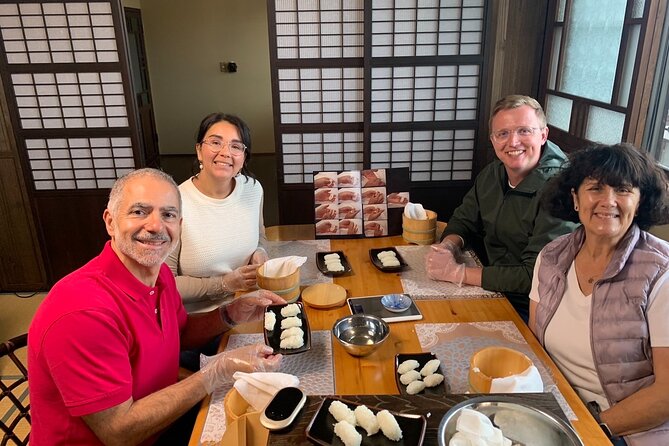
Sushi is better when you make it yourself. This three-hour lesson near Mount Fuji gives you direct instruction from a veteran sushi chef, with practice making nigiri sushi and sushi rolls rather than simply watching a demonstration. You also learn about sushi traditions, Japanese table etiquette, and cooking methods you can repeat at home.
I like the scenic setting close to Mount Fuji, and I like that this is a private activity for your own group. The lesson also welcomes foreign tourists, expatriates, and local friends, which gives it a friendly, mixed audience. The main consideration is the price: at $229.91 per person, this is a serious splurge for a cooking class.
In This Review
- Key Points at a Glance
- What This Fujikawaguchiko Cooking Class Actually Offers
- Meeting at Kawaguchiko Station
- Learning Nigiri Sushi by Hand
- Rolling Sushi and Comparing Techniques
- A Lesson in Sushi History and Table Etiquette
- Mount Fuji Views While You Cook
- Why the Private Format Matters
- Is $229.91 a Fair Price?
- Who Will Enjoy This Most?
- Practical Advice Before You Book
- Final Verdict: Should You Book the Fujisan Sushi Lesson?
- FAQ
- Where does the sushi lesson begin?
- How long does the experience last?
- Where does the activity end?
- What will I learn to make?
- Is the lesson taught in English?
- Is vegetarian food available?
- Should I report food allergies before the class?
- Can I cancel for a full refund?
Key Points at a Glance
- Hands-on nigiri and roll making: You prepare two classic sushi styles instead of only observing a chef.
- Mount Fuji setting: The activity takes place near Fujikawaguchiko’s famous mountain views.
- English instruction available: A veteran chef with worldwide cooking experience explains the lesson in English.
- Japanese food culture included: The class covers sushi’s tradition, history, and proper table etiquette.
- Private group format: Only your group participates, with group discounts available.
- Vegetarian-friendly planning: Vegetarian food is available if you request it in advance.
What This Fujikawaguchiko Cooking Class Actually Offers
This is not a quick sushi demonstration squeezed into a sightseeing stop. You spend about three hours learning how sushi is made, with the chef showing you methods that you can imitate at home.
The focus is on nigiri sushi and sushi rolls. Nigiri gives you practice shaping sushi by hand, while rolls introduce a different technique and a more playful format. Learning both makes the class more useful than one limited lesson, since you can later choose the style that fits your kitchen, time, and ingredients.
The chef also explains the tradition and history of sushi. That cultural context matters. Sushi is not simply a meal built from rice and toppings. The lesson connects the food to Japanese customs and table behavior, so you leave with a better sense of how sushi fits into daily dining culture.
You should also expect some teaching beyond the kitchen work. The experience includes Japanese table etiquette, and one published review praised the trivia questions and an informative slideshow. Those additions give the lesson a classroom element, but they also help break up the hands-on work and make the three hours feel more varied.
More Cooking Classes in Fujikawaguchiko machi:
- Ramen Cooking Class at Ramen Factory in Mt.Fuji
★ 5.0 · 101 reviews - Ramen Cooking Class at Lake Kawaguchiko (Short Course)
★ 5.0 · 42 reviews - Sushi Cooking Class at Sushi Factory -KIWAMI- Mt.Fuji
★ 5.0 · 23 reviews
Meeting at Kawaguchiko Station
The experience begins at Kawaguchiko Station, at 3641 Funatsu in Fujikawaguchiko, in Yamanashi Prefecture. This is a practical meeting point because the station is near public transportation and easy to identify in the area.
Your activity ends back at the meeting point. That return arrangement keeps the outing simple, especially if you are fitting the class between other plans around Mount Fuji. You do not need to arrange a separate return location, and you can continue from the station after the lesson.
The meeting point also makes this a useful option for people staying around Lake Kawaguchi. You can build the class into a day focused on the area rather than treating it as a distant side trip.
Still, you should allow time to find the exact meeting spot and arrive ready for a scheduled start. Confirmation is sent within 48 hours of booking, subject to availability, so do not leave this reservation until the last minute if your schedule is fixed.
Learning Nigiri Sushi by Hand
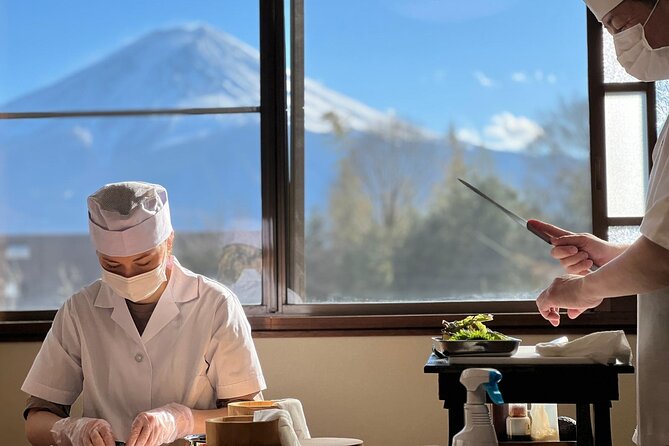
Nigiri is one of the clearest ways to understand the skill behind sushi. The form looks simple, but the rice must be shaped carefully and handled with control. A professional chef guides you through the process, so you can focus on technique instead of guessing from a recipe.
The value here is repetition and correction. You see how the chef works, then try the method yourself. A good cooking class should leave you able to remember the basic movements once you return home, and this lesson is designed with that goal in mind.
You should not expect to become a sushi professional in three hours. That is not the point. The benefit is learning a practical foundation, gaining confidence with the preparation, and understanding why the finished piece should look and feel a certain way.
The lesson may suit you especially well if you enjoy food classes where the finished meal is only part of the reward. You get a meal-related activity, but also a skill you can try again later.
Rolling Sushi and Comparing Techniques
Sushi rolls offer a different kind of practice. Instead of shaping individual pieces, you work with a larger format and learn how to build and handle the roll.
Having both nigiri and rolls in the same session gives the class a useful balance. Nigiri teaches precision. Rolls are more about arrangement, shaping, and keeping the ingredients together. If one technique feels difficult, the second format gives you another way to enjoy the cooking process.
The description does not specify the exact fillings, tools, recipes, or number of pieces you will make. That means you should avoid arriving with a fixed expectation about a particular type of roll. The chef’s instruction is the main feature, not a promise of a specific menu.
That lack of detail is one point I would clarify before booking if you have strong dietary needs or a particular sushi style in mind. Vegetarian preparation is available, but you need to request it in advance. Food allergies should also be reported ahead of time.
A few more options to weigh up in Fujikawaguchiko machi
- Mt Fuji Area Private Guided Tours in English-Nature up close, quiet, personal
★ 5.0 · 288 reviews - Explore Mt. Fuji Ice Cave in Aokigahara Forest
★ 5.0 · 243 reviews - Private guided hidden gems tour by local English speaking driver
★ 5.0 · 142 reviews - Early Morning Kayaking With Views of Mt Fuji at Lake Kawaguchiko
★ 5.0 · 69 reviews
A Lesson in Sushi History and Table Etiquette
The cultural section helps set this experience apart from a standard cooking workshop. You learn about sushi as part of Japanese food culture, not just as a dish to assemble.
Japanese table etiquette is also useful for the rest of your trip. Even if you do not remember every rule, learning how sushi is traditionally approached can make meals in Japan feel less intimidating. The lesson gives you a little context before you sit down at another sushi counter or restaurant.
One review praised the trivia questions and slideshow, along with the chance to learn facts about Japanese culture. That suggests the class is not built only around kitchen instructions. You can expect the chef to explain, ask questions, and provide background during the session.
The language setup may vary in feel. The chef is described as explaining in English, which is important for international participants. At least one participant particularly enjoyed having the class conducted in Japanese while studying the language. If you are learning Japanese, you may appreciate that added challenge, but English support is part of the stated offering.
Mount Fuji Views While You Cook
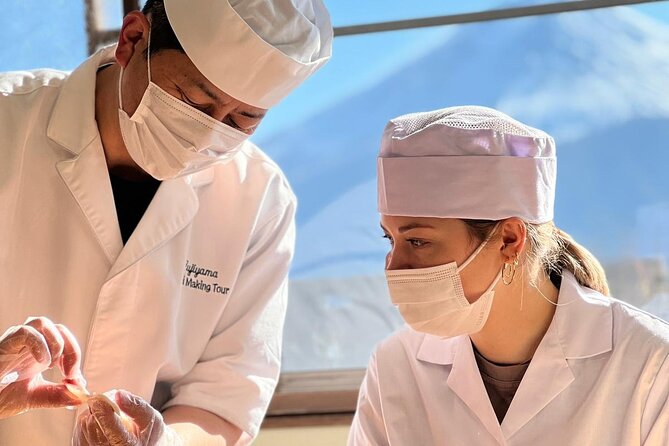
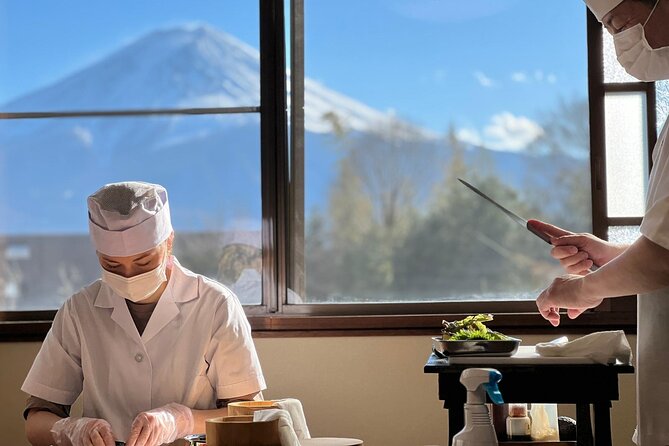
The setting is one of the strongest reasons to choose this class over a similar lesson in a major city. The activity is located close to Mount Fuji, and you can enjoy beautiful views while preparing sushi.
The experience listing identifies Mount Fuji as the itinerary stop, but it does not promise a separate sightseeing visit, a summit trip, or a guaranteed clear view. Think of the mountain as part of the setting, not as a separate guided excursion.
Weather and visibility can affect what you see. A cloudy day may limit the mountain view, but the cooking lesson itself remains the main activity. If you are choosing between several sushi classes, the Mount Fuji setting adds a memorable sense of place. If you are booking mainly for a perfect photograph, keep expectations flexible.
I like the pairing of scenery and food. You are not rushing from one famous viewpoint to another. Instead, you get time to sit, listen, prepare food, and notice where you are.
Why the Private Format Matters
This is a private tour and activity, so only your group participates. That changes the feel of the lesson.
A private format can make it easier to ask questions, take your time with a technique, and work at a pace that suits your group. It is also a good fit for families, couples, friends, or a small group with different cooking abilities.
The tradeoff is cost. Private instruction usually makes a class more personal, but the listed price of $229.91 per person is high compared with an ordinary group cooking lesson. Group discounts are available, so the value may improve if you are booking with several people.
I would think about what you want from the day. If you only want to eat sushi, this is not good value. You are paying for instruction, cultural explanation, a private setting, and the time spent learning a repeatable skill near Mount Fuji.
Is $229.91 a Fair Price?
At $229.91 per person, this experience belongs in the special-occasion part of your Japan budget. The price makes more sense if you value private instruction and want an activity with both food and cultural content.
The three-hour duration helps. You are not paying for a short photo opportunity or a ten-minute demonstration. The chef teaches two sushi formats, explains sushi culture and etiquette, and answers questions during a dedicated lesson.
The price is also easier to justify for a group that can use the available discount. If you are traveling alone and mainly want a casual meal, you may find the cost hard to defend. If you are celebrating, traveling with family, or want a carefully planned Mount Fuji activity, the private structure has more appeal.
I would compare it with your other planned spending around Fujikawaguchiko. A cooking lesson can be a welcome change from temples, viewpoints, and transport connections. It gives you a slower activity and something tangible to take home as a skill.
Who Will Enjoy This Most?
I would recommend this experience to several kinds of visitors:
- People who want to make sushi, not simply eat it
- Families or friends who prefer a private activity
- Food lovers who want cultural background with their meal
- Visitors staying near Lake Kawaguchi or Kawaguchiko Station
- Japanese-language learners who may enjoy hearing some instruction in Japanese
- Vegetarians who arrange their needs before the class
- Anyone looking for a Mount Fuji activity that does not rely entirely on sightseeing
It may be less suitable if you want a large social class, a cheap meal, or a full Mount Fuji sightseeing tour. It is also not the best choice for anyone who dislikes advance planning around food allergies or special diets.
The experience is open to foreign tourists, expatriates, and local friends, so you do not need to be part of a particular kind of tour group. The private format keeps the activity focused on your own party.
Practical Advice Before You Book
Reserve early if this class is important to your schedule. It is booked an average of 157 days in advance, which suggests that availability can become an issue, especially during busy periods around Mount Fuji.
Wait for booking confirmation before treating the lesson as final. Confirmation arrives within 48 hours, subject to availability.
Tell the provider about food allergies in advance. Do the same for vegetarian requests. Do not assume the chef can adjust the menu at the last moment.
You receive a mobile ticket, so keep the booking accessible on your phone. Arrive at Kawaguchiko Station with enough time to locate the meeting point without rushing.
The cancellation terms are friendly but firm. You can cancel for a full refund up to 24 hours before the local start time. Cancellations or changes made less than 24 hours ahead are not accepted for a refund.
Final Verdict: Should You Book the Fujisan Sushi Lesson?
I would book this if you want a private, hands-on food experience with Mount Fuji nearby. The combination of nigiri, sushi rolls, etiquette, cultural explanation, and scenic surroundings gives the lesson more substance than a basic cooking class.
I would hesitate if $229.91 feels high for a three-hour activity or if your main goal is simply to eat sushi. The class earns its price through personal instruction and the private format, not through sightseeing alone.
For food lovers, families, couples, and small groups, this is a strong choice. Request vegetarian arrangements or allergy information early, and reserve well ahead. If the price fits your plans, you get more than lunch: you get a practical Japanese cooking skill and a memorable way to spend time near Mount Fuji.
FAQ
Where does the sushi lesson begin?
The activity begins at Kawaguchiko Station, located at 3641 Funatsu, Fujikawaguchiko, Minamitsuru District, Yamanashi 401-0301, Japan.
How long does the experience last?
The lesson lasts approximately three hours.
Where does the activity end?
The activity ends back at the meeting point at Kawaguchiko Station.
What will I learn to make?
You will learn how to make nigiri sushi and sushi rolls with instruction from a professional sushi chef.
Is the lesson taught in English?
The veteran chef explains the lesson in English. One participant also enjoyed taking the class in Japanese, so the language experience may include Japanese as well.
Is vegetarian food available?
Yes. Vegetarian preparation is available, but you should request it in advance.
Should I report food allergies before the class?
Yes. You should inform the provider about any food allergies in advance.
Can I cancel for a full refund?
Yes. You can cancel at least 24 hours before the experience start time for a full refund. Changes or cancellations made less than 24 hours before the start time are not accepted for a refund.
Just added in Fujikawaguchiko machi
- Cute & Fun E-Car tour following guide around Lake Kawaguchiko★ 5.0 · 54 reviews
- Sushi Cooking Class at Sushi Factory -KIWAMI- Mt.Fuji★ 5.0 · 23 reviews
- Ramen Cooking Class at Lake Kawaguchiko (Short Course)★ 5.0 · 42 reviews
- Early Morning Kayaking With Views of Mt Fuji at Lake Kawaguchiko★ 5.0 · 69 reviews
- Private Local Hiking to enjoy the nature and culture of Mt.Fuji★ 5.0 · 22 reviews
- Hidden Fuji drive tour with a Local English speaking guide★ 5.0 · 43 reviews
- Ramen Cooking Class at Ramen Factory in Mt.Fuji★ 5.0 · 101 reviews
- Mt. Fuji Five Lakes Area Private Tour with Licensed Guide(Kawaguchiko area Dep)★ 5.0 · 55 reviews
Cooking Classes, compared.
Sushi Making Tokyo Roll and Authentic Japanese Sushi Class
Read our review →
Roll and Authentic Sushi Making Class in Asakusa
Read our review →
Ramen Cooking Class at Ramen Factory in Kyoto
Read our review →
Sushi Making Class in a Happi Coat near a Famous Spot
Read our review →
Sushi Making Osaka Roll and Authentic Japanese Sushi Class
Read our review →
Tokyo Sushi Making Class in Tsukiji with Professional Chef
Read our review →
Ramen & Gyoza Cooking Class in Tokyo with Local Supermarket Visit
Read our review →Browse the lists this tour appears in