
Reviewed · COOKING CLASSES
Ramen Cooking Class at Lake Kawaguchiko (Short Course)
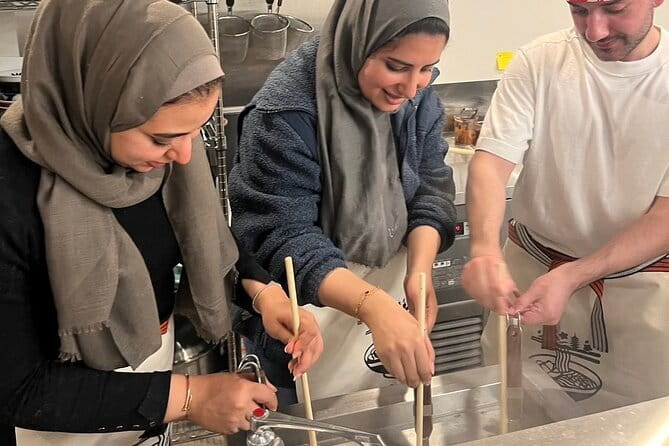
Fresh noodles taste better when you make them. This short Kawaguchiko class lets you knead dough, cut noodles, choose your soup base, and cook your bowl while enjoying views of Mt. Fuji. I like the hands-on noodle making and the English-speaking instruction, plus the bandana is a useful souvenir. The main drawback is the one-hour format, which leaves little room for a slow, relaxed cooking session.
You meet at the Fuji Activity Reservation Center in Funatsu, Fujikawaguchiko, and return there when the class ends. At $39.14 per person, the price is fair for a meal, instruction, ingredients, taxes, and the cooking experience, though drinks cost extra and private transportation is not included.
In This Review
- Key Points Before You Book
- Turning Dough Into Noodles in One Hour
- Choosing Tare for Your Ramen Bowl
- Cooking Fresh Noodles in a Real Noodle Cooker
- Adding Chashu and Finishing the Bowl
- Eating Ramen With Mt. Fuji in View
- What the $39.14 Price Really Covers
- Meeting at Fuji Activity Reservation Center
- Why the Bandana and Certificate Matter
- Who Will Enjoy This Class Most
- Practical Tips for a Better Visit
- Should You Book the Kawaguchiko Ramen Class?
- FAQ
- How long does the ramen cooking class last?
- Where does the class begin and end?
- Is an English-speaking instructor included?
- Are drinks included in the price?
- Can I request help with allergies or dietary restrictions?
- What souvenirs do participants receive?
Key Points Before You Book
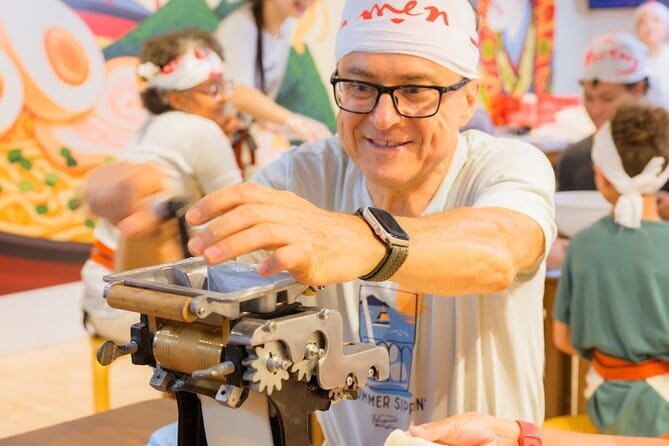
- You make the noodles yourself: Knead the dough, roll it out, and cut it with a noodle-making machine.
- Your broth is customizable: Choose your preferred tare, the seasoning base that shapes the flavor of your ramen.
- Mt. Fuji adds a memorable setting: You eat your finished bowl with a view of Japan’s famous mountain.
- The class is short and focused: Plan on about one hour from start to finish.
- The group can be small: The maximum is 20 people, but a 5 p.m. session once had only two participants.
- You get more than lunch: Each group receives a completion certificate, and every participant takes home an original bandana.
Turning Dough Into Noodles in One Hour
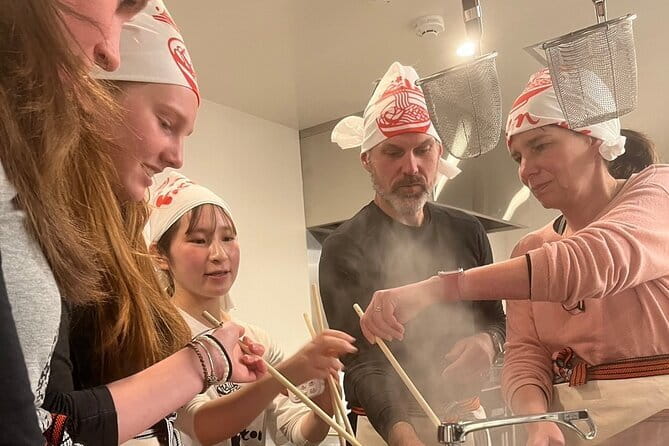
The appeal here is simple: you are not just eating ramen, you are helping create it. The class begins with dough. You knead it, roll it out, and then cut it using a noodle-making machine.
That first step gives the meal some substance. You can see how a basic dough becomes the noodles in your bowl. It is also a good choice if you want an activity that feels more personal than a standard restaurant meal.
The process is guided, so you do not need previous cooking experience. The English-speaking instructor explains what to do and helps keep the class moving. Names mentioned by past participants include Kimmy, Hiro, and Mae, with Mae earning particular praise for enthusiastic, one-on-one help during a small evening class.
You should expect a practical workshop rather than a long culinary lesson. The class lasts about an hour, so each stage is designed to be clear and efficient. That is useful if you have a packed Kawaguchiko schedule, but it also means you will not spend a whole afternoon exploring ramen techniques.
The noodle-making machine is part of the fun. It takes the rolled dough and cuts it into noodles, giving you a clear connection between your work and the food you later eat. For children and first-time cooks, this kind of visible result can be more rewarding than a lecture about ingredients.
More Cooking Classes in Fujikawaguchiko machi:
- Ramen Cooking Class at Ramen Factory in Mt.Fuji
★ 5.0 · 101 reviews - Sushi Cooking Class at Sushi Factory -KIWAMI- Mt.Fuji
★ 5.0 · 23 reviews - Fujisan Sushi Making Lesson
★ 5.0 · 16 reviews
Choosing Tare for Your Ramen Bowl
Once the noodles are prepared, you choose your tare, or soup seasoning base. This is where you set the direction of your ramen. The exact choices are not specified, so you should ask the instructor about the available options when you arrive.
That choice matters because ramen is not only about the noodles. The broth and seasoning give the bowl its main character. Being able to select your preferred base makes the meal feel more like your own creation rather than a fixed dish handed to you.
The class does not include drinks, so bring that cost into your planning. The food tasting and everything needed to make the ramen are included in the price. If you have food allergies or dietary restrictions, tell the provider in advance. Do not wait until the cooking begins, since the ingredients and topping options may need preparation.
This is also the point where expectations matter. The experience lets you choose your soup base, but the available range and level of customization are not listed. If you want a very specific regional broth or strict dietary substitutions, contact the operator before booking.
Cooking Fresh Noodles in a Real Noodle Cooker
After you prepare the dough and choose the seasoning, you boil the noodles in a real noodle cooker. This step is quick, but it gives you a final role in the meal.
Fresh noodles can cook differently from packaged noodles, so the instructor’s timing matters. You do not have to guess when they are ready. The point is to cook them properly, then move them into the bowl before adding the finishing ingredients.
I like this part because it keeps the experience active until the meal is served. You are not simply watching a demonstration and then receiving a bowl from the kitchen. You have a hand in the final cooking stage.
Still, the short duration means the class will likely feel brisk. If you prefer slow instruction, long conversations, or plenty of time for photographs, you may find the pace tight. The one-hour length is better suited to a quick, well-organized activity between sightseeing stops.
Adding Chashu and Finishing the Bowl
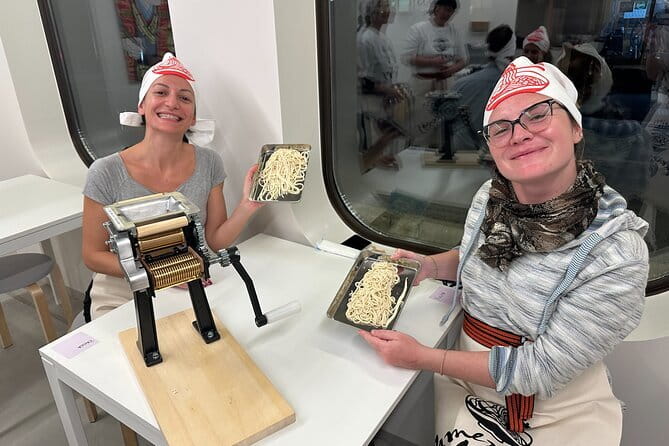
The topping stage lets you finish the ramen with ingredients that include chashu. This gives the bowl the familiar look and feel of a ramen-shop meal, while the homemade noodles make it distinctly yours.
The information provided does not list every topping or the full range of choices. You can expect the class to provide the necessary ingredients, but ask about exact options if you have allergies, avoid meat, or follow a particular diet.
This is an especially good activity for couples, friends, and families who enjoy making a meal together. Each person can choose a soup base and take part in the process. At the end, you have both a hot meal and a shared story from the day.
The food is the central reward, but the class also works because the steps are easy to understand. Knead, roll, cut, season, boil, top, eat. There is a satisfying rhythm to it, and you can see progress from one stage to the next.
A few more options to weigh up in Fujikawaguchiko machi
- Mt Fuji Area Private Guided Tours in English-Nature up close, quiet, personal
★ 5.0 · 288 reviews - Explore Mt. Fuji Ice Cave in Aokigahara Forest
★ 5.0 · 243 reviews - Private guided hidden gems tour by local English speaking driver
★ 5.0 · 142 reviews - Early Morning Kayaking With Views of Mt Fuji at Lake Kawaguchiko
★ 5.0 · 69 reviews
Eating Ramen With Mt. Fuji in View
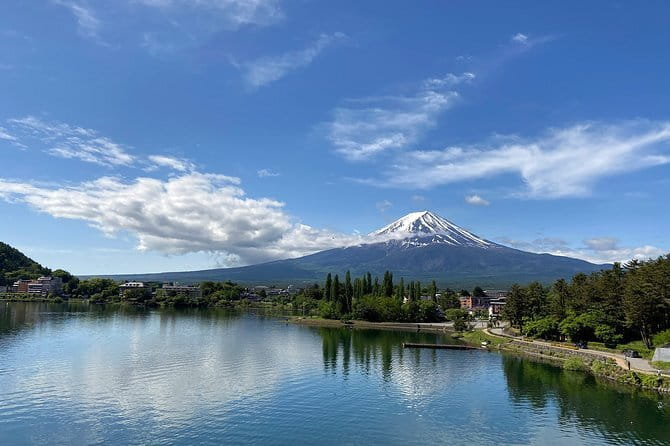
The finished bowl is enjoyed with a view of Mt. Fuji. That setting gives the meal a strong sense of place. You are not taking a generic cooking class in an anonymous room. You are making a Japanese comfort food while visiting one of the country’s best-known mountain areas.
The view will depend on conditions at the time of your visit. Mt. Fuji is not guaranteed to be visible, so you should treat it as a valuable bonus rather than the only reason to book. Even without a clear mountain view, the cooking activity remains the main attraction.
If seeing Fuji matters greatly to you, consider how this class fits into your day and what the weather is doing. The experience itself lasts about an hour, and it returns you to the same meeting point. That makes it easy to combine with other plans around Lake Kawaguchiko, but you should leave enough time to reach the center without rushing.
An evening class can be a nice option. One 5 p.m. session had only two people, which allowed for very close instruction from Mae. Smaller groups are not guaranteed, since the maximum capacity is 20, but late-day availability may sometimes feel more intimate.
What the $39.14 Price Really Covers
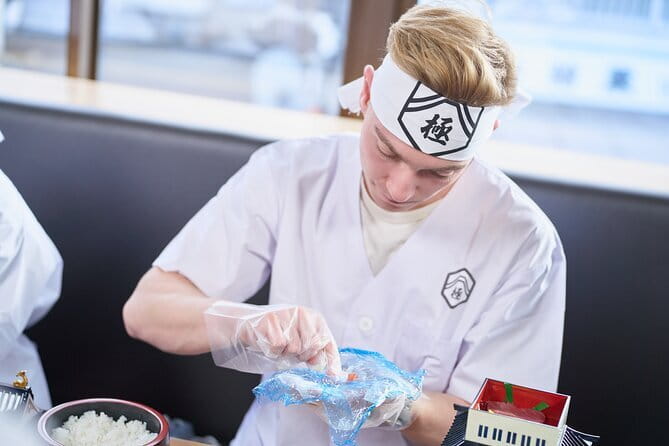
At $39.14 per person, this is not simply the cost of a bowl of ramen. The fee includes local taxes, food tasting, all the supplies needed to make the ramen, an English-speaking instructor, and an original bandana souvenir.
That package gives the class reasonable value. You receive a meal, a short cultural activity, direct instruction, and something to take home. The bandana is a practical keepsake rather than a disposable trinket, and each group also receives an official certificate of completion.
The value is strongest if you enjoy activities, not just sightseeing. A restaurant meal may cost less, depending on where you eat, but it will not give you the noodle-making process or the certificate. A longer cooking class might offer more technique, but it would also likely require more time and a higher price.
You should budget separately for drinks. Private transportation is also not included. Since the meeting point is near public transportation, you can plan to reach it on your own, but the exact transit route depends on where you are staying.
Meeting at Fuji Activity Reservation Center
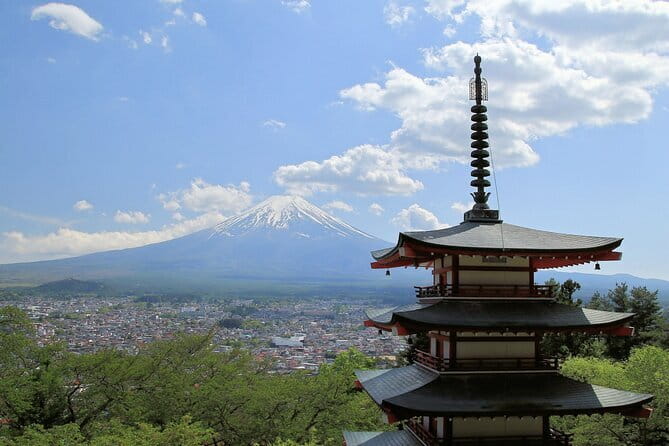
The class begins and ends at:
Fuji Activity Reservation Center
3487-15 Funatsu
Fujikawaguchiko, Minamitsuru District
Yamanashi 401-0301, Japan
Returning to the starting point keeps the logistics easy. You do not need to arrange a separate pickup after eating, and you can leave your luggage or later plans organized around the same location, subject to the operator’s own policies.
Your booking confirmation arrives at the time of booking, and the experience uses a mobile ticket. Keep the ticket available on your phone when you arrive.
The group limit is 20 people. That is large enough for the class to have energy, but the actual atmosphere can vary. A nearly private class may give you more direct help, while a fuller session could feel more social and less personal.
Because the class is short, arriving on time matters. A late arrival could affect your ability to complete each step, though no separate late-arrival policy is provided. I would plan to reach the meeting point with a little margin.
Why the Bandana and Certificate Matter
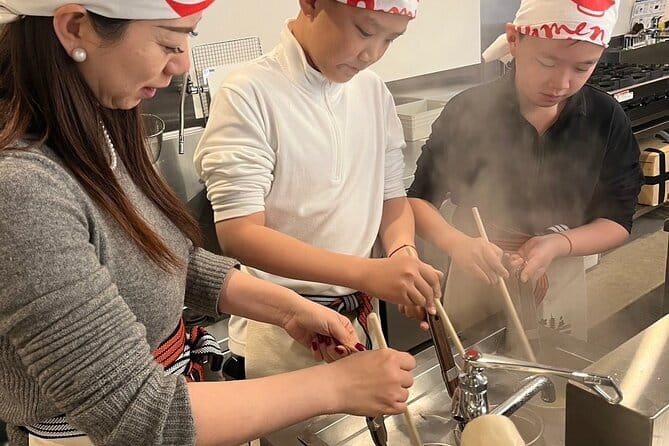
The certificate is presented to each group, not necessarily to each individual. It is a small detail, but it gives the activity a clear finish. You have completed a task, shared the food, and received a physical reminder of the session.
Each participant also receives an original bandana. You can use it during cooking, then keep it as a souvenir. It is a better memento than a photo alone because it connects directly to the activity.
The extras also help explain the price. You are paying for more than ingredients. You are paying for instruction, the organized cooking setup, the meal, and the small ceremony at the end.
Who Will Enjoy This Class Most
I would recommend this class to you if you want a short, active experience in the Kawaguchiko area. It suits people who like Japanese food, hands-on activities, and simple cultural experiences that fit between larger sightseeing plans.
It is especially suitable for:
- Couples looking for a shared activity
- Families with children who enjoy making food
- First-time visitors who want an easy introduction to ramen
- Solo visitors who like guided cooking
- Anyone seeking an indoor activity near Mt. Fuji
- People who want a souvenir beyond photographs
The class may be less suitable if you want a long, technical cooking course. The one-hour schedule leaves little time for extended instruction. It may also be a poor fit if you have strict dietary needs and cannot confirm suitable ingredients in advance.
The group size deserves thought too. The maximum is 20, so you should not book expecting a private lesson. On the other hand, small sessions can happen. The 5 p.m. example with only two people shows that the atmosphere may be much more personal at certain times.
Practical Tips for a Better Visit
Tell the provider about allergies or dietary restrictions before the class. This is the most important preparation detail, since ramen often combines noodles, soup seasonings, meat toppings, and other ingredients.
Keep your mobile ticket ready. The activity begins at the Fuji Activity Reservation Center, and the same place serves as the endpoint.
Do not count on drinks being included. The meal is covered, but beverages are not.
Allow time to enjoy the finished bowl. The class is only about an hour, so the schedule is compact. If you want photographs, a relaxed meal, and a clear view of Mt. Fuji, avoid placing another immediate appointment right afterward.
If your schedule is uncertain, the cancellation terms offer some protection. You can receive a full refund if you cancel at least 24 hours before the local start time. Cancellations or changes made within 24 hours are not accepted for a refund.
Should You Book the Kawaguchiko Ramen Class?
I would book this experience if you want a friendly, affordable activity that combines food, instruction, and a Mt. Fuji setting. The strongest reasons are the genuine noodle-making process, the English-speaking guidance, and the chance of a small class with close help from an instructor such as Mae, Kimmy, or Hiro.
The decision is less clear if you want a serious culinary course or need extensive dietary customization. The class is short, drinks cost extra, and Mt. Fuji views depend on the day.
For most visitors with an hour to spare, the $39.14 price is sensible. You leave with a meal you helped make, a bandana, and a certificate for the group. That is a useful mix of flavor and memory, without taking half a day from the rest of your Kawaguchiko plans.
FAQ
How long does the ramen cooking class last?
The activity lasts approximately one hour.
Where does the class begin and end?
It begins and ends at the Fuji Activity Reservation Center, 3487-15 Funatsu, Fujikawaguchiko, Minamitsuru District, Yamanashi 401-0301, Japan.
Is an English-speaking instructor included?
Yes. An English-speaking instructor is included in the experience.
Are drinks included in the price?
No. Drinks are not included.
Can I request help with allergies or dietary restrictions?
Yes. You should inform the provider in advance about any allergies or dietary restrictions.
What souvenirs do participants receive?
Every participant receives an original bandana, and each group receives one official certificate of completion.
Just added in Fujikawaguchiko machi
- Cute & Fun E-Car tour following guide around Lake Kawaguchiko★ 5.0 · 54 reviews
- Sushi Cooking Class at Sushi Factory -KIWAMI- Mt.Fuji★ 5.0 · 23 reviews
- Early Morning Kayaking With Views of Mt Fuji at Lake Kawaguchiko★ 5.0 · 69 reviews
- Private Local Hiking to enjoy the nature and culture of Mt.Fuji★ 5.0 · 22 reviews
- Fujisan Sushi Making Lesson★ 5.0 · 16 reviews
- Hidden Fuji drive tour with a Local English speaking guide★ 5.0 · 43 reviews
- Ramen Cooking Class at Ramen Factory in Mt.Fuji★ 5.0 · 101 reviews
- Mt. Fuji Five Lakes Area Private Tour with Licensed Guide(Kawaguchiko area Dep)★ 5.0 · 55 reviews
Cooking Classes, compared.
Sushi Making Tokyo Roll and Authentic Japanese Sushi Class
Read our review →
Roll and Authentic Sushi Making Class in Asakusa
Read our review →
Ramen Cooking Class at Ramen Factory in Kyoto
Read our review →
Sushi Making Class in a Happi Coat near a Famous Spot
Read our review →
Sushi Making Osaka Roll and Authentic Japanese Sushi Class
Read our review →
Tokyo Sushi Making Class in Tsukiji with Professional Chef
Read our review →
Ramen & Gyoza Cooking Class in Tokyo with Local Supermarket Visit
Read our review →Browse the lists this tour appears in