Reviewed · OSAKA TOURS
Nostalgic Osaka walk, totally different from Dotonbori
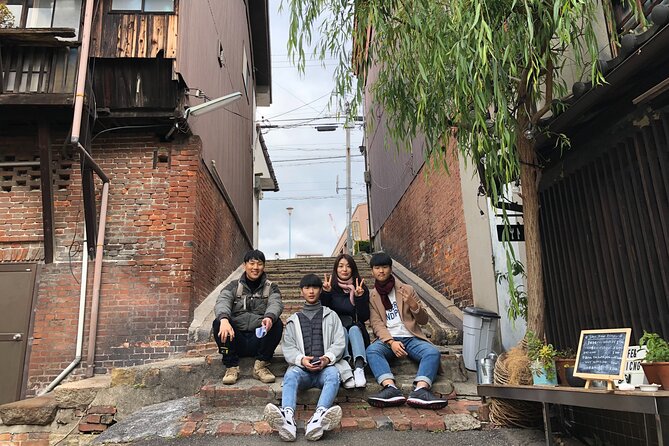
Old Osaka still whispers. This two-hour walk through Karahori offers a welcome change from Dotonbori, with old machiya houses and narrow lanes that still feel tied to everyday neighborhood life. I like the chance to see a tatami workshop and small local businesses, and I especially like the personal guidance of Chieko, whose warm, thoughtful approach earns consistent praise. The main consideration is simple: this is a walking tour, with some uphill and downhill stretches.
I also like the small group size, capped at six people, which gives you room to ask about Japanese customs, food, neighborhoods, and daily life. At $36.13 per person, the price is fair if you value context and local introductions, but less so if you want a major Osaka landmark tour or a meal included.
In This Review
- What makes this Osaka walk worth your time
- Why Karahori feels so different from Dotonbori
- A small group led by Chieko
- Inoue Seijosho and the craft of tatami
- One hour on Karahori Shopping Street
- A renovated house at クーデリーカフェ
- Maruyo-shoten and 250 years of bonito
- Chocolate at Ek Chuah
- Len and the reuse of traditional homes
- The old moat wall and a quiet café lane
- What the $36.13 price gets you
- Timing, meeting point, and walking conditions
- Who will enjoy this walk most
- Should you book the Karahori walk?
- FAQ
- How long does the Nostalgic Osaka walk last?
- Can I choose a morning or afternoon departure?
- What is the group size?
- Where does the tour start?
- Where does the tour end?
- Is food included?
- Are coffee and tea included?
- Is bottled water provided?
- Are service animals allowed?
- What happens if the tour is canceled because of bad weather?
What makes this Osaka walk worth your time
- Karahori’s old lanes: Walk through a historic neighborhood close to central Osaka, far removed from the bright signs and crowds of Dotonbori.
- A working tatami maker: See traditional floor-mat materials and the machinery used to make them at Inoue Seijosho.
- Small local shops: Browse places selling bonito, chocolate, crafts, food, and souvenirs that are not typical airport purchases.
- Osaka’s former defenses: Spot an original moat wall dating from the 15th century near a quiet café alley.
- A guide who adapts: Chieko can answer questions about ordinary life and adjust parts of the walk to your interests, including cats and local shopping.
- A manageable schedule: Choose a morning or afternoon departure, with the route lasting about two hours.
Why Karahori feels so different from Dotonbori
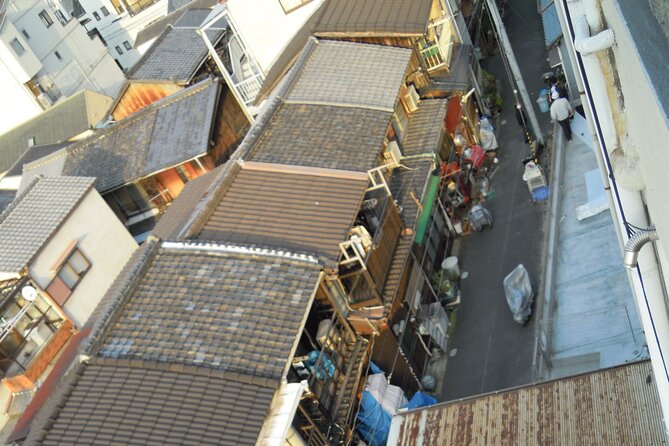
Dotonbori is Osaka turned up loud: giant signs, food stalls, bright lights, and constant movement. Karahori offers the opposite mood. Its appeal comes from ordinary streets, old homes, small shops, and the sense that people live here rather than perform Osaka for sightseers.
The neighborhood is within walking distance of central Osaka, yet it can be hard to read on your own. The lanes twist around old buildings, renovated properties, and remnants of earlier city defenses. A guide helps you notice what would otherwise look like just another residential street.
I would choose this walk early in an Osaka visit if you want local context before exploring more of the city. It gives you useful background on homes, food, crafts, and neighborhood life. It also works later in your trip, especially if you have already seen Dotonbori, Osaka Castle, and the main shopping districts.
A few more options to weigh up in Japan
- Universal Studios Japan Studio Pass
★ 4.8 · 89,883 reviews - Universal Studios Japan Express Pass
★ 4.7 · 53,138 reviews - Osaka Amazing Pass
★ 4.7 · 21,697 reviews
A small group led by Chieko
The tour allows no more than six people. That matters here. Karahori is not a grand open plaza where a large group can gather without getting in the way. Narrow lanes and residential paths call for a quiet, respectful pace.
Chieko is the named guide, and her role seems central to the experience. She has a close connection to the neighborhood and greets local shopkeepers and residents while taking care not to disturb them. That local trust adds something you cannot get from a map or a self-guided audio tour.
You can ask about Japanese culture, everyday routines, local food, and the area’s past. The walk can also respond to your interests. If you mention a fondness for cats, for example, Chieko may add cat-related details to the route. This kind of personal touch is one reason the tour feels more like a conversation than a fixed procession from one sight to the next.
Inoue Seijosho and the craft of tatami
The first stop, Inoue Seijosho, introduces one of Japan’s most recognizable traditional household items: the tatami mat. The shop master shows you the materials and the machine used to make the mats.
This is a short visit, about 10 minutes, but it gives the walk a strong start. Tatami is not merely a decorative symbol of Japan. It is part of the design and feel of traditional rooms, and seeing the production process helps connect the object to real work and local skill.
Do not expect a long demonstration or a hands-on workshop. The stop is brief and admission is free. Its value is in seeing a working specialist shop and learning a little about an object you may have encountered in temples, inns, or traditional homes.
One hour on Karahori Shopping Street
The longest part of the route is Karahori Shopping Street, where you spend about an hour. This is the heart of the walk and the place where the contrast with Dotonbori becomes clearest.
The street serves local daily life. You may see shops that sell ordinary goods rather than Osaka-themed merchandise made only for tourists. Chieko provides context as you move through the area, helping you understand how the shopping street fits into the neighborhood.
Look up and around as you walk. Karahori is known for old wooden machiya houses, some more than 100 years old. Some have been maintained, some have been adapted for new uses, and some show their age. That mixture gives the area its character. It is not a museum district polished into one perfect style.
The route also includes alleyways and quieter paths. You are asked not to disturb residents, including older people who still live along these lanes. Keep voices low, do not photograph private homes without permission, and follow the guide’s lead. This is a living neighborhood, not a stage set.
The walking can be more demanding than the two-hour duration suggests. One person specifically noted slight uphill and downhill sections. If you are comfortable walking through city streets but prefer a flat, easy route, this is worth keeping in mind.
A completely different kind of day out:
- Tokyo Disney Resort – Tokyo Disneyland & Tokyo DisneySea Park Tickets
★ 4.8 · 99,488 reviews - SHIBUYA SKY Ticket
★ 4.7 · 46,509 reviews - Mt. Fuji Instagram-Worthy Spots Day Tour: Ladder Town, Oshino Hakkai, Lake Kawaguchi, Lawson Convenience Store (Departing from Tokyo Station or Shinjuku Station)
★ 4.8 · 35,467 reviews - JR Whole Japan Rail Pass
★ 4.8 · 29,150 reviews
A renovated house at クーデリーカフェ
The stop listed as クーデリーカフェ is a small café in a renovated old house. You have around 15 minutes here, with time to look at items that differ from the usual airport or major-chain souvenirs.
The appeal is not a long café break. Coffee and tea are not included, and the tour does not include meals. Think of this stop as a chance to browse and perhaps buy something, rather than a promised tasting session.
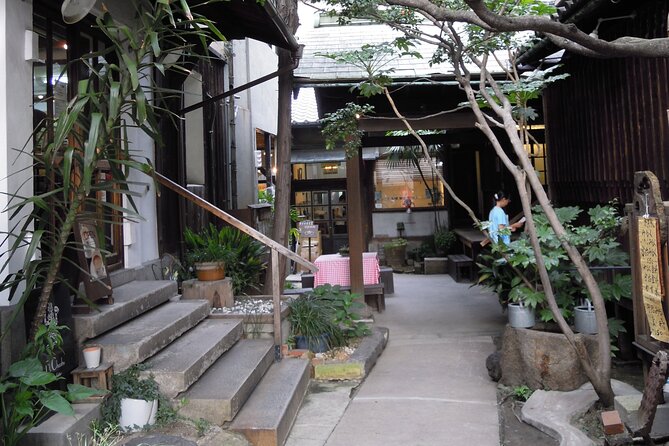
Renovated traditional homes are an important part of Karahori’s current identity. New businesses can operate inside older structures without erasing the building’s past. That balance gives you a better sense of how historic neighborhoods remain useful in modern Osaka.
Maruyo-shoten and 250 years of bonito
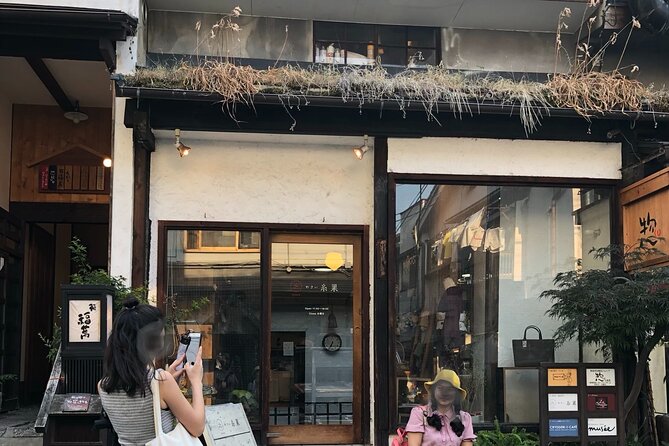
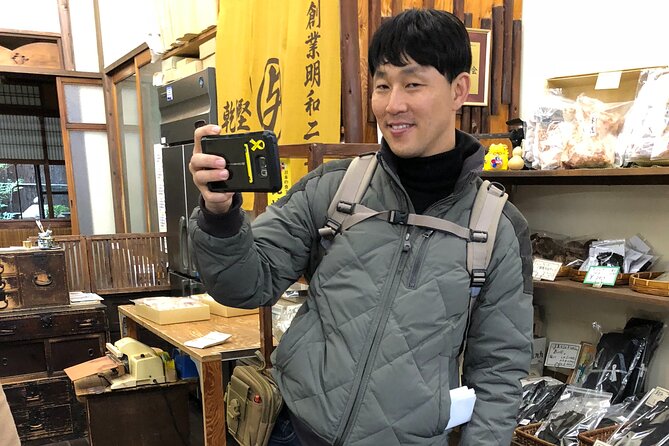
Maruyo-shoten is a bonito shop established in 1765, with more than 250 years of history. The visit lasts only about five minutes, but the subject is useful if you want to understand Japanese cooking beyond sushi and ramen.
Bonito is closely tied to dashi, the stock that forms the base of many Japanese dishes. At this shop, you can learn what authentic bonito is and how a long-running specialist business fits into local food culture.
Because the stop is short, do not expect a full cooking lesson. Its purpose is to introduce you to a traditional food shop and give you a detail to watch for during the rest of your time in Japan. You may also find something to purchase, but food shopping is optional and at your own cost.
Chocolate at Ek Chuah
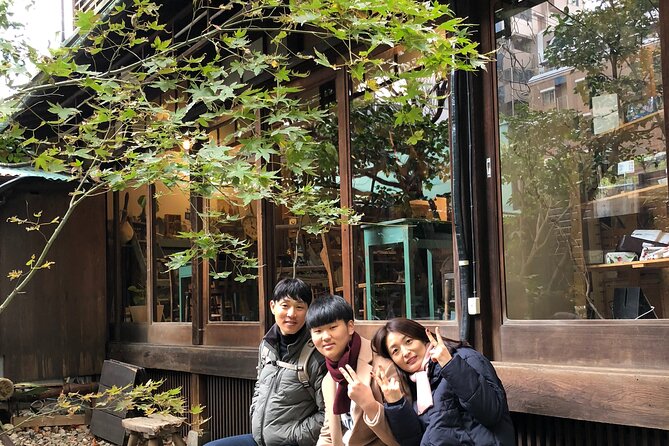
Chocolatier Ek Chuah, Karahori Kura Main Shop, adds a modern pleasure to the old neighborhood. The stop lasts about five minutes and is framed as one of Osaka’s best chocolate shops.
That pairing is part of what makes the route interesting. You move from tatami and bonito to a contemporary confectioner, all within the same historic area. Karahori is not frozen in the past. It uses old buildings and older traditions while making room for newer tastes and businesses.
The short visit is enough to look around and decide if you want to buy something. Chocolate is not included, so budget separately if you want a treat or a gift.
Len and the reuse of traditional homes
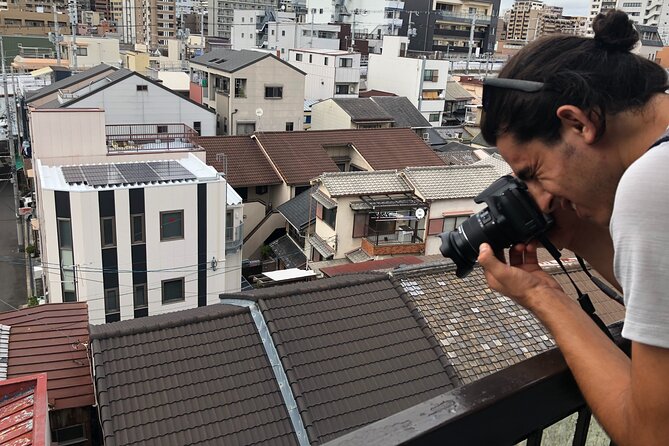
Len, the Karahori Residence Refurbished Commercial Complex, occupies a traditional house that has been converted into a group of shops. You have around 10 minutes to explore and look for unusual souvenirs.
This stop reinforces a theme running through the walk: preservation does not always mean leaving a building untouched. A machiya can become a café, shop, or small commercial space while retaining some of its original feel.
For you, the practical benefit is variety. The tour does not take you only to old structures for photographs. It shows how the buildings are being used now. If you like design, local crafts, or gifts with a stronger connection to place, this may be more rewarding than a standard souvenir store.
The old moat wall and a quiet café lane
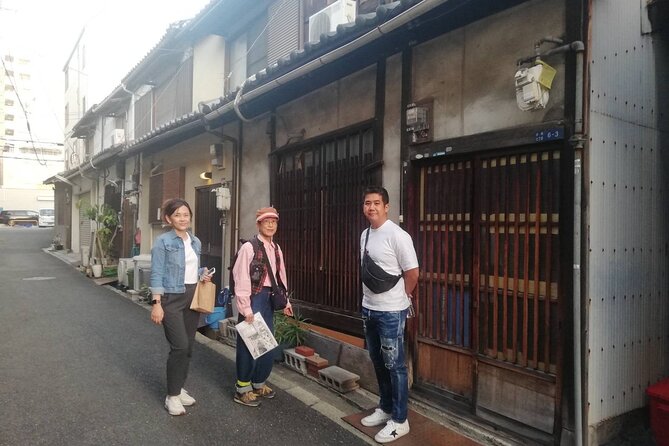
The final unnamed stop is a café hidden in an alley. Beside it, you can see part of Osaka Castle’s original moat wall, said to remain from the 15th century.
This is a fitting close to the walk. The wall is easy to overlook, especially when surrounded by modern homes and businesses, yet it connects the small lanes of Karahori to Osaka’s larger political and military past.
The café itself is not included as a meal or drink stop. You may purchase coffee, tea, or food yourself if you want them. The important part is the setting and the explanation of how the old wall survives within the neighborhood.
What the $36.13 price gets you
At $36.13 per person, this is not the cheapest way to spend two hours in Osaka. You could walk Karahori independently for less, especially if you skip purchases and refreshments.
The value comes from the interpretation. A self-guided walk may show you the same streets, but it will not necessarily explain the old houses, point out where the moat wall remains, introduce you to a tatami maker, or help you approach local shops respectfully.
The small group also improves the value. With a maximum of six people, you are more likely to hear the guide clearly and ask questions without holding up a large crowd. Bottled water is included, but meals, coffee, tea, and shopping are extra.
I would call the price reasonable for someone who values local stories and personal contact. It is less attractive for anyone looking mainly for entry tickets, food tastings, or a list of major attractions. All the listed stops are free to enter, so you are paying for the guide’s time, route planning, introductions, and local knowledge.
Timing, meeting point, and walking conditions
You can select a morning or afternoon tour. That flexibility helps you fit the walk around Osaka Castle, shopping, or a meal elsewhere in the city.
The meeting point is 6-chōme-2-24 Tanimachi, Chuo Ward, Osaka, postal code 542-0012. The activity returns to the same meeting point, which makes it easier to plan your next stop. It is near public transportation, though the supplied details do not specify a particular station or walking time from one.
The duration is approximately two hours. Arrive early. If you are more than 15 minutes late, you cannot join, since the tour is designed around the group’s schedule and the guide’s responsibility to other participants.
Most people can take part, and service animals are allowed. Still, plan for steady walking, narrow lanes, and some slight slopes. Wear comfortable shoes. Bring extra money if you want to buy food, drinks, chocolate, or souvenirs.
The tour requires good weather. If poor weather causes cancellation, you are offered another date or a full refund. Free cancellation is available up to 24 hours before the start time. A minimum number of participants is also required, and a cancellation for that reason brings an alternative date or experience, or a full refund.
Who will enjoy this walk most
I would recommend it to you if you have already seen Osaka’s headline sights or want a quieter first look at the city. It suits people interested in local architecture, food traditions, crafts, small shops, and conversations about ordinary life.
It is also a good fit for repeat visitors. The route offers details that are easy to miss if you simply choose a neighborhood and wander without context. Families and couples who enjoy browsing can make good use of the shopping stops, while curious solo visitors may appreciate having a local person to answer questions.
I would think twice if you want a food tour with included tastings. The route introduces food shops, but you buy anything you eat or drink. I would also choose another activity if long walks or uneven terrain are a concern, or if your main goal is Osaka Castle’s central sights rather than the surrounding historic traces.
Should you book the Karahori walk?
Book it if your idea of a good Osaka morning or afternoon includes old homes, small businesses, and a guide who can explain the city at street level. The strongest parts are the tatami workshop, the hour on Karahori Shopping Street, the renovated machiya buildings, and the chance to see the old moat wall in an ordinary neighborhood setting.
Skip it if you want a fast checklist of famous landmarks, a full meal, or included tastings. For everyone else, this is a thoughtful way to see Osaka beyond Dotonbori, especially with Chieko guiding a small group through a place she clearly cares about.
FAQ
How long does the Nostalgic Osaka walk last?
The tour lasts approximately two hours.
Can I choose a morning or afternoon departure?
Yes. The experience offers both morning and afternoon tour options.
What is the group size?
The tour has a maximum of six participants.
Where does the tour start?
It begins at 6-chōme-2-24 Tanimachi, Chuo Ward, Osaka, 542-0012, Japan.
Where does the tour end?
The activity ends back at the meeting point.
Is food included?
No. Meals are not included. You can buy food from local shops or cafés at your own expense.
Are coffee and tea included?
No. Coffee and tea must be purchased separately if you want them.
Is bottled water provided?
Yes. Bottled water is included.
Are service animals allowed?
Yes. Service animals are allowed.
What happens if the tour is canceled because of bad weather?
You will be offered a different date or a full refund. Free cancellation is also available when you cancel at least 24 hours before the start time.
Just added in Japan
- A One-of-a-Kind Sushi Experience in a Special Place of Japan★ 5.0 · 15 reviews
- Tokyo Cute Bento Cooking Class – Make a Kawaii Character Lunchbox★ 5.0 · 126 reviews
- Japanese Home Cooking Class & Walk in Todoroki Temple Tokyo★ 5.0 · 88 reviews
- Japan Tokyo Tower Observatory Deck E-Ticket★ 4.0 · 34 reviews
- Catch a Baseball Game in Tokyo with a Local – Tickets Included★ 5.0 · 24 reviews
- Tokyo Private Day Tour by Car with English speaking Driver Guide★ 4.0 · 29 reviews
- Japan Classic 10 Day – One Life Adventures★ 5.0 · 129 reviews
- JDM Experience with Fast&Furious RX-7 (English speaking Driver)★ 5.0 · 57 reviews
Osaka Tours, compared.



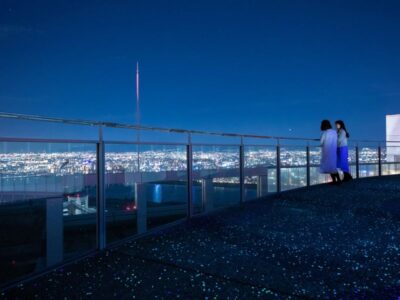
Umeda Sky Building & Kuchu Teien Observatory Ticket in Osaka
Read our review →