
Reviewed · CASTLES AND HISTORIC SITES
Ultimate Osaka Walking Tour: Castle, Dotonbori & Hidden Gems
Osaka reveals itself one street at a time. This full-day walk links Osaka Castle, Dotonbori, Kuromon Market, and Shinsekai with smaller corners that are easy to miss on your own. I like the strong mix of history and everyday city life, and I like that guides such as Tim, Kenzo, Scott, Adam, and Daniel add stories about food, culture, and modern Japan rather than simply pointing at buildings. The main catch is simple: this is a real walking day, often around 5 miles or 15,000 steps, and Osaka Castle’s interior is not included.
The small group limit of 11 people keeps the outing more personal than a giant coach tour. You also get Osaka-style street food and a drink at a local restaurant, plus plenty of time to ask questions. The two short train rides help cover more ground, but their fares, ¥240 and ¥190, are extra.
In This Review
- The Osaka experience in one long, useful day
- Starting with Osaka Castle and the samurai era
- Amemura, where Osaka gets young and cheeky
- Shinsaibashi-suji and 400 years of shopping
- Dotonbori, neon, food, and Osaka’s loud personality
- Hozenji Yokocho and a quiet corner near the canal
- Kuromon Market, Osaka’s Kitchen
- Shinsekai and Osaka’s retro side
- What the guides add to the walk
- The walking effort, timing, and comfort
- Is $73.29 good value?
- Who should book this Osaka walk?
- FAQ
- How long does the Osaka walking tour last?
- Does the tour enter Osaka Castle?
- Is lunch included?
- Can the lunch accommodate vegan or gluten-free diets?
- How much walking is involved?
- Are train fares included?
- Is hotel pickup available?
- What happens if bad weather cancels the tour?
- Should you book it?
The Osaka experience in one long, useful day
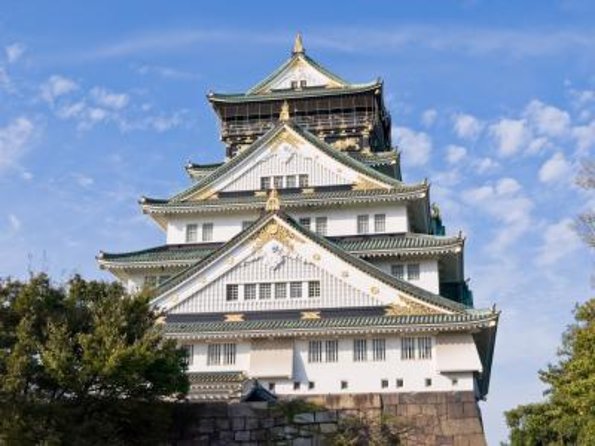
- Osaka Castle is viewed from outside, with about 90 minutes for history, grounds, and photographs.
- Amemura and Shinsaibashi show Osaka’s youth culture and its long-running shopping tradition.
- Dotonbori and Hozenji Yokocho contrast neon entertainment with a quiet old alley and temple.
- Kuromon Market, known as Osaka’s Kitchen, brings seafood, produce, and local food culture into the day.
- Shinsekai finishes the route with retro streets and the familiar Tsutenkaku Tower area.
- Guides are a major strength, especially for history, local customs, food, and practical Osaka advice.
Starting with Osaka Castle and the samurai era
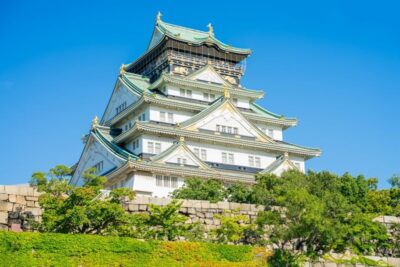
The tour begins at Ōsakajōkōen Station, at 3 Osakajo in Chuo Ward. That is a useful starting point because Osaka Castle gives you a sense of the city’s scale before the route moves into dense downtown streets.
You spend roughly 90 minutes around the castle area. The castle played an important part in Japan’s unification during the sixteenth-century samurai period, so this is where the tour’s historical thread begins. Guides have been especially praised for explaining the castle and its place in Japanese history, with Daniel and Adam singled out for their strong storytelling and photo guidance.
There is one important limitation: you do not enter Osaka Castle. The admission ticket is not included, and the scheduled time is for the outside area. If going inside the castle museum is high on your list, you will need to arrange that separately, perhaps on another day.
For many people, this is a fair trade. The tour is trying to connect several parts of Osaka in one day, not spend half the schedule inside a single attraction. Still, you should know what you are buying. You get context, exterior views, and photographs, not an interior castle visit.
More Castles and Historic Sites in Osaka
- Osaka Castle Ticket
★ 4.7 · 12,450 reviews - Osaka Castle: Museum and Tower Entry Ticket
★ 4.5 · 2,380 reviews - Osaka Castle Walking Tour and Castle Tower Admission
★ 5.0 · 561 reviews
Amemura, where Osaka gets young and cheeky
From the castle district, the route moves toward central Osaka, using two short train rides during the day. Train fares are not included, so budget ¥430 in total for those rides. The trains are practical rather than scenic, but they save your legs and allow the walk to cover several distinct districts.
Amerika-mura, usually shortened to Amemura, is a compact area of narrow streets tied to Osaka’s youth culture. Shops here cater to urban clothing and hip-hop style, giving you a different picture of the city from the traditional temple and castle scenes.
This stop lasts about 30 minutes. That is enough for an introduction and a look around, but not enough for serious shopping. I see Amemura as a useful cultural pause. It shows how Osaka absorbs outside influences and reshapes them in its own style.
Do not expect a quiet, carefully preserved quarter. The appeal is the mix of street fashion, local youth culture, and compact lanes. If you like fashion, music, and modern city life, this section may be one of the most revealing parts of the route.
Shinsaibashi-suji and 400 years of shopping
Next comes Shinsaibashi-suji Shopping Street, a covered commercial arcade stretching about 600 metres. Osaka has used this area as a major shopping district for roughly 400 years, and the arcade gives you a clear look at the city’s love of retail.
The stop lasts around 30 minutes. You will walk beneath the covered roof past hundreds of shops, making this a good part of the tour in rainy weather. It also offers a break from the open streets and a chance to see how traditional Japanese shopping habits continue in a modern setting.
This is not a museum stop, and it is not designed for browsing every store. The value comes from walking through the area with a guide who can explain the district’s place in Osaka life. If you want time to shop, ask your guide for suggestions, then return independently after the tour.
Dotonbori, neon, food, and Osaka’s loud personality
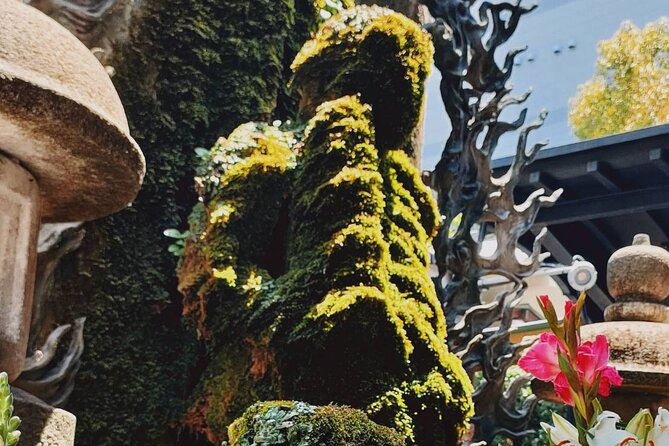
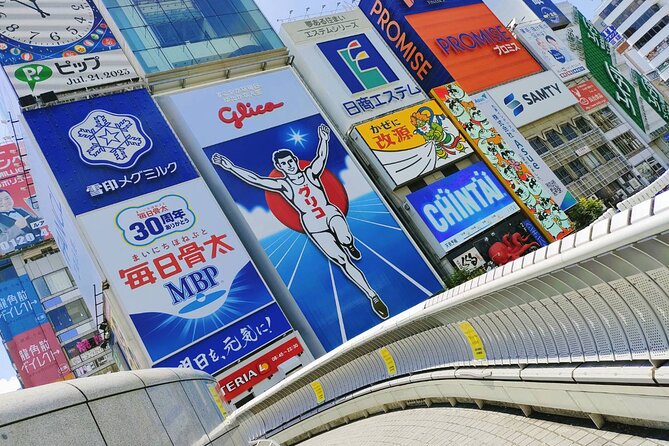
Dotonbori is the city’s most famous entertainment district, running beside the Dotonbori canal. Its neon signs, restaurants, nightlife, and street food make it an obvious Osaka highlight, but the guided walk helps you see more than the usual photo stop.
You get about 30 minutes here. That is enough to take in the canal area, see the famous signs, and understand why Dotonbori attracts so much attention. It is not enough for a long restaurant meal or a relaxed evening crawl, so think of this as an introduction.
The tour’s food focus fits Dotonbori well. Osaka is known for casual food eaten in the street or at informal local places, and the experience includes a complimentary lunch of Osaka-style street food with a drink at a local restaurant. The exact food selection is not specified, so you should expect a local-style meal rather than a fixed list of dishes.
Lunch is an important part of the value here. A guide can explain what you are eating and how it fits into Osaka’s food culture, which is more useful than simply grabbing a snack without context. The tour cannot cater to vegan or gluten-free diets at lunch, so that restriction matters when deciding.
More Walking Tours in Osaka
- Osaka: Hotspots & Hidden Gems Walking Tour Private or Group
★ 4.9 · 1,300 reviews - Osaka Local Foodie Walking Tour in Dotonbori and Shinsekai
★ 5.0 · 985 reviews - Osaka Bar Hopping Night Walking Tour in Namba (3 bars, 6 tastes)
★ 5.0 · 958 reviews - Osaka: Deep Backstreets Walking Tour with Dinner Option
★ 4.9 · 902 reviews
Hozenji Yokocho and a quiet corner near the canal

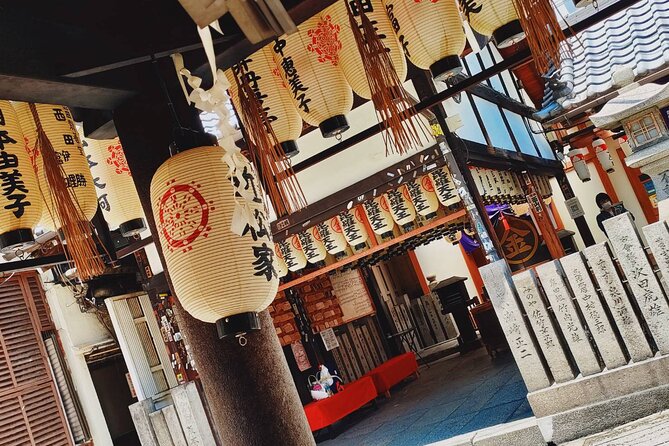
Just off Dotonbori, Hozenji Yokocho feels like a sharp change of pace. This narrow alley has cobblestone paths and traditional lanterns, preserving an older atmosphere in the middle of one of Osaka’s busiest entertainment districts.
The scheduled time is about 30 minutes. That gives you room to slow down, take photographs, and notice the contrast between the polished commercial streets and this intimate passageway.
Nearby Hozen-ji Temple is a small Buddhist temple built in the seventeenth century. It is dedicated to Fudo Myoo, one of Buddhism’s five wisdom kings. The temple is modest in size, but that is part of its charm. You are not being asked to admire a huge monument. You are seeing how a small place of worship remains part of daily city life.
This section is one of the best examples of the tour’s purpose. Osaka is not only castle walls, neon, and shopping arcades. It is also quiet lanes, small temples, and older traditions folded into the modern city.
Kuromon Market, Osaka’s Kitchen
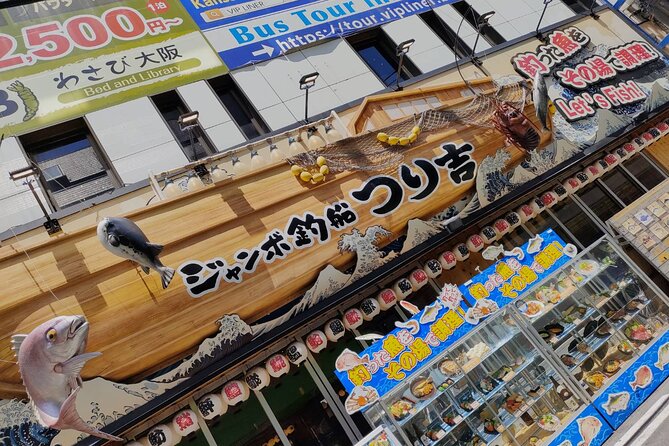
Kuromon Market has operated for more than 200 years and is often called Osaka’s Kitchen. The covered market is known for fresh seafood and other food stalls, making it a natural place to connect the city’s history with its appetite.
The planned stop is about 30 minutes, though the available schedule depends on the tour format. Kuromon Market is listed for day and private tours, so group participants should confirm that this stop is included in their selected option.
Thirty minutes gives you a taste of the market, not a full food tour. You can look at the produce and seafood displays, ask questions, and sample what is available within the tour’s lunch arrangement. It is also a good place to ask your guide how to choose food in Osaka and what local specialties are worth seeking later.
Adam received particular praise for taking care with food allergies on a private outing. That does not change the stated restriction that vegan and gluten-free meals cannot be catered for at lunch, but it suggests that you should explain any allergy clearly before the day begins and confirm what can be managed.
Shinsekai and Osaka’s retro side
The final major district is Shinsekai, developed before the Second World War and centered around Tsutenkaku Tower. The area is known for its nostalgic atmosphere and neon signs, giving the tour a final change of mood.
You spend about 30 minutes here. Shinsekai is not presented as a polished historic quarter. Its appeal is the older entertainment-district feeling and the way it reflects a different chapter of Osaka’s development.
Ending here works well. Osaka Castle begins the day with national history and samurai politics. Shinsekai finishes with popular culture, food, and the everyday city. Between them, you see Osaka as both an important Japanese city and a place with a strong local personality.
What the guides add to the walk
The strongest part of this experience is the guiding. Tim is repeatedly praised for explaining Japanese and Osaka history while also discussing food, culture, daily life, and life as a foreign resident in Japan. Kenzo is noted for his warmth, humor, patience, and clear passion for Osaka. Scott brings broad knowledge of Japanese society and current life, while Adam is valued on private tours for flexibility, humor, history, food advice, and photo stops.
That range matters because this route includes many short stops. Without explanation, you would see a castle, a shopping street, a canal, a market, and a tower district. With a good guide, the connections become clearer.
The experience is offered as either a private personalized tour or a group tour. Private tours allow more control over pace and questions. One private guest described Adam adjusting the walking speed and helping with photographs. Group tours can be a comfortable choice for solo visitors, and the maximum of 11 people is small enough for conversation without making the route feel crowded.
Guide assignment is not guaranteed, so do not book solely to secure one particular person. The consistent praise across several guides suggests that the company’s main strength is its guiding team rather than one individual.
The walking effort, timing, and comfort
You can choose a five-, six-, or seven-hour version. The route is mainly on foot, with two short train rides. Several people described the day as roughly 5 miles or about 15,000 steps, though the pace is often described as comfortable and leisurely.
That combination is worth taking seriously. You do not need to race, but you do need comfortable shoes. There are plenty of sights along the way, which makes the distance feel less demanding, yet this is not a gentle stroll from one nearby attraction to the next.
A moderate level of fitness is required. Osaka summers can be hot, and wet weather may affect the experience because the tour requires good weather. If poor weather forces cancellation, you are offered another date or a full refund.
Pickup is offered for some arrangements, but hotel pickup is not offered for group tours. Check the exact option before booking. The published meeting point is Ōsakajōkōen Station, and the tour ends in a different location, which is useful because the route moves across Osaka rather than returning to the castle.
Is $73.29 good value?
At $73.29 per person, the price is reasonable if you want a structured introduction to several Osaka districts in one day. You receive a guide, lunch with a drink, a route linking major sights, two short train rides, and local context that would take time to assemble yourself.
The two train fares, ¥240 and ¥190, are extra, and attraction admission is not included. Since you do not enter Osaka Castle, the price is not paying for a bundle of entrance tickets. It is paying mainly for the guide’s time, route planning, food, and interpretation.
For a first visit, I think the value is strongest when you have only a day or two in Osaka. You can get your bearings, learn which districts deserve a return visit, and collect food and transport advice. If you prefer slow museum visits or long meals, the fixed route may feel too busy.
The group discount option can help families or friends. A private tour costs more than the listed per-person group price, but the extra flexibility may suit families, photographers, or anyone with specific food and mobility needs. The public rating is 5 out of 5 from 862 ratings, with 100 percent recommending it, which supports the idea that the guiding is the main reason people find the price worthwhile.
Who should book this Osaka walk?
I would choose this tour if you want a broad first look at Osaka and enjoy learning while walking. It suits solo visitors who want company, families with older children, couples who want local orientation, and anyone who prefers districts and daily culture over a list of indoor attractions.
It is also a good fit for people who like food but want more than a dedicated food crawl. You get market culture, street food, shopping areas, temples, history, and modern neighborhoods in one route.
I would hesitate if you have difficulty walking several miles, need a vegan or gluten-free lunch, or want to spend substantial time inside Osaka Castle. You should also avoid booking it as your main plan if you need a fully accessible route, since the activity requires moderate physical fitness and includes narrow streets and train transfers.
Cancellation is free up to 24 hours before the start time. Changes or cancellations inside that window are not accepted for a refund.
FAQ
How long does the Osaka walking tour last?
You can choose a five-hour, six-hour, or seven-hour version. The approximate duration is five to seven hours.
Does the tour enter Osaka Castle?
No. The tour visits the Osaka Castle area from outside, and admission to the castle is not included.
Is lunch included?
Yes. The tour includes Osaka-style street food with a drink at a local restaurant.
Can the lunch accommodate vegan or gluten-free diets?
No. The stated lunch arrangement cannot cater to vegan or gluten-free diets.
How much walking is involved?
The tour is mainly on foot and requires a moderate level of physical fitness. The route may involve roughly 5 miles or about 15,000 steps.
Are train fares included?
No. Two short train rides are required, with fares listed as ¥240 and ¥190.
Is hotel pickup available?
Pickup is offered, but hotel pickup is not available for group tours. Check the selected tour option for exact meeting details.
What happens if bad weather cancels the tour?
You will be offered a different date or a full refund if poor weather causes cancellation. You may cancel for a full refund up to 24 hours before the start time.
Should you book it?
Book this tour if you want Osaka explained as a living city, not just a series of famous stops. The castle, market, canal, temple, shopping arcade, youth district, and Shinsekai each show a different side of town, while the guides add the history and food knowledge that hold the day together.
Just bring good shoes, budget for the two train fares, and remember that Osaka Castle is an exterior stop. For a first Osaka visit, especially one limited to two days, this is a strong way to get oriented and find the places you will want to explore more slowly later.
More Castles and Historic Sites in Japan
- Tokyo: Samurai Restaurant Show Ticket with 2 Drinks
★ 4.5 · 1,307 reviews - Kyoto Samurai Experience
★ 5.0 · 1,294 reviews - Tokyo Castle & Imperial PalaceーShogun Walking Tour
★ 4.7 · 1,068 reviews - Kyoto: Nijo-jo Castle and Ninomaru Palace Guided Tour
★ 4.7 · 1,020 reviews
More Walking Tours in Japan
- Kyoto Geisha Walking Tour: Gion District & Hidden Gems
★ 4.7 · 3,273 reviews - Tokyo Tsukiji Fish Market Food and Culture Walking Tour
★ 5.0 · 3,184 reviews - Kyoto: Gion Magical Night Walking Tour with Geisha Trivia
★ 4.9 · 2,393 reviews - Tokyo: Imperial Palace and Shogun Historical Walking Tour
★ 5.0 · 2,251 reviews
Just added in Japan
- A One-of-a-Kind Sushi Experience in a Special Place of Japan★ 5.0 · 15 reviews
- Tokyo Cute Bento Cooking Class – Make a Kawaii Character Lunchbox★ 5.0 · 126 reviews
- Japanese Home Cooking Class & Walk in Todoroki Temple Tokyo★ 5.0 · 88 reviews
- Japan Tokyo Tower Observatory Deck E-Ticket★ 4.0 · 34 reviews
- Catch a Baseball Game in Tokyo with a Local – Tickets Included★ 5.0 · 24 reviews
- JDM Experience with Fast&Furious RX-7 (English speaking Driver)★ 5.0 · 57 reviews
- Tokyo Private Day Tour by Car with English speaking Driver Guide★ 4.0 · 29 reviews
- Japan Classic 10 Day – One Life Adventures★ 5.0 · 129 reviews
Castles and Historic Sites, compared.
Imperial Palace and Shogun Historical Walking Tour
Read our review →
Tokyo Castle & Imperial PalaceーShogun Walking Tour
Read our review →
Nijo-jo Castle and Ninomaru Palace Guided Tour
Read our review →
Samurai Ninja Museum Guided tour and Experience
Read our review →Browse the lists this tour appears in