
Reviewed · GO-KARTS
Official Street Go Kart Tour Akihabara 2nd
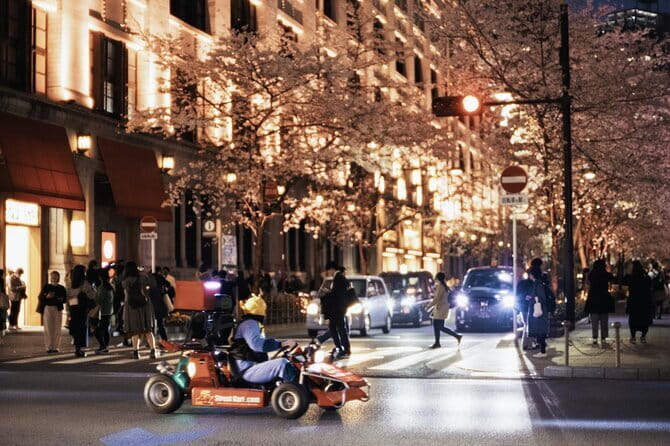
Tokyo traffic becomes your front-row seat. This go-kart tour takes you onto public roads through Tokyo in a character costume, with a guide leading the way. I like the cheerful guides, especially Sam, Khan, Julian, Mads, and Billy, who are praised for clear instructions, steady pacing, safety checks, and taking plenty of photos. I also like the route, which links Tokyo Station, Akihabara, the Imperial Palace area, Harajuku, and Shibuya Crossing in one lively ride.
The catch is simple: you are driving in real Tokyo traffic, not on a closed track. You must bring the right International Driving Permit, a physical passport, and suitable clothes. The activity is exciting, but it is not a relaxed sightseeing bus ride, and you may spend part of the tour concentrating more on the road than on the sights.
In This Review
- Key points at a glance
- What this Tokyo kart ride really feels like
- The rules you need before booking
- Starting in Akihabara, Tokyo’s game district
- Tokyo Station and its red-brick landmark
- Around the Imperial Palace area
- Harajuku and the Takeshita Street entrance
- Crossing Shibuya at street level
- Why the guide matters so much
- Cost, timing, and what you receive
- Who will enjoy it most
- Final verdict: should you book it?
- FAQ
- How long does the Official Street Go Kart Tour Akihabara 2nd last?
- Where does the tour start?
- Where does the tour finish?
- What areas does the route include?
- Can I drive inside the Imperial Palace?
- Do I need an International Driving Permit?
- What documents do drivers from Switzerland, Germany, France, Taiwan, Belgium, or Monaco need?
- Can children or non-drivers ride as passengers?
- Are Mario or Nintendo costumes available?
- What is included in the price?
Key points at a glance
- Drive through five famous Tokyo areas: The route includes Tokyo Station, Akihabara, the Imperial Palace area, Harajuku, and Shibuya Crossing.
- A guide leads the group: Staff such as Sam, Khan, Julian, and Mads are praised for clear instructions, photos, and careful attention to the group.
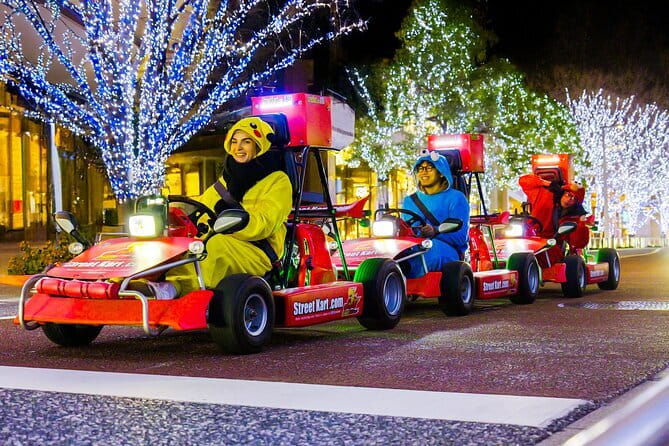
- Costumes are included: You can choose from permitted comic, game, and anime-style outfits, but Mario and Nintendo-related costumes are not allowed.
- Bring the correct documents: Most participants need a 1949 Geneva Convention International Driving Permit, plus a physical passport.
- Small groups help: The maximum group size is six, so the guide can keep watch over each driver.
- The best timing depends on you: Morning rides may have clearer roads, while evening rides offer more city lights and pedestrians.
What this Tokyo kart ride really feels like
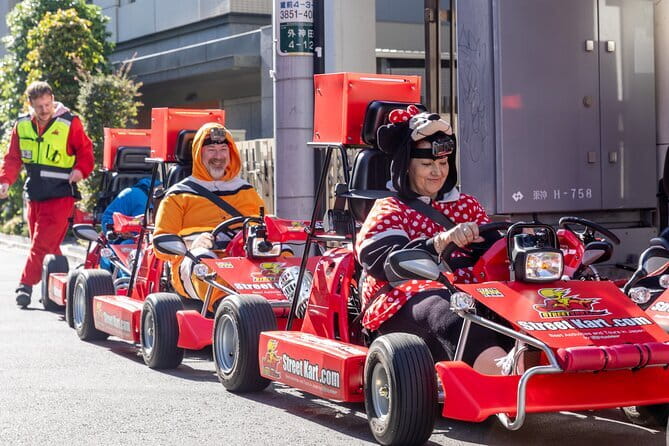
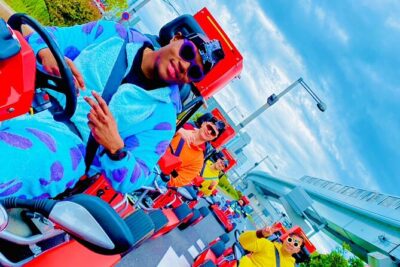
This is not a race, and it is not a theme-park attraction. You drive a single-seat kart on Tokyo streets while following a professional guide in another kart. The fun comes from being part of the city scene, wearing a playful costume, waving to people, and seeing familiar districts from street level.
The route lasts about one hour and 40 minutes to two hours. That is long enough to feel like a proper outing, but short enough to fit into a busy Tokyo schedule. Since the tour begins and ends at the Akihabara 2nd location, you do not need to arrange a separate return ride.
I would set aside extra time before the start for check-in, paperwork, and choosing a costume. The meeting point is STREET KART Akiba 2nd at 4-chome 16, Kanda Sakumacho, in Chiyoda City. It is near public transportation, which makes it practical to reach from other parts of Tokyo.
The small group size is useful. With no more than six people, the guide can keep checking behind and make sure nobody falls too far back. That matters more here than it would on a normal walking tour because traffic, signals, turns, and lane changes all require attention.
A few more options to weigh up in Tokyo
- Tokyo Disney Resort – Tokyo Disneyland & Tokyo DisneySea Park Tickets
★ 4.8 · 99,488 reviews - SHIBUYA SKY Ticket
★ 4.7 · 46,509 reviews - JR Whole Japan Rail Pass
★ 4.8 · 29,150 reviews
The rules you need before booking
The driving permit requirement is the most important part of this experience. A normal home-country driving license is not enough for most participants.
You need a physical International Driving Permit issued under the 1949 Geneva Convention by a government-authorized association. You must also carry your physical passport. Digital copies are not described as acceptable, so do not rely on a phone image.
There are special rules for certain license-issuing countries. If your license comes from Switzerland, Germany, France, Taiwan, Belgium, or Monaco, you need a Japanese translation issued by the Japan Automobile Federation, known as JAF. Bring both your physical domestic license and the official translation.
Licenses from countries not covered by the 1949 Geneva Convention are not permitted for driving in Japan. The provided examples include China, Indonesia, Mexico, Qatar, and Saudi Arabia. Check your situation before paying, because arriving without the correct paperwork could end the experience before it begins.
All drivers must be at least 18 years old. The karts are single-seaters, so children and non-drivers cannot ride along as passengers. Every person taking part must drive and must hold documentation valid for driving in Japan.
You also need closed footwear. Skirts and long dresses are not advised, a sensible rule for climbing into and operating a small open kart. Tell the operator in advance about any hearing or mobility impairment.
Starting in Akihabara, Tokyo’s game district
The starting point in Akihabara puts you in the right mood straight away. This is Tokyo’s famous anime and game district, packed with shops, signs, electronics, arcades, and pop-culture references. You do not need to plan a separate Akihabara visit around the tour because the ride takes you through the area itself.
Driving here offers a different view from walking the main streets. You see the district as part of Tokyo’s wider traffic system, with the guide setting the pace and keeping the group together. At the same time, you should not expect to stop for shopping or spend time inside the arcades. The attraction is the moving street view, not a detailed tour of the shops.
This is also where the costume idea makes the most sense. A comic or anime-style outfit turns a normal city drive into something playful and highly visible. People may smile, wave, or take notice, which adds to the feeling of being part of a moving street show.
The costumes are subject to copyright restrictions. Mario and Nintendo-themed clothing, along with items suggesting those characters, are not permitted. If you have your heart set on a specific Nintendo outfit, this is not the activity to book for that reason.
Tokyo Station and its red-brick landmark
The route includes Tokyo Central Railway Station, giving you a look at the restored Marunouchi station building. Its red-brick façade is one of Tokyo’s most recognizable architectural sights, and it provides a strong contrast to Akihabara’s pop-culture energy.
You will see the station from the road rather than enter it. The stop is listed as free admission because the tour passes the public exterior. This is a quick visual highlight, not a station history lesson or an indoor architectural visit.
That distinction matters. If you want time to admire the building, take detailed photographs, or explore the station’s many shops and food areas, plan a separate visit. The kart ride gives you a passing view while keeping the larger route moving.
Still, the contrast between the old-style red-brick façade and the modern city traffic is part of the appeal. You get a quick look at a major Tokyo landmark without giving up the main purpose of the outing, which is driving through the city.
A completely different kind of day out:
- Mt Fuji and Hakone 1-Day Bus Tour Return by Bullet Train
★ 5.0 · 26,383 reviews - TOKYO SKYTREE® Ticket
★ 4.7 · 25,136 reviews - teamLab Borderless Tickets: MORI Building DIGITAL ART MUSEUM
★ 4.7 · 24,126 reviews - teamLab Planets TOKYO Ticket
★ 4.7 · 21,663 reviews
Around the Imperial Palace area
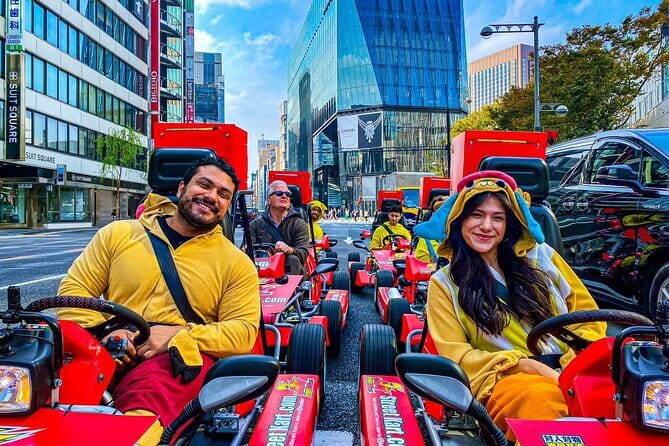
The tour drives around the Imperial Palace area, but you will not drive inside the palace grounds. This is worth understanding before you book, since the wording can otherwise create the wrong expectation.
The palace area gives the route a calmer, more formal change of scene after Akihabara. You pass around the area from the public roads, seeing the surroundings as part of central Tokyo rather than joining a palace tour. There is no admission charge listed for this part of the activity.
As with Tokyo Station, the view is brief and road-based. You will not have time for a garden visit, a palace interior, or a long photo stop. I would treat this section as a scenic link between the more theatrical parts of the route.
Harajuku and the Takeshita Street entrance
Harajuku brings fashion and youth culture into the mix. The route passes the entrance arch to Takeshita Street, a well-known shopping street whose arch changes design during the year.
That changing entrance gives repeat visitors something different to see, though the ride cannot guarantee a particular design. You pass through the area rather than stop for shopping, so the tour works best as an overview.
Harajuku can be crowded, and the guide’s pace may feel deliberate here. That is a good thing. You are still operating a vehicle on public roads, and keeping the group together matters more than squeezing in a few extra seconds near a shop entrance.
If you want Takeshita Street’s stores, cafés, and fashion shops, come back on foot. The kart route gives you a quick look at the district and the crowd reaction, not a replacement for exploring the street.
Crossing Shibuya at street level
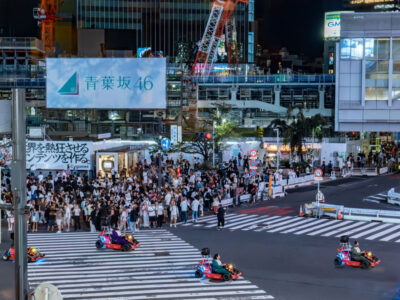
The most dramatic section is the drive through Shibuya Crossing, the famous scramble intersection. Few Tokyo experiences put you in such a visible position. You are not watching the crossing from a café window or a pavement corner. You are moving through it in a small kart, following your guide.
This is also the section where concentration matters most. One person described focusing more on safety than on the sights, which is an honest way to think about the activity. You may enjoy the lights, crowds, and waves, but you still need to watch the road and follow instructions.
The crossing is not a guaranteed photo stop. It is a live traffic junction, so the experience depends on traffic conditions and the movement of the group. That uncertainty is part of what makes it exciting, but it also means you should not expect a perfectly timed social-media photograph.
Even so, this is likely to be the moment you remember most. The costumes, the famous intersection, and the guide-led formation create a scene that feels very different from standard sightseeing.
Why the guide matters so much
The guide is not just there to point out sights. The guide leads the group, sets the pace, gives instructions, checks behind, and helps you feel comfortable on the road.
Sam is repeatedly praised for clear explanations, good conversation, careful pacing, and taking photographs. Khan is praised for checking on everyone and helping drivers feel confident. Mads is described as friendly and reassuring, while Julian and Billy also receive warm praise for making the ride enjoyable.
Those details tell you what to value. A good guide can make the difference between nervous fun and plain nerves. The activity takes place in real traffic, so a calm leader who keeps the group together is more important than a guide delivering a long lecture about each neighborhood.
Photography is another useful part of the service. Guides may take many pictures during the outing, and one experience included a printed picture at the end plus a link to additional photos. You should not treat every image service as guaranteed in exactly the same form, but the staff clearly place value on recording the experience.
An action-camera rental is not included. Camera, mount, and SD card rental cost extra if available. Ask about that option before the ride if a first-person video is important to you.
Cost, timing, and what you receive
The listed price is $62.40 per person. For Tokyo, that is a fair price if you want the unusual part of the experience: driving a kart through several central districts with a guide and costume included.
Your fee covers the kart rental, costume rental, lead guide, and fuel surcharge. It does not cover hotel transfers, food, drinks, or action-camera equipment. Full coverage insurance is also extra at ¥1,000 per person.
I see the price as reasonable for a special-occasion activity, not as a cheap way to see Tokyo’s major sights. A train or walking route will show you more detail for less money. This tour earns its price through the novelty, the public-road driving, the costume, the guide support, and the photographs.
You can choose your timing carefully. Morning rides may have clearer roads and fewer pedestrians, which can help you focus on driving. Evening rides bring city lights, a more animated atmosphere, and more people around to wave at you.
Neither choice is automatically better. Pick morning if you feel nervous, want a quieter ride, or prefer to concentrate. Pick evening if the visual drama of Tokyo after dark matters most to you.
The activity needs good weather. If poor weather causes a cancellation, you are offered a different date or a full refund. You can cancel for a full refund up to 24 hours before the start time, but changes or cancellations inside that window are not accepted.
Who will enjoy it most
I would recommend this to adults who want a playful, unusual way to see Tokyo and who are comfortable following road instructions. It suits friends, couples, and solo participants. One solo morning outing was described as a good experience with clear roads and a steady pace.
It also suits people who enjoy being noticed. You may get smiles and waves from children and people along the route, and the costume adds to that public, social feel. If you dislike attention, costumes, or operating a vehicle in city traffic, the activity may feel more stressful than fun.
This is not the right choice for a family with young children because the karts are single-seaters and all participants must be at least 18. It is also not suitable for anyone who cannot obtain the required Japanese driving documents.
I would not book it as your only Tokyo sightseeing activity. You will pass important places, but you will not stop long enough to explore them. Pair it with walking, trains, museums, or neighborhood visits so you get both the broad city view and the details.
Final verdict: should you book it?
Book this tour if you want an energetic Tokyo memory rather than a conventional city tour. The strongest reasons are the small group, attentive guides, permitted costumes, public-road route, and the chance to pass Shibuya Crossing in your own kart.
Before booking, confirm your license documents, wear closed shoes, skip long skirts, and decide if you prefer quiet morning roads or brighter evening scenery. If you can manage the paperwork and accept that safety comes before sightseeing, this is a distinctive two-hour addition to a Tokyo trip. If you want deep landmark visits or a calm ride, choose a walking tour instead.
FAQ
How long does the Official Street Go Kart Tour Akihabara 2nd last?
The activity lasts approximately one hour and 40 minutes to two hours.
Where does the tour start?
It starts at STREET KART Akiba 2nd, Japan, 101-0025 Tokyo, Chiyoda City, Kanda Sakumacho, 4-chome 16, 1F.
Where does the tour finish?
The activity ends back at the same meeting point.
What areas does the route include?
The route includes Tokyo Central Railway Station, Akihabara, the area around the Imperial Palace, Harajuku, and Shibuya Crossing.
Can I drive inside the Imperial Palace?
No. You drive around the palace area, but you do not drive inside the palace.
Do I need an International Driving Permit?
Yes. Most participants need a physical International Driving Permit issued under the 1949 Geneva Convention by a government-authorized association. You must also carry a physical passport.
What documents do drivers from Switzerland, Germany, France, Taiwan, Belgium, or Monaco need?
Drivers from those countries need a Japanese translation of their license issued by the Japan Automobile Federation, along with their physical domestic license and physical passport.
Can children or non-drivers ride as passengers?
No. The karts are single-seaters. Every participant must be at least 18 years old and hold a valid license for driving in Japan.
Are Mario or Nintendo costumes available?
No. Mario and Nintendo-themed costumes, including clothing or items that suggest those characters, are not permitted because of copyright restrictions.
What is included in the price?
The price includes kart rental, costume rental, a lead guide in a kart, and the fuel surcharge. Hotel transfers, food, drinks, action-camera rental equipment, and full coverage insurance are not included.
Just added in Tokyo
- Private Nippori Fabric Town Walking Tour★ 5.0 · 21 reviews
- Nikko Private Day Tour – Temples, Nature & Hidden Gems★ 5.0 · 41 reviews
- Ninja Wire Action Experience★ 5.0 · 29 reviews
- Nikko one day trip GREEN NUMBER PLATES★ 4.5 · 47 reviews
- Nikko Private Tour from Tokyo with Licensed Guide and Vehicle★ 4.5 · 15 reviews
- Nikko Toshogu, Kegon waterfall, Lake Chuzenji One Day Pvt. Tour★ 5.0 · 22 reviews
- Nikko Private Day Tour with Guide by Car (from Tokyo)★ 4.0 · 16 reviews
- Solo Travelers Unite in Tokyo★ 5.0 · 19 reviews
Go-Karts, compared.
Flagship 2-Hours Official Street Go-Kart Tour – Tokyo Bay Shop
Read our review →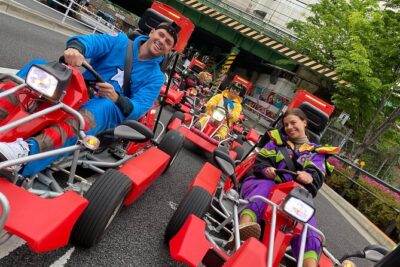
Shibuya Go Karting Experience by Akiba Kart Shibuya
Read our review →
Tokyo Go Kart: Asakusa, Skytree, and Akihabara **IDP MUST**
Read our review →
Shibuya Official Street Go-Kart in Shibuya Annex
Read our review →Browse the lists this tour appears in