
Reviewed · DAY TRIPS
Osaka: Kyoto & Nara & Uji Historical and Scenic One-Day Tour
Four stops, one very full day. This Osaka day tour links Nara, Uji, and Kyoto by air-conditioned vehicle, giving you deer, temples, matcha, and red torii gates without the stress of working out several train routes. I especially like the easy transport and the chance to visit Uji, a place many short trips leave out.
I also like the human touch from the English and Chinese guides. Guide Mia earned praise for useful local shopping tips, while another guide was described as humorous and clear. The tradeoff is simple: the schedule is tight, and one day covering this much ground can mean more time on the road than at some sights.
In This Review
- Key points to know before booking
- Why this day trip works for first-time visitors
- Nara Park: deer, snacks, and a little caution
- Todaiji Temple: a brief look at a giant Buddhist monument
- Uji River and Byodoin: the day’s gentler change of pace
- Fushimi Inari Taisha: red gates and a strict clock
- What the $56 price really buys you
- Transport, meeting points, and the pace of the day
- Who will enjoy this route most
- Should you book this Osaka to Nara, Uji, and Kyoto tour?
- FAQ
- How long does the tour last?
- What languages does the guide speak?
- Is hotel pickup available?
- How early should I arrive?
- Are Todaiji Temple and Byodoin Temple admission fees included?
- Are meals and drinks included?
- Is transportation included?
- How much time is provided at Nara Park?
- Can I feed the deer?
- Is the tour suitable for wheelchair users?
Key points to know before booking
- Nara combines deer and Japan’s largest Buddhist setting: You have time to feed the deer in Nara Park, then visit the enormous Todaiji Temple.
- Uji is the calm middle of the day: A two-hour visit brings the Uji River, Byodoin Temple, tea shops, and matcha sweets together.
- Fushimi Inari is a photo stop with real walking: Seventy minutes gives you time for the lower torii gates, but not a full mountain hike.
- The $56 price covers the hard part: Round-trip transport, fuel, tolls, parking, and a live guide are included.
- Temple admission costs extra: Bring separate money for Todaiji and Byodoin, plus lunch, drinks, deer crackers, and matcha treats.
- The tour is best for active sightseers: Expect moderate walking, changing weather, and a long day of moving between famous places.
Why this day trip works for first-time visitors
Osaka is a practical base, but its nearby historic districts can feel scattered when you are looking at a map. Nara lies east of Osaka, Uji sits farther toward Kyoto, and Fushimi Inari is on Kyoto’s southern side. Public transport can handle these places, but fitting them together requires planning, transfers, and attention to departure times.
This tour removes that work. You board an air-conditioned vehicle, follow a set route, and let the guide handle the roads. The included tolls, parking fees, and fuel matter more than they first appear. On a packed day, saving time at stations and avoiding the need to navigate unfamiliar connections gives you more energy for the temples.
Still, this is not a slow cultural walk. The duration is listed as eight to ten hours, and the return time can shift with traffic, weather, and other delays. You will see a broad sample of the region rather than study each site at length.
That makes the tour a good fit if you have limited time in Osaka or want an overview before returning later. It is less suitable if your ideal day means lingering over lunch, taking long temple walks, or photographing every torii gate without checking the clock.
More Day Trips in Osaka
- From Osaka: Himeji Castle, Arima Onsen & Mt. Rokko Day Tour
★ 4.6 · 339 reviews - Osaka Day Tour: Amanohashidate & Ine Bay
★ 5.0 · 280 reviews - Kyoto and Nara Day Trip from Osaka
★ 4.0 · 175 reviews
Nara Park: deer, snacks, and a little caution
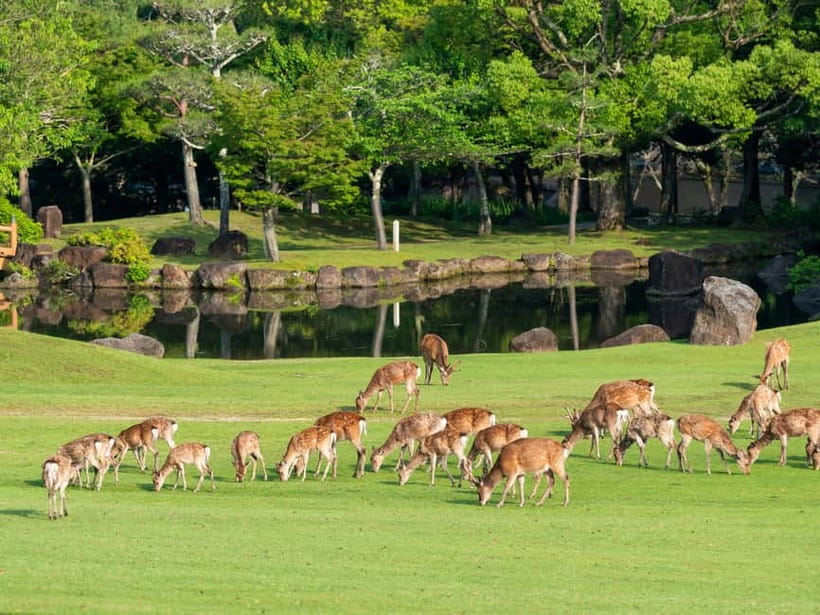
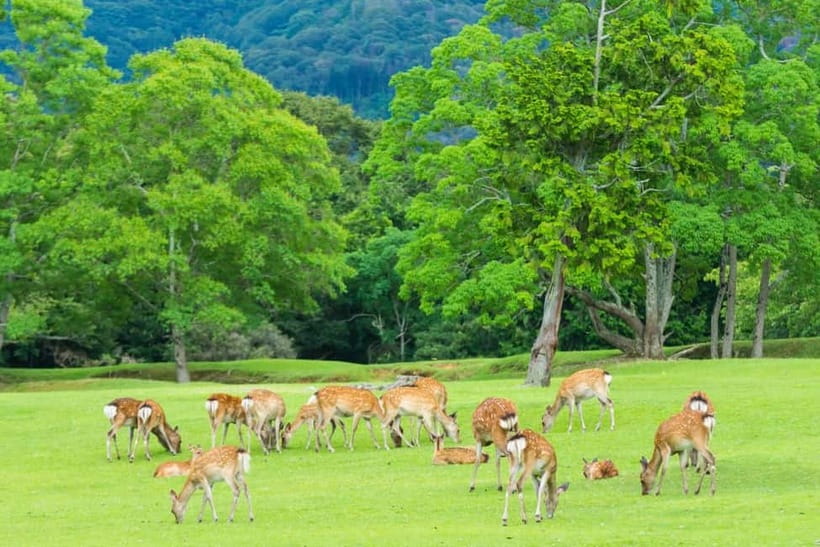
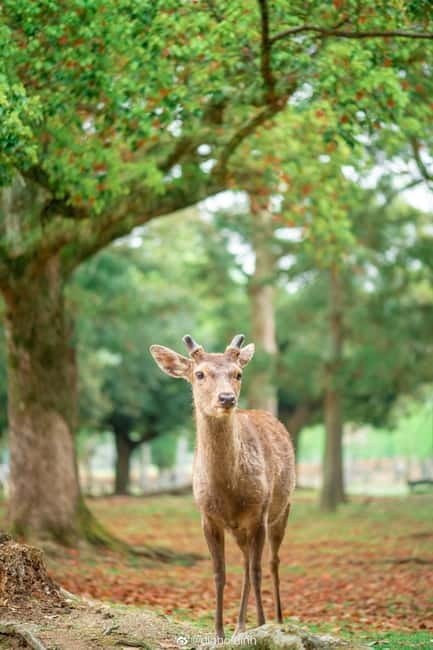
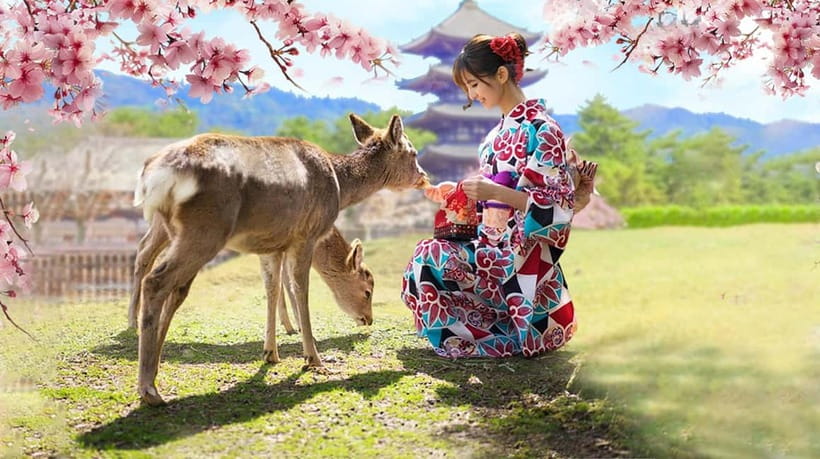
The first major stop is Nara Park, with about 45 minutes for free time and sightseeing. This is your chance to meet Nara’s famous deer, offer them a snack, and take photographs among the open park grounds.
The deer are accustomed to people, but they are still wild animals. Follow the guide’s instructions when feeding them, and keep your hands and food under control. The animals may seem gentle, yet their behavior can change quickly when they spot a snack.
That short visit works well for a first encounter. You can buy deer crackers, approach the animals, and get a taste of Nara’s unusual mix of history and wildlife. If you want long portraits, quiet walks, or time to explore more of the park, 45 minutes will feel brief.
I would keep your camera ready, but do not let the deer become the entire focus. Nara Park is also the setting for a major ancient capital and important temples. The next stop gives you the architectural and religious weight that the deer cannot provide.
Todaiji Temple: a brief look at a giant Buddhist monument
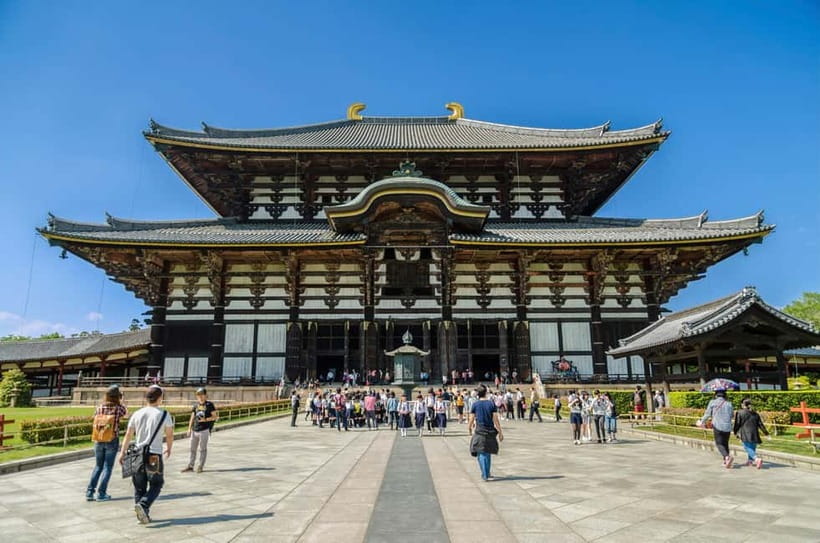
Todaiji receives about 30 minutes of sightseeing time. Admission is not included, so budget separately for entry. Inside, the main draw is the huge bronze Vairocana Buddha, housed in one of Japan’s most imposing Buddhist temple settings.
The scale is the point. Even with only half an hour, you can appreciate the contrast between the broad wooden temple structure and the enormous seated Buddha. The atmosphere is solemn, and this is the stop where the day’s Buddhist heritage becomes most powerful.
Thirty minutes is enough for a focused visit, not a complete study of the temple grounds. You will need to move with purpose, especially if the group must meet at a fixed time. If Todaiji is high on your personal list, note the limited time before booking. You may prefer a separate Nara visit later, when you can explore at your own pace.
For many people, this quick stop is still worth the admission fee. The building and Buddha are not minor sights that can be replaced by a photograph. They give the Nara portion of the tour a strong sense of place.
Uji River and Byodoin: the day’s gentler change of pace
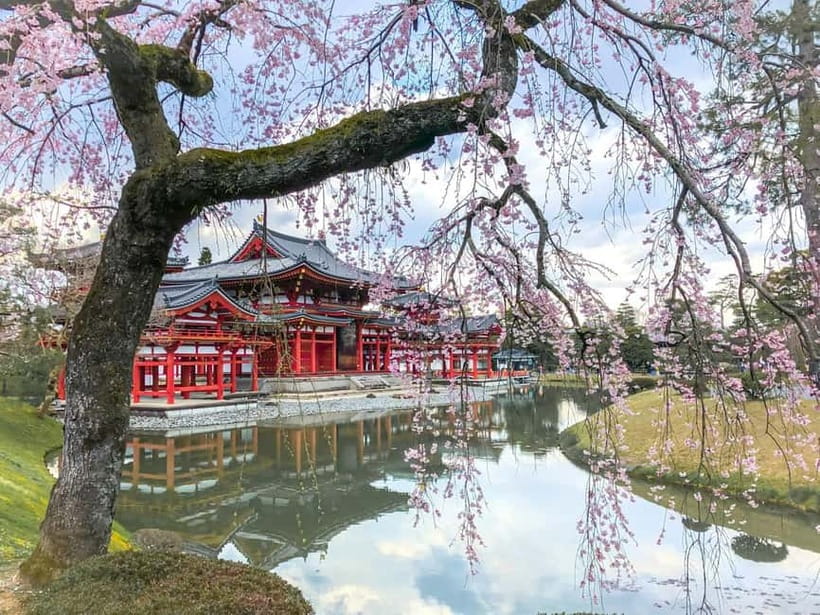
Uji is allotted about two hours, making it the most spacious part of the day. After the compact Nara stops, Uji gives you time to walk beside the Uji River, see the statue of Murasaki Shikibu, and browse Byodo-in Omotesando.
The river walk brings a quieter mood. You can slow down, look across the water, and see why Uji is tied so closely to traditional tea culture. The visit is not limited to a single temple entrance. It includes the surrounding streets, food, and the atmosphere of a historic town.
Byodoin Temple is the centerpiece. Its elegant Phoenix Hall is associated with the temple’s calm, formal character, and the grounds offer a more measured experience than the crowds and animal encounters in Nara. Admission is extra, so check your budget before the day begins.
The tour also identifies Uji as a matcha destination. Along the local food street, you can look for matcha desserts and drinks. Since meals and beverages are not included, this is your chance to buy something on your own. The matcha stop is not simply a snack break. It connects the town’s scenery with one of its best-known local traditions.
Guide Mia was particularly appreciated for local shopping advice. That kind of help can be useful in Uji, where you may want to compare sweets, tea products, and small souvenirs without wasting your limited free time.
The main limitation is that two hours can disappear quickly. If you want both Byodoin, a proper river walk, a sit-down meal, and several tea shops, you will need to choose carefully. I would place the temple and one food stop first, then use any remaining minutes for shopping or the river.
More Day Trips in Japan:
- Mt. Fuji Instagram-Worthy Spots Day Tour: Ladder Town, Oshino Hakkai, Lake Kawaguchi, Lawson Convenience Store (Departing from Tokyo Station or Shinjuku Station)
★ 4.8 · 35,467 reviews - 【Mount Fuji Magnificent Scenery Exploration Day Tour】Arakurayama Sengen Park & Kawaguchiko Oishi Park & Oshino Hakkai & INS Famous Lawson & Hikawa Clock Shop (Departing from Tokyo)
★ 4.9 · 12,075 reviews - [Kyoto & Nara Day Tour] Sagano Scenic Railway & Nara Park & Fushimi Inari Taisha Thousand Torii Gates & Togetsukyo Bridge & Bamboo Grove & Kimono Forest (Departing from Osaka)
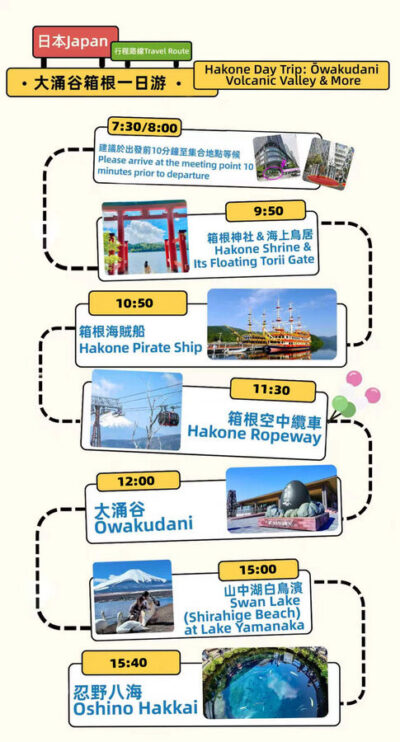
★ 4.9 · 10,942 reviews - Mount Fuji & Hakone – Lake Ashi Torii Gate, Hakone Shrine, Hakone Pirate Ship, Hakone Ropeway, Owakudani, Lake Yamanaka & Oshino Hakkai Day Trip: Sea, Land, and Air Panoramic Tour from Tokyo
★ 4.8 · 7,989 reviews
Fushimi Inari Taisha: red gates and a strict clock
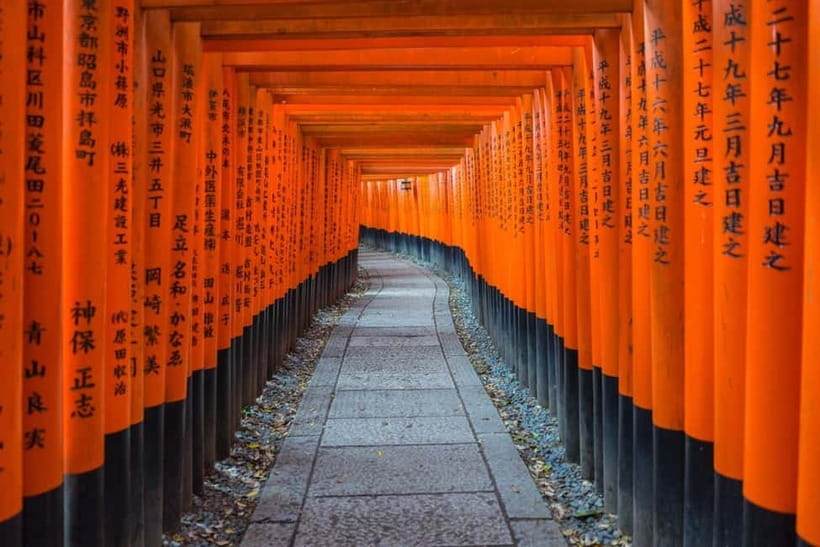
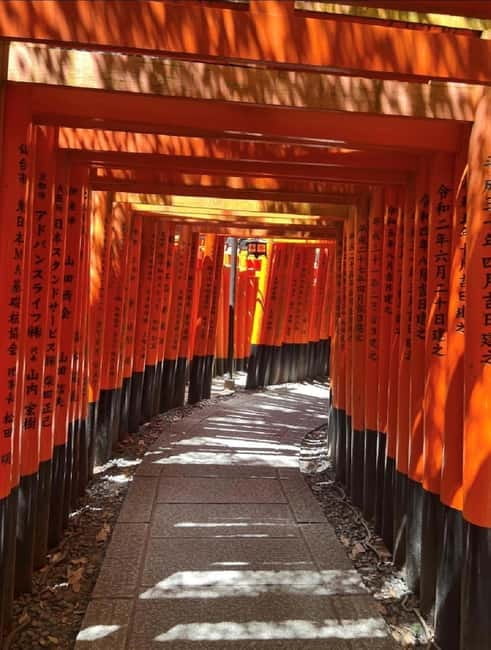
The final major visit is Fushimi Inari Taisha, with about 70 minutes for a break, photographs, free time, and walking. The shrine is famous for its long corridors of red torii gates, which rise from the main shrine area into the wooded hills.
You do not need to climb far to see the visual effect that makes Fushimi Inari famous. The lower section offers the most immediate torii views and is the sensible target on a timed tour. Light filtering through the gates creates changing patterns, so this is a good place to take your time with a few careful photographs rather than rush through dozens.
Seventy minutes gives you a useful introduction, but it is not enough for a complete climb through every section. Keep an eye on the meeting time. Getting lost in the gates would be easy, and the vehicle will not wait for a long solo hike.
Fushimi Inari is also a working shrine, not just a photo backdrop. Give yourself a moment to notice the religious setting, the small offerings, and the steady movement of people making their visit. The guide can help explain the shrine’s place in Japanese culture, while you absorb the visual drama.
As a last stop, it offers a strong ending. The red gates feel completely different from Todaiji’s massive Buddha hall and Byodoin’s quiet elegance.
What the $56 price really buys you
At $56 per person, this is a strong transport value if you want all of these destinations in one day. The price includes an English or Chinese-speaking guide, round-trip transportation, tolls, parking, and fuel. Those inclusions reduce the small costs and practical hassles that can add up on a self-planned route.
The tour does not include entrance to Todaiji or Byodoin. Meals, drinks, deer snacks, matcha desserts, and other personal purchases are also extra. The final cost will therefore be higher than the advertised fare, but the base price remains reasonable for a full day with a vehicle and guide.
The value depends on your priorities. If you want maximum independence, a rail-based day may suit you better. If you want to see the main sights without handling transfers or parking, the price is easier to justify.
The strongest praise has centered on convenience and the guides’ ability to keep the day organized. One guide used WhatsApp to stay in touch with the group, which is a useful touch when people are spread out at busy sites. Guide Mia was also praised for local tips and clear explanations.
Do not expect a private tour experience at this price. The route, stops, and meeting times are fixed enough to keep a group moving. You are paying for access and coordination, not unlimited time at every temple.
Transport, meeting points, and the pace of the day
The starting point depends on the option you choose. Drop-off locations include several Osaka wards, such as Chuo, Kita, Fukushima, Nishi, Nishinari, and Naniwa, along with Kyoto Station’s Hachijo Entrance Square Sunken Garden. Check your exact pickup and return point before booking because the choice affects your morning and evening plans.
If you choose hotel pickup, the guide details and pickup time are sent by 8:00 pm the evening before. Wait in the hotel lobby ten minutes early. If you are meeting the group elsewhere, arrive at least 15 minutes before departure.
The vehicle is air-conditioned, which helps after walking outdoors and gives you a place to rest between stops. Traffic can be heavy, and road conditions may change the return time. Keep your evening flexible rather than scheduling a flight, dinner reservation, or other fixed appointment too close to the expected finish.
Wear comfortable shoes and bring water. You will walk through park paths, temple grounds, shopping streets, and the torii corridors. Smoking is not allowed.
Families should provide accurate information about infants, strollers, or large luggage when booking. Babies count as passengers under Japanese traffic laws, so the operator needs correct numbers to arrange suitable transport.
The tour is not suitable for wheelchair users, and it is not suitable for people with animal allergies because of the close contact with Nara’s deer. Pregnant people and those aged 70 or above are asked to sign a travel waiver on arrival.
Who will enjoy this route most
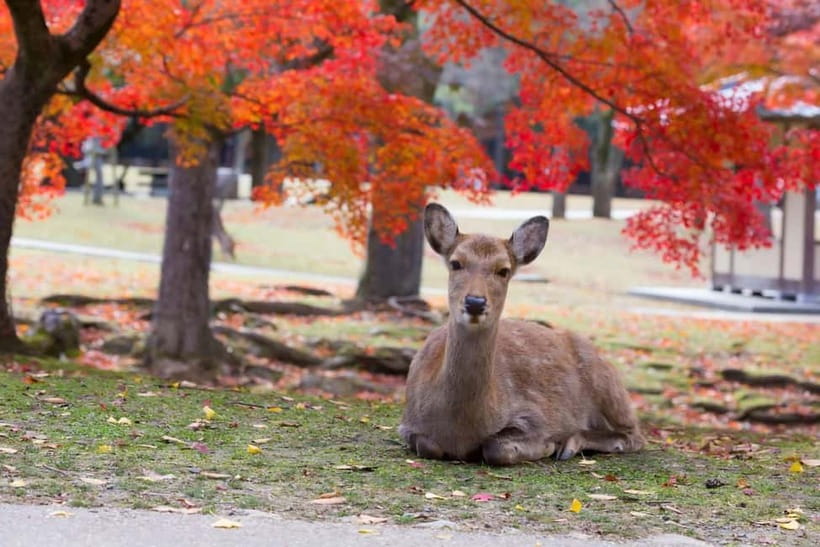
I would recommend this tour to a first-time visitor based in Osaka who wants a broad look at the Kansai region. It is also useful if you have only one free day and want to combine Nara’s deer, Uji’s tea culture, and Kyoto’s most recognizable shrine.
You will get the most from it if you:
- Enjoy seeing several major sights in one day
- Prefer guided transport to figuring out train changes
- Are comfortable with moderate walking
- Like having free time but do not need complete independence
- Want a mix of animals, temples, food streets, riverside scenery, and shrine architecture
I would hesitate if your main goal is a slow Nara visit or a serious tea experience. The schedule gives you an introduction to matcha culture, not a full tea ceremony program. It also gives Todaiji only 30 minutes and Fushimi Inari 70 minutes, so dedicated photographers and temple fans may want separate visits.
The route can work for older children, provided they can handle a long day and stay with the group. The animal stop is naturally engaging, while the temples add meaning for adults. People with mobility limitations should note the moderate walking and the stated restriction on wheelchair users.
Should you book this Osaka to Nara, Uji, and Kyoto tour?
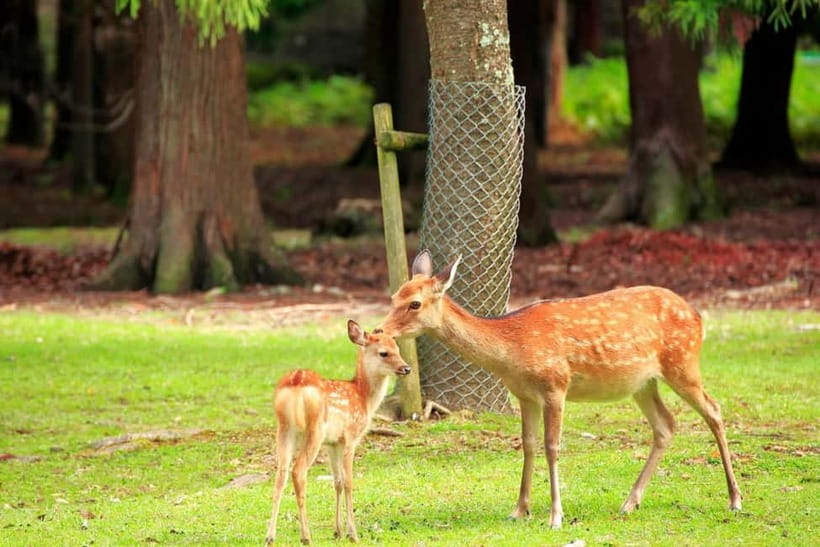
Book it if you value convenience over depth. For $56, you get a well-packed route, transport costs covered, and a guide who can explain the places and keep the group connected. The strongest parts are the easy Nara and Uji combination, the useful guide support, and the chance to see Fushimi Inari without planning a separate Kyoto trip.
Skip it if you dislike fixed schedules or want long, quiet visits. The road time is a real consideration, and the stops are short at Nara Park and Todaiji. Bring water, comfortable shoes, extra money for admissions and food, and a flexible attitude about the return time. With those expectations, this is an efficient and appealing introduction to several of Japan’s most memorable sights.
FAQ
How long does the tour last?
The tour lasts approximately eight to ten hours. The actual return time can change because of weather, traffic, and other unexpected conditions.
What languages does the guide speak?
Live guides are available in English and Chinese.
Is hotel pickup available?
Pickup is optional and depends on the booking option. If you choose it, the guide details and pickup time are emailed by 8:00 pm the evening before.
How early should I arrive?
Arrive at the meeting point 15 minutes before the scheduled departure. For hotel pickup, wait in the lobby 10 minutes early.
Are Todaiji Temple and Byodoin Temple admission fees included?
No. Admission to Todaiji and Byodoin Temple is not included in the tour price.
Are meals and drinks included?
No. Meals, beverages, matcha treats, deer snacks, and other personal expenses are not included.
Is transportation included?
Yes. Round-trip transportation in an air-conditioned vehicle is included, along with toll fees, parking fees, and fuel fees.
How much time is provided at Nara Park?
The scheduled sightseeing time at Nara Park is approximately 45 minutes.
Can I feed the deer?
Yes. You can offer the deer a snack, but they are wild animals. Follow the guide’s instructions when feeding them.
Is the tour suitable for wheelchair users?
No. The tour is listed as unsuitable for wheelchair users. It is also unsuitable for people with animal allergies because the itinerary includes close contact with Nara’s deer.
Just added in Japan
- A One-of-a-Kind Sushi Experience in a Special Place of Japan★ 5.0 · 15 reviews
- Tokyo Cute Bento Cooking Class – Make a Kawaii Character Lunchbox★ 5.0 · 126 reviews
- Japanese Home Cooking Class & Walk in Todoroki Temple Tokyo★ 5.0 · 88 reviews
- Japan Tokyo Tower Observatory Deck E-Ticket★ 4.0 · 34 reviews
- Catch a Baseball Game in Tokyo with a Local – Tickets Included★ 5.0 · 24 reviews
- JDM Experience with Fast&Furious RX-7 (English speaking Driver)★ 5.0 · 57 reviews
- Tokyo Private Day Tour by Car with English speaking Driver Guide★ 4.0 · 29 reviews
- Japan Classic 10 Day – One Life Adventures★ 5.0 · 129 reviews
Day Trips, compared.
![[Kyoto & Nara Day Tour] Sagano Scenic Railway & Nara Park & Fushimi Inari Taisha Thousand Torii Gates & Togetsukyo Bridge & Bamboo Grove & Kimono Forest (Departing from Osaka)](https://media.japanvisits.com/wp-content/uploads/kyoto-nara-day-tour-sagano-scenic-railway-nara-park-fushimi-inari-taisha-thousand-torii-gates-togetsukyo-bridge-bamboo-grove-kimono-forest-departing-from-osaka-k110001-400x257.jpg)
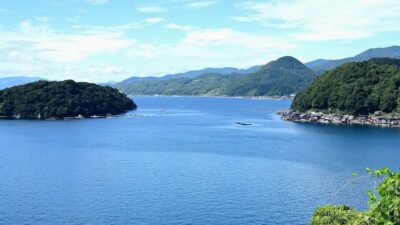
Kyoto Amanohashidate & Ine Funaya & Ine Bay Scenic Day Trip (Departing from Osaka or Kyoto)
Read our review →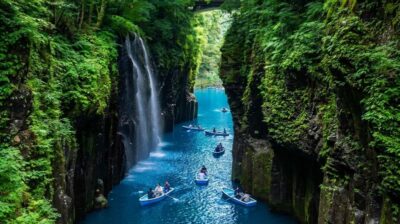
Kyushu: Mount Aso, Kusasenri & Takachiho Gorge Day Tour (Optional Takachiho Boat Ride Experience)
Read our review →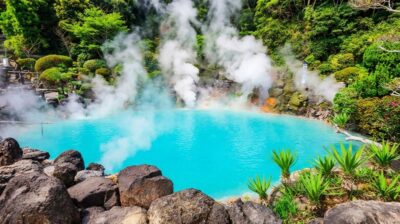
Kyushu One-Day Tour: Yufuin no Mori Train & Yufuin Town & Nyoirin-ji Temple & Dazaifu & Hell Hot Springs (Departing from Fukuoka)
Read our review →
Browse the lists this tour appears in