
Reviewed · FOOD TOURS
Osaka: Shinsekai Food Tour with 13-15 Dishes at 5 Eateries
Osaka eats best in small, smoky rooms. This three-hour Shinsekai food tour takes you beyond the obvious restaurant streets for 13 to 15 local dishes at five compact eateries, including takoyaki, kushikatsu, udon, yakitori, gyoza, and tonpeiyaki. I like the smart mix of food and neighborhood history, and I like that a small group of up to nine people can enter places you might skip when faced with Japanese-only menus. The main catch is clear: vegans and people with gluten intolerance cannot join, and other dietary needs may limit what you can eat.
You meet at Dobutsuen-mae Station, then walk through arcades and side streets in Shinsekai. Guides such as Kevin, Taka, Tommy, Mio, Paul, and Kiko have been praised for keeping the pace friendly, explaining local customs, and helping the group connect. Come hungry, wear comfortable shoes, and do not plan a large dinner afterward.
In This Review
- Key points to know before booking
- Why Shinsekai makes a better food-tour setting than Dotonbori
- Meeting at Dobutsuen-mae Station
- First stop: takoyaki, oden, and Osaka’s snack culture
- The izakaya course: udon, skewers, wings, and kushikatsu
- A classic Japanese eatery with nikudoufu and homestyle dishes
- The gyoza specialist brings a focused change of pace
- Final stop: tonpeiyaki, karaage, edamame, and a second drink
- What the guides add to the meal
- Is $53 a fair price for three hours?
- Who should book this Shinsekai food tour?
- Practical details worth knowing
- FAQ
- How long is the Osaka Shinsekai food tour?
- How many dishes are included?
- How many eateries does the tour visit?
- Which foods may be included?
- Are drinks included?
- Where is the meeting point?
- Is the tour suitable for vegans or people with gluten intolerance?
- Is the tour conducted in English?
- Should you book it?
Key points to know before booking
- Five different food settings: The route includes a stall, gastrobar, classic eatery, izakaya, and specialty restaurant.
- A serious amount of food: The advertised tasting runs to 13 to 15 dishes, with two drinks included.
- Shinsekai away from Dotonbori: You eat in smaller local places rather than following Osaka’s most famous restaurant crowds.
- Small English-speaking groups: The group is limited to nine, giving you more time to ask questions and speak with the guide.
- Food restrictions are a real issue: The experience is not suitable for vegans or people who must avoid gluten.
- Best timing for your trip: Several guide comments suggest doing it early in your Osaka stay, since you can collect food tips and neighborhood advice for later.
Why Shinsekai makes a better food-tour setting than Dotonbori
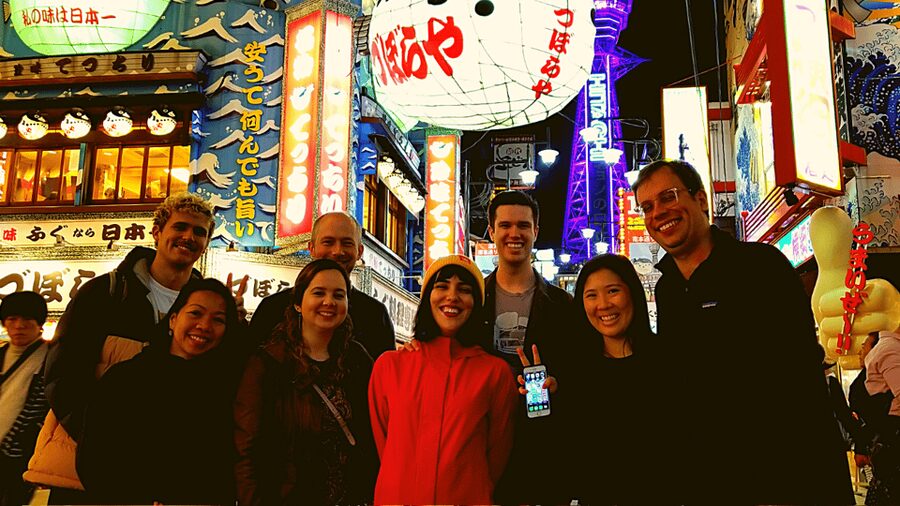
Dotonbori gets the neon signs and the big crowds. Shinsekai gives you a different view of Osaka, one shaped by old arcades, narrow side streets, small food counters, and long-running neighborhood businesses.
That setting matters. You are not simply sitting down for one large meal. You move between places, see how the district changes from one street to the next, and learn how everyday Osaka food fits into local life.
The route uses establishments with Japanese menus, which is part of the point but can also make ordering alone harder. Your guide handles that barrier, explains what is arriving, and helps you understand dishes that may not be obvious from their names.
I especially like this format for a first evening in Osaka. You get a quick orientation to Shinsekai, taste a range of local food, and can ask your guide what to eat later. Taka, described as Osaka-born and raised, has offered extra suggestions for restaurants and local spots, while Tommy has been praised for continuing to answer questions and give recommendations after the tour.
More Food Tours in Osaka
- Osaka Food Tour: 13 Dishes at 5 Local Eateries
★ 5.0 · 2,149 reviews - Hungry Osaka Street Food Tour:15 Tastings & 3 Drinks with a Local
★ 5.0 · 1,727 reviews - Osaka Local Foodie Walking Tour in Dotonbori and Shinsekai
★ 5.0 · 985 reviews
Meeting at Dobutsuen-mae Station
The meeting point is in front of the 15 wall lanterns of Daiichi Building at Exit 1 of Dobutsuen-mae Station on the Midosuji Line. Read that carefully. Shinsekai has plenty of signs, alleys, and station exits, so arriving at the correct exit saves a needless start to your evening.
The activity lasts three hours, though the exact starting time depends on availability. The tour is in English and uses a small group of no more than nine participants.
Expect plenty of walking and some steps. One person noted that the movement helped burn off a few calories between stops, which is a polite way of saying you should not treat this as a seated tasting. Comfortable shoes are a sensible choice, and you will want room in your appetite for the final stop.
The pace appears organized but not frantic. Guides such as Kevin have been praised for moving the group along without making the evening feel rushed. That balance is useful because food stalls and tiny restaurants do not always work well with a large group.
First stop: takoyaki, oden, and Osaka’s snack culture
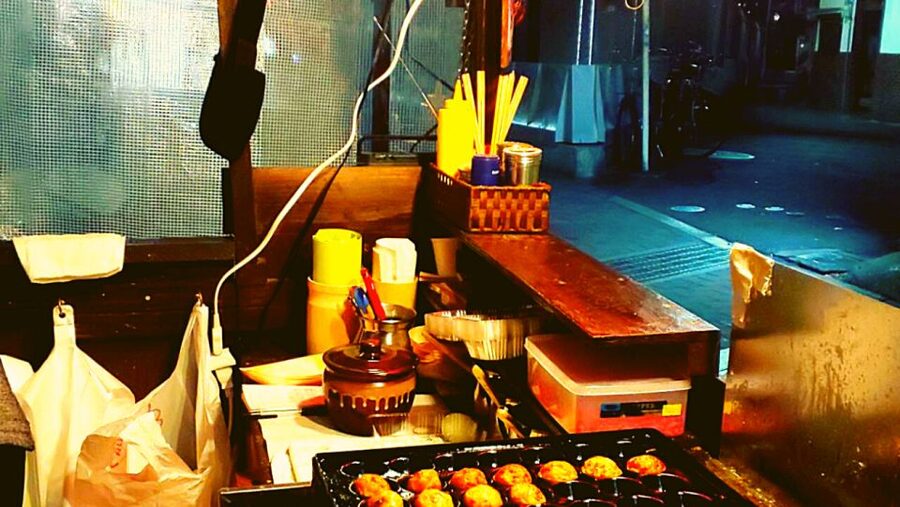
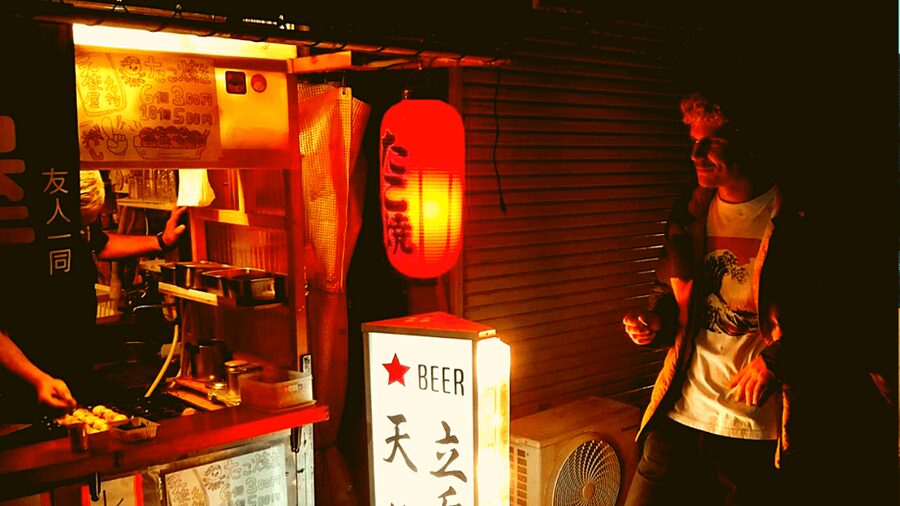
The opening stop is a takoyaki and oden stall. Takoyaki is one of Osaka’s signature foods: small battered balls cooked around pieces of octopus, then served hot with toppings. The outside is browned while the center can be soft and steaming, so take a careful first bite.
Oden gives you a different texture and mood. It is a simmered selection of ingredients served in broth, often a comforting choice in cool weather. The exact items depend on what is available at the stall.
Starting with these dishes works well because it introduces two sides of Osaka eating. Takoyaki is quick, casual street food, while oden reflects the pleasure of choosing warm, slowly cooked items from a pot.
This is also the sort of place that can feel awkward if you do not read Japanese. The group can arrive together, have the food arranged, and hear an explanation before eating. You get the flavor without the guesswork.
The izakaya course: udon, skewers, wings, and kushikatsu
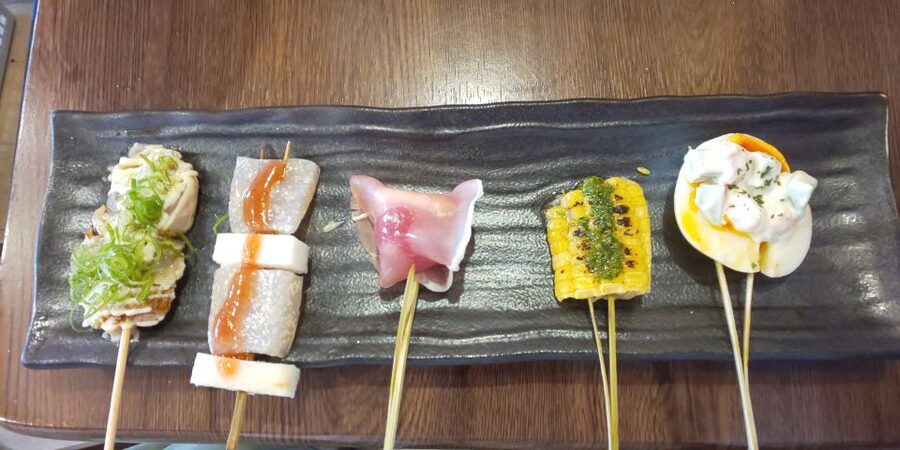
The next part takes place at an izakaya, a Japanese drinking and dining place where food is ordered to share. Here you may receive kitsune udon, yakitori, chicken wings, and nagaimo, along with kushikatsu.
Kitsune udon combines noodles in broth with sweet fried tofu. It is simple, filling, and a useful counterpoint to the fried foods that follow. Nagaimo, a type of mountain yam, can have a slippery texture that surprises some first-time diners, but the guide helps put unfamiliar dishes into context.
Yakitori means grilled chicken skewers, while chicken wings bring a more familiar choice to the table. The exact preparation can change, and the menu is subject to restaurant availability.
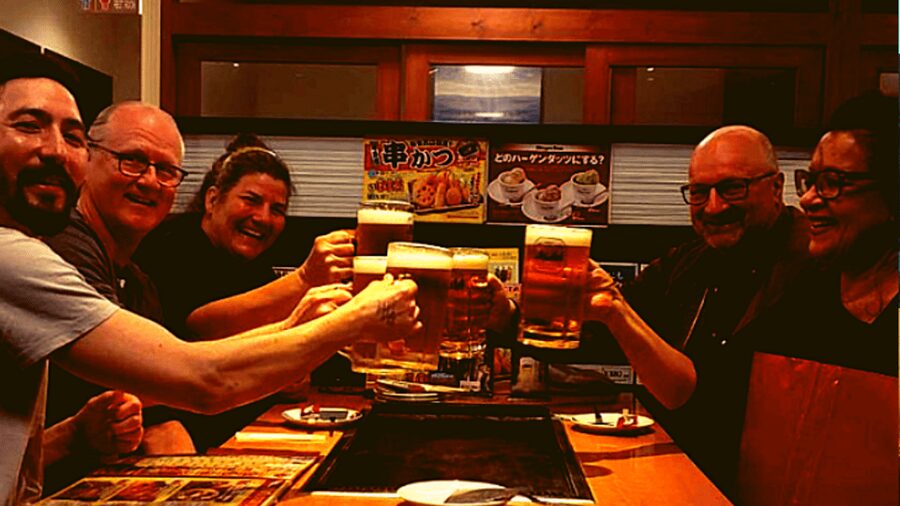
Kushikatsu is one of the dishes most closely tied to Osaka. These skewers of meat and vegetables are lightly deep-fried, then eaten as a casual shared meal. The attraction is not just the crisp coating. It is the easy rhythm of selecting a skewer, trying another, and discovering which vegetables work best with the frying.
The tour is a good fit if you are curious but not wildly adventurous. Several people have enjoyed trying foods they would not have ordered alone, while less adventurous eaters still found much of the menu approachable. You can experiment without committing to a full plate of something unfamiliar.
More Food Tours in Japan:
- Tokyo: Shinjuku Food Tour (13 Dishes at 4 Local Eateries)
★ 5.0 · 6,603 reviews - Tokyo: Shinjuku Food Tour (15 Dishes and 4 Eateries)
★ 4.9 · 2,033 reviews - Best of Shinjuku: Izakaya Food Tour (4 Stops, 14+ Tastings)
★ 5.0 · 1,863 reviews - Kyoto Night Foodie Tour in Gion (9+ dishes + 6 Sake tastings)
★ 5.0 · 1,762 reviews
A classic Japanese eatery with nikudoufu and homestyle dishes
The third stop is a cozy traditional restaurant. The menu may include nikudoufu, a beef and tofu stew, along with original yakitori or skewered beef assortments, mochi, and one alcoholic or non-alcoholic drink.
Nikudoufu is the most home-style dish in the lineup. Beef and tofu simmer together in a savory sauce, making it a warm, substantial course after the lighter opening snacks. It gives the tour some balance and shows that Osaka food is not only about fried street specialties.
Mochi adds a sweet, chewy finish to this portion of the meal. Since the dishes can change with the season and restaurant availability, treat the sample menu as a guide rather than a guarantee.
This stop has received particular praise for its homestyle feel. That is valuable because the best food tour is not just a greatest-hits parade. You want a dish that suggests what people might eat in a regular neighborhood setting, not only what appears on a sign aimed at first-time visitors.
The gyoza specialist brings a focused change of pace
The fourth stop is a restaurant devoted to gyoza. After several kinds of skewers, noodles, stew, and takoyaki, the dumplings provide a welcome shift in shape and texture.
One guide-led route has included crispy Osaka-style gyoza, and the preparation may differ from the dumplings you have encountered elsewhere in Japan. This is a short visit, but it adds another useful lesson: even a familiar food can vary by city, restaurant, and cooking method.
I like the specialty stop because it keeps the route from becoming a blur of fried snacks. You get to focus on one food and compare its texture with the other dishes already eaten.
At this point, pace yourself. The tour may advertise 13 dishes, but the portions add up. One person described being full by the final stop, and that is a common-sense warning rather than a complaint. Eat steadily, but do not race through the early courses.
Final stop: tonpeiyaki, karaage, edamame, and a second drink
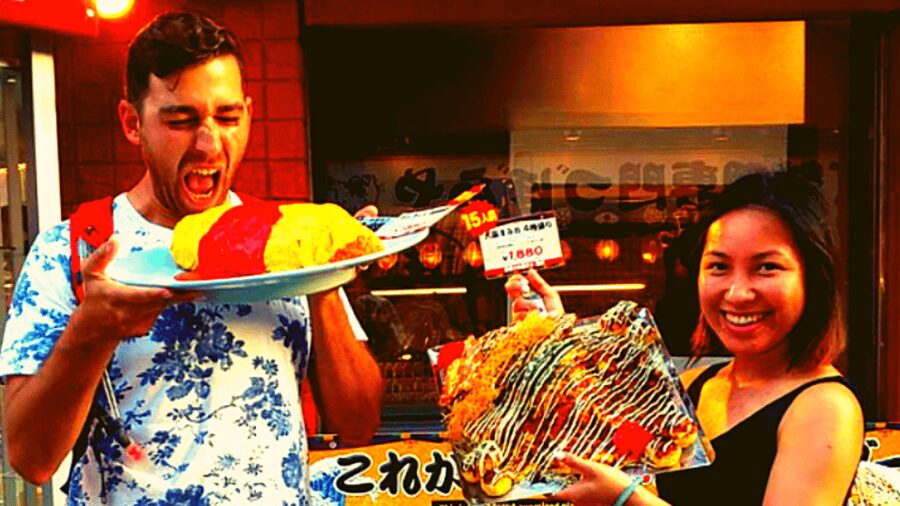
The last eatery serves tonpeiyaki, edamame, karaage, a Japanese-style pancake or fruit dish, and another drink. Tonpeiyaki is a pork omelette, a hearty Osaka-style plate that makes a fitting final savory course.
Karaage is Japanese fried chicken seasoned with spices. It is one of the easiest dishes for many people to enjoy, while edamame offers a fresh, salty break from the richer food.
The final pancake or fruit dish gives you a lighter finish, though the overall meal remains substantial. You also receive a second drink here, with alcoholic and non-alcoholic choices available.
The menu may contain 13 dishes in total, or as many as 15 depending on the route and availability. Seasonal ingredients, closed restaurants, or full bookings can lead to alternative locations. That flexibility is practical, but it means you should not book the tour for one exact dish alone.
What the guides add to the meal
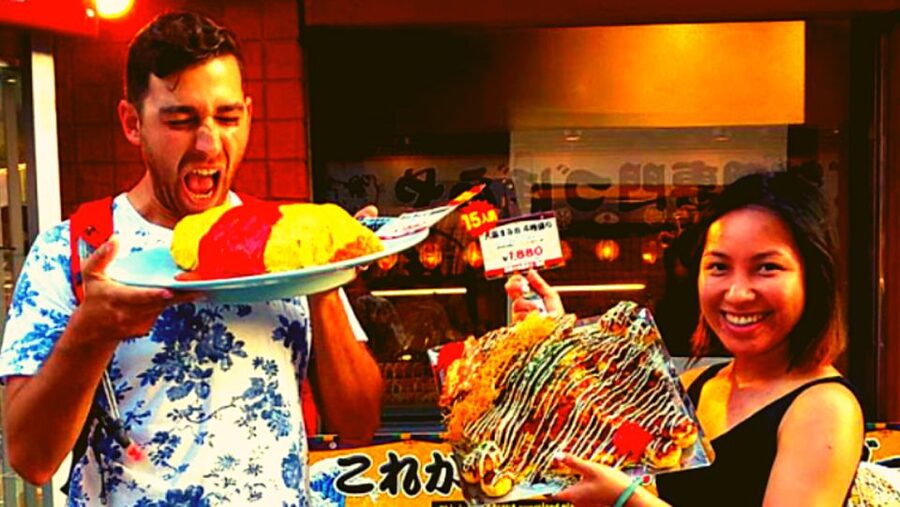
Food is the reason to book, but the guide often determines how much you take away. The strongest guide comments describe people who explain the dishes, share Shinsekai history, answer questions, and make a mixed group feel comfortable.
Kevin has been praised for keeping the evening entertaining while staying on schedule. Tommy has been described as especially good at combining food explanations with local culture and wider Osaka context. Taka’s Osaka background has helped guests get suggestions for the rest of their trip.
Other named guides, including Yuki, Paul, Darren, Bernie, Kiko, Sarah, Mari, Mio, Mario, Suga, Nathan, Dominic, Brian, Don, and Yuichi, have also been praised for warmth, humor, and local insight. Since you cannot normally choose a specific guide, think of these names as examples of the guiding style rather than a promise about who will lead your tour.
The small group helps here. Nine people is large enough for conversation but small enough for a guide to notice if someone is confused, left behind, or unsure about a dish. One couple even continued on to karaoke with fellow participants, though that is not part of the scheduled experience.
Is $53 a fair price for three hours?
At $53 per person, the value is strong if you would otherwise struggle to choose and order in small Japanese establishments. You receive food at five stops, 13 dishes as the stated baseline, possibly up to 15, plus two drinks.
You are also paying for access and organization. The guide reserves or arranges visits, explains the menu, manages the walking route, and helps the group enter places that may be difficult to navigate on your own.
The price is less compelling if you already know Shinsekai well, speak Japanese comfortably, and prefer to order one dish at a time. You could spend less by eating independently, but you would lose the guided structure and the chance to try such a wide range in one evening.
The two included drinks help the calculation, especially since the route includes an izakaya and other places where a drink fits naturally. Still, the biggest value is variety. You are not paying for a single premium meal. You are buying a compact introduction to Osaka’s everyday food culture.
Who should book this Shinsekai food tour?
I would suggest it to first-time visitors who want more than Osaka’s famous signs and food photographs. It also suits people who enjoy trying small portions across several places and want a local guide to explain what is on the table.
Solo visitors can fit in well, since the group format creates easy conversation. Couples and families can also enjoy it, although children may not want every dish. At one stop, fries were arranged for children, but that should not be treated as a standard menu promise.
Food-focused visitors will appreciate the range, especially if they want takoyaki, kushikatsu, udon, yakitori, gyoza, and other Osaka specialties without building the evening themselves. It is also a good early-trip activity because guides can provide ideas for later meals.
You should skip it if you are vegan or need gluten-free food. The activity specifically says that gluten-free and vegan participation is not possible because too few suitable dishes are available. A pescatarian may also miss some courses, so ask before booking if your diet falls between the listed categories.
Practical details worth knowing
The tour meets at Dobutsuen-mae Station, Exit 1, not at your hotel. Hotel pickup and drop-off are not included.
You can cancel up to 24 hours ahead for a full refund, and the reserve-now, pay-later option allows you to hold a place without paying immediately. Check the available start times when selecting your date.
Restaurants may occasionally be closed or fully booked. In that case, the group visits alternatives, so the exact lineup can change.
FAQ
How long is the Osaka Shinsekai food tour?
The tour lasts three hours.
How many dishes are included?
The experience includes 13 dishes as the stated total, with the advertised range running from 13 to 15 dishes depending on availability.
How many eateries does the tour visit?
You visit five eateries: a food stall, gastrobar, classic eatery, izakaya, and specialized restaurant.
Which foods may be included?
The sample menu includes takoyaki, oden, kitsune udon, yakitori, chicken wings, nagaimo, kushikatsu, nikudoufu, beef skewers, mochi, gyoza, tonpeiyaki, edamame, karaage, and a Japanese pancake or fruit dish.
Are drinks included?
Yes. Two drinks are included, and you can choose alcoholic or non-alcoholic options.
Where is the meeting point?
Meet at Dobutsuen-mae Station on the Midosuji Line, Exit 1, in front of the 15 wall lanterns of Daiichi Building.
Is the tour suitable for vegans or people with gluten intolerance?
No. The activity is not suitable for vegans or people with gluten intolerance because there are too few appropriate dishes.
Is the tour conducted in English?
Yes. The live guide speaks English.
Should you book it?
Book this tour if you want a filling, social introduction to Osaka food without spending hours deciphering menus or choosing restaurants. The combination of five small eateries, two drinks, a nine-person limit, and a guide-led walk through Shinsekai gives you plenty for $53.
I would book it near the beginning of your Osaka stay, arrive hungry, and keep the rest of the evening light. Skip it if strict dietary needs make the menu difficult, or if you prefer slow dining at one restaurant. For most flexible eaters, this is a practical way to taste Osaka one skewer, dumpling, noodle, and omelette at a time.
Just added in Japan
- MT. FUJI/ Private Tour delivered and guided by a top-tier driver★ 5.0 · 27 reviews
- Mt fuji & Hakone customizable day tour w/ English speaking driver★ 5.0 · 45 reviews
- Fuji Speedway Self Drive & Mt. Fuji Private Tour pickup & dropoff★ 5.0 · 14 reviews
- Mt.Fuji Trekking 1 Day Tour up to the summit★ 5.0 · 14 reviews
- Seasonal Mt. Fuji Scenic Views, Fruit Picking and Ropeway Ride!★ 4.5 · 35 reviews
- Customisable Mt.Fuji Private Day Trip, English Speaking Driver★ 5.0 · 22 reviews
- Private Mt Fuji Tour from Tokyo: Scenic BBQ and Hidden Gems★ 5.0 · 146 reviews
- Private Mount Fuji Tour in Luxury Vehicle with English Guide★ 4.5 · 39 reviews
Food Tours, compared.
Shinjuku Food Tour (13 Dishes at 4 Local Eateries)
Read our review →
Osaka Food Tour: 13 Dishes at 5 Local Eateries
Read our review →
Shinjuku Food Tour (15 Dishes and 4 Eateries)
Read our review →
Best of Shinjuku: Izakaya Food Tour (4 Stops, 14+ Tastings)
Read our review →
Kyoto Night Foodie Tour in Gion (9+ dishes + 6 Sake tastings)
Read our review →
Hungry Osaka Street Food Tour:15 Tastings & 3 Drinks with a Local
Read our review →
Tokyo Night Foodie Tour in Shinjuku – Seasonal Sushi, Wagyu Beef
Read our review →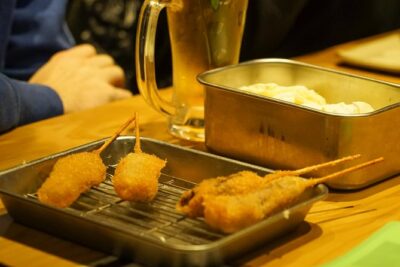
Osaka Local Foodie Walking Tour in Dotonbori and Shinsekai
Read our review →Browse the lists this tour appears in