
Reviewed · FOOD TOURS
Tokyo: Shinjuku Food Tour (13 Dishes at 4 Local Eateries)
Shinjuku tastes better with a local guide. This three-hour walking tour gives you a useful introduction to the district through 13 Japanese dishes at four eateries, from a tiny food stall to an izakaya, traditional restaurant, and gastrobar. I like the broad mix of food and the chance to enter places that can feel hard to navigate on your own. I also like that two drinks, alcoholic or non-alcoholic, are included, so you are not reaching for your wallet at every stop.
The tour also adds stories about Shinjuku, Kabukicho, and Tokyo life between meals. That makes it more than a dinner crawl. The main caution is consistency: some guides add plenty of cultural detail, while others may give less explanation about what you are eating. Golden Gai is part of the advertised route, but at least one outing did not visit it, so you should not book this solely for that stop.
In This Review
- The quick facts that matter
- Why this Shinjuku food tour works
- Starting near the west side of Shinjuku Station
- Omoide Yokocho: tiny alleys and a first taste
- Kabukicho: food beside Tokyo nightlife
- Golden Gai: a memorable area with one important caveat
- Four eateries, 13 dishes, and two drinks
- The guides shape the evening
- Walking, timing, and comfort
- Is $86.22 a fair price?
- Who should book this experience?
- Should you book the Shinjuku food tour?
- FAQ
- How long is the Shinjuku food tour?
- How many dishes are included?
- Are drinks included?
- What kinds of places does the tour visit?
- Where does the tour start and finish?
- Can I cancel for a refund?
The quick facts that matter
- Thirteen tastings in three hours: The food comes in several small servings, allowing you to sample a wide range without planning four restaurants yourself.
- Four different types of food stop: The route includes a stall, an izakaya, a traditional Japanese eatery, and a gastrobar.
- Two drinks included: You can choose alcoholic or non-alcoholic drinks, a useful touch in an evening food tour.
- A maximum of 12 people: This is not a private tour, but the group is smaller than many large city walks.
- Three famous Shinjuku districts: Omoide Yokocho, Kabukicho, and Golden Gai give the walk a strong sense of place.
- A meeting point near Shinjuku Station: The tour starts near AOKI Shinjukunishiguchi Honten and ends near the Southeast Exit of JR Shinjuku Station.
Why this Shinjuku food tour works
Shinjuku can be tiring to figure out. The station has many exits, the streets change character quickly, and some of the best-looking eateries are tiny rooms with little English signage. A guide removes much of that guesswork.
I like the way this tour uses food to explain the area. You are not simply taken from one restaurant to the next. The route passes through old alleyways, nightlife streets, and preserved postwar architecture. Your guide can explain what each district is known for, how local dining places work, and what to do with unfamiliar dishes.
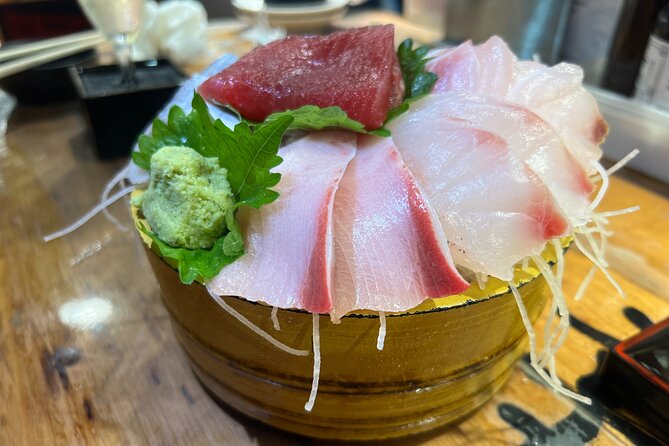
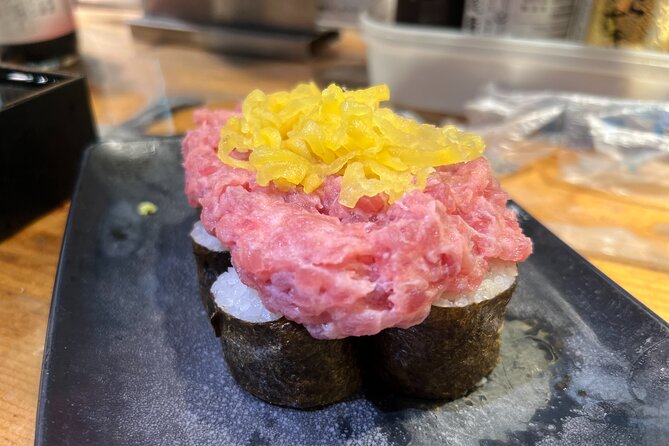
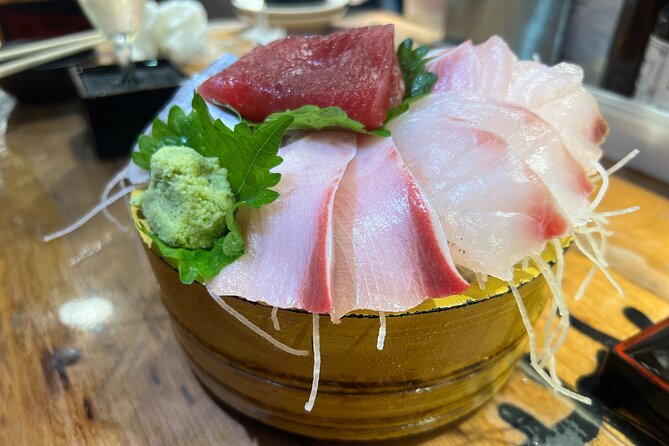
The strongest part is the variety. Thirteen dishes sounds like a lot, and it is. The servings are arranged as tastings rather than one huge meal at a single restaurant, so you get a better picture of Japanese casual food. Specific menus can change, but past outings have included tonkotsu, taiyaki, pork cutlet, raw dishes, and even snails. That range can make the evening more interesting, though it also means you should be willing to try food without knowing exactly what will appear.
The tour has a current rating of 4.9 from more than 6,600 ratings, with 99 percent recommending it. That is a strong signal, especially for a food experience with several moving parts. Still, the uneven comments about explanations and the occasional missed Golden Gai visit are worth keeping in mind.
More Food Tours in Tokyo
- Tokyo: Shinjuku Food Tour (15 Dishes and 4 Eateries)
★ 4.9 · 2,033 reviews - Best of Shinjuku: Izakaya Food Tour (4 Stops, 14+ Tastings)
★ 5.0 · 1,863 reviews - Tokyo Night Foodie Tour in Shinjuku – Seasonal Sushi, Wagyu Beef
★ 5.0 · 1,161 reviews
Starting near the west side of Shinjuku Station
The meeting point is AOKI Shinjukunishiguchi Honten at 1-chome-8-5 Nishishinjuku. That places the start on the west side of Shinjuku Station, an area where a few extra minutes can save you a great deal of stress.
Shinjuku Station is not difficult once you know the correct exit, but it is easy to lose time inside the station. I would arrive early, confirm the exact meeting instructions on your mobile ticket, and avoid assuming that the nearest exit is obvious. The tour ends near the Southeast Exit of JR Shinjuku Station, which is convenient if you plan to continue into the evening.
If you prefer to return to the starting point, the guide can escort you back to the Starbucks meeting area. That is helpful if you are staying on the west side or do not want to work out another station route after dinner.
The tour is limited to 12 people. That still requires some patience in narrow alleys and small restaurants, but it is a manageable size for conversation. Several guides have been praised for making solo visitors feel welcome, and some people have exchanged contact details with others in the group and met again later in Tokyo.
Omoide Yokocho: tiny alleys and a first taste
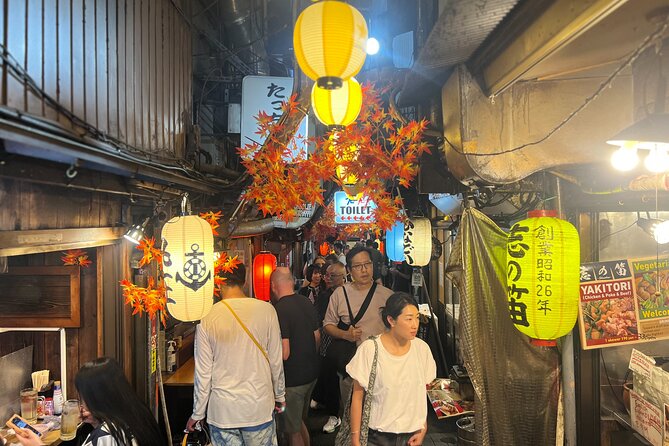
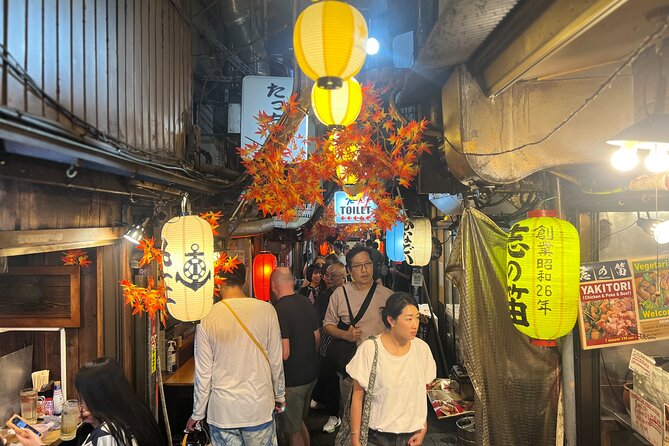
The first hour takes place around Omoide Yokocho, a compact maze of narrow lanes lined with small izakayas and food stalls. This is a good opening scene because it immediately shows you a different side of Shinjuku from the wide station avenues and tall office buildings.
The setting is part of the experience. Seating can be tight, the alleys are narrow, and the food is served in a close, informal environment. A guide is useful here because you can focus on the food and atmosphere instead of wondering which doorway is appropriate for visitors.
The first stop may include raw food or dishes you have not ordered before. This is where guide quality matters most. A strong guide will explain what is on the table, how to eat it, and why it belongs in the local food culture. One past outing was criticized because raw food arrived without enough explanation, so I would ask questions if you are uncertain. There is no prize for pretending to understand a dish.
Omoide Yokocho is also a useful place to learn the difference between a casual Japanese drinking spot and a standard restaurant. The tour includes food at one stall and gives you a look at the kind of compact dining space that can be intimidating on a first visit.
Kabukicho: food beside Tokyo nightlife
The next part moves into Kabukicho, Tokyo’s best-known entertainment district. The guide explains the different kinds of establishments in the area and takes you to a traditional Japanese restaurant.
Kabukicho is not just about nightlife. It is a dense, changing district where restaurants, bars, theaters, hotels, and entertainment venues sit close together. A guide can give you context without requiring you to spend the evening guessing which streets are comfortable to explore.
This is often the most substantial food section of the tour. One popular dish mentioned by name is pork cutlet at Katsuya, described as coming from an old restaurant with a particular reputation. Other outings have included tonkotsu and several small plates. The exact order may vary, but the goal is clear: you sample several types of Japanese food instead of settling into one familiar bowl of ramen.
I like this stop for first-time visitors because it gives you confidence. After watching the guide order, seeing how dishes are shared, and trying food in a local setting, you may feel more capable of entering similar places on your own. That practical confidence can be worth as much as the meal.
The drawback is that the amount of historical or food information depends on your guide. Guides such as Hoshi, May, Igor, Emma, Nathan, and Elena have been praised for explaining Japanese culture, offering later dining tips, and keeping the walk lively. A few outings have felt more like restaurant visits with limited background. If the cultural side matters greatly to you, ask your guide questions early.
A completely different kind of day out:
- Tokyo Disney Resort – Tokyo Disneyland & Tokyo DisneySea Park Tickets
★ 4.8 · 99,488 reviews - SHIBUYA SKY Ticket
★ 4.7 · 46,509 reviews - JR Whole Japan Rail Pass
★ 4.8 · 29,150 reviews - Mt Fuji and Hakone 1-Day Bus Tour Return by Bullet Train
★ 5.0 · 26,383 reviews
Golden Gai: a memorable area with one important caveat
Golden Gai is known for its narrow lanes and more than 200 small bars. Its tiny buildings preserve a piece of postwar Tokyo, and the area feels very different from the larger commercial streets nearby.
The value here is visual and cultural. You get to see how much character can fit into a few cramped lanes, with small businesses stacked close together. The guide can explain how the area works and point out details you might miss while walking alone.
Golden Gai is also the least certain part of the experience. It is included in the route description, but one outing skipped it, leaving a visitor disappointed. The tour may change because of timing, restaurant operations, group movement, or other conditions. If this district is your main reason for booking, confirm the planned route with the operator before paying.
The tour may also pass recognizable sights along the way. One guide added the giant 3-D cat, Godzilla above a building, and the red-light district to the evening. Those extras are not guaranteed, but they show how the walk can connect food with the famous visual landmarks of Shinjuku.
Four eateries, 13 dishes, and two drinks
The food plan is the tour’s main selling point. You visit four types of venues:
- A food stall
- An izakaya
- A traditional Japanese restaurant
- A gastrobar
That structure gives the meal a useful rhythm. You may eat something casual in an alley, sit down for shared plates, try a more traditional preparation, and finish with a final dish or dessert. One described route ended with taiyaki, a fish-shaped sweet filled with a warm center, served outside a fourth stop.
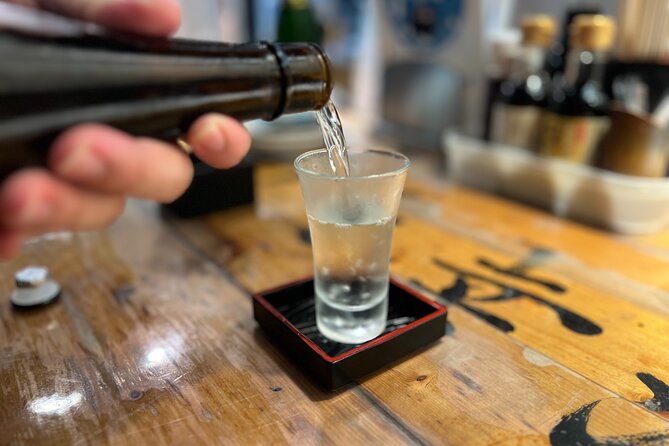
Two complimentary drinks are included. You can choose alcohol or non-alcoholic options, which makes the tour easier for people with different preferences. Because the drink allowance is already covered, the $86.22 price is simpler to understand than a tour where every restaurant bill is separate.
Thirteen tastings can fill you up. I would arrive hungry, but not so hungry that you rush the first stop. The food is served over about three hours, and the walking between places gives the evening some breathing room.
The menu is not designed as a carefully selected tasting menu in the fine-dining sense. It is a broad sample of local eating. That is a strength if you want variety and a weakness if you are looking for one famous specialty prepared at a high level. One person considered the food excellent and local, while another felt the izakaya choices were poor compared with independent meals elsewhere in Tokyo. Your expectations matter.
The guides shape the evening
A food walk succeeds or fails on its guide. Here, the guide team includes people named May, Agathe, Mak, Hoshi, Nathan, Lloyd, Kei, Izzy, Hina, Daiichi, Paula, Elena, Ami, Igor, Shane, and Maya.
The best accounts describe guides who explain Japanese food and culture in clear English, suggest places to eat later, and adjust to the group. Hoshi was praised for excellent English and useful local advice. Igor was praised for explaining the food and area while keeping a comfortable walking pace. Kei helped with food preferences and dietary restrictions, then sent recommendations after the tour.
Lloyd’s handling of a mobility issue is also worth noting. He helped arrange cabs between locations so a parent with limited mobility could still enjoy the restaurants. That does not mean every part of the tour is easy for every person, but it suggests that you should tell the operator about mobility concerns before the start.
There is a real difference between a guide who simply delivers food and one who explains it. If you see something unfamiliar, ask what it is, how it is normally eaten, and what makes the restaurant worth visiting. That can turn a basic tasting into a useful lesson.
Walking, timing, and comfort
The tour lasts about three hours, with roughly one hour connected to each major district. You walk between eateries, so comfortable shoes are sensible. The pace has been described as manageable even for someone walking with a leg injury, but the route still involves city streets and narrow food alleys.
Most people can participate, and the tour is near public transportation. The group size tops out at 12. Small venues can feel crowded with that many people, but a larger group would be harder to manage in Omoide Yokocho or Golden Gai.
This is an evening experience, and Shinjuku changes as the night goes on. You will see restaurants and nightlife areas in their natural setting, not a quiet daytime version prepared just for sightseeing. That is part of the appeal, but families with young children or anyone seeking a calm meal may prefer a simpler restaurant booking.
Is $86.22 a fair price?
At $86.22 per person, this is not the cheapest way to eat in Shinjuku. You could order individual dishes for less, especially if you already know where to go and are comfortable reading menus or communicating in restaurants.
The price becomes more reasonable when you count the included food, two drinks, guide service, walking tour, and the time saved. You are paying for access to four different food settings, not simply for 13 bites. You also avoid the risk of choosing four mediocre places on your own.
I would call it good value for a first evening in Shinjuku, especially if you want a full meal and an introduction to the district. It is weaker value for confident Tokyo diners who already have a list of favorite izakayas and ramen shops. The tour cannot guarantee that every dish will match your personal taste.
The free cancellation policy gives you some flexibility. You can cancel at least 24 hours before the start for a full refund. Changes or cancellations inside that window are not accepted and are not refunded.
Who should book this experience?
I would recommend it most strongly if you fit one of these profiles:
- You are visiting Tokyo for the first time.
- You want to sample Japanese food without planning several restaurants.
- You are traveling alone and would enjoy a small social group.
- You feel unsure about entering tiny izakayas or ordering unfamiliar dishes.
- You want neighborhood context along with dinner.
- You value a guide who can suggest places for the rest of your trip.
I would be more cautious if you have strict dietary needs, strongly dislike raw food, or want a fixed menu. The information confirms that the guide can respond to dietary restrictions and preferences, but it does not provide a full menu in advance. Ask before booking.
I would also avoid booking it only for Golden Gai. The area is part of the planned route, but the route has not been identical on every outing.
Should you book the Shinjuku food tour?
Yes, if you want a lively introduction to Shinjuku with plenty to eat and a guide to handle the hard parts. The combination of 13 dishes, four eateries, two drinks, and three famous districts gives you a full evening for the money.
Book it early in your Tokyo stay so you can use the guide’s restaurant suggestions later. Come hungry, wear good shoes, arrive early at the west-side meeting point, and ask questions about every unfamiliar dish. If you want a quiet, highly controlled tasting menu or a guaranteed Golden Gai visit, choose a different experience.
FAQ
How long is the Shinjuku food tour?
The experience lasts approximately three hours.
How many dishes are included?
The tour includes 13 Japanese dishes at four eateries.
Are drinks included?
Yes. Two complimentary drinks are included, and you can choose alcoholic or non-alcoholic options.
What kinds of places does the tour visit?
The food stops include one stall, one izakaya, one traditional Japanese eatery, and one gastrobar.
Where does the tour start and finish?
It starts at AOKI Shinjukunishiguchi Honten at 1-chome-8-5 Nishishinjuku, Shinjuku City. It ends near the Southeast Exit of JR Shinjuku Station. The guide can escort you back to the Starbucks meeting area if requested.
Can I cancel for a refund?
Yes. You can cancel at least 24 hours before the start time for a full refund. Cancellations or changes made less than 24 hours before the start are not refunded or accepted.
Just added in Tokyo
- Manga Lesson with a Professional Japanese Manga Artist in Nakano★ 5.0 · 77 reviews
- Making a bento box with cute character look in Japan★ 5.0 · 15 reviews
- Tokyo/Ikebukuro Manga drawing workshop by pro-Manga artists★ 5.0 · 65 reviews
- Luxury Tokyo Sake, Cocktail, Whisky and Pairing Tour★ 5.0 · 18 reviews
- Tokyo Ueno Food & Nature & Localtown Tour: 10Dishes+ Drinks★ 5.0 · 34 reviews
- Make Your Own Bonsai with a Professional Bonsai Artist in Tokyo★ 4.5 · 18 reviews
- Make Traditional Nerikiri Sweets & Matcha experience in Shibuya★ 5.0 · 130 reviews
- Daikoku Parking Tokyo Drift & APIT Car Meet JDM Culture Tour★ 5.0 · 79 reviews
Food Tours, compared.
Shinsekai Food Tour with 13-15 Dishes at 5 Eateries
Read our review →
Osaka Food Tour: 13 Dishes at 5 Local Eateries
Read our review →
Shinjuku Food Tour (15 Dishes and 4 Eateries)
Read our review →
Best of Shinjuku: Izakaya Food Tour (4 Stops, 14+ Tastings)
Read our review →
Kyoto Night Foodie Tour in Gion (9+ dishes + 6 Sake tastings)
Read our review →
Hungry Osaka Street Food Tour:15 Tastings & 3 Drinks with a Local
Read our review →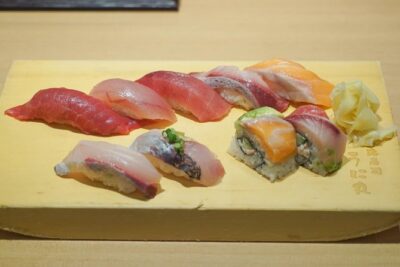
Tokyo Night Foodie Tour in Shinjuku – Seasonal Sushi, Wagyu Beef
Read our review →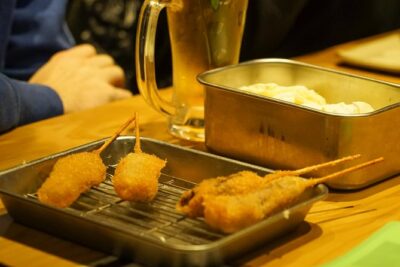
Osaka Local Foodie Walking Tour in Dotonbori and Shinsekai
Read our review →Browse the lists this tour appears in