
Reviewed · ENTRY TICKETS
Osaka: Tsutenkaku Tower Entry Ticket
Osaka’s lucky tower is a quick city highlight. Tsutenkaku rises 108 meters above Naniwa Ward, giving you wide views from its Golden Observatory, a close look at Osaka’s neon-lit style, and a chance to rub the famous Billiken statue for good fortune. I especially like the low $8 price and the easy, self-guided format. You go straight to the tower entrance, so there is no tour group or long schedule to manage.
I also like the mix of old Osaka character and modern city views. The lattice tower glows with changing neon lights, while Billiken adds a playful local tradition. The main consideration is that the ticket is for one entry only, and people with vertigo, a fear of heights, or epilepsy should skip this experience.
In This Review
- Key points at a glance
- Why Tsutenkaku belongs on an Osaka day
- Arriving at the 108-meter tower
- Going up to the Golden Observatory
- Meeting Billiken, Osaka’s lucky mascot
- The tower’s neon look after dark
- What the $8 ticket really gives you
- How long to allow for the visit
- Who will enjoy Tsutenkaku most
- The main drawbacks to consider
- Should you book Tsutenkaku Tower?
- FAQ
- Where is Tsutenkaku Tower located?
- How tall is Tsutenkaku Tower?
- What does the ticket include?
- How much does admission cost?
- What are the tower’s opening hours?
- Can children enter Tsutenkaku Tower?
- Do I need identification?
- Can I leave and come back in with the same ticket?
Key points at a glance
- 108-meter Osaka landmark: Tsutenkaku gives Naniwa Ward a distinctive focal point and offers a compact way to see the city from above.
- Golden Observatory views: The main appeal is the panoramic outlook over Osaka, with an enclosed observation area high in the tower.
- Billiken for luck: Rub the gold statue, a popular symbol of happiness and good fortune.
- Neon-lit latticework: The tower’s changing lights add a modern touch to its historic design.
- Simple $8 admission: You receive tower entry without a guide, transport, meal, or extra activity included.
- Short and flexible visit: Daily hours run from 10:00 AM to 8:00 PM, with last entry at 7:00 PM.
Why Tsutenkaku belongs on an Osaka day
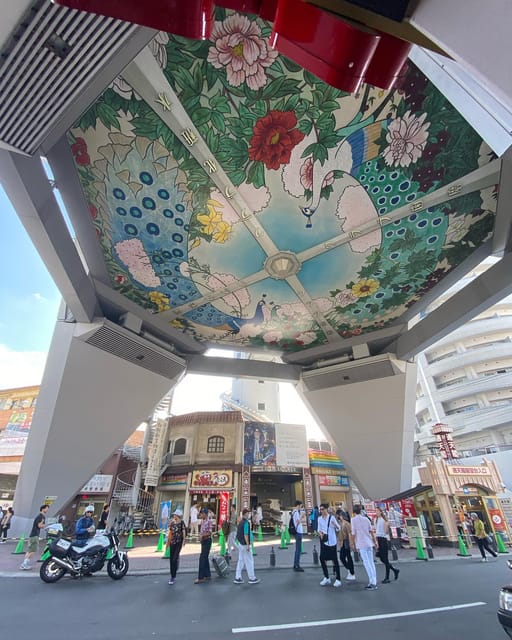
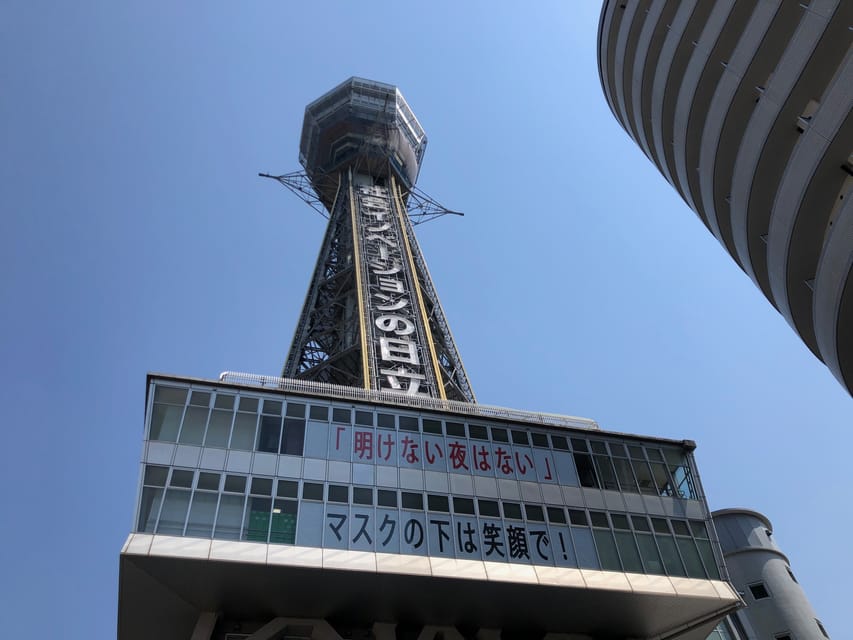
Tsutenkaku is more than a lookout platform. It is one of the city’s familiar symbols, tied closely to the character of Osaka’s Naniwa Ward. The tower rises 108 meters, and its shape is easy to recognize thanks to the open metal framework and bright neon lighting.
That design gives the visit a different mood from a sleek modern observation deck. You are not simply riding up a glass skyscraper. You are entering an Osaka landmark that combines a slightly old-fashioned tower style with bright city energy.
The tower was rebuilt after its earlier predecessor was lost in a major fire. That detail gives the structure extra meaning. It is a replacement that became a landmark in its own right, rather than a surviving relic protected behind glass.
I like this kind of attraction because it gives you a quick sense of place. You can see Osaka from above, then return to street level without giving up half a day. At $8 per person, the ticket is also priced as an easy addition to a day in the city, especially if you want one paid viewpoint without committing to a more expensive observation attraction.
More Entry Tickets in Osaka
- Universal Studios Japan Studio Pass
★ 4.8 · 89,883 reviews - Universal Studios Japan Express Pass
★ 4.7 · 53,138 reviews - Osaka Amazing Pass
★ 4.7 · 21,697 reviews
Arriving at the 108-meter tower
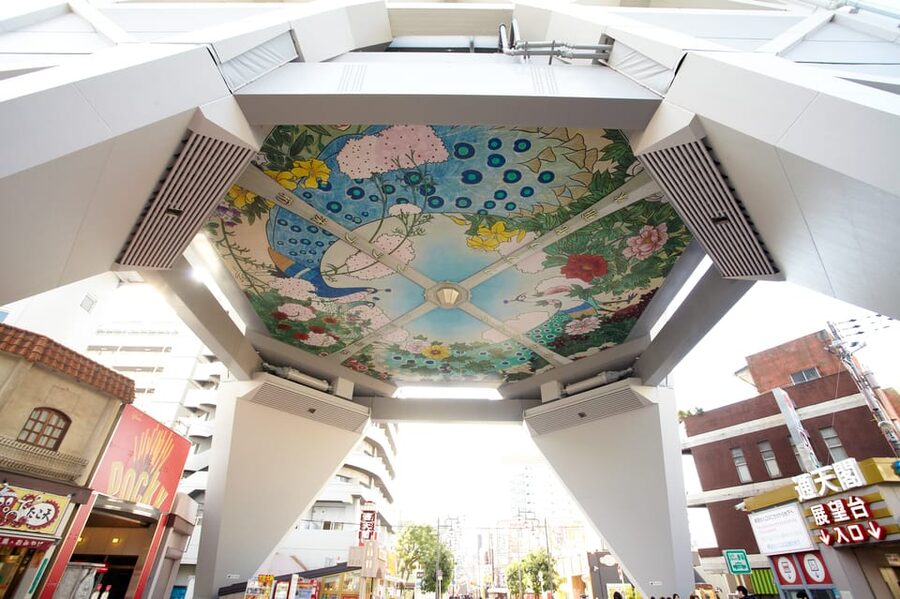
The meeting point is simple: go directly to the entrance of Tsutenkaku Tower in Osaka and redeem your ticket there. You do not need to find a separate office or join a walking group. That makes this a practical stop for independent sightseeing.
Bring comfortable clothes and your passport or an ID card. A copy is accepted, which is useful if you prefer not to carry your original passport around the city. The ticket is for adults from high school age upward. Children from age five through middle school use the child category, and children under four enter free.
The compact setup also means you should think about timing. The tower is open daily from 10:00 AM to 8:00 PM, with the last entry at 7:00 PM. A visit earlier in the day may suit you if you want to fit it between other sights. A later visit lets you see the tower’s neon character, though the provided information does not promise a specific night-view program.
A reported wait of around 20 minutes is possible, though another assessment found the tower easy to enter and not too crowded. I would treat that as a useful guide rather than a guarantee. Build in a little spare time if you have a dinner reservation or a tightly planned evening.
Going up to the Golden Observatory
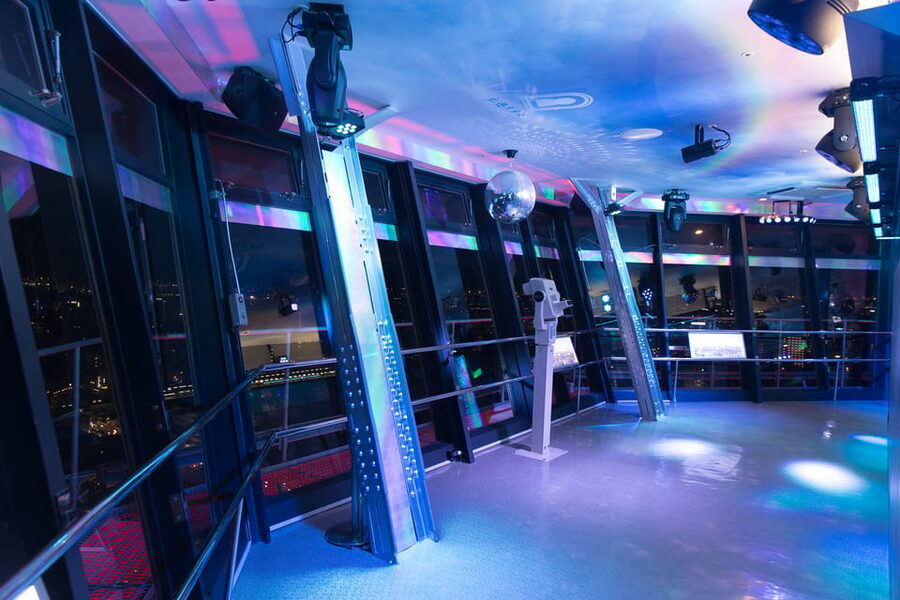
The Golden Observatory is the heart of the ticket. From up there, you can look across Osaka and get a broad view of the city from a central landmark. The outlook is described as panoramic, so this is a good choice if you want to understand the scale of Osaka rather than focus on one single building.
The tower is 108 meters high, which is enough to make the city feel open below you without placing you at the extreme height of a supertall skyscraper. Still, you will be standing above the streets, and the attraction specifically warns that it is not suitable for people with vertigo or a fear of heights.
The viewing experience seems straightforward. One assessment described the ride up as easy, with good city views and little crowding. That matters because an observation deck loses some of its charm when the whole visit becomes a battle for space. Here, you can expect a relatively focused stop: enter, go up, look out, enjoy the tower’s special details, and return to the entrance.
The views are the reason to buy the ticket, but the Golden Observatory is not presented as a long, guided program. You will need to create your own experience. Spend a few minutes identifying the spread of Osaka, take your photographs, and look back at the tower itself before going down.
Meeting Billiken, Osaka’s lucky mascot
The Billiken statue gives Tsutenkaku its most distinctive bit of character. This gold figure is known as a god of luck and happiness, and the tradition is simple: rub the statue for good fortune.
That small ritual is easy to appreciate because it does not require special knowledge or a formal ceremony. You can make it part of your visit, take a photograph, and move on to the views. It also gives children a clear activity, which can make the tower more engaging than a viewing platform alone.
I would not treat Billiken as a reason to visit instead of the lookout. The statue is a charming extra, while the Golden Observatory is the main value of the ticket. Together, they give you two different ways to enjoy Tsutenkaku: one based on Osaka’s popular culture and one based on the city view.
The gold finish also suits the tower’s playful presentation. Tsutenkaku is not trying to feel solemn or formal. Its appeal is friendly, bright, and a little whimsical, which fits Osaka’s lively public image.
More Entry Tickets in Japan:
- Tokyo Disney Resort – Tokyo Disneyland & Tokyo DisneySea Park Tickets
★ 4.8 · 99,488 reviews - SHIBUYA SKY Ticket
★ 4.7 · 46,509 reviews - JR Whole Japan Rail Pass
★ 4.8 · 29,150 reviews - TOKYO SKYTREE® Ticket
★ 4.7 · 25,136 reviews
The tower’s neon look after dark
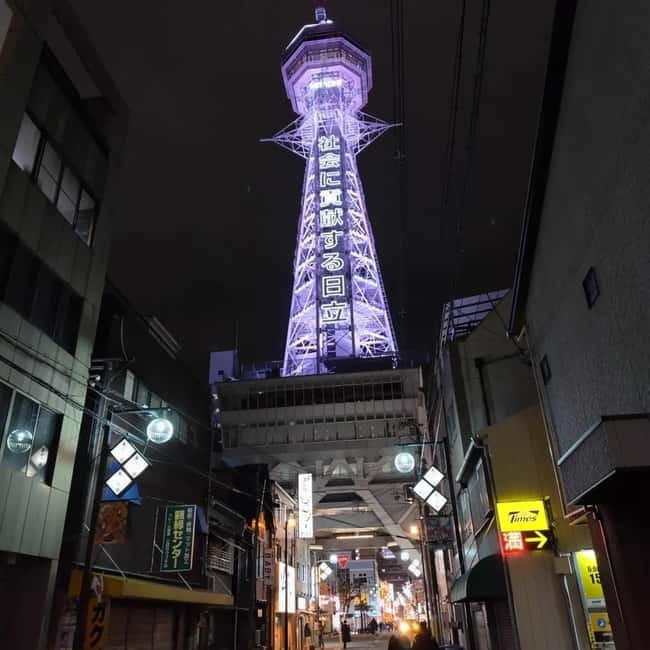
Tsutenkaku’s metal latticework is one of its best visual features. During the day, you can study the structure and see how the open frame differs from a solid concrete or glass tower. At night, changing neon lights give it a stronger visual presence.
This makes the attraction useful in two ways. You can visit for the elevated view, then appreciate the tower from street level as part of your evening in Naniwa Ward. The ticket itself covers entry only, so you do not need to stay for a separate event. The building’s lighting is part of its regular identity.
The lighting also helps explain why Tsutenkaku remains popular despite newer and taller viewpoints elsewhere in Osaka. A modern tower may offer greater height, but Tsutenkaku has a more recognizable shape and a stronger connection to the neighborhood around it.
If you enjoy photographing architecture, allow time to look at the tower from outside before or after your visit. The ticket requires a single entry, so plan your interior visit carefully. Once you leave, you cannot re-enter with the same admission.
What the $8 ticket really gives you
At $8, this is a modestly priced sightseeing ticket. The value comes from three included elements: access to the 108-meter tower, the Golden Observatory, and the Billiken area. You also get the pleasure of seeing the structure’s neon design from close range.
The ticket does not include a guide, transport, food, or any extra listed activity. That is not a serious problem at this price, but it sets the right expectation. You are paying for access to a landmark, not a full tour of Osaka.
I see the ticket as good value if you already plan to be near Tsutenkaku or want a short attraction between other plans. It is less compelling if you dislike observation decks or want a detailed explanation of the neighborhood’s past. The experience is visual and self-guided, not a lecture.
Some activities at the tower may have separate costs or conditions, since one assessment referred to options such as an outside platform and a slide. Those features are not listed as part of this admission ticket, so you should not assume they are included in the $8 price.
How long to allow for the visit
No fixed duration is provided, and that is one advantage of the format. You can make the stop brief or take more time with the views and photographs. A possible 20-minute wait should be added to your planning if the entrance is busy.
For a relaxed visit, I would allow enough time to handle entry, reach the Golden Observatory, enjoy the city view, rub Billiken, and photograph the tower. The attraction may work well as a short stop, but I would not build an entire day around it.
The daily schedule gives you plenty of flexibility. Opening at 10:00 AM allows a morning visit, while the 7:00 PM last entry leaves room for an early evening stop. The tower closes at 8:00 PM, so do not arrive at the last minute.
Because the ticket is single-entry, choose your timing before you go inside. If you want both daylight views and the neon appearance, you will need to decide which matters more, since you cannot leave and return on the same ticket.
Who will enjoy Tsutenkaku most
I recommend this experience for several kinds of visitors:
- First-time Osaka sightseers who want a simple view from a recognizable landmark.
- Families with older children who may enjoy Billiken, photographs, and the tower’s unusual design.
- Budget-conscious visitors looking for an $8 paid attraction.
- Independent planners who prefer a self-guided visit with no assigned group schedule.
- Architecture fans who appreciate neon lighting and open latticework.
- Photographers looking for a distinctive Osaka subject, especially around the tower exterior.
The ticket is less suitable for anyone who feels uneasy at height. The attraction is also not suitable for people with epilepsy, according to the safety information provided. If that applies to you, choose a ground-level Osaka activity instead.
Comfortable clothing is recommended. That is sensible for any city sightseeing stop, especially if you are fitting the tower into a longer day on foot. Keep your identification handy for ticket redemption, and remember that a copy of your passport or ID is accepted.
The main drawbacks to consider
The biggest limitation is the ticket’s lack of flexibility after entry. It is single-use, and once confirmed, it cannot be canceled or refunded. That means you should check your schedule before buying, particularly if your Osaka plans may change.
The second limitation is that the experience may feel brief. The tower gives you a view and a local good-luck ritual, but it does not include a guide to explain Osaka in detail. If you want a structured tour, this ticket will feel too basic.
Crowds may also vary. One assessment noted an easy visit with little crowding, while another reported a wait of about 20 minutes. That difference is normal for a popular city landmark. Go with a little time in hand rather than assuming instant entry.
Finally, people seeking the highest possible viewpoint may prefer a taller observation attraction. Tsutenkaku’s appeal is its identity and location, not record-breaking height. You are buying a classic Osaka experience with a manageable price, not the city’s most dramatic elevation.
Should you book Tsutenkaku Tower?
Book it if you want an affordable, easy-to-plan Osaka landmark with good city views, a bit of local charm, and an unusual lucky statue. The $8 price makes it especially appealing when you are already visiting the surrounding area or need a compact sightseeing stop.
Skip it if heights make you uncomfortable, if you need a refundable plan, or if you want a guided cultural tour rather than a self-directed viewpoint. For most independent visitors who enjoy city panoramas and distinctive architecture, Tsutenkaku offers enough personality to justify the modest cost.
FAQ
Where is Tsutenkaku Tower located?
Tsutenkaku Tower is in Osaka’s Naniwa Ward on Honshu, Japan.
How tall is Tsutenkaku Tower?
Tsutenkaku Tower is 108 meters tall.
What does the ticket include?
The ticket includes entry to Tsutenkaku Tower, including access to the Golden Observatory.
How much does admission cost?
The listed price is $8 per person.
What are the tower’s opening hours?
Tsutenkaku Tower is open daily from 10:00 AM to 8:00 PM. Last entry is at 7:00 PM.
Can children enter Tsutenkaku Tower?
Children from age five through middle school use the child category. Children under four enter free. Adults are defined as high school age and older.
Do I need identification?
Yes. Bring a passport or ID card for redemption. A copy is accepted.
Can I leave and come back in with the same ticket?
No. The ticket allows single entry only, with no re-entry.
Just added in Japan
- A One-of-a-Kind Sushi Experience in a Special Place of Japan★ 5.0 · 15 reviews
- Tokyo Cute Bento Cooking Class – Make a Kawaii Character Lunchbox★ 5.0 · 126 reviews
- Japanese Home Cooking Class & Walk in Todoroki Temple Tokyo★ 5.0 · 88 reviews
- Japan Tokyo Tower Observatory Deck E-Ticket★ 4.0 · 34 reviews
- Catch a Baseball Game in Tokyo with a Local – Tickets Included★ 5.0 · 24 reviews
- JDM Experience with Fast&Furious RX-7 (English speaking Driver)★ 5.0 · 57 reviews
- Tokyo Private Day Tour by Car with English speaking Driver Guide★ 4.0 · 29 reviews
- Japan Classic 10 Day – One Life Adventures★ 5.0 · 129 reviews
Entry Tickets, compared.
Tokyo Disney Resort – Tokyo Disneyland & Tokyo DisneySea Park Tickets
Read our review →




teamLab Borderless Tickets: MORI Building DIGITAL ART MUSEUM
Read our review →
Browse the lists this tour appears in