Reviewed · TOKYO TOURS
Small Town in the Big City: Tasting Tokyo’s Kichijoji
Tokyo can feel too large to understand in one visit. Kichijoji gives you a smaller doorway into it. This six-hour food walk follows local eating habits through a department store food hall, sushi counter, yakitori shops, street stalls, and a family-run senbei maker. I like the way the tour focuses on one neighborhood rather than rushing across Tokyo, and I like its small maximum group of six, which should make food stops and conversation easier. The main drawback is the price: at $195 per person, this is a serious food-tour splurge, especially since private transportation is not included.
The route also has a useful balance. You get polished department-store food beside everyday shopping streets, plus old-school and modern places in the same half-day. Guide Phoebe receives especially warm praise for her patience and enthusiasm, though the exact guide may vary. Plan for plenty of walking, a full six hours, and an appetite that can handle frequent samples.
In This Review
- Key points to know before booking
- Why Kichijoji makes a smart Tokyo food base
- Starting with sushi and a Japanese department-store food hall
- Kichijoji’s shotengai brings food into daily life
- Three generations of senbei making
- Inokashira Onshi Park and the breathing room between bites
- Traditional bites beside newer Tokyo food habits
- What the six-person format changes
- Is $195 a fair price for this Kichijoji tour?
- Who should book, and who should skip it?
- Final verdict on Small Town in the Big City
- FAQ
- Where does the tour start?
- Where does the tour end?
- How long does the food tour last?
- How much does the tour cost?
- What food and drinks are included?
- Is private transportation included?
- How many people can join the tour?
- Can I cancel for a full refund?
Key points to know before booking
- Kichijoji keeps the focus local: You explore one Tokyo neighborhood instead of spending the day crossing the city.
- The food range is unusually broad: Expect sushi, yakitori, octopus balls, senbei, pickles, fruit, snacks, lunch, and drinks.
- The tour begins at a depachika: This famous Japanese department-store food hall shows how traditional foods and new food trends share the same aisles.
- A three-generation senbei maker adds a personal touch: The family business gives the walk a connection to craft and continuity.
- Six hours allows time to eat and explain: This is not a quick tasting crawl. It is built around context, shopping streets, and local food customs.
- The group is capped at six people: That suits visitors who prefer a more personal outing, but the $195 price reflects that smaller format.
Why Kichijoji makes a smart Tokyo food base
Kichijoji sits in Musashino, west of central Tokyo, and this experience treats it as more than a convenient place to eat. The point is to see how a neighborhood works through its food. You move from department-store displays to everyday shopping streets, then to small food businesses and familiar Japanese snack traditions.
I like that approach because Tokyo food culture is not found only in famous restaurants. It also appears in the food hall where people buy prepared dishes, the street where shoppers pick up dinner, and the family shop that has kept making one specialty across generations.
The tour title promises a small town in a big city, and that idea shapes the route. Kichijoji is still part of one of the world’s largest urban areas, but the day is organized around a manageable district. You do not need to spend your time figuring out which station exit leads to the right alley or which food counter is worth your yen. The guide supplies the route and the explanation.
This is a good fit if you want Tokyo to feel less like a list of landmarks and more like a place where people eat, shop, and return to familiar businesses. It is less suited to someone who wants a quick introduction to many different parts of the city.
A few more options to weigh up in Tokyo
- Tokyo Disney Resort – Tokyo Disneyland & Tokyo DisneySea Park Tickets
★ 4.8 · 99,488 reviews - SHIBUYA SKY Ticket
★ 4.7 · 46,509 reviews - JR Whole Japan Rail Pass
★ 4.8 · 29,150 reviews
Starting with sushi and a Japanese department-store food hall
The experience begins at Kichijoji Station and moves into a depachika, the food hall found in many major Japanese department stores. This is one of the strongest opening choices because it puts Japanese food presentation and shopping customs in front of you right away.
Inside, you can expect carefully arranged foods rather than a simple row of takeaway counters. The route points out prized pickles, exceptionally expensive fruit, and Japanese snack foods. These details help show the range of Japanese food retail, from humble packaged treats to produce sold as a luxury gift.
The first major eating stop is a sushi bar described as a local favorite. That matters because the tour does not treat sushi as an isolated tourist symbol. You begin with a place people in the area choose, after seeing the ingredients and prepared foods that surround it.
Lunch is included, along with snacks, bottled water, and coffee or tea. The supplied information does not specify every dish or portion, so you should think of this as a tasting-focused meal rather than a promise of a fixed menu. Food tours can fill you up quickly, and six hours of sampling means pacing yourself is wise.
The depachika can also be a strong value point. You are paying not only for food, but for someone to explain what you are seeing and help connect unfamiliar products to Japanese eating habits. If you already know Japanese department-store food halls well, this part may feel less new. For a first-time visitor, it offers a quick lesson in how food can be displayed, valued, and bought in Japan.
Kichijoji’s shotengai brings food into daily life
From the department store, the walk continues along Kichijoji’s shotengai shopping street. A shotengai is a local shopping street built around daily needs, and this setting changes the feel of the tour. You are no longer looking mainly at polished food displays. You are moving through the places where people shop for ordinary meals and snacks.
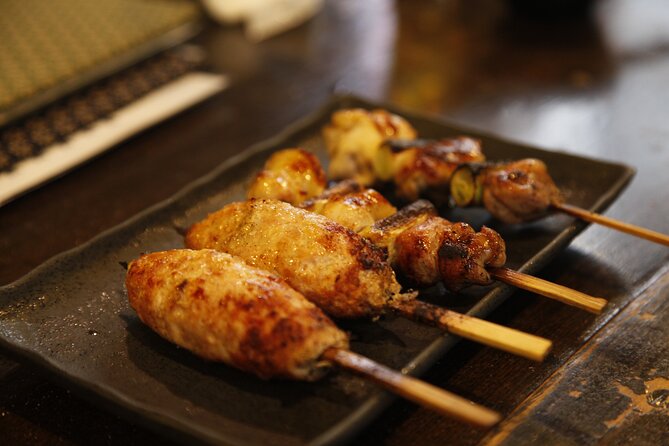
This is where the tour covers basic Japanese cuisine through things you can taste. Yakitori skewers are prepared and served street-side, giving you a direct look at one of Japan’s most familiar casual foods. The food is simple in format, but the stop helps explain why grilled skewers work so well in a neighborhood food culture: they are portable, social, and easy to buy as part of an ordinary outing.
You also sample octopus balls, known as takoyaki. They offer a different texture and style from yakitori, and their preparation at a street stand adds another layer to the route. I like this contrast. You are not just moving from one premium bite to another. The selection includes food associated with shopping streets and quick eating.
The shotengai portion may be one of the most enjoyable sections for anyone who wants to observe Tokyo at close range. The tour is not only about sitting down to eat. You are walking, looking, tasting, and learning how food fits into the rhythm of a neighborhood.
The tradeoff is physical. Six hours is a long time for a food walk, and the experience includes movement between stops. The tour is near public transportation, and most people can participate, but the supplied information does not give a precise walking distance or a detailed pace. If you have mobility concerns, contact the provider before booking rather than assuming the route will be easy.
Three generations of senbei making
One of the most distinctive parts of the route is the visit to a family of artisanal senbei makers. The business has three generations behind it, giving the food a human story that a large commercial snack aisle cannot provide.
Senbei are Japanese rice crackers, but the important point here is not simply trying another snack. A family-run maker lets you connect a familiar Japanese food to the people and methods behind it. The experience gives the tour a sense of continuity without turning the day into a formal history lesson.
A particularly praised detail is the original rice cracker associated with this stop. It is described as a family-owned specialty, and that kind of tasting is exactly where a neighborhood food tour can earn its price. You are trying something tied to a specific business rather than eating the same widely available snack you could find anywhere.
This stop should appeal to you if you enjoy food with a clear sense of place. It may matter less if you care only about a large number of tastings or prefer famous restaurant names. The tour’s appeal comes from the mix of businesses: a department store, a sushi counter, street stalls, and a long-running maker.
A completely different kind of day out:
- Mt Fuji and Hakone 1-Day Bus Tour Return by Bullet Train
★ 5.0 · 26,383 reviews - TOKYO SKYTREE® Ticket
★ 4.7 · 25,136 reviews - teamLab Borderless Tickets: MORI Building DIGITAL ART MUSEUM
★ 4.7 · 24,126 reviews - teamLab Planets TOKYO Ticket
★ 4.7 · 21,663 reviews
Inokashira Onshi Park and the breathing room between bites
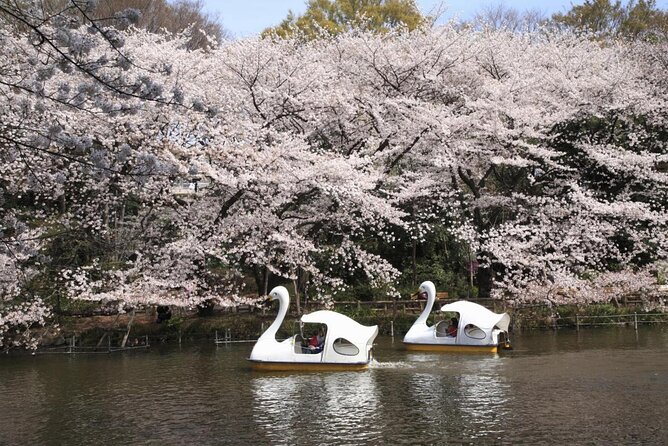
Inokashira Onshi Park is included in the route, although the supplied details do not spell out exactly how much time is spent there or which part of the park you visit. Its presence gives the day a change of pace from food counters and shopping streets.
That pause can be useful. A six-hour eating tour needs moments when you can reset your palate, walk without immediately ordering another dish, and absorb the neighborhood around you. The park also helps support the broader idea of Kichijoji as a local district rather than a collection of restaurants.
You should not book this experience expecting a dedicated park tour or a major sightseeing visit. Food is the main subject. The park is best understood as one piece of the route and a break in the eating schedule.
Traditional bites beside newer Tokyo food habits
The tour also includes avant garde taverns, according to the description, alongside old-school yakitori places and street food. The exact taverns and dishes are not specified, so I would not book it with a fixed checklist of named restaurants in mind.
Instead, expect a range of food settings. Some stops focus on long-standing habits, while others show newer ways of eating and socializing. That mix reflects how Tokyo works today. Tradition is not kept in a separate museum. It shares space with new menus, modern presentation, and changing tastes.
This balance is one of the best reasons to choose the tour over a basic food crawl. You get more than a sequence of samples. You can compare the formal display of a depachika, the quick service of a street stall, the casual appeal of yakitori, and the personal scale of the senbei maker.
The tour also provides coffee or tea and bottled water, which are small but useful inclusions during a long outing. Since lunch and snacks are included, the $195 cost covers a substantial amount of food as well as the guide’s time. Still, value depends on your priorities. If you would happily spend a full afternoon finding and paying for these stops yourself, the organized route may feel worthwhile. If you mainly want to eat inexpensive street food, the price will feel high.
What the six-person format changes
The maximum group size is six people. That is a major feature, not a footnote. Food stops in Japan can involve tight counters, narrow spaces, and shared attention, so a small group should make it easier to hear the guide and ask questions.
A small group can also make the family-business visit feel more respectful and personal. You are less likely to feel like part of a large procession moving through a local shop. The available feedback gives Phoebe special credit for patience and enthusiasm, qualities that matter on a tour built around explanation and repeated tastings.
The guide is central to the experience. Food names alone do not tell you why a pickle costs more than another, how a shopping street serves local residents, or why a family senbei shop matters. A good guide turns those observations into useful understanding.
Phoebe was praised for making the tour a highlight of a Tokyo visit, especially through her enthusiasm and patience. You should note that guide assignments can change, so treat her name as a helpful indication of the tour’s tone, not a guarantee that she will lead your departure.
Is $195 a fair price for this Kichijoji tour?
The cost is $195 per person, and the tour lasts about six hours. That places it well above the price of simply buying snacks at a market or eating at a few casual shops. The value comes from the full package: a small group, a guide, lunch, snacks, coffee or tea, bottled water, and access to a planned sequence of food experiences.
I would consider the price reasonable for someone who wants a well-organized food day and values personal guidance. The group limit of six is especially important here. You are not paying for a cheap self-guided snack route. You are paying for time, organization, interpretation, and a chance to visit several different types of food businesses without doing the research yourself.
The price is harder to justify if you are a confident Tokyo eater who enjoys choosing your own restaurants and can read Japanese menus or navigate local food streets comfortably. You may get better value by exploring Kichijoji independently.
There is also no private transportation included. The tour starts at Kichijoji Station and ends back at the meeting point, so you need to arrange your own way to and from the station. That is not a major problem for an experience based in one neighborhood, but it is part of the total cost and time you should plan for.
Who should book, and who should skip it?
I would recommend this experience to you if you want:
- A focused introduction to Kichijoji rather than a rushed tour of all Tokyo
- A full food day with lunch and several tastings
- A small group capped at six people
- Local food businesses, including a three-generation senbei maker
- Help understanding Japanese food customs and everyday shopping habits
- A mix of traditional foods and newer eating places
I would be more cautious if you want a short tour, a fixed list of famous restaurants, or a low-cost way to sample street food. Six hours is a commitment, and the route is designed for people who enjoy conversation, walking, and context as much as eating.
The experience is also weather dependent and requires a minimum number of participants. If poor weather or low enrollment cancels the outing, you are offered another date or a full refund. You can cancel for a full refund up to 24 hours before the start time, but late cancellations and changes are not accepted.
Final verdict on Small Town in the Big City
I like this tour because it gives Tokyo a human scale. Instead of trying to cover every famous food district, it asks you to pay attention to one neighborhood and the people who feed it.
The strongest elements are the small group, the broad food selection, the department-store food hall, and the three-generation senbei business. Guide Phoebe’s warm reputation adds to the appeal, though the price remains the central question.
Book it if you want a guided, food-heavy day that connects sushi, yakitori, street snacks, and family craft. Skip it if you prefer to explore independently or are looking for a quick and inexpensive tasting. For the right eater, Kichijoji offers a thoughtful way to see Tokyo through its everyday meals.
FAQ
Where does the tour start?
The tour starts at Kichijōji Station, at 2 Chome-1 Kichijoji Minamicho, Musashino, Tokyo 180-0003, Japan.
Where does the tour end?
The experience ends back at the meeting point.
How long does the food tour last?
The tour lasts approximately six hours.
How much does the tour cost?
The listed price is $195 per person.
What food and drinks are included?
Lunch, snacks, bottled water, and coffee or tea are included.
Is private transportation included?
No. Private transportation is not included.
How many people can join the tour?
The maximum group size is six people.
Can I cancel for a full refund?
Yes. You can cancel at least 24 hours before the experience start time for a full refund. Late cancellations and changes are not accepted. The tour may also be rescheduled or refunded if poor weather or insufficient enrollment causes a cancellation.
Just added in Tokyo
- Official Street Go Kart Tour Akihabara 2nd★ 5.0 · 19 reviews
- Private Nippori Fabric Town Walking Tour★ 5.0 · 21 reviews
- Nikko Private Day Tour – Temples, Nature & Hidden Gems★ 5.0 · 41 reviews
- Ninja Wire Action Experience★ 5.0 · 29 reviews
- Nikko one day trip GREEN NUMBER PLATES★ 4.5 · 47 reviews
- Nikko Private Tour from Tokyo with Licensed Guide and Vehicle★ 4.5 · 15 reviews
- Nikko Toshogu, Kegon waterfall, Lake Chuzenji One Day Pvt. Tour★ 5.0 · 22 reviews
- Nikko Private Day Tour with Guide by Car (from Tokyo)★ 4.0 · 16 reviews
Tokyo Tours, compared.

Tokyo Disney Resort – Tokyo Disneyland & Tokyo DisneySea Park Tickets
Read our review →
Mt Fuji and Hakone 1-Day Bus Tour Return by Bullet Train
Read our review →

teamLab Borderless Tickets: MORI Building DIGITAL ART MUSEUM
Read our review →